Bootstrap
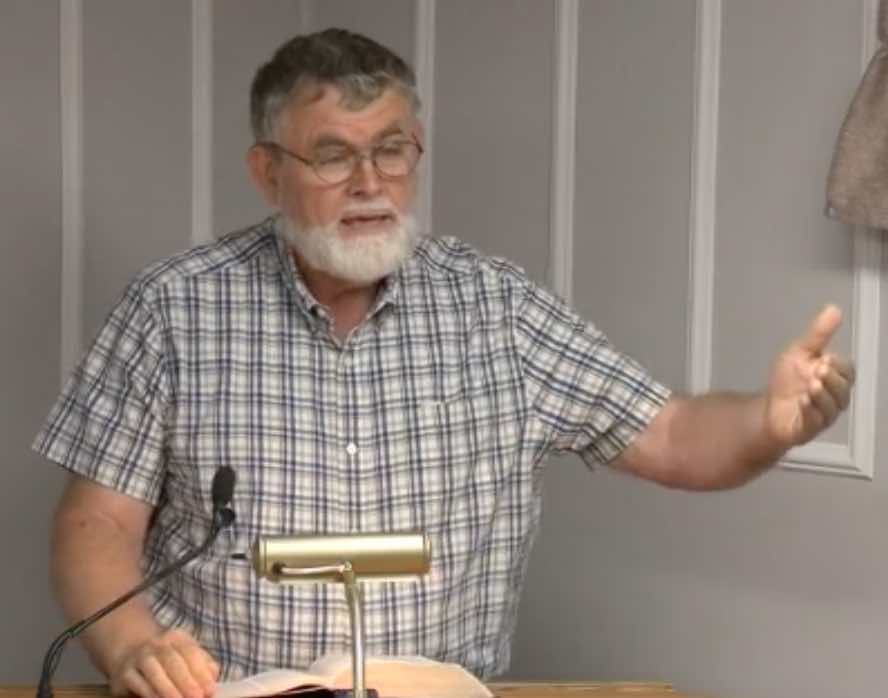
Mike McInnis

The Fate of the Nations #110

Mike McInnis • May, 7 2017 • Audio
0 Comments
What does the Bible say about God's judgment on nations?

The Bible illustrates God's sovereignty in raising up and bringing down nations as a manifestation of His judgment and purpose.

Throughout Scripture, we see that God raises nations for His purposes and, in His sovereign will, brings them down when they stray from His ways. This principle emphasizes that no political ideology or human effort can save a nation from God's judgment. For example, the rise and fall of empires like Babylon or Israel show how God's sovereignty manifests in history, aligning with His redemptive plan. Ultimately, nations cannot inherit God's kingdom as they are not comprised of 'flesh and blood'; rather, true believers who manifest God's kingdom do so by grace and mercy amid their struggles.

Daniel 2:21, Zephaniah 3:12-13

How do we know that God's sovereignty applies to our lives?

We know God's sovereignty applies to our lives through Scripture, which assures us that He is in control over all circumstances.

God's sovereignty is woven throughout the fabric of Scripture, assuring believers that He controls all events according to His will. Passages like Romans 8:28 underscore that all things work together for good for those who are called according to His purpose. This assurance empowers Christians to trust in God's plan, even amid trials, knowing that His grace sustains and preserves them. Through historical narratives, such as Daniel's experiences in the lion's den, we learn that the Lord offers protection and deliverance not by removing trouble but by sustaining His people within it.

Romans 8:28, Daniel 6:16-23

Why is it important for Christians to understand God's kingdom?

Understanding God's kingdom helps Christians recognize their identity and purpose in a world governed by divine sovereignty.

Understanding God's kingdom is essential for Christians as it clarifies their identity as subjects of His rule and their role in manifesting His glory. True Christianity is the expression of God's kingdom, which exists independently of earthly nations and governments. This realization allows believers to navigate current political and social climates with discernment, recognizing that their primary allegiance is to God’s kingdom rather than any earthly system. Believers find comfort in knowing that their citizenship is in heaven, as affirmed in Philippians 3:20, providing a perspective that transcends national affiliations.

Philippians 3:20, Matthew 5:3

Sermon Transcript

Auto-generated transcript • May contain errors

100%
In this politically charged world
we have many voices vying for our attention. Some tell us everything
in our nation is going fine and happier days are just around
the corner if we will only keep on with the same plans and schemes
of greater government that have brought us to this juncture.
Then we have the opposers of those concepts assuring us that
they have a better plan that will surely result in a greater
tomorrow and a brighter future if we will adopt their notion,
strap on our guns, get back to our roots, and pick ourselves
up by the bootstraps. Never do we hear anyone, either
the conservative bastions of freedom or the liberal gift givers,
who ever properly identify the reality of what is happening
in this nation. Neither of them have a clue as
to how to correct the problems because neither group understands
the reality of God's certain judgment, nor do they grasp the
concept of a sovereign God who orders all things according to
His purpose. Then there are some well-meaning
souls who see religion as a solution and opine that we need to get
back to our roots as a Christian nation. There never has been
or can there possibly be such an entity in this world. True
Christianity is the manifestation of God's kingdom in the earth,
and flesh and blood cannot inherit it. Nations cannot be Christian,
and ours is no exception, regardless of the faith which may or may
not have been embraced by some of the founding fathers in general,
or what catchy slogan might be on our money. Some, on the other
hand, see religion, especially Christianity, as a problem. and promote the notion that secularism
and tolerance of idolatry is the true God we should all worship.
They have no trouble enlisting multitudes with the promotion
of the brotherhood of mankind and the rejection of all moral
absolutes as long as everyone's happy and doing their own thing.
Both conservatives and liberals alike embrace these concepts
to varying degrees. Time and again, throughout the
pages of Scripture, we read about various nations whom God raised
up and then brought down in order to manifest His certain judgment.
Thankfully, He has also done the same in order to manifest
the glory of His grace in the deliverance of that people which
He has scattered among the nations of the earth. even as the wise
sower has cast his seed upon the ground, or as he does scatter
jewels, hiding them in the earth, until such time as he is pleased
to uncover them and present them as the precious stones of his
kingdom. Carnal man, whether religious
or not, is constantly looking for a carnal deliverer, someone
to ride in on a white horse. Yet in the midst of the men of
these troubled nations the Lord has a people whom he loves with
an everlasting love, and will in his own time make them known
unto men and angels. Those things which can be shaken
must be, in order that those which cannot be shaken might
remain. The natural man would assume
that the deliverance of this people will be manifest by keeping
them from the fires and troubles which arise as his judgment falls
around them. Yet he does not demonstrate those
that are his by keeping them from trouble, but rather by keeping
them while they are in the midst of trouble, as we see with Daniel
in the lion's den, or his companions in the fiery furnace. Of course,
this is not a popular view among those who rant on about a secret
rapture, and seek to mollify carnally-minded professors by
assuring them that they will escape earthly tribulation, which
they identify as some age yet to come. The natural man can
never embrace the basis of God's kingdom. He is convinced that
there must be some merit in those whom the Lord would receive,
whether it be some good work or his faith. There is absolutely
nothing in men which can cause them to merit one iota of favor
before God. This is manifested as the Lord
describes His people to Zephaniah as a poor and afflicted people.
The children of the kingdom are poor in spirit, having nothing
of value which they can add to that which is required of them.
They are the epitome of those who depend upon a handout. They
freely confess that they will perish, apart from the sovereign
mercy and grace of God.
Mike McInnis
About Mike McInnis
Mike McInnis is an elder at Grace Chapel in O'Brien Florida. He is also editor of the Grace Gazette.
Broadcaster:

Comments

0 / 2000 characters
Comments are moderated before appearing.

Be the first to comment!