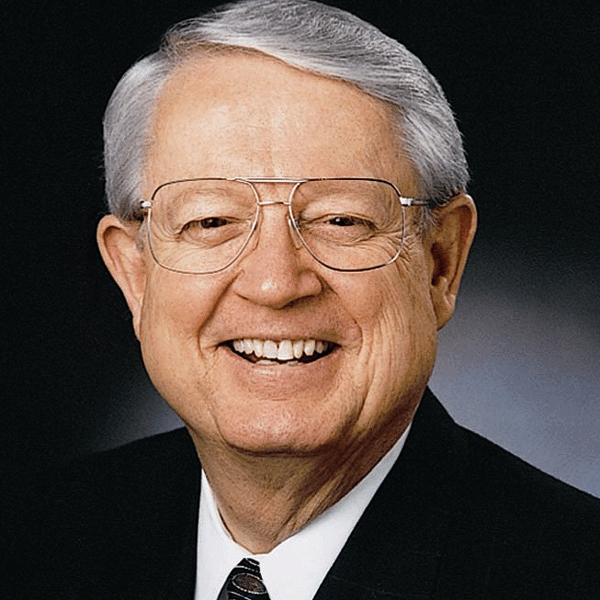
Swindoll contends that predestination, though challenging to human autonomy, stands as a foundational Reformed doctrine distinguishing Christian theology from humanistic self-determination. Drawing on church history's greatest theologians and citing Psalm 115:3 and Romans 8:28-39, he argues that God's sovereign plan of salvation transcends individual human agency and calls believers to recognize themselves as participants in God's master plan rather than the center of the universe. This doctrine requires a paradigm shift from self-centered Christianity to God-centered theology, understanding that salvation belongs to a greater divine agenda that cannot be altered by human will.
What does the Bible say about predestination?
The Bible teaches that predestination is part of God's sovereign plan for salvation, indicating that individuals are chosen by God before the foundation of the world.
Ephesians 1:4-5, Romans 8:28-30
How do we know predestination is true?
Predestination is confirmed through multiple biblical passages that affirm God's sovereign choice in salvation.
Romans 8:28-30, Ephesians 1:4-5
Why is predestination important for Christians?
Predestination is vital as it highlights God's sovereignty and grace in salvation, reminding Christians that their salvation is part of God's divine plan.
Romans 8:28-39
Predestination. Just the word appears intimidating. It is perhaps one of the most difficult concepts in all of Christian doctrine because it appears on the surface to rob humans of their most precious treasure: their autonomy. Although the doctrine challenges our notions of self-determination, it is ultimately what separates Christians from humanists, who proclaim that the fate of the world is ours to decide. The past, they say, has been fired in the kiln of history and cannot be altered, but tomorrow is still soft and pliable clay, ready to be shaped by the hands of humanity. Individually and collectively, we—not an almighty figment of wishful thinking—will determine our own future. Put in today’s terms, “It’s all about us."
Today, I stand in the company of great theologians, preachers, teachers, missionaries, and evangelists to proclaim exactly the opposite. I join the ranks of reformers like William Tyndale, John Wycliffe, John Calvin, Huldrych Zwingli, John Huss, John Knox, and Martin Luther. I sing with the poets Isaac Watts and John Newton and preach with George Whitefield, Jonathan Edwards, and Charles Spurgeon. I respond to the call of pioneer missionary William Carey, who stirred his slumbering Calvinist generation to follow the command of Christ and make disciples of all nations. I place my theology alongside those of John Owen, A. H. Strong, William Shedd, Charles Hodge, B. B. Warfield, Lewis Sperry Chafer, John F. Walvoord, Donald Grey Barnhouse, and Ray Stedman. And I am numbered alongside my contemporaries John Stott, R. C. Sproul, John Piper, John MacArthur, and J. I. Packer. Today I stand in a great company of sound biblical scholars to declare that God not only created humanity and directed our past, He has already shaped our future. “Our God is in the heavens; He does whatever He pleases” (Ps. 115:3).
Coming to terms with the doctrine of predestination requires a dramatic shift in our perspective. We emerge from the womb and progress through childhood viewing the universe with ourselves at the center. Then something wondrous happens at some point in the process of maturing—for most healthy adults, anyway. We suddenly realize that the world extends beyond the circle of our own horizon and that others see the same world from a different viewpoint. Soon, the universe no longer revolves around us, and we accept that our little circle is but a very small part of a much greater reality.
The same is true of salvation!
We faithfully share God’s “plan of salvation” with individuals—as we should—but we too often fail to appreciate that Christianity is not “all about us”; it’s about Him . If we are to proclaim the complete gospel of Jesus Christ, we must recognize and embrace God’s master plan of salvation. The almighty Creator is fulfilling His own agenda for His universe, which cannot be altered; therefore, those who have heard and accepted the plan of salvation have become a part of something much greater than themselves, even if they don’t realize it.
Take a few moments now and reread Romans 8:28-39 in light of God’s master plan of salvation. We tend to claim the promises of those verses as individuals. God does indeed love us personally and individually, but note that Paul used the first-person plural, “we” and “us,” throughout the passage. This does not promise that God will alter the universe to ensure the highest good of each individual. On the contrary, God’s “plan of salvation” is a mighty river of destiny into which a believer plunges. This river of righteousness will eventually flood the world, washing away the old order to make room for the new.
Comments
Your comment has been submitted and is awaiting moderation. Once approved, it will appear on this page.
Be the first to comment!