Bootstrap
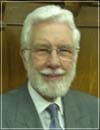
Stephen Hyde

21 - The Purpose of the Law

Galatians 3:19-20
Stephen Hyde June, 29 2018 Audio
0 Comments
Galatians Series - 21

Galatians 3:19-20

The purpose of the law was to restrain sin.

Sermon Transcript

Auto-generated transcript • May contain errors

100%
things for Jesus' sake. Amen. May it please God to bless us
together as we continue our meditation in the Epistle of Paul to the
Galatians and chapter 3. I'm reading this evening verses
19 and 20. The Epistle of Paul to the Galatians
chapter 3 and reading verses 19 and 20. Wherefore then serveth
the law? It was added because of transgressions. Till the seed should come to
whom the promise was made. And it was ordained by angels
in the hand of a mediator. Now a mediator is not a mediator
of one, but God is one. And this of course follows on
from the verses that we meditated on last Friday, when the Apostle
told us, and this I say, that the covenant that was confirmed
before of God in Christ, the law, which was 430 years after, cannot disannul that it should
make the promise of none effect. For if the inheritance be of
the law, it is no more of promise, but God gave it to Abraham by
promise." And then it would seem that the Apostle then really
asks a question. And he says, having spoken these
things, therefore, we might say, why is the law necessary? What
good does it do? Why is it needful? And indeed,
many people will ask that question today. Many people will come
and say, well, of course, the law doesn't have any position
in my life. Well, quite clearly, the law
of God does have a position in our life. And therefore, the
apostle answers it and he says, it was added because of transgressions. and of course the law is there
the holy law of God which is given to Moses and that law is
there for a guide to us and a situation which directs us to understand
what is right and what is wrong we have of course a conscience
but there we have spelled out in some detail and very full
are the commandments so that we are enabled by the grace of
God to turn away from sin and not just think well it's irrelevant
I can do what I want to do because of course it's a gospel age and
I can please myself. Well our concern should be to
please God and to therefore do those things which are right.
The Apostle Paul, when he wrote to the Romans, and in the third
chapter, we mentioned this previously, but it is a very relevant verse,
verse 20, in the third chapter of Romans, where the Apostle
says, therefore by the deeds of the law, there shall no flesh
be justified in his sight. For by the law is the knowledge
of sin. So we see that by keeping the
law we will not be justified very clearly because we cannot
keep the law because we are sinful and however you and I endeavor
to keep the law in its entirety we will find that we fail and
as the Apostle went on further and in the fifth chapter of the
Romans he tells us moreover the law entered that the offense
might abound That means that we should very clearly see what
sin is and not therefore to push it aside and think, well, that
was only a little sin. Well, there are of course really
no little sins as such. Sin is sin and every sin by itself,
however small, unless it is pardoned and forgiven, will condemn us
to eternal hell. So it is very relevant that we
should recognize this great truth that the offense might abound,
but where sin abounded. This of course is the glory of
the gospel. That's what really the apostle
is showing to us in this chapter in Galatians to help us to realize
that our righteousness doesn't come through keeping of the law.
but it comes through that which the Lord Jesus Christ has done. And so we have this very clear
position in this fifth chapter in the 21st verse of Romans,
that as sin hath reigned unto death, even so might grace reign
through righteousness unto eternal life by Jesus Christ our Lord. And that follows on from these
very blessed words, but where sin abounded, grace did much
more abound. So we might feel, and I believe
the true Church of God realises that sin does abound. And we are unable naturally to
stem the tide. But what a blessing it is when
we know and realise the working of God's grace which subdues
sin. and enables us to turn from it. What a wonderful blessing
that is. And so here we see this truth,
it was added because of transgressions, it was necessary. And then the
apostle goes on to say, till the seed should come to whom
the promise was made. Now, who was the promise made? Well, of course, it was made
to the living Church of God, that which was given to Abraham
so many, many years ago, and till the seed should come. Well, that would seem to direct
us clearly to the Lord Jesus Christ, who was, of course, the
ever-blessed seed. Till the seed should come. to
whom the promise was made. What a mercy if that is so, because
the Apostle again explains it somewhat in the Hebrews, in the
eighth chapter and the seventh verse we read, for if that first
covenant had been faultless, then should no place have been
sought for the second. For finding fault with them,
he says, behold, the days come, saith the Lord, when I will make
a new covenant with the house of Israel and with the house
of Judah. And what a blessing that is to
realize that that has come to pass. Wherefore then serveth
the law. It was added because of transgressions
till the seed should come to whom the promise was made. And
of course the promise was made to the whole Church of God, not
only to the Jews, but it looked forward also to the Gentiles,
those who would be the spiritual seed of Abraham. We know that
it was initially spoken to the natural seed of Abraham, the
Israelites, we're thankful that it was then extended of course
to the whole true Church of God which included those Gentiles
who were born again by the Spirit and the Apostle tells us and
it was ordained by angels in the hand of a mediator. Well that may not be very easy
to understand and I have a little paragraph here by John Gill which
I'll just read to you which says so Moses and Christ the law and
the gospel the old and the new covenant are continually opposed
to each other besides the mediator here seems to be represented
as inferior to the angels and as receiving the law into his
hands from them by whom it was ordained, which to conceive of
Christ is very much to the demeaning and lessening of him. Moses is
the mediator here, meant, who stood between God and the people
of Israel, not to make peace between them, but to show the
word of God from him to them, and this at their own request. And then that also is spoken
to us really in Deuteronomy when Moses wrote the book of Deuteronomy
and in the fifth chapter and the fifth verse he says, I stood
between the Lord and you at that time to show you the word of
the Lord for you were afraid by reason of the fire and went
not up into the mount. So there we have Moses' explanation
of the situation. which would seem to correlate
with this which the Apostle Paul brings before us here. And it
was indeed ordained by angels. We read again in Deuteronomy
chapter 33 and verse 2, and he said, The Lord came from Sinai
and rose up from Seir unto them. He shined forth from Mount Paran,
and he came with ten thousands of saints. from his right hand
went out a fiery law for them. That was seen when the law was
given on Mount Sinai. There was this wonderful revelation
of the power of God. And so here we have this statement,
and it was ordained on that occasion by angels in the hand of a mediator
who was indeed Moses. And then the apostle moves on
to say, now a mediator is not a mediator of one, but God is
one. Well, we know, of course, God
is one, but God is, of course, three persons, Father, Son, and
Holy Spirit. And we know that the Lord Jesus
Christ is that one who, of course, is the mediator between God and
man. And what a wonderful privilege
it is for us tonight as we gather here for prayer as sinners, unable
to approach the majesty on high by ourselves. How we need a mediator. How we need one to come and to
stand between. And we know the Lord Jesus Christ
did. He stood between in garments dyed in blood. So it is he instead
of us that is seen as we approach to God. And so tonight as we
consider the truth of God's Word and the Old Testament position
and how really it fades away as we view the blessed mediator,
the one true God, and the second person in the Trinity who is
that glorious mediator for us. And it's a blessing if you and
I know the wonder of it. And we only know the wonder of
it when the Lord grants us that access in prayer unto the throne
of grace. what is destroyed, that middle
wall of partition is taken down and we find access into the holy
place through our glorious high priest, our wonderful mediator,
the Lord Jesus Christ. Well, may we bless God tonight
that we do have a mediator, and that we are included in that
gracious and glorious covenant ordered in all things. And sure,
the promise that was given to Abraham applies to the whole
church of God, those who are found in Christ. Wherefore then
serveth the law. It was added because of transgressions,
till the seed should come, to whom the promise was made. And
it was ordained by angels in the hand of a Mediator. Now,
a Mediator is not a Mediator one, but God is one. Amen.
Broadcaster:

Comments

0 / 2000 characters
Comments are moderated before appearing.

Be the first to comment!

Joshua

Joshua

Shall we play a game? Ask me about articles, sermons, or theology from our library. I can also help you navigate the site.