Bootstrap
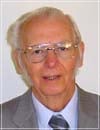
Bill McDaniel

The Surityship of Christ

Hebrews 7
Bill McDaniel July, 13 2014 Video & Audio
0 Comments

Sermon Transcript

Auto-generated transcript • May contain errors

100%
Let's please turn to a most unique
book in the New Testament, the book of Hebrews. I don't know
what we'd do without it in regard to certain things that are brought
before us here. in this great book, especially
from the standpoint of the Jew and the Lord and the Old Testament. And this morning, our text is
in the longest section of the book, and that would be the one
about the priesthood of Christ. So if you'll open your Bible
to the seventh chapter, we have to find us a place to break in.
and get to our text. Let me give you my subject, and
that is the suretyship of Christ. Christ, the surety of the covenant. That's a great subject, one of
my favorite. All right, let's break in Hebrews
chapter 7. Let's start our reading in verse
20. and read through verse 25, and
the 22nd verse contains the kernel of our subject and of our study
of the morning. Hebrews 7 and verse 20. He's talking about the priesthood
of Christ as being much more excellent than that of Aaron
and the Levites. That's his argument along here.
So look at verse 20. And in as much as not without
an oath he was made priest, and then parentheses, for those priests
were made without an oath, but this with an oath by him that
said unto him, the Lord swear, will not repent, thou art a priest
forever after the order of Melchizedek. By so much was Jesus made a surety
of a better testament, and they truly were many priests because
they were not suffered or permitted or allowed to continue by reason
of death. But this man, because he continues
ever, has an unchangeable and intransmissible priesthood, wherefore
he is able also to save them to the uttermost that come unto
God by him, seeing he ever liveth to make intercession for them. Now the 22nd verse again, By
so much was Jesus made a surety of a better testament. I think this morning that our
souls are in for a rich feast of nutrient from the blessed
word of God and from this aspect of the saving work of the God-man,
even the Lord Jesus Christ. considering him who is all and
all in the matter of saving sinners and of bringing many sons unto
glory. For it is our declared intention
here to view the Lord in his capacity as the surety of the
better or the everlasting or of the new covenant or testament
as stated in the 22nd verse in the text that we read. By so
much was Jesus made a surety of a better testament. Now, you
know, I think there are a lot of people in churches today that
know very little about covenant theology or about the covenant
that God made whereby our great salvation is involved. Now, the first thing that we
ought to notice, I guess, is that our text and our subject
is found, as I mentioned, that large section of the book of
Hebrews devoted to the priesthood of our blessed Lord and Savior
Jesus Christ. This is the longest section or
division of And I think we can agree that it begins in chapter
4 and verse 14 and continues all the way to the 18th verse
of the 10th chapter. And the apostle in this section
shows, by comparing the priesthood of Aaron with that priesthood
of the Lord Jesus Christ, the exceeding superiority of Christ
as a priest over that of Aaron and of the Levi. For consider,
Aaron, a man, a common man, an ordinary man, was a sinner. His sacrifices were insufficient
to put away sin. His place of service was not
in the very presence of God, but in an earthly tabernacle,
and his term as high priest was cut short or ended because of
his death. And that's what the writer said.
There were many high priests, hundreds of them, because they
were not allowed to continue on account or by reason of death. But, verse 24, this man, referring
to the Lord Jesus Christ, because he remains forever, he abides
forever, has an unchangeable priesthood, literally an intransmissible
priesthood, he neither received it from another, he neither succeeded
another, nor will another succeed him. he ever lives. And because of that, he is able
to save unto the uttermost all that come unto God by Him. Now, one of the first thing that
we notice in the 22nd verse of our text is another of the many,
many mentions in the Hebrew epistle of the word covenant or of the
word testament. Jesus is the surety of a better
covenant, yea, of a better testament, that is, than the first. He is
the surety of a better covenant. And notice again the word better. It is used in Hebrews at least
a dozen times, this word better. And it means better. It means
stronger. It means more noble. It means
something that is useful, something that is of an advantage or advantageous
or excellent. It is an excellent covenant that
our Lord is the priest, the surety, and the mediator of. But then
the same word covenant is an additional five times, that is,
in the King James Version, translated testament. So you have a covenant
and you have a testament from the same word, by the way. It's the same word that the Lord
Jesus used in that night before his death, Matthew 26, 28, Mark
14 and verse 28. And in the gospel of Luke chapter
22 and verse 20, when he said to that circle of his disciple,
this is my blood of the new Testament or covenant, which is shed for
many for the remission of sin. So that these two words covenant
and covenant and testament are interchangeable here in the book
of Hebrew. The meaning of the word testament
or covenant is a disposition. To make a disposition, a special
arrangement. And according to W.E. Vine in
his word studies in the New Testament dictionary of words. It comes
from a verb that means to cut or that means to divide, to dispose
of in a covenant way. And it should be noted how often
God dealt with men and with nations by means of a covenant. Read the Old Testament and see
that God was ever making covenant with men and nation. With Noah,
with Abraham, with Isaac, with Jacob, with David, with Israel,
God entered into covenant with them. Now we speak of the covenant
of grace so many times that salvation is by or through a covenant,
a covenant arrangement. And John Gill wrote and described
it thusly, quote, the covenant of grace is a compact or agreement
made from all eternity among the divine person, especially
the father and the son concerning salvation of the elect, unquote. And so our brother Gil went on
to say, The contracting parties in this great covenant were the
Holy Three, the Father, and the Son, and the Holy Spirit. Each of them having not only
an agreement, but also a part in the accomplishing of the covenant. The Father set forth an eternal
purpose in regard to the saving of sinners, of the way of their
pardon, of the way of their reconciliation, and the Son shed the blood of
the everlasting covenant, and the Spirit of God applies that
covenant to the elect of God, creating in them a saving interest
in the salvation of Jehovah and of Christ. So, the Father elected,
the Son redeemed, and the Spirit of God quickens or regenerates. Now this covenant, though it
is distinguished in Hebrew and in the Bible as old and as new,
as first and as second, especially in Hebrew. You'll see that chapter
8 verse 7 through verse 13. Many of the old time Calvinistic
preachers and writers were of the same persuasion of Gill and
of Owen and others that the old and the new, the first and the
second are but different administration of one and the same everlasting
covenant. In that, both of them were established
by blood, both of them had a mediator that was appointed of God, and
that there never was, there never has been, but one way for sinners
to be saved. Noah found grace in the eyes
of the Lord, Genesis 6 and verse 8. And Abraham believed And it
was imputed unto him for righteousness, Genesis chapter 15 and verse
6. And that there is a covenant
we have seen from the scripture. And that it has an old and a
new manifestation or dispensation, if you will, the first and the
second. So it now behooves us to consider
both the part and the relationship which our Lord Jesus Christ had
under this covenant. What is required of the Lord
Jesus Christ concerning the covenant? And how is it that His blood
is the blood of the everlasting covenant or testament? Matthew
26, 28 again. 1st Corinthians 11 and verse
25 we read in Isaiah Isaiah the prophet chapter 42 and verse
6 Speaking of in verse 1 my servant mine elect in whom my soul delight. And in verse 6, I the Lord have
called thee in righteousness and will keep thee and give thee
for a covenant unto the people and for a light under the Gentiles. See also Isaiah chapter 49 and
verse 8. By the way, there is another
connection which ought to be made between the two manifestations
of the covenant as we mentioned a moment ago. And that is this,
Paul in his writing makes it clear and as it is stated by
Calvin in his commentary Isaiah, that the covenant was made with
Abraham and his seed, quote, had its foundation in Christ,
unquote. We need to remember that, bear
it in mind. That covenant made with Abraham
and his seed had a connection and had its foundation in Christ. You'll read in Romans 4 and verse
16, it is by faith that it might be sure unto all of the seed,
but especially that passage from Paul in Galatians in the third
chapter and verse 14 through verse 29. We won't Take time
to read them, but it says essentially this that the blessing of Abraham
might come on the Gentiles by Jesus Christ and Paul writes
this and if you are Christ and then are you Abraham's seed and
heirs according to the promise. But let's go back to the question.
What part and what relation the Lord Jesus Christ has to this
covenant of which we speak? It is safe to say that the person,
the work, the death of our Lord Jesus Christ is the main essence
of the covenant and of salvation. That as the covenant is manifested,
it is fulfilled and preached is Christ Jesus our Lord as the
main substance and sum of that everlasting covenant. For it
is by covenant arrangement that Christ is at one and the same
time the head of the elect Romans 5 17 through 19 by the purpose
of God Christ is the duly constituted head over the church and over
all things and The elect were chosen in him and I want to make
a statement and have an eternal, vital union with the Lord Jesus
Christ. You ought to study eternal, vital
union. A union that cannot be broken,
it cannot be severed, it cannot be disannulled by any power or
any person or by any circumstance whatsoever. Three times in Hebrews,
Jesus is called the mediator of the covenant. Chapter 9, verse
15. Chapter 8 and verse 6. Jesus
is the mediator of a better covenant. Again, chapter 12, verse 24,
speaks of the blood, or the mediator, of the blood of the everlasting
covenant. For there is one God and one
mediator between God and men, the man Christ Jesus, as Paul
writes in 1 Timothy chapter 2 and verse 5. Now, a mediator is one,
is a person that we might call a middleman or a go-between. And between two parties, that
are estranged from one another on some account or another. And this point, to be a mediator
between God and man, it was ultimately necessary that the mediator be
a partaker of both natures, of the human and of the divine. and that he be true God and true
man, and that our Lord Jesus Christ was in that hypostatic
union. Again, Jesus not only is the
mediator, but he is the testator also. the covenant Hebrews 9
verse 16 and verse 17 he is the testator of the new covenant
there must be the death of the testator the Apostle said now
this Greek word is some seven times in the New Testament but
this is the only time that is translated testator at least
in the King James Version Other times the same word is appointed. Appointed in Luke chapter 22
and 29. It is translated made, M-A-D-E,
in Acts 3 and 25. I will make a new covenant. Hebrews chapter 8 10 and 10 16
and there must be the death of the one making the covenant or
who is the testator of the covenant finally Jesus is not only the
mediator and the testator but according to our text today He
is the surety of the covenant. He is the surety of this better
covenant. Hebrews 7 and verse 22. Covenant, testament, both need,
both have a surety. And it may or may not come as
a surprise that this is the only time that this word surety is
used in all of our New Testament. But its roots are deeply embedded
in the Old Testament. Though it is used but once here,
it is a frequent subject of the Old Testament Scripture. We read
of suretyship in the book of Genesis, chapter 43, chapter
44. We read of suretyship in Job
17 and verse 3. We read of it again in Psalm
119, Verse 122. And then studying
in Proverbs, several times in Solomon's collection of Proverbs,
he speaks of a surety. And so those familiar with the
Old Testament oracle know the meaning of a surety and the substance
of suretyship. Now we will learn. that there
is a very close relation between Christ being the surety of the
covenant and the imputation of the sins of the elect unto the
Lord Jesus Christ. there is the most intimate connection
that he is surety that our sins are imputed. That our sins are
imputed and that he is the surety. And that the relation arises
from Christ having become the surety of his elect. So what then is a surety and
what does a surety do? One commentator who has so well
defined that surety and his responsibility is that old time prolific writer
John Owen. And he has also answered the
quibbles of any of those who would weaken or diminish the
importance of the suretyship of our Lord. Because it is only
mentioned one time in the New Testament, someone might say
or dismiss it, only one time do we read of this. But then
we must remember, as Owen said, that one time or ten times It
is by the inspiration of God and is therefore of equal authority
with all other scripture. We might throw the argument back
in their face. Listen, John 1 16 is only one
time in all the Bible, but how much important do many people
attach unto it? Now as to the first, though but
once in the New Testament, The word is known to those Jewish
readers by the signification of it in the Old Testament and
by its use among men and in civil endeavor, both in the scripture
and in the society of men. And what is signified by it when
suretyship is entered into and is practiced, whether God and
Christ in the eternal covenant are men and men. The word in
Hebrews 7 and verse 22 means, it has a rather broad meaning,
it can mean a bond, it can mean a pledge, it can mean to be a
bondman who answers for another, one who guarantees the answer
of a debt that another owes. The word in the Old Testament
most often used is the word that includes the idea of to intermingle
together. or to strike hand, or to mix
up one with another, to mix up together striking hand, to draw
near unto another. Strong's Concordant lists the
range of meaning to be like this, to intermix, to give, or to be
security, to undertake, to give pledge, And the word mortgage
is sometimes used and attached unto it. For example, let's look
at some Old Testament places of the mention of assurity. Remember Job 17, verse 3, in
Job's awful, pitiful plight. In the condition and the misery
that he was in, he lamented this. Who is he that will strike hands
with me? In other words, become my surety,
mix himself up with me. Proverbs 6 and verse 1 speaks
of one that has stricken hands with a stranger. It's mentioned
in chapter 17 and verse 18. You'll see it in Proverbs 6,
1, 17, 18, 22, and 26. All of these in Solomon's proverb
make a mention of surety and striking hands one with another. That is, one that becomes a surety
has mixed himself together with the one for whom he has agreed
to be a surety and vice versa. So much so, That is the Puritan
Owen Pudding, quote, whereby they coalesce into one person
as to the ends of that surety ship, unquote. They become as
one person. They are so mixed up together
and mingled that one is responsible for the other because the surety
becomes liable for the one that he has made himself a surety
for, whether it is their person or whether it is their debt or
possibly for both of them in their situation. Responsible
for their life or their safety or their debts, or for whatever
the agreement was about their surety ship. Now, we have a principle
of first mention that we recognize in the scripture. The first mention
of a thing usually gives us the base and the core of it. And the first mention of a surety
in the scripture is that one in Genesis chapter 43, mentioned
again, in chapter 44. I guess you might remember how
the sons of Jacob came back from Egypt, Joseph had held Benjamin
and kept him until they returned again, and Joseph demanded that
Benjamin be brought back again into the land of Egypt. Jacob
fears the loss of another son. He is reluctant. And in Genesis
43 and verse 9, Judah pledges himself. Judah, one of the older
brothers, pledges himself as surety for Benjamin. And if you're
not familiar with the verse, it reads like this. I will be
surety for him. of my hand shall you require. If I bring him not again unto
thee, and set him before you, then let me bear the blame forever."
What a powerful verse, what a powerful vow is that indeed. It is a type, however, of the
suretyship of Christ and has in it the seeds of suretyship. In that, Judah so mixes himself
up with his little brother Benjamin that he pledges life for life
and debt for debt, and to forever bear the blame should he fail
to bring his younger brother and set him again before the
father in his house. Here again the terms. will be
surety for him. Of my hand shall you require
him. I will be completely responsible
for him and for his life. And Judah ties the knot very,
very tight in this situation, that if I do not return him unto
you according to my pledge and according to my word, then let
the fault and the guilt be mine all the days of my life and beyond. Now, of course, this suretyship
is not infallible, but it is a type of the one whose suretyship
is infallible, who, as surety of the New Testament, will bring
all of God's little Benjamins safely unto the Father. all of
his brethren read about that in Hebrews 2 sometime the children
the brethren those which you have given me that bring all
of them many sons and Now again, we noted Solomon in his Proverbs,
though he does speak frequently of the practice of one becoming
a surety for another, and in reading and studying what Solomon
has to say about it, we learned that he strongly recommends against
it. Solomon strongly recommends against
churdiship. He views it as a snare. and warns of harsh, harsh consequences. And he counseled to go and seek
to be free from that surety ship once and for all, whether it
be a friend, whether it be a stranger. You have that in Proverbs 16,
1 through 5. And especially what is done rationally
and without due deliberation or without counting the cost.
and looking to what all is involved. Because you see, any that have
need of a surety are a poor risk. Anyone that has need of a surety
to stand with them are a poor risk to any that become a surety
for them. For the debt may fall and will
fall upon the surety. Now while scripture warns against
us, becoming a surety, yet Christ has become a surety for many. And not under a civil agreement,
but in the everlasting covenant. The surety of a better covenant. And this is vital. For how shall the covenant be
realized unless there be one to bear the sin of the covenant
people? How shall there be forgiveness
apart from the surety answering the debt of sin? Two interesting
verses, Hebrews 9 verse 15, Romans 3 and verse 25. They speak about
redemption for the transgressions under the first testament Hebrews
9 15 and Paul in Romans 3 and 25 speaks of Christ making propitiation
for those sins that are passed through the forbearance of God,
unless a surety answer the charging. Now Christ is the surety of the
New or of the Better Testament or Covenant. Christ is our surety
before God Almighty. And even here, I think we must
tread carefully and avoid the errors of such people as the
Sassanians and others of old. The Sassanians said that Christ
was only a surety on behalf of God to make sure that the promises
he had made were fulfilled. That Christ was not a surety
on our behalf to answer for our sin, but only on the part of
God that the promises might be kept and fulfilled. Christ, or
rather God, has no need of a surety for his word and his promise
is his bond. And then they deny that Christ
is the surety for us because they deny that God needs an atonement
to forgive the sin of sinners. So Sinians thought that God might
forgive sin without satisfaction, that there was no satisfaction
needed for God to forgive sin. And also, we must remember that
they denied original sin and total depravity. So this is an
escape for them. Christ, they say, assurity only
for God unto us that the promises will come to pass. We cannot
help seeing the connection between the priesthood of Christ and
the surety ship of Christ in Hebrews chapter 7. That the Lord
is not only made a priest by the call and the ordination of
God. His priesthood is after the order
of Melchizedek. He has an unending priesthood
because when he was made priest, Psalm 110 and verse 4, with an
oath God said, you are a priest forever after the order of Melchizedek. Could we say in perpetuity? You are a priest in perpetuity. And follows in Hebrews 7 and
22, by so much was Jesus made a surety of a better covenant
or testament. by an oath. Our Lord became both
priest and surety. By so much, Jesus was made a
surety. By His being a priest forever,
only by this could He be a priest and a surety forever by the oath
of Almighty God. Psalm 110 and verse 4. Now, as we've already seen, a
surety is one who acts in behalf of others who cannot act for
themselves. Most of us, I guess, when we
were young and had no credit, our parents signed the bill so
that we could establish credit. We've done that for our children. But a surety is one who pledges
to pay a debt which he otherwise would not owe. if he were not
a surety. Only by becoming a surety are
they liable. But having voluntarily become
surety, the debt then is theirs. The penalty to endure is theirs
upon the default of the one for whom they act as a surety. Now in civil suretyship, the
one who has gotten a surety to guarantee his debt may fully
pay the whole debt so that nothing falls upon the surety. For he pays off the debt, the
surety is not needed or called in to act. I'll give you an example. Dorothy and I's first vehicle,
my daddy went down and signed with me. I had no credit established
whatsoever. And he signed for that 1952 red
GMC pickup that cost $1,295. Now if we had not paid, he would
have been liable to pay that debt because he mixed himself
up with me as my surety. But in the case of the elect,
the debt is beyond their ability to recompense. It is a debt that
we could never pay. Owen wrote the words in verse
22, buy so much, answer to in as much, back in verse 20. The connecting being this, and
I hadn't seen this till Owen pointed it out, in that he became
a priest by a solemn oath from the Father, he is thereby made
a surety of a better covenant. Or to put it another way, his
being a priest by an oath gave him his fitness to be the surety
of the better testament. For it is the priesthood that
gives dignity to the testament or to the covenant that God has
made concerning salvation. And I'll just say this, salvation
is only and always by and through a covenant. Now the surety which
is Jesus was made notice the word made a surety literally
he was appointed or we could use the stronger word he was
constituted he assumed the surety ship according to the appointment
of the father yet not against his own will. It was not forced
upon him. He freely took upon him to answer
the debt and to bear the curse and to pay the last farthing
that his elect did owe. He agreed to shed the blood of
the everlasting covenant. to give it as a ransom for many
for the remission of their sin. For the price is not reckoned
in silver and in gold, but in the precious blood of Christ,
the Lamb of God, without spot and without blemish. And we must
make the point that the suretyship of the Lord, and hear me here,
the suretyship of the Lord literally screams out at us. Particular atonement. The surety
ship of our Lord screams out particular atonement. Special,
efficacious atonement. An atonement made that is effectual
toward those to whom it is made. Let me put it another way. That
none be lost for whom Jesus is a surety, that none can perish,
for whom our Lord is a surety, or in other words, for whom our
Lord died. Now you will argue back against
that. I would say to you, will God require a double payment? Reason here, be logical. Will
God require a double payment? Will He require that of Christ
that He gave? Will He require that again of
any sinner for whom our Lord died? Will God require a double
payment? You must answer that in dealing
with the Atonement. First, from the Lord, He received
the price of the remission of our sin. Will He require it again
of any sinner for whom it is already given. How can they be
lost that Christ died for? His death is our salvation and
is our life and is our deliverance from sin. Judah's pledge, I'll
be surety I will bring him again. Our Lord's pledge, I will be
surety of the everlasting covenant I will redeem them. I will give
my life. I will shed my blood that they
might be saved and brought unto glory. Somewhere in some hymn
that we sing, the lines are there. Payment God will not twice demand. First at my bleeding surety's
hand, and then again at mine. He is our surety. And that assures
us the debt is paid. It is paid in full. There will be nothing more to
pay for us to pass into the presence of a just and a holy God. I will be sure, Jesus' surety
of the everlasting covenant.

Comments

0 / 2000 characters
Comments are moderated before appearing.

Be the first to comment!

Joshua

Joshua

Shall we play a game? Ask me about articles, sermons, or theology from our library. I can also help you navigate the site.