Bootstrap
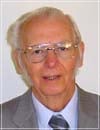
Bill McDaniel

Lowest Humiliation of Christ

Philippians 2:1-11
Bill McDaniel April, 10 2011 Video & Audio
0 Comments
The Lord Jesus humbled Himself more than any other has. Christ veiled His glory to tabernacle in the flesh that He might redeem His sheep. His ultimate humility was seen in His obedience unto death.

Sermon Transcript

Auto-generated transcript • May contain errors

100%
This morning we will read verse
1 through 11. we will only be able to make
it down through about verse 8, and then say verse 9, 10, and
11 for our second service. The first part has to do with
the humiliation of our Lord, and the second part has to do
with the exaltation of Him by the God of Heaven. So today our
study, lowest humiliation, highest exaltation. Philippians 2, 1
through If there be therefore any consolation
in Christ, if any comfort of love, if any fellowship of the
Spirit, if any bowels and mercies, fulfill ye my joy, that ye be
like-minded, having the same love, being of one accord, of
one mind, Let nothing be done through strife or vain glory,
but in lowliness of mind let each esteem other better than
themselves. Look not every man on his own
things, but every man also on the things of others. Let this
mine be in you, which was also in Christ Jesus, who, being in
the form of God, thought it not robbery to be equal with God,
but made himself of no reputation, took upon him the form of a servant,
and was made in the likeness of men. who being found in fashion
as a man, humbled himself and became obedient unto death, even
the death of the cross. Wherefore God also highly exalted
him and given him a name which is above every name, that at
the name of Jesus every knee should bow of things in heaven,
in earth, and under the earth, and every tongue should confess
that Jesus Christ is Lord to the glory of God the Father. Now, this is truly one of the
great, outstanding Christological passages to be found anywhere
in the New Testament. It covers the two stages of the
Lord's saving work, that two-fold work of our Savior that He might
and must perform in order to save His people from their sin. The first part of it we look
at is His humiliation. The Bible said He humbled Himself. He became incarnate in order
that He might assume a body, and in that body that He might
die upon the cross, that He might lay yonder in a grave covered
and sealed in. Yes, I say, he humbled himself
more than any other ever did. And that's in verse 6 through
8, our text of the morning. Secondly, we'll save this for
the evening, his exaltation when his humiliation was fulfilled,
ended, or completed. when he had humbled himself,
all that was necessary and all that God required, he then was
exalted to the highest possible glory, invested then with a sovereign
power, over all things, and the Father put all things under His
feet in that great exalted state. This we have in verse 9 through
11 in our second study of the day. Now here's something interesting. Before we dive into this exceedingly
deep pool, let us consider why Paul is moved by the Spirit,
of course, to write these things concerning the two states of
the blessed Son of God. What does Paul write about Christ
humbling himself even to death? and then to lay in the grave. Does he do it to correct some
prevailing heresy that had been detected at Philippi or had been
reported unto him? Was there a particular error
on the person of Christ that caused him to write? Had false
teachers come in, mingled among them? and perverted the doctrine
of Christ? Were there some there who denied
the incarnation? Were there some there who denied
the resurrection or the exaltation of our blessed Savior? Had some
denied the true, real humanity of our Lord, or had they a deficient
knowledge of the divinity of our blessed Savior? Did they
hold some inadequate view of the atonement that Christ had
made when He died on the cross? In short, we're asking, was the
reason that Paul brings out of His treasury, such a treasure
of great jewels, such a bold declaration of Christ, such a
wonderful passage on our blessed Savior. Why did He do it? Well,
the answer is right here in the text. He writes these things
to them so that it might motivate them to heed His exhortation,
especially that one back in verse 4. Look not every man on his
own things, but every man also on the things of others. Here
is an exhortation that is hard for us to do. That every man
not look exclusively at his own affairs, but let him also look
that his health be concerned and such like on the affairs
of others. Look at verse 6. Who? Now this
is the nearest antecedent in the end of verse 5 to Jesus Christ. So it is Jesus Christ, who? And Paul uses the personal relative
pronoun here, who, which is a word that connects what has been said
with something that is about to follow. It adds reference
to the person mentioned in the antecedent, that is Jesus Christ,
Christ Jesus who, Christ Jesus the one who, thus the one who
is emphatic for at least two reasons. The word who is emphatic
for at least two reasons. A, it opens the way for Paul
to declare something great and amazing about this person, even
Jesus Christ. referred to by the who, Jesus
Christ who, that is, He who is the heart of what Paul is urging
now upon his readers to consider. In other words, Christ is the
perfect example to follow to accomplish the exhortation that
Paul has given. Look not everyone on their own
things, but also on the things of others. Then be it is appropriate
because as R.C. Linsky wrote this, who is the
subject here of the three verbs that follow, expressive of action. Notice, considered not, emptied
himself, humbled himself. Who considered not, who emptied
himself, who humbled himself. John Eady wrote on this great
passage that Paul measures the humiliation or the condescension
of the Lord as the distance between an equality with God and hanging
dead upon a gibbet. Now we look at verse 6 and the
who. Who being. Who being in the form
of God as we progress along. And the word being here is the
word hubarco Beyond doubt refers to the pre-incarnate deity or
state of the Lord Jesus Christ. Some would render the word existing. Jesus Christ who being or existing. Subsisting also would be another
good word. It refers to the antecedent state,
or let me say condition, of our Lord. that the Lord has being
or existence prior to his becoming incarnate. The fact that he possessed
an existence prior to him being born of a woman. before he was existing, even
before that. He himself said he was before
Abraham, and he had glory with the Father before the world ever
was. And the apostle adds that his
being or existence that he had, he subsisted, it was in the form
of God. Here's another word of great
importance here. translated, rendered form in
our Bible's morphe. It is used here twice in concerning
the Lord and Savior Jesus Christ. In verse 6, being in the form
of God, which by the way had nothing to do with shape or with
a visible outline or a bodily feature. The word is again in
verse 7, took upon Him the form of a servant. The more faith
of God, the more faith of a servant. Now in verse 6, His being in
the form of God is as John Gill wrote a phrase that is to be
understood in order to mean that Christ Jesus before the incarnation
was of the same nature and the same essence of God. That he partook of the same nature,
same divinity as the Father. that he was possessed of the
very same glory as the Father, which Christ from all eternity
was never without it. He had the glory of God and the
fullness of God. He did not strip himself of that
divine nature in order to become incarnate. He did not lay aside
His divine attributes or else it could not have been said that
God was manifest in the flesh. Now there's a difficult phrase
here for us in the end of the sixth verse. In the King James
Version it is, thought it not robbery to be equal with God? We're going to have to spend
some time upon that. You can always tell when a passage
is hard, when a passage is difficult to exegete by how many different
views there are of it by the commentators, and then by how
little they have to say upon the matter in their commentary. So let's try to get our arms
around this statement here in the end of verse 6, that He,
that is Christ, the Son, Jesus Christ, the Son, did not think
it robbery to be equal with God. I think I read this verse in
every version and read it in every interlinear and looked
at it in every commentary that I have in my library. And the
word robbery and equal here must be considered for us to properly
understand. First, let's notice the connection
of the phrase, thought it not robbery to be equal with God. Now, with what goes before and
with what goes after, let's do not dismiss them. Who being in
the form of God, having the nature of God, being part of the divine
essence and nature, did not think it to be robbery to be equal
with God, but made himself of no reputation. There the word
but, in verse 7, brings in a contrast, if you will. Now what in the
world is Paul saying and telling us here in saying he thought
it not robbery to be equal with God? Maybe it would help if we
reminded ourselves again of Paul's premise and of his exhortation
back in verse 4. That is that each of you do not
look exclusively at your own things, at your own matters,
at your own interests, but also at the interests and matters
of others. Instead, verse 5, have the mind
of Christ. Then we ask, what is the mind
of Christ in Paul's context here? How is he meaning that? Have
the mind of Christ. So we ask ourselves the question,
how is it that Paul intends that Christ should be an example to
be imitated, so as to fulfill the exhortation in the fourth
verse? What about him is noteworthy
in this regard? What about the Lord would motivate
us to look not exclusively on our interests, but also on the
other? Who being in the form of God,
thought it not robbery to be equal with God, but made himself
of no reputation." Now, as Gil said, the apostle is speaking
here very clearly of the mind of Christ prior to the incarnation,
when he possessed full deity and glory. Now, I'm not saying
he laid it aside. This mind also possessed him
while he were incarnate in the flesh. Now let's look at that
word robbery as we have it in our version. It is the word harpagmos
from a word harpazo, meaning to seize and hold as a prize,
to take or to catch. are to grasp. Now the second
word is translated in the New Testament, Matthew 11, 12, take
by force. Matthew 13 and 19, catch away.
John 10, 28 and 29, to pluck, pluck out of my hand. Acts 8 and 39, Philip was caught
away and they saw him no more. Jude verse 23, pulling, some
say with fear, pulling them, snatching them, as it were, out
of the fire. Now one meaning of the word robbery
is that of prize. Prize. P-R-I-Z-E. Paul said that the Lord Jesus
Christ did not consider equality with God as a prize to be grasped
or to be seized. Now He was equal with God. He was in the form of God. So Paul is not speaking of the
Son attempting to advance or to possess more glory or more
divinity, just the very opposite is what he is saying. John Eady
is helpful to me in saying Paul, in introducing the humiliation
of Christ, speaks of that state of mind that led him unto it
to humble himself. Here is part of what E.D. said
on Philippians chapter 2 and verse 6. Though through the form
of God was his, he did not regard it with selfish and exclusive
attachment, unquote. But he made himself of no reputation,
he emptied himself, or as the verse tells us, He, being in
the form of God, took upon Him the form of a servant. Having the true nature of God,
He then also took the true nature of a servant. taking from the
form of God also the form of a servant. Now compare 2 Corinthians
8 verse 9. See if it will help us enlighten
us in it. Paul writes there, For you know,
the grace of our Lord Jesus Christ, though He was rich Yet for your
sakes he became poor, that ye through his poverty might be
rich. Now it says he was rich and he
became poor, just as he is the bread of life but He was hungry
at times upon the earth. He is the fountain of life, but
He Himself yielded Himself up to the death of the cross. Then
to look upon the things of others, He made Himself of no reputation. Verse 7, this is not the word
that we use to say that someone is well known. or that their
name is recognized, or that they have strong recognition, or that
they have distinguished themselves in some way or the other, whether
good or bad. This word reputation here is
not like they are known for and wide are well thought of, as
in Acts 5 and verse 34, are that people have an opinion of them. After all, Jesus was well known. Many had an opinion of Him, and
strong opinions they were. Now this word is five times in
the New Testament. Here they are, Romans 4.14, 1
Corinthians 1 and 17, 1 Corinthians 9 and 15, and 2 Corinthians 9
and 3, and the word is most often translated as made void or of none effect, etc. Now, the nearest meaning of Philippians
2.7, emptied, being in the nature and form of God, still He emptied
Himself, being full of glory. yet emptied himself. He left heaven to dwell on earth. And for what reason? To look
upon the things of others. Here we must be ever so careful
in dealing with this doctrine or word emptying. What is involved
in this emptying himself? How did Christ empty himself? In what way and to what extent
does scripture teach that our Lord emptied himself? How and
to what extent did the Lord go in emptying himself? Now, there
is a Greek term in connection with Philippians chapter 2 and
verse 7, and the term is kenosis, K-E-N-O-S-I-S. No doubt you have heard it at
one time or another. And the word simply means empty. Paul does not enumerate here
any particulars as to the degree or the things of which our Lord
emptied himself, saying only from his mindset to look upon
the things of others He emptied himself in order that he might
take on a slave's form. But what we must warn against
is a couple of views of this emptying that are alive in Christendom
and being preached today. Such as, A, some dare to say
that the Lord Jesus Christ, the Son of God, actually stripped
Himself, actually divested Himself of His divine nature and deity,
so then what you have in Jesus is no more than a common ordinary
man. That's the view of some, most
extreme. But then B, some say that he
lay aside his divine attributes. that His life and His actions,
His words, His act, however, contradict such views. Who but
God can say, Thy sins be forgiven thee? Who but God, incarnate
in the flesh, could know and read the mind of men which our
Lord did? We say, therefore, that this
teaching is He did not set aside His divine nature or the perfections
of it. Pray tell, how could God shed
divinity like a cocoon sheds its shell? How could, on the
other hand, a mere mortal assume deity? He veiled His everlasting
glory in a tabernacle of flesh. That's when you go outside, the
sun is shining, but the clouds are overshadowing so that it
does not shine through in all of its brightness. And yet, on
the other side, the sun is as bright and as radiant as ever. On occasion, such as the Mount
of Transfiguration, our blessed Lord allowed three there to behold
a blast of His glory. He took those favored three,
went there, and the Scripture said, a blast of glory. His clothes were brighter than
they might ever have been. And Peter said in 2 Peter 1 and
verse 16, he said, on the Mount of Transfiguration, when we beheld
His glory. He had been an eyewitness to
this majestic display of the glory of God, not divested, not
left in heaven, but veiled and covered to an extent according
to God's will. In other words, Christ did not
appear on earth with the same majestic glory which He had with
the Father before the world. Well, He had it, but He did not
display it. And He came not as a divine theophany. That's not how the Lord came
into the world. He came by being born of a woman,
assuming human nature and flesh. Our Lord appeared not here on
earth among us as a grown man, but as a babe issued out of the
womb of the virgin. And in verse 7 of our text there,
the apostle said, and took upon him the form of a servant. I think it bears repeating that
the word form in verse 7 is the same one as that one in verse
6 and that it has the same meaning of nature or essence. So as he possessed a true divinity
prior to the incarnation, so he assumed true human nature
or the true form of a servant. yet without any depravity in
it. But neither was our Lord living
at that time in glorified humanity until after the resurrection
and the ascension. In fact, Paul gives us a double
description of the incarnation. He took upon him the form of
a servant and was made in the likeness of men. So we distinguish
between form and likeness there. in that verse of the Scripture.
He assumed the nature of a servant. Now this serves Paul well to
say this of Christ, because he's exhorting them to become servants
one unto the other. Now it is as incarnate that the
Son is the servant. As referred to in prophecy, Isaiah
52 and verse 13, Jehovah said, Behold My servant. In Isaiah 42 and verse 1, Behold
My servant. whom I uphold, mine elect, in
whom my soul delights." That great passage in Isaiah 53 and
verse 11, my righteous servant, is how Jehovah refers to him. Now, the form or the nature of
a servant. So they came not in the likeness
of original human nature as it first existed in upright Adam. But then neither did he partake
of depraved, corrupt, fallen, sinful humanity as we do. We are born to pray. The Lord
was born without any depravity, even though He was made in the
likeness of sinful flesh, Romans 8 and verse 3, and condemned
it. in the flesh. Now any who saw
the incarnate Son with their eyes while He were upon the earth
in His flesh took Him to be a man. Any that saw the Lord took Him
to be a man, being made in the likeness of men, being found
in fashion as a man. The Samaritan woman recognized
him as a Jew and called him that in John 4 and verse 9. How is it thou being a Jew? Ask drink of me. Jesus assumed
the form of a servant and any who judged him by outward appearances
only would not take him to be God incarnate in the flesh. Isaiah 53 and verse 2 said, it
likens him to a shoot out of a dry ground. You remember a
shoot, something we thought was dead, a bush, a tree, we thought
it was dead, and then here comes a little green shoot up by the
side of it. In other words, Jesus came in
the flesh, out and through the house of David, long after its
great glory had faded. Even when we see Him, Isaiah
said, there is no beauty that we should desire Him. Of what
could we have covered so far? Now this is the Son. He that
being in the form of God emptied himself, took the form of a servant,
and was made in the likeness of men. Now coming to the eighth
verse, being found in fashion as a man, having the appearance
of a man, having the image of a man. He had the look of a man,
but he was really a man. Or as Gill wrote, it is not an
emptied likeness, but the real thing. He repeats, to those that
saw him, he had the actual fashion of a man. His outward perceptible
mode and shape of his appearance. did always cause him to be known
and recognized as indeed being a man. John Eady wrote, he was
fully ascertained to be a man while he were upon the earth.
Paul does not here give us the details of the manner of the
incarnation, but we are not at loss, for we have it in the Gospel
of Matthew chapter 1, And in Luke chapter 1, the Holy Spirit
caused Mary to conceive the humanity of Christ. How? She was overshadowed
by the Spirit of God. And we read in Matthew, she was
with child of the Holy Spirit. Now in verse 8, Philippians 2,
the apostle said, having been found in fashion as a man. And what did he do? He humbled
himself. Some have raised the question
whether the incarnation itself should be counted as a part of
our Lord's humiliation. Lutherans deny that it was, limit
his humiliation to only his earthly existence. Was it not that only
by the incarnation that Christ could enter into the condition
of which he would humble himself to death on the cross to look
on the things of others? I would count it humiliation
for the body of the God-man to be conceived to lay and be developed
in the womb of a daughter of Adam. A lowly, common, peasant
woman she was, of meager circumstances engaged to be married to a man
who was a carpenter. and then to partake flesh and
blood. He did this and when He did,
He took a special kinship to His elect. They are flesh and
blood. He also likewise took part of
flesh and blood. He did not put on the nature
of an angel, we read in Hebrews 2, but he put on the likeness
of men, even the likeness of sinful men in Romans 8 and verse
3. He was ridiculed, he was mocked,
He was called a blasphemer and condemned as an imposter. But notice, the humility that
Paul emphasizes is his submitting himself here unto the death of
the cross. He humbled himself, he became
obedient unto death. He let the Jews take him in hand,
accuse him and condemn him as blasphemer, He held in his power
as he stood before Pilate, who gave sentence that he should
be put to death. He did not summon legions of
angels that might fight for him and save him from death, nor
did he slay his enemies with the very word of his mouth, but
he might have. But Paul also emphasizes not
only his death, but the particular kind of death that our Lord submitted
to, which was even the death of the cross, even death on a
cross. Not just death, but death of
a cross. There were two strong aspects
of this kind of death that came by crucifixion. Number one, it was one of the
most excruciatingly painful kinds of death ever imagined. Painful, distressing, unimaginable
suffering. For here the victim is nailed
to a cross, until they are dead. Spectators come around them,
making sport of them. Hands and feet of the one crucified
are fastened by nails unto the cross. Nothing or anything is
given to alleviate the pain, just raw, constant pain until
death comes. Then secondly, not only was it
the most painful, but it probably was the most shameful death.
The victim is left with no personal dignity at all, stripped naked
of all of their clothes, hanged upon a cross, in a public place,
before the eyes of all of those who pass by and thirst for blood. And in the case of our Christ,
and the Jews, it was cursed is everyone that hangs on a tree."
Deuteronomy 21, 23 and Galatians 3, 13. It signified to a Jew
the curse of the law in Deuteronomy 21. When they were cursed by
the law and put to death, they were then hanged on a tree until
even. And in Acts chapter 5 and verse
30, it signified the curse of the law. From the standpoint
of Roman law, however, it was reserved for only the worst criminals
and slaves. It was the worst of the worst
as far as death, and in dying the death of the cross, our Lord
also was numbered among the transgressors. Isaiah chapter 53, and verse
12. In Mark chapter 15, 27 and 28
it says, and with him they crucified two thieves, the one on the right
the other on the left, that the Scripture might be fulfilled,
which read, He was numbered with the transgressors." He was put
there among the criminals. He died with criminals there
upon the cross. Our Lord gave Himself up to die,
that awful death of the cross and as a criminal, numbered with
transgressor as if he had been the worst transgressor. Let us
not overlook the words, became obedient unto death, or some
prefer, until death. He obeyed in every aspect until
and unto death. Both, of course, are true. He
was obedient in all things. The Father had set before Him,
and that obedience extended to His dying, the death upon the
cross. This is the one who said in Psalm
40 and verse 8, quoted in Hebrews, I delight to do Thy will, O God,
yea, Thy law is within my heart, so that in all that the Lord
did, all that in His flesh He endured and suffered, He did
to fulfill what was written of Him and ordained for Him by God,
and what was ordained for Him to do and to suffer, even to
drink the bitter, bitter cup of death, that agony upon the
cross that was set before Him, and He drank it without flinching
back. And why did the Holy Lord do
this? Why did our Savior, becoming
in the form of a servant, humble Himself and endure the death
of the cross? He did it for the sake of the
elect. He gave Himself for them. He bore their sins in His own
body upon the tree. He was looking on the things
of others to stay in Paul's contact. His mind was toward their welfare. He looked toward their things
and their business. And to accomplish that, He took
on humanity that He might die for their salvation. That He
might die, not just any death, but the death of the cross, be
cursed, hang upon a tree. Now, I say with Paul, no higher
model can be found none ever humble themselves more than did
our Lord and Savior Jesus Christ. There's not a better model found
for us to look upon the things of others for none ever did so
to the extent of our Lord and of our Savior. Let every man
think upon the things of others as Jesus Christ had this mind
and looked upon our things and took care of the salvation of
our soul. He that was with God and was
God He that made all things and without him was not anything
made that was made. Then humbled himself, he emptied
himself, he took on the form of a servant and went to the
death of the cross. Thank God for this great, great
concern that he had for others, for his own, for those the Father
had given him. And in the second service we'll
see, because of that and as a result of that, he is exalted more than
any other has ever been exalted.

Comments

0 / 2000 characters
Comments are moderated before appearing.

Be the first to comment!

Joshua

Joshua

Shall we play a game? Ask me about articles, sermons, or theology from our library. I can also help you navigate the site.