Bootstrap
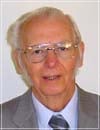
Bill McDaniel

Salvation According to Prophets

1 Peter 1:1-12
Bill McDaniel March, 20 2011 Video & Audio
0 Comments
Throughout the Old Testament, the prophets foretold the coming of the Messiah, and the salvation He would bring. Though they may not have known the gospel as fully as is now recorded in the completed Scriptures, the substance of their writing is the same as what the apostles preached.

Sermon Transcript

Auto-generated transcript • May contain errors

100%
Now watch along here, who are
kept by the power of God through faith, unto salvation ready to
be revealed in the last time, wherein ye greatly rejoice, though
now for a season, if need be, ye are in heaviness through manifold
temptations, that the trial of your faith, being much more precious
than of gold that perisheth, though it be tried with fire,
might be found under praise and honor and glory at the appearing
of Jesus Christ, who having not seen ye love, in whom though
now ye see him not, yet rejoicing, yet believing ye rejoice with
joy unspeakable, receiving the end of your faith, even the salvation
of your soul. Of which salvation the prophets
have inquired and searched diligently who prophesied of the grace that
should come unto you. Searching what? or what manner
of time the Spirit of Christ which was in them did signify
when He testified beforehand the sufferings of Christ and
the glory that should follow. unto whom it was revealed that
not unto themselves but unto us they did minister the things
which are now reported unto you by them that have preached the
gospel unto you with the Holy Ghost sent down from heaven,
which things the angels desire to look into. Now, focusing for
the first part on verses 10 through verse 12. But let me come at
it this way. In interpreting the Holy Scripture,
in order to rightly divide them, in drawing out the true meaning
of a passage or a text of scripture, there should be a consideration,
I believe, of the historical setting, as we might call it,
of the passage. And that scripture not be divorced
completely from the context or the setting in which we find
it in the scripture. In dealing with the scripture
and interpreting them and rightly dividing them, we should consider
such questions as the following. Number one, what is the subject
that the author is speaking of? First of all, what matter is
he discussing when he writes these particular things? Secondly,
who is or who are the ones that he is speaking to? He is speaking
on a particular matter. Now, whom is he speaking those
matters to? And number three, we should always
consider what is the object of the person writing a particular
passage of scripture. What purpose is there behind
the writing of the things that we are reading? Now, as for the
subject being discussed, the most recent one, previous to
our text, is that of that great salvation in and through Jesus
Christ. He talks about those who have
been begotten unto a lively hope. They have been begotten unto
an inheritance that is undefiled and reserved in heaven and that
fadeth not away. In short, the apostle is discussing
here the coming state, happiness, and blessedness of those who
are kept in persevering faith by the power of God. John Brown wrote something on
this section of the epistle that I'll use here, quote, the subject
of the apostle is the final deliverance and the complete happiness which
Christians are to obtain at the coming of Jesus Christ, unquote. Now the great salvation now bestowed
in and through Christ, but that is to be consummated in a world
or in an age to come. Now if you will, notice with
me three portions of this passage of the scripture again to put
our mind in the right frame. Let's go back to verse 5 again. "...who are kept by the power
of God through faith unto salvation, ready to be revealed in the last
time." Again, in verse 7, "...their faith will be consummated at
the appearing of our Lord and of our Savior." Then look at
verse 9. Receiving the end, literally
the goal or the aim or the purpose of your faith, that is the salvation
of your soul. So see how now the chapter is
laid out for our learning. In verse 3 through 9, there is
the blessed inheritance that awaits in contrast between the
present and the coming state for the children of God. Now
we don't seem. We believe by faith, but then
face unto faith. In verse 10 through verse 12,
they form, I'll call it a paragraph, and perhaps we would not err
to say that these three verses here could be called a temporary
digression in the writing of the apostle. However, they are
directly related and they are directly connected to the subject
that is at hand. And that subject is the full
and final salvation of the elect. Now in support of this we see
how verse 13 could really be put at the end of verse 9. For verse 13 starts an exhortation
based upon the previous fact that the apostle has laid down
on his scroll. However, verse 10 through verse
12 are also preparatory to the exhortation. They lead into the
exhortation that began in verse 13, and they also add great weight
to the apostles exerting them to be very diligent in the things
of the faith, the gospel, and of Christ. See how smoothly the
passage flows. Verse 9, the salvation of your
soul. Then in verse 10, of which salvation? That is, concerning this salvation,
This very salvation, the apostle said, was a leading subject of
the writing of the Old Testament prophet. Now, three things the
Old Testament prophets did in regard to this great salvation
in verse 10. You might look at them. Number
one, they inquired. They inquired into the things
that they had written under the inspiration. Number two, much
like it, they searched diligently, searching out diligently. Number three, they prophesied
of the grace given unto you. Peter says to those people in
his day, as he writes, that these Old Testament prophets were prophesying
of the grace that is given unto you. In other words, speaking
of this great salvation, They prophesied of the grace that
is to be given unto you. Now before we wade out into verse
10 and verse 12, I'd like to try to give you a literal rendering
of those verses as they might be transposed over into the English. Here they are. I'm giving you
a literal reading. concerning these things. Quote,
concerning which salvation the prophets who prophesied earnestly
sought and searched diligently concerning this grace given unto
you, searching in regard to what kind or time the Spirit of Christ
in them was indicating when testifying in advance about the sufferings
of Christ and the glories to come after them, to whom it was
revealed that not for themselves but for you they did minister
these things which have been proclaimed unto you by those
preaching the gospel to you by the Spirit of God sent down from
heaven. which thing the angels desired
to look into. Now this is so important because
it declares that the salvation which is in and through Jesus
Christ is one and the same with that prophesied by the Old Testament
prophet. They prophesied in their day
of a suffering and a dying Messiah. They prophesied in their day
of one who would be bruised and wounded by Jehovah. They prophesied
of one mighty to save. They spoke of one who was the
fellow of Jehovah, who would be smitten with the sword of
divine justice, who would die but would rise again without
seeing corruption. All of that and more we find
in the Old Testament Scripture. So that the incarnation of Messiah,
who was born of a virgin, made of a woman, and according to
the flesh, came after Israel, is the same one foretold by the
prophets of God of old. In every detail, in every act,
especially in his suffering and in his dying. All things done
and said to and by our dear Savior matched exactly the words of
the prophet of God of old. So when here in verse 10, Peter
speaks of the grace given unto you. It seems not to limit it
to present salvation, but to salvation in its fullest and
in its eternal aspect. Even yonder when it culminates
in its final glory, as back in verse 5, salvation ready to be
revealed in the last time. Now this is not to say that their
revelation, that is the revelation of the Old Testament prophet
was as clear as the revelation that we have in Jesus Christ
and in the scripture and which was made under his apostle. Just as the revelation and knowledge
we have now is not as full and clear as that which shall be
in coming glory. Though we eagerly seek to know
and to understand all that we can. Now we see here in verse
10 and verse 11 some unusual statements that we want to take
notice of. These statements concern the
prophets and their prophecy. They wrote about it. They inquired
and they intently and diligently searched the time and the manner
and such like of the accomplishment of those things that they had
written. Now this signifies that their
own prophetical writings were not completely and fully understood
by them, even the ones who wrote them. even though they wrote
them under the inspiration of the Spirit of God. For 2 Peter
chapter 1 and 21, holy men of God spake as they were moved
by the Spirit of God. This is not to say that they
knew not the meaning of the words that they used or that they put
down on the scroll. They knew what they wrote as
to words and they knew that they wrote of great blessing that
were to come, but then as John Brown wrote in his commentary
on 1 Peter, it was to the surprise nature, precise nature, excuse
me, and the extent of the blessing. and to the exact period as well
as the manner of these blessings being bestowed that they were,
quote, much in the dark, unquote. Still, they searched and diligently
inquired into the things that were put down. Notice then in
the end of verse 11. What they searched out was what
the Spirit of Christ that was in them did testify beforehand
the sufferings of Christ and the glory that should come. Now this might put us in mind
of something which the Lord said to his disciples on a certain
occasion. You'll find it in Matthew 13.
The Lord had been speaking to the disciple and to the people
in several parables. In Matthew 13 and the 17th verse,
let us include also the 16th verse, after the Lord had spoken
the parable of the sower of the seed of the soil, whichever you
prefer to call it, they had asked him, why is it that you are speaking
to them, to the people, in parables? And in verse 16 and verse 17,
the Lord said this to them, Blessed are your eyes, for they see your
ears for they hear for truly I say unto you that many prophets
and righteous men have desired to see that which you see and
have not seen it and to hear that which you heard and have
not heard it." The essence of the statement is this, they who
saw and heard Christ in person are more blessed than those who
saw him by faith and far off or through the eyes of the scripture.
Charles Spurgeon put it like this, you under the gospel are
made to know what the greatest and the best of men under the
law could not discover, unquote. Now the faithful of old, like
Simeon, in Luke chapter 2 and verse 25, waiting for the consolation
of Israel. Here was a faithful Jew. Here
was one who believed. Here's one who waited for the
consolation of Israel. Like Joseph of Arimathea, Mark
15 and verse 43, which waited for the kingdom of God. Joseph was a faithful man believing
that the kingdom of God was to come. But back to 1 Peter chapter
1. and verse 12, the apostle speaks
of a revelation that was made unto the prophets in conjunction
with their prophecy, saying, unto them it was revealed. That is, a certain thing was
revealed. We already saw in verse 10 that
they diligently searched and inquired." There's a contrast
in verse 12. Let's see it. unto themselves,
but unto us." Now see that contrast. Not unto themselves, but unto
us they did minister. This does not deny that the prophets
ministered to their own age and their own people, but teaches
us that their ministry and their writings were geared beyond and
above that simply of their time and of their people. The great
salvation of the Lord and the day of Messiah was also included
in their prophecy. And even the final glory of salvation,
as Peter said. According to the Lord, in Luke
chapter 24, verse 26 and 27, the prophet spoke of his suffering
as a prelude to his entering into his glory. And in verse
27 of Luke 24, it says this from Moses, Genesis, Exodus, Leviticus,
Numbers, Deuteronomy, and all the prophets, he expounded unto
them in all the Scriptures the things concerning himself. Verse
44, that all things must be fulfilled which were written in the law,
in the psalm, and in the prophet concerning him. Now the prophet's
ministry was strongly geared to their age, yes, but also to
another or a later age of history. Peter is saying, they ministered
to us rather than just or only unto themselves. If you look
at the last part of verse 12, where it seems that the apostle
here is saying, What the prophets wrote is the same in substance
as what the apostles were preaching the gospel of Christ our Lord. That in substance they are one
and the same. The prophets, like Abel, though
long dead, were still speaking. So the words of the prophet were
being reported by the apostles of the Lord and using them to
preach the gospel. By those who preach the gospel
under the leadership of the Holy Spirit during and after the days
of our Lord. Spirit having been sent down
from heaven." Notice, if you might, a short appendix at the
end of the twelfth verse of our text. Here is a puzzling thing. Which things the angels desired
to look into. Now, I have no doubt that the
reason this is mentioned is for a specific purpose, that is to
emphasize the glory of the prophets' predictions and the glory of
the gospel, that these glorious heavenly beings The angels of
God, or the apostle, surely does not refer to the apostate or
the fallen beings here. They desire to look into these
things. They have an eager, earnest desire
to look into those things that the great salvation in and by
Jesus Christ is, as the Puritan Thomas Manton wrote, and I quote,
worthy of the contemplation and admiration of the angels themselves,
unquote. Some expositors say that the
figure here is that of one bending over, bending down. getting very close in order that
they might gaze intently and directly upon something. The
reason for that is that it is the same word that is used in
Luke 24 and verse 12 and used in John chapter 20 and verse
5 of Peter and John when they raced out to the empty tomb and
they stooped down and they looked closely and intently into the
tomb. Again in John 20 and verse 11,
it's the word used of Mary, who also went stooping down into
the empty tomb, gazing closely and intently to that place where
our Lord once lay in the tomb. And so the angels, he said, are
behold with intense wonder the ways of salvation, anxious to
see the advance of the kingdom of God and of Christ. For in the days of his flesh
he was seen of angels, 1 Timothy 3 and verse 16. Here are a few
thoughts from John Gill that angels sang glory to God on the
night of the incarnation. They rejoice in heaven at the
conversion of a sinner. They're ministering angels sent
to those who to be heirs of salvation. And they behold the manifold
wisdom of God in the church. So the conclusion is, the angels
have a delight, take a delight, in the great salvation in Christ. they have an intense interest
in this so great salvation. No doubt Peter writes that, that
it might cause us to consider it with a deeper appreciation
and a higher esteem of the gospel that these things the angels
even are intensely interested in gazing upon. But let's go
back to the apostles' assertion that the salvation in Christ
was the substance of the prophet's writing, that Christ and His
salvation, prominent in both bodies of the Scripture, both
the old and the new, that all things, and I want you to get
this, if you get nothing else, all things from the beginning,
from the start of the Bible, from creation, from the fall
of man, that all things from the beginning flow toward Jesus
Christ. All things of the Old Testament
are flowing toward the Lord Jesus Christ, the Son of God. That
from the fall, preparations were made for the appearance of the
Redeemer. And those preparations were begun
to be made even so early as man fell." This is seen in the fact
that the Lord Himself, and then after Him, His apostles in their
preaching, used the Old Testament Scripture to establish the fact
that Jesus of Nazareth was the Son of God and was the Messiah
expected, showing that He matched exactly the words of the prophet. that Jesus, you could just lay
all that He did upon the Old Testament prophet and how well
it would match. That's why the Lord said to some
Jews one day, found in John 5 and verse 39, search the Scriptures,
He said, they are they that testify of Me. That is, they bear witness
of Me. Read them. In them you think
you have eternal life and they are the ones that testify of
me." In that passage, he is answering their accusing him of blaspheming
for making himself equal with God. He can answer this, in John
5 he does. The Father bare witness to Him
at His baptism. John bare witness to Him. This
is the Lamb of God that taketh away the sins of the world. The
Holy Spirit bore witness to Him, baptizing Him, as it were, in
a day of His baptism. And the Scriptures bare witness
of Him, the Lord Jesus Christ. Now these Jews who heard our
Lord, They claim reverence for the Scripture, that it was the
infallible, inerrant Word of their God. He shuts them up to
the Scripture, for in them they thought the way of eternal life
to be revealed, and He claims to them, they bear witness of
Me. On another occasion we read an
amazing thing, John 1 and verse 45, when Philip told Nathanael,
Come, come, we have found him of whom Moses in the law and
the prophets did write. and that one is the same Jesus
of Nazareth. He is that one that they promised
and that they wrote about, that we find written up in the scripture. Again, consider Acts, the eighth
chapter. When Philip was sent to minister
to the Ethiopian eunuch who was returning from Jerusalem. Having
been there to worship, he had the treasure, or rather the charge
of the treasure of Candace of Ethiopia. And he was reading
as he wrote along from the prophet Isaiah and the 53rd chapter. And in verse 7 and verse 8 of
Acts 8, we read in Acts 35 that Philip used that text and preached
unto him Jesus Christ from the words of Isaiah, speaking of
him who was crucified at Jerusalem, who yielded up his life without
any resistance. So Philip began at Isaiah 53. The eunuch said, who's the talking
about, of himself or some other man? Philip took his cue and
preached Christ from Isaiah. chapter 53. James A. Alexander wrote in verse 35 in
his large commentary on the book of Acts, that would be Acts 8,
35, quote, that he, Jesus, was the very one predicted in the
Hebrew scripture was Philip's exegetical discourse to his companion,
unquote. This is Jesus the very one who
has been crucified in Jerusalem, who is alive again from the dead. Now all I have to say is pity
those, God pity those, who say that they cannot find the Lord
Jesus Christ in the Old Testament Scripture anywhere. I've read
that the Jewish rabbis and the scholars before the incarnation
of the Lord definitely held that the passage in Isaiah 53 pertained
to Messiah, that it was a prophecy that it foretold Him. But then
when His own nation rejected Him, refused Him, turned against
Him, and crucified Him, they changed their interpretation
of Isaiah 53 that it had something to do with someone else. This they did with other passages
of the Scripture as well. By the way, when we think of
our Lord and His prophecy in the Old Testament, let us not
forget that the incarnation of Christ His incarnation is prophesied
in the Old Testament that a virgin would give birth. For example,
Isaiah 7 and verse 14. The Lord shall give you a sign.
Behold, a virgin shall conceive and bear a son, and thou shalt
call him Immanuel. Look at Matthew 1. 18 through
23, it says there, shall call His name Emmanuel, which is by
interpretation, God with us. There's another passage in Isaiah,
this one's in chapter 9, it's verse 6 and verse 7. and of the increase of his government
there shall be no end, to order and establish it with judgment
and justice henceforth forever." There is an unusual verse in
Jeremiah chapter 31 Verse 22, we don't usually maybe think
or include this in studies of the virgin birth, but it says
this, the Lord has created a new thing in the earth. A woman shall
compass a man. Now I think that's a prediction
also of the virgin birth. But that's not all. The prophets
also foretold where Messiah would be born. in Micah chapter 5 and
verse 2, But thou, Bethlehem Ephratah, thou being little among
the thousands of Judah, out of thee he shall come forth unto
me to be ruler in Israel, whose goings forth are from old, from
everlasting." There I notice that the margin has it, the days
of eternity, the days, the everlasting days of our Lord. Well, time
is short. I determined to be through by
two o'clock. Consider a passage found in Acts
26, verse 22, and verse 23, where Paul is defending himself before
Agrippa and Festus. Festus didn't know what to make
out of all this, so he carries him over unto Agrippa." And there
Paul is defending himself against the charges that the Jews had
lodged against him, that he ought to be put to death, that he was
a man deserving of being put to death, that he ought to die. Something says Festus to do with
one Jesus who was dead, but whom Paul affirmed to be alive, Acts
25 and 19. And in Acts 26, 22, and 23 is
Paul's answer. And let us get the gist of this
answer where it takes him and us. Having obtained help of God,
I continue unto this day. witnessing to small and great,
saying, none other things than those which the prophets and
Moses did say should come, that Christ should suffer, that he
should be the first that should rise from the dead and show light
unto the people and to the Gentiles." Unquote. Paul is saying, look,
They're wanting to put me to death. What I've been preaching
is nothing but what the Old Testament prophets have said. F.F. Bruce,
in his commentary of Paul's defense there in this chapter of Acts,
he seems to prove that neither his manner of life, remember,
Paul lived as a strict Pharisee, and they confessed the resurrection
of the dead. That neither his manner of life
nor his preaching should offend the Jews, said Bruce, because
his doctrine of Christ and the resurrection was based upon the
Old Testament scriptures. Oh, that's what Paul is saying
unto him on that particular occasion. Bruce put it like this, that
what Paul was preaching, quote, was the proper, proper consummation
of Israel's ancestral faith." In other words, it's what the
Scriptures led them to. If they follow the prophets and
Moses and the psalm, this is what it leads them to. It leads
them to Christ who suffered and died and rose again. Thus we learn. that the seed
of about every major Christian New Testament doctrine that you
could mention has its roots in the Old Testament scripture. You will find the apostles again
and again going into the Old Testament scripture to substantiate
a doctrine when as yet the New Testament writings were not done
or complete. Let me give a few scriptures
in closing. Romans 1, 1 and 2, Paul says
the same. This gospel promised the gospel
by the prophets in the Holy Scripture. He separated an apostle under
the gospel which, he said, was prophesied in the prophet. Listen to Romans 3 and 21. This
one really ought to get our attention. Paul's talking about justification
by faith and righteousness and he said there in Romans 3, 21,
the righteousness of the law is witnessed by the law and the
prophets. In other words, gratuitous justification,
justification by an imputed righteousness, is witnessed by the law and the
prophet. Near the end of the Roman epistle,
chapter 16, verse 25 and 26, he talks about the mystery once
kept secret is now made manifest by the scriptures of the prophet. So the conclusion that we draw,
the apostles based their preaching of Christ on the Old Testament
scripture as we do now them and the New Testament. Question,
how did the faithful in the Lord's day of His appearing. How did
they recognize Him to be the Messiah? He matched the Scripture,
that's how. The Scripture, the words of the
prophets were fulfilled in Him minutely and exactly. All Scripture met together in
the Lord Jesus Christ. In Him, they prophesied of the
grace to come in Messiah, even the Old Testament prophets. We
find Noah finding grace. We find Abraham believing and
it is imputed unto him for righteousness. Genesis 15 and verse 6. So that these doctrines are established
in the Old Testament scripture or the Old Testament writing.

Comments

0 / 2000 characters
Comments are moderated before appearing.

Be the first to comment!

Joshua

Joshua

Shall we play a game? Ask me about articles, sermons, or theology from our library. I can also help you navigate the site.