Bootstrap
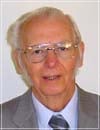
Bill McDaniel

The Doctrine of Election

Ephesians 1:3-6
Bill McDaniel January, 30 2011 Video & Audio
0 Comments
The Bible teaches that salvation is not by the willing or working of man, but according to the sovereign election of God. The doctrine of election by grace is fundamental to a right understanding of the true Gospel of salvation in Christ.

Sermon Transcript

Auto-generated transcript • May contain errors

100%
Ephesians chapter 1 and verses
3 through 6, the subject, The Doctrine of Election. Paul writes a great eulogy to
God here saying, Blessed be the God and Father of our Lord Jesus
Christ, who hath blessed us with all spiritual blessings in heavenly
places in Christ. Literally, in the heavenlies
in Christ. according as He has chosen us
in Him before the foundation of the world, that we should
be holy and without blame before Him in love, having predestinated
us unto the adoption of children by Jesus Christ to Himself according
to the good pleasure of His will, to the praise of the glory of
His grace, wherein He hath made us accepted in the Beloved. In the fourth verse, having chosen
us in Him before the foundation of the world. Now I ask you,
where is there a sweeter or more comforting or assuring doctrine
than that of divine election? Here God's grace takes its wings
toward us. For election is of grace. Romans 11 and verse 7. And grace was given us in Christ
before the foundation of the world. 2 Timothy chapter 1 and
verse 9. And election is unto salvation
and everlasting life. 2 Thessalonians 2.13, Paul tells
them, God has from the beginning chosen you unto salvation. And in considering the doctrine
of election, we are upon solid scriptural ground for nothing
Nothing is more clearly set forth and more evidently declared in
the Scripture than the doctrine of election. Even if some have
neither eyes to see nor ears to hear the blessed doctrine
of election, it is hid in plain sight in the Scripture, spoken
of over and over. So let us stay our premise here
in the beginning with a short summation of the doctrine of
election as we believe it and as it is laid out in the scripture
that God before the world began. chose a people in His Son, the
Lord Jesus Christ, to be the heirs of salvation and ordained
them unto eternal life through the redemption that is in Christ
Jesus. that in due time they are regenerated
and they are called by the power of God. Their election does not
begin in time, but in eternity past. And there is no salvation
apart from divine election. And as Elisha Coles wrote in
the 16th century, in his excellent book called simply God's Sovereignty,
he said this, and I quote, is the great fundamental of the
gospel, containing the whole sum and scope of the gospel of
Christ." Election is a part of the good news of the gospel of
Christ our Lord, that the eternal and sovereign God has saving
intention toward some. apart from election, none would
be saved, not a single one, as there are no cause for them to
be saved or forgiven apart from divine election. For our Lord
Jesus Christ died especially and particularly for those that
were given unto Him by the Father, and not given to Him, not when
He became incarnate, not when He died, not when He rose again
out of the grave, not when they believe on Him, and not when
they come to Him in faith and repentance. For they were chosen
in the Son before the world ever began. Our text is very clear
on that. Now, there was a time, back in
the history of the church, when what we call the doctrines of
grace, or the sovereignty of God, or Calvinism, or the five
points of Calvinism, were openly and freely preached in churches
in many places. They were preached in the pulpit
of the major denominations of the world. Such pulpits as the
early Lutherans, and as the early Presbyterian. The congregational
churches preach the sovereignty of God. At one time, the Church
of England preached the sovereignty of God. Independence preached
the sovereignty of God. And of course, Baptist assemblies. Now such subjects as sovereign,
sovereignty, and predestination and election were not hid under
a bushel, but they were publicly declared in the pulpits of the
land. These were not doctrines that
were shunned aside or kept quiet or only whispered about. These
were not doctrines that were kept back from the hearing of
the people or whispered only in the ears of a few. They were
the established doctrines of the preaching of the day. And
they were inculcated, included in the creeds of the churches
as well. But alas, over time, as some
slept, an enemy sowed the evil seeds of Arminianism among the
churches of the world. One author who wrote said this,
quote, Arminianism is the grand religious evil of this age and
of this country. It has more or less infected
every Protestant denomination among us, unquote. Another calls
Arminianism, quote, religious atheism, unquote. It worships
that Dagon-like idol of free will. It preaches up the sovereignty
of the will of man. Until today, sovereignty is a
generally rejected doctrine, a generally despised doctrine,
and cast out as evil in our own land. Nevertheless, what saith
the Scripture? What saith the Word of God? A study of election. A study
of election from the Scripture gives us an occasion to consider
the eternal counsel of God. To think upon what Paul and others
call the purpose of God. In Ephesians 3, verse 11, Paul
wrote, according to the eternal purpose which he purposed in
Christ Jesus, such a statement ought to get our attention and
hold it that God is acting in accordance with a purpose, that
that purpose is eternal formed before the foundation of the
world, and that it is both established and executed in and through the
Lord Jesus Christ. That things, especially salvation, are falling out according to
that purpose which God purposed before the foundation of the
world. There in chapter 3, it concerns
the mystery of the calling of the Gentiles and a special stewardship
that was given to Paul as an apostle unto that end. That is, the bringing in the
Gentiles into the covenant of grace. Now, let's just think
a moment on that word purpose. What a strong word it is in our
New Testament. The word purpose was kind of
a favorite with the Apostle Paul. We find him using it often and
perhaps more than any others when speaking of the things of
God. At times the word is used of
Paul's purpose himself as in Romans 1 and verse 13 where he
said, I purpose to come unto you. That's the same Greek word
that we have in other places. It is the same word used in Ephesians
1 and verse 9 of God's purpose and good pleasure. which he has
purpose in himself. Now, the word for purpose Prothesis,
which has such meanings as to set forth, to purpose, to determine. And it is translated at least
four times in the King James Version of the Bible as showbread. This word is translated, yes,
showbread. Referring to the bread showing
for, the bread of showing for, the table of bread in the tabernacle
and later there in the temple. Those four places for the translation
of shewbread are found in Matthew 12 and 4, Mark 2 and verse 26,
Luke 6 and verse 4, and Hebrews chapter 9, And verse 2, the word
prothesis there translated showbread. The showing forth of the bread
upon the table. At least two times it refers
to people and their purpose in their life. as a Christian. Acts 11.33 and 2 Timothy 3 and
verse 10. But the majority of times in
the scripture it refers to the purpose that God has purposed
in himself regarding the children of men, those that are the elect. Now going to our text in Ephesians
1, it is very rich with references here to a special, eternal, immutable
purpose of God. I want you to notice with me
the several words and phrases that Paul uses here to emphasize
it, such as verse 5, having predestinated us according to the good pleasure
of His will. Look at verse 7 then, according
to the riches of His grace. Look at verse 9, where he uses
actually a three-fold description. A. The mystery of His will. B. His good pleasure. And C. Purpose in Himself. Jumping to verse 11, then look. It has another trinity of descriptive
words, quote, being predestinated according to the purpose of Him
who works all things after the counsel of his own will. So we have the three things there.
We have purpose, we have counsel, and we have will in this verse. All of this supposes that God
is sovereign over all of his works and all of his creature. Now, when we consider the purpose
of God, His counsels, or His decree, the everlasting covenant,
there are two decrees, or parts of the decree, respecting the
human family, that are clearly stated for us in the Scripture. The first one is called election. In some are God's elect. Romans 8, 33. God's elect are
mentioned in that verse. The second is the doctrine reprobation
or of the rejection for not all are elect of God. There is an
election or there are the elect and there are the rest in Romans
11 and verse 7. Very clearly there are the elect
that have obtained it and the rest were blinded. Some are not His sheep, as He
said in John 10 and verse 26. Some He never knew in Matthew
7 and verse 23. Never knew in election, never
knew in the foreknowledge, never knew in salvation or redemption. Neither as his elect or as believers,
never at any time did he know them. Now in this study, we focus
and narrow down to the doctrine of election. We ask ourselves
the question now, what is this doctrine of election? Why and how or some call the
elect of God. And to what are they elected? If there is an election, to what
are they elected? Elected to do what or to be what? We will first declare the negatives
concerning it. Number one, the election in Ephesians
chapter 1 is not a national election, not of a nation, not whole cities,
nor providences, nor even whole families, but of single individuals. It is an election of individuals. Secondly, nor if this election
of some to a special ministry or a particular work of the Lord. That's not what Paul is setting
forth. He is not saying that some are
chosen especially for a special task unto the Lord, or unto some
office, but he is choosing them unto salvation and everlasting
life. Thirdly, Again, negatively, it
is not that God has chosen everyone without exception. This is the
view of some Armenians in our day. So that they then unelect
themselves by their unbelief and disobedience. Number four,
they are not elected because or when they believe or come
unto Christ. Election is before the world. Election is before they existed. Election is before they were
born. They do not elect themselves
by having faith in the Savior. And then again, neither are they
elected for foreseen faith. This is not the ground of their
election. Arminians are content. to grant
an election, for they cannot dodge it, provided it be based
upon their foreseen faith and obedience and exception of Jesus
Christ. God does not choose those whom
he foresees will believe as the cause or ground of their election. making faith to be the cause
rather than the fruit of election. By this, the Arminians are able
to protect that grand, dagon-like idol of free will. Having God
to choose for foreseen faith is to choose a grace, is it not? And that, of course, is not God's
way. Scripture teaches us that election
touches both the angelic family, I Timothy 5 and 21, and also
the human family. There are elect angels, according
to Paul, in I Corinthians 5 21. And concerning human election,
Paul puts it among those spiritual blessings with which God has
blessed us in the heavenlies before the foundation of the
world and in the heavenlies. And also it is said that it is
in Him, I-N-H-I-M, in Christ. Those chosen, the elect, have
their election in Christ. They are chosen in Him, and I
might add, with Him. We note that in Ephesians 1 and
3, we are blessed with all spiritual blessings, and the realm of those
blessings is in Christ. And in verse 4, the chief or
leading blessing is election. We are blessed in Him with all
spiritual blessing according as He has chosen us in Him. Now, let us not forget at this
point that Scripture tells us that Christ is called God's elect. I Peter 2 and verse 6. I lay
in Zion a chief cornerstone, elect and precious." Talking
about the Savior. In Isaiah chapter 42, it contains
a prophecy of the Lord Messiah. And in verse 1, Isaiah 42, Behold
my servant, whom I uphold, mine elect, in
whom my soul delights, I have put my spirit up on Him. Christ is the one chosen of God
to be the head of the elect. Christ is the covenant head of
God's blessed elect. He is the head. They are the
members. They chosen in Him. Psalm put
in the words to be in Him, to be in Him in a time that is to
come, so they say. elected to be in Christ in some
future date or time to come. This is as false as those who
claim that the words, all that the Father giveth unto me, occurs
not until their believing or their conversion. Yet the Lord
does not say in John 6, 37, all that come to me the Father will
give me. Rather the order is, all that
the Father gives me comes unto me. And all of the elect are
effectually called unto the salvation in Christ. Now the words are
too clear for us to set them aside, that this choosing of
us in Him not to be in the future, this occurred before the foundation
of the world. What can these words mean except
in eternity, prior unto creation, before the commencement of time,
and thus before the actual being of those who are the elect? It not only occurred before the
foundation of time and the world, but was complete even then. None shall be added later to
the number of the elect. That number is fixed and settled
and immutable before creation and the fall of man, before the
incarnation of the Lord in flesh. For as in Hebrews 4 and verse
3 we learn that God's works were finished before or from the foundation
of the world. These expressions that we meet
with, before the world, refer to what the Scotsman theologian
John Eadie called quote, absolute eternity, unquote. For consider,
if you will, John 17 and 24, where the Lord says in that great
prayer unto the Father, quote, you loved me before the foundation
of the world. John 17, 24. See also Matthew
13 and 35. 1 Peter 1 and verse 20, who Jesus
was foreordained before the foundation of the world. Our Lord was foreordained
to become incarnate and to die before the world was ever formed. What a wonderful, blessed assurance
in 2 Timothy 1.9. if I may refer to it again, that
we are called with a holy calling in accordance with grace and
mercy which was given us in Christ Jesus before the world began. Then there's Revelation 13 and
verse 8, that Christ is the Lamb slain, from the foundation of
the world." All the works of God were decreed before time. They were enshrined in the eternal
purpose, or counsel, covenant, or decree of God. And as we noted
the use of the word purpose, let's hear Paul in Romans 9,
And verse 11, too clear to misunderstand, as he writes that certain things
occurred in connection with Jacob and with Esau, quote, that the
purpose of God according to election might stand, unquote. Let's get
that. That the purpose of God according
to election might stand. Now, you might make light of
election. Do you hear what Paul writes? That God ordained things in such
a way, and they fell out in such a way, that the purpose of God
in or according to election might stand, might come to pass, might
be realized, might not be changed. Along here in Romans 9, Paul
is using the familial history of Abraham to prove a point in
verse 6, that not all Israel are of Israel, that Israelites
after the flesh or perishing. And that did not mean that the
Word of God had failed or had fallen or had come to naught. Since verse 7 of Romans 9, it
was in Isaac that Abraham's seed might be called. that the casting
out of Ishmael had no effect upon the purpose of God. And again, in verse 8, Paul makes
a distinction between the children of the flesh and the children
of promise. I'm in Romans 9, verse 8, that
with regard to the children of Abraham. Paul's point in Romans
9 is this. They were both elect and reprobate
in the immediate family of Abraham. Ishmael, the son of the flesh,
was cast out of Abraham's family. The promised seed Isaac, in him
would all of the seed be called and promised unto Abraham. Now, a real sharp objector, one
that had really thought and sought how he might overthrow our doctrine,
one such might claim that this is easily explained by the circumstances
that occurred in the house of Abraham, with Isaac, with Hagar,
and with Sarah, and with Ishmael. And that is, some objector might
say, well now look, This can be accounted for, the casting
out of Ishmael can be accounted for upon the circumstances of
the situation. that they had different mothers. Their mothers were not the same. They might contend that Ishmael
was born of an unlawful or illegitimate wife, was only then cast out
of the family after mocking and teasing young Isaac. You can see that in Genesis 21
and verse 9. And this infuriated their mother
Sarah. You remember what she said? The
son of the bondwoman shall not be heir with my son. But beginning with verse 10,
Romans 9, Paul shows that God's discriminating grace carried
over Not only in Abraham's immediate family, but also into his grandchildren. And as Murray makes the point,
there were factors in Isaac's sons that were not present in
Abraham's sons. Such as, they had the same father
and they had the same mother. They were conceived at one and
the same time. They were twins. Esau was even
the firstborn, and God disregarded that, which was usually a blessing,
and chose the younger. Now, by the way, The unique experience
of Rebecca's childbearing is written up in Genesis chapter
25 and verse 19 through 26. That is very interesting. Signifying something out of the
ordinary course of nature was occurring. First of all, in that
chapter, verse 22, the children struggled together mightily within
Rebekah. It was not after the ordinary
fashion. There was movement, there is
movement, but in the case of Rebekah, the children were struggling
together before they were ever born. I think I could say that
these brothers fought before they were ever born. And lo and behold, as Isaac came
out first, Jacob had hold upon his heel, if you remember the
record, and was named Jacob, meaning heel snatcher or supplanter. He was called Heel Snatcher because
he had hold on the heel of his brother Esau. Even here something
strange and unique is going on. Later his name, you remember,
was changed to Prince of God Israel. Yisrael, meaning Prince
of God or One Who Will Rule. Now, let's go back to Romans
9. Take a close look at verse 10
through verse 13. For here is the truth of discriminating
grace declared. That election is entirely gratuitous. That means it has no cause in
the one elect. It is freely given without any
compensation or consideration from the elect. that nothing
present and nothing lacking is the cause of their election,
that it is all owing to the sovereign good pleasure of God. Let's notice how Paul applies
the facts. which established for us both
election and reprobation in the twin sons of Isaac and Rebekah. We see that verse 11, at least
in our authorized or King James version, is put in brackets or
in parentheses in some versions. So, for the time being, let's
join verse 10 and verse 12 together and see what a good and a flowing
sense we get. When Rebecca had conceived by
one, by our father Isaac, verse 12, it was said unto her, the
elder shall serve the younger, The margin has it written, the
greater shall serve the lesser. This is found in Genesis 25 and
verse 23, that when Rebecca went to inquire of the Lord, What
is this? What is going on? Why is it thus
with me? The Lord said unto her these
words, Two nations are in thy womb, and two manner of people
shall be separated from you. One people shall be stronger
than the other, and the older shall serve the younger. Not confined to nations only,
but here are the individual. The older shall serve the younger. Now we found in Romans 9, 11,
which Paul interjects between verse 10 and verse 12, why does
he feel compelled to say these things? Let me suggest two things
for your consideration. knowing the general hatred for
sovereign election and the many dodges that are used to blunt
unconditional election and make it turn upon the actions of the
person rather than the will of God. So I say, there are two
arguments that might be raised against it if not for verse 11. Verse 11 kills those objections
completely. Thank God for verse 11. Here
they are. Number one, modern Armenians
can often be heard to say, Oh, Paul is talking about nations
in Romans chapter 9. Nations only. And they try to
draw off of the text in Genesis chapter 25. Based upon the words
in that chapter, two nations, two manner of people are in thy
womb. But also I pointed out Genesis
25, 23 speaks of the two individuals, the elder shall serve the younger. And Paul speaks of the children,
those conceived by Rebekah and named Jacob and Esau. And then beside, Jacob and Esau
were of the same nation, but also of the same tribe and also
of the same family. Secondly, another argument might
be of this manner, that is, that both Ishmael and Isaac came of
age and manifested then an evil disposition. that because Ishmael
mocked Isaac and because Esau sold his birthright, this is
the reason that they were rejected. Paul will have none of this. He will not let such an objection
stand. He says two things there in verse
11. Number one, the prediction was
made before the children were born. Get that. When Rebecca had conceived them,
but before they were ever born. It was told her then that the
older would serve the younger, that the younger would have the
preeminence over the older, that he would be preferred over the
older. And remember that this was contrary
to the normal as the firstborn in a family usually had preeminence
in that family. Exodus 13 and verse 2. Secondly,
Paul is clear again in verse 11, it was decided before they
were born and thus before they had done good or evil, before
they had committed any righteous or any sinful deed, neither good
nor evil. was a factor in the case of these
twin sons. Robert Haldane put it, the preference
was given to Jacob, independent of any ground of merit, unquote. And that for the two reasons
given. They were not yet born, they
had not yet done any good or evil. In fact, they had not actually
committed any moral acts of one kind or another. Listen to it,
neither having done any good or evil. Now how often and how
emphatically this is declared in the Scripture. Romans 9 and
verse 16. Not of him that wills, not of
him that runs. John 1.13, which were born, not
of blood, nor the will of the flesh, nor of the will of man. Ephesians 2, 8 and 9. You are
familiar with it. By grace through faith are you
saved, and that not of yourself. It is the gift of God, lest any
man should boast. Again, 2 Timothy 1, 9. Saved
and called, not according to our works, but according to His
own purpose and grace, given us in Christ Jesus before the
world. ever began. So, in conclusion,
let us sum up the matter of election by several points that are confirmed
by the Scripture. Number one, sovereign election
is taught in the Scripture. It's not hid, it's taught there
clearly. Number two, election is unto
salvation and the eternal life. That's the end of it. Number
three, election is personal. It is of individuals. Jacob and Esau and Abraham and
Isaac. Number four, election is unconditional. It is absolute and irrevocable. It cannot be changed. Number
five, it is the purpose of God from eternity. From eternity
are the elect chosen and ordained to a blessing. Number six, election
is founded upon nothing but the grace of God. It is a purpose
of God according to election of grace. And number seven, the
elect are chosen not in themselves and not in their parents, but
in the Lord and Savior, Jesus Christ. And I'll close by saying
finally, election being taught in the Scripture is a subject
deserving of being preached to the people of God. It's not to
be hid and kept secret. Why hide it under a bushel? God's grace in Christ is manifested
in the election of a number that no man can number. unto everlasting salvation. For again I say, if not for election,
none would be saved. Because you see, only the elect
Christ died for. Only the elect are regenerate
and are effectually called. So if not for election, none
then would be saved. So we rejoice in the doctrine
of election. It is indeed a part of the good
news of the gospel and is to be declared to the comfort of
the people of God and of their assurance. And perhaps even to
the lost and unregenerate, that if they might be able to hear,
that their soul might be in grave danger.

Comments

0 / 2000 characters
Comments are moderated before appearing.

Be the first to comment!

Joshua

Joshua

Shall we play a game? Ask me about articles, sermons, or theology from our library. I can also help you navigate the site.