Bootstrap
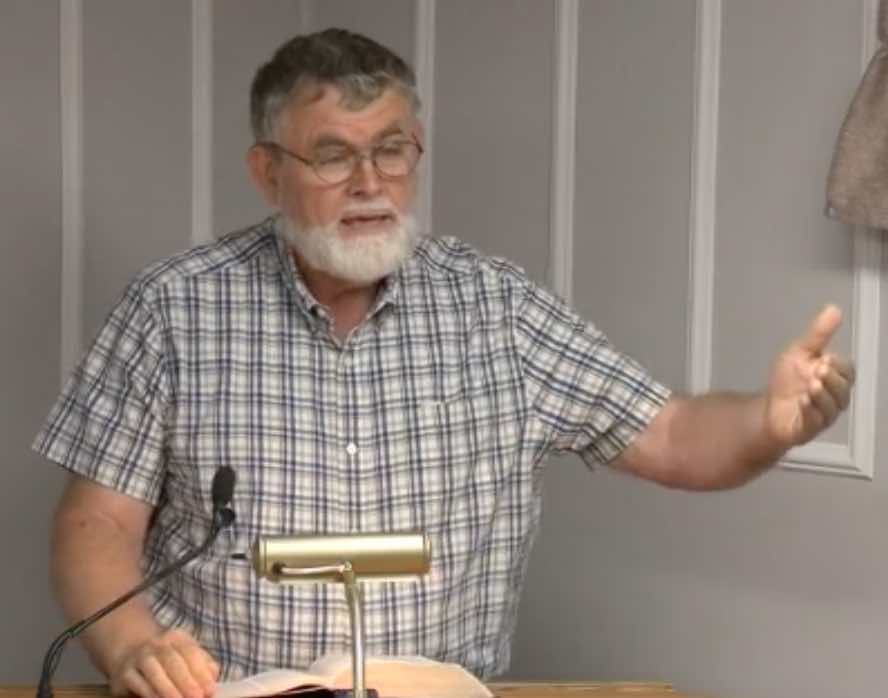
Mike McInnis

The World is Mine

Psalm 50:7-23
Mike McInnis August, 4 2019 Audio
0 Comments
Christ In The Psalms
What does the Bible say about God's love?

The Bible teaches that God's love is particular and directed towards His chosen people, not universally bestowed on all.

In Psalm 50, God declares His particular love for Israel, indicating that His affection is based not on their merit, but on His sovereign choice. This concept is echoed throughout Scripture, highlighting that God's love is not a generic sentiment for all humanity but a specific love directed towards His elect. For instance, Romans 9:13 states, 'Jacob have I loved, but Esau have I hated,' demonstrating God's sovereign love towards some while passing over others. The particular nature of God's love assures believers of their security and significance in His plan of redemption.

Romans 9:13, Psalm 50

How do we know that God sovereignly chooses His people?

Scripture provides numerous examples of God's sovereign choice, illustrating that He elects individuals based on His purpose alone.

Throughout the Bible, we see clear instances of God's sovereign choice in salvation. In passages like Romans 9, the Apostle Paul emphasizes that God's selection is based purely on His good pleasure rather than human works or lineage. The case of Jacob and Esau serves as a profound example, revealing that God's purpose stands unaltered by human action (Romans 9:11-12). Additionally, Ephesians 1:4-5 affirms that believers are chosen in Christ before the foundation of the world, underscoring the reality that salvation is a divine act initiated by God, who calls His people according to His eternal decree.

Romans 9:11-12, Ephesians 1:4-5

Why is the depravity of man important in Christian theology?

Understanding man's depravity highlights our need for God's grace and the reality of our dependence on Him for salvation.

The doctrine of total depravity reveals that every aspect of humanity is affected by sin, necessitating divine intervention for salvation. As stated in Psalm 50, awareness of our sinful nature leads to humility and reliance on God's mercy. This doctrine underscores the belief that, apart from God's restraining grace, humanity is capable of the most heinous acts (as evidenced by societal violence). Recognizing our depravity is essential for understanding the need for Christ's atoning sacrifice, as it highlights our inability to earn favor with God and our absolute dependence on His grace for salvation.

Psalm 50

Sermon Transcript

Auto-generated transcript • May contain errors

100%
Looking at Psalm 50. We began looking at this Psalm
last week. Psalm 50. I'm going to begin
reading in verse 8. Well, let me begin reading in
verse 7. He says, Here, O my people, and
I will speak, O Israel, and I will testify against thee. I am God,
even thy God. I will not reprove thee for thy
sacrifices or thy burnt offerings to have been continually before
me. I will take no bullock out of thy house, nor he goats out
of thy foals. For every beast of the forest
is mine, and the cattle upon a thousand hills. I know all
the fowls of the mountains, and all the wild beasts of the field
are mine. If I were hungry, I would not
tell thee, for the world is mine, and the fullness thereof. Will
I eat the flesh of bulls or drink the blood of goats? Offer unto
God thanksgiving and pay thy vows unto the Most High. And
call upon me in the day of trouble. I will deliver thee and thou
shalt glorify me. But unto the wicked God saith,
What hast thou to do to declare my statutes, or that thou shouldest
take my covenant in thy mouth, seeing thou hatest instruction,
and castest my words behind thee? When thou sawest a thief, then
thou consentest with him, and hast been partaker with adulterers.
Thou givest thy mouth to evil, and thy tongue frameth deceit.
Thou sittest and speakest against thy brother, thou slanderest
thine own mother's son. These things hast thou done,
and I kept silence. Thou thoughtest that I was altogether
such a one as thyself, but I will reprove thee, and set them in
order before thine eyes. Now consider this, ye that forget
God, lest I tear you in pieces, and there be none to deliver.
Whoso offereth praise glorifieth me, and to him that ordereth
his conversation aright will I show the salvation of God."
Now, you know, one thing that I believe is pretty clear throughout
the Scripture and that is the contrast and comparisons that
the Lord makes throughout the Word of God. It begins quite
early on with Abel in and Cain. And Cain brought an offering
to the Lord and the Lord was not pleased with that. Abel brought
an offering and the Lord was pleased with it. And the Lord
would teach us something about that. That he makes a difference
between Cain and Abel. He had respect unto the offering
of Abel because he had respect Unto Abel, not because he looked
at Abel and said, Abel's better than Cain, but he said, I love
Abel. Now a lot of people don't like
that. I guess they would rather he would say, I hate both of
them. Now the grace of God and the
mercy of God shown to wicked sinners is a blessing of the
highest order when we consider that the reality is that he should
by all rights not love anybody. That he has loved some is a glorious
thing. Now some folks get mad because
he hasn't loved everybody or at least if you tell them that
he hasn't loved everybody because by nature men think that God
loves everybody. And that's pretty much a pretty
common theme that's preached on in our day and time. It has
been ever since I was a kid, you know. You've all seen the
bumper stickers. I hope you don't have one. It
says, Smile, God Loves You. Now, what that does is it cheapens
what the love of God that He demonstrates in the Scripture
is. The love of God is a particular love. All true love is particular. Now, we know that to be true. Marriage is an example that God
gave to show the love that He had for His bride. And He would
have men to love their bride. Not to love everybody else's
bride, but their own bride, because that love is to be particular.
That's the way the Lord designed it. And so we see that particular,
that separation taught here in this psalm as we see the words
of Christ set forth here. I believe something that the
Lord is continually demonstrating in the earth that he would make
a difference, that he would contrast his kingdom with the kingdom
of the world. Now we've seen just these past few days a demonstration
of the depravity of man. Now when we look at these events
that have taken place and we see these shootings take place
and people murdered for no apparent reason and just senseless killings
and stuff like that, a lot of times people get all up in arms
and they say, oh, what a terrible person that was. And well, they
should. That is a terrible act. It's
an awful thing. But what we should learn when
we see such things as this take place is that the Lord is demonstrating
to us what we would be apart from His grace and mercy that
restrains us and keeps us from such things. Now if a man becomes
acquainted with the depravity of his own heart, he knows that
he is capable of the most heinous of acts. You know, our thought
process ought to teach us that. It brings us to shame quite often
when we think of some of the things that we think. And what
keeps us from acting on the things that we think? Only the grace
of God. Who maketh thee to differ from
another? And what hast thou that thou hast not received? And so
the Lord would demonstrate the mercy that he has upon the human
race that we're not out here killing each other right and
left over every little thing that rolls up except that He
restrains us. And He rolls back that restraint
from time to time to give us a glimpse of what we are by nature. Now does that make what these
people did okay? Of course not. It just shows
us what sin is. It shows us the nature of it. It shows the awfulness of it.
It shows us how far it can go. apart from that restraining grace. And the Lord says here, Here,
O My people, and I will speak, O Israel. Now He is speaking
to a people that He said, I have set My love upon you, Israel,
not because you were a greater people in the earth, or anything
having to do with you, but because I loved you. He said, because
it pleased Me to choose you. Fear not thou worm, Jacob, for
I have loved thee. Jacob, I have loved thee. Your
brother Esau, I have hated. Who is sufficient for those things?
I mean, is that place for Jacob to gloat? No, he said, I am not
worthy of the least of thy mercies. You see, the man that's taught
the love of God never can come to the place where he thinks
he deserves it or that he ought to be loved. Now, this concept
of universal love, where God just loves everybody, as men
think, well, God just, that's just our right. It's like, you
know, we live in a nation of, where we have these inalienable
rights. And I believe in the governmental
sense and that sort of thing, we do have inalienable rights.
I'm not against the Constitution or anything like that. But it
is a It often bleeds over into our thinking that we, by nature,
we think we have inalienable rights before God. No, you don't
have any rights at all. Shall the thing form, say to
him that formed it, why hast thou made me thus? I mean, God
made us like He would have us to be. And what can you say about
that? I mean, shall the thing form?
Are you going to argue with God? Are you going to say, well, Lord,
you shouldn't have done it that way? No, He did all things according
to the good pleasure of His will. And by His grace, we're taught
and constrained to rejoice in that, to fall down and worship
Him because He is the God who does all things. Well, He's worthy
to be praised. But He says to Israel, I'm going
to testify against you. Now he's going to make a separation
here in a minute between those which, for he says, they are
not all Israel which are of Israel. Now the Lord used the nation
of Israel to teach an important lesson. Not that he loves nations, but
that He loves His people. And He used Israel to illustrate
the love that He has for His people in earth, which He calls,
as Brother Al mentioned a moment ago, a remnant. That people out
of every kindred, tribe, and tongue, when Jesus Christ came
into the world, He came into the world as the Savior of the
world. Now this was a startling thing
to the Jews, don't you understand? When the Lord said to Nicodemus,
for God so loved the world that He gave His only begotten Son,
that whosoever believeth in Him should not perish, but have everlasting
life, that was a startling truth to Nicodemus. Because Nicodemus
was a Jew, a Pharisee. He was among the very strictest
sect. And if you had asked any of those
Jews, does God love the world in general, They've said, no,
he loves Israel. Now they had that part of it,
they had right, their understanding of that Israel that the Lord
loved was not correct. Even as today, many mistake.
the nation of Israel that's over in the Mideast as being the people
of God. Now I'm sure that the Lord has
some people among that nation. He said He had them among every
nation. But let us not make the mistake
of thinking that they are the people of God. Because the Lord
has His people out of all nations. He is the Savior of the world.
He is that One who loves the world and His people in the world. But He will make a difference
between that precious and the vile. He says, I will not reprove
thee for thy sacrifices. He says, I don't have a beef
with you. He's talking to the national
people of Israel. He says, I'm not angry with you
because you've offered sacrifice, because I told you to do those
things and you've gone about to do them. But he said, I will not reprove
thee. because they've been continually
before me, but, now the but's not in there, but I'm gonna put
it in there, but, I will take no bullock out of the house.
And he says, I'm not reproving you because you've offered up
bulls and goats, because I told you to do that. But he says,
I don't need your bulls and your goats. He said, they don't mean
anything to me. He said, I own the cattle on
a thousand hills. All the goats are mine. I don't
need for you to offer one to me. Now a lot of people think
they're going to give something to God. Well, we've had this
for a long time, Lord, but we're going to give it to you. Brother,
the Lord does it in his mercy. You see, he blesses his people
because the Lord loves the cheerful giver, and he causes his people
to cheerfully give. And you know, the blessing's
in the giving. Some people give because they're planning on getting
a blessing. You ever known anybody like that?
I mean, it's like they're going to give all this stuff because,
buddy, one day they want a payday. I mean, they're expecting a payday.
I mean, listen to Kenneth Copeland. He'll tell you. You're going
to get a payday if you'll just give God. Or me, he can't really
determine which one it is. He just figures, well, God's
gonna funnel it through me and then I'll, you know, after I
have enough jets and motorcycles and all that stuff, then I'll
funnel it on out a little further. But the Lord doesn't need your stuff.
That's what he says to Israel. He says, I don't need your bulls,
I don't need your goats. I'm not mad at you because you
did what I said to do. For I know all the fowls of the
mountains, the wild beasts of the field of mine, everything
belongs to me, even the unclean animals. Why did the Lord make
the unclean animals? Now in the thinking of men, if
the Lord didn't want the Jews to eat Pigs? He wouldn't have made any pigs,
would he? I mean, why would he make pigs and then tell them
not to eat them? What did he do? Because he said, I will show
that there is a difference between my people and the people of the
world. Later on, he told Peter, Peter,
rise up and kill and eat these things. Peter said, man, I can't
eat that stuff. That's unclean. He said, don't call commoner
unclean what I have cleansed. Because you see, these things
are mine. Don't you come into my house and tell me that a hog
is unfit to eat. If the Lord made it and He gave
it to men to eat, then let's receive it with thanksgiving.
Not as the religious might tell us, oh, don't do that or don't
do this. I know all the fowls of the mountains,
the wild beasts of the field are mine, clean and unclean alike,
if I were hungry." He said, if I did stand in need, now this
is like a rhetorical question, he's not saying I have ever been
hungry, but he said, if it was possible that I should ever get
hungry, you'd be the last person on earth that I'd come asking
for, because what could you do to help me? And yet we've got
a whole culture of religious folks that believe they can help
God out. How much different are they?
And I mentioned this last week, but how much different are they
When they say God has no hands but your hands and no feet but
your feet, how are they any different than those that David described
in the Psalms when he said those very things? He said they have
mouths but they speak not. He said, but our God is in the
heavens. He hath done whatsoever he hath
pleased. That's the end of the story,
isn't it? I mean, what can a man say? The Lord said, I form the light and
create the darkness. I make peace and create evil. I, the Lord, do all these things. Now, most times when people read
that passage of Scripture, they start by, well, you know, God
didn't really mean this. He meant it like this and He
didn't mean that and all this. Look, God said what He said.
There's nothing made that was not made by the hand of God.
There's nothing that occurs that does not occur according to the
good pleasure of Almighty God. Now a man can either rebel against
that or he can fall down in worship and say, Lord, we're not sufficient
for these things. This is too high for me. I can't
enter into this. I'm speechless before thee. That's what happened to Job,
wasn't it? Job thought he knew a pretty
good bit. He was way smarter than the other guys, you know.
And they thought they were way smarter than him. Job found out they didn't even
know anything. We were singing that song there
a moment ago. It basically said that same thing. You know, all
the things that we think we know, when we come face to face with
the Almighty God, they'll fade away. We won't know anything.
We don't know anything. We're standing in a place of
complete and utter and absolute dependence on Him who says, if
I was hungry, I'd never come to you. If I needed something,
I'd never come to you. If I needed a man to go over
to Africa and preach the gospel to somebody, He says, I wouldn't
come and ask you. Would you please do that? No,
he says, I'll send my word. Now, he may indeed be pleased
to give men the opportunity to give unto such a thing as that,
but don't ever think that God, oh, if we don't get this money
up, I mean, I don't know what the Lord's gonna do. I mean,
I've heard Jimmy Swagger weep and cry and carry on, oh, the
Lord's just gonna go out of business. You don't help us. I mean, what
are we going to do? The Lord said, if I was hungry,
Jimmy, I wouldn't need you. I wouldn't come to you because
you don't have anything. We don't have anything. Oh, and call upon me. Offer unto God thanksgiving and
pay thy vows to the Most High because He is. He's not coming
asking us for something. He says, you better ask me. I
said, I own cattle on a thousand hills, and if you ever have anything,
it'll be because I gave it to you. Not because you earned it. Not because you should have had
it. Not because I'm paying off a
debt to you. Offer unto God thanksgiving and
pay thy vows to the Most High. We owe Him worship. If you give
Him everything you've got, it won't be enough. You know what
the rich young ruler found out? He thought he was doing a pretty
good job. Well, Lord, I've done all the commandments. I want
to move on up to the next level, he said. I want the deeper life. I want
to get over here and get the second blessing. I want to get
something, I want to move up a notch. But we never got to the starch
yet. Only by the grace of God are we where we need to be. Pay
thy vows to the Most High. What do we owe Him? What does
the Lord say to the rich young ruler? Go give everything you
have to the poor and come follow me. He said, Wow, I'm not quite
as righteous as I thought I was. And he went away sorrowing. and call upon me in the day of
trouble, because you see, when a man comes to that place, see
the rich young ruler was brought to a place of trouble, wasn't
he? When he came to the Lord, he didn't have any trouble, did
he? I mean, he was doing fine, he had plenty, I mean, he was
rich, and he said, Lord, I've kept the law, what can I do now?
He didn't have a trouble or care in the world. But see, when the
law came, sin revived, and I died. And he said, oh, woe is me. He was brought down to trouble,
was he not? And call upon me in the day of trouble. Jonah,
he didn't have any trouble, he thought. I mean, he said, you
know, the Lord told me to go down there to Nineveh, but man,
he says, I'm on this ship headed for Tarshish, and what can the
Lord do now? Can you imagine that? I mean,
isn't that the way we think? Well, boy, I got it now. I says,
you know, I'm home free. The Lord can't do anything about
this. I mean, I'm going the other way. He was sleeping. Oh, man, he
was at rest, was he not? But you see, the Lord, He had
determined before Jonah ever bought the ticket, he'd already
determined that Jonah was going to be swallowed by a fish. Because
he prepared a fish, the scripture says. He prepared it. An old fish swam around. I wonder
how long the fish was. I don't know if the Lord just
made the fish right then, or if that fish might have been
a hundred years old. I don't know. but the Lord prepared
that fish. This is the thing that just amazes
me and most people just, it just goes right over their head. They
never even think about it. That fish was at the exact right
place. Now of all the places in the
ocean that the fish could have been, he was right in that one
place when Jonah was thrown overboard of that ship, the Suarez. What a blessing that was to Jonah.
Oh now, Jonah didn't think it was a blessing when he was going
down to fish's mouth. He thought, oh man, what's happened
to me now? And when he was in the fish's
belly, he didn't think much of the deliverance, but you know
that was the only thing that saved old Jonah, because he'd
have drowned, wouldn't he? If it hadn't been that the fish
swallowed him. But you see, the Lord brought Jonah into the belly
of the fish for a purpose. Now he wanted to send Jonah to
Nineveh, but the reason he wanted to send Jonah to Nineveh was
so that he might show Jonah what he was by nature and how much
he needed the mercy of God. But he said, and called upon me in the day of
trouble. Nobody had to prompt Jonah to pray. when he was in the belly of that
fish, didn't he? They didn't say, now we're going
to have a week of prayer next week. We want all y'all to come. You know, we're going to do this. I'm not against that. Don't misunderstand
me. But you see, when the Lord brings
a man to prayer, he'll pray. You don't have to ask him to
pray. You don't have to persuade him to pray. When the Lord brings
a man into a place of this kind of trouble that he's talking
about here, he will pray. Jehonah prayed, didn't he? He said, man, salvation's of
the Lord. He said, the only thing that's
gonna get me out of this is God's gonna have to deliver me. Oh, what a glorious thing. The
Lord said, I will deliver thee, and thou shalt glorify me. You see, all of those whom the
Lord is pleased to bring out of darkness into the light shall
bring glory to his name through the ages to come. Paul said,
We're going to praise His name through the ages to come, magnify
the glory of His grace, the goodness of God to us. I will deliver
thee and thou shalt glorify me. What a glorious thing. That's
why Paul said, Reckon ye yourselves dead, indeed unto sin, but alive
unto God through Christ our Lord. He didn't say make believe. He
didn't say make out like it's so. He said reckon it to be so. He said it is so. What you need
to do is wake up and see how it is. And that's why we preach
the gospel, you see, is so that God's people might be enlightened. by the Spirit of God as He breathes
upon the Word, opening our eyes to see and hear the good things
of the glory of God. And that is a blessing. The Lord
does deliver His people, and they gladly glorify Him. But
unto the wicked God saith. Now here He's gonna contrast.
You see, He's been talking here to the remnant. He talked to
the nation of Israel, now he talked to the remnant out of
that, and then he's going to speak back to the nation of Israel
as a carnal people. But unto the wicked God saith,
What hast thou to do to declare my statutes, or that thou shouldest
take my covenant in thy mouth? He said, It's one thing when
you offer a bull or a goat unto me, and you fall down and worship
Me in the light that you have, it's quite another thing when
you go through these religious motions and you make these offerings
and you do all these things and you teach other people to do
these things, and yet your heart is far from Me." He said, what
are you doing? What is thou to do to declare
my statutes? What are you doing talking about
the Word of God? Why are you telling people lies
and things that aren't true and you're not walking according
to the way of the Lord? Why are you saying such things? Why are you talking about my
covenant? That's what the Pharisees did, didn't he? They said, we
be Abraham's children. What did the Lord say to him?
He said, you're of your father the devil. Well, he didn't like
that. He didn't like that at all, did
he? You know, the Lord Jesus Christ, he needs to read some
of the books that some of these guys that's building these big
mega churches and stuff are writing nowadays to tell, you know, how
to get folks. You know, you've got to minister
to them and help them and all that kind of stuff, and you've
got to get them in and that. Nurture them and bring them along.
The Lord didn't listen to that, did He? He hadn't read those
books. He might have had a greater success,
according to them, if He had just known what to say. But He
said, You're a bunch of vipers. He said, You're of your father
the devil. And He said, The works of your father ye will do. When thou saw'st that seeing,
thou hatest instruction, and castest My words behind thee.
He says, you tithe mint, anise, and cumin. You do all these things.
You keep the law and it's jot and tittle. And you ought to
have done these things. See, he didn't say you shouldn't
have done that. He never told a man not to tithe. He never told anybody not to
tithe, did he? But he said, You ought to have
not only done these things, but you ought to have shown mercy. Sing thou hadest instruction,
castest my word behind thee. You don't listen to what I've
said. Now who's he speaking to? He's speaking to the Pharisees,
for one. He's speaking to all those religious
men who would make a show of walking with the Lord in an outward
way, but yet in their heart is far from him. When thou sawest
a thief, and then thou consentest with him, and thou spend partaker
with adulterers, thou givest our mouth to evil, and thy tongue
frameth deceit, you secretly delight in these things, is what
he said. Thou saidest to speakest against
thine own brother, Your own brother, slander your mother's son. As
you tell your brother you love him and then you go behind his
back. You speak evil of your own kin,
whether that be spiritual kin or whether it be natural kin. These things hast thou done and
I kept silence. and thou thoughtest I was altogether
such a one as thyself." See, men count the long-suffering
of God to be that he's just not going to say anything. They think
because the Lord doesn't just jump on somebody just like that,
that everything's okay. He said, you thought I was like
you. See, you'd have flown off the handle and done something
right then, but he says, I'm not like that. He said, when
the time comes, he says, I'll take care of the problem. But
I will reprove thee and set these things in order before thine
eyes. Now consider this, ye that forget
God, think on these things, lest I tear you in pieces and there
be none to deliver. Now you see, the man who has
not the grace of God, he'll grow angry at such a thing as that.
Well, who does he think he is telling us he's going to do that?
Well, we don't believe in preaching on the judgment of God and the
fact that the Lord hates sin. We just want to talk about the
positive stuff. We want everybody to feel good
when they leave. We want to help folks out. I'm not against helping folks
out, but brethren, the only way I know that you can help anybody
out is to tell them the truth. If all you're interested in is
helping somebody out as they walk in this world, then get
you a degree in psychiatry and open up your office and help
them. But if by the grace of God you desire to help men spiritually,
there is only one way they can be helped, and that is through
the Spirit of the Living God. He must have performed the action. His office is always open, and
the doctor is always in. Now consider this, ye that forget
God, lest I tell you in pieces, and there be none to deliver.
And then he's going to talk about, here he's speaking again to those
who are the sons of God. Whoso offereth praise glorifieth
me. What did he say down there? He
said, let me read it again here. Somewhere I will deliver thee,
and thou shalt glorify me. He said, whoso offereth praise
glorifieth me. Because you see, that is the
language of the Kingdom of God, is praise to the Most High God.
I mean, what would we rather do? Praise the Lord? I mean,
or go fishing? I mean, if you had to contrast
those two things, which would you rather do? I won't make you tell me. Whoso offereth praise glorifieth
me. And to him that ordereth his
conversation aright will I show the salvation of God. Now how
can you order your salvation aright? Jonah, order your conversation
aright and I'll show you salvation. Is that what the Lord said? I
mean, did He tell? Jonah, you've got to straighten
yourself out, and when you get straightened out, I'm going to
get you out of the whale. Well, the fish wasn't a whale,
but He says, I'm going to get you out. But you've got to take
the first step. The fish vomited Jonah out on
the land. Jonah didn't have a thing in
the world to do with that. He had nothing to do with putting,
well he did have something to do in the sense that he paid
the fare going to Tarshish and the ship going to Tarshish had
a rendezvous with the fish, so he did have something to do with
it from that standpoint. He just didn't know it, see.
He was sleeping when it all took place. But the Lord brought him
into the fish and he brought him out. And Jonah had nothing
whatsoever to do with either one. but he was blessed by it. Whoso
offereth praise glorifieth me. What a glorious thing it is to
be given a desire to praise the truly living God. What greater
blessing can there be in the earth than a man that has a heart
desire to magnify Jesus Christ? I mean can a man be blessed any
greater than that? You know, you've got people going
around out here talking about they're going to get the second
blessing. And they're going to do all these different things
when they do and all that. Dear brethren, there is no greater
blessing than being given a heart to praise the living, true and
living God. His son, Jesus Christ, who died
for sinners. I mean, that's the most glorious
place that a man can be brought. What a wonderful thing. The Lord
will show the salvation of God to him that orders his conversation,
his way of life. Does that mean get your life
straightened out? No, don't get the cart ahead
of the horse. But see, when a man is brought
to the place where God would have him to be, That's when he
shall receive the gift of salvation, the gift of faith, the gift of
praise, a desire to glorify his name forever. I can't give that
to a man. It'd probably be a good thing
that I can't because I'd be picking and choosing who it was I was
going to give it to. And I'd be picking and choosing
on the basis of whether or not You know, you did something for
him, or this, that, or the other. You know, you don't try to help
people that just try to stab you in the back, do you? But God commendeth his love toward
us, in that while we were yet sinners, Christ died for us. What a glory. What a wondrous
thing. May the Lord help us.
Mike McInnis
About Mike McInnis
Mike McInnis is an elder at Grace Chapel in O'Brien Florida. He is also editor of the Grace Gazette.
Broadcaster:

Comments

0 / 2000 characters
Comments are moderated before appearing.

Be the first to comment!

Joshua

Joshua

Shall we play a game? Ask me about articles, sermons, or theology from our library. I can also help you navigate the site.