Bootstrap
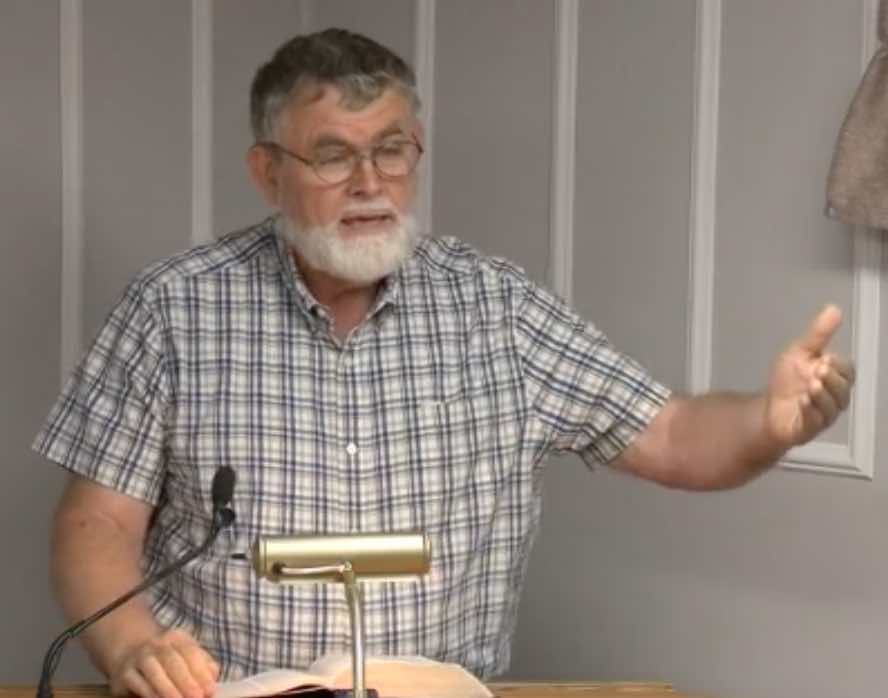
Mike McInnis

The Lord is My Shepherd #6

Psalm 23
Mike McInnis • August, 20 2012 • Audio
0 Comments
What does the Bible say about God's mercy?

The Bible teaches that God's mercy is sovereignly dispensed according to His will.

The Scriptures reveal that God's mercy is not a general provision available to all, but specifically extended to those whom He has chosen. This is evidenced by His declaration to Moses in Exodus 33:19, where He states, 'I will be gracious to whom I will be gracious, and I will show mercy on whom I will show mercy.' The Apostle Paul echoes this sentiment in Romans 9, clarifying that the bestowal of mercy is not dependent on human will or effort, but solely on God's sovereign choice. This underscores the importance of recognizing God’s mercy as a powerful act of grace in the lives of His chosen people.

Exodus 33:19, Romans 9:15-16

How do we know God chooses to save some and not others?

We know God chooses to save some through Scripture, which reveals His sovereign will in predestination.

The doctrine of election asserts that God, in His infinite wisdom, predestines individuals for salvation. As Paul explains in Ephesians 1:4-5, God chose us in Christ before the foundation of the world, determining our holiness and adoption based on His will. This highlights that our salvation does not originate from our own decision or effort, but is a gracious act of God. Jesus also reinforces this concept, indicating that He knows His sheep and grants them eternal life, implying that His relationship with the saved is one of divine initiation, rather than human choice. Therefore, the assurance of our salvation is rooted in God's sovereign decision.

Ephesians 1:4-5, John 10:27-28

Why is it important to understand the Lord as our shepherd?

Understanding the Lord as our shepherd emphasizes His authority and care over our lives.

The imagery of the Lord as our shepherd conveys profound theological truths about His role in our lives. It emphasizes His guidance, provision, and protection, which cultivates a deep sense of trust in His plan. As David proclaims in Psalm 23, the Lord’s shepherding assures us of His goodness and mercy, which are foundational to experiencing true peace. This relationship is not one of mere benevolence but reflects a covenantal commitment from God to His chosen people. Recognizing the Lord as our shepherd encourages believers to rely on His grace and providential care, affirming our identity as His beloved sheep, who listen to His voice.

Psalm 23, John 10:11-15

Sermon Transcript

Auto-generated transcript • May contain errors

100%
Thy mercy, my God, is the theme
of my song, the joy of my heart and the boast of my tongue. Thy free grace alone, from the
first to the last, has won my ovations and found my soul blessed. Welcome, friends, to another
broadcast of Morsels for Zion's Poor. One of the most beloved
passages in the Bible is the 23rd Psalm. David ends his beautiful
poem with these words, Surely goodness and mercy shall follow
me all the days of my life. and I will dwell in the house
of the Lord forever." This psalm is often read at funerals and
has been the source of true comfort to many over the years. Most
consider it to be a general message of reassurance and hope to all
who hear its word spoken. Yet David's rejoicing in the
everlasting mercy of God was not based on some sort of reliance
on the general benevolence of God. Rather, the basis of his
hope is found in the very beginning of the psalm where he says, The
Lord is my shepherd. None of the rest of the psalm
has any lasting benefit at all to any who may hear it spoken
unless he who formed the light and created the darkness is indeed
their shepherd. Many today speak of the love
and mercy of God toward all men as if it is a foregone conclusion. By doing so, they despise the
majesty and glory which surrounds the mercy of God, which is sovereignly
dispensed according to the good pleasure of His will. He plainly
told Moses, I will be gracious to whom I will be gracious, and
will show mercy on whom I will show mercy. Paul quotes this
same passage again in Romans chapter 9, where he adds this
further explanation. So then it is not of him that
willeth, nor of him that runneth, but of God that showeth mercy.
The Lord Jesus told the Pharisees, But ye believe not, because ye
are not of my sheep. He goes on to say, My sheep hear
my voice, and I know them, and they follow me. And I give them
eternal life, and they shall never perish, neither shall any
man pluck them out of my hand. He clearly indicated that all
men are not his sheep. So it is plainly true that he
is not the shepherd of all men. It is also clearly true by his
teaching that those whom he calls his sheep do not become his sheep
by their own choice, but rather by his. David said, The Lord
is my shepherd. But David knew that he did not
become David's shepherd because David determined him to be, but
rather because he chose David to be one of his sheep. and set
his everlasting love upon him before David ever drew his first
breath. This is exactly what the Apostle
Paul told the Ephesians when he said, according as he hath
chosen us in him before the foundation of the world, that we should
be holy and without blame before him in love, having predestinated
us unto the adoption of children by Jesus Christ to himself, according
to the good pleasure of his will. If we truly love Him, it is because
He first loved us. Even as He told His disciples,
ye have not chosen me, but I have chosen you. Is the Lord your
shepherd? Or are these mere words which
you feel entitled to enjoy because you mistakenly think that you
have chosen Him? Jesus Christ is the Savior of
sinners, and saved as such as are of a broken heart and contrite
spirit. He calls his own sheep by name
and another shepherd they will not follow. He is the good shepherd
who gives his life for the sheep. If you would like a free transcript
of this broadcast, email us at That's ForThePoor.net.
Mike McInnis
About Mike McInnis
Mike McInnis is an elder at Grace Chapel in O'Brien Florida. He is also editor of the Grace Gazette.
Broadcaster:

Comments

0 / 2000 characters
Comments are moderated before appearing.

Be the first to comment!

Joshua

Joshua

Shall we play a game? Ask me about articles, sermons, or theology from our library. I can also help you navigate the site.

0:00 0:00