Bootstrap
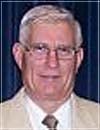
Mark Pannell

Choosing Gilead

Joshua 1:12-18
Mark Pannell • September, 5 2010 • Audio
0 Comments
Joshua 1:12 And to the Reubenites, and to the Gadites, and to half the tribe of Manasseh, spake Joshua, saying, 13Remember the word which Moses the servant of the LORD commanded you, saying, The LORD your God hath given you rest, and hath given you this land. 14Your wives, your little ones, and your cattle, shall remain in the land which Moses gave you on this side Jordan; but ye shall pass before your brethren armed, all the mighty men of valour, and help them; 15Until the LORD have given your brethren rest, as he hath given you, and they also have possessed the land which the LORD your God giveth them: then ye shall return unto the land of your possession, and enjoy it, which Moses the LORD'S servant gave you on this side Jordan toward the sunrising.
16And they answered Joshua, saying, All that thou commandest us we will do, and whithersoever thou sendest us, we will go. 17According as we hearkened unto Moses in all things, so will we hearken unto thee: only the LORD thy God be with thee, as he was with Moses. 18Whosoever he be that doth rebel against thy commandment, and will not hearken unto thy words in all that thou commandest him, he shall be put to death: only be strong and of a good courage.

Sermon Transcript

Auto-generated transcript • May contain errors

100%
Let me add my welcome to Winston. It's certainly good to see you
all out to hear the gospel this morning. I pray that the Lord
will give us all a blessing from his word. I've chosen the title
of this message is Choosing Gilead. You who have been here and know
what I'm doing, I'm preaching a series of messages through
the book of Joshua, and we're about to finish up the last few
verses of the first chapter. We'll be looking at verses 12
through 18 today in that first chapter and finishing up that
chapter. You remember from our last lesson,
Joshua had commanded all Israel to get ready. The time has come
for you to go in and actually possess, take possession of the
land of promise, that land that they'd been given hundreds of
years ago in a promise to Abraham. It's time to go in. Time to take
possession of it. But in these verses today he
issues some special instructions to two and a half tribes of Israel. And our lesson today will be
trying to understand these instructions and how they apply to us today.
So look with me first of all at Joshua chapter 1 and verses
12 and 13. We see here, and to the Reubenites,
and to the Gadites, and to half the tribe of Manasseh, spake
Joshua, saying, Remember the word which Moses, the servant
of the Lord, commanded you, saying, The Lord your God hath given
you rest, and hath given you this land. Now to understand
what we're going to have in these verses, it would be impossible
for us to do that just based on what we see in this book of
Joshua. We have to go back to Numbers chapter 32 because that's
where Reuben and Gad met with Moses in this discourse that's
carried out there throughout the entire chapter of Numbers
32. So we'll be looking back there.
If you're following along with me in your Bible, you want to
go ahead and mark Joshua here and turn over to Numbers chapter
32, because we'll be looking at quite a few verses back there. Before Moses died, the descendants
of Reuben and Gad came to him. They came to him and Eleazar,
who was the high priest of Israel at that time, and to the chief
princes of Israel, and they had a request. The request was that
they be given the land of Gilead for a possession. Now, Reuben
and Gad were obviously cattlemen. They had a lot of cattle. The
scriptures said they had much cattle. And they saw Gilead as
a land that would be good, very good, for raising cattle. And
they desired that land. So look with me at their request
here in Numbers chapter 32 and verse 5. This is Reuben and Gad talking.
He said, wherefore said they? And let me just stop right there
a minute. It's not actually Reuben and Gad themselves. They died
in Egypt. All the sons of Jacob, original
sons of Jacob there, died in Egypt. But these are the children
of Reuben and Gad. I might refer to them as Reuben
and Gad throughout this, but understand it's the descendants
of Reuben and Gad. And that's who's talking here.
Wherefore said they, if we have found sight in thy sight, let
this land be given unto thy servants for our possession, and bring
us not over Jordan. What they want to do is they
want to settle on the east of the Jordan River. The promised
land is on the west of the Jordan. They're in camp. That's where
Israel is right now. They're in camp on the east side
of the Jordan River, about to go over the Jordan and take possession
of that promised land. But Reuben and Gad, the children
of Reuben and Gad here, are requesting from Moses and these chief priests
of Israel that they be allowed to settle on this side of Jordan,
that they not go in with the children of Israel and settle
in Canaan, in the land of promise. Now Moses' reaction to this request
they make is strong. It's a strong resistance. Starting
with this question, look at Numbers chapter 32 and verse 6. And Moses
said unto the children of Gad and to the children of Reuben,
Shall your brethren go to war, and shall you sit here? In other
words, your brethren are about to engage in a war, a fierce
battle, a long battle with the inhabitants of that land they're
going in to possess. Are you supposed to just sit
here and let them go fight while you just sit over here and rest
in your land? And then he issues more resistance
with a reminder of what their fathers had just put the nation
through. Their fathers, you remember,
are those who had to wander in the wilderness 40 years until
all of them died up because they would not enter into the promised
land. Look with me in Numbers 32 and verses 7 through 9 here. Moses writes, and wherefore discourage
you? Why do you discourage the heart
of the children of Israel from going over into the land which
the Lord hath given them? Thus did your fathers when I
sent them from Kadesh Barnea to see the land. For when they
went up into the valley of Eschol and saw the land, they discouraged
the heart of the children of Israel that they should not go
into the land which the Lord had given them. You remember
12 spies went out 10 came back with an evil report, and only
Joshua and Caleb came back with a good report. But the 10 convinced
the children of Israel that they couldn't possess that land. There
were giants in the land, there were walled cities in the land,
and they were unable, they said, to go in. So they discouraged
Israel. And the Lord made them wander
in the wilderness until those men died off. And then Moses continues his
resistance here with an accusation and a discouragement and a warning
to these children of Reuben and Gad. Look at Numbers 32 verses
14 through 15. He says, and behold, you are
risen up in your father's stead, an increase of sinful men, to
augment yet the fierce anger of the Lord toward Israel. For
if you turn away from after him, he will yet again leave them
in the wilderness, and you shall destroy all this people. If you
turn away from, if you don't enter into that land with us,
but settle over here, turn away from the Lord, he'll leave this
people in the wilderness, and you'll be the ones responsible
for destroying this nation. But Reuben and Gad are persistent.
They're determined to have Gilead. They see Gilead as a land that
they have a strong desire for. They want to raise their cattle
there. They want to raise their families there. So they're persistent.
Look at Numbers 32, verse 16. And they came near unto him,
unto Moses, and said, We will build sheepfolds here for our
cattle, and cities for our little ones. But we ourselves will go
ready arm before the children of Israel, until we have brought
them unto their place. And our little ones shall dwell
in the fenced cities, because of the inhabitants of the land.
We will not return into our houses until the children of Israel
have inherited every man his inheritance. We'll go fight,
they said. We'll leave our families here
in this land. We'll build strongholds for them,
cities, walled cities for them and our cattle, and we'll go
into the land armed with the children of Israel and fight
with them until they have inherited that inheritance that they're
given. And so, since they've told Moses and convinced Moses
that they're not just going to sit idly while Israel goes to
war. And since they've not discouraged,
they told him they're not going to discourage Israel from going
in and possessing that land that God has given them. And since
this doesn't mean that they're turning away from the Lord. Since
they've done those three things, Moses finally relents to Reuben
and Gad. Look at Numbers 32 and verse
20. And Moses said unto them, if
you will do this thing, If you will go armed before the Lord
to war, and will go all of you armed over Jordan before the
Lord, until he hath driven out his enemies from before him,
and the land be subdued before the Lord, then afterward you
shall return and be guiltless before the Lord and before Israel,
and this land shall be your possession before the Lord. Now, Moses said
if you'll do what you promised here, if you'll go fight with
Israel until they've all inherited that land that they've been given,
then you can have Gilead, this land on east of the Jordan, you
can have that for your possession. So with that understanding of
Moses' discourse with the children of Reuben and Gad, let's turn
back to Numbers 32 here and we'll look and see what The intense
desire of these two-and-a-half tribes here for Gilead means
to us today. Let me explain one little thing
right here. I said two-and-a-half tribes,
and that's who he's writing to in Joshua. When Moses determined
to give them the land, only Reuben and Gad had come to him in a
request, but half the tribe of Manasseh is included in that.
When Moses gave the land out, he gave it to Reuben, the descendants
of Reuben and Gad, and the half the tribe of Manasseh. None of
the commentators seem to know exactly why that was that the
half tribe of Manasseh is included, but I'm pretty sure Moses wouldn't
have forced him to settle outside the land of promise, to settle
in Gilead. So I would be pretty confident to say that they came
on the success of Reuben and Gad at Moses giving them this
land on the east of the Jordan, they also wanted to settle over
there. Perhaps they were cattle men as well, and they wanted
to raise cattle over there. They saw it the same way Reuben
and Gad did. But we're going to look at this
lesson today, choosing Gilead under these three points. First,
we'll see the condition for choosing Gilead, we'll see the commitment
to choosing Gilead, and we'll see the consequence of choosing
Gilead. First, let's look at the condition
for choosing Gilead. Look at Joshua chapter 1 and
verse 14. Joshua tells him, Your wives,
your little ones, and your cattle shall remain in the land which
Moses gave you on this side, Jordan. But you shall pass before
your brethren armed, all the mighty men of valor, and help
them until the Lord hath given your brethren rest as he hath
given you. And they also have possessed
the land which the Lord your God giveth them. Then you shall
return into the land of your possession and enjoy it, which
Moses, the Lord's servant, gave you on this side Jordan toward
the sunrise. Now, you know that the land of
promise, Canaan, is the land of promise. And Canaan is the
rightful inheritance of the natural descendants of Abraham. God gave
this land. He gave Canaan to Abraham hundreds
of years before. He gave it to him in a promise.
Abraham, Isaac, and Jacob possessed that land by faith. They didn't
actually settle there and drive out the inhabitants, but they
possessed it. They possessed it by faith. But it was given
to their descendants. And all Israel needs to do now
is possess the land that they've already been given. There are
no conditions to be met. Canaan is already theirs. But
possessing Gilead, the land that the children of Reuben and Gad
and that half-tribe Manasseh want to settle in, possessing
Gilead is a very different matter. Gilead is not the land of promise.
Gilead is not the land that God gave Abraham in a promise over
400 years ago. And Gilead comes with a condition.
Moses said back in Numbers 32, if you will do this thing, if
you will go armed with your brethren into this land, if you will do
that, Then, not before then, but then afterward you shall
return and be guiltless before the Lord and before Israel, and
this land will be your possession. If you will go fight with your
brethren, if you will go help your brethren possess Canaan,
then you shall be guiltless, then you shall have Gilead. But
you'll be guiltless and you'll have Gilead because you've met
that condition that you agreed to. You will have done what was
required of you to settle in Gilead. Just as Canaan is typical
of salvation conditioned on Christ alone, Gilead is typical of salvation
conditioned in some way, to some degree, on the sinner. Just as
Canaan is typical of eternal rest in the doing and dying of
Christ alone, Gilead is typical of rest in the doing of sinners,
sinners meeting some condition to have that rest. Canaan had
been given to these natural descendants of Abraham before any of them
were born. None of these that are entering into Canaan, none
of them were alive when this land was given to Abraham over
400 years earlier. Those of this generation inherited
this land from their father Jacob, who inherited it from his father
Isaac, who inherited it from his father Abraham, to whom the
Lord gave the land in a promise. All that's left for them to do
is go in and possess the land. It's already rightfully theirs. And Canaan, you remember from
our other studies, Canaan is typical of the eternal salvation
that has already been given to the spiritual descendants of
Abraham in Christ before the world began, 2 Timothy 1.9. The
conditions for spiritual Israel having this salvation were laid
on Christ, their representative, their substitute, and their surety.
They were laid on Him in eternity past, before the world began.
And Christ came in time and met those conditions in full. He
put away the sin of every sinner He died for, and He established
the one righteousness by which God justifies, declares each
of them righteous in His sight. In time, in each successive generation,
God is bringing every sinner He chose and Christ redeemed
to possess, to come into the possession of, to know God as
a just God and Savior, to know the Savior who saved them, to
actually possess the salvation that they've already been given.
They have to meet no condition to have it. There are no conditions
laid on the sinner here. All they need do is enter into
the rest found in the doing and dying of Christ alone. The Reubenites
and Gadites in these verses are typical of all of us by nature.
They desired Gilead. They desired a salvation that's
somehow conditioned on them. They desired a rest that would
be dependent upon their doing. That's what all of us desired
before God brought us to the gospel. That's where all of us
were before God mercifully brought us to this message that reveals
Him to be just and the justifier of ungodly sinners based on nothing
but the imputed righteousness of Christ alone. The children
of Reuben Gad saw Gilead meeting their needs. That's what we saw.
Meeting that condition was meeting our needs before God saved us
and brought us to this gospel. They were willing to fulfill
the condition required to have what their hearts desired. They
wanted Gilead, and they'd do whatever it took to get it. And
they saw nothing for them in Canaan. Canaan to them was just
an undesirable land. They desired Gilead. The question
for you and me on this point of the message here is this.
Will we rest in Christ alone? Will we rest in Canaan? Or will
we find our hope in that salvation condition by our doing, by our
meeting some condition, by our walking an aisle, or becoming
zealous before God, or giving our hearts to Christ, or inviting
Him into our hearts? Which one? The rest in Christ
alone, or rest in a salvation condition in some way upon the
sinner? All right, that's the condition
for choosing Gilead. Next, we have the commitment
to choosing Gilead. The Reubenites and the Gadites
have pledged themselves to meet the condition that they swore
to uphold. They pledged to do what's required
for them to possess Gilead, and they are committed to that pledge.
Look at Joshua 1, 16 and 17. And they answered Joshua, saying,
All that thou commandest us, we will do, and whithersoever
thou sendest us, we will go. According as we hearken unto
Moses in all things, so will we hearken unto thee. Only the
Lord thy God be with you, as he was with Moses. Now, these
are words of commitment here. They said, whatever you command
us, we'll do. Wherever you send us, we'll go.
Just like we were obedient to Moses, we'll be obedient to you.
They're committed to meeting that condition because they want
Gilead for possession. Obviously, their zeal here is
not in question. But what is their zeal really
toward? Is it toward Canaan? They'll
be fighting for Israel to possess Canaan, but is that really what
their zeal is toward? No, their zeal is toward Gilead.
Their zeal is to fight for Israel to possess Canaan because that's
the condition they've agreed to. They'll be fighting for Israel
to possess Canaan without any desire to possess Canaan themselves. Their treasure is Gilead. So
Gilead is where their hearts will be. Scripture says, for
where a man's treasure is, there will his heart be also. They
will really be fighting so they can possess Gilead. They're committed
to doing whatever it takes for them to enter into this land
and take possession of it and live here, raise their families
here. They're committed to the condition that will give them
their heart's desire. Like I said, they're zealous. But their zeal and their determination
here are misdirected. Christ spoke of this type zeal
to those of his day, to the Pharisees of his day. Look at Matthew chapter
23 and verse 15 with me. Matthew 23, 15, he said, Woe
unto you scribes and Pharisees, hypocrites! For you compass sea
and land to make one proselyte, and when he is made, you make
him twofold more the child of hell than yourselves. And those
are strong, harsh words our Lord delivers toward the Pharisees.
Why would Christ utter such harsh words to the most religious people
of his day? Well, it's because their religion
was one of requirements and conditions. They rejected Christ and his
righteousness imputed as the only way God can justify an ungodly
sinner and remain just in the process. They were like most
of the religious people of our day. They've settled in Gilead. They've settled in a salvation
they think they have met some condition to have. And when the
gospel comes along telling them about salvation conditioned on
the doing and dying of Christ alone, they want no part of it.
They want no part of such a salvation. Commitment is a good thing. Determination,
that's a good thing. But if your commitment and determination
is to that which makes sinners two-fold more the child of hell
than yourselves, What have you accomplished? Nothing but death
and destruction for you and for them. Paul told the Galatians,
but it is good to be zealously affected always in a good thing. It's good to be zealous toward
that which glorifies God as a just God and a Savior. It's good to
be zealous toward the righteousness Christ worked out, that righteousness
by which God is just to justify ungodly sinners. It's good to
be zealous toward the spiritual descendants of Abraham possessing
the salvation that they were given in Christ before the world
began. That's good. That's a good thing.
It's good to be zealous in those things. The commitment of those
choosing Gilead is dangerous, could be deadly. If they remain
there, it will be. May the Lord deliver us from
the commitment of those choosing Gilead. May he deliver us under
that that eternal salvation already given to a multitude of sinners
no man can number in Christ before the world began, and certain
to be possessed by each one of them in each successive generation.
All right, the last point of the message is the consequence
of choosing Gilead. Look with me at Joshua 1 and
verse 18. Whosoever he be, now these are
the descendants of Reuben and Gad again talking. Whosoever
he be that doth rebel against thy commandment, speaking to
Joshua, and will not hearken unto thy words and all that thou
commandest them, he shall be put to death, only be strong
and of a good courage. This is the descendants of Reuben
and Gad saying, if any among us that you choose to go fight,
you order them to go fight, and they don't do it, they'll be
put to death. We'll see to that, they're saying. Whatever Joshua tells these men
selected to go fight with Israel, they must do. Wherever Joshua
sends them, they must go. Again, these are words of zeal. They're words of determination.
Obviously the leaders of these tribes are serious about Israel's
pursuit of Canaan. They're serious about Israel
possessing the land they've been given. But they're not pursuing
Canaan for themselves. They won't settle in Gilead.
Their hearts are in Gilead. They only want Israel to possess
Canaan so they themselves can possess Gilead. Their men will
fight. They've ensured that. They'll
be put to death if they don't. but at what price will they fight?
What is the consequence of choosing Gilead? Now, I see the consequence
of choosing Gilead in one word, and that word is separation.
We'll see that in three different areas, but the word is separation. That's the consequence of choosing
Gilead. First is separation from their families. Those men that
have to go off to war, well, look with me first at Joshua
1, 14. He said, your wives, your little ones, and your cattle
shall remain in the land which Moses gave you on this side of
Jordan, but you shall pass before your brethren armed, all the
mighty men of valor, and help them. They're going to leave
their families over here in Gilead, on the east of the Jordan River,
all their cattle, all their families, all their children. They're going
to stay over here while the men of war go with the children of
Israel in the Canaan and fight with them. They're about to embark
on a journey here that's going to be 17 years long. I doubt
if any of them knew that's how long it would be, but they knew
it would be a lengthy struggle here because they had many enemies
in that land that would have to be driven out. So it's going
to be 17 years. Can you imagine being separated
from your family for 17 years? Can you imagine a wife being
separated from her husband for 17 years? Can you imagine a wife
and the children of a husband being separated for 17 years? I mean, if a husband separated
from his children for 17 years, he's going to be 17 years without
any influence over those children whatsoever, what they believe,
their character. He's not going to have any part
in molding their character or any of that. It's a tremendous
price to pay. the separation of the husband
from their families. But as great a consequence as
this separation is, there is greater. There is separation
from Canaan. Settling in Gilead means that
these two and a half tribes cannot settle in Canaan. they will have
settled elsewhere. Look at Numbers 32 verses 28
through 30. So concerning them, that is talking
again about Reuben and Gad here, Moses commanded Eliezer the priest
and Joshua the son of Nun and the chief fathers of the tribes
of the children of Israel. And Moses said unto them, If
the children of Gad and the children of Reuben will pass with you
over Jordan, every man armed to battle before the Lord, and
the land shall be subdued before you, then you shall give them
the land of Gilead for a possession. But if they will not pass over
with you armed, they shall have possessions among you in the
land of Gilead. They could have, these two and
a half tribes, they could have settled in Canaan. They could
have taken their rightful possession in the land of Canaan. These
two and a half tribes are of the generation of Abraham's natural
descendants that could claim their rightful inheritance of
Canaan. They could choose Canaan. The only reason they can't settle
in Canaan is they've chosen to settle in Gilead. They've requested
and God has given them the land of Gilead for possession. They've
desired a land outside the land of promise. Obviously, they can't
settle in Canaan and in Gilead. They can't settle in both. No
man can serve two masters. You can't settle on a salvation
condition on Christ alone, and one in which you think you have
met some condition to find favor in God's sight. As long as these
two-and-one-half tribes insist on possessing Gilead, they cannot
possess Canaan. Now this is the same choice,
men. all men, all of us by nature,
make concerning salvation. We've all chosen Gilead. That's
our choice by nature. That's our choice before God
brings any of us to the gospel. We've all claimed a salvation
that we have met some condition to have. The gospel comes along
and tells us about a very different salvation. It reveals to our
minds a salvation without conditions towards sinners, a salvation
freely given, one bought without money and without price. The
gospel reveals a salvation worked out in the doing and dying of
Christ alone for every sinner he was given. These had Canaan
and Gilead set before him. These two and a half tribes,
they had Canaan and Gilead set there. They could choose either
one. They chose Gilead. They preferred Gilead over Canaan. They're like those Christ spoke
of in John's Gospel. Look with me at John chapter
3. We're going to look at verses
18 through 19, but you know this portion of scripture here to
be John 3, 16, one of the most quoted, most well-known verses
probably in the Bible, for God so loved the world that he gave
his only begotten son. God loved the world so much,
and the world he loved He gave His Son to save that world. And
that's what that context is all about. Look with me here in verse
18. He that believeth on Him believeth on the Son God gave,
who would save his people from their sins. He that believeth
on him is not condemned, but he that believeth not is condemned
already, because he hath not believed in the name of the only
begotten Son of God. And this is the condemnation,
that light is coming to the world, and men love darkness rather
than light, because their deeds were evil. Light is coming to
the world. The declaration of a savior who
has met all the conditions, worked out the salvation of every sinner
the father gave him before the world began. His sheep, he bought
them with his own blood. He put away their sin. By his
obedience unto death, he established the righteousness by which God
declares them righteous. And men here, they come under
this light. That's the gospel. And they come
under this message, this message of light, the gospel. And, you
see that word in verse 19, rather than, they prefer, even hearing
this glorious salvation worked out by the doing and dying of
Christ alone, they prefer to go on in that salvation, that's
darkness, that salvation, where they met some condition in order
to gain the favor of God. And they do that because their
deeds are evil, because that's the salvation they desire. They
don't want anything to do with the one revealed in the gospel.
Gilead is the choice of men. Canaan is the gift of God. Gilead
can never be Canaan. Gilead represents the rest, the
salvation of conditions. Canaan represents the salvation
without conditions towards sinners. It's freely given because Christ
has met all the conditions. The second consequence of choosing
Gilead is this. As long as you insist on possessing
Gilead, you cannot possess Canaan. You can't have both. And the
last and worst consequence of choosing Gilead is separation
from God's glory. Gilead is not where God's glory
resides. These who have chosen Gilead
are demonstrating a lack of what all men lack by nature. And what
would that be? A reverence, a regard for the
respect and honor of God's character in the salvation of sinners.
They don't know him as a just God and Savior and they don't
see any need for him to be just when he justifies ungodly sinners.
Look with me at Romans chapter 3 and verse 10. Now this is Paul's
indictment against humanity here. Indictment against all of us
by nature. He says here in verse 10, as it is written, there's
none righteous, no not one. There's no sinner born of Adam.
No sinner in any generation born of Adam who has a righteousness
by which God can declare them righteous based on anything they've
done or refused to do. There's none righteous, no, not
one. There's none that understandeth. There's none that seeketh after
God. Now, all men seek after a God, but they don't seek after
a just God and Savior. None do that by nature. And here's
the bottom line on that indictment in verse 18, Romans 3, 18. There's no fear of God before
their eyes. There's no reverential respect for the honor of God's
character in redemption. There's no respect for a just
God and a Savior. They don't see any need for that.
God's glory as a God faithful to keep his promises resides
in Canaan. Canaan is the land God gave Abraham's
natural ascendance in a promise over 400 years earlier. If God
is to be glorified, if he's to be honored as a God who fulfills
his promises, Israel must possess Canaan. What if all the tribes
of Israel wanted what these two and a half tribes wanted? What
if nobody wanted to go in and possess the land? That wasn't
to be, of course, but what if? God would be dishonored because
he had promised Abraham that his descendants would possess
that land of Canaan. If God is to be glorified as
a just God and Savior in like manner, spiritual Israel must
enter into the salvation that they were given in Christ before
the world began. They must possess the salvation
worked out in the body and soul of Christ for every sinner he
represented. They must find their rest in
Christ and in Christ alone. If God is to be glorified in
the heart of a sinner, that sinner must know that God is just to
save them and to keep them saved for but one reason, because he
has charged to their account the righteousness Christ worked
out in his obedience unto death. And there's no other reason.
There's no reason in Him. There's no condition they've
met that would enable God to do that. But for the righteousness
of Christ alone charged to their account. That's the salvation
that honors God. That's the salvation that exalts
Christ. And that's the salvation that
removes all boasting from sinners. No sinner has any knowledge No
sinner has this knowledge. The knowledge of God is a just
God and Savior, naturally. God has to give us this knowledge.
We're not born with it. We don't have it in our former
religion. We didn't have it. We didn't
have it until God sat us down under the gospel and sent the
Spirit. It comes to our minds through the gospel. It comes
to our hearts when the Spirit of God makes the gospel effectual
to us. It comes to a sinner's darkened
mind only when God turns on the light, that same light mentioned
in John chapter 3. This is the condemnation. Light
has come. The gospel has come to declare
Christ. But look with me at 2 Corinthians 4 and verse 6. It says, for God
who commanded the light to shine out of darkness has shined in
our hearts to give the light of the knowledge of the glory
of God in the face of Jesus Christ. God has to show us that the only
way he can be just and deal mercifully with us, the only way he can
be just and give us salvation, is through the imputed righteousness
of Christ. He gives us a regard for His
redemptive glory as a just God and Savior, and He does it through
the declaration of what Christ has done to save His people from
their sins. I cannot find anything positive
in these two and a half tribes of Israel choosing to settle
in Gilead and rejecting Canaan. It's true God did give them Gilead
for a possession. God gave them the desire of their
hearts. But what he didn't give them
was the desire of his heart. As I close this lesson, I would
pray that God would give everyone listening here the desire of
his heart. I pray that he would give us
all a need for Christ. Christ who has come and met all
the conditions to save his people from their sins. I pray that
he would give us a commitment to him and the gospel that declares
him. I pray that he would deliver
us from the consequence of settling outside Christ, that our walk
and our witness may give glory to a just God and Savior. May
God make this so in the hearts of his people.

Comments

0 / 2000 characters
Comments are moderated before appearing.

Be the first to comment!

Joshua

Joshua

Shall we play a game? Ask me about articles, sermons, or theology from our library. I can also help you navigate the site.