Bootstrap
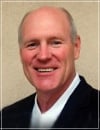
Randy Wages

Seek Ye First

Matthew 6:24-34
Randy Wages August, 20 2006 Audio
0 Comments
Matthew 6:24 No man can serve two masters: for either he will hate the one, and love the other; or else he will hold to the one, and despise the other. Ye cannot serve God and mammon.
25Therefore I say unto you, Take no thought for your life, what ye shall eat, or what ye shall drink; nor yet for your body, what ye shall put on. Is not the life more than meat, and the body than raiment? 26Behold the fowls of the air: for they sow not, neither do they reap, nor gather into barns; yet your heavenly Father feedeth them. Are ye not much better than they? 27Which of you by taking thought can add one cubit unto his stature? 28And why take ye thought for raiment? Consider the lilies of the field, how they grow; they toil not, neither do they spin: 29And yet I say unto you, That even Solomon in all his glory was not arrayed like one of these. 30Wherefore, if God so clothe the grass of the field, which to day is, and to morrow is cast into the oven, shall he not much more clothe you, O ye of little faith? 31Therefore take no thought, saying, What shall we eat? or, What shall we drink? or, Wherewithal shall we be clothed? 32(For after all these things do the Gentiles seek:) for your heavenly Father knoweth that ye have need of all these things. 33But seek ye first the kingdom of God, and his righteousness; and all these things shall be added unto you. 34Take therefore no thought for the morrow: for the morrow shall take thought for the things of itself. Sufficient unto the day is the evil thereof.

Sermon Transcript

Auto-generated transcript • May contain errors

100%
This morning, we're going to
continue our study on the Sermon on the Mount. That was an appropriate
song you picked there for the message today, Winston. When
it ended there, you know that we might have grace to trust
him more. And that's what the message is
about today. It's about our dependence and
trusting on God. As I say, we'll be looking at
verses 24 through 34. And as you turn, let me just
briefly set the stage again and remind you of the context for
today's message. Are the passage for today if
you remember the theme of the sermon on the mount which we
have. reviewed over and over again, is the gospel of the kingdom. That speaks not of a geographical
area, but a dominion, a rule, or a reign, a reign of grace,
grace reigning through righteousness. As we pointed again and again
to that verse on the front of the bulletin there, Romans 5,
21, it says that as sin hath reigned unto death, even so might
grace reign through righteousness unto eternal life by Jesus Christ
our Lord. So the rain is the kingdom spoken
of here by Christ. And here in chapter six, we've
already seen Christ engage his audience with a, excuse me again,
with a discussion concerning various religious duties and
activities. And specifically, you remember,
he talked about almsgiving, prayer, fasting. And we saw how those
three duties, they might be considered as typical really of all our
religious endeavors and efforts. Christ had set forth how we might
evaluate whether or not those religious efforts are acceptable
before God. And he did so by directing our
attention, if you recall, to the heart of the matter, to the
motive, the motive behind doing that, which we do in our religious
observances. In penetrating to the motive,
Christ exposes the sinfulness that is inherent in the performance
of religious activities and duties. Now, you heard me right. I'm
talking about a sinfulness inherent in religious activities and duties. And that sinfulness is true of
all of us, everyone prior to God-given spiritual life. And
that fact should stir us up to examine our own religious motives
to see whether our participation in religion, whether it springs
from the motive of grace that is characteristic of his kingdom,
that reigns grace reigning through righteousness, or whether we
are still prompted, as all are initially, when they approach
God and desire to go to heaven, are we still prompted to act
because we believe that our actions, our efforts, all our religious
thoughts and interests somehow merit or earn some favor before
God or contribute to our receiving his blessings. And of course,
that's the religion of works. And then in verses 19 through
23, just prior to our passage today in Matthew six, Christ
summarized what he had been teaching up to that point. When he said
this, he said, lay not up for yourselves treasures on earth.
He said, but lay up for yourselves treasures in heaven. And he said,
he went on to say, for where your treasure is, there will
your heart be also. And in today's text, down in
verse 33, we'll see just how we are to lay up for ourselves
these incorruptible, eternal treasures in heaven when Christ
commands, but seek ye first the kingdom of God and his righteousness,
and all these things shall be added unto you. And it's from
that verse I've chosen the title for today's message, Seek Ye
First. So let's begin by reading this
passage. Look with me in Matthew 6, starting in verse 24, where
Christ says, No man can serve two masters, for either he will
hate the one and love the other, or else he will hold to the one
and despise the other. Ye cannot serve God and mammon. Therefore I say unto you, take
no thought for your life what ye shall eat, or what ye shall
drink, nor yet for your body what ye shall put on. Is not
the life more than meat, and the body than raiment? Behold
the fowls of the air, for they sow not, neither do they reap,
nor gather into barns, yet your heavenly Father feedeth them.
Are ye not much better than they? Which of you by taking thought
can add one cubit unto his stature? And why take ye thought for raiment?
Consider the lilies of the field, how they grow. They toil not,
neither do they spin, and yet I say unto you that even Solomon
in all his glory was not arrayed like one of these. Wherefore,
if God so clothed the grass of the field, which today is and
tomorrow is cast into the oven, shall he not much more clothe
you, O ye of little faith? Therefore take no thought, saying,
What shall we eat? What shall we drink? Wherewithal
shall we be clothed? For after all these things did
the Gentiles seek. For your heavenly Father knoweth
that ye have need of all these things. But seek ye first the
kingdom of God and his righteousness, and all these things shall be
added unto you. Take therefore no thought for
the morrow, for the morrow shall take thought for the things of
itself. Sufficient unto the day is the evil thereof. As we consider
this passage, recognize that, as I said earlier, it's really
about trust and dependence on God for all things, both temporal
and eternal. And as I studied it over the
passage, it occurred to me that there were two aspects shown
here of our natural rebellion before God that would stand in
opposition as a barrier to our complete trust and our total
dependence upon God for all things. And notice I said our natural
rebellion, because once again I want to emphasize that's the
way we come into this world. We come in as rebels, dead in
our trespasses and sin, none righteous, no not one, going
about to establish a righteousness of our own, by nature just as
the children of wrath. And this natural rebellion is
manifested in these two ways. First, it's in our false religion.
We've seen that in our study of chapter 6 up to this point
in time. That is how we all initially
approach God in our desire to go to heaven. Whenever someone
gets serious about religion, they approach God and they say
in their minds, what do I have to do to get into heaven? And
Christ has already addressed this subject by pointing us to
examine the motive behind our religious thoughts and duties.
To see that trusting in anything other than his righteousness,
that is finding any merit anywhere else. even in our religion, that
it is contrary to the rule of his kingdom, his reign of grace. As we saw back in chapter 5,
verse 20, he said, except our righteousness would exceed the
very best of the best. The scribes and the Pharisees
put together, he says, you shall not enter into the kingdom of
heaven. We need to see a perfect righteousness outside of ourselves,
and it's not one we can produce. It's none other, and it's the
only one that can be produced by the Lord of glory, that which
he came to provide and which he did provide in his life and
in his death in full and perfect satisfaction to the law and justice
of God. That's what righteousness is.
But secondly, as we'll see in today's text, there's a second
manifestation, not just in the area of our religion, but that
manifest our rebellion before God, and it's evidenced by our
indifference, our neglect. And in today's text, we're going
to observe how this indifference or neglect of the things of God,
of the things pertaining to his kingdom, it springs from two
sources. First, you see, there's a natural rebellion that's evidenced
by our preoccupation with the other things of this life. Things
that divert us, distract us from seeking his kingdom and his righteousness
first and foremost. And then secondly, there's our
tendency to be indifferent or neglectful. Also, that would
spring from an inordinate worry and anxiousness. Reflecting,
if you think about that, that sort of worry reflects a sinful
lack of trust and faith in God. The God we claim to trust with
our eternal destiny. You see how incongruent that
is. And so today we're going to see
how these things, they're very much interrelated. And I hope
to show you that. And I was telling Jim earlier
in the week, it seems every time I go to study a passage, it looks
like God's got something he's wanting to tell me. And so as
I preach to you today, know that I have to take this pretty much
to heart here too, as I'm sure you will. So with that in mind,
let's go back and consider these verses here in more detail back
in verse 24. There it reads, No man can serve
two masters, for either he will hate the one and love the other,
or else he will hold to the one and despise the other. You cannot
serve God and mammon. And keep in mind, Christ had
just pointed them to examine their hearts by assessing what
they treasured. And it should prompt all of us
to consider just what motivates our religious efforts and our
religious interests. Where do we find our reward?
You know, he asks that over and over again here in chapter 6.
They have their reward, he said. And then in verse 24 here, he's
saying you can't have it both ways. If you're all about serving
yourself or finding some merit within, and I think we see both
aspects here, laying up treasures here on earth then you're not
laying up treasures in heaven. Those two things cannot be happening
simultaneously. Our thoughts are generally preoccupied,
see, with that which we value or treasure, and it reflects
our heart's desires. And here Christ points out the
impossibility of someone serving two masters. Now, based on what
he has said up until now, we can see that laying up treasures
on earth, at least in part, refers to those who believe that their
efforts at religion here on earth merit something before God. And
we know that because Christ, as I said, he repeatedly said
of these, he said, you know, those that would pray to be seen
of men and so forth. He said they have their reward. In other words, that's it. Their
reward is derived from the esteem that they receive from this religious
world. The religious world, the religion
of works, that would have salvation conditioned on something you
do, some activity. But as we examine the verses
that follow here, I think you're going to see this dual perspective
regarding what is being taught. That is, in addition to addressing
the folly of natural false religion, Christ is also addressing the
danger of allowing the interests, cares and concerns of this world
to divert us, to cause us to neglect seeking him first. And as we will see, that's no
less telling on where our hearts are than the false doctrine of
this world's religion. Listen, God's got to preserve
us. Or every one of us, every one of us would all go the way
of the thorny ground here that's depicted in the parable of the
seed and the sower. And you may want to look at that
again when you have time at home. If you recall, the plant sprung
up that was sown, the seed was sown on thorny ground. and the
plants sprung up. It had, in other words, it depicted
one who had heard the true gospel, the seed, and it appeared to
have life. But after a while, the thorns,
the cares, the deceitfulness of riches, those things that
would distract us came up and choked it out, really exposing
that it was not destined to live. Now, it's clear to us in God's
word that those who don't believe his gospel are lost, they lack
spiritual life. The book of Mark says in the
Great Commission, he that believeth not the gospel shall be damned. But for those of us who do profess
belief in this gospel, this issue of neglect and indifference,
and there's degrees of it in all of us, this issue of neglect
and indifference toward the gospel and the things of God is not
to be taken lightly. You see, for when it persists,
it too is an evidence of the absence of spiritual life. And
when Christ says no man can serve two masters, it's understood
here that he's speaking of two masters whose orders are contrary
one to the other. That's why you can't serve two
masters. In the days when I was more active
in my business, I had a partner who owned an equal share of the
company. And consequently, there were a few key managers in our
company who reported directly to the both of us. Now, that
worked fine as long as we were in total agreement on everything.
However, practically speaking, no one can effectively report
to two different people, both simultaneously concerning every
area of responsibility, because inevitably, One of us would contradict
the instructions of the other. So while officially that may
have been the case, we learned over the years to divide up the
areas of oversight in recognition of the impossible position that
places folks in. And that's Christ's point here.
It's an impossibility. No man can serve two masters.
As he suggests here, when orders are contradictory, choices must
be made. They will love the one that is
in subjection to them and hate the other that is not being in
subjection to them or the other way around, vice versa. And he
describes these two competing masters here as God and mammon. Now that word mammon is commonly
used to refer to wealth and riches or material gain. And the only
other place that it's found in the New Testament is over in
Luke chapter 16, and in verse 9 there, it speaks of the mammon
of unrighteousness. And in my study, I discovered
there are those, and I tend to agree, that think this refers
not only then to gain or riches, but to whatever is in opposition
to the Lord. In other words, to this kingdom,
this kingdom that is righteousness, peace and joy. the mammon of
unrighteousness, what is not righteousness. It's a competing
master, so to speak. And it could be interpreted in
light of Luke's usage, the mammon of unrighteousness, as anything
then which is hostile to a state of grace. And I believe that
broader interpretation fits here as well, because if you keep
in mind, that's what Christ is addressing both. He's addressing,
A, false religion, and he's also addressing, B, neglect due to
the concerns and diversions of this world. So certainly whenever
wealth and riches and material gain, or for that matter, other
competing interests, if they become the priority of a person's
life, He or she is in essence serving themselves and cannot
serve God at the same time. No man can serve two masters. So likewise, when one presumes
to find within himself spiritual riches, and here again we see
the dual application of this, I think. When he finds within
himself spiritual riches that are contrary to the gospel of
grace, as in possessing some merit before God that he or she
presumes that they're able to produce, Then that too would
be in opposition to the rule of his kingdom, this kingdom
of grace, which reigns through the one perfect righteousness,
that one produced by Christ and by him alone. In Colossians 3,
5, Paul speaks of covetousness being idolatry. And I, you know,
I had trouble with that when I first think about it, because
we all have some degree of covetousness. And but I believe this is what
he's referring to there that any interest or pursuit that
would take precedence over seeking and serving the Lord. It is the
product of our own self-interest our own self-love our selfishness. And so in verse 25 Christ says
therefore in light of this reality and he then begins. an explanation
that gets summarized down in verse 33. He says, in light of
this reality that you cannot serve God and that which competes
with or is hostile to God, the mammon of unrighteousness, he
says, then consciously make this choice. Seek ye first the kingdom
of God and his righteousness. Now, I'll continue to make some
comments on these verses as I read through them. But as you'll see,
they really don't need a lot of explanation. And know that
I nor anyone else can really add anything to the beauty of
these illustrations that Christ gives here. As Mark prayed in
the 10 o'clock hour, I heard in his prayer talking about how
the Word of God does not return void. And I'm thankful for that.
So let's look at it in verse 25 where it says, Therefore,
I say unto you, Since you cannot serve two masters, he's saying,
go this way. Take no thought for your life
what you shall eat or what you shall drink, nor yet for your
body what you shall put on. It's not the life more than meat
and the body than raiment. Now, we know in light of other
scriptures that Christ is not promoting here to a carefree. It doesn't matter anything about
what goes on here in this life. He's not promoting or condoning
laziness. He's not suggesting we shouldn't
plan at all for the future and the things of this life. He's
not promoting a welfare state. And we know that, you know, because
Paul's instructions to the believers at Thessalonica, he said, if
any would not work, neither should he eat. So we would be wrong
if we interpreted Christ's words contrary to that. And I also
don't think he is forbidding here the pursuit of riches and
the enjoyment of the things of this life, listen, under all
circumstances or under any condition whatsoever. But there is a clear
message that he is forbidding a situation in which we allow
these things to occupy our thoughts to the point that they take precedence,
they become first, see, over thinking on those things above.
He's forbidding the undue and anxious care, our misplaced priorities
that would cause us to neglect the greater, more important and
valuable eternal matters of the gospel and the kingdom of heaven.
When he says take no fault, he's asking, he's directing us to
examine what dominates our minds, our interests, our youth. Am I? Are we consumed primarily
with those things that have to do with this life, the sustaining
of this fleeting, corruptible life? A life on earth, if you
remember now back in verse 19, he described as one where moth
and rust doth corrupt. We're just, this life's just
a little dot on the scale of eternity. And, and, but we often
live, we're all, we all live like it's all there is so often. You can see why this kind of
hits home. He continues in verse 26 and
says, Behold the fowls of the air, for they sow not, neither
do they reap nor gather into barns, yet your heavenly Father
feedeth them. Are ye not much better than they?
You notice he directed our attention to the fowls of the air. This
wasn't a bunch of pin-raised birds or chickens in a hen house
that had comfort, warmth, heat, and food provided for them by
someone else. Now, these were wild birds who
don't have any shelter or provision other than that provided by God.
And then in verse 27, he says, which of you, by taking thought,
can add one cubit unto his stature? Now, a cubit was considered to
be the distance between the elbow and the tip of the finger, and
I think evolved over time to actually be a standard measurement
that was something approaching 18 inches or so. And while a
child will grow several cubits, you know, before they reach adulthood,
you and I are totally unable to affect our ultimate height,
our stature, simply by our thoughts and our wishes. And we accept
that fact. And there's a lesson therein.
He continues in verse 28, saying, And why take ye thought for rainlet? He said, Consider the lilies
of the field. Again, of the field. Not the
ones you grow in your flower pot or in your flower beds where
you cultivate them and water them and fertilize them and all.
We're talking about wildflowers that are subject to all of nature
and the wild animals that might tromp upon them. And he says,
consider them how they grow, the lilies of the field. They
toll not, neither do they spend. They don't have to work to produce
their beautiful clothing, to spend their harvest, see, in
the cloth. And he says, And yet I say unto
you that even Solomon, as rich as he was, and all his glory,
he was not arrayed like one of these. Wherefore, if God so clothed
the grass of the field, which today is and tomorrow is just
cast into the oven to keep the fire going, see, he says, Shall
he not much more clothe you, O ye of little faith? Shall God
not take care of all our needs, as the scripture says, according
to his riches and glory? Now I'm speaking, when I say
of your needs, I'm speaking of the redeemed, because they've
been purchased. We're talking about folks who've
been purchased by the blood, the precious blood of Christ,
and they've been made one with Christ before the eyes of the
Father, His beloved Son. He looks on you and He sees His
beloved Son and you as one, His brethren. Now, if you're among
that number, Can he possibly forget you and overlook you?
He could no more overlook his own, those for whom Christ lived
and died, than he could overlook the precious blood of Christ,
his only begotten Son that bought their salvation. So as 1 Peter
5, 7 suggests, cast all your care upon him, for he careth
for you. Romans 8, Paul said, what shall
we then say to these things? If God be for us, who can be
against us? He that spared not his own son,
but delivered him up for us all, how shall he not with him also
freely give us all things?" You see, oh ye of little faith, you
see how incongruent it is for us to imagine, to believe with
our hearts, to have God-given faith and see that He took care
of our eternal destiny and then failed to trust Him day by day,
the One who took care of all that and spared not His Son for
us. So who can read this and not
concur with Christ's assessment there in verse 30 when He said,
O ye of little faith? You see, if God has granted you
the gift of faith, then you have, by the regenerating, miraculous
power of God the Holy Spirit, you've been stopped dead in your
tracks, heading down a broad road that leads to destruction,
as Christ will cover later on in the Sermon on the Mount here,
that is a religious way that you were heading down. And instead,
he's turned you completely around. That's what faith and repentance
is about. So as to repent from trusting
in yourself for your salvation, for your trusting that it was
your faith, your decision, your fact you weren't quite so stubborn
that you walked an aisle, said a prayer, whatever it was that
you thought proceeded from you, He stopped you from that so that
you saw the necessity of a righteousness outside of yourselves. And with
that, you also see the absolute certainty that the one perfect
righteousness that was established by Christ, it will completely
justify you, save you to the uttermost. Now, who shall lay
anything to the charge of God's elect? It's God who justified,
Christ who died, yea, who is risen, again, Romans 8. If your
hope, your faith is in Christ and the righteousness that he
alone established in his obedience unto death, then that faith doesn't
dare look at itself as contributing one iota to one's redemption,
to one's justification, or to even the procurement of those
blessings. So why not trust God in all things? We profess to trust him in the
thing that matters for all eternity. Why not trust him in all things?
And as that faith grows, it grows in appreciation for how irrelevant
our little faith actually is. And I say that faith is not irrelevant,
but it is in contrast to that which alone attains and maintains
our salvation, the blood and righteousness of the Lord Jesus
Christ. You've all heard that adage, the more you know, the
more you know, you don't know. And I believe we can apply that
same principle to faith. The more we grow in the grace
and knowledge of our Lord Jesus Christ, grow in faith, the less
confidence we have in faith, in ourselves, and the more we
realize and appreciate not just that it has less merit, but it's
absolutely insufficient. Our faith is, are anything else
produced by us, or in us, or through us? to merit, see, or
procure any blessing from a holy God. And as we grow, I believe
we're more and more able to identify with the self-assessment that
Paul the Apostle made when he said, wretched man that I am. But I thank God, and you can
too, and rejoice in knowing that my salvation isn't conditioned
on this wretched man that I am, or on his little faith. So Christ
continues then in verse thirty one where we read, therefore,
take no thought saying what shall we eat or what shall we drink
or where with all shall we be clothed? He said for after all
these things did the Gentiles see. For your heavenly father
knoweth that you have need of all these things, but that should
bring to remembrance those of you who heard the earlier message
on the manner of prayer. Christ words recorded back in
in verses 7 and 8 there when he was he was teaching them how
to pray and he said but when you pray Said use not vain repetitions
as the heathen the Gentiles do Well, they think they shall be
heard for their much speaking and he says be not you therefore
like unto them for your father same same phrase here He knoweth
what things you have need of before you ask him Again, he's
telling them not to be like the heathen that is consumed with
the riches of their own self-righteousness or with the thoughts that are
centered on the necessities, the riches and the pleasures
of this life and this world. Christ is teaching us to recognize
and live in light of our total dependence upon God for all things,
both eternal and temporal, so instead of serving that which
is hostile to God's grace in his way of salvation, mammon. In verse thirty three, Christ
commands us, but seek ye first the kingdom of God and his righteousness
and all these things shall be added unto you. You know, to
seek first the kingdom of God and his righteousness, it denotes
the precedence that Those things above our spiritual interests
are to have over the things of this earth. And listen, even
over our concern for the future provisions necessary for life,
food, drink, clothing. Our first priority is to seek
the kingdom of God and his righteousness. In our study of this sermon up
until now, we've seen, as I've told you again and again, that
the kingdom of God refers to this reign of grace, this Grace
reigning through righteousness, and as such, then we know we
do not seek the kingdom of God unless we also seek his righteousness. As Romans 14, 17 told us, the
kingdom of God is not meat and drink, but righteousness and
peace and joy in the Holy Ghost. That's what it is. So sadly,
we know that most who desire to be included in the kingdom
of heaven, they want to go to heaven. They're ignorant, are
not submitted to the very righteousness which this kingdom is all about,
through which grace reigns. As Paul explained in the first
verses of Romans 10, again, I encourage you to look at that again. It's
a passage familiar to most of us. He said that they being ignorant
are not in submission to this rule, this reign of righteousness,
called there the righteousness of God, that this exposes, he
said they were zealous of God, they had a zeal of God. that
in spite of that zeal, exposes that they were yet lost. And
he describes them as, by default, going about to establish a righteousness
of their own, which would put them, see, which puts us all
initially, and those who have yet to see differently, in rivalry
with the work of the Lord Jesus Christ, who it goes on to say
is the end or the fulfillment of the law for righteousness.
So lest anyone mistakenly assume that merely because they're interested
in going to heaven. That they can claim the promises
of this verse that is that all these things will be supplied
under them added under them. Temporal or eternal. Then Christ
adds an important conjunction here the word and. To further
qualify that which identifies the kingdom of God, they are
to seek. He says, seek ye first the kingdom of God and his righteousness. And note that this first priority
too, is to seek his righteousness, not our own. Remember Paul's
words in Philippians 3, 7, where he wrote, but what things were
gained to me. He was heading down that broad
road leading to destruction too. And there were things that he
thought recommended them unto God, they were gained. And he
says, those I counted lost for Christ. And then in verse 9,
and he said, And be found in him not having mine own righteousness,
which is of the law, that is, based upon my meeting a requirement
or a condition, but that which is through the faith of Christ,
the righteousness which is of God by faith, that means by the
faith, by Christ. And here in Matthew 6, 33, Christ
tells him how to seek the kingdom by seeking his righteousness,
not their own. He had already established that
the standard of righteousness was perfection. Matthew 5, 48,
Be ye therefore perfect, even as your Father which is in heaven
is perfect. And Christ had already explained
that this was why he came. He said, this is what I came
to do. How dare you usurp that? He said, I came to fulfill every
jot and till. Made under the law to redeem
them that are under the law. Dot every I, cross every T. You
see, it's the righteousness of another. The Lord Jesus Christ.
It's a righteousness that far exceeds that of the scribes and
the Pharisees. It's a righteousness that's brought
about by a representative. By a substitute. A surety who
obeyed the law and gave his life for a people. All those that
the Father gave him. The scriptures call the many.
And it is justifying righteousness. And it's brought about by blood
sacrifice for sins. It's the very righteousness of
God, Romans 1, 16 and 17, that's revealed in the gospel. He says
therein is the power of God unto salvation in the gospel. Why?
Because therein is that righteousness revealed. And it's the basis. That righteousness is the basis
upon which sinners are translated into the kingdom of God. And
it's what keeps them there eternally. And nothing else will do this.
The efforts, see, of lost sinners to keep the law, that is, to
meet any condition or requirement so as to gain favor with God
or procure his blessings, these are no more than dead works and
evil deeds to be repented of, and these are not worthy to be
compared to the righteousness of his kingdom. To seek God's
kingdom and righteousness any other way, see, or with any other
mindset is a direct attack against God's redemptive glory in Christ,
you see, because that's where His glory is. Only in the person
and work of Christ do we see who God is. We see how He can
manifest His mercy without having to do away with His justice.
We see Him as a just God and a Savior. So of our own efforts,
then, all are called to repentance. And instead, they're called to
seek ye first the kingdom of God and His righteousness. And Christ says, and all these
things shall be added unto you. Trust Him in all things, temporal
and eternal. And we end this chapter then
in verse 34 with Christ saying, take therefore no thought for
the morrow, for the morrow shall take thought for the things of
itself. Sufficient unto the day is the evil thereof. In the instructions
on the manner of prayer, you may recall Christ said, pray
like this. He said, give us this day, our
daily bread. And here in verse 34, he says,
don't be consumed with anxious, anxious thoughts about tomorrow.
We're to depend and trust upon God daily. And here, tomorrow
is personified. And he says, she's going to take
care of herself because you have plenty to deal with. on your
plate today, saying sufficient unto the day is the evil thereof.
That word evil in the passive is translated troubles. And he's
saying you've sufficient troubles to deal with today. Anxious worries,
they will have no more effect on tomorrow than thinking about
your height will make you any shorter or any taller. Tomorrow,
the same Lord will care for his own. Those who are identified
by their How have they identified his own? Seeking first his kingdom
and his righteousness. Whatever troubles, trials, or
temptations might arise tomorrow, shouldn't we trust and depend
on the God who loved us so much that he gave his only begotten
son, who came and lived and died to ensure the eternal well-being
of all whom he represented? Well, then are you among that
number for whom he lived and died, those he represented? That's a great question. In the
first part of his sermon, you may recall when we were studying
that section known as the Beatitudes, Christ described for us identifying
characteristics of these, the eternally blessed of God, when
he would say, start each verse with blessed are. And in verse
six, this is what he said. He said, blessed are they which
do hunger and thirst after righteousness, for they shall be filled. So
thank God if he's given you a hunger and a thirst for righteousness,
for his righteousness. And if you can't yet identify
with that description, then pray God would begin today, even today,
to draw you unto himself and give you a hunger and a thirst
for his righteousness. If you can take it or leave it,
ask God to show you differently. He will take care of his own.
Look, not only their physical needs, their physical food, drink
and clothing, but he'll give them a hunger. and a thirst after
his righteousness, that which Jesus Christ alone established.
And it's upon Christ whom we feed. See, it's upon him who
we rely for all of our spiritual sustenance, because what he accomplished,
his righteousness, is what fills our need. You know, to be clothed
in the robe of his righteousness. If you want to talk about spiritual
clothing, That is, to have the perfect satisfaction that He
made to God's law and justice, His perfect obedience while He
walked here on earth, and the penalty for the sins of His people,
for your sins, if your sins were covered by Him, put away by Him,
excuse me, at the cross, by the shedding of His own precious
blood, to have that reckoned to you, imputed to you, charged
to your account, It's to be clothed with a garment so glorious that
you're suitable, see, for entrance and acceptable at the wedding
feast before God himself at the very throne of heaven. In Christ,
based upon his work of righteousness, we find all we need. We are filled. So let our prayer be that God
would grant us all grace to cast all our sinful concerns and anxious
worries upon him. that our priorities would be
so ordered that our first thoughts and the first desires of our
hearts might always be drawn to him based upon his all-sufficient,
justifying righteousness through which grace reigns in his kingdom.
And may we grow in grace so as to take no thought for tomorrow,
knowing as Paul said in Romans 14, 8, he said, but whether we
live, we live unto the Lord, and whether we die, we die unto
the Lord, so whether we live, or die, therefore, we are the
Lord's. Live like it. And given the temptations
to fall into neglect or become indifferent in our interest in
the things of God, look, in attending to the means of meeting together
for worship, in attending to prayer, in attending to studying
the Word of God, look, in our zeal and desire to get the gospel
out, to see others come to know what we've been so blessed to
see. Let's pray for one another. that God would continually rekindle
our hearts so that our desires to be found in his kingdom and
our interest in his kingdom, this kingdom which is righteousness,
peace and joy, based on that alone that it might take precedence
over all else. Seek ye first the kingdom of
God and his righteousness and all these things shall be added
unto you.
Randy Wages
About Randy Wages
Randy Wages was born in Athens, Georgia, December 5, 1953. While attending church from his youth, Randy did not come to hear and believe the true and glorious Gospel of God’s free and sovereign grace in Christ Jesus until 1985 after he and his wife, Susan, had moved to Albany, Georgia. Since that time Randy has been an avid student of the Bible. An engineering graduate of Georgia Institute of Technology, he co-founded and operated Technical Associates, an engineering firm headquar¬tered in Albany. God has enabled Randy to use his skills as a successful engineer, busi¬nessman, and communicator in the ministry of the Gospel. Randy is author of the book, “To My Friends – Strait Talk About Eternity.” He has actively supported Reign of Grace Ministries, a ministry of Eager Avenue Grace Church, since its inception. Randy is a deacon at Eager Avenue Grace Church where he frequently teaches and preaches. He and Susan, his wife of over thirty-five years, have been blessed with three daughters, and a growing number of grandchildren. Randy and Susan currently reside in Albany, Georgia.

Comments

0 / 2000 characters
Comments are moderated before appearing.

Be the first to comment!

Joshua

Joshua

Shall we play a game? Ask me about articles, sermons, or theology from our library. I can also help you navigate the site.