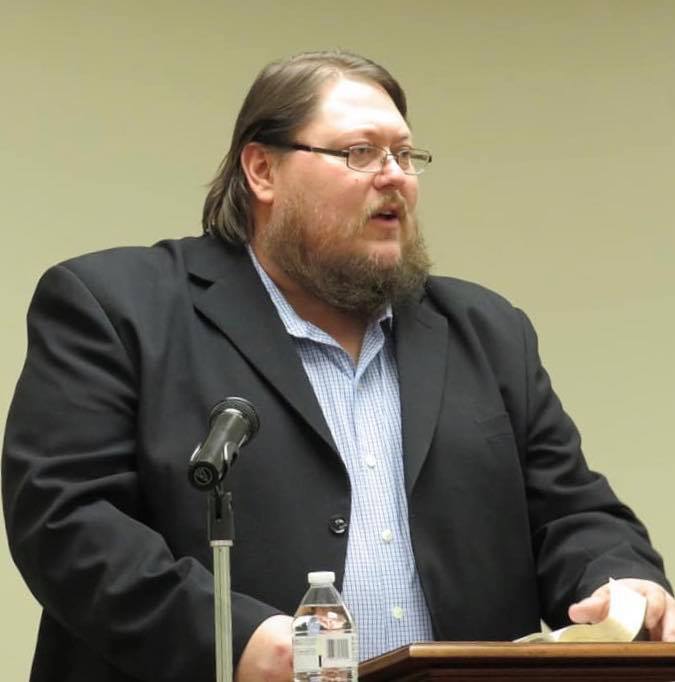
In this sermon, Mikal Smith delves into the sovereign will of God as expressed in Ecclesiastes 3:14, emphasizing that all events in life, great and small, occur under God's eternal purpose. He argues that nothing happens by chance, asserting that God meticulously orchestrates every detail, including human choices, to fulfill His divine plan. Smith references biblical support from Romans 10, Isaiah 53, and John 12, illustrating that true faith and belief in the gospel are the result of God’s revealing work, rather than human effort or decision. The sermon highlights the significance of God's sovereignty in salvation and preaching, clarifying that while preachers proclaim the gospel, the efficacy of that proclamation lies solely in God's power to regenerate and reveal truth, underscoring the Reformed doctrines of monergism and predestination.
Key Quotes
“Nothing happens by chance. It isn't by chance that you're here today... Everything is purposed by God.”
“Salvation is of the Lord, period. Man can't take away from it. Man can't put to it.”
“The preaching of the gospel is not to make people saved... it's to bring good news to those who are saved.”
“The only one that believes the report is the one to whom the arm of the Lord has revealed it.”
The Bible teaches that God is sovereign over all creation and His purposes cannot be thwarted (Ecclesiastes 3:14).
In Ecclesiastes 3:14, it states, "I know that whatsoever God doeth, it shall be forever. Nothing can be put to it, nor anything taken from it." This illustrates that God's sovereignty means He is in complete control of every aspect of creation and His eternal purposes will always be fulfilled. This eternal purpose spans from the beginning of creation, indicating that all that occurs is ordained by God. Furthermore, God's sovereignty is a foundation for understanding His nature and our relationship to Him, which leads to reverence and worship as we acknowledge that nothing happens by chance or outside His will.
Ecclesiastes 3:14
Salvation is entirely a work of God, as it is based on His predetermined purpose and the redemptive work of Christ (Ephesians 1:4-5).
The doctrine of salvation emphasizes that it is not a synergistic effort between God and man, but rather a monergistic work of God alone. This is vital in understanding that salvation is not dependent on human actions or decisions. Ephesians 1:4-5 clearly states that God chose us in Christ before the foundation of the world, underscoring divine election and predestination. The work of Christ on the cross was for those whom God has chosen, and nothing can be added to or taken from this divine act. Therefore, belief in Christ as Lord and Savior is a result of God's grace, given freely to His elect, confirming that salvation is rooted in God's sovereignty and initiation.
Ephesians 1:4-5
Preaching the gospel provides comfort to the saved by affirming their status in Christ and declaring the good news of their redemption (Romans 10:14-15).
While the act of preaching may not cause salvation, it serves as a means to declare the finished work of Christ to those who are already saved. Romans 10:14-15 speaks to the necessity of preachers, emphasizing, "How shall they hear without a preacher?" Although some may argue that preaching is integral to salvation, it is rather a comfort that confirms the grace already bestowed upon believers. The purpose of gospel preaching is to remind and reassure Christians of their position in Christ— that their sins are forgiven, and they are recipients of grace. Thus, preaching strengthens faith and encourages perseverance in the Christian life as it continually points to the hope found in Christ.
Romans 10:14-15
Grace is a gift from God, and faith is also given by Him; neither can be generated by human effort (Philippians 1:29).
The relationship between grace and faith is critical in sovereign grace theology. Philippians 1:29 states, "For unto you it is given in the behalf of Christ, not only to believe on him, but also to suffer for his sake." This emphasizes that faith is a divine gift, bestowed upon the elect by God, and cannot be produced by our efforts. Moreover, faith is not merely intellectual agreement; it is a heartfelt response to God's revelation. True faith arises when God opens the heart and imparts the ability to understand and accept the truth of the gospel, illustrating that both grace and the faith to receive that grace are entirely acts of God's sovereignty.
Philippians 1:29
Comments
Your comment has been submitted and is awaiting moderation. Once approved, it will appear on this page.
Be the first to comment!
