Bootstrap
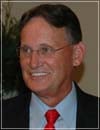
Larry Criss

How Much More

Hebrews 9:14
Larry Criss March, 27 2016 Audio
0 Comments
Larry Criss
Larry Criss March, 27 2016

Sermon Transcript

Auto-generated transcript • May contain errors

100%
As we just said, the day we'll
observe the Lord's Supper, that's one of my favorite times here,
when we remember Him. That's what He said, didn't He? When He instituted the Lord's
Supper the first time, He told His disciples, this do, when
He gave them the bread, the wine, He said, this do in remembrance
of me. God help me to do that. Help
me to do that. Mike, we can go through the motions.
Just go through the motions, but help us to do what he said. Remember me when you take the
bread and drink the wine. Remember what this represents. My body broken for you, my blood
which is shed for you. When Moses called for the children
of Israel, just before God brought them
out of Egypt and gave them instructions concerning the Passover lamb.
Let me read that to you. Then Moses called for all the
elders of Israel. This is in Exodus chapter 12,
verse 21. And he said, draw out and take
you a lamb according to your families and kill the Passover.
And you shall take a bunch of hyssop and dip it in the blood
that is in the basin, and strike the lentil in the two side posts
with the blood that is in the basin. And none of you shall
go out of the door of his house until the morning, for the Lord
will pass through to smite the Egyptians. And when he seeth
the blood," nothing but the blood, not when you see it, but when
God sees it, when he seeth the blood upon the lentil, and on
the two side posts, the Lord will pass over the door and will
not suffer the destroyer to come in unto your houses to smite
you. And ye shall observe this thing for an ordinance to thee
and to thy sons forever. And it shall come to pass when
ye be come to the land which the Lord will give you according
as he has promised. And you shall keep this service,
and it shall come to pass when your children shall say unto
you, what mean you by this service? Why are you doing this? What's
this mean? You shall say, it is the sacrifice
of the Lord's Passover, who passed over the houses of the children
of Israel and Egypt, when he smote the Egyptians and delivered
our houses. and the people, when Moses spoke
these words, and the people bowed the head and worshipped. May we do so today. Concerning
this ordinance, which is the fulfillment of the Passover that
we just read of in Exodus 12, if someone were to ask us, What
the Egyptian sons afterwards would ask them, what mean you
by this? If we were asked, when you take the bread and the wine,
what does that mean? Why are you doing that? That's
a good question, isn't it? That's a good question. Today
is that day, that religious day, like a carnival. So much is going
on this day. There's a really big show going
on all around us. Did you notice in the bulletin
the quote by Brother Maurice Montgomery? He said, I have only
this to say, there is nothing, there is nothing, absolutely
nothing about true worship and true religion which is appealing
to the flesh. Ouch! Ouch! Man, that That knocks out about
99% of what's going on today in the religious world because
that's exactly what it's appealing to the flesh. And Marie said,
think about it. But unlike that, that which appeals
to the flesh, if we were asked, what does this mean? It's not
carnal. It's not done with a bunch of
fanfare. But it's done simply. Our Lord,
when he instituted this, couldn't have done it more simply. This
bread represents my body. This wine represents my blood. Do this often, and as often as
you do, remember me. And that's exactly what we try
to do. We remember the Lord's death
till he comes. Till he comes. because he's not
dead anymore. He arose. Yes, he died, but he
arose. What's the meaning of his resurrection? Ever think about that? Everywhere
today, people are talking about the resurrection of Christ. He
arose. If you could somehow ask them,
what does that mean? Christ arose. What does that
mean? What do we learn from that? What does that do for us today? The resurrection of Jesus Christ
2,000 years ago, what does that do for me right now? Did he really
accomplish anything in his death and resurrection? Did he really
accomplish anything? Let me say this. If Jesus Christ
did no more for the lost, if he did no more for those people
who go to hell than those who are saved and go to heaven, if
he did no more for one than he did the other, then why did he
even die? Why? If he only made something
possible, if he only made something possible and the Success of that
depends upon my contribution to it in the future, then why
did he even bother? As Paul put in Galatians chapter
2, he asked, if righteousness came by the law, Galatians 2,
21, if righteousness came by the law, if what God Almighty
demanded of you and me, perfection. That's not a Baptist word, that's
God's word. He said it must be perfect, didn't
he, Lois? It must be perfect to be accepted. Now you let that truth grip your
heart. You let God roll back, or rather
strip off the robe of self-righteousness and expose us to what we really
are. And then realize also he demands
perfection. It's not my best, it's perfection
that he demands. And oh, then we'll cry, wretched
man that I am, who shall deliver me? God demands a perfect righteousness. He demands the fulfillment of
his law. And he demands the satisfaction
to his broken law. Paul said, if righteousness,
if that righteousness, could come by the law, he said, then
Jesus Christ died in vain. Now you think of that. Jesus
Christ died in vain. He died for nothing? He did all
that for nothing? He suffered the wrath of God
Almighty for nothing? He trod the winepress alone and
was made sin for nothing? Well, if I could be saved any
other way, yes, it was for nothing. But thank God, that's not so.
That's not so. Again, if someone were to ask
us, what do you mean by this? It's not a sacrament. Eating the bread and drinking
the wine does not confer grace. It does not confer grace. This
is a picture, a reminder. It's a memorial. of our Savior. Remember, remember, God told
the Egyptians, remember that you were a bond slave in the
land of Egypt and the Lord thy God redeemed thee. Remember. That's what we remember. Peter said, remember, you were
not redeemed with silver and gold. but with the precious blood
of Jesus Christ as a lamb slain from the foundation of the world
and revealed in these last days for you. Oh, precious is the
flow. Nothing else can do this. Oh,
precious is the flow that makes me white as snow. Turn, if you will, we'll come
back to Hebrews 9 in a moment, but turn, if you will, to Ephesians.
Ephesians chapter 5. Paul tells us here in Ephesians
5 what the result was of Christ's death. What it really accomplished. I like the words accomplished.
That's how our Lord spoke. He said, I have a baptism to
be baptized with, and how am I straightened, constrained,
determined, until it be accomplished? He said everything written concerning
the Son of Man must be accomplished. Even hanging upon the cross,
knowing that all things we read in John 19, knowing that all
things were now accomplished, He said, I thirst. Because that
prophecy had to be accomplished. And then after he took the drink,
he said, it's finished. It's finished. It's accomplished. Here in Ephesians chapter 5,
verse 25. Husbands, love your wives like
you love every other woman out there. No. No. Husbands, love your wives how?
Like Christ loved the church. Like Christ loved the church.
A special love. An everlasting love. and gave
himself for it, that he might sanctify it and cleanse it with
the washing of water by the word, that he might present it to himself.
A glorious church, not having spot or wrinkle or any such thing,
but that it should be holy and without blemish. That's what
his death intended? That's what it was to produce? Well, did it? Did it? I don't mean will it do so if
I do my part in time. No, I mean when he died. At the very moment he died, did
he obtain what we just read in Hebrews 9 and Ephesians 5? Well, John saw the church of
God when he was caught up to heaven John saw the church of
God. The Lord said, John, come up
hither and I'll show you things that must be hereafter. That must be hereafter. This
is not an if. This is not a possibility of
failure. John, I'm going to show you things
that must be hereafter. There's no question about this.
And among those things that John saw, Revelation 14 verse 1, and
I looked and looked. A lamb stood on the Mount Zion.
Oh my, John, that must have ravished your heart. That old 90-year-old
man exiled on that rocky isle of Patmos for the preaching of
the gospel and the witness of Jesus Christ. Oh, how that must
have uplifted his spirit. He saw the lamb standing on Mount
Zion. standing in absolute victory,
standing in sovereign majesty, doing as he always has, ruling
everything for the salvation of his people and the glory of
God. The Lamb stood on the Mount Zion.
Oh, but look here. He's not by himself, Louis. Remember
what he told his disciples? Unless a corn of wheat falls
into the ground and dies, it abides alone. That's him. Oh,
but if it dies, what happens? It brings forth much fruit. That's exactly what Isaiah prophesied. He, Christ, shall see it develop
his soul and be satisfied with him. with the lamb on Mount Zion
stood a hundred forty, a hundred forty and four thousand representing
all of his people having his father's name written in their
foreheads and I heard a voice from heaven as the voice of many
waters and as the voice of a great thunder and I heard the voice
of harpers harping with their harps and they sung as it were
a new song before the throne and before the four beasts and
the elders and no man could learn that song but the 140 and 4,000
which were redeemed from the earth. These are they which are
not defiled with women, for they are virgins, spiritually. These
are they which follow the Lamb, whithersoever he goeth. These
were redeemed from... Isn't that how you read it? These were redeemed from among
men. not redeemed with all men, redeemed
from among men, being the firstfruits unto God and to the Lamb. And
in their mouth was found no gout. Oh, precious is the flow that
makes them white as snow, for they are without fault before
the throne of God." What could accomplish that except
the doing and the dying of the Lord Jesus Christ. In chapter
1 of Hebrews we're told when he, that is Christ, had by himself
purged our sins, he sat down. Why? Because his work was accomplished. When he had by himself, without
your help or my help, When he had by himself purged our sins,
he sat down at the right hand of the majesty on high. Exactly
what we read here in Hebrews 9 verse 12. Neither by the blood
of goats and calves, but by his own blood, he entered in once
into the holy place. Why? Having obtained eternal
redemption for us. Sounds like he got the job done. Sounds like he did exactly what
he came to do, Mike. I don't find, even in those types,
even in the Passover land, in the Old Testament, in the Gospels,
in the Epistles. I don't find one inkling of a
suggestion that Jesus Christ did anything less than redeem
his people from all their sins. Glory to his name, he got the
job done. He didn't die in vain. I'll tell
you what, brothers and sisters, if this sinner wasn't redeemed
at Calvary, If my sins weren't purged at Calvary, they're never
going to be. They're never going to be. If
Christ did not bear my sins in his own body on the tree then
and there, they're never going to be borne away. Never. I'm lost and without hope and
without God, and all I've got to look forward to is hell if
Jesus Christ did not obtain my eternal redemption. Verse 14,
in light of what? Paul has said. This question
is asked. How much more? How much more? How much more shall the blood
of Christ, who through the eternal spirit offered himself without
spot to God, purge your conscience from dead works to serve the
living God? How much more? I hope we'll delight
in answering that question from our hearts, we that know God,
and be helped to remember him who his own self bore our sins
and brought us to God. We rejoice again in Hebrews,
or rather verse 12 of Hebrews 9. I repeat this deliberately
because I find great comfort in it. He obtained past tense. All my life I've heard God wants
to, God's trying to, if God had his way. Do you find comfort
in that sort of talk? Do you really? Not me. Tell me about an atonement that
really atoned. You want to comfort me? You want
me to lie down with a good conscience and a good hope before God Almighty?
As old top lady said, when I soar the world's unknown and behold
thee on thy throne, what hope does this sinner have? That he
obtained. He obtained. Glory to his name,
he obtained. When we drink the wine and eat
the bread, we're celebrating a victory. Not an attempt, but
an obtaining of eternal redemption for us. Eternal redemption. Eternal redemption. What's that mean? It means that
it reaches in both directions. Our glorious Redeemer upon the
cross by His death redeemed those under the first covenant, Paul
tells us here in Hebrews. And all those whose sins he bore
are born away. They'll never be found again.
It reaches in both directions. It extends to God's people in
all ages. It brought in an everlasting
righteousness. This is why God promised that
he shall give grace and glory. to all those redeemed by the
Lord Jesus Christ. Let me read you a verse in Psalms,
Psalms 49, verse 6. They that trust in their
wealth and boast themselves in the multitude of their riches,
none of them, none of them, are you included in that? None of
them can by any means, Psalms 49 verse
7, none of them can by any means redeem his brother nor give to
God a ransom for him. Why not? Because God won't accept
it. God won't accept it. For the
redemption of their souls is precious and it ceases forever. that he should still live forever
and not see corruption. In light of that, what a joy
to hear these words from God Himself. What a joy in the ears and heart
of every needy sinner looking to the Lamb of God all of their
hope and all of their salvation, to hear God Almighty Himself
proclaim, deliver his soul from going down to the pit, I found
a ransom. I found a ransom. And he did so in the Lord Jesus
Christ. He obtained that eternal redemption
as Paul tells us In verses 13, not by the blood of bulls and
goats or the ashes of a heifer, but by his own blood. Those were
only to the purifying of the flesh. What does Paul mean by
that? He means that they were only typical. They were only
shadows. They were only types. Until he
who was the fulfillment should come. And therefore, being only
types, they only purified the flesh outwardly, typically. They only touched the outward.
Hence, they were continually offered. That's why those under
that covenant were continually coming. Because they could never,
by those sacrifices which they offered, continually take away
sin. In chapter 10 here in Hebrews,
Paul says, in verse 1, for the law, having a shadow of good
things to come, and not the very image of the things, can never,
can never, with those sacrifices which they offered year by year
continually, make the comers thereunto perfect. And then Paul
asks, for then would they not have ceased to be offered? If
a sinner could be perfect by that, accepted before God by
that, then would they not have ceased to be offered? And of
course, the answer is yes. But that wasn't the case. They
couldn't make the comer perfect because that the worshippers
once purged should have no more conscience of sins. But in those
sacrifices, there is a remembrance again made of sins every year.
It's not possible that the blood of bulls and goats should take
away sin. They only touched the outward.
They didn't reach to the root of the problem. The heart. The heart. This is our Lord's
condemnation of the religious elite of his day, the Pharisees. When he pronounced those terrible
woes upon them, he said, you Pharisees, y'all cleaned the
outside of the platter and the cup. but the inside's filthy. That's what you are. You're like
a grave, like a tomb, that men whitewash on the outside, but
the inside is full of dead men's bones. He said that's what you
are. That's what your righteousness
is. It's all a show. It's all outward. It doesn't
reach to the heart, the root of the problem. And sad to say,
sad to say, that that is still true in our day. Most people
are content with an outward show of religion. They're satisfied
with that. Because it doesn't deal with
the heart. It doesn't go to the real issue. Oh, but by the grace
of God, not everybody's content with that. There are some that
are not content. They want more than just ceremony. They want more than just type.
They want more than just going through the motions of religion.
They want mercy. They want grace. They want real
salvation because they're a real sinner and they can't be satisfied
with just outward things. And the cry of their heart is
this, Lord, give me this water. Give me this water. from the well of your everlasting
mercy and grace, from that fountain filled with blood. Oh, plunge
me beneath that flood. Give me this water that I never
thirst again because I've drunk from the wells of this world's
religion. And it's done nothing for my
inside, my heart. I'm still the same old person. I'm still fallen. I'm still lost. I'm still undone. Give me more. As he said to the woman at the
well, that dear, that poor, poor woman who had been tossed and
passed from man to man to man. That's why she came to the well
in the middle of the day, the hottest part of the day. Why
would you want to go carry water at noon? because nobody else
would be around. Nobody else would see her. Nobody
else would sneer at her and say, there's that prostitute. But the Lord Jesus Christ knew
her. Oh, glory to his name. Who would
ever believe when they saw her sneak into the well that day
that that was an object of God's everlasting love? And Jesus Christ
deliberately puts himself right in her way. That's why we read
there in John, he must go through Samaria, one of his sheep's there. And that's the day that she's
going to find out that she's one of his sheep. And he told
that broken-hearted sinner, drink of the wells, the water of this
well, rather, and you'll thirst again. Am I talking to anybody that
is a perfect example of that? Am I? Am I? Am I talking to someone
who's done that very thing? You went to the wells of this
world, be it what it may, you fill in the blank. And you've
drank and you've drank and you drank. But then in a little while,
you've got to go back. Because you're not satisfied.
You're still thirsty. That applies to wealth, fame,
popularity. It applies especially to man-made
religion. You'll thirst again. Oh, give
me grace. Give me mercy. I must know the
living God. And our Lord said to that woman,
drink of the water that I shall give you and you'll never thirst
again. That very familiar parable that
our Lord spoke to those who trusted in themselves that they were
righteous. That's why he spoke the parable of the Pharisee in
the public, to those who trusted in themselves that they were
righteous. You know it just about by heart, don't you? Two men
went up to the temple to pray. One's a Pharisee. He's content
with just ceremony. He's perfectly satisfied with
just going through the motions. I mean, after all, His so-called
prayer is a confession of that fact, is it not? Lord I thank
you, I'm not like other men, I don't do this, I don't do that,
I cross all my t's, I dot all my i's, it was all outward, it
was all a show. And there's a public, a despised
tax collector, a traitor to his own people. No one was looked
down more looked down more on than that public. And he wouldn't
even stand where the Pharisee was. He stood afar off. Ceremony won't satisfy him. Types won't satisfy him. This man's thirsty. The Pharisee
bragged on himself and then went home just like he came in, trusting
his own self-righteousness. But that publican said, I can't
go, I can't leave, I won't be content, I won't be satisfied
until I find mercy. You remember? He beat on his
heart. He knew the issue. He knew the
issue. He knew what that Pharisee didn't
know. These types, these ceremonies, they just touched the outward.
My problem's inside. My problem's my heart. I need
some grace that'll reach deeper than the stain has gone. That's
what he wanted. He's one of those that our Lord
described as being taught of God. Everyone that has learned
of the Father cometh unto me, learns what a wretch he is. learns
his true state before a holy God. And there he stands. He won't even lift his eyes toward
heaven. Man, I'd like to find one. I'd
like to find a sinner like him. I've got good news. Everybody's
made a decision. You can't hardly find a sinner
anymore. Everybody's saved. This poor publican, can you picture
him? Can you identify with him? Which
of those two men do you identify with? The one who says, God,
I thank you. I'm not like other men. And he
goes home. Or are you like that, public? So bowed down with grief and
shame and the burden of his sin that he can't hardly stand up
straight. He can't lift his head and he's
just, oh, God. Be merciful. Be merciful. He doesn't claim anything like
the Pharisee. He doesn't have a list of his
doings. He only said, God be merciful
to me, the sinner. I need grace. I need mercy. And glory to God, he found it. Mike, he found it, didn't he?
He found it. Jesus Christ said, I say unto
you, this is what I want. This is what I want. I don't
know how. I lost track of the times that
some soul winner told me I was saved. I can't. I've lost track
of the times of a young man growing up. How many times somebody buttonholed
me into making a decision for Jesus and it didn't amount to
squat. It didn't mean nothing. Because
it just touched the outward, just touched the outward. I asked
my grandmother one day, what must I do to be saved? She said,
first thing you need to do is get a haircut. I was a hippie. Get a haircut. Look like a man. It's a shame
for a man to have long hair. Outward, outward. My problem
was in here. Oh, but then one day, one day, the great shepherd of the sheep,
who loved this rebel and gave himself for me, who redeemed
me with his own blood, called me by his grace. All the redeemed
are going to be called by grace. Nobody he redeems is going to
go to hell. In time, they're going to have
applied to their heart and conscience, like our text says, the blood
that was shed for them at Calvary. God be merciful to me, the sinner."
And Jesus Christ said, concerning that publican, these are not
the words of the priest, or the preacher, or the soul winner,
or mama or daddy. These are the words of Jesus
Christ. What glorious words they are. Oh my soul, what glorious
words they are concerning that publican, that beggar, not that
bragger, that beggar before the throne of God. Christ said, I
say unto you, he's going home justified. Can you just see him? Can you see that? He's going
home justified. He's going home in the sight
of God just as though he's never seen, justified before the throne
of God Almighty. That's what I want, don't you? Like that poor woman we read
about in the Gospels. She had an issue of blood, we're
told. And that poor lady went everywhere to quacks. And they
would just pass her from one to the other. Ever felt like
doctors were doing that to you? Well, I want you to see this
specialist." And then he writes, he scribbles what you can't really
make out. I've got him, now you get what you can and he sends
you to another, I don't know what. But that's how this poor
woman was. She'd spent all of her living,
she had an issue of blood, she was hemorrhaging to death. She
spent all of her living on many physicians, and was nothing bettered
but rather grew worse, we read. All they did was just touch the
outward. That's all religion does, just
the outward. Then one day she heard about
the great physician, Jesus Christ. And man, there's a multitude
following him. He's going to the house of Jarius.
And on the way, this woman with the issue of blood, she was under
the law considered unclean. She wasn't even supposed to be
there, like the leper. But she squeezes through that
crowd, maybe on her hands and knees, because she's thinking, I've got to get to him. If I
don't touch him, I'm going to die. If I don't get to him, I'm
gone. He's my only hope. Can you see
that trembling, diseased woman as she reaches for him and she
touches the hem of his garment? He who is full of grace, full
of mercy, ever full, ever overflowing. She touches him and just like
that, she's whole. All glory to his name. Just like
that, she's whole. He does for her in an instant
what all those quacks could never do. And he stops. Who touched
me? The master asked and the disciple
said, What do you mean, who touched you? We can't move in this crowd. They're pressing on us from every
direction. Who touched you? And he said,
someone touched me because I feel virtue. Virtue has gone out of
me. In her was disease, death. Oh, but in him was virtue and
grace and mercy and cleansing. And that's what flowed from him.
into her. And he said, go your way, go
in peace, thy faith has made thee whole. And that's why we're
asked this question. In light of those glorious things,
how much more shall the blood of Christ? Cause remember, Paul
tells us he offered himself. He offered himself. Can you put
a value on that? Can you tell me the worth of
the Son of God? Can you tell me how much merit
is in Christ himself? Can you tell me how pleasing
to God Almighty Christ is? How much more than the blood
of Christ, who offered himself without spot to God, purge your
conscience from dead worth to serve the living God. He offered
himself. Who he is gives virtue. worth, merit to what he did. Who died? Who died? Jesus Christ died. My soul, that
can't be in vain, Don. That can't be for nothing. Oh
no. Jesus Christ shed his own precious
blood. That cannot be for a maybe. Surely
God Almighty wouldn't make his son to be sin for a hope so. Oh no. No, he obtained, we read
it, eternal redemption for us because he offered himself to
God. Himself. Not just his work, but
himself. Call his name Jesus. He shall
save his people from their sins. Who else could? He paid the ransom
to God's holy law. He satisfied God. How much did
he accomplish? Did he accomplish? Well, we sing
it sometimes, don't we? Jesus paid it all. Jesus paid
it all. You know when you Make the last
payment, house payment, car payment, whatever it may be. You know,
I don't know everything's on computer. Now I remember as a
young man when I got my first car, the bank gave me a payment
booklet about that thick. It was only 36 payments in those
days. Now I think you can get them 72 or more, but do they
even use those anymore? But anyway, when you make the
last payment, they stamp on that deed or whatever, paid in full. Man, doesn't that feel good?
Doesn't that feel good to look at that document? Paid in full. Before the throne of God Almighty, Jesus Christ paid the debt in
full. He paid it all. Let me tell you
this. Payment God will not twice demand. First, at my bleeding
surety's hand, and then again at mine. No, no, never, never. What's this worth? And I'll wrap
this up. See him trotting the winepress
alone. See him bruised for the iniquities
of his people. See him crushed beneath the wrath
of the fierceness of God Almighty. What the old writers called the
unknown sufferings of Christ. The suffering of his soul was
the soul of his suffering. See him. Oh no, that's not right. We can't see this. We can't see
this. God made him to be sin for us.
We can't see that. We can't comprehend that. We
can't enter into that. He who knew no sin was made sin. He wasn't pretended to be made
sin or something like sin. He was made sin. And he cried
out, My God, why hast thou forsaken me? What's that worth? What's that worth? To hear him
cry, it's finished. Whatever it refers to, he said,
it's finished. It's done. It's not attempted,
not provided, not contingent. It's finished. It is at the very
moment he said so. He would not have said so otherwise.
And he said, it's finished. once done forever. That is, redemption's finished,
justice is satisfied, sins are purged, transgressions are ended,
righteousness is brought in, paid in full. That's what we
remember. We celebrate an accomplished
redemption. In Isaiah chapter 43, God says,
remember, I have redeemed thee. I have redeemed thee. You're
mine. So when you pass through the
waters, they'll not overflow thee. When you pass through the
fire, it'll not harm thee. Why? Because you're mine. I've redeemed thee. Child of God, when the storms
in your life are raging, like they are for some of us now,
for dear Rob, Oh, may God give her grace to remember, I've redeemed
you, you're mine. When you perhaps are forced to
cry out, I've sinned against you, God, and I'm not worthy
to be called your son. Remember, I have redeemed thee. You're mine. I'm not going to
cast you off. Our Lord was on earth one time. There was a leper came to him and bowed down
and said, Lord, if you will, you can make me clean. And the Lord reached out his
hand and said, I will. And he touched him. Oh, he touched me. He touched me. He said, I will be thou clean.
And immediately his leprosy was cleansed. The vilest offender
that truly believes that very moment from Jesus, a pardon receives.
And he said, now go to the priest and offer, according to the law
of Moses, the sacrifice, the offering for your cleansing. You know what that offering was?
It was two birds. And that recovered leper would
take two birds to the priest. And he would take one bird and
kill it. And catch the blood of that sacrificed
bird in a bowl. And then he would take the second
bird, yet living, and dip it in the basin with the blood of
that sacrificed bird. And he would take it out into
the field and let it go with the blood dripping off its wings. What a beautiful picture of our
redemption. Redeemed, how I love to proclaim
it. Redeemed by the blood of the
Lamb. Robert Murray McShane wrote a
hymn entitled, I Am a Debtor. I'm going to read one stanza
of it to you. I remember when I would quote this when Brother
Lowell was still with us. He'd sit right back there, just
a couple of pews in front of Carlos. And every time I would
quote that, I'd see Brother Lowell wipe away the tear. It says,
when I stand before the throne and dressed in beauty not my
own, When I see thee as thou art,
and love thee with unsinning heart, what brother Lowe does
thou, then, Lord, shall I fully know, not till then, how much
I owe. God bless you. Thank you for
your attention.
Larry Criss
About Larry Criss
Larry Criss is Pastor of Fairmont Grace Church located at 3701 Talladega Highway, Sylacauga, Alabama 35150. You may contact him by writing; 2013 Talladega Hwy., Sylacauga, AL 35150; by telephone at 205-368-4714 or by Email at: larrywcriss@mysylacauga.com
Broadcaster:

Comments

0 / 2000 characters
Comments are moderated before appearing.

Be the first to comment!

Joshua

Joshua

Shall we play a game? Ask me about articles, sermons, or theology from our library. I can also help you navigate the site.