Bootstrap
Jesse Gistand

Friday Night Bible Study - Acts 3:1-16

Acts 3:1-16
Jesse Gistand December, 6 2013 Audio
0 Comments
Jesse Gistand
Jesse Gistand December, 6 2013

Sermon Transcript

Auto-generated transcript • May contain errors

100%
If you have your outline, your
Friday night Bible outline, you'll notice that the topic or the
title of this chapter is the glorification of the Son by the
Father. The glorification of the Son
by the Father. This is the way that Peter is
going to explain what took place in this notable event of which
I'm going to read verses 1 through verse one through verse 16, and
then we'll take up our study for tonight. Now, Peter and John
went up together into the temple at the hour of prayer, being
the ninth hour. And a certain man lame from his
mother's womb was carried, whom they laid daily at the gate of
the temple, which is called beautiful, to ask alms of them that entered
into the temple. who, seeing Peter and John about
to go into the temple, asked in alms. And Peter, fastening
his eyes upon him with John, said, Look on us. And he gave
heed unto them, expecting to receive something of them. Then
Peter said, Silver and gold have I none, but such as I have give
I thee. In the name of Jesus Christ of
Nazareth, rise up and walk. And he took him by the right
hand and lifted him up and immediately his feet and ankle bones received
strength. And he leaping up stood and walked
and entered in with them into the temple walking and leaping
and praising God. And all the people saw him walking
and praising God and they knew that it was he which sat for
alms at the beautiful gate of the temple and they were filled
with wonder and amazement at that which had happened unto
him. And as the lame man which was
healed held Peter and John, all the people ran together unto
them in the porch that is called Solomon's, greatly wondering. And when Peter saw it, he answered
unto the people, ye men of Israel, why marvel you at this? Or why
look ye so earnestly on us as though by our own power or holiness
we had made this man to walk. The God of Abraham, and of Isaac,
and of Jacob, the God of our fathers, hath glorified his son
Jesus, whom you delivered up, and denied him in the presence
of Pilate, when he was determined to let him go. But you denied
the Holy One, and the just, and desired a murderer to be granted
unto you, and killed the Prince of life, whom God raised from
the dead, whereof we are witnesses. And His name, through faith in
His name, hath made this man strong, whom you see and know. Yea, the faith which is by Him
hath given Him this perfect soundness in the presence of you all. Thus
is the reading of God's Word. We are in the third chapter of
the book of Acts. If you are following through our journey
through the book of Acts, if we have our PowerPoint, you can
pull up the first point. What I want to call your attention
to as we consider what is probably the first miracle that the apostles
are privileged to participate in the first miracle that takes
place of which the apostles are privileged to partake in that
as we think about the 28 chapters of the book of Acts and therefore
the The journey of the early church we call it the infant
church the baby church for whatever reason chronologically it would
be so because of the Impartation of the Spirit of God what what
I want you to think about as we go through the book of Acts
is being sensitive to time factors Because frequently what you don't
get in the narrative of scripture are time pieces, information
about time spans, durations between one event or another. And this
is true in the whole of scripture. You will read a portion of scripture
where from one chapter to the next, it might very well be 30
or 40 years. And if you're not sensitive to
that, that piece of information being left out can cause you
to draw conclusions that while they may not necessarily be wrong,
they can be deficient. And so here's a truth that I
want you to understand as we work through the book of Acts.
The book of Acts is not depicting for us in the historical setting,
a frenzied, hurried experience where the apostles every day
are involved in ministry and healing people and raising the
dead and opening the eyes of the blind and some amazing spectacular
event is occurring every day. That is not the scenario. The
scenario is really one of a gradual development of the life of the
church in the context of Israel, Jerusalem, Judea, and Samaria,
where the disciples are exercising their calling to be visible representations
of the Lord Jesus Christ in the midst of a very stable, long-existent
religious institution called Judaism which they are a part
of and so there is this gradual development of a testimony that
Christ is affirming in the midst of an institution that's on its
way out. They don't know it but the institution
is on its way out. The point that I want to drive
home before we look at our first point in our outline is that
from the time of Pentecost to Chapter 3 could have been anywhere
from six months to a year or a few years Where in the disciples
were living life and doing life just like you and I do Could
have been a few years Here's how we can establish a marker.
I do have and we do have in in in biblical studies Fairly acute
chronological evidences for events that transpired in the book of
Acts for instance In Acts chapter two, we saw how when the Spirit
of God was given, that it was manifested that one time by tongues
of fire, the wind blowing, and the people of God speaking in
other tongues, right? Not unknown tongues, other tongues,
other men's languages. Well, you don't have that featured
as a prominent activity every time the church gathered together.
It didn't come up again for another 10 years. during the time of
Peter's meeting with Cornelius and the band is a span of 10
years from Pentecost to the Italian band of Cornelius' house. Now we're not suggesting or asserting
that there may not have been a practice of speaking in languages
between Acts 2 and Acts 10, but if you are disciplined to understand
what we have taught concerning tongues, that tongues was just
not some gift that you exercise in a very haphazardous way just
to show off you had the gift of tongues. It was a very particular
gift with a very particular objective in view. Remember that? It was
a breakthrough gift in order to demonstrate to a certain constituency,
the Jewish people, that God had sent the gospel to the Gentiles. So wherever those conditions
were not met for which that gift would be employed, that gift
would not be employed. Am I making some sense thus far?
So even so, when it comes to the miracles, We can't assume
as we think about the book of Acts, the early church and how
it is on fire for God, and it's testifying to the risen Lord.
We can't assume that every day a miracle took place, that every
day a healing took place, that every day a controversy took
place. Nothing could be further from the truth. In fact, as I
would have you to embrace the normative life of the early church,
very much like ours, with the exception that we are in the
21st century, extremely weak and impotent in areas in which
they weren't in the first century, life went on fairly normally.
24 hours, seven days a week, the mundane practice of working
and worshiping and going about life. And why I say that is,
and some of you know this by now, God has never ever been
in a hurry. God has never ever been in a
hurry and you can't force urgency upon God just to get him to endorse
your agenda. And you can't force urgency on
God or on the narrative of scripture to, as it were, shape the language
to imply that they wanted to move every day doing stuff. They
didn't never sleep, didn't take a bath. They live lives, they
work, They, uh, toy, they engaged in commerce. They, they did life
just like you and I did. And on occasion, as they were
doing normal life, like you and I did, God showed up. That's
the way you have to see it on occasion while they were doing
normal life as believers with a crystal centric Bible based
foundation as their agenda. Every now and then God showed
up to do something supernatural every now and then not a lot.
What is your point pastor? My point is with God patterns
are very important. Basic practices are more important
than the anomaly of a notable miracle with God. What's more
important to God is consistency. What's more important with God
is the practice of being believers. Remember the book of Acts is
the praxis. That's our Latin term for acts,
right? Praxis. Proxies means to practice over
and over and over again So when you make mention of the book
of the acts you can say it is the book of what practice? practice
So that's what's taking place in Acts chapter 3 that they have
been practicing something that they have received from the Lord
Jesus Remember the book of Acts is really an extension of the
glorified Christ Manifested in the church right you guys agree
with that The glorified, exalted, seated ruling Christ is still
manifesting himself only in his body, which is his church. So
when you look at the church of Jesus Christ in the book of Acts,
you will see the church doing the same thing that Jesus did.
Again, point number one, a pattern of old and what things? Old and
new. So all right, now when you come
across a pattern of old and new, you are coming across a tension,
a tension. Old and a new thing are going
to serve as tensions in fact the new has entered into Penetrated
the old and they are overlapping at this present time Because
of a particular purpose and I want you to mark what I mean by the
old and new The new pattern is given to us in Acts chapter 2
verse 42. I want you to see the pattern look at it so we already
have seen how that Peter preached the gospel the men and Asked
them, what shall we do to be saved? He declared unto them
what was necessary for salvation to occur. They gladly then received
the word and they were baptized according to verse 41. And God
in his mercy added 3,000 souls that day to the kingdom. And
only God can add to the church in the true sense, correct? But
verse 42 now establishes our pattern, the pattern of life. Look at verse 42. And they what? And they did what? They continued. That's our word I want you to
grasp. They continued. And they continued
steadfastly. These words here are very important.
They're verbs, they're adjectives, they're descriptive of the nature
of a believer in pursuit of God. They continued and they continued
steadfastly. Do you remember what Jesus said
in John chapter 8 concerning those who were true believers?
And around verse 31, 32, 34, through 36, he said in verse
32, I think of John chapter 8, if you continue in my word, you
are my disciples indeed. And you will what? Know the truth
and the truth will set you free. If you what in my word? Continue,
continue, continue. The idea is perseverance. The
idea is continuous. The idea is persistence. The
idea is practice. But it's continuance, persistence,
practice, perseverance in a very tempered, moderate way. It's not rushed. It's not tyrannical. It's not driving you in an artificial
way. It's not causing you to be anxious. It's not moving you to psychological
problems because of a lack of sleep. It's not throwing you
into fits because you are, as it were, seeking the Spirit of
God and He's over here one week and He's over there the next
week and He's over yonder the week thereafter. No. No. God has taught those of us who
are serious about the Word of God from the beginning of time
that He works methodically and in patterns. Six days shall a
man work, and on the seventh day he shall rest. He gave his
first brand new typical son the pattern. Six days you work, the
seventh you rest. Six days you work, the seventh
you rest. Remember that? Six days you work,
the seventh you rest. because God is not into wearing
out His people, knowing our frailty and our weakness, and because
He actually operates through our humanity, your humanity and
mine need the cyclical rest that comes with what a 24-hour day
involves. So with Acts chapter 2 and Acts
chapter 3, what you have is a new pattern, Acts 2 42, listen to
it. And they continued steadfastly in the apostles doctrine. That's
new, isn't it? And in fellowship under or on
the foundation of the apostles doctrine and in breaking bread
of bread and in prayers. This is a new fellowship paradigm. It's a new fellowship paradigm
because it's based upon the gospel. People are gathering together
to hear the word of God explained. to understand apostolic doctrine
and to affirm one another in the faith in a very grassroots
context where they are gathering in numbers of people every day
sometimes and certainly every week. It is very normal. There's nothing unusual about
it. What is what we would call supernatural
about it is that the people of God are gathering together. And
the people of God are gathering together around the Word of God.
And the people of God are gathering together to know more about Christ. We would call that supernatural
because a natural man has no interest in the things of God.
People who are not born of God or spiritual are really not interested
having a deep, deep, deep and profound interest in who Jesus
is. As such, as you're gonna learn
on Sunday, you will know if you've been a Christian any time along,
let's say 10, 12, 15 years, You have seen many people come and
many people go. Many people start off zealously
who waned out over time. Many people start off on fire
for a God, as it were, and Peter out. Well, this is all anticipated
in the word of God. At the end of the day, when you
follow the wisdom of scripture, here's what you learn. The race
is not given to the swift, nor the battle to the strong. But
he that endure it to the end the same shall be saved that's
going to be the development of our warning in hebrews 6 Let
not him that puts his armor on Boast as if he has finished the
battle defeated his foes and is safely able to take it off
claiming the victory The job of the christian is to understand
the temperance and the cyclical pattern of things that God has
brought under his redemptive purpose and pattern as a means
of growing in grace and being prepared for ministry and serving
to edify one another. So the new pattern was they continued
together under apostolic doctrine with the apostles being at the
head of the teaching ministry and the guiding ministry. And
so their fellowship was circumscribed by the apostles agenda, which
was to preach Christ and in the breaking of bread and in prayer.
In other words, this was a profoundly worshipful gathering. We could
say that even as you and I are doing it right now, about a hundred
people or so in our room, uh, in our present study that in
the first century, that's how they were, but in, and maybe
in smaller quarters and different homes and what have you throughout
the course of the week, But the fellowship was authentic and
it was centered on the person of Christ. And it was privileged
by this new dynamic of the presence of the spirit of God, illuminating
the mind and causing the heart to be enriched with enthusiasm
about learning about the kingdom of God. As may be some of your
hearts right now. I don't know your heart. I know
my own heart to the degree that I know it. I love God's word.
I love studying his word. I love being around the people
of God. Even after 30 plus years, 35, 36, 37 years now of being
a Christian, I am still utterly amazed when I wake up with a
desire to know God's word. I'm utterly amazed when I wake
up with the passion to study and to go deeper in my knowledge
of Christ. And I am utterly amazed after
30 something years that I still have the blessed opportunity
to open the scriptures with people who are hungry for the word of
God. Amazed! Cause I've been doing this since
I was a very, very young man in my twenties. And I have seen
people come and I have seen people go. I have seen people rush in
and I have seen people rush out. I've seen people on fire and
I've seen people totally peter out never to return again. I've
seen it. I've seen it. And so I'm saying
to you, my Christian brothers and sisters, that what we are
to grasp as we learn the riches of the life of the early church
from the book of Acts, the pattern of temperance the pattern of
temperance that the book is calling us to So one new model is that
they are engaging in apostolic doctrine since centered in Jesus
Christ who really is the fulfillment of all prophetic truth and so
for the Christians here and these would all be Jewish Christians,
right when they go back to the Tana and you guys learn this
enough Systematic theology Tana is the Old Testament. It's the
Torah. It's the prophets and it's the
Psalms It's the Torah prophet in the Psalms These are three
Hebrew words that are contracted and put together called the Tana
all of the Old Testament from Genesis to Malachi is called
the Tanakh. As they would study the Tanakh, either in the Hebrew,
Aramaic, or in the Greek, primarily in the Greek, because they were
Hellenized by this time, they would be looking for the fulfillment
of all the prophecies with regards to Jesus, wouldn't they? Because
now they have the key. They have the key. All they need
to ask is, so how does this point to Jesus of Nazareth? That would
have been their joy. because prior to this, they would
have been reading passages that for the most part would have
remained unveiled, ununlocked, still veiled, still mysteries,
hard to interpret, no conclusions. And now the apostles are able
to open up the scriptures as Peter did on Pentecost and fully
developed the crystal centric interpretation of Psalm 16, Psalm
110 and others. As it spoke about David in the
historical context, Peter knew that this really was about the
Lord Jesus Christ and their souls were set on fire. Remember how
Jesus walked from Jerusalem to Emmaus with those two disciples
and how he opened the scriptures to them and how their hearts
burned within them as he expounded in the scriptures from Moses
and the Psalms and all the prophets, the things concerning himself. Do you guys remember that? The
Emmaus Road experience is what we should all want every time
the scriptures are opened. The Emmaus Road experience is
what we should all want. We should never want to engage
in Bible study or be in the midst of a time of scripture examination
or analysis or exposition and our heart not be available to
the revelation of the glory of God in Christ. We should ask
God to show us Christ even if it's just one portion of scripture
when we gather together. You should never, child of God,
enter into the sanctuary or the fellowship of the people of God
around scripture and go away unaffected by the revelation. To do so is to be ignorant of
your privilege. Also to be ignorant of your deficiency. Privilege meaning you can ask
God and he'll give you a revelation Deficiency meaning your heart
and mind is weighed down with the cares of this life So heavily
that you can come into the presence of Jesus and leave and not be
any better for it if we don't ask God How many times have you
come and gone and the word never touched your heart? Can I say
that's our fault Yes, I may. I'll show you how in our text
tonight. Anyhow, the first thing that we want to mark is the new
pattern of apostolic ministry taking place, but it's taking
place in an old context. Look at verse 46 of Acts chapter
two. So now we have verse 42 is the
pattern of the new Testament church, but look at verse 46
and they what continuing daily. There's the pattern. Watch this
now. with one accord, where? Ah, so you see how new things
are tied to old things? A new message, a new doctrine
now being disseminated and communicated in an old system. A new doctrine
in an old system. Now, when you take an old thing
and a new thing and put it together, this is where your outline raises
the question. It becomes a condition for two
things. Is that what your outline says?
When you take a new pattern and place it in an old institution
or in an old setting, it becomes a condition for two things. First,
it becomes a condition for conflict. A condition for conflict. A condition
for conflict. Jesus had to teach his disciples
this in Mark chapter 2 verse 22 in Mark 2 22 as he started
doing ministry And I've told you guys this before so you might
as well learn it Our master was operating under the Old Testament
economy You guys do know that right like when people be argued
when they begin to argue with you about Matthew Mark Luke and
John are New Testament books say uh-uh. They are not New Testament
books. I The only part of Matthew, Mark,
Luke, and John that's New Testament is to tell end of their story
about the life of Jesus and that only after his resurrection.
Crucifixion is Old Testament. Do you understand that? Burial
is Old Testament. Only resurrection is New Testament.
When the veil of the temple is rent, And Jesus is raised up. And many bodies of the saints
are raised up to bear record to the resurrection of Christ.
And that a new and living way has been made through the death
of Jesus Christ through his flesh. That is his body. Now we are
operating in New Testament times. But from Matthew 1-1 all the
way through Matthew 28 until Jesus said it is finished, we're
all in the Old Testament system. Are you guys hearing me? But
within the context of the Old Testament system, Christ is operating
out of New Testament principles. The master himself is teaching
his disciples how to do new things in an old context. He's teaching
his disciples how to operate in the newness of life where
the Spirit of God would be given to them as it was given to him.
To do ministry in a way in which Judaism did not do ministry.
To minister to people to whom the Pharisees would not minister
to. To minister in circles where the Jews would not go. To minister
to people to whom the Jews were completely abhorrent of. So Jesus
says in Mark chapter 2, and this was on the context of John the
Baptist's disciples coming to Jesus. and saying to Jesus and
to his disciples, now our teacher, John, he taught us how to be
very ascetic and clean our hands. And we did all kinds of very
Jewish ritualistic things, but your master, I mean, you guys
don't even wash your hands when you eat. You're hanging out with
sinners, you're hanging out with vagabonds, you're hanging out
with Samaritans, you're eating hamburgers and hot, you're doing
all kinds of stuff. What's that all about? And you
know what he says? You cannot put new wine in old
wineskins. You got that? So our master actually
was taking his disciples for three and a half years through
a crash course of New Testament paradigms in an Old Testament
context, and it was blowing away all of their categories every
day. Every day, the apostles' categories,
their assumptions, their Judaism was being demolished. Why would
he talk to a Samaritan woman? Why would he touch that harlot
woman? Why would he hang out with lepers?
Why would he hang out with these kinds of people? I thought he
was the Messiah. Messiah certainly wouldn't do
this. You see how they're crashing? Their computer is crashing because
they don't know how to recognize these new programs. They were
made to operate in a new program in the context of an old database.
And this is why the parable is given. So in Mark chapter 2 22
no man puts a new puts new wine into old bottles else the new
wine doth burst the bottles You see our conflict the bursting
of the bottles You'll see that take place from chapter 4 all
the way through chapter 28 the bursting of the bottles and the
wine is spilled and the bottles will be marred But the new wine
must be put into new what? Okay, you know been a lot of
interpretations around that just to find people's bizarre and
crazy Activities even in the 21st century, you know wanting
to break away from traditional church and things of that nature
The context is very clear. Jesus is talking to the disciples
about his evangelical Charge to reach centers of all hue with
the gospel of himself of which his disciples would be liberated
After being empowered to do the same thing to be liberated to
preach the gospel to every creature is going to run head on over
against the whole Judaic system. Judaism now is about to be challenged
by the gospel. Are you guys following me? It's
about to be challenged by the gospel. So I said the first condition
that occurs out of taking a new pattern and placing it in an
old system is what? Conflict. The second thing that
emerges out of it, however, is going to be opportunity. That's
your second word. Opportunity. Opportunity. So when you and I who are given
the gospel and we're new creatures in Christ, if any man be in Christ
Jesus, he's a what? That's right. We have a new message,
a new doctrine, a new covenant. based on better promises that
are given to new creatures. So you and I operate out of a
new wine, a new doctrine, because we're new creatures, because
we operate out of a new covenant by a new and living way given
to us by our Savior, Jesus Christ, who is the head of the church.
And we take this new wine and we actually implement it, permeate
everywhere we go, those who would have it. It's going to do two
things. It's going to create conflict
and it's going to open a door for opportunity. Point number
two in your outline here comes the opportunity going back to
Acts chapter 3 Here's the door that opens now when Peter and
John went up together into the temple When Peter and John this
might be point number two in your in the PowerPoint up there
Yeah, you can leave it there in Acts chapter 3 verse 1 now
when Peter and John went up to the temple at the hour of prayer
Being about the ninth hour. This is what we call the imperfect
verb form what that means is on their way up to the temple,
which is something they were doing constantly as a part of
the pattern of their life. That's the imperfect verb form.
That means it's something you do. You don't finish it, but
you're doing it. Like when you're on your job
and you work on your job eight hours, but you are in your six
hour, you're not done till you've done eight hours, clock out and
leave. They were going to the temple, which is what they did
all the time. And on their way up to the temple, there was a
man who was being laid at the gate of the temple simultaneously
while Peter and John were going to the temple. This is the pattern
that I'm talking about. You guys got that? This is the
pattern. Listen, and a certain man laying from his mother's
womb was carried. whom they laid daily, there's
our word, at the gate of the temple, which is called beautiful,
to ask alms of them that enter into the temple. Verses one and
two create our old new paradigm. Our new old paradigm. You guys
got that? Verses one and two of chapter
three establishes our new old paradigm. What's new? Peter and
John. What's old? The temple. the Jewish
structure of which they were a part of since they were born.
They are going to prayer, which is something they have always
been doing. There was prayer given in the temple three times
a day according to the Psalms, morning, noon, and evening. Is
that true? The ninth hour in our context
would be three o'clock in the evening. For the Jews, it went
from six in the evening to six in the morning being the evening.
Six in the morning to six in the evening being the day. You
guys got that? Being the dead. And so six in
the morning is the first hour. Nine o'clock is the third hour.
12 o'clock is the sixth hour. Three o'clock is the ninth hour. The ninth hour was the time when
actually God the Father opened the curtains after it had went
dark for three hours from noon to three, where him and his son
did the business of redeeming our souls. Then he opened the
curtains again to let us back in. So right now we are actually
observing a ninth hour prayer, which is three o'clock in the
evening of which Peter and John are going because Jesus said,
go ye into all the world and preach the gospel beginning at
Jerusalem. In other words, it was not the
master's intention for the gospel to start anywhere else but the
very place that he knew he would first have to enter into conflict
with in order to demonstrate the truth of the prophecy that
he was indeed the Messiah. Go back to the old. Establish
the new in the midst of the old. Bring the new into the old. Go
into the old and establish the new. But but but master, yes,
I know two things are gonna occur conflicts gonna occur But I guarantee
you another thing will occur to opportunity So we have the
opportunity That takes place in our context Which is point
two in your outline an impotent man meets God at the temple.
Is that what your outline says? that sounds it sounds very innocuous
sounds very normative sounds very You know very casual sounds
like it doesn't have a whole lot of deep spiritual significance
to it But I would have you to take off your human glasses and
put on your divine focals and read that again And read it with a sense of gravity
Just because you go to church doesn't mean you automatically
meet God and Got it? Just because you go to
church doesn't mean you meet God. We know a lot of people born
and raised in the church never meet God. We got a brother here
who has been set at the temple gate every day of his life from
a young adult by friends, family, whomever. We don't know. We'll
talk about the implications of that in a moment. Who've been
at this gate every day. since his young adult life and
never met God till now. Are you hearing me? This is what
I mean about patterns and patience and temperance and persistence
and continuing the same thing over and over and over and over
again. This is the thing that I know
the devil loves to knock his people off of. He loves to get
his people to think that because God didn't show up today. He
won't show up tomorrow Or that because God didn't show up today
or didn't show up tomorrow if he shows up He won't show up
in any way of any significance. And so we fall prey to rote routine
not expecting God to show up and we fall prey to mere religion
empty ritualistic religion We don't even come to church by
faith We come to church presumptuously. Am I making some sense? But this
lame man came to the temple every day expecting God to show up
someday. Got it? Well, I mean, I can develop
this, but let's just work through this for a moment because this
is important for our mind. You're lame from your birth.
You're helpless. You're hopeless. Someone has
to help you. This humbles you because you're
so lame that unless there are people that care enough about
you to get you up and even maybe clean you up and have to move
you hither and yon, you're going to be a total mess, a disgrace
to yourself and others. God has humbled you. It's humbling
to be dependent fully upon someone else. But do you understand this
kind of humility is prerequisite to the grace of God? That many
women don't receive from God except they come to discover
this is how dependent they are upon God themselves. Do you realize
that you and I by nature are impotent? Impotent. totally helpless when
it comes to moving towards God. That I cannot move towards God
myself. That if I am to be brought into
the presence of God, someone else will have to help me get
there. And I am once there still dependent upon God to actually
show up and meet me. I'm a beggar. I'm a beggar. Are you guys seeing what I'm
seeing now? It's very important to see this because a rich person,
a wealthy person, a presumptuous person, the young man who does
not, or young woman who does not thank God for the vitality
of their youth and the movement of their members and the dexterity
of their body and the health and functionality of the whole
of their being, presuming that it's just an inherent right.
When people are born lame every day by the thousands around the
world, We'll breathe in and out and use this marvelous body that
we have in all kinds of ways other than to glorify God. We
will presumptuously believe it's our inherent right to be able
to have mobility and to move and to function and not be a
paraplegic or paralyzed or lame or dysfunctional in any way. See, the text is teaching us
something wonderful about the grace of God that needs to be
captured by us too. An impotent man meets God at
the temple. Well, what we are told by the
writer is that this man was laid there every day by someone we
don't know, and he was there to ask alms. You know what he's
doing? He's begging. Alms is saying,
hey, I don't have anything. I don't have the ability to work.
I don't have the ability to provide for myself. Will you give me
money quickly in terms of just a little bit of application here
quickly. And then we can go into the deeper, deeper implications
because it's critically important. Two things, asking for money
on the part of this lame person was because he could not at any
wise work for himself. Which means we thank God that
we live in the 21st century where technology has evolved to such
a degree that it doesn't require physical manpower for a person
to earn a living. I'm thankful for that. I'm thankful
that technology has emerged at a level where men and women can
be extremely economically independent and successful with just their
mind. I'm thankful because it is a
burden if we were merely industrious in nature in operating with our
physical bodies to actually produce our income and wealth as it were
in factories. And yet we would have a growing
group of people who could not physically participate. We would
be obligated to take care of them, wouldn't we? Not to say
that that's a bad thing, which brings me to my second point.
Had National Israel been a faithful gospel church, this lame man
wouldn't be at the temple gate. Had National Israel at this time
not been part of the Roman Empire's economic structure so that it
would have been free to operate out of a biblical mosaic system
of economics, this lame man would not have had to exercise the
undignified occupation of begging for money at the temple. I think
I said it to our men's meeting or I said in our last Bible study
that I think I said it on my Monday show, I don't remember
when, but I went to the bank, the teller, the machine right
outside the company you worked at right up here on the foothill
to deposit some money. And there was a young man out
there selling, asking for money because he was part of a homeless
thing. Why was he asking for money?
Because every one of us were going to the to the teller either
to put money in or to take money out or to find out if there's
any money in there, I don't know. But the point is, his assumption
is, I can ask these people now because they are more inclined
to give it, having their mind on their money as they went to
the teller. I told you, however, that I sat
in my car for about 10 minutes and watched every person that
drove up, get out of their car, walk past that young man with
a kind of grievance on their face. Do you know why? Because he assumed that he had
a right to ask them for money just because they were going
to the bank. I almost pulled him to the side and said to him,
young man, someone needs to teach you better about what it means
to be independent and what it means to work for a living and
what it means to ask God to give you the grace to be able to go
and make money so that you can help others. I almost pulled
him to the side, but I didn't want to be distracted from my
agenda. Didn't know who was behind the bushes, who had his back,
or whatever the case may be. So I left it alone this time.
Almost did. You know, because it can blow
up. It can blow up in your face, you know. In the Jewish economy, prior
to the coming of our master, the way the economy was to work
was you're poor, you're disenfranchised, you're afflicted, you're lame.
were to be taken care of by the people of God. There was a complete
infrastructure to take care of them. The system was balanced. You'll see that when we go further
into the book of Acts, which is also in Acts chapter two,
where they had all things in common, where they were able
to take care of each other and echo equitable economic system
that made sure that people were not as it were, uh, unlawfully
or unjustly out of sorts when it came to their economic welfare. We're all jacked up today. Both
the church and America is jacked up today in that regard. You
do know that, right? There's a lot of people are not actually
operating out of the fundamental ethic of work hard and be rewarded
for your work. We've got a lot of lazy people
in our present culture. That laziness is a consequence
of ignorance. The ignorance is a consequence
of negligence. Do I need to explain? So if I
don't teach my son the discipline of hard work and the necessity
of him going out and developing skill sets in order for him to
make an income, he will be inclined to live off of my labors, assuming
that that's all right, not realizing that God made him in his own
image and in his own likeness to labor in the vineyard, just
as God does. Isn't that what we learn? Six
days shall a man labor, the seven days shall he rest. In this you
typify God. My father works and I work, Jesus
said. You didn't find Jesus lazy, indolent,
careless, begging, asking. Am I making some sense? Now we're
not speaking to people who are so unfortunate as this man who
was born lame. We are talking about people who
could work, but won't work. But we're also talking about
what happens when from the top down, we have a system of inequity
that does not demand that those who have the ability to work,
work. See, if our infrastructure and
our economic system and our political system was such that it demanded
that every able-bodied citizen work, we would never have a financial
problem. If it demanded it. If it didn't
foist upon us this pseudo love called a welfare system, this
is a pseudo love in order to bring people into bondage, to
make a lopsided economic structure that takes more from others to
give to some who shouldn't deserve it because they actually didn't
work into it. I know I'm touching toes now,
but it's true. It's true. And ladies and gentlemen,
just one other point with regards to that, before we go back, where
we are in our culture today, in our nation today, I will tell
you right now, unless you are, particularly you young people,
unless you are radically diligent to commit yourself to God, and
then also commit yourself to the principle of hard work, you
will be a slave of the system continually. You will be a slave
of the system. If you are healthy physically,
if you have a good mind, if you have the ability to be mobile,
you have every opportunity in this world to be independently
economically stable. There's no reason for you not
to. The only reason that you would be economically unstable
in a situation of dire need is because of a lack of wisdom and
a lack of motivation and a welfare mentality. that fundamentally
says it's all right for me to just live off of other people's
hard earned money. And the Bible doesn't endorse
that philosophy. You guys do know that, right? It does not
endorse that philosophy. The Bible does not mind us helping
people, but the Bible does not endorse an individual having
all of his faculties, all of his rationale, reason, sense,
not pursuing and availing themselves to all of the free resources
by which a person can be prepared to work and provide and contribute
to the welfare, the common commonwealth of the state. The Bible does
not endorse that kind of behavior. So the man laying at the gate
is truly stricken by two things, an apostate church situation,
and then by his own physical limitations being born lame. So he is compelled to ask an
impotent man meets God at the temple. So in your outline, it
says that he was at what is called the Gate Beautiful. You see that
term, Beautiful Gate? Well, at the temple at that time,
I just want to make this observation before we go into the text. At the time, the temple that
was built under Herod had four entrances into the court of the
temple. East, west, north, and what?
Obviously, right. Four entrances into the temple
at that time. Herod's temple was the second
temple built after Solomon's temple was destroyed in 587 BC. Herod began to build the temple
some 50, 60 years before Jesus came into ministry. And so this
was a gorgeous, ornate temple, larger than even Solomon's temple,
and it had four gates. One of the gates was the gate
at which this lame man was placed. It's called the Gate Beautiful.
Now, we don't know what gate that is. We don't know if the
Eastern Gate, Western Gate, Northern Gate, Southern Gate. There are
scholarly suggestions, and they're nothing but suggestions. Scholars
one of the prominent interpretations is that this gate beautiful was
called a Nike nor gate which was made up of Corinthian brass
a very luxurious Brass that was contributed to the temple by
a very wealthy Jew of which everybody would then call this the beautiful
gate for the splendor of the brass that was used to make this
gate Okay, and this gate was a strategically Place gate by
which if a person was going to meet the thoroughfare going in
they would be placed at this gate So this would be a perfect
gate for the layman since the gates were designed as separations
Just teaching some theology here with the Old Testament This is
why we don't hold to a our church does not hold officially to a
premillennial dispensational theology. We don't Because we
do not believe in erecting the old temple system. We believe
to to endorse a The erection of the old temple system is to
tear down the finished work of Christ and to reestablish the
divisions that Judaism had set up, which indicated that the
way into the holiest of all was not yet made. It would be a reversal
of the gospel, bringing us back up under the law system, which
is what the Jewish state wants to do, whether you know it or
not. To make a category for the women, separate from the men.
To make a category, for the Gentiles, separate from the Jews, to make
a category for the priesthood, the sacerdotal priesthood, separate
from the laity. The whole Jewish system was set
up as a body of separation. You guys understand what I'm
getting at? This is radically different from the model of the
gospel church, which has brought us into a unity in the person
of Christ and has given us access into the Holy of Holies, where
Christ is, because we're one with him. to advocate and embrace
that old Jewish system is to tear down the finished work of
Christ which establishes the unity of the body and to erect
again all of those barriers which were set up as stages indicating
Christ had not yet come. You'll see this over time why
I say the new being inserted into the old necessarily is done
in order to demolish the old so that we can establish new
wine skins for the new wine. You can't have Judaism and Christianity
operating and coexisting in the same space at the same time.
They are naturally mutually exclusive. Am I making some sense? It does
not work. Judaism has to give way to the
fulfillment of its purpose in the person of Christ. For to
that end was Judaism established. Christ being the end of the law
for righteousness to everyone that believes. Judaism has to
say we are an infant system that can only be brought to full realization
in the person of Christ. And I can say a whole lot more.
But the gate to which this brother was laid was a gate at which
Providence decides to exercise an opportunity. What do we mean
by Providence? God is going to move Peter and John into the
presence of this lame man while at the same time simultaneously
bringing the lame man to the temple gate at the same time.
Do you believe in coincidence? I don't. I believe in providence. Right? So providentially we have
an opportunity. What do gates signify in the
scripture? They signify entry, they signify
access, and they signify what? Opportunity. Entry, access, and
opportunity. All gates do. So in your Bible,
if you were to think about gates, here's what you may understand,
that gates represent access. Do you know Psalm 24 verse 7
describes the believer himself, herself, themselves as gates?
Open up ye doors, ye everlasting gates, and the King of glory
shall come in. Open up ye doors, ye everlasting
gates, and the king of glory shall come in. Now, granted,
David is describing the temple giving full accessibility to
God to enter in, right? That's what he's describing in
his psalm. He's describing the access of
the central point where God is to meet his people, being the
temple, to open up all the gates so God can come in. But who is
the temple but the people of God? Are we not the temple of
the Lord? And are not the gates that are
to be opened the hearts of the people of God? Am I making some
sense? So when the psalmist says, open
up the gates, lift up the doors, ye everlasting doors, and the
King of glory will come in. He's saying, believe on the Lord
Jesus Christ. Open yourself up to his presence
for we are the habitation of God through the Spirit. The house
of the living God becomes the abode of God in the soul. Do
you believe that? So God opened Lydia's heart in
Acts 16 to the preaching of the gospel of the apostle Paul and
she attended to the things that were spoken by them and God used
her mightily to help start the Philippian church because her
heart was open. The command to open up ye gates
is a command from on high to the soul of men and women to
whom Christ comes knocking on the door, opening the door, entering
into the heart. taking his seat on the throne,
taking over and running your life. Am I making some sense? And so this lame man on this
day is about to experience something mightily. All right, let's move
into our basic point. I could develop the idea of the
beautiful gate. I will say this, when Jesus said in John chapter
14, verse six, you know it, you need to know it because the argument
is going to prevail until the world ends. No one comes unto
the father, but by me, I am the way, the truth, the life. Is
that right? The only way to God is through
the narrow gate. faith in Christ alone. He's the gate. He's the door. By me, he said, do the sheep
enter in and find pasture and are saved. Do you believe that? And so the lame man providentially
is laid at the gate. Only the gate today at which
he was laid was not really the gate that God had in mind. The
gate that God had in mind was in heaven. But he's going to
use his servants now to help this lame man enter into the
gate, which is in heaven. It's going to be typified by
the gate here on earth. So what happens? This lame man
is infirm. You see point number, uh, a his
infirmity. He was impotent. The Greek word
ostinuo is the term that means to be completely without strength.
I've said this before for years just as a visual analogy God
in his mercy gives us bones. He gives us sinew. He gives us
flesh He gives us muscle right and in our youth the young man
glories in his strength. That's what the proverb says
We glory in our strength Well, you know when by the time we
hit 12 and 13 13 and 17, but we can hit those fences. I Mean Am I telling the truth? He's
a man. Look at that power. We got we didn't get up and down
the street Boasting in our power same thing with you ladies. You
know that as we get over our strength wanes, doesn't it? And
so the proverb says the old man glories in his wisdom. I Don't
ever think about climbing fences anymore. I Look for the gate On my way
to the fence, I look for the gate. My eyes stand looking for
the gate, finding out what kind of gate it is, if it has a lock
on it. How much time do I have before they catch up with a brother?
Because if I'm going to use my energy to get over this fence,
I might not be able to run after I get over the other side. But
as a young man, I wouldn't think twice. I look forward to climbing
six foot, nine foot gates, hit them, hit the ground running.
Feet as swift as the deer you remember that hillary long time
ago. You remember that? The greek word ostinato ah is
a preposition is a negative preposition like i've said before the word
can be translated in the english un like an unkola or Uncool or
on whatever unprofessional it negates the noun or the verb
that's in front of it And stenato is the verb from which we get
the term strength It's the word that we use for steroids. Steroids
is an extract from our bodies where you develop this compound
by which you can make muscles grow. So a steroid really is
a biological thing that God gave us in order to strengthen our
muscles. Our muscles have to be strengthened
in order for us to even sit up. You know that, right? You know
how we, uh, we take for granted our body, don't we? Do we take
for granted our body? And one of the areas we take
for granted is our core. We take for granted our core.
And you don't know that you really need to have a strong back. In
order to have a strong back, you have to have a strong abdomen.
Without a strong back and a strong abdomen, it doesn't matter how
strong you are up here or even how strong you are in your legs,
if you've got a weak core, you are weak. You can't even get
up off the bed, off the floor, off a couch when your back is
out. How many of you know what I'm
talking about? I just need to, I've got quite a few. And you come to discover
that the strength of the body is in the core, but it teaches
you something about the placement of strength. Now this lame man
was impotent so that he could not stand up. We don't know how
fully impotent he was. We know that he could not walk.
And in that sense, he was completely vulnerable. He was without strength.
That's Romans chapter 5 verse 6, by the way. And while we were
yet without strength, Christ died for us. You know what that
means? Spiritually, when you and I are unsaved, we have no
spiritual strength. In an unsafe state, there is
no strength to call on God. There's no strength to trust
God. There's no strength to hope in God. There's no strength to
seek God. There's no strength to worship
God. There's no strength to depend upon God. No strength. Am I making
some sense? The unbeliever does not have
strength. Strength has to be infused into
the soul, just like this virtue had to be infused into the body
of this lame man. For a man to look to Christ requires
lifting up the head to heaven. That takes strength. When you're
dead in trespasses and sins, you have no strength. You have
no strength. You tell a person who doesn't
have the life of God in them to trust Christ. Just trust Christ,
man. He can't trust Christ until strength is infused. Am I making
some sense? There's Romans 5, 6. So that's
the application here. But I want to show you a beautiful
truth, a beautiful truth. That's point number two in our
outline. Are we there? The virtue of what? The virtue of asking. I don't care what one says, this
lame man operated out of a virtue that ultimately rewarded him. You may call him whatever you
want to, but he obtained the prize. You have not because you
what? Isn't that what the Bible says? Read it for yourself. James chapter
4 verses 1, 2, and 3. And our master said very plainly
in Luke chapter 11 as he was explaining to us the way God
works, the way God works. So I'm staying on this point
of my introduction when I share with you saints that God has
taught us that he operates in the normative cycles of everyday
life unhurried. God is not tyrannical. He's not
whimsical. He's never rushed. That is not
your God. You can never acquiesce to the
notion that your God is rushed. Because once you acquiesce to
the notion that God is rushed, then God is no longer in control.
And there are a whole lot of now faculties that we must consider
that would implicate God as neither being sovereign, nor being omniscient,
nor being omnipotent, nor being omnipresent, nor being all wise. For if God is all of these things,
why does he have to hurry anytime? Am I making some sense? This
is why it's so important to know God. Our next class after biblical
theology will be theology proper, getting back to the issue of
knowing God. Where people make their mistakes
is that they don't know God. Like you might have a notion
about Jesus, but your notion will be pagan as anything. And
as long as it's a pagan notion of Jesus, you're completely missed
the point. And then you can't interpret providence or events
accurately where you have a wrong notion about God. God is never
in a hurry because he's got everything under control. Are you hearing
what I'm saying? Everything under control. And
he doesn't drive his people in a tyrannical way. So if you,
if you don't hurry up and get there, if you don't hurry up,
you're going to miss out on my blessing. What God is going to provide
a blessing. That's going to bring me into
everlasting joy and consolation. But he doesn't have the power
to get me to the blessing because time is so sovereign that it
can overrule God's desire for me to enter into that blessing.
Are you hearing what I'm saying? That's ludicrous. Ludicrous. And so what we learn is God really
does work. in the normal everyday apparent
mundaneness of life. He really does. The lame man
today will tell you he is thankful for everything he went through
up to this point. Yes, he will. See the reward,
the reward that comes with being persistent and patient and temperate
and continuing, persevering, the reward that comes with perseverance
far outweighs all of the apparent things that were lost in the
past. The Bible is very clear. He that
comes unto God, is the lame man coming to God? Must believe that
he is and that he is a rewarder of them that slothfully seek
him. So you know I'm preparing you
for Sunday's message right here. So I'm helping you see how God
works. So this lame man becomes a model
for us in this moment of God revealing his glory in the natural
things and in the supernatural things. Don't simply pursue the
supernatural to the neglect of the natural. They both correspondingly
work for the glory of God. See, you may observe a person
experiencing a blessing from God, whatever that blessing may
be. And you are completely ignorant of the process by which he entered
into that blessing. You are amazed at and enamored
by the way in which God is supernaturally working in that person's life.
But you fail to understand the prerequisite, natural, mundane,
practical processes that led up to that. Am I making some
sense? And you and I can't do that.
Since we have a Bible that plainly teaches us that God created the
heavens and the earth. He started with Adam. He moved
from Adam to Noah. He moved from Noah to Abraham. He moved from
Abraham, Isaac, and Jacob to Moses. He moved from Moses to
Joshua, and from Joshua all the way up through Malachi to Jesus.
That was a long time, ladies and gentlemen. That was a long
time. And you know what the Bible says?
Christ came at the fullness of time, born of a woman, made under
the law to redeem us from the curse of the law. But for the
saints between the creation of the world and the entering into
the world of the son of God was a long time. You know what God
required of every believer before the coming of Christ? Faith. Faith, didn't he? Faith. This is what I love about the
Hebrew studies. The Hebrew writers say, hey, hey, those brothers
and sisters who obtained the prize had to walk by faith. They had to believe God. They
had to live with the everyday mundaneness of life. And you
and I live in the 21st century with all kinds of cool gadgets for which you ought to thank
God too. Don't, don't, don't, don't blow them off now. Don't don't
blow up being in the 21st century some of my pastor peer friends
say they make it very clear that we are in some of the best times
and in some of the worst times I agree We are in some of the
best times and in some of the worst times. I fully agree with
them Do you want to know what it's like to live before the
time of? anesthetics and Novocaine When
they pulled your teeth out At best, they gave you a piece of
wood and told you to take a shot of Jack Daniels. Now, you know,
for those molars, that didn't work. Do you understand what
I'm getting at? So the people of God must hold
together, coalesce together the good things of our present time
with the difficult things. Don't not give God glory for
causing you to be born at this time. At this time, God calls
you to be born. Because God is good. This is
good, too He says we have to adopt God's biblical principles
and learn how to walk in them if we want to enter into the
material Blessing that God would have us to enter into by which
we could function live and do his will am I making some sense?
Like we can't be lazy and expect God to bless us It's very clear
the talk of the lips only tends to poverty The man that will
not work will be a slave to the lender That's our nation right
now. Am I making some sense? So hard
work is a virtue from God because it represents the character of
God, represents the character of his son. Jesus worked all
the way till he said it is finished. You don't get a depiction of
Jesus being lazy, but what you also don't get is a depiction
of Jesus just making it to Capernaum because he was running so hard. Hold up, fellas, before we go
in and do many. I'm tired, man. Woo! We just made it. We almost
missed God's opportunity here. Woo! You don't get that, do you?
I think if you're reading your Bible as carefully as I am, he
was always on time, wasn't he? And you don't really get a picture
of him sweating when he showed up, do you? That's the nature
of God. And for believers, timing is
everything. Everything is beautiful. in its
time. You have to believe in that.
Otherwise, you're going to try to rush God and you're going
to find out that God is God when you try to rush him. And you
know what that means? You'll fail and you're seeking to rush
God and you'll be frustrated because he's not on your clock
because you're in a hurry. And God has never been in a hurry.
That's good, even if you don't understand it. The virtue of
asking God. You know what Jesus said in Luke
chapter 11 verse 9 through 13? Seek and you will what? Ask and knock. It's in what we call the present
verb form. Keep doing it. Keep doing it.
Keep doing it. You know, every time you knock,
you discover that you still have faith. Did you get that? Every time
you knock, you discover that you still have faith. And if
you discover that you still have faith, you also have something
prerequisite to that faith. You actually have a revelation
of the door because not everybody know the door. And if you don't
know the door, you don't have that upon which you can knock
in order to have an opportunity to enter accessible to the opportunity
that God has for us. God shows us the door and gives
us a passion to knock and tells us to stay there knocking until
he opens the door. That's what he did for this lame
man. Are you with me? So we're going to meet the apostles
here and we're going to shut it down. The blessing of believing
friends. This is the last one before we move to our next one.
Shut it down. I'm already late. I should stop it here. The blessing
of believing friends. And I think I'm going to stop
it here. The reason why you take your time developing a text of
scripture and you try to Unpack it and look at all of its nuances
is in order to see the economy of God on as Practical a level
as possible. Don't don't miss these blessings
God Who is sovereign and is able to do whatever he wants to free
of any means if he felt like it works through means This is
not a contradiction or an oxymoronic concept. If you can't hold the
fact that God can do whatever He wants to do, exclusive to
you and me are things created, while at the same time He chooses
to work through means, which when you read your Bible carefully,
that is the revelation. The revelation is this, that
the infinite God, who is transcendent and above everything. This is
what makes him holy. He doesn't live or exist or dwell
in or depend upon his creature. He's not a pagan god. We don't
believe in pantheism. God is wholly harmless and separate
from his creation and yet upholds his creation by the word of his
power. And not only that, He has created His creation in such
a way that He voluntarily, without changing His nature, enters into
His creation to involve Himself with His creation to manifest
His glory to His creation through His creation. Did you get that? God has intentionally created
the universe in a fashion by which He enters into it in order
to manifest His glory through it and to it. He chose to do it that way because
he knows unless he involves himself With his creature for the pinnacle
of his creation, which is mankind. We would never understand God Right So what does he do he makes
a universe? six days and on that six day
he makes a man, you know if that man becomes a mediator or a between
creation and the creator. That's what the man becomes.
That's what you and I become. We become the creature who is
able to have an authentic, deep, profound relationship with the
creator by which the creation can bring God glory through us. Am I making some sense? You know
what we call this? The incarnation. This is why I celebrate Christmas. In spite of all of the paganism
that goes on in the world that has nothing to do with the Bible,
in spite of all of the foliage and all of the paraphernalia
and all of the barnacles of secularism and materialism and consumerism,
I can see through all that to this magnificent specimen called
the incarnation of which if it wasn't for the incarnation, there
would be no glory in this world whatsoever, even on an earthly
level. Because of Christ, God allows
his world to exist with the kind of virtue and temporal glory
that it has. Are you hearing me? Because of
Christ, because of his son, because of his son, the sun rises and
sets. Because of his son, the Lord
reigns upon the just and the unjust because of the glory of
his son. This is why when he made the
universe, made this particular, uh, solar system in which we
are in, where we are centered around the sun because of the
sun, God is shining upon everything that he made because of the sun. Things in this world are redeemable,
material things, relationships, Events temporally redeemable
God can use them we can use them for his honor and his glory because
of his son Who is worthy to be worshipped? worthy to be worshipped
worthy to be worshipped Are you hearing me? He is worthy to be
worshipped as God incarnate the greatest manifestation of love
any deity could ever manifest of which no other deity has and The incarnation dignified me. The incarnation raised me to
a level to make me a partaker of the divine nature. The incarnation
gave me eternal life. Are you hearing me? The incarnation
raised me to a level whereby I am legitimately called a son
of God. The incarnation. This is why
we worship him, the newborn king, the son of the living God, that
baby in the manger. Because God was able to, by virtue
of his incarnation, redeem the whole man. I'm talking about
the thing that was conceived in the womb that can't be seen
with the naked eye. All the way down to the beginning
of his existence, he was redeemed. To an old man, an old woman,
for all eternity. Isn't he glorious? Ah, let's stop right there. Let's
pray. Father, thank you for this time. Thank you for your word.
Thank you for what we're learning through the book of Acts. Help
us to be patient. Help us to understand routine
rituals that are rich with faith, rich with expectation, rich with
purpose. Teach us how to be evangelical
like Peter and John. Give us opportunities to share
the gospel with folks who are impotent, who want you but don't
know you and can't get to you unless somebody takes them and
lays them at the gate. May we be such that care about
sinners enough to bring them to the throne room by prayer
and supplication, by witnessing and sharing, by opportunities
to bring them under the hearing of the gospel that they might
meet God and have their impotency met. As we go our way, give us
traveling mercy, prepare us to worship you on Sunday. We pray
in Jesus name. Amen. God bless you guys.
Jesse Gistand
About Jesse Gistand
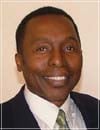
Jesse Gistand has been pastor of Grace Bible Church of Hayward for 17yrs. He is a conference speaker, lectures, and has a local radio ministry. He is dedicated to the gospel of God's Sovereign Grace, and the salvation of chosen sinners through the ministry of gospel preaching. "Christ is All." Their website may be viewed at http://www.grace-bible.com.
Broadcaster:

Comments

0 / 2000 characters
Comments are moderated before appearing.

Be the first to comment!

Joshua

Joshua

Shall we play a game? Ask me about articles, sermons, or theology from our library. I can also help you navigate the site.