Bootstrap
Jesse Gistand

Friday Night Bible Study - Acts 2:1-13

Acts 2:1-13
Jesse Gistand September, 13 2013 Audio
0 Comments
Jesse Gistand
Jesse Gistand September, 13 2013

Sermon Transcript

Auto-generated transcript • May contain errors

100%
Amen Acts chapter 2. I'm gonna
read again verses 1 through verse 13 and then we'll unpack what
we have been dealing with you can pull up our previous PowerPoint
Section number 3 drawn by the sound if you will section number
3 and when the day of Pentecost was fully come they were all
with one accord and suddenly there came a sound from heaven
as of a rushing mighty wind and and it filled all the house where
they were sitting. And there appeared unto them
cloven tongues like as a fire, and it sat upon each of them.
And they were all filled with the Holy Ghost and began to speak
with other tongues, as the Spirit gave them utterance. And there
were dwelling at Jerusalem devout Jews out of every nation under
heaven. Now when this was noised abroad,
the multitude came together and were confounded, because that
every man had heard them speak in his own language. And they
were all amazed and marveled, saying one to another, behold,
are not all these which speak Galileans? And how hear we every
man in our own tongue wherein we were born, Parthian, Medes,
Elamites, and the dwellers in Mesopotamia, and Judea, Cappadocia,
Pontus, and Asia, Phrygia, Pamphylia, in Egypt and in the parts of
Libya about Cyrene and strangers of Rome, Jews and proselyte,
Cretes and Arabians. We do hear them speak in our
tongues the wonderful works of God." What does this mean? We'll stop right there because
there's a change of the narrative from there that is relevant to
Peter's response in verse 13. We left off last week recognizing
that we are dealing with a Pentecost fulfillment. We talked about
the Old Testament feast day of Pentecost coming 50 days after
Passover. Passover was when our Savior
was crucified in the early days of AD 33. 50 days later, the
Spirit of God is poured out and it fulfills what was typologically
in the Levitical code under the three forms of government that
Israel was obligated to a, they were obligated to a religious
or a ceremonial law. They were obligated to a civil
or judicial law. That was the 10 commandments
with the extrapolation of those commandments given in the Deuteronomy,
Deuteronomical code where the judges and Moses would adjudicate
moral ethical behavior according to the 10 commandments. And then
there was the agricultural system. There was the ceremonial system,
how they should worship. That's the Levitical code. There
was the civil judicial system. That was the code of Moses law
by which Israel was to determine right and wrong morally and ethically.
And then there was the Levitical code or what we call the agricultural
code, three forms of government. We have three forms of government
in our country as well. The legislative branch, the executive
branch, and then what is the other branch? judicial branch,
the legislative branch, the executive branch, and the judicial branch.
The judicial branch is our judge system where our Supreme Court
and the court system in every state adjudicate law and determine
whether or not our legislatures, these folks that are in Washington,
our Congress and Senate, who try to legislate laws that are
ostensibly within the framework of our Constitution, and govern
the people on an everyday basis, the judicial system examines
that legislation that comes to Washington or out of Washington
to determine whether it's in sync or in concordance with or
harmony with the Constitution. The executive branch is where
the president is. He and his administration execute
primarily, but not exclusively, the laws that have to do with
our war policies, our global policies with respect to reinforcing
our interests around the world. That's the executive branch.
Although he does also have power, of the pen to overrule legislation
in Washington, D.C. as well. These three branches
of government are designed to be checks and balances to keep
our so-called quasi-representative republic in good shape. So Israel has a threefold government.
America has a threefold government. There's a lot of parallels there,
and they all emerge historically out of your Roman Government
paradigm as well. And what I why I'm saying that
is because in Acts chapter 2 Israel was at all of the Jews were at
Jerusalem on Pentecost at this time because this was a major
feast at Pentecost. They were not Those who did not
know the gospel and were not in the small nucleus of believers
with Jesus, they were not at Pentecost waiting for the outpouring
of the Spirit. They were at Pentecost going
through the Old Testament Levitical priesthood observance of the
feast days. There were major feast days we
talked about last week that Israel had to observe. There were seven
overall feasts that they observed throughout the year, but three
major ones, Passover, Pentecost and then what will be called
the feast of harvest or the feast of in gatherings at the end of
the season The season began at a certain time of the year ended
at a certain time of the year and Israel would gather around
these feasts. Thank God for the harvest because
they were primarily an agricultural nation they depended heavily
upon their wheat upon their grapes upon their vineyards upon their
olives upon for them to survive. They were the land of milk and
honey with olive trees and vineyards and harvests. You guys get the
scenario. So at Pentecost they are coming
together to worship God because God has given them the first
fruits. In the Levitical code in Leviticus
23, the priest would have offered up two waved loaves, two loaves
of bread before God. The number two represents witness
This is true in the scriptures out of the mouth of two or three
witnesses. Let every word be established. So the two wave
lows that the priest Aaron would have raised up in the, um, and
the temple would have been a wave lows given to God saying, we
thank you for the seed. So we thank you for the harvest
grown. We thank you for the gathering
in of the sheaves and the preparation of the bread that we eat. Praise
God from whom all blessings flow. That's our theology. We get what
we get from God. A man can receive nothing except
they receive it from heaven. The two wave lows would represent
the church of the living God is why Jesus would say to his
disciples before they cross over from the Old Testament into the
new. The harvest is plentiful. The laborers are few. Wait, wait,
wait, you will be able to be a part of the initial harvest,
our first fruits of Pentecost that would begin the New Testament
period. And this is what's taking place
in Acts chapter two. What we learned in last week's study
in verses one through four was this, that at Pentecost, they
were there on one accord. Verse one, you see that? They
were all with one accord in one place. We worked that through
extensively in the weeks before. It's very important for the church
of the living God to understand that God is not interested in
mere form. He also is interested in substance. Let me say that again while I
cut the heater down. So you don't fall asleep on me.
God is not interested in mere form. He's also interested in
what substance. And what that means is that,
um, What God saw at Pentecost was a true obedience. What God
saw in the disciples rather here at Jerusalem was a true obedience.
One where they were waiting physically in Jerusalem as they were told,
but their hearts also were right. And you and I know that it's
critical in order for us to do anything on any kind of level,
on a systemic level, on a team work level, as a collective level,
that we've got to have unity. The unity was a gift that was
given to this nucleus for them to be able to wait in an indefinite
period of time because they were not told how long it would be
before they received the promise. And they were waiting, and they
were worshiping, and they were studying the Word of God. They
were going home and coming back just in case you thought that
they stayed there 40 days. They didn't. In fact, it would
have been 10 days that they would have waited. Jesus was with them
40 days. He told them to wait that 10
days. They would have gone home, went to sleep, come back the
next day, gone home, went to sleep, come back the next day.
And they would have went through basically what we do in worship.
We pray. We study. We fellowship they
would have been worshiping. So I want you to understand it's
a very basic Scenario here nothing Super zealous they weren't tearing
all night and praying and crying. It's not been going on. You know
how we used to do it No, get up go home. Go to bed getting
your own bed. Go to sleep Get a good night's sleep. I told
you sleep is spiritual, right? I Because, you know, when you
don't have your sleep, you got attitude and that's carnal, isn't
it? So get your sleep because you've got to be spiritual. You
get up the next day and you do it all over again. And then it
says in verse two, and suddenly there came a sound from heaven
as of a rushing mighty wind. And it filled all the house where
they were sitting. I want you to mark a couple of
things in verse two. In verse two, we have a sound,
right? We have a sound. That's where our PowerPoint,
drawn by the sound, drawn by the sound. Sound filled the house.
Sound filled the house. I said to you that that was a
phenomena. It wasn't an actual wind that
came into the house. It was the sound of a mighty
rushing wind. You guys got that? It was not
a literal wind. Please understand that we are
not dealing with a physical phenomena on a level of the wind currents
running into Jerusalem, wherever they were, and then rushing into
the house. It would have implied that it was in the house and
outside of the house, but the sound was in the house. We learned
in John chapter 3 verse 8 when Jesus used the analogy of the
wind as a type of the spirit Which is a running analogy that
goes from the beginning of the Bible to the end of time as an
analogy are Corresponding to the nature of the spirit the
wind represents the spirit You guys got that. So let me say
this again It's important for us to get this right because
we can slip into paganism very easy The wind is not a spirit
So when you walk in and the wind start blowing and the leaves
are rustling in there the Lord ain't talking to you He may be talking to someone
else but he's that's not the Spirit of God, okay, please understand
that Our Savior said in John chapter 3 that when the wind
blows you hear the sound of it And in like manner, this is a
parallel clause, so is the manner or movement or sovereignty of
the Spirit of God. It's a parallel clause. It doesn't
mean we're talking about the same thing. You guys follow that.
So what we're having here in Acts chapter two is a phenomena
on a heavenly, on a spiritual level from heaven that is corresponding
with the Old Testament call of Israel on Mount Sinai when they
were given the law. We won't go back to unpack that,
but in Exodus chapter 19, when God had told Moses to tell Israel
to sanctify themselves and on the third day, come to the Mount,
when you come to the Mount, I will meet you there and I will speak
with you there face to face. They heard a sound. And the sound
was a loud noise. And the noise at that time was
the blowing of the trumpet. The earth was quaking and fire
was emerging out of Mount Orab. It was a tumultuous experience. They knew that God was present.
And when they gathered, trembling fearful, God spoke to them. So
what we underscored last time was that we have a sound. And
then the next thing we have in verse 3 is a sight. There appeared unto them cloven
tongues as of what and it sat upon each of them So in the second
verse we have a sound that's audible hearing in the third
verse We have sight that's visual seeing both of these are manifestations
that will not occur again This was a one-time event that symbolize
the one-time entrance of the Spirit of God into the world,
the initiation of the baptism of the New Testament Church.
It would not happen again because it's fulfilling Old Testament
typology. Once Old Testament typology is
fulfilled, God does not have to use that paradigm or that
model or that image or that analogy anymore. You won't see that going
through the Book of Acts. The Spirit of God will work several
times through the Book of Acts. But he will not work with these
two phenomena. The term phenomena is a Latin
term that means to be, to appear or to manifest. We can't quite
describe it, but it is a manifestation. The Spirit of God will not manifest
himself in the book of Acts again as fire. He will not manifest
himself in the book of Acts as a sound. What he will manifest
himself as in the book of Acts repeatedly, which is what we're
going to study for the next three weeks, is a tongue and a prophecy. This is what we are compelled
to, by our study, to consider. This is what's driving the whole
narrative at this point. So what will fall away is the
sound. What will also fall away is the
sight. But what won't fall away is the
internal compelling for the people of God who have now received
the spirit to utter, to utter as the spirit gave them utterance. This will happen continually
through the book of Acts because they will be practicing what
Our lord practiced so we read in verse three and four these
words and there appeared unto them cloven tongues Like as a
fire and the king james the word is cloven. It should be divided
Divided tongues and it would really mean individual tongues
now if you want to you can uh, You can uh visualize a tongue
on the top of your head. But really what it is is just
a flame Flame on the top of the heads of each of the persons
in the room with the Apostles the number being how many? 120 120 people individually possessed
by the Spirit of God Audibly engulfed by a sound that's a
unit. That's a that's a a group experience
and then individually the tongues of fire on their heads and The
tongues of fire that are on their heads means that they are now
being qualified to speak. For the Spirit of God is entering
into them individually and they will all now open their mouth
as the Spirit gives them utterance, as the Spirit gives them utterance.
That phraseology and that terminology will be developed down the line
because it means that God is sovereign in the act. what they
do, they will do because they are compelled by a sovereign
God to open their mouth. He will qualify them to speak.
What we're going to be looking at here tonight is the explanation
of that phenomena. The explanation of that phenomena
is going to take a couple of weeks because the text is rich
in theology and it's necessary to understand Primarily because
of our present present-day practice in most of our charismatic and
Pentecostal churches which often assert that what they do in their
churches by way of what we call speaking in tongues are the gift
of languages Corresponds to the book of Acts, but many of us
would say that you really don't have a correspondence With what
is taking place in our Pentecostal charismatic churches and the
book of Acts we will demonstrate that carefully and logically
that there is actually no correspondence there with what we see in most
of our churches that are exercising what is called the spiritual
languages. We will work that through carefully to help demonstrate
that what's taking place in the book of Acts. If we want to hold
to a diversity of a development of theology from first Corinthians
12 through 14 and the book of Acts, what's going on in first
Corinthians 12 through 14 may indeed be another kind of phenomena
that the church at Corinth is experiencing versus what's taking
place in the book of Acts. But we're going to work our way
through that to demonstrate if that's a plausible solution. Most of our Pentecostal charismatic
theologians Have seen that it is difficult to harmonize what
takes place in most of your Pentecostal churches With the book of acts
when you carefully examine the content as you're going to hear
tonight With what they allege is the gift of the spirit And
so what they do is they divide the book of acts and the book
of first corinthians 14 in terms of the experience and say first
corinthians 14 Is the premise and grounds upon which we practice
what we practice. We will look at both of those
Arguments and see what we can make of that over the next couple
of weeks in the book of Acts You will see a clear continuity
of the manifestation of the Spirit of God in the expression of tongues
Having as its emphasis ladies and gentlemen one thing prophecy
Prophecy and when we say prophecy what we are talking about is
the proclamation of the gospel We are talking about proclamation
of the gospel, um, through the gift of tongues, as we're going
to talk about here in a moment with a specific purpose in view. So the operation of tongues in
the book of acts will have a very clear prophetic, prophetic implication
as you're about to see now. So we have the sound of the house
field. We have the fire upon them, and
then we have the spirit within what then occurs the process
explained. In verse four, it says, and they
were filled with the Holy Spirit, or the Holy Ghost. Some of your
translations say Holy Spirit. It is a better translation. The
word ghost is an English term that does not correspond with
the Greek phrase panuma or pneuma. Sometimes the P is silent. The
word ghost is a little bit more of a tight definition that is
16th century Greek. 15th century, 16th century English. And really what it meant was
the spirit of a departed person, the spirit of a departed person.
And it has more to do with personality than it has to do with the essence
of the spirit. The term pneuma, spirit, spirit
is purely the idea of our incorporeal essence as being spiritual. And
so it would be better translated Holy Spirit. Although when they
use the term ghost, they have the implications the Holy Spirit
being the representative of the person of Christ and they began
to speak with other tongues as the Spirit gave them utterance
they began to speak with other tongues if you had your outline
you would be able to see as we work through what we call the
process explained they began to speak it's in what we call
the imperfect infinitive they opened their mouth they began
to speak and they did not stop speaking they continue speaking
And Luke under inspiration of the Holy Spirit is saying to
the church is that the church now has been empowered to prophesy,
to preach, to speak, to declare God's word. They were moved passively
by the Spirit of God. The language is very technical. And the Spirit of God came upon
them so that they passively were empowered and qualified to open
their mouth and to speak. They are now occupying the office
of prophet. The church as a whole is occupying
the office of prophet and they are prophesying. They are prophesying
continually. The prophetic utterance that's
taking place here is going to be explained, but the phenomena
itself is clear. It's the work of the Spirit of
God. It happens on Pentecost. It happens as a consequence the
two metaphors corresponding to the nature of God and the Old
Testament Pentecostal feast taking place as well as the establishing
of the law on Mount Sinai occurring correspondingly now the people
of God are going to Manifest that for which they were called
and that is they're going to utter the latter part of verse
4 as the Spirit gave them what? utterance utterance They spake
as the Spirit gave them utterance. Both of those conjunctions, or
both of those clauses, is what defines, ladies and gentlemen,
a prophet. Both of those clauses is what
defines a prophet. And the role that's taking place
right now is that the third person, who is here as a representative
of the second person, who is that? The Lord Jesus. Christ
himself having come as a representative of the first person who was that
God the Father The third person is now present as the resident
apostle. I Need you to get that the third
person is now president present as the resident apostle You must
know this Remember, we're learning that the book of Acts is the
practice of the church, which practice we receive from Jesus
himself. We are merely perpetuating his
life after he rises from the dead and returns to heaven. This
is so important for you and I to get if we are believers in Christ,
we are the body of Christ. The body of Christ now is the
representative, corporal representative of Jesus Christ on the earth.
And when Jesus said in John chapter 20 verse 21, as the father hath
sent me, so I am sending you. We now have our marching orders
and the model for those marching orders. I know what I'm called
to do. I'm called to do exactly what
my master did when he was here. That's why I'm called a Christian.
For a Christian is one who is identified with Christ and what
Christ did when he came was to preach and prophesy and teach
and proclaim the glory of his Father to the world. That is
our primary job. That's why God saved you. That's
what you and I are called to do. That's why the third person
came. The Father sent the Son, Apostolos. The Son sent the Spirit, Apostolos. The Spirit sends the church,
apostolos. Got it? We are all apostles in
that sense. And until that grips the church's
understanding, we can be sidetracked like the church has been sidetracked
by so many issues in the world and fail to realize that our
job is to do the one thing that no one else in the world can
do. Proclaim the glory of God in the person of Jesus Christ
for the salvation of sinners in a fashion that brings men
and women to Christ Now what we're dealing with in Acts chapter
1 is a model that I want to be Penetrated into your thinking
because the model will fulfill It will fulfill everything Jesus
said and many of the Old Testament passages and then it will ferret
itself out So what are they doing? They are speaking forth. They
are uttering. They are speaking in other tongues. Point number two, in the process
explained. You see the term other tongues up there? You notice
I use the language of men. You notice I say that? Because
that's precisely what it is. An intertextual exposition will
explain this. We don't get the right to define
the text the way we want to. Warning, never define the scriptures
by your experience. Always define your experience
by the scriptures. Never say the scriptures mean
this because of my experience. To do so is to exercise a fallacy
in biblical interpretation called eisegesis, which means to read
into the text our own subjective presuppositions, assumptions,
or and experiences and say, oh, this must be what I experienced. No, not necessarily. The two
may not correspond at all. What you are experiencing and
what's in the text may not actually correspond. You may just think
they do. See what I'm getting at? Careful examination of the
text on a very objective level will allow you to stand back,
examine the text in the full scope of biblical truth and the
revelation sound hermeneutics and go, okay, I see what it says.
Now, is that what I'm experiencing? Got that? That's how you bring
everything in the captivity to Christ to the obedience of Christ
versus twisting the scriptures and make them affirm your practices
are mine Authority does not lie in our experience authority lies
in the Word of God The authority of scripture is designed to affirm
or deny our experience An experience must never trump scripture So
in our PowerPoint, we have other tongues. Why? The word heteros,
we learned that last week is a very, very important concept
in our present day scenario where we love the whole ideology coming
out of a postmodern culture of homo. The opposite of homo is
heteros. You got that? You know what heteros
means? Different. Other. Like male is opposite
of female. Y'all got that? Male is opposite
of female. Heteros. It's a good term. It is a law of non-contradiction.
It makes distinctions. God is into distinctions. Y'all
believe that? He made them male and female
in the image of God created He them. So the term is heteros
and the other word is our Greek word glosios from which we get
the term languages. Languages, it's other languages.
They were these were people you this is gonna be fascinating
These were people who were gifted immediately without being taught
Another language So you and I for the most part Although it's really
difficult to tie this analogy down because we have so many
different ethnic groups in our nation And I love it as well
as in our church. I love that as well. And so many
of you speak multiple languages and I speak it in part, but I
love the idea that we have multiple languages in our church and multiple
ethnic groups. But let's just say we're all
born American and all we knew was English. If I wanted to learn
Espanol, I would have to be taught Espanol in a very didactic grammatically
structured way, learning the dialect, parsing the verbs and
the conjugations and all that, to learn the language of Spanish
or French or whatever the language may be. That is an arduous task
that takes time, especially when you're old as I am. Children
can learn it very quickly. The miraculous gift of tongues
was that God granted certain people the capacity to speak
in the language of other ethnic groups without being taught. This is what we call a missiological
gift. It's a gift for missions. It's
a missiological gift. Another way we use it is a breakthrough
gift. You know what a breakthrough
gift is? It's the ability to break through barriers. under
the dunamis of the Spirit of God in a supernatural way without
having to be taught or go through the classical systems of men
in order to be able to engage people who would be a barbarian
to you and you to them, right? You go to a different country,
they speak a completely different dialect, completely different
language, you're barbarian to them, they're barbarian to you,
the wall is up. The Holy Ghost empowers you to
speak in their language, the wall comes down. That's what
happens right here. What you are seeing in Acts chapter
2 is what we call an anti-Babylonian manifestation of God's purpose. An anti-Babylonian... Remember
the Tower of Babel in Genesis chapter 11, where God scattered
the nations? Remember the three major nations
of the world at that time? They were all brothers. Shem,
Ham and Japheth, remember? They were all brothers. And because
they were proud enough to think that they could get to God, get
to heaven without God, God scattered them to the four winds. And they
became the foundation for all the nations of the world. And
God left them scattered. He left them scattered. That
was the Babylonian tower that was disrupted from their seeking
a unity among themselves. That was the foundation for humanism.
A unity among themselves without God. This is what we're trying
to do in our world today. At Pentecost, there was an anti-Babylonian
manifestation where God took these divided nations and brought
them together at Pentecost and spoke to them all at one time
in their own language through a people group who were of themselves
of a different language, although they were one ethnic group themselves.
I'm going to talk about them in a little bit. This was the
phenomenon that took place. And even though in our previous
PowerPoint, I don't want you to go back. I use the term drawn
by the sound. What I know is that what drew
the people that were at Jerusalem, these 15 nations described for
us in verses 9 through 13, 9 through 11, what drew them to where the
120 in the upper room were was not the sound of the wind, but
the prophecy and utterance that was taking place. continually,
unendingly, by them all as they were proclaiming the gospel.
That's what the wonderful works of God are in these languages
of the people who were at Pentecost. They're proclaiming the gospel.
And we talked about this last week. When a man or woman is
privileged to share the word of God with the human race, in
order for you to do it effectively, you need the spirit of God. Sharing
the Word of God is not a human and a natural phenomenon. You
must be gifted by the Spirit of God. You cannot, of your own
strength, proclaim faithfully or effectively or accurately
the Word of God to human beings without the Spirit of God. This
is the whole idea of the outpouring of the Spirit of which Peter
is going to explain to us here shortly. The phenomena, as I
shared with you last week, is that these people began to speak
under the impulse of the Spirit of God, and they continued until
they drew to them all these ethnic groups. These ethnic groups just
kept coming because they kept prophesying, which in itself
is analogous to the call for us to proclaim the gospel so
that men and women might hear the message of redemption. It
was a powerful, powerful phenomenon that was taking place here. So
they spoke in other tongues by spiritual impulse, guided prophetically
and impassionedly by the Spirit of God. I used that in that last
point, point number C, not the last one, point number C, by
the spiritual impulse, guided prophetically, because they're
proclaiming the Word of God, and impassioned. The Greek verb
there that's being used, and they spake with other tongues
as the Spirit gave them utterance, gave them utterance, What I called
your attention to in verse 14 where Peter is now standing up
explaining what's taking place He says in verse 11, but Peter
standing up with the 11 lifted up his what? Lifted up his voice
Lifted up his voice Peter gave utterance Peter is the same verb
that's being used here, lifted up his voice, is what's being
used when it says, and they spake with other tongues as the Spirit
gave them utterance, as the Spirit lifted up their voice. I want
you to hear me. They were not talking quietly
like a person sitting two feet in front of each other. They
were speaking boldly and clearly with uplifted voices. Under the
unction of the Spirit of God, they were proclaiming the glories
of Christ. That takes energy, that takes
focus, that takes clarity of mind, that takes an endowment
of the Spirit of God, and that action is what the Spirit of
God uses to call men and women's attention to Him. So what you
see in verse 14 is what the 120 were doing, which is what created
the noise. Are you guys hearing me? This
is the noise that's taking place. the noise that's taking place.
So they were passionate in their proclamation of it. And so I
guess I'll just take some, uh, pot shots as some of these folks
that think that, uh, preaching and proclaiming the word of God
is sitting on a stool, having a conversation with somebody,
no preaching and proclaiming the word of God under the unction
of the spirit is not sitting, having a cup of coffee, talking
about Jesus. You can do that. Don't get me
wrong. That's a nice way of dialoguing
The the book of acts is filled with dialogue and pete and paul
went into the synagogues Constantly reasoning. That's our word dialogue
gizmo. My reasoning out of the scriptures
those things pertaining to christ but when it comes to preaching
and the prophetic Expression that the Spirit of God has endowed
a man or woman or a person to do There's going to be a level
of animation That you cannot deny Okay It was in our masters life It
was in the Apostles life. It's in the early churches life
Peter has to do this here in verse 14 Corresponding to what
these folks are doing in 120 because ladies and gentlemen
There were 15 groups of people. This is thousands of people who
have gathered together around these who are 120, thousands
of people. Now I have a microphone. Are
you hearing me? They didn't have a microphone.
There's what the vocal cords that God gave them from birth
which he endowed by his spirit to be able to declare With a
level of volume that drew people to themselves They continued
with that volume with that clarity with the specificity of the gospel
under that unction until the people were drawn together Fascinating
Fascinating the effect was fourfold The people were drawn they were
confounded They marveled and they were amazed. Do you see
that in our PowerPoint? Look at what it says over in
verse six, six. Now, when this was noise abroad, the multitude
came together and were what? Confounded. You know what that
means? That they, they were rather confused
as to what they were seeing and what they were observing. They
were not confused as to what they were hearing. They were
confused as to what they were observing because there was no
rational reference point in their mind by which they could logically
rest with the fact that a person of another ethnic group clearly
not having the background of his culture or his dialect or
his language is speaking to you in their language. You are blown
away. That's what the word confounded
means. Are you hearing me? The next word is, in my text,
is that they were amazed, verse seven. And they were all amazed. See the phrase amazed? The word
amazed there is a word that's constantly used in the gospels
when Jesus' priests are healed. It means that they stood outside
of themselves. It's a Greek term that means
to be amazed. to be jarred out of the subjective
experience, almost like an out-of-body experience. And technically that's
what the Greek term is. I just don't want to get weird
with it. The Greek term means to stand outside of yourself
and say, what is taking place? You know how we use the phrase,
he's besides himself, you know. So they were on the outside of
this because they could not It was really it was really a marvel
to them. They were this was they were
on the brink of Irrationality This is how powerful this phenomenon
was I want you to I want you to I want you to stay with me
the last Phrase that's being used the last adjective to describe
their experience is that they marvel see the phrase marvel
So they were confounded, they were amazed, and they marveled,
saying one to another, behold, look, are not all these which
speak what? We're going to be talking about
them in a moment. How hear we every man in our own tongue wherein
we were born? Powerful, isn't it? So two important
questions we are going to be dealing with, two important questions
that I am raising. I don't know if we had further
PowerPoints on that or not. Let me see. Yes, two important
questions raised. This is what we're gonna deal
with for tonight. We've got a little time two important questions
raised This is where I want you guys to be Patient as we as we
look at this because our Lord is brilliant in the manner in
which He manifested his glory to humanity and he does it in
certain principles that are consistent all the time if you and I miss
this we will miss the way in which the Lord works and He works
this way all the time. So the two questions that are
raised are really questions which will help us understand how God
works. Here are the questions. How are
we hearing? Do you see that? How are we hearing? And the other one is, how are
they speaking? The two actually conflated together
actually means what's happening here? Okay, what's happening
here? How are we hearing? Well, they're
hearing by divine providence They are there by an appointment
from God They are at a time in history That is the pivotal change
of everything that they all were a part of the perfunctory Religion
of the Old Testament system being either Jews or proselytes going
to the temple three times a year going through the external modes
of religion and going through the sacrifices, going through
the offerings, going through the blood sacrifices, going through
these feasts which could never take away sins, which could never
satisfy the soul. They were just going through
religion. Anybody know anything about that? Just religious activity. And because they were under a
worse religion, they thought that they were alright, but internally
they knew that they were vacuous and empty. So, what's powerful
is that There was a change of events on this particular Pentecost. This is not the same Pentecost
as all the other Pentecost. This one had an interruption
from the normal Old Testament model of the dry empty formality
and now they were confronted with a dynamic that drew them
away from the old into the presence of the new. Are you hearing me? They were confronted by a dynamic
that was strategically placed in the same place where they
would be, although not smack dab in the middle for a prophetic
reason we will talk about here shortly, but close enough in
the region that the sound of the dynamic would draw them away
from the type and the shadow and the symbolism of the Old
Testament ritual to come and discover the reality behind the
ritual that was taking place somewhere else. Are you hearing
me? They were being drawn by God
to leave the Old Testament system and begin to realize the New
Testament reality behind the system. They are compelled to
raise the question because they are stuck between the old and
the new. So this is what the book of Acts
is about. Transition from the Old Testament
into the new. The New Testament officially
takes place on this day. Let me help some of you with
your theology because like folks like to come, you know, we just
have brothers and sisters who like to argue, right? And the
reason we argue is because like we'll have a doctrinal view or
a doctrinal concept and then someone will come along and say
something different than what you believe, right? And then,
you know, because we don't like to give up stuff easy. Even if
it's wrong, we don't like to give it up. It can be as wrong
as a black goat, but we're not giving it up. We're going to
argue to keep it right. And so I've had to deal with
this for 25 years. When you are confronted with
a truth that actually demolishes your position, you fight to hold
it. You fight to hold it because
you are so tied to your truth that if you lose that truth,
you're afraid you're going to lose yourself. That's dreadful
because now what you've done is committed idolatry with that
particular assumption. But now if God loves you, he'll
destroy that assumption so he can lead you to the truth and
the truth is a person. You got that? That's a battle
that's going on here with these guys struggling. And I said to
you last week that the idea of them being confounded, them marveling,
and them being amazed is a messianic experience. What do I mean by
that? I mean that when you go through the Gospels, Matthew,
Mark, Luke, and John, Jesus did that all the time. He confounded
him all the time. He caused him to marvel all the
time. He caused him to be beside themselves all the time He caused
him to say what is this all the time? They were shaken up all
the time by his preaching teaching in miracles all the time because
there was a kind of judgment taking place Okay, I want you
to hear this. There was a kind of judgment
taking place When you and I are confronted with real biblical
truths not just the assumptions of men, not people's particular
pet views, mine or others. When you and I are really confronted
with biblical truth and you are confronted with biblical truth
when God is in it, you are going to be shaken up every time. You're
going to be shaken up because at the point in which you experience
a revelation of God in the truth of his word, you have now got
to resolve a choice. with whether or not you're gonna
hold to your own old views, which may be inconsistent, contradictory
to, averse to the revelation of the truth that you are now
hearing, or whether or not you're gonna capitulate to that new
truth and discover that you were one of God's sheep and follow
him. That's a powerful, powerful,
powerful, point in time. That's a very difficult situation.
This is what Jesus did with the children of Israel constantly
in his ministry. He divided people all the time. And there was a
division because of him. And there was a division because
of his words. And there was a division over his sayings. People were
going to the left and the right all the time with his ministry.
See, don't buy into this Pollyanna notion that Jesus just like loved
everybody and everybody was kumbaya, all happy around Jesus. That
was never the case. People got mad at Jesus all the
time. The disciples would run to Greek Christ and say, Lord,
don't you know that you just defended that person? Don't you
know you just made the rulers upset? Jesus said, listen, every
tree that my father didn't plant shall be rooted up. Now that's
politically correct, isn't it? Every tree that my father if
what he was saying is I'm operating under the Holy Ghost The spirit
is blowing like a wind every tree That's not planet needs
to come up as soon as possible to know where your foundation
is That's true. See this is where the Injustice
takes place in our churches where we're not given to sound clear
bold honest straightforward preaching and teaching See, we used to
know this a hundred years ago, didn't we old folk? Didn't we
used to be under that kind of stuff? When you were done, the
skin color on your body was different when you left out. You were scorched,
weren't you? Today, we don't have that kind
of preaching. where they are very serious, speaking for God,
speaking by God and dealing with men and women and bringing them
to a crux and a point of eternal verity. We don't hear that today.
It's all entertainment today. So you go out the same way you
came in, your heart never ever being gripped by omnipotence. It's sad. It's sad because we,
listen, we don't change. We don't change unless God gets
a hold of us. We don't change. And Jesus was
the fulfillment of Malachi chapter 3. And the Lord shall suddenly
come to his temple. He will purge the sons of Levi
and that's what he did all three and a half years purged Israel
as John the Baptist says now Now is the fire laid to the kindling
now is the fan put to the floor He shall thoroughly purge his
floor. He will gather his wheat into
his water and all the chaff will be burned up That's what Jesus
did for three and a half years y'all understand that That's
why they killed him Because he was the only authentic man out
of all of the scholarly group, which we're getting ready to
talk about here in a moment, the scholarly group. He was the only one who
had the spirit of God besides his cousin, whom they killed
also. Because John wasn't no joke.
John wasn't no joke. That brother ate grasshoppers,
crickets, wore a leather girdle. He wasn't no joke. He didn't
care about your fashion. He didn't care about your politics.
He didn't care nothing. He didn't care about men's persons. He didn't respect your position,
your prestige, your prominence. He told you like it was. Very
few people in the world like that today. We kill people like
that. I remember a very group of folks
that come to grace about eight years ago. And I preached some
sermon. I was very young at that time,
and I guess I had just waxed hot. I guess I was burning up
everything on that, just burning up everything. So it was a group
of ladies, a group of ladies. They come out of a very prominent
church here in the Bay Area, a church known for politics.
And they came to me and said, your preaching is good, but you
know, that kind of preaching is dangerous. It'll get you hurt. And I took those words. in a
sad way, because that's exactly the sentiment of the church when
it operates out of fear instead of faith. It counts the cost
and says it's not worth it. Don't be that bold. Be politically
correct. Well, John wasn't, neither was
Christ. And you're getting ready to learn
as we go through the book of Acts, neither were the apostles. They
were not politically correct. See, you cannot be politically
correct when you are endowed with the Spirit of God. You can't. All you can be when you have
the Spirit is what the Spirit wants you to be. That's all you
can be. You can't be any less or any
more than what He makes you. And when He's done, you have
to live with the consequences. And the next mission he calls
you, oh, he says, okay, you want to go on this mission with me
again? This is true. This is true. So three questions
we're going to deal with today briefly, maybe for the next 15
minutes and we'll shut it down. The fact is, how are they hearing?
They were hearing because they were providentially brought to
a place where God is going to demonstrate to them that the
gospel no longer will be at Jerusalem. It will no longer be a gospel
where you have to come to Jerusalem. But the gospel now will spread
to the four quarters of the world. And in fact, when they leave
today, these 15 nations, they will leave as ambassadors and
apostles for Christ. They will leave now with the
gift of which Pentecost pointed to year after year after year
in the shadow. The first fruits. You guys got
that? Pentecost represents the first
fruits of the full harvest You guys got that first fruits the
first fruits is the guarantee that the harvest will be given
and it has many categories you and I as Christians are called
the first fruits of God's eternal salvation plan and in the arena
of God's people being part of an eternal, glorious kingdom
that will last forever and ever. We are only a part of the grand
scheme. We're called the first fruits
in the sense that what God does in this new creation, in this
new kingdom paradigm, in this eternal kingdom, is start with
humanity first. which is the reverse of what
he did in the Genesis account when he created the heavens and
the earth, and then on the sixth day he made man. In the new creation,
he started with man first, namely Christ. He is the beginning of
the new creation, and because we are his body, the Spirit of
God makes us new creatures in Christ. If any man be in Christ,
he's what? And thus you and I are a kind of firstfruits unto God,
James chapter 1. Which means there is a latter
harvest of the manifestation of all of God's covenant blessings
to which we are to enter in Right now you and I who are true believers
represent the reality of the eternal kingdom to come You guys
got that? This is why I say when we talk
about the kingdom of God in its four phases and we are in the
third phase The ecclesiastical phase of the kingdom. The first
phase was the patriarchal phase The second phase was the monarchial
phase. The third phase is the ecclesiastical
phase The fourth phase will be the eternal glory stage when
god will glorify everything making everything brand new At the center
of it will be the father and the son and we will worship him
for all eternity We are in the ecclesiastical phase the phase
where the church represents the kingdom of god in the world today.
Are you hearing me? We are in the third phase which
means how do we know the kingdom of God is present because of
the church Remove the church and there is no evidence of the
presence of the kingdom for the church Well, it is not the essence
of the kingdom. It is the expression and vehicle
by which the kingdom manifests itself And the kingdom manifests
itself in the a thorough proclamation of the gospel of which the Spirit
of God takes and uses to save people out of every nation, kindred,
tribe, and tongue. And when he saves them, he creates
other churches. And they do the same thing. Are
you guys hearing me? This is the missiological agenda,
the mission agenda of the Spirit of God. Are y'all hearing what
I'm saying? His job is that he sent to save
sinners through the church. How are they hearing? They are
hearing by the providence of God. What are they hearing? They
are hearing the gospel in their own languages. What's the next
question? How are they speaking? I'm glad
you asked that question. I'm gonna wrap it up here. This
is a phenomenal truth that over the last three or four weeks,
I have been meditating on and enjoying. This is the area, and
I'll be done here. This is the area where you and
I must Understand how God works Isaiah 55 says his ways are not
your ways His thoughts are not your thoughts Now he can give
you his thoughts and then you can think God's thoughts after
him and thus be in sync with God He does not mean for us not
to know him God is light and therefore he will be known Somebody's
gonna know God. That's his nature. I But what
he is saying is in yourself intrinsically, naturally, you and I don't have
the ability to think God's thoughts or know what God is thinking
or be able to say, I know what God is up to until God from the
outside of us reveals himself to us by special knowledge. That
is his word. His word will tell us who he
is and how he thinks and what he does and why he does what
he does. Then his word will tell you that he does what he does.
And if you don't like it, it's too bad. Then his word will say
I'm doing what I'm doing and it doesn't matter about you liking
it I don't even want you to ask the question. Just know that
I'm doing it Ask brother Joe. He never got his answer Joe never
got his answer All he got was God's blessing And that was enough
to settle him down Joe, do you know what you went through to
this day? I still don't know Do you know why you went through
no, I don't know but God blessed him in his latter in so much
That joke could say this better is the end of a thing than the
beginning thereof Those that are patient will be blessed Those
that put their trust in the Lord. He will come through you guys
understand that right? So here's what's going on, which
is absolutely phenomenal in our account as the men seek to gather
their faculties and Verse 12 says, and they were all amazed,
all amazed, and were in what? Doubt. The word is perplexed.
It's the same concept that took place in John chapter 20, when
Peter and James and John went to the sepulcher, as the women
had said, he wasn't there. And they slid into the sepulcher
and they all looked. And when Peter came out, the
text says, and Peter was in doubt as to what he saw. He couldn't
understand what was happening. He couldn't put it together.
They still can't put it together. This is going to compel Peter
to speak, but only after we address the question that's up in verse
7. And they were all amazed and
marveled, saying, one to another, behold, are not all these which
speak what? OK, so I want to talk to you
about my Galilean brethren. Can I do that? Because that is
a remarkable statement. How is it? that these 15 nations,
which, as you saw, were as far east as Persia, Babylon, and
then far south as Libya, not Libya, but Ethiopia, Egypt, and
then far west as Rome and Italy. So they covered all three sections
of what we had said before was the Shem, Ham, Japheth region
of Genesis chapter 11, correct? That was the basic Middle Eastern
geography that we are dealing with in that text, 15 nations. Now, those 15 ethnic groups are
also what may be also described as regions, regions. And in those regions, there were
two groups of people that God had scattered abroad in his purpose.
Those two groups of people were Jews and Gentiles. Now, because
all the Gentiles who had come with the Jews to Pentecost were
there, it means that they were proselytes. So that's how Luke
describes it at the latter end of the list. Jews and proselytes. You guys got that? So some of
the folks in these other nations, the Persian nation, the Libyan
nations and what have you, they were Jews who were scattered
abroad in the dysphoria back in the destruction of Israel
587 BC, 610 BC. Never did come back. You guys
understand that? Or when they did come back, they were free
to roam because Rome had dominion over that whole portion of the
world and they could go to any country they want to and settle
down. So what we have is a scattering of the Jewish people abroad in
all of these regional areas. This would be the second scattering.
The first scattering was the Genesis 11 account. The second
scattering was when God destroyed the temple in 587 BC. You guys
remember that? Under Nebuchadnezzar and scattered
the people of God to the four winds. This is why John says
in John chapter 11 that there are children of God scattered
abroad throughout the world and the high priest was describing
the diaspora. So wherever these Jews went,
they talked about Jehovah God. And many of the natives of these
different ethnic groups, we become believers and they would come
to Jerusalem, make their pilgrimage three times a year. Are you guys
following me? So those are the two categories. But they all
with one accord realize that there is a group of people that
are being used by God to proclaim the gospel in a powerful way
to all of these different ethnic groups. They are amazed that
God would choose this group of people. Who were they? The Galileans. The Galileans. Folks from West Oakland. Hunters Point, South Richmond,
the back hills of Kentucky, Louisiana folks, Alabama folks, Southern
folks. Now I am making a little bit
of a caricature of this, but when you understand the background
of the Galilean culture, here's what you understand. They were
eclectically a group of poor people. The Galileans were poor
people. The Galileans were people who
were very uneducated. They were truly your country
bumpkins and your ghetto folks. I want you to follow this now.
These were the folks of whom the elite echelon rulers in Jerusalem
would say, can any good thing come out of Nazareth? And then
Is there a prophet to rise up out of Galilee? John chapter
seven. And these people are cursed. They can't know God because they
don't know the law. In all three cases, what you
have is a form of discrimination on the part of the leaders who
were under the false assumption that because they were the ones
that were lettered and learned and scholastically endowed that
they had an advantage over these poor, peasant, vagabond, ghetto
folk, bad language, bad dialect, tore up grammar. You understand? See, these were the folks that
used the word ain't all the time. In fact, their speech was so
rude that they had developed their own sort of genre and dialect. In Mark's gospel, chapter 14,
verse 17, you don't have to go there, but Peter tried to pretend
that he wasn't with Jesus, but a little Jewish girl said, ah,
no, no, no. See your speech tells on you. See, cause you know, every hood
has his own little language. Every hood has his own little,
ain't that right? Oh yeah. He from, he from the South. He
from the East. I know him. And, and, and, and Peter was
exposed because Peter was a Galilean fisherman. What's amazing about
this is that these folks with this rude speech and their unlearned
background and their country bumpkin ways, unlettered are
the folks whom God has endowed with the capacity to reach all
these nations with a clear, bold, sound, effectual proclamation
of the gospel so that the power may be clearly seen to have been
of God and not of man. so that the excellency of the
glory and of the power might be clearly seen to be the consequence
of the cross work of Jesus Christ, who was also Galilean. So that
as they are preaching to all these peoples, the people won't
fall prey to believing that this had its origins in the old temple. For the old temple is about to
be demolished and the new temple are that group of people who
are now speaking forth the word of the gospel in all of these
ethnic groups. Are you guys hearing what I'm
saying? These poor, uneducated, ignorant, unlearned folks who
spent a little time with Jesus, these poor, ignorant folks who
spent a little time with Jesus. And what is Christ doing here?
He's doing several things. I'm just going to enunciate them
and we'll pick this up next week. The first thing that our master
is doing in this account is fulfilling John chapter 12 verse 31. You know what that text says?
If I be lifted up, I will draw all men to me. Amazing. We know we're talking
about his crucifixion, but we also are talking about his resurrection
and his ascension to glory Once he was lifted up. We talked about
that several weeks, right the cloud took him up and Placed
him at the right hand of God the Father Peter plainly said
God has made him both Lord and Christ and he's going to explain
this what you see now is what Jesus is doing which is what
Christ told the rulers he would do and when he went back to his
father. And this is what he told his
disciples, I've got to go back to my father because if I don't
go back, you will not receive the spirit. If you don't receive
the spirit, you won't be able to do what God has purpose for
you to do. So what they're experiencing
is the outpouring of the spirit as a consequence of Christ's
rule in heaven at the right hand of God. They are now the nucleus
of the New Testament church Preaching and prophesying to all the nations
and they don't have one earthly accomplishment But by which they
can say well, you know, I went to school for eight years Learn
the languages learn comparative religion Learn all of these things
that folks are supposed to learn in order to be effectively used
of God now we don't Talk down education But where education
becomes a substitute for a real vital relationship with God by
the spirit, we oppose all education. For such education has absolutely
nothing to do with God's ability to effectively use you in the
life of men and women. Are you hearing what I'm saying?
And it is critical for you to know that in order for God to
be glorified, there are gonna be certain rules that he always
applies. He's never going to use someone
who can, of their own accomplishments, steal His glory. He is never
going to use someone who, of their own accomplishments, will
steal His glory. We know that because the genus,
the genus, G-E-N-U-S of the gospel is built around God taking his
own son and bringing him into the world incarnate and making
sure that he was not lettered or educated in the school of
the Shema or the school of the theologians by which they can
say, ah, we taught him. He was taught of God. He was
taught of God, John 7. Where did this man learn letters?
From God. From God. Very important, particularly
for us who want to be used by God to reach people with the
gospel. Education is a handmaiden to the ministry of the gospel,
where it does not puff you up, but rather build you up. God
will always resist the proud and only give grace to the humble
You will never know the power of God in the conversion of another
person by how much you learn in your book learning Study so
that you can show yourself approved unto God but understand much
study wearies the flesh You and I need an infusion of the spirit
of god We need the discipline of the spirit of god to take
a hold of our life and then be pleased to use us As he gives
us utterance utterance Utterance is the yielding to the spirit
of god to take what's already in us in terms of biblical truth
And use it for his glory and his honor in the edification
of others So what I'm talking to you about now, and I'm going
to stop here because I'm way over my time, is really what it means
to be Christian versus what it means to go to
church. What it means to be Christian
is to have a real vital relationship with Jesus Christ by his spirit. Which spirit has the capacity
to qualify you to speak on God's behalf effectively in the life
of people? So that the word is this, no
flesh shall glory in his sight. God always uses the base things
of the world, the weak things of the world to confound the
mighty and the high, always. Always he gets glory out of taking
the superlative gifts of his own nature and pouring them into
earthen vessels So that again as he pours out of that earthen
vessel into other earthen vessels The phenomena is how God works
not the color and ordination and the glitter of the vessel
in fact the vessel It's a funky vessel. 2 Corinthians chapter 4, the nicest
term we can use is a spit pot. You know how folks, y'all don't
know this, but our folks in Louisiana and Texas, we sit out on the,
don't go there, don't go there. Yeah, you can't handle that,
huh? Y'all know what I'm, y'all know
where I'm getting ready to go, right? My grandma and my auntie and cuz,
they get to talking those old stories. And that's as nice as I can put
it because in the actual grammar of 2nd Corinthians 4 it's worse
than that And that describes you and me by nature you and
I by nature are filthy Sinful Weak by nature dishonorable
vessels Hallelujah This is what God uses. This is what he uses. He can clean us up a bit but
not so much that we steal his glory and then pour the power
into it and pour it out into other vessels that don't mind
being nothing for Christ. Remember, without me, you can
what? Do nothing. You and I are nothing. And that's exactly what God uses.
Nothings. Galileans. Galileans. You're compelled to ask the question. It's a remote correlation, of
course. She's asking the question, is there a correlation between
the fire? And we talked about that when
we dealt with the fire analogy at Lent, because the Old Testament
becomes a foundation for the new. God is a consuming fire,
isn't he? That is one of what we call the native metaphors
of God's nature. He's fire. He's light. He's purification. He's revelation. He's light. He's purification. He's revelation.
He's awesome in his capacity to destroy. He's awesome in his
capacity to purge. These are the two extremes. God
will destroy and God will purge. He will make things clean and
he will annihilate things. This is the nature of the fire,
right? So Moses sees a burning bush. that is not consumed engulfed
in fire, right? And we have learned that that
burning bush engulfed in fire was a vision of the pre-incarnate
Christ, who as a root out of dry ground, just a stubble of
wood. That's what our flesh is, nothing
but stubble. Wood, hay and stubble engulfed
by the spirit of God went about declaring God's glory. And the
amazing thing is God dwelt in him. But he was also a picture
of the people of God, national Israel, the elect in Israel.
They possessed the spirit of God. But he's also a picture
of the New Testament church. Every true believer is a burning
bush. Do you believe that? Then burn! Let's pray. Father, thank you
for this time. Thank you for your people. Thank
you for your word. Thank you for the truth. As we go our way,
give us traveling mercy. Prepare us for our class tomorrow.
We pray in Jesus' name. Amen. God bless you.
Jesse Gistand
About Jesse Gistand
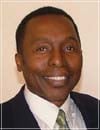
Jesse Gistand has been pastor of Grace Bible Church of Hayward for 17yrs. He is a conference speaker, lectures, and has a local radio ministry. He is dedicated to the gospel of God's Sovereign Grace, and the salvation of chosen sinners through the ministry of gospel preaching. "Christ is All." Their website may be viewed at http://www.grace-bible.com.
Broadcaster:

Comments

0 / 2000 characters
Comments are moderated before appearing.

Be the first to comment!

Joshua

Joshua

Shall we play a game? Ask me about articles, sermons, or theology from our library. I can also help you navigate the site.