Bootstrap
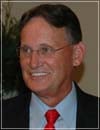
Larry Criss

He Did Not Turn Back

John 14:31
Larry Criss July, 15 2012 Audio
0 Comments
Larry Criss
Larry Criss July, 15 2012
Fairmont Grace Church

Sermon Transcript

Auto-generated transcript • May contain errors

100%
Back in John's Gospel, chapter
14, the traitor has gone out to betray
the Lord. In chapter 13, we read of that
at verse 30. He then, having received the
sop, that was what our Lord told John identify him when John,
leaning on his breast, asked him, who is it that should betray
you? He gives the sop to Judas and immediately he goes out and
it was night. Therefore, when he was gone out,
Jesus said, now is the Son of Man glorified and God is glorified
in him. Only with them now, that is,
the disciples. with his little children, with
the family. And from this point, what we
read of beginning at verse 31 of John 13, all the way over
to chapter 18 at verse 3, he's alone with his disciples. Even
though they walk the streets and they go to the Garden of
Gethsemane, he's only with them until the traitor comes back.
He makes another appearance, and this time he's not alone.
Verse 3 of John 18, Judas then having received a band of men
and officers from the chief priest and Pharisees, to whom he had
bartered our Lord away for 30 pieces of silver, cometh hither
with lanterns and torches and weapons. Between these two events
that we just read of concerning Judas in chapter 13 and chapter
18, Jesus comforts his disciples, and he teaches his disciples,
instructs them, and prays for them in chapter 17 in that high
priestly prayer, and refers to them in chapter 14 as little
children. Little children. Look at verse
1, that very familiar verse of John 14. He says, let not your
heart be troubled. And I have probably pointed this
out to you before. but it won't hurt to do it again. This is one of those places where
the chapter break is in an unfortunate place. I think we would do better
to ignore it here because he is speaking to Peter and he says
in verse 38 of chapter 13, Jesus answered him, that is Peter,
Will thou lay down thy life for my sake? Verily, verily, I say
unto you, the cock shall not crow till thou hast denied me
thrice. Let not your heart be troubled.
Isn't that something? You believe in God, believe also
in me. And then, down in verse 18, I
will not leave you comfortless. I will come to you. Then look down at verse 22 again. Judas saith unto him, not Iscariot,
Lord, how is it that thou will manifest thyself unto us and
not unto the world? And he answers them. And again,
the second time, he says in verse 27, peace I leave with you. My peace I give unto you. Let
not your heart be troubled. Let not your heart be troubled,
neither let it be afraid. And then in chapter 15, after
leaving the upper room where he had instituted the Lord's
Supper, where he was when the traitor went out, where he was
when he spoke these words in chapter 14, In chapter 15, they've
left the upper room. The last verse of, or rather
the last verse in chapter 14, the last few words, he says,
Arise, let us go hence. And then they walk through the
streets of Jerusalem toward the Garden of Gethsemane. Did he
point to a vine on one of the walls of Jerusalem where the
vines were growing when he said these words, I am the true vine
and my father is the husband? And they walked through the streets
toward Gethsemane. And he continues to comfort and
instruct them until they come to, until we come to chapter
17 where he prays that high priestly prayer. He enters seeds for his
little children. Father, keep them that you gave
me. While I was with them, I've kept
them. Now I'm coming back to you. Keep
them through thy word. All those that you've given me,
I've kept. None's lost except the son of
perdition that the scriptures might be fulfilled. This is not
where he's entered Gethsemane. No, no, no. This prayer takes
place before they get there in John chapter 18. When he comes
to John chapter 18, the other gospel writers tells us that's
where he prayed, and his sweat was, as it were, great drops
of blood falling down to the ground. I want you to look back
at the last verse of chapter 14, though. Look what it says
again. but that the world may know that
I love the Father, and as the Father gave me commandment, even
so I do. Arise, let us go hence." Let
us go hence. Knowing all things that awaited
him, knowing all things that were about to come upon him,
he says, arise. arise. Let's go to them. And as the faithful great shepherd
of the sheep, can you picture this? He leads them out. always leading the way. He goes before them. I was almost
inclined, considering what he was going to do at this time.
When he says, arise, let us go hence, he knew they didn't, but
he knew what he was going to. He knew it was that hour for
which he had come into the world. He knew what was going to take
place. He knew. more than anyone else, because
he knew all things that should come upon him, and yet he says,
Arise, let us go hence. I was almost tempted to title
the message, Behold, How He Loved Them. Behold how he loved them. But then I thought of a scripture
in Isaiah. You need not turn there. And
I thought perhaps this will be a more appropriate title. He
didn't turn away. He didn't turn away. Knowing
all things that should come upon him, he went forth. In Isaiah
chapter 50, we have this prophecy. And who else could it be speaking
of except the Son of God? The Lord had given me the tongue
of the learned. that I should know how to speak
a word in season to him that is weary. He wakeneth morning
by morning. He wakeneth mine ear to hear
as to learn. The Lord God hath opened mine
ear. The word there is bored. where
a servant didn't want to leave his master. He loved the master. So they were more a hole in his
ear as an identification mark that he didn't want to go free.
He wanted to stay with his master. And our Lord says to his father,
his God, the lord had opened my ear and I was not rebellious. Neither turned away back. I didn't go back. I gave my back
to the smiters and my cheeks to them that plucked off the
hair. I hid not my face from shame
and spitting. Arise, he says, let us go let
us go hence. He didn't turn back. That's the
title of my message. This night of all nights, he
faces it with these blessed words. Let's go face it. Arise, let
us go He gave me a work, even so I
do. I'm going now to do it. Arise,
let us go hence. The hour had come. The hour. How often we read that
word used by our Lord. Here in John's gospel several
times, the other gospels, the hour had come. This hour was the reason for
the beginning of hours. This was the reason for time
beginning. All hours were leading up to
this one hour. And when all that he accomplished
in this hour reaches down to that last calling, or rather
the calling of that last sheep for whom he shed his precious
blood, he will say, time will be no more. There's no more need
of time, Lord. Oh, no. And he'll gather us all
home to be with him. Turn back, if you will, in John
chapter 12. He speaks of this in John chapter
12 at verse 23. This hour that was now upon him,
this hour that he would accomplish that which his father sent him
into the world to do. He says, the hour is come that
the Son of Man should be glorified. Verily, verily, I say unto you,
except the corn of wheat fall into the ground and die, it abideth
alone. It abideth alone, but if it die,"
and he did, if it die, it bringeth forth much fruit. How much? A multitude that no
man can number. Verse 25, he that loveth his
life shall lose it. And he that hateth his life in
this world shall keep it unto life eternal. If any man serve
me, let him follow me. And where I am, there shall also
my servant be. If any man serve me, him will
my father honor. Now is my soul troubled. approaching this hour. He says,
concerning what would take place, now is my soul troubled. And what shall I say? Father,
save me from this hour? Oh, no. Oh, no. But for this
hour, for this cause, rather, came I unto this hour. Father,
glorify thy name. Verse 1 of chapter 13. Now before
the feast of the Passover, That Passover that was a picture,
a type, a shadow of our Lord Jesus Christ. The last Passover. the truly last Passover. He was
about to fulfill everything that pictured. Now, before the feast
of the Passover, when Jesus knew that His hour was come, that
He should depart out of this world unto the Father, having
loved His own which were in the world, He loved them unto the
end. And then in that high priestly
prayer, He prayed just before He entered the Garden of Gethsemane.
He says in verse 1 of John 17, These words spake Jesus and lifted
up his eyes to heaven and said, Father, the hour is come. It's arrived. It's here. The hour is come. Glorify thy
son that thy son may also glorify thee. The hour that God created
the heavens and the earth for, that hour. God dwelleth not in
temples made with hands. Heaven is my throne and earth
is my footstool, he declares, and heaven and earth were created
for this hour. I don't think I need be concerned
about overstating that or overemphasizing that. It's not possible, Lord. All the work that was set before
him, that he refers to as being comprised into this hour that
had now approached and he arises to face, there was none greater
all the enormity of that work, all the magnitude of his accomplishment. Turn, if you will, to Hebrews
chapter 10. Hebrews chapter 10. This is what
the writer refers to. Gives us an idea of The marvel, the marvel of this
hour and the work that was entrusted into the hands of Christ, the
importance of it is seen here. Hebrews chapter 10, verse 5. Wherefore, when he cometh into
the world, that is Christ, he saith, Sacrifice and offering
thou wouldest not. but a body has thou prepared
me, and burnt offerings, and sacrifices for sin thou hast
had no pleasure." If those things could take away sin, God would
have been pleased with them, but he had no pleasure with them.
They were only pictures, they were only types, they were only
shadows. Then said Ilo, I come. I come. It's not possible that
the blood of bulls and of goats should take away sins. Then said
I, Lo, Lo, I come to do what those could never do, to do what
those were only a picture of. I come to really and actually
and completely and eternally take away all the sins of all
my people. Then I said, Lo, I come. I'm so thankful He did, aren't
you? Because it's not possible, as
Paul says in verse 4, that the blood of bulls and goats should
take away sins, and it's not possible that anything I could
ever do could take away sins. It's not possible that all the
works of men, all combined, all their religious endeavors could
ever take away, could ever erase one sin. Then said I, What a
Redeemer. Who is this? Who is this, Lonnie,
that can accomplish this work? Who is this that can put away
sin? He must be something. Oh, he
must be worthy. He must be unique. He's in a
class all by himself. Then said I, this one, I come,
in the volume of the book it is written of me, to do thy will,
O God, to do all thy will, to do it perfectly, to satisfy you
to such a degree that nothing will be left to do. I come to
do thy will, O God. Above when he said sacrifice
and offering and burn offerings and offering for sin, thou wouldest
not. Neither had pleasure therein
which are offered by the law. Then said he, that is Christ,
I come to do thy will, O God. He taketh away the first that
he may establish the second. By the which will, We are sanctified
through the offering of the body of Jesus Christ once. Once. Once was enough. Our high priest doesn't have
to enter into the holy place year after year. He did it one
time when he offered himself for the sins of all of his people.
That got the job done and God was satisfied. Every priest,
verse 11. standing daily, ministering,
and offering oftentimes the same sacrifices they had to. Why? Because they could never
take away sin. But, here it is, but this man,
but this man, the God-man, that holy thing formed in the womb
of Mary by God's Holy Spirit, that one Joseph was told to call
his name Jesus, that man that shall save his people from their
sins, that man who came unto this hour, that man who said,
Arise, let us go hence. I've come to accomplish the redemption
of my people, this man. after he had offered one sacrifice
for sins forever, did what? What did he do? He sat down,
signifying that the work was done. The work of redemption
that we just sang about was accomplished. Therefore, he sat down on the
right hand of God. Let us go forth. All the importance
of this hour. If he turns back, if he turns
back and doesn't pay the debt. If he turns back and doesn't
offer himself to God, then there's no atonement, Lord. No atonement. No atonement equals no redemption. No redemption equals this. We're still cursed by God's unsatisfied
law. Sin still remains, and if sin
still remains, God's wrath on sin still remains on you and
I, except for this. When He had by Himself purged
our sins, He sat down. That's the only way wrath is
removed. That's the only way sins are
put away. That's the only means, the only
avenue, the only reason I'm accepted before God is because I'm accepted
in Him. And that's the only reason. And
there can't be a better one. There can't be a better way than
to be accepted in him. Could you be more secure outside
of him? Oh, no. Outside of him, there's
nothing but judgment. Oh, but accepted in him, there's
no condemnation. This man, the prophet Zacharias
said, Speaking of our Redeemer, I will remove the iniquity of
that land in one day. In one day. I will remove the
iniquity of that land. It's not talking about Israel
over there, but the land of His people, His redeemed, His chosen. I will remove the iniquity of
that land in one day. day. Is that not why they sing
in glory? Worthy is the lamb. Is that not
why we'll join that multitude in singing that blessed song?
Because then we'll have a realization. We'll have more of a knowledge
of the enormity of this blessed work that he did on the behalf
of his people in taking their sins away. And that's why we'll
sing. in a way that we just can't now
because we'll realize it in a way that we don't now. Oh, He's worthy. He's worthy because He has taken
away all our sins. With harps and with vows there
stands a great throne in the presence of Jesus and sings this
new song. To him who had loved us and washed
us from sin, to him be the glory forever. Amen. Forever? Forever? Is that not an indication
of the worth of the Lamb? The magnitude of the work that
He accomplished for His people? Because the psalm never gets
old. It never gets old. Because the
accomplishment of our dear Redeemer is so enormous that we'll never
get over it. All these once were sinners defiled
in his sight. Now arrayed in pure garments,
their voices unite to him who had loved us and washed us from
sin. To him be the glory forever. Amen. To that mighty work. that he speaks of as being this
hour, he says, arise, let us go hence. And then in chapter
18, they arrive. They arrive at the Mount of Olives,
and they enter the olive garden there, Gethsemane, with its oil
press, symbolic of where he would trod in the winepress of the
wrath of God alone. In 2 Samuel chapter 15, David is fleeing from Jerusalem
because his son Absalom has taken the throne. He's gathered men
around him, and David's remaining faithful ones come to him and
say, Absalom has gathered a great... The people have just flocked
around him. We've got to leave. And we're told in chapter 15
of 2 Samuel that David went across this same brook that the son
of David did hundreds of years later. He crossed the brook Sidra. David crossed it to escape. to
save his life. The son of David crosses it to
lay down his life for his sheep. He doesn't flee, but he enters
that garden, approaches that mob, and says, Whom seek ye? What a picture. The captain of
our salvation stepping up to face this bloodthirsty mob led
by the traitor Judas with these words in verse 4, Whom seek ye? We should read the entire verse,
shouldn't we? Jesus, therefore, knowing all things that should
come upon him, David heard from his faithful men, Absalom seeking
your life, so he crossed the brook to escape. Our Lord knows
everything that's about to come upon him, and he doesn't turn
back. He steps forward and says, Whom
seek ye? Whom seek ye? That cup. That cup. He's now about to press to his
lips that cup that he referred to in the garden when he prayed,
Father, if it be possible, let this cup pass for me. Peter, he says in this chapter,
put up your sword. The cup that my Father hath given
me, verse 11, shall I not drink it? All this cup This cup. Father, if it's possible, let
this cup pass from me. Matthew tells us that he was
exceeding sorrowful, even unto death. Luke says he was in an
agony and he prayed more earnestly until his blood was as it were,
or rather his sweat was as it were, great drops of blood falling
down to the ground. In chapter 12 of John's gospel,
he said, now is my soul troubled, and what shall I say? The cup! The cup of God's wrath due to
you and I for sin. The cup of a holy God passes
over to his sinless son and he'll be made sin for you and I. Oh, this cup. Now is my soul
troubled, he said. But he told them, don't let yours
be. my soul's trouble. And what shall
I say? Father, save me from this hour.
Oh, the cup. Let not your heart be troubled.
Let not your heart be troubled. If the nearness of that cup of
being made sin and therefore, in being made sin, he endures
God's wrath. Because he was made sin, he is
forsaken of God. If the closeness of that hour
caused this in our Redeemer, when we read in other Gospels
concerning his prayer in the garden, if just the nearness
of that hour caused such a reaction, what must have been the actual
passing through it that he endured when he was actually made sin? The old writers referred to that
as the unknown sufferings of Christ. That's a pretty good
title, isn't it? I confess, they're unknown to
me. Unknown to me. Made sin, he who
knew no sin. The sinless one made sin. No wonder Luther said, pondering
over that verse, where our Lord's cry pierces the darkness from
the cross, my God, why has thou forsaken me? And Luther said,
who can understand that? Who can explain that? God, forsaken
of God. If the shadow of the cross now
falling over his holy soul caused this, what was it like for him
when he actually hangs upon the cross all alone? I've trodden
the winepress alone. Such a loneliness we cannot identify
with because he was the sinless Lamb of God. I do always those
things that please the Father. The hour has come as it's written. You all be scattered to your
own and leave me alone. Yet he said, I'm not alone. The
Father's with me. But not now. Not in this hour. Not when he's made sin. God justly,
because he's made sin, God justly condemns him as sin. You notice
that in 2 Corinthians 5 and 21? It doesn't say that he was made
like sin. It said he was made sin itself. Sin itself. Listen to what he
says in Psalm 22. This is our Lord's cry from the
cross. These words. Well, turn there
with me. Psalm 22. Did he utter all these things?
Perhaps he did. I know we have them not all recorded
in the Gospels, but listen to it. Psalm 22, or read it with
me. He says in verse 1, My God, my
God, why hast thou forsaken me? Why art thou so far from helping
me and from the words of my roaring? O my God, I cry in the daytime,
but thou hearest not, and in the night season, and am not
silent. But thou art holy, but thou art holy. and thou that
inhabits the praises of Israel. Our fathers trusted in thee,
they trusted, and thou didst deliver them. They cried unto
thee, and you delivered them. They trusted in thee, and were
not confounded, but I am a worm. This is Christ speaking. I'm
a worm, contemptible, despised. I'm a worm, and no man, a reproach
of men, and despised of the people. And yet, knowing all that, he
says, arise, let us go hence. He didn't turn back. He leaves that upper room where
he said, take the bread, this is my body. Take the cup, this
is my blood. And he goes to perform that which
that represented. to fulfill what that blood or
rather wine and bread represented, his body and his blood. Look in John 18 with me at verse
4. Jesus therefore knowing all things
that should come upon him went forth and said unto them, Whom
seek ye? They answered him, Jesus of Nazareth.
Jesus saith unto them, I am. That's what he said, I am. Judas
also, which betrayed him, stood with them. As soon as he had
said unto them, I am, they went backward and fell to the ground.
Who does it look like is in control to you? Verse 7. Then asked he them again, Whom
seek ye? They said, Jesus of Nazareth.
Jesus answered, I have told you that I am. If therefore ye seek
me, let these go their way. Let these go their way? This
mob? This bloodthirsty mob? Why would
they do that? Why would they let the disciples
go their way? Because he told them to, that's
why. Look at verse nine, that the
same might be fulfilled which he spake, of them which thou
hast given me, I've lost none. Whom seek ye? Jesus of Nazareth,
I am. I am. Take me. Take me. I am. Who do you seek? Jesus. He says, here I am. You found him. Take me. He shall
save his people from their sins. That's the one they wanted. Jesus,
he says, take me. Jesus, he who knew no sin and
did no sin, in whom was no sin, he says, take me. Take me. God will make me to be sin that
these can go free. Take me. Take me. To God's divine justice. When
the sword justly hung over our head, and God in holy justice,
it was the right thing to do, says the soul that sinneth, it
must die. Christ steps forth, moves me
out of the way, looks up to the sword of divine justice and says,
take me. Take me. But the sheep go free. You say you want Jesus? I'm He. Take me. But my sheep must go
their way. Who shall lay anything to the
charge of God's elect? God's the one who justifies the
elect. Justly so. Because the substitute
said, take me. And God did. God's wrath fell
on him. So now we sing, who is he that
condemneth? It is Christ that died. The law
doesn't have an argument with God's people. The law doesn't
have a problem. It doesn't have an issue with
us. It's been satisfied. It's satisfied in the person
of our glorious substitute. Therefore, we sing again, there
is therefore now, therefore now no condemnation to them which
are in Christ Jesus. Now we stand here on the other
side of the cross, so to speak, to which he said, Arise, let
us go hence. And looking back, we behold this. I see this, and I believe this,
Lester. Thank God I believe it. Christ has redeemed me from the
curse of the law, being made a curse for me. I believe that. And I see this. I look back to
that hour and I see this. That by His own blood, He entered
in once into the holy place, having obtained eternal redemption
for me. I believe that. And I rest in
that. And I find comfort in that. feel
one day I'll stand before God because of that and hear Him
say, I fully expect to hear it, enter into the joy prepared for
you from the foundation of the world because of Him. I see Him. who being the brightness of His
glory, and the express image of His person, and upholding
all things by the word of His power, when He had by Himself
purged our sins, they're gone. They're gone. He got the job
done, believer. Look up. Rejoice. Our sins are all taken away. That's why he exclaimed, and
he wouldn't have exclaimed otherwise, it is finished. They're gone,
bless God. When he had by himself purged
our sins, he sat down at the right hand of the majesty on
earth. Hi. There's an old hymn. I hope that we can learn this.
I don't think, I think I was told we we don't know it but
on page 223 in our hymn book, it says this. I thought of this
hymn when I looked over my notes this afternoon and I thought
that's the reaction. That's the reaction of a That's how we honor him and the
glorious sacrifice Christ made on the behalf of his people.
Listen to this. Arise, my soul, arise. Shake off thy guilty fears. The bleeding sacrifice in my
behalf appears. Before the throne my surety stands. My name is written on his hands. My name is written on his hands. The last verse says, My God is
reconciled. His pardoning voice I hear. He
owns me for his child. I can no longer fear. With confidence
I now draw nigh. And Father, Abba, Father, cry. Arise, my soul, arise. God bless you. Thank you for
your attention.
Larry Criss
About Larry Criss
Larry Criss is Pastor of Fairmont Grace Church located at 3701 Talladega Highway, Sylacauga, Alabama 35150. You may contact him by writing; 2013 Talladega Hwy., Sylacauga, AL 35150; by telephone at 205-368-4714 or by Email at: larrywcriss@mysylacauga.com
Broadcaster:

Comments

0 / 2000 characters
Comments are moderated before appearing.

Be the first to comment!

Joshua

Joshua

Shall we play a game? Ask me about articles, sermons, or theology from our library. I can also help you navigate the site.