Bootstrap
Larry Criss

The Preciousness

1 Peter 2:4-7
Larry Criss June, 17 2012 Audio
0 Comments
Larry Criss
Larry Criss June, 17 2012

Sermon Transcript

Auto-generated transcript • May contain errors

100%
Back in 1 Peter chapter 2, in
those first several verses that we read, verse 4, verse 6, verse
7, the word precious is used. In verse 7, it could have more
accurately been translated the preciousness. Not just that he
is precious, but the preciousness itself. All three times that
the word is used here, it refers to one person alone, and that
is Christ. He's precious to his people,
to those that believe he is precious. He's precious to God. Verse 6,
behold, this is God speaking, I lay in Zion a chief cornerstone,
elect, precious, and he that believeth in him shall not be
confounded. Confounded, that is, put to shame. That will never happen. That
will never happen. Those that believe on Christ
shall be kept by the power of God." And then in verse 4 it
says, "...to whom coming as unto a living stone, disallowed indeed
of men." In Psalm 118, David prophesied of that. I know it
has reference to David himself historically, but prophetically
it referred to the Lord Jesus Christ, the stone which the builders
refused. That's what the Pharisees said,
the leaders, the teachers. We won't have this man rule over
us, they said. And Christ told them. He quoted
that very scripture to them in Psalm 118. They knew it. They'd read it. The scribes had
made copies of it, yet they didn't recognize it. Christ said, have
you not read in scripture the stone which was refused of the
builders, the same as made the head of the corner? And he said,
this is God's doing. You can't stop it. You can't
prevent it. And it's marvelous, wondrous
in our eyes. This is what Peter refers to
when he says, this stone rejected of men, but still chosen of God
and precious. The third instance, though, in
verse 7, where it speaks of Christ as the preciousness. I want you
to notice first of all, and I think it would appear more precious
to them when we're reminded of this, to those Peter wrote to
in verse 1. They were persecuted. They'd
been forced to flee their homes, lose their property. And Peter
addresses his epistle to the strangers scattered. Scattered. As to their outward condition,
their external state, they were strangers to this world. The
world just didn't understand them. And the world doesn't understand
God's people today. They understand religion, but
they don't understand God's people. So they're strangers to this
world and scattered in this world. But God, but God, I never tire
of pointing that out. But God knew who they were and
God knew where they were. They weren't strangers to Him.
God knows those who were His. Look at verse 2 of chapter 1. He left according to the foreknowledge
of God the Father. God the Father that chose them
in Christ. God the Father that had loved
them with an everlasting love would never forget them. They
would never be strangers to Him. They would never be strangers
to the great shepherd of the sheep either. He knew who his
sheep were and he knows where they are. Of all that the Father
has given me, he said, I should lose none, not one. In the 84th Psalm we read that
it can, speaking of God's people, Believers, that they go from
strength to strength. Every one of them in Zion appeareth
before God without an exception. Not one shall be lost. And no
matter what loss they may have suffered here, look what Peter
says again in verse 2. Grace unto you, and peace be
multiplied. You can't lose that. The world
can't take that from you. They may persecute you, they
may take your earthly possessions, but this they cannot take. That
most prized possession. That preciousness, that grace
and mercy that's in Christ Jesus, they can't touch that. Remember
what our Lord told His sorrowing disciples that night of His arrest
just before He went to the garden? He said, because I've told you
that I'm going away, sorrow has filled your hearts, but I will
see you again. But He says, I leave this with
you. Peace I leave with you. My peace give I unto you. Not
as the world giveth, give I unto you. And as a result of that
blessed, settled peace, he said, let not your heart be troubled.
Someone called the heart the synodal of the soul. Christ said,
don't let your heart be troubled, neither let it be afraid. Now looking again at verse 7
of chapter 2, It says, "...unto you, therefore, which believe,
He," that is, Christ, "...is the preciousness. He alone."
Another sinner that I often quote. A sinner, another trophy of God's
mighty grace. And every redeemed sinner Every
chosen sinner and every redeemed sinner and every chosen redeemed
sinner that's called by God's grace, as Peter said in verse
9, out of darkness into His marvelous light, every one of them, God
says he'll keep. Every one of them is a trophy
of Christ's mighty grace, an accomplishment of his redemptive
work, a trophy of his satisfaction to divine justice. John saw him
in Revelation and he said upon his head, upon his head were
many crowns. He wears them all and he deserves
them all. But this old sinner, and you'll
recognize who I'm talking about without me even giving you his
name, just quoting that famous hymn that he wrote. He wrote
this, it was grace that taught my heart the fear. The fear. You understand what that means.
Most religious folks in our day don't. That's a forgotten element
in today's preaching. Being taught to fear. That's
a necessary work. And it's only God's work. Conviction
of sin. Bring a sinner. Everyone God
saves, He brings to this blessed realization. They realize that
they're lost. God brings them down. They must be brought down. They've
got to be stripped. They'll never have the robe of
Christ's righteousness placed upon them until every filthy
rag of self-righteousness is by themselves willingly stripped
away and cast down at the feet of Christ. Old Newton said, it
was grace that taught my heart this blessed reality. The fear
that I'm lost, that I'm undone. We're too high by nature. We
think too highly of ourselves. Nebuchadnezzar learned what this
meant, to be brought down. And at the end of his days, when
he came back to his senses, he said, I've learned this, that
those who walk in pride, he is able to abase. God can bring
that proud rebel down. That proud son, that proud daughter,
whoever they might be, God is able. God is able to bring them
down and abase them before himself. Oh yes, our very nature requires
a stripping, getting men lost. And it's a painful, painful work,
but it's absolutely necessary. And that's what Newton wrote
about. And the good news is this. Paul tells us in Philippians
chapter 1, he that's begun a good work in you, he that has thus
stripped you, he that brings you down, he who makes you confess,
I've sinned, he who gets you lost, by that same mighty grace
will find you and clothe you. And as the great shepherd of
the sheep, he'll bring you all the way home. He that's begun
a good work in you will continue it until the day of Christ. He'll finish it. He'll complete
it, Paul said. Old Newton went on to write in
that old hymn, and grace my fears relieved. Oh, what a relief. What a relief. You remember that
time in our lives when all of our time, All of our energy,
all of our thoughts were getting more, more, more of this world. Got to have more. Got to have
a better this or a bigger that. Never was satisfied until God
brought us down and showed us what our real need was. And then
for the first time in our lives, we saw what was truly important. The only thing that mattered
then. In comparison, these other things
were nothing. The only thing that matters,
the only thing I desire, the only thing I want to know before
I'm called out of this world, I want to know Him. I want to
have peace with God. I want to know that my sins are
forgiven. I don't want to lay down on that
pillow another night and toss and turn not having peace with
God. Oh, the cry of our hearts day
and night was this, how can I be just with God? That's what Newton
wrote about. like old Bunyan's pilgrim in
his famous allegory, when he went about with that burden upon
his back, and he couldn't get rid of it, that burden of sin,
that burden of guilt, and he couldn't get rid of it. All faithful
evangelists directed him to the city, the celestial city, and
off goes Pilgrim with that burden on his back. Oh, remember that. Remember that
load, that guilt, that sin, and religion couldn't remove it.
My prayers couldn't remove it. My good intentions couldn't remove
it. My vowing to God that I would
do better couldn't remove it. Oh, but like Pilgrim, we read
in that old book of Bunyan's, Pilgrim's Progress, he says when
he came up to the cross, when He came up to the cross, the
Virgin, That burden that was bearing his soul down to hell,
that heavy burden that he could find no relief from, it fell
off. As soon as he came up to the
cross, the burden fell from off his shoulders. And it started
rolling and kept rolling till it fell into the sepulcher. And
old Bunyan said, I saw it again no more forever. Oh, my sins
were gone. And he went on to write. that
pilgrim gave three leaps and went on his way rejoicing and
singing, blessed cross, blessed sepulcher, oh, blessed rather
be the man who there was put to shame to me. And Bunyan went on to write about
that experience too. He said, oh, how precious did
that grace appear the hour I first believed. Remember that first
love? That first love. Oh, when Christ
came to us and spoke peace to our hearts. Oh, the love that
was in our hearts. The gratitude. The appreciation. The wonder of His grace. He saved
me, Lord. He heard this sinner's prayer.
He came to me. Oh, the glory and the wonder. How precious did that grace appear. Oh, may it appear so precious,
even more so today. Peter says, unto you therefore
which believe, he is the preciousness. Can you imagine, just by way
of example, can you imagine how precious Christ must have been
in the eyes of that leper that day, on that dusty road when
that leper approached the King of glory? Apparently he had heard
of Christ, had heard what Christ had done with others. But he
approaches him and he falls down before him and says, if you will,
if you will. And I don't need to go into detail
about leprosy. You know what leprosy was and
the law of the leper. He was an outcast. He was outcast
from society. from his home, from his children,
from his wife, from his family, the only place he was allowed
legally to abide was in a colony with other lepers. If there was
a stranger in the land that wasn't familiar with the law of the
leper, and he approached the leper, the man would have to
warn him and cry out, I'm unclean! I'm unclean! Don't come near
me! Don't approach me! The priest has pronounced me
unclean! And he comes before our Lord.
And he bows down before him. This man was serious. Wasn't
he, Lonnie? He wasn't acting. Oh, no. No, he was serious. And he said, Lord, if you will,
it's all up to you. What about your will, leper?
Oh, I'm willing to be clean, but that won't bring the cure.
My will won't, it's not what decides the issue, it's His will. It's not of Him that willeth,
or of Him that runneth, but of God that showeth mercy. Who were
born, not of the will of the flesh, nor the will of man, but
by the will of God. That's the will that determines
sinners being made righteous. It's God's will. And the leper
falling down before our Lord said, if thou wilt. The dowel
can make me clean. Are you willing? Are you willing? Do you hear the chime of wedding
bells there? Cause the blessed bridegroom
of our souls says, oh, I'm willing. I'm willing. Thank God that he
was willing. Oh, when God sent him forth to
be the propitiation for our sins, he was willing. when God said
it's necessary in the fullness of time for you to go and be
made of a woman, assume their nature like those of your brethren,
to be made under the law and endure its curse. Are you willing? And he said, oh, I'm willing.
I'll go to do thy will, O God. I'll do everything you require. I'll do everything necessary
to acquire the redemption, the eternal salvation of all my people. Lord, if you will, you can make
me clean. And he reaches forth, touching
that leper, and at the same time saying, I will. I will be thou
clean. And we read that he was made
clean, cleansed from that very moment. He was clean. Can you imagine? Can you imagine?
He goes to the priest. Our Lord tells him, go to the
priest. Go to the priest that pronounced
you unclean. Present yourself before him,
and he'll pronounce you clean. And you'll go home. Christ didn't
come to destroy the law. He came to satisfy the law, to
fulfill the law. Oh, what grace. What, matchless? Paul in Romans 5 calls it reigning
grace, conquering grace. As dear sister Judy Estes used
to sing, grace that reaches deeper than the stain has gone. That's the kind of grace I need.
None other is going to help this sinner. Oh, be thou clean. What grace flows from Him to
the sinner that He touches. He remains undefiled. Oh, but they become clean. Oh, if I could just reach through.
Just reach through. If I can just make contact with
Him. If I can just touch him, I've
got to do business with him. Not the preacher. Not the priest. Not the church. Him. Him. He's the redeemer. He's the mediator. He's the substitute. If I don't
get to him, I'm going to perish. Oh, I've got to get to him. And
John wrote, The blood of Jesus Christ, God's Son, cleanses us
from all sin. All of our sin, Lord, all gone
by our blessed substitute. He bore it away, bore it away,
like the priest that pronounced the sins of Israel on the head
of that scapegoat, and then he was taken into the wilderness
and let go, never to be seen again. Our sins are gone. The vilest offender, the hymn
writer wrote, that truly believes, that very moment from Jesus,
a pardon receives. A full, free, irrevocable pardon
from Jesus receives. Perhaps I've told you the story
about Brother Henry Mayhem. He was telling us one time in
a message he was preaching that he was at a prison preaching
to convicts. And he used the word propitiation.
And he could tell by the puzzled look on their face they didn't
have a clue what he was talking about. So he mentioned the substitution
of Christ again. Clueless, they didn't know what
he was talking about. Then he asked the question, how about
pardon? How many of you know what a pardon
is? And every hand in the place went
up. Oh, they knew something about a pardon. They wanted a pardon.
And Henry told them about the pardon of God that's in Christ
Jesus. Unto you therefore that what?
Notice what Peter writes. Unto you therefore which what?
Which do what? Work. Work? Oh, no, no, no, no. No, not work. That won't bring
it. That keep the law? Oh, no. By the deeds of the law,
no flesh will be justified in His sight. You that reform? No, that won't do it either.
That won't bring salvation. How about learn doctrine? Even
right doctrine, correct doctrine? No, that won't do it either.
How about turning over a new leaf? No, no, no. The whole tree
is corrupt. It won't do any good to turn
over a new leaf. John said the axe is laid to the root of the
tree. But unto you that believe, you
that trust, you that lean up on your beloved, that put all
the weight of your immortal soul upon him. Who is this? We read in the Song of Solomon,
who is this coming up from the wilderness, leaning upon her
beloved? All of her weight resting on
Him, trusting Him, His merits, His worth, His value, His preciousness. Oh yes, He's mighty to save. His preciousness comes to this. He's able. because of who He
is and what He's done. He has such merit and such value,
such preciousness that He's able to save to the uttermost all
that come unto God by Him. There's never been one. There's
never been a sinner, never, that's truly come to Christ wanting
mercy that was ever turned away. In his day, he said, come unto
me, all ye that labor and are heavy laden, and I'll give you
rest. And the publicans and the sinners
and the harlots and the riffraff came, and every one of them without
exception found forgiveness of sins and rest for their souls. We read in John's Gospel, chapter
7, I think it is, on that last day of the feast, he stood after
watching them go through their religious ceremonies, just dead
ceremony. Our Lord stood and said, if anybody
really thirsts, if anybody's really thirsty, if anybody's
not satisfied with this, with this religious tradition, if
anybody really wants to know God, if anybody wants to drink
of God, if anybody's thirsty, come to me. Come to me, I'm the
water of life. Drink of me, he told the woman
at the well, and you'll never thirst again. Unto you that believe,
he is precious. O cast your soul down upon him. upon him. Throw the weight of
your soul upon him. He can sustain it. He can hold
it. Upon this rock, he said, my church
is built. I build it. And the gates of
hell shall not prevail against it. He is precious. Underline
the word he. He himself is the preciousness. He's beyond value. You can't
measure his worth, can you? His worth to God, as we mentioned
in verse 4, chosen of God and precious. Why? Why? Because God
can't forgive sin without him. It'll never happen. God's mercy
always comes to the sinner on the wings of satisfied justice. And only He, Christ Himself,
satisfied God's justice. Turn, if you will, back to Romans
chapter 3. Romans chapter 3. Our salvation,
the forgiveness of sins, has something to do with God's justice. It has much to do with God's
justice. Unless justice is satisfied,
No sins will be forgiven. In Romans chapter 3, Paul writes,
for all have sinned, verse 23, all have sinned without exception
and come short, fallen short, missed the mark of the glory
of God. Oh, but hear this good news.
Being justified freely by His grace through the redemption
that is in Christ Jesus, whom God has set forth to be a propitiation
through faith in His blood to declare His righteousness, for
the remission of sins that are past, through the forbearance
of God, to declare, I say at this time, His righteousness,
that He, that is God, might be just, and the justifier of him
which believeth in Jesus." Oh, justified. Justified from all
things from which we could not be justified by the law of Moses. No other fount I know Nothing
but the blood of Jesus. Oh precious. Oh precious. Precious was that flow. And thank
God it wasn't in vain. That precious blood accomplished
the eternal redemption of all his people. That precious blood,
Peter tells us, we were redeemed by. not silver and gold, but
by the precious blood of Jesus Christ unto him that loved us
and washed us from our sins by his own blood. John, who are these? of every
nation and kindred and tongue and people. This multitude that
can't be numbered. Who are they, John? Where did
they come from? They stand before the throne
of God. They stand right in the presence
of God, rejoicing and waving the palm leaf of victory and
clothed in white raiment. Who are these, John? These are
they that have washed their robes in the blood of the Lamb Therefore,
for that reason alone are they before the throne of God." John
saw him on another occasion and said, we saw him as the only
begotten of a father, full of grace. I like those words. Full of grace and truth. I'm so empty, but he's so full. I'm so... without anything to recommend
me to God. Oh, but He has everything I need.
All grace. All the grace I'll need today.
All the grace I'll need tomorrow. All the grace I'll need all the
days of my life until by His mighty grace He calls me to come
up hither to be with Him forever. All grace necessary to present
us to the Father, without a spot, without a wrinkle, or any such
thing. He's altogether lovely. Is He not? Is He not? Who's your
bride? They asked the bridegroom. She said, oh, if you see him,
you'll know him. He'll stand out. He's not like
anybody else. He's not like anybody else. There's none like him. He's special. He's precious. He's a perfect God and perfect
man. He's a perfect Redeemer. There's no fault in Him. There's
no blemish in Him. He's a perfect Savior. And He's
a perfect mediator between God and man. He's perfect in every
respect. He's perfect in every view you
behold Him from. He's absolutely perfect. There's none like Him. When I
went out to Taylor, Arkansas a few weeks ago, the motel I
stayed in, while I was there, I opened the drawer by the nightstand,
or the nightstand by my bed, and of course there was a Bible
placed there by the Gideon's, and I saw something I've never
seen before in a motel room. There was a book there, The Teachings
of Buddha. So I thought, oh my soul, Buddha
hadn't seen that before. Buddha, I guess they want to
be politically correct or cover all their bases in case some
Buddhist wonders in the place. But I'll tell you what, Buddha's
not altogether lovely. Buddha couldn't take away his
sins or anybody else's sins. All but Jesus Christ. Oh, what
did God say? Joseph, Joseph, call His name
Jesus. That holy thing in the womb of
the virgin. Go ahead and marry her, Joseph.
And when He comes forth, He's the very God of every God. He's
that one Isaiah prophesied of 700 years before. He's the mighty God, the Prince
of Peace, the Everlasting Father. And call His name Jesus, because
He shall, not Muda, but He shall save His people, all of His people,
from all of their sins. That's why I give Him that name.
Oh, there's something about that name. The theme of the song of
the redeemed in glory is him. Who's worthy? Who's worthy to
take the book and to loose the seals thereof? And none was found
except one. Only one. That same Jesus. He came. Behold, John, the land
of the tribe of Judah hath prevailed. He came and took the book. Every divine attribute, mercy,
justice, grace, love, every divine attribute blends in perfect harmony
in him and him alone, only in him. Does mercy and truth meet
together? Only in Him does righteousness
and peace kiss each other. Only in Him. That's why we sing,
Oh, the love that drew salvation's plan. Oh, the grace that brought
it down to man. Oh, the mighty gulf. And what
a gulf there was between the holy God who declares, the soul
that sinneth, it must die, and here I am, a guilty sinner, a
debt with nothing to pay, but Christ, the Son of God, bridges
that gulf. He bridges that gulf by His own
sacrifice. He offered Himself without spot
to God. He bridged that gulf. Oh, the
mighty gulf that God did span at Calvary. Now He's just when
He justifies a sinner. John says He's faithful and just
to forgive us of our sins. When He, in His mercy, did as
old Newton wrote about, taught my heart to fear, brought this
sinner down, made me cry, oh, depth of mercy, can there be
mercy still reserved for me? What must I do, I asked. What
must I do to be saved? I don't have a clue. I'm lost. That's all I know. That's all
I'm sure of. I'm sure of this. I'm lost. What must I do? And my dear old
grandmother said, get a haircut. Get a haircut. and get you a
Bible. And I did. But it didn't bring
peace to my soul. And I went to the preacher. I'm
lost, man. What must I do? I don't know
what to do. And he said, come up front. Come
up front and repeat after me. And the burden stayed. The burden
didn't move. Just left me more confused than
ever. And I thought, well, I'm just
doomed. I'm just doomed. forever to be
lost. Going to hell and nothing I can
do. Oh, but God. But God, I love those words,
don't you? But God, who is rich in grace,
brought this sinner to the cross. He stripped me and then he clothed
me. I cried, I have sinned. And he said, Thy sins, which
are many, are all forgiven thee. Last of all, notice the little
word in the text, unto you therefore which believe he is the preciousness. Present tense. Present tense. He always is the preciousness. as precious now as ever, as valuable
now to needy sinners as ever, as accepted before the holy God
as ever. His divine satisfaction speaks
eternal, Blessings to his people and to God. Dear dying lamb by
precious blood, oh I'm so thankful for this, shall never, it'll
never lose its power. It'll always be effectual. It'll
always speak acceptance of us before the throne of a mighty
God. It'll always be powerful to save,
powerful to redeem, till all the ransomed church of God be
saved to sin no more. Turn, if you will, with me back
to the book of Joshua. Moses has died. Joshua's now
led the children of Israel into the promised land. And now he's
going the way of all the earth as well. It's time for him to
die too. So he gathers the children of
Israel around him in Joshua chapter 23, and he speaks these words
to them. Joshua chapter 23 and verse 1. And it came to pass a long time
after, that the Lord had given rest unto Israel from all their
enemies round about, that Joshua waxed old and stricken in age.
And Joshua called for all Israel, and for their elders, and for
their heads, and for their judges, and for their officers, and said
unto them, I am old and stricken in age. And ye have seen all
that the Lord your God hath done unto all these nations because
of you. For the Lord your God is he that
hath fought for you. Glance down at verse 14. And
now behold, this day I am going the way of all the earth, And
you know that in all your hearts and in all your souls that not
one thing hath failed of all the good things which the Lord
your God spake concerning you. All are come to pass unto you
and not one thing hath failed thereof. Not one thing, Lord. Now we see through a glass darkly,
much of the time, if not most of the time. Oh, but in that
day... And that day, we'll see Him as He really is. Our Joshua
says, I will never leave you. I will never forsake you. All
that the Father giveth me will come to me in time, and they'll
come to me in eternity. And in that day, we'll sing of
our Joshua. Not one word has failed. Everything you promised. Everything
you promised us has come to pass. What a living, loving, lasting
union exists between Christ and His church. None can break it. None can break it. Unto you therefore
which believe, He is the preciousness. God bless you. Thank you for
your attention.
Larry Criss
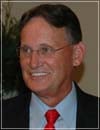
About Larry Criss
Larry Criss is Pastor of Fairmont Grace Church located at 3701 Talladega Highway, Sylacauga, Alabama 35150. You may contact him by writing; 2013 Talladega Hwy., Sylacauga, AL 35150; by telephone at 205-368-4714 or by Email at: larrywcriss@mysylacauga.com
Broadcaster:

Comments

0 / 2000 characters
Comments are moderated before appearing.

Be the first to comment!

Joshua

Joshua

Shall we play a game? Ask me about articles, sermons, or theology from our library. I can also help you navigate the site.