Bootstrap
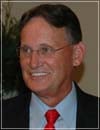
Larry Criss

Jesus Christ Himself Being The Chief Cornerstone

Ephesians 2:20
Larry Criss January, 22 2012 Audio
0 Comments
Larry Criss
Larry Criss January, 22 2012

Sermon Transcript

Auto-generated transcript • May contain errors

100%
Ephesians chapter 2, let's begin
reading at verse 11 to the end of the chapter. Wherefore
remember, Paul exhorts, wherefore remember that you being in time
past Gentiles in the flesh who are called uncircumcision by
that which is called the circumcision in the flesh made by hands, that
is, by the Jews, that at that time you were without Christ,
being aliens from the commonwealth of Israel and strangers from
the covenants of promise, having no hope and without God in the
world. But now, in Christ Jesus, Ye
who were sometimes far off are made nigh by the blood of Christ. For he is our peace, who hath
made both one, and hath broken down the middle wall of partition
between us, having abolished in his flesh an enmity, even
the law of commandments contained in ordinances. For to make it
himself of twain, one new man, so make him peace. and that he
might reconcile both unto God in one body by the cross, having
slain the enmity thereby, and came and preached peace to you,
which were afar off, and to them that were nigh. For through him
we both have access by one spirit unto the Father. Now, therefore,
ye are no more strangers and foreigners, but fellow citizens
with the saints and of the household of God. and are built upon the
foundation of the apostles and prophets, Jesus Christ himself
being the chief cornerstone, in whom all the building fitly
framed together groweth unto a holy temple in the Lord, in
whom ye also are built together for inhabitation of God through
the Spirit. I was thinking this afternoon
as I looked over the notes I have for this message about something
that happened to me years ago. I thought I'd share it with you
as an introduction to this message. It was when I still lived in
wild, wonderful, as it was called, West Virginia. They got half
of that right. Pretty wild. Not so wonderful. But anyway, there was a man that
I'd become acquainted with, a pastor of a church in the area, and
he asked me one weekend if I would come preach, or rather for preaching
services that he was having one weekend, that I would be a part
of it and preach, I think, on Saturday morning. And I told
him I would. His services there were, the
meetings were Friday, Saturday, and Sunday. And he'd invited,
I didn't know any of these fellows. He'd also invited his former
theology professor from Virginia, somewhere in Virginia. And along
with him, he invited two others, doctors of divinity to speak
too. I felt like an Arab in Israel.
But I preached first and I was thankful for that. And then the
professor of theology spoke for about an hour or so on one word
in 1 Peter chapter 1. He spoke on the word foreknowledge,
elect according to the foreknowledge of God the Father. And he spoke
about that word being actually in the original, prognosis, if
I remember right. I think that's what he said,
prognosis. And then he went into the meaning
of the word, the root word, and he spent an entire hour on that. And as I said, he delved into
the Greek, but I don't know Greek. The only Greek I know, and this
is true, was a fellow that ran a hot dog stand right below where
I went to high school. He was a Greek and he made some
good footlong. But other than that, I didn't
know a lot of Greek. And I'll tell you something else.
The folks sitting in there, in that service, I knew them. I
was acquainted with them. And they were farmers and coal
miners and their wives and their families. They were hardworking
people, weary pilgrims, struggling through the week with trials
and temptations and heartache. And I've often thought that was
sad that they sat down hungry, needing to hear something to
feed their souls. And for an hour, this professor
tried to impress his two other professors, doctors, with his
knowledge of a word. And those poor folks went away
hungry because the message had nothing in it concerning Jesus
Christ. Look at the text that he took,
if you will, just for a moment. Elect according to the foreknowledge
of God the Father. But it doesn't stop there, does
it? Through sanctification of the Spirit in 1 Peter chapter
1, Verse 2, unto sprinkling of the blood of Jesus Christ, grace
unto you and peace be multiplied. Now that's good news. Blessed
be the God and Father of our Lord Jesus Christ, which according
to his abundant mercy, have begotten us again into a lively hope by
the resurrection of Jesus Christ from the dead. Now that blessed
truth alone gives us assurance for what follows. It would never
be realized except by the resurrection of Jesus Christ from the dead.
That gives us hope. We serve a living savior. As you heard me say, God's raising
his son from the dead was his eternal once for all, Amen, to
the accomplishment of His Son. Had He not been satisfied with
it, Christ would have never came forth from the grave. But God
demonstrated His satisfaction with the work of His Son by raising
Him from the dead and setting Him at His own right hand in
heavenly places. And that resurrection, of Christ
setting up on the throne now in glory is the guarantee of
what Peter writes after that in verse 4. To an inheritance. Our high priest will see to it.
To an inheritance incorruptible and undefiled, he's earned that
for us, that fadeth not away, reserved in heaven for you. I've heard folks talk about getting
their reward. I want his reward. I want not
what I merited, oh, but I want what he merited on the behalf
of his people. who are kept by the power of
God. Isn't that good news? Because
Peter was writing to pilgrims. He was writing to tried, tempted
believers. And this was good news. This
was refreshing to their soul. Had that dear man went ahead
and preached this, it would have been refreshing to those poor
coal miners and those farmers and their wives and their families
to be reminded of this. This is not all. You have an
inheritance. who are reserved in heaven for
you. And in the meantime, until you
arrive there, be assured of this, who are kept by the power of
God through faith unto salvation. Your keeping, your preservation
is not in your hands, but in the hands of your great faithful
shepherd. through faith unto salvation
ready to be revealed in the last time. And Peter wrote, wherein
ye greatly rejoice though now. Though now, Peter said, I know,
I realize. I also am a fellow pilgrim. Though
now for a season, if need be, ye are in heaviness through manifold
temptations." And then he goes on down in verse 9 and then we'll
go back to Ephesians 2. But in verse 9 he says, receiving
the end of your faith. even the salvation of your souls. Nothing you're going through
now, nothing you'll go through tomorrow, or all the days of
your earthly pilgrimage will ever change that. You have an
inheritance reserved for you in heaven. Isn't that good news? Now look back, if you will, in
Ephesians chapter 2. With those thoughts in mind,
I take as my text these words in verse 20. Jesus Christ himself. Jesus Christ himself. Brother Law read from chapter
1. In chapter 1, Paul describes what God's matchless grace does
for us. Chosen in him before the foundation
of the world, for example. In chapter 2, Paul shows us what
God's matchless grace does in us. Chapter 1, for us. Chapter 2, in us. Look at verse
1, for example. This is a work that's done in
us by the grace and spirit of God. You had he quickened who
were dead in trespasses and sins. I know that's a familiar verse
of scripture, but think about it for a moment. You had He quickened,
made alive, who were dead in trespasses and sins." We were
dead and we proved it. We lived like it. We acted like
it among all the other dead people. And that's what Paul says in
the next verse. You proved you were dead spiritually. You proved you didn't have any
life toward God or from God, wherein in times past ye walked
according to the course of this world, according to the prince
of the power of the air, the spirit that now worketh in the
children of disobedience, among whom we were right there in the
mix, by nature no different, among whom also we are, Paul's
writing to believers, those he termed elect, chosen, But he
says, by nature, we were as all other men. We had our conversation,
the way we lived, in times past, in the lust of our flesh, fulfilling
the desires of the flesh, not God, of the flesh, not him, but
me, and of the mind, and were by nature the children of wrath,
even as others. We're all in the same graveyard
of spiritual death. But something happened. Something
happened. And Paul goes on and tells us
that. Something remarkable happened.
Lester, something miraculous happened. Something happened
that brought us out of that spiritual death. Look at verse 4. But God... That's what happened. But God, who was rich in mercy,
for His great love were with He loved us even when we were
dead, while we were dead in sins, helpless, hopeless, we can contribute
nothing to the resurrection, to spiritual life. It was all
His work. But God, without Him, There'd
be no life, no spiritual resurrection. And look what Paul attributes
it to, again, verse 5. Even when we were dead in sins,
have quickened us together with Christ. With Christ, not apart
from Him. The best of men by nature are
still no better than the worst of men spiritually. They're in
the same boat. And we were in the cemetery of
spiritual death and we would still be there. We would still
be there. And we would still be proving
that was our abode by the way we walked, as Paul described
in verse 3. We would still be going the way
of the world except for this great miracle of grace, but God. But God. That's the only difference. Oh, what a wonder. What a wonder! The spiritual resurrection of
a dead sinner. What a wonder that is! What a
demonstration of God's mighty power! It is no less, oh no,
the other is less, that is, if corpse in a cemetery got up and
began to walk and live again, that would be less of a miracle
than what Paul speaks of here, spiritual resurrection. You had
he quickened who were dead in trespasses and sins. Remember? Remember? Oh, Lazarus
is simply a picture of that. His resurrection from the dead
is a picture of what God does for helpless, hopeless dead sinners. Look what Paul says in chapter
1. Speaking of the faith of God's elect, speaking of what God does
for them in chapter 1, verse 17, Paul says, I pray for you. And he says, this is what I pray.
that the God of our Lord Jesus Christ, the Father of glory,
may give unto you the spirit of wisdom and revelation in the
knowledge of him." He's writing to believers, but he said, I
want you to grow in grace and in the knowledge of him. The
eyes of your understanding being enlightened that you may know
what is the hope of his calling. and what the riches of the glory
of his inheritance in the saints, and what is the exceeding greatness
of his power to usward who believe, according to the working of his
mighty power. And he equates the power by which
God raises a dead sinner from the dead as being the same power
that Jesus Christ rose from the dead by. Look at verse 20. which
He, that is God, wrought in Christ when He raised Him from the dead,
and set Him at His own right hand in the heavenly places."
But God, but God, what a miracle! I said we walked according to
the course of this world, as Paul says in verse 1, and we're
by nature children of wrath, and we act alike. Remember? Wherefore, remember, Paul says
in verse 11. Let's look at that now. Let's
begin there. Paul says in verse 11, wherefore,
remember. Remember. He exhorts us to look
back. Look at your past in verses 11
and 12. Wherefore, remember these things. Memory, that can be a very blessed,
needful thing, by which we look back, not like Lot's wife. Our Lord said, remember Lot's
wife? She looked back in Sodom, proving
that her heart was still there. Lot brought her out of Sodom,
got her out of Sodom, but he couldn't get Sodom out of her.
No, we don't look back in that sense, but look back at God's
mercy and grace. This is what the apostle is exhorting
us to remember, God's goodness to us. Or rather look back in
this way, as the hymn writer expressed it, Lord, draw back
the curtain of memory now and then. and show me where you brought
me from and where I could have been. Look back, not like Lot's
wife. But like the prophet exhorts
us to do in Isaiah 51, look back to the rock from whence ye were
hewn. Look from where God found you.
Look where you were extracted from. No different than the rest
of fallen men. And to the hole of the pit, that's
where we were by nature, from whence ye were digged. Paul says,
wherefore remember. And it's good reasons for us
to do so, is it not? Because if we remember, if we
look back at God's great mercy toward us, it'll make us thankful. It'll make us thankful. There's
no question about that. Look again at verse 11. Wherefore
remember that you being in times past Gentiles in the flesh who
are called uncircumcision by that which is called the circumcision
in the flesh made by hands. Verse 12, that at that time ye
were without Christ. Without Christ. I know to every believer Christ
is the most precious thing in life to him or her. I know that. He's captured your heart. You say, all to him I owe, but
that was not always the case, was it? Oh, no. Paul says, at
that time you were without Christ. Wherefore, remember, There was
a time we, you and I, before God came to us in mercy and grace,
that we lived and we worked and we planned and we spent all of
our time and all of our effort, just like the rest of the world,
living in this world and getting all of it that we could. But
in doing so, we were without Remember, Paul says, ye were
without Christ. During those years of darkness
and blindness and spiritual death, I lived, I worked, I planned,
I breathed, I did everything and anything, frivolous things,
just wasting my life, and I never in all those years gave God Almighty
a serious thought. I was dead. I was dead. Paul says, Wherefore remember
ye were without Christ, verse 12, having no hope. Having no
hope. How could we? Without God in
the world. In the world. This world is marked
for destruction. Every tree in the forest of this
world is marked to be cut down and burned. And we were among
them. We stood among them. Oh, but
there was this one difference that makes all the difference.
Not what we were by nature. Oh, no. There was this difference. Christ Jesus Himself. Jesus Christ Himself said, ye
are not of the world. Ye are not of the world. Ye were,
but I've chosen you out of the world. You're mine. You're not of the world even
as I am not of the world. Yes, by nature, you had a mark
like every other man. Oh, but by grace, you had been
marked from eternity in marks of my indelible grace. You're mine. And when that time
came, He came to where we were, Lord, didn't He? He came to where we were. Ezekiel
16 describes it. I walked by thee when ye were
in your own blood. Like that aborted infant is the
picture there, cast out into the field to die. And that's
how I found you. That's the condition you were
in. And I walked by thee and saw thee, and behold, it was
a time of love, and I spread my skirt over thee, and you became
mine. And I took you, and I washed
you, and I cleaned you, and I dressed you, in my own righteousness
is the picture. Oh, wherefore, remember, remember
and be thankful to Jesus Christ himself. He's never forgot us,
has he? And he never will. Brother Don,
oh, several years ago. The years go by faster as they
go by, don't they? It's been several years ago he
was preaching from John, John chapter 17, Christ's high priestly
prayer. In a few hours from the time
he uttered that prayer, he would be on the cross. He would be
enduring the wrath of God on the behalf of his people. He
would be made sin. just a little while from this
prayer in John 17. But he prays for his sheep. He
prays for the apostles. He prays for all those who should
believe on him afterwards. He prays that they may be won,
that they may be kept, that they may be sanctified. But he never
one time, never one time, Lord, mentions our sin. Don pointed
that out. I hadn't thought about that.
In that high priestly prayer, realizing what he was about to
endure because of our sin, he was going to be made sin for
us who knew no sin. But he never mentions it in that
prayer. Oh, how he remembers us. And he says concerning the Lord's
Supper, as often as you do this, when you do it, as often as you
do it, the reason you're doing it is as a reminder of me. Do this, he said, pass this cup
among you, he said. This is my blood. Do this in
remembrance of me. And I've thought how many times
I've done that, gone through the motions without remembering
Him. Drink the wine, eat the bread,
but not remember Him. That's not observing the Lord's
table, but I've been guilty of it. But at the same time that
I can't remember Him, Even at such a blessed time as
that, He has never for a moment forgotten me. Think about that. There's never been a time, Lester.
There's never been a time that I wasn't on His heart. There's
never been a moment that I wasn't one with Him. There's never been
a time that He never thought of me. My mind can get a hold
of that. But there's never been a time
He loved me before the foundation of the world. He loved me before
He came. Because of His love for me, He
came. He's always loved me. He's never
forgotten me. Oh my soul, no wonder Paul exhorts
us, remember Him. Wherefore remember Him, what
He's done. You perhaps have heard this story.
It's worth repeating. Paul Mayhem. went to see one
of his members, I believe it was, out of the church in Rocky
Mountain, Virginia that he pastors. An elderly lady was in the hospital
and she was sick. And Paul went in, sat down next
to her bed, began to talk. And he could tell by her puzzled
look, she didn't know who he was. She didn't remember him
because of the illness. And he said, don't you know me,
sis? Don't you know me, sister? And
she said, I'm sorry, young man, I don't know you. He said, I'm
Paul Mahan, your pastor. I'm sorry, I don't know you.
Well, maybe my daddy. Maybe you remember my daddy,
Henry Mahan? Blank. I don't know. And Paul
said, well, that's all right. I've come to talk to you about
Jesus Christ. And her eyes lit up. And she
said, oh, I know him. I remember him. And Paul said,
well, sister, you can forget me. You can forget me. That's
all right, long as you know him. Paul says, wherefore remember? It'll help us to be thankful.
It's also a check against pride. Remember where you were. Remember what I brought you from. It's a good antidote against
pride. Am I the only one that has a
problem with that? I do. I do. Mr. Wesley claimed that his old nature
was eradicated, mine hasn't been. It's not. Old Spurgeon said,
pride is a wicked weed that'll grow anywhere. I know that's
true. I know it by experience. Tim
James said one time that the reason he preached so often about
self-righteousness was because he had a problem himself with
self-righteousness. And I have a problem with pride. with pride. Oh, but this, remembering
his grace, will help with that, will it not? Turn back, if you
will, to 1 Corinthians, chapter 4. This is a familiar passage,
but it won't hurt us at all to look at it again. 1 Corinthians,
chapter 4. You know the problem at the church
in Cornuth? Oh, they were proud, proud, proud. Paul uses the word, you're puffed
up. You're walking around puffed
up. And then he rebinds them in verse 6 of chapter 4. And these things, brethren, I
have in a figure, referring to what he says in chapter 3 about
Apollos and he just being laborers together with God, having a figure
transferred to myself and to Apollos for your sakes, for this
purpose, that ye might learn in us not to think of men above
that which is written, that not one of you be puffed up for one
against another." And that's what they were doing. And then
Paul reminds them, for who maketh thee to differ? It wasn't Paul,
and it wasn't Apollos. For who maketh thee to differ
from another? And what hast thou that thou didst not receive?
Now if thou didst receive it, why dost thou glory as if thou
hast not received it? Oh yes, it'll help us to be humble. Turn, if you will, to chapter
6 in 1 Corinthians, chapter 6. Wherefore, remember, verse 9 of chapter 6, Know ye
not that the unrighteous shall not inherit the kingdom of God? And that's still on the books.
The unrighteous shall not inherit the kingdom of God. And there
is none righteous, no, not one. Be not deceived, neither fornicators,
nor idolaters, nor adulterers, nor infeminate, nor abusers of
themselves with mankind, nor thieves, nor covetous, nor drunkards,
nor revilers, nor extortioners shall inherit the kingdom of
God. And such were some of you. And such were some of you. And such was this man that stands
before you at this very moment. Such was he. Yeah. Some of those things Paul mentioned.
That was me. Such were some of you. But there's grace shining forth again,
is it not? He says, such were some of you,
past tense. But now he speaks in the present
tense. Ye are. Ye are. You're not what you once
were. But ye are washed. But ye are
sanctified. But ye are justified. All present
tense. How? In the name of the Lord
Jesus and by the Spirit of our God. Oh, Paul says, wherefore
remember. Remember. Look back now, if you
will, at verse 13 of Ephesians chapter 2. Paul says, remember your present
state. Look at your present state. Verse
13. But now in Christ Jesus, ye who
sometimes were far off, We're far off. That's true. That's true. Between us and a holy God, there was that
great gulf. Fixed. Fixed. Immutable. Impregnable. As Abraham told the rich man
in hell, Between us and you, there's a great gulf fixed. It's there. And you can't come
to where we're at. And we can't come to where you
are. A great gulf of divine justice
demanding satisfaction. A great gulf that we could not
bridge. The gulf of God's holy law demanding
perfection. And the sword of divine justice
standing guard saying the soul that sinneth it shall die. A great gulf. And God says, you
can't bridge it. I couldn't bridge it with all
my prayers, all my religious endeavors, all my trying. I couldn't bridge it. Oh, but
look. Look, but now, but now in Christ
Jesus, ye who sometimes were far off are made nigh by the
blood of Christ. Oh look, God has laid help on
one that is mighty, Jesus Christ himself. He bridged the gulf. for you and I." Who is this that
comes up from Eden with dyed garments? He looks like one that's
trodden in the winepress, and he replies, I have trodden the
winepress alone, and of the people there were none with me. He by Himself, Jesus Christ Himself,
purged our sins and sat down, therefore, at the right hand
of God. And by doing so, by that great
work of mighty grace, by that accomplishment of Jesus Christ
Himself, we're made nigh. Look what it says. Made nigh
by the blood of Christ. Made nigh. Oh, that great gulf
between my sinful soul and a holy God was an infinite distance. Oh, but now I've been brought
near into a very intimate relationship. from infinite afar off to imminent,
or rather, intimate in Jesus Christ. In Christ Jesus. You know the old hymn. Near,
so very near to God, nearer I cannot be, for in the person of his
Son I am as near as he. Look what it says in verse 14. Not it. Not it. It won't do this. I don't care
what it is. It won't do this. For He is our
peace. He Himself is our peace. In verse 15 it speaks of Him
making peace. And verse 16, and that He might
reconcile both unto God in one body. How did He do that? By The cross. How? By slaying the enmity thereby. Jesus Christ himself is our peace. Do you remember that picture
you would see in a history book or philosophy or whatever in
school? of Atlas, wasn't he of Greek
mythology? It's been a while since I was
in school, but I think it was Greek mythology. Atlas is shown
holding the world on his shoulders. That was a myth. What we read
up right here is not a myth. Jesus Christ himself made peace
with God on the behalf of His people. Jesus Christ Himself,
not as a myth, but as a living, breathing substitute, bore our
sins away. He by himself purged our sins. He is our peace. Turn, if you will, to Romans
chapter 4. Paul speaks there of this very thing. Christ making
peace with God on the behalf and for his people. In Romans
chapter 4, verse 23. Verses 23 through 25. Now it was not written for his
sake alone, that is Abraham, that it was imputed to him, but
for us also, to whom it shall be imputed if we believe on him,
not on it, but on him, that raised up Jesus our Lord from the dead,
who was delivered, that is our Lord, who was delivered for our
offenses. Instead of for, you could very
accurately and properly write because of, who was delivered
because of our offenses. Oh, but he was raised again because
of our justification. Because of, because he by himself
purged our sins, satisfied divine justice, because of that, God
raises him from the dead. Having slain the enmity we read,
thereby, he is our peace. Remember in Luke's gospel chapter
seven, our Lord is in the house of Simon, that self-righteous
Pharisee. And that sinner comes in, that
woman. And Simon says, she's a sinner.
What is she going to do? She walks up and begins to weep
and wash the feet of Christ with her tears and dry them with the
hairs of her head and anoint him. And Simon said, if he was
what he claimed to be, he wouldn't allow that. She's a sinner. Simon
didn't know anything about grace, did he? Lester, the mercy God's
had on me, there's nobody I should look down on. I don't have the right to look
down on anybody. I don't have nothing that I haven't
received. His grace made me the differ.
Simon, there were two debtors. One owed 500 pence and one owed
50. And when neither one could pay, they had nothing to pay.
The Lord frankly, their master frankly forgave them. Frankly,
the word is freely, forgave them both. Which one will love him
most? You know Simon's answer. You
see this woman, Simon. I came into your house and you
didn't do any of these things. But this woman has. And I say
unto you, Simon." Simon didn't like what he was hearing, but
he heard it anyway. Simon, I say unto you that her sins, which
are many, are forgiven. And the brother Pharisee sitting
around said to himself, who is this that forgiveth sins also? Who does he think he is? And
our Lord just ignored him and turned to the woman and said,
Go in peace. Thy sins are forgiven thee. Therefore being justified by
faith, we have peace with God through the Lord Jesus Christ. He is our peace. He himself is
grace personified. Therefore, as Paul went on in
Romans and wrote, there is no condemnation to those who are
aware in Christ Jesus. Another blessed noun. Another
blessed noun, rather. Present tense. There is therefore
now no condemnation. and never will be to those who
are in Christ Jesus. Look, ye saints, the sight is
glorious. See the man of sorrows now. From the fight return victorious. Every knee to him shall bow. Crown him, crown him. Crowns become the victor's brow. He deserves it. Look again, if
you will, in Ephesians 2, and we'll close. We'll wrap this
up. Look at those blessed words again in verse 20. Jesus Christ
himself. Jesus Christ himself. Take that
out. Take that out, Louis. And what
would you have left? Take him out of the verses we
just read. Take him out of the verses that
Brother Lowell read, chapter 1. Take him out and what would
you have left? Nothing. Nothing. You would be,
as Paul described, hopeless, helpless, without God, without
hope if we were without Christ. Take Him out and you have no
election. Brother Lowell read in verse
4 of chapter 1, chosen in Him, in Him. Take Him out and there's
no election. He stood for me. God the Father
said to the Son, Thou art my first elect, God said, and then
chose us in Christ our head. But without Him, there would
be no us. When you think of election, think
about Jesus Christ Himself. Remember, Paul said, He stood
for us. Without Him, there would be no
redemption. There would be no brainy nigh
without Him. Jesus Christ by Himself purged
our sins. Without Him, there would be no
heaven, no glory, no possibility of it. Turn to 1 Thessalonians
chapter 4. 1 Thessalonians chapter 4. We'll read these verses and then
we'll close. Chapter 4, verse 16. I hear people
talk about the second coming, and you know what they talk about. They talk about what's going
to happen and in what stage it's going to happen. They've got
maps and charts, and they've got it all figured out. They
talk about, I heard Brother Tim say, pre-millennial and post-millennial
and Reynolds aluminum and just blah, blah, blah, blah, blah.
and talk about where it's going to happen. And never talk about
who. Don't talk about who. The second
coming is about Jesus Christ Himself. And this is what Paul
says in verse 16 of 1 Thessalonians 4. For the Lord Himself shall
descend from heaven with a shout. What would it matter who or what
descended from heaven, angels, whatever, it Jesus Christ himself
did. That's who we're looking for,
Jesus Christ himself. Oh, that's the blessed promise.
That's what encourages and lifts the heart of tempted, weary pilgrims. Jesus Christ Himself has promised,
where He is, I'm going to be. Paul says, for the Lord Himself
shall descend from heaven with a shout, with the voice of the
archangel and with the trump of God, and the dead in Christ
shall rise first. And then we which are alive and
remain shall be caught up together with them in the clouds to meet
the Lord. to meet the Lord in the air,
to be with Him, to glorify Him, to worship and serve Him forever,
to see His face and to sing the old, old story of Jesus and His
love. That's heaven, folks, is it not? And so, Paul says, and so shall
we ever be with the Lord. I ran across this in my papers
the other day. I forgot I even had it. And don't
recall where I got it. But it's by Brother Henry Mahan. Some of you knew him long before
I did. But Henry wrote this song. I'll
just share a part of it with you. The title of it is Himself. Once it was the blessing, now
it is the Lord. Once it was the filling, now
it is his word. Once his gifts I wanted, now
the giver own. Once I sought for healing, now
himself alone. Once it was my working, his it
hence shall be. Once I tried to use him, now
he uses me. Once the power I wanted, now
the mighty one. Once for self I labored, now
for him alone. Once I hoped in Jesus, now I
know he's mine. Once my lamps were dying, now
they brightly shine. Once for death I waited, now
his coming hail. And my hopes are anchored safe
within the veil. Brothers and sisters in Christ,
May God enable us to remember Him, Jesus Christ Himself, and
thereby we go in peace. Peace with God and the peace
of God. God bless you.
Larry Criss
About Larry Criss
Larry Criss is Pastor of Fairmont Grace Church located at 3701 Talladega Highway, Sylacauga, Alabama 35150. You may contact him by writing; 2013 Talladega Hwy., Sylacauga, AL 35150; by telephone at 205-368-4714 or by Email at: larrywcriss@mysylacauga.com
Broadcaster:

Comments

0 / 2000 characters
Comments are moderated before appearing.

Be the first to comment!

Joshua

Joshua

Shall we play a game? Ask me about articles, sermons, or theology from our library. I can also help you navigate the site.