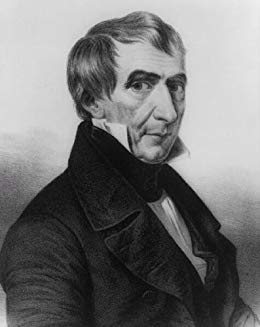
The main theological topic addressed by Henry Law in "Resurrection" is the significance of Jesus Christ as the Resurrection and the Life, particularly as it pertains to the resurrection of believers. Law argues that Jesus’ declaration "I am the Resurrection" (John 11:25) carries profound authority, affirming His divinity and the literal understanding of resurrection—both of Christ and of believers. He cites various scriptural instances, including the resurrection of Lazarus (John 11:43-44), the healing of Jairus' daughter (Mark 5:41), and the raising of the widow's son in Nain (Luke 7:14-15) to demonstrate Christ's power over death. The article emphasizes the transformative nature of the resurrection, promising that believers will be raised in glorified bodies, thus underscoring the hope and assurance that the resurrection provides for believers in their eternal union with Christ. This hope is essential for the believer’s faith and understanding of salvation within the framework of Reformed theology.
Key Quotes
“Let all doubt vanish as morning mists before the orb of day.”
“We rely not on utterance alone for this grand comfort.”
“Every grave which holds the body of a sleeping saint shall open its cold portals.”
“Blessed day! The espousal of the Church to the Heavenly Bridegroom is now complete.”
What does the Bible say about resurrection?
The Bible reveals that Jesus is the Resurrection and the life, promising that those who believe in Him will live even after death (John 11:25).
In addition to His claim, Jesus provides tangible evidence of His resurrection power by raising Lazarus from the dead (John 11:43-44) and performing similar miracles, showing that He has the authority to give life. Furthermore, His own resurrection on the third day serves as the ultimate demonstration of His power and the promise that all who believe in Him will also be raised to eternal life. The resurrection stands as the cornerstone of Christian doctrine, underpinning the hope of eternal life and the restoration of all things through Christ.
John 11:25, John 11:43-44
How do we know Christ's resurrection is true?
Christ's resurrection is validated by numerous eyewitness accounts and His ability to raise others from the dead, affirming His divine authority (1 Corinthians 15:6).
Moreover, Jesus' resurrection fulfills various Old Testament prophecies and serves as the climax of His earthly ministry. The angelic proclamation at the empty tomb confirms His victory over death, further validating the claims of resurrection. Believers are assured that Christ's resurrection is not an isolated event; rather, it signifies God's plan for redemption and the ultimate resurrection of all who trust in Him. Therefore, the resurrection of Jesus stands as a historically verifiable event that provides believers with the assurance that death has been conquered.
1 Corinthians 15:6, Acts 1:11
Why is resurrection important for Christians?
Resurrection is vital for Christians as it assures eternal life and the victory over sin and death (1 Thessalonians 4:16).
Additionally, the resurrection validates the entire gospel message, showcasing that Jesus' sacrifice and victory over sin are complete. It reaffirms God's faithfulness to His promises and confirms that believers will experience new life in Him not only in the future but also in the present through spiritual resurrection. Embracing the truth of the resurrection encourages Christians to live boldly in faith, knowing their ultimate destination is with the resurrected Christ in glory. Hence, it is not merely a doctrine but the bedrock of Christian hope and assurance.
1 Thessalonians 4:16, Romans 6:5
Jesus said unto her,I am the resurrection, and the life: he that believeth in me, though he were dead, yet shall he live: - John 11:25
"I am the Resurrection."
Whose lips proclaim this mighty word? Who is the speaker claiming such authority? Is it on earth that this announcement sounds? Can it be the calm utterance of sober mind? Is attention due to it as emanating from One who spoke what He well knew, and testified an indubitable truth?
Let all doubt vanish, as morning mists before the orb of day. Let reverence give heed. Let adoration meekly bow. Jesus here appears in the character of the true, "the faithful Witness." The Word, the eternal Word—He who is light, and in whom there is no darkness at all; He who cannot deceive, and cannot be deceived—thus testifies. He in whom "are hidden all the treasures of wisdom and knowledge" gives this sublime revelation, "I am the Resurrection." Jesus the speaker, of Himself thus speaks—to Himself He points, exclaiming, "I am the Resurrection."
The question now occurs, What is the import of the term? What is its main significance? Accurate definitions lead to accurate conclusions. The end will not be reached, when first steps move in a wrong course. The target should be seen, before the arrow flies.
Doubtless the word is often used in figurative sense. It lends expressive aid to exemplify various occurrences. When wintry sods relax, and hardened fields assume again their verdant carpet; when flowers bloom, and buds expand, and renovated beauty clothes the earth, Nature is said to put on her resurrection-dress. When the soul has felt the absence of heavenly dew, when grace has languished, and no gracious breezes from above have nourished spiritual shoots, when after this cold period the Spirit revisits the heart, and renews the joys of holy communion, a metaphor speaks of the resurrection of the inner man. Other revivals might be characterized as resurrections.
But there is no figurative meaning in these words, "I am the Resurrection." The context at once claims literal acceptance. Let thought now realize the scene of utterance. The lifeless frame of Lazarus had recently been carried to the grave. Jesus seeks Bethany, to comfort the weeping sisters. Martha hastens to meet Him. In reply to her impassioned grief, He gives her the assurance, "Your brother shall rise again." The mourner acquiesces in the truth. She knew that her brother's body should not lie always in the grave. She assents that it again shall be arrayed with life, and again shall possess all properties of being. It is in connection with this assent that Jesus sublimely cries, "I am the Resurrection."
We here learn that Jesus speaks of the Resurrection of the body, and that this marvel shall be accomplished through the direct exercise of His mighty power.
Let grateful joy now revel in these wondrous tidings! When death opens the cage, the spirit flies to separate existence. It leaves the deserted tenement to crumble into dust. But the soul, alive without the body, is not entire and perfect man. It is but one portion of the total being. For man to be complete, the body must again resuscitate. The component parts must live, co-partners of one tenement. A re-animated frame must receive the ever living soul. Then man is man again. How delightedly, then, should we drink in the heaven-born assurance, "I am the Resurrection."
We rely not on utterance alone for this grand comfort. Indeed, if Jesus had but once thus spoken, faith would possess sufficient ground for solid standing, its feet would rest on a firm rock; it could confront a world of doubters, and trample down all sneering fallacies. But to fill the believing heart with confidence, Jesus adds demonstration to His word. Few moments are allowed to pass, when at His word a dead body lives again.
He asks, "Where have you laid him?" They guide Him to the grave. "It was a cave, and a stone lay upon it." He orders its removal, and having lifted up His eyes to heaven, in supplication to His Father, He cried with a loud voice, "Lazarus, come forth." There is no delay. Instantly death withdraws its hold. The body "that was dead came forth." Thus Jesus by undoubted fact established what His lips had recently declared—"I am the Resurrection."
Had this fact only been exhibited, faith would rejoice in perfect confirmation. It would rightly exult and sing, Jesus is "the Resurrection." His voice declares it. His deed corroborates it. But this is not the only instance where Christ manifests His power to loosen the grasp of death. Let thought review the early days of His ministry. Jairus, high in Jewish rank, with supplicating urgency implored that death might not remove his little daughter. He asked much, and he obtained more. What an encouragement to bold and earnest prayer! The youthful sufferer expired. Great was the lamentation! Jesus hastened to the spot, and entered the chamber of the lifeless child. He takes her hand, and speaking with all authority, as "the Resurrection," cries, "Little girl, I say to you, get up." (Mark 5:41) He displays His re-animating power. "Immediately the girl stood up, and walked around."
Jesus multiplies evidence, that faith may with stronger grasp cling to Him as "the Resurrection." In His journeyings He approaches Nain. According to the pre-arrangements of His will, when He reached the gate, "there was a dead man carried out, the only son of his mother, and she was a widow: and much people of the city was with her. And when the Lord saw her, He had compassion on her, and said to her, Weep not. And He came and touched the bier: and those who bore him stood still." And now He, who is "the Resurrection," speaks: "Young man, I say to you, get up." The word goes forth, almighty in authority, and arrayed with the strength of Omnipotence. No opposition checks obedience. No foes in earth or hell can stay the mandate. Instantly the corpse resumes its former life. "The dead man sat up and began to talk, and Jesus gave him back to his mother." (Luke 7:11-15) Thus assurance towers to the heavens that Jesus is "the Resurrection."
The most notable evidence still claims attention. On the accursed tree at Calvary, Jesus lays down His life. To pay the penalty of transgression, to make entire satisfaction to all the outraged attributes of God, to drink to the dregs the cup of wrath, to fulfill all predictions, and to buy His ransomed heritage, He hangs a lifeless body upon the cross. To the grave He is consigned. The appointed morn arrives. Will He still lie among the dead? Vain are the watch, the stone, the guard; vain is all the precautionary vigilance; vain is all the power of the grave and hell; Jesus comes forth the mighty Conqueror of death. Hear His subsequent words to the beloved disciple, "I am He who lives, and was dead; and behold, I am alive forevermore." (Rev. 1:18) He who raised others now rises Himself. He who raised others will raise us too. Reader! adore Him!—the Lord, "the Resurrection."
Further instruction is graciously imparted by the Holy Spirit. It is His desire that our hearts should overflow with consolation. He would not leave us deficient in any knowledge which could enlighten and delight. He therefore with loving hand withdraws the veil, and exhibits the main wonders of the Resurrection-day. He bids us now in spirit to intermix in events in which we surely shall have part, and which the flight of time brings on apace. The Apostle writes that when the set time is fully come, and all the decrees of salvation are accomplished, the blessed Jesus will rise from His high throne, and again in person hasten to this earth. We read, "The Lord Himself shall descend from heaven with a shout, with the voice of the Arch-angel, and with the trumpet of God." (1 Thess. 4:16) Other branches of His work He has entrusted to commissioned hands. Prophets and apostles have proclaimed His Word. Enlightened ministers have called sinners to His faith, and have toiled to place spiritual stones in the spiritual house of God. All His angels have been sent "forth to minister for those who shall be heirs of salvation." (Heb. 1:14) But here is work which so intensely fills His heart that it can be entrusted to no other agent. The raising of the bodies of His sleeping saints shall be accomplished by Himself alone. The Spirit, with a herald's voice declares, "The Lord Himself shall descend from heaven." The angels' assurance is now verified, "This same Jesus, which is taken up from you into heaven, shall so come in like manner as you have seen Him go into heaven." (Acts 1:11) Will He come back in silent pomp? Oh, no! He descends with a shout, with the voice of the Archangel. Angels and authorities, and powers, who are made subject unto Him, obey His call. All heaven hears, and re-echoes the mighty shout. All earth hears, and trembles through its length and breadth.
But what is the shout? Conjecture may with reverence surmise, but it finds no certainty. We may suppose that His voice summons all the hosts of heaven to bear Him under the canopy of their glittering wings, and all the ransomed spirits who had left their bodies in the graves of earth, fly to cluster around Him in His glorious return. To the Archangel's voice there is the adjunct of the trumpet of God. Paul, when treating of the wonders of this day, omits not this accompaniment, "Behold, I show you a mystery: we shall not all sleep, but we shall all be changed, in a moment, in the twinkling of an eye, at the last trumpet: for the trumpet shall sound." (1 Cor. 15:51, 52) It is wisdom's employ to live listening for this trumpet's sound.
What is the effect of this world-shaking note? Behold with faith the first occurrence. "The dead in Christ shall rise first." (1 Thess. 4:16) Every grave which holds the body of a sleeping saint shall open its cold portals. Each inhabitant shall rise from the couch on which it has reclined. If any slumber in ocean's deep caverns, they shall uplift the head. From the four winds of heaven they shall stand again in living form on earth. Oh! what a mighty army! All whoever fell asleep in Christ, from Abel to the last who died in faith, shall re-appear.
But how changed are now their bodies! how perfect, how beauteous, how glorious! They shall put off their death-clothes for bodies like Christ's glorious body. In what condition was the body consigned to its parent earth? It was "sown in corruption"—tainted by decay, soiled by all which is most loathsome; but now, "it is raised in incorruption," blooming in pure loveliness, incapable again to know pollution's touch. It was "sown in dishonor." It was hidden as a revolting object from all sight. Its home was among the worms and reptiles of the ground. Now, "it is raised in glory." Its brilliancy surpasses the sun in midday splendor. All brightness is eclipsed by its surpassing rays. It was "sown in weakness." It lay in feebleness, without power to move, or exercise the least prerogative of life. "It is raised in power." We know the might of angels: more than angelic activity is now worn. Suffice, it was sown an heir to all the imbecilities and nothingness which cling to the earth-born. "It is raised a spiritual body." The term is easily uttered. Its full import must be unknown until the grand reality is reached.
But the Resurrection of the sleeping saints is accompanied with the change of all the bodies of the Lord's flock who meet that day in tenements of clay. All this Resurrection-glory shall be theirs. They thus transformed shall be caught up in one collected mass to join the risen saints; they shall together "meet the Lord in the air," and together reign with Him forever. This is the consummation of the work of Jesus, "the Resurrection."
Who will not cry from his inmost soul, All praise to Him who said, "I am the Resurrection!" Blessed day! The espousal of the Church to the Heavenly Bridegroom is now complete. He had wooed and won her in her time-state. Mighty voices now shout: "Let us be glad and rejoice, and give honor to Him: for the marriage of the Lamb is come, and His wife has made herself ready." (Rev. 19:7) The enraptured Apostle "saw the holy city, new Jerusalem, coming down from God out of heaven, prepared as a bride adorned for her husband." (Rev. 21:2) We bless You, O Lord, our Resurrection!
Blessed day! It witnesses the coronation of all who have washed in Jesus' blood, and by faith have put on His righteousness. The promise of a crown was freely given, and now is gloriously redeemed. "Henceforth there is laid up for me a crown of righteousness, which the Lord, the righteous Judge, shall give me at that day." (2 Tim. 4:8) Thus the Bride's head receives the crown of life—"the crown of glory that does not fade away." (1 Pet. 5:4) We bless You, O Lord, our Resurrection!

Comments
Your comment has been submitted and is awaiting moderation. Once approved, it will appear on this page.
Be the first to comment!