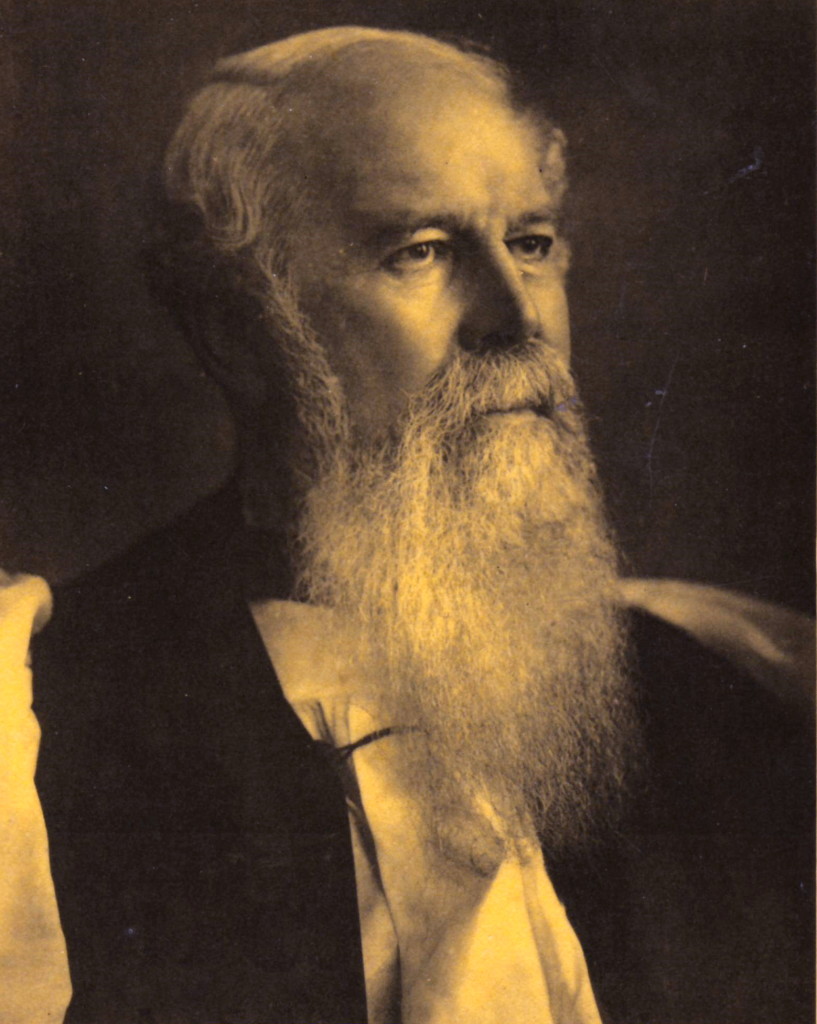
In J.C. Ryle's "Expository Thoughts on Mark 9:30-37," the primary theological topic addressed is the nature of true greatness in the Kingdom of God, contrasting it with human standards of ambition and desire for preeminence. Ryle underscores Christ's foretelling of His impending death and resurrection (Mark 9:31), emphasizing that the crucifixion was the central purpose of Christ's incarnation — to provide atonement for sin and fulfill God’s justice while justifying sinners (Romans 3:26). He further explores the apostles' struggle with pride and rivalry, a reminder of the pervasive sinfulness inherent in human nature. In this context, Ryle articulates Jesus’ radical teaching that greatness in His Kingdom is defined by servanthood and humility (Mark 9:35), encouraging believers to serve others selflessly. The practical significance of this teaching lies in its call for Christians to embody humility and serve the least among them, aligning their lives with Christ's example, thereby demonstrating the authentic nature of discipleship.
Key Quotes
“He did not come upon earth merely to teach and preach and work miracles. He came to make satisfaction for sin by His own blood and suffering on the cross.”
“If anyone wants to be first he must be the very last and the servant of all.”
“The way lies in devoting ourselves to the care of the weakest and lowest of His flock.”
“Their work may often be hard and discouraging... But let them know that the Son of God marks all they do and is well pleased.”
What does the Bible say about the death and resurrection of Jesus?
The Bible teaches that Jesus' death and resurrection are central to salvation, highlighting how God can be just while justifying sinners (Mark 9:31).
Mark 9:31, Romans 3:26
How do we know the importance of humility in Christianity?
Humility is crucial in Christianity as it aligns with Christ's teaching that greatness comes from serving others rather than seeking power (Mark 9:35).
Mark 9:35, Philippians 2:3-4
Why is serving others important for Christians?
Serving others is important for Christians because it reflects Christ’s example and commands us to love and care for one another (Mark 9:35).
Mark 9:35, Galatians 5:13
Let us mark, in these verses, our Lord's renewed announcement of His own coming, death, and resurrection. "He taught His disciples, and said unto them, The Son of man is delivered into the hands of men, and they shall kill Him; and after He is killed, he shall rise the third day."
The dullness of the disciples in spiritual things appears once more, as soon as this announcement was made. There was good in the tidings as well as seeming evil—sweet as well as bitter—life as well as death—the resurrection as well as the cross. But it was all darkness to the bewildered twelve. "They did not understand what He was saying, and were afraid to ask." Their minds were still full of their mistaken ideas of their Master's reign upon earth. They thought that His earthly kingdom was immediately to appear. Never are we so slow to understand, as when prejudice and pre-conceived opinions darken our eyes.
The immense importance of our Lord's death and resurrection comes out strongly in this fresh announcement which He makes. It is not for nothing that He reminds us again that He must die. He would have us know that His death was the great end for which He came into the world. He would remind us that by that death the great problem was to be solved—how God could be just, and yet justify sinners. He did not come upon earth merely to teach, and preach, and work miracles. He came to make satisfaction for sin, by His own blood and suffering on the cross. Let us never forget this. The incarnation, and example, and words of Christ, are all of deep importance. But the grand object which demands our notice in the history of His earthly ministry, is His death on Calvary.
Let us mark, in the second place, in these verses, the ambition and love of pre- eminence which the apostles exhibited. "By the way they disputed among themselves who was the greatest."
How strange this sounds! Who would have thought that a few fishermen and publicans could have been overcome by envious rivalry, and the desire of supremacy? Who would have expected that poor men, who had given up all for Christ's sake, would have been troubled by strife and dissension, as to the place and precedence which each one deserved? Yet so it is. The fact is recorded for our learning. The Holy Spirit has caused it to be written down for the perpetual use of Christ's Church. Let us take care that it is not written in vain.
It is an dreadful fact, whether we like to allow it or not, that pride is one of the commonest sins which beset human nature. We are all born Pharisees. We all naturally think far better of ourselves than we ought. We all naturally imagine that we deserve something better than we have. It is an old sin. It began in the garden of Eden, when Adam and Eve thought they had not got everything that their merits deserved. It is a subtle sin. It rules and reigns in many a heart without being detected, and can even wear the garb of humility. It is a most soul ruining sin. It prevents repentance, keeps men back from Christ—checks brotherly love, and nips in the bud spiritual desires. Let us watch against it, and be on our guard. Of all garments, none is so graceful, none wears so well, and none is so rare, as true humility.
Let us mark, in the third place, the peculiar standard of true greatness which our Lord sets before His disciples. He says to them, "If anyone wants to be first, he must be the very last, and the servant of all."
These words are deeply instructive. They show us that the maxims of the world are directly contrary to the mind of Christ. The world's idea of greatness is to rule, but Christian greatness consists in serving. The world's ambition is to receive honor and attention, but the desire of the Christian should be to give rather than receive, and to attend on others rather than be attended on himself. In short, the man who lays himself out most to serve his fellow men, and to be useful in his day and generation, is the greatest man in the eyes of Christ.
Let us strive to make a practical use of this heart-searching maxim. Let us seek to do good to our fellow men, and to mortify that self-pleasing and self- indulgence, to which we are all so prone. Is there any service that we can render to our fellow Christians? Is there any kindness that we can do them, to help them and promote their happiness? If there is, let us do it without delay. Well would it be for Christendom, if empty boasts of churchmanship and orthodoxy were less frequent, and practical attention to our Lord's words in this passage more common. The men who are willing to be last of all, and servants of all, for Christ's sake, are always few. Yet these are the men who do good, break down prejudices, convince infidels that Christianity is a reality, and shake the world.
Let us mark, in the last place, what encouragement our Lord gives us to show kindness to the least and lowest who believe in His name. He teaches this lesson in a very touching manner; He took a child in His arms, and said to His disciples, "Whoever shall receive one of such child in my name, receives me, and whoever shall receive me, receives Him that sent me."
The principle here laid down is a continuation of that which we have just considered. It is one which is foolishness to the natural man. Flesh and blood can see no other way to greatness than crowns, and rank, and wealth, and high position in the world. The Son of God declares that the way lies in devoting ourselves to the care of the weakest and lowest of His flock. He enforces His declaration by marvelous words, which are often read and heard without thought. He tells us that to "receive one child in His name, is to receive Christ, and to receive Christ is to receive God."
There is rich encouragement here for all who devote themselves to the charitable work of doing good to neglected souls. There is encouragement for every one who labors to restore the outcast to a place in society—to raise the fallen—to gather together the ragged children, whom no man cares for—to pluck the worst of characters from a life of sin, like brands from the burning and to bring the wanderers home. Let all such take comfort when they read these words. Their work may often be hard and discouraging. They may be mocked, ridiculed, and held up to scorn by the world. But let them know that the Son of God marks all they do, and is well pleased. Whatever the world may think, these are they whom Jesus will delight to honor at the last day.

Comments
Your comment has been submitted and is awaiting moderation. Once approved, it will appear on this page.
Be the first to comment!