Bootstrap
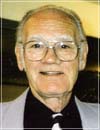
Scott Richardson

Be Ye Followers Of Me

Philippians 3:17
Scott Richardson September, 15 1996 Audio
0 Comments

Sermon Transcript

Auto-generated transcript • May contain errors

100%
Turn with me to the third chapter
of the book of Philippians. of chapter 4, verse 17, of Philippians
chapter 3, Now we are living in a time when this expression
is used a good bit. leaders, rulers, have cried that
we need role models. Young people need a role model.
We ought to walk circumspectly and so forth. People need someone
they can look up to and all that. Well, it seems to me like the
Apostle Paul is a role model. Paul, Paul the Christian, Paul
the believer, were to be followers of him as he is a follower of
the Lord Jesus. Be ye, he said, be ye altogether
followers of me. Be ye followers together of me.
And he said, And mark them which walk so as ye have us for an
example. Now, I'd say that that teaches
that we're to look to Paul as a leader in Christianity, as he follows
the Lord Jesus Christ. Now, well, let me read the rest
of that. For many walk, of whom I have
told you often, and now tell you, even weeping, that they
are the enemies of the cross of Christ. We once were enemies of the cross
of Christ. But God revealed His Son to our
souls, and we fell at His feet and took up His banner and took
up His cause, and we have been brought to go in a different
direction. We have been changed, translated,
translated is the word, from the kingdom of darkness into
the kingdom of light, into the kingdom of God's dear Son. Now
we have for our objective the honor and the glory of our captain,
the captain of our salvation, the Lord Jesus. He's the object
that we live for, object that we pursue is his glory, and so
forth. They are the enemies. They are
enemies of the cross. They hate. Remember I told you
this morning, those outside of the Lord Jesus, by nature, by
nature, all of us was at one time a hater of God. Although at the time we didn't
know that we were haters of God, but that didn't change it any.
We were still haters of God. And I said that everybody from
babyhood, childhood, youth, and manhood
that's outside of the Lord Jesus Christ hate God. They're enemies of God. Remember
I told you that's the most terrible word that you can find in the
scriptures to describe men and women, boys and girls, outside
of the art of safety, is that they are actually enemies of
God. And the sad part of it is that
they don't even know that. They don't know it. God knows
it, but they don't know it. If they ever find out that they
really are, that's how God regards them, is His enemy. If they ever
find that out, find that they have a need, and God reveals
the need met in the Lord Jesus, then they'll flee to Him, won't
they? Find comfort in Him. Well, anyhow, he says, I told
you this often, and I've told it to you over and over and over
again, that these false preachers out there, false religions, false
theories, false philosophies, they're false, false, he said. I've told you often about that,
and now tell you even weeping. You can be deceived. A man, he
can say, well, I believe in the doctrines of grace. He may believe
in the doctrines of grace, but that's not salvation. That's
not salvation. There's a whole lot of people
who believe in what's called Calvinism. Are you a Calvinist?
I'm a Calvinist through and through. I believe in the five points.
But do you know the Lord Jesus? Anybody can be a Calvinist. Don't
trust in election. Election don't save you. It's
unto salvation. Election, oh, glorious, glorious
Bible doctrine, but it don't save you. It don't save you. Even weeping that they are the
enemies of the cross of Christ, whose end is destruction. Why,
he said, whose God is their belly. whose glory is the shame, who
mind earthly things." Mind earthly things. Paul talked like he didn't
mind earthly things. That is, he wasn't caught up
with earthly things. He was caught up with something
far better than earthly things. He was caught up with heavenly
things. Set your affections on things
above. where Christ is. Now, Paul says, I want you to
be a follower of me as I follow him. Follow me. I'm your role model. I'm your
father. He told the fellows I was reading
about there in 1 Corinthians, he says you might have Ten thousand
fathers, but he said, just got one father as far as I'm concerned.
He said, I've begotten you with the gospel. Be a follower of
me. Who mind earthly things. Our
conversation is in heaven. That's citizenship. That's where
our citizenship... He's saying that we're not of
the world. That's the reason we don't mind earthly things.
We're not of the world. We're not worldly. I know what
the Pentecostals and the average religion today, they're talking
about holiness. They think holiness is not going
to a picture show. They think holiness is don't
cut your hair. They think holiness is don't
put any lipstick on. That's what they think. That's
holiness. That's this thing that they say,
without holiness, no man can see the Lord, unless you are
make yourself appear to be different than everybody else by some symbol
or sign, you're not following after holiness. But that's not
what it's all about. It's not that which comes in
a man that defiles him goes out. It's this heart business. It
has to do with a man's heart, the seed of his affections, where
he really is, his soul. What thinketh you in your heart?
Ah, it's one thing to talk about love and all that business, but if I went home, if you went home
with me, if you went home with me and followed me all day long,
you might draw some different conclusion. I hope you wouldn't,
but you could. He said our citizenship's in
heaven. We're not of this world. We're not of this world. We're heavenly people. From hence
also we look for the Savior. We look for the Lord Jesus to
come and rescue us, to deliver us from where? From this present
evil world. This world's evil. Isn't that
evil? We're talking about there, poor
churches, what a low ebb of morality there is in the United States
of America. No morality. No morality. Their citizenship, and I'm not
being a politician here now, but the majority of the citizens
of this country don't seem to care if their leaders, if they
set the right example. If they're liars or thieves or
cheats or adulterers or adulterers, they don't seem to care. It don't
make any difference. It ought to make a difference, doesn't
it? We ought to look down upon that and frown upon that, I think. Once we also look for the Savior,
we look for Him to come and rescue us and deliver us. The Lord Jesus Christ, that's
the Savior. That's His business. That's what
He does. He saves people. He saves sinners
from their sins, from the power of their sins. He saves them from the Penalty of sin, and he is saving
them from the presence of the Savior. Well, I read that. Now, here's
what I want to say. The apostle is speaking there
in the book of I Corinthians, he's speaking here in the book
of Philippians. It's not as an apostle that he
speaks to us. Get that and then you get the
rest of it. It's not as an apostle that he speaks to us. He was
an apostle. Highest office in the visible
creation here below in the church of the Lord Jesus Christ. Highest
office. Apostle. Sent by God. But it's not as an apostle that
he speaks to us in the verses that I've read to you and in
this third chapter of the book of Philippians. He doesn't speak
to us as one endowed with extraordinary gifts and privileged to see unspeakable
visions in the paradise of God. No, it's not Paul, the gifted
vessel, that speaks to us. Now, it's Paul the Christian. It's here, it's Paul the believer,
Paul the Christian. He speaks to us as a role model,
as a Christian, as a believer. Now, he says, Be followers of
me. Now, I know that we couldn't
follow him in his wonderful and most brilliant career as an apostle. We couldn't follow him along
those lines, could we? Now, we couldn't follow him in
his rapture to paradise in the third heavens when he seen things
and heard things that he could not utter when he come back down.
We couldn't follow him there. But we can follow Paul the Christian,
Paul the Christian. Where do we start? Well, the
starting place for a believer. is his standing before God. Something's got to take place
to change, to alter his standing by nature. By nature, he's alienated
from the life and light of God. By nature, he's far off from
God. By nature, he is without hope. and without God in this world. That's what he is by nature. He goes astray at birth, speaking
lies, shaping an iniquity. That's got to change. He's got
to have a proper standing before God. He's got to have his sins done
away with. He's got to have his sins pardoned.
Pardoned. He's got to receive a pardon
from God in reference to his sins of omission and commission. Sins of ignorance and sins that
he openly premeditated to commit. He's got to have a pardon signed
and sealed by God himself. His standing, his starting place. What was Paul's starting place? Where do we start? Well, let's
look at the apostle here. He said, Be ye followers of me. the apostle Paul, who was Saul
of Tarsus, before God changed his name. Now, Saul of Tarsus,
Paul the Pharisee. Paul was a Pharisee and the son
of a Pharisee. Religiously, Paul was a Pharisee. He didn't deny it. Whatever was to be had in the
shape of religiousness, Saul of Tarsus would have it. Whatever was to be had
in the form of religiousness, this Paul that we're talking
about, he would have it. Now, he would leave no stone
unturned in order to build upon the superstructure of his own
righteousness." Now, it was a righteousness that the Bible speaks of, of
the old creation. He says here, let me read it, in verse 8, verse 7, He said,
but what things were gained to me? And he talks prior to this
about the things that were gained to him. He said, now, though
I might also have confidence in the flesh, if any man think
that he hath whereof he might trust in the flesh, If any man
thinks he's got a righteousness in the flesh that he might trust
in, he said, I've got more than he has. That's what he means. I've got more of a righteousness
than he has to trust in. If there's anybody that can put
himself up there and display his righteousness, he said, I
have more than he has. But listen down here, he said,
but what was gained to me? What was gained to me, he said,
I counted lost, for Christ's sake. All right? He says, Those
things which were gained to me, those things I count for loss,
for the excellence, say, of the knowledge of Christ Jesus my
Lord, for whom I have suffered the loss of all things, and do
count them but dumb, that I may win Christ, and be found in him,
be found in him alone, alone, not having my own righteousness,"
which he talked about here in verse 4, not having my own righteousness,
which is of the law. And does not the Bible say that
by the works of the law no flesh shall be justified in God's sight? He said, "...and be found in
him." Now, before I forget it, That's our starting place right
there. There's where we start, is to
be found in Him, in Jesus Christ. Not having my own righteousness,
which is of the law, but that which is through the faith of
Christ, the righteousness which is of God by faith. That's what
Paul has to say there. Listen now, the leading thought,
the main thought, the most important thought, I think, in this whole
chapter is this, that the thought here is not a guilty sinner coming
to the fountain filled with blood. that flows from Emmanuel's vein,
and being cleansed and made ever with hope. That's not the leading
thought here, a guilty sinner coming. But rather it's this. Listen to me now. Rather than
a guilty sinner coming now and being cleansed by the blood of
the Lord Jesus Christ, which is certainly important, and I'm
not minimizing that in any sense of the word, but that's not what's
being taught here. What's being taught here is a
legalist. A legalist is one who's trusting
in what he can do or what he don't do. A legalist is trusting
in the works of the flesh. That's a legalist. The works
of the law, and by the works of the law no man can be justified
before God, but it's a legalist casting aside, that is, hurling
aside as nothing his own righteousness
because he has found a better and more glorious righteousness.
That's what it is here. That's the thought here. not
a guilty sinner coming to be cleansed, but a legalist, a legalist
who says, I circumcised on the eighth day of the stalk of Israel,
the tribe of Benjamin, a Hebrew of the Hebrews, and touching
the law, I'm a Pharisee. Anybody thinks he's got a righteousness
in the flesh, he said, let him stand up here and measure himself
by me, he said, I've got more than he has. It's not the guilty sinner coming,
although Paul did come. He said he's the chief of sinners.
But right in this particular case, it's a legalist casting
aside as nothing his own righteousness because he has found a better
righteousness. And there's no need for me to
go on and talk to you about Paul the sinner, the chief of sinners,
that he found pardon and peace in the precious blood of the
Lord Jesus Christ, because you know that. You know that. He
found peace and pardon in the Christ of God, whom God revealed
to his heart on the way to Damascus, and unseated him, and taught
him, and called him, and sent him into the Gentile world with
the gospel. We know that and believe it.
But this is not the leading thought here. I want to impress that upon your
souls, upon your minds, upon your hearts. The leading thought
here is a legalist, self-righteous legalist, casting away from himself
his own righteousness and counting it as a worthless thing, counting
it as nothing in comparison to the righteousness of God in a
glorified Christ. That's what he's talking about.
He said, even if I had a righteousness, he said, I'd gladly cast it aside,
throw it down, because I found a righteousness which is far
better than my own righteousness. That's what he's saying. It's
not the sinner, see, getting his sins pardoned, getting his
guilt cleared, and shame covered, but a ligament laying aside his
righteousness. A man renouncing his own vain
glory simply because he found true glory in the everlasting
righteousness of the Lord Jesus Christ. That's what's going on
here. Listen, it's that Paul, Pharisee
preferred. Paul the Pharisee, Paul the ligulous,
Paul the worksmonger preferred the righteousness which was revealed
to him and in him in Christ Jesus because it was infinitely better
and more glorious than his righteousness, which was the righteousness of
the law." Let me try to give you a biblical illustration
of what I'm saying. I go back to the first man, to
Adam in the garden. Dear Adam, poor Adam. God blessed Adam with everything
that he could possibly need in order to be happy and at peace. Everything that he craved and
desired, God gave him. Well, you know the story. Adam
in the garden. Wound up naked. Isn't that right? He wound up naked. And he knew
he was naked. And he heard the voice of God
in the garden. God called to him and said, Where
art thou, Adam? Out here behind these trees.
He said, I'm naked. How do you know you're naked?
naked. All right, God made him an apron.
You remember that? He made himself an apron, but
his apron wouldn't satisfy his pierced conscience. He put his
apron on, but he still said he was naked. Now, Adam was in the
garden, and he was naked, and he made himself. He made himself
an apron. Now, God didn't make him this
apron out of fig leaves. He made it himself. It was his
hands that made this apron. He made this apron and he put
this apron on, but it would have been a loss to him to keep the
apron after the Lord God had made him a coat. See? What use
would the apron be that he made with his own hands when God made
him a coat? No need. for him to keep the
apron that he made himself, it would be a loss to him. So it's
better to have a God-made coat than a man-made apron. And that's
what Paul said. He said, My righteousness, which
is of the law, is man-made. I cast it aside. I compare it
to the righteousness of God, which is by faith, as nothing."
And he said, those things that were gained to me, I kind of
lost, for Christ's sake. So it's better to stand in the
righteousness of God than to stand in the righteousness of
the man, which is the works of the law. Well, it's not only
mercy to get rid of our sins through the Lord Jesus Christ,
which God has sent and God has provided—mercy of God. But it's
also mercy to get rid of our righteousness and receive instead
the righteousness which God has revealed in His Son. We sing at Him. My hope is built
on nothing less, nothing less than Jesus' blood and righteousness. That's our standing and that's
our starting place, a righteousness. Paul's place
is the standing of a Christian, a standing of a believer. to
be found in Him, found in Christ, found in Him alone, not found
in Him and partly in the works of the law. See, you can't be
saved by saying, I trust in Christ,
but I also am trusting in my baptism. Oh no, it's being found
in Him alone, not partly in Him and partly in something else.
It's not found in Him as something less than Him, no. or found in
him and something lower than him, no, nothing different, not
partly in him and partly in the law and partly in the ordinances
and the symbols and the ceremonies, no, I insist, is to be found
in him. See, that's what Paul said. I
suffered the loss of all things. I had everything, and I'm not
I'm not unhappy about losing. I'm glad that I lost them. If I had the achievements, the
laurels of a great scholar, I'd gladly cast them down. Oh, I count them all but done
that I may win Christ and be found in Him, not having my own
righteousness. Oh, bless God. Do you understand
what I'm talking about? I think you do. I hope you do. I hope that you have. I do not
frustrate the grace of God, if righteousness cometh by the law,
then Christ is dead and vain, found in Him. It's all in Him. That's the reason we praise Him,
isn't it? That's the reason we honor Him.
That's the reason we shudder, and we'll shudder tomorrow, somewhere
along the way, somebody, or inadvertently speak unwisely concerning the
name of the Lord Jesus Christ, and we'll just cringe because
we say, well, we're found in him. He alone is our righteousness
and our standing before God. And here he is being despised
and criticized and being made fun of. We're found in him. He alone is our righteousness.
Let's stand. We'll be dismissed.
Scott Richardson
About Scott Richardson
Scott Richardson (1923-2010) served as pastor of Katy Baptist Church in Fairmont, West Virginia.
Broadcaster:

Comments

0 / 2000 characters
Comments are moderated before appearing.

Be the first to comment!

Joshua

Joshua

Shall we play a game? Ask me about articles, sermons, or theology from our library. I can also help you navigate the site.