Bootstrap
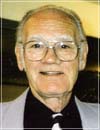
Scott Richardson

False Religion

Romans 1:1-18
Scott Richardson January, 29 1978 Audio
0 Comments

Sermon Transcript

Auto-generated transcript • May contain errors

100%
First chapter of the book of
Romans, Romans chapter 1. I think all of us, I believe to some measure, understand
that This generation has been deceived
in regard to the gospel of the Lord Jesus. For the most part, the so-called
evangelicals of our day have led people down a path into a
world of fantasy. rather than into a world of reality. That can be seen in several different
ways. In particular, and I've mentioned
this before, but in particular, it can be seen in religious services. You can see the fantasy of all
of it in the Sunday morning services, the robed choirs, choirs with
gaudy, bright-colored or dull-colored robes, stained-glass windows with shepherds,
sheep laying down, pictures of Jesus crosses. You can see it in the lighted
candles. You can see it in the preacher,
the robe that he wears, various uniforms that are in conjunction
with his office, the playing of some hymn while
he prays or someone else prays. You see, that is all a fantasy
land because we have to do with a real God in a real world. When
we go out of the building, we leave the stained glass windows.
We leave the crosses, the candles, the sheep the robed choirs, the
robed preacher, and we enter into a real world where a real
God is. That's where He's at. He's out
here. He's not in this fantasy world.
Therefore, when people leave this place, they have left their
religion. Now, when they pray, they have
no soft organ music. When they worship, they don't
have the robed choir and the preacher in his robe and the
dimmed lights and all of that. So it's a world of fantasy is
what it is. It's a world of fantasy. When people leave this little
world of fantasy and go out into the real world why they have
left their God and left their religion right there in that
building. Because that which is real is not compatible with
that which they have been involved in, this world of fantasy. And
preachers spend all their time and efforts in leading people
down this path of fantasy. It's unreal. It's not like it
is. The religion of the New Testament
was a group of people who came together, united by one common
bond, and that's the Lord Jesus Christ. And they came together
to know more about Him. More about Jesus would I know. That was the purpose of their
coming together, was to worship Him, whom to know is life eternal."
There was no stained glass windows. There was a man before them,
a simple man before them that knew their sorrows, knew their
joys, and was able to enter into them. And he spoke to them in
regard to the things of the eternal God. There was no, no. A bunch of clowns in uniforms,
stood around and entertained and tried to hoop up the enthusiasm,
the hearts of those that gathered there. So it's a world of fantasy. That's all it is, a world of
fantasy. And the majority of the religious people in our world
today is involved in this world of fantasy, this religion of
fantasy, and are going towards eternity as fast as their legs
will carry them, without any covering for their sins. Most
of them have been led to believe in what is commonly referred
to as the simple gospel. The simple gospel. Well, I'm
not saying that the gospel is not simple. In a sense, there
is the simplistic sense of the gospel. There is that. A child enlightened by the Spirit
of God can understand the Gospel as well as the aged individual
enlightened by the Spirit can understand the Gospel. But what
is meant by the simple Gospel is that Jesus died for you, won't
you live for Him? Now that's what's preached in
our day, and that's all there is to it. Jesus died for you,
won't you live for Him? And thousands say, well, that's
a pretty good deal, I won't pass that by. You mean to tell me
that Jesus died for me? Therefore, if I accept Him, I'll
never go to hell. That sounds like a good deal.
I'll buy that." And they buy that and have been led into this
road or down this road of fantasy, believing that they're saved.
They come on Sunday morning and they have the robed choirs and
the stained glass windows and the candles. And the organ playing
while the preacher prays, and he talks about dedication or some other particular
theme, and when it's over with, they leave and go their way.
Well, here in this book of Romans, I want to talk to you just a
little bit here this morning about some things that I think
that are necessary that's contrary to what this simple gospel so-called
teaches. Let me begin reading in verse
number one. Paul, a servant of Jesus Christ,
called to be an apostle separated under the gospel of God, which
he had promised afore by his prophets in the Holy Scriptures,
concerning his son Jesus Christ our Lord, which was made of the
seed of David according to the flesh. You see, Just in these
three verses we can find that the Gospel is a proclamation
in regard to the Lord Jesus Christ. It's an announcement of a work
done. That's what the Gospel is. The Gospel regards or is
concerned with the Lord Jesus Christ, concerning His Son Jesus
Christ our Lord. which was made of the seed of
David according to the flesh, and declared to be the Son of
God with power according to the Spirit of holiness by the resurrection
from the dead, by whom we have received grace and apostleship
for obedience to the faith among all nations for his name, among
whom are ye also called of Jesus Christ. To all that be in Rome,
Beloved of God, called to be saints, grace to you and peace
from God our Father and the Lord Jesus Christ. First, I thank
my God through Jesus Christ for you all that your faith is spoken
of throughout the whole world. For God is my witness, whom I
serve with my spirit in the gospel of his Son, that without ceasing
I make mention of you always in my prayers. making request if by any means
now at length I might have a prosperous journey by the will of God to
come unto you. For I long to see you that I
may impart unto you some spiritual gift to the end you may be established. That is, that I may be comforted
together with you by the mutual faith both of you and me. But
I would not have you ignorant, brethren, that oftentimes I purposed
to come unto you, but was let hitherto that I might have some
fruit among you also, even as among other Gentiles. I am a
debtor both to the Greeks and to the barbarians, both to the
wise and to the unwise. So, as much as in me is, I am
ready to preach the gospel to you that are at Rome also, for
I am not ashamed of the gospel of Christ. For it is the power
of God unto salvation to every one that believeth, to the Jew
first, and also to the Greek. For therein is the righteousness
of God revealed from faith to faith, as it is written, The
just shall live by faith. For the wrath of God is revealed
from heaven against all ungodliness and unrighteousness of men, who
hold the truth in unrighteousness. Now, in seeking to make the message
of salvation acceptable to the natural man, the heart of the
gospel message is cut out. And in its place is placed some
glib statement of Jesus died for you, won't
you live for him?" Now, this is changing the truth of God
into a lie. It's an exchange for the simple
gospel. Now, according to the Apostle
Paul's account of the gospel here in Romans, the gospel is
too simple. I want you to Listen to this
now. The gospel is too simple if it
neglects to emphasize man's sinfulness before God and before God's holy
law and his state of condemnation because of this. The gospel is
too simple if it does not emphasize man's true state before God. Anytime that you hear preaching
that does not emphasize the sinfulness of man before the holy law of
a holy God, then the gospel that that man is preaching, or that
church is preaching, or that you are reading about, is just
too simple. Because the heart of the whole
message of the gospel has been taken out. Now, in this book of Romans,
and I've kind of read this carefully now, I want you to notice how
Paul, the Apostle, begins his proclamation of the Gospel. I want you to notice how he does
it. He doesn't do it with the love
of God. He doesn't first begin talking about the love of God. He doesn't first begin preaching
the gospel with a proclamation of Christ's work upon the cross. That's not it. He doesn't talk
about the love of God. He doesn't talk about the work
of the Lord Jesus upon the cross. Now, these facts are true. These facts are true that God
is love and that the Lord Jesus Christ did do a particular and
specific work upon the cross. These facts mean nothing apart
from the awful truth of man's condition before God, his Maker,
and his Judge. They don't mean a thing apart from man's sinfulness. I think you can see that. Now,
Paul announces the Gospel with a pronouncement of divine wrath
upon the transgressors of his law. Verse 18, the verse that
I quit with, says, Now Paul here, this is the beginning of Paul's
pronouncement in regard to the gospel concerning the Son of
God. He says, For the wrath of God
is revealed from heaven against all ungodliness and unrighteousness
of men who hold the truth in unrighteousness. You see, his
pronouncement of divine wrath is upon those who are transgressors
of God's holy law. He doesn't say anything about
the love of God. He doesn't say anything about
the Lord Jesus Christ dying, suffering in man's stead here.
He puts first things first. puts the emphasis upon man's
wrongdoing. He puts the emphasis upon man's
ungodliness before the holy law of God. Man is ungodly in that
there is no fear or reverence of God Almighty in his soul. No man, apart from a divine operation
of the Holy Spirit of God, has any fear or reverence in his
soul. No man. You can just mark that
down. Doesn't make any difference who
he is. Doesn't make any difference as to his background, to his
environment. Doesn't make any difference to
his manners or to his mannerisms or to his methods. It doesn't
make any difference to his education. Doesn't make any difference whatsoever.
If the Spirit of God has not operated on that man's heart,
then you can mark it down that that man has no fear or reverence
of God Almighty in his soul. He needs to know that. He needs
to be told that. And if that's not told, then
the gospel is too simple. See what I'm talking about? The
gospel is too simple if that's not emphasized. And that's what's
emphasized in our day, you see. That's what's emphasized, the
simple gospel, so-called, It says that all you've got to do
now, God loves you, God loves you, Christ died for you, won't
you live for Him? And shake hands with the preacher
or sign some card or shed a few tears or be sorry for some mistake
that you made and you're a Christian. Well, I'm telling you that's
a world of fantasy and that's what the majority of this world
is involved in, is in a world of religious fantasy. And preachers
are leading men and women down into an eternal separation of
God as fast as their feet will carry them. Too simple. The apostle says that man is
ungodly, he is unrighteous. And he says that there is no
fear or reverence of God in his soul. And I say, brethren, as
the Bible teaches, that man must be made to see this. Paul declares
here the nature and result of Gentile guilt. In Romans chapter
1, he goes on through here to the 2nd chapter and to the 16th
verse. From Romans 1.18, clean through
to Romans chapter 2 and verse 16, the Apostle Paul sets forth
the ungodliness and unholiness and the guilt and the ruin of
Gentiles." Gentiles. You just read it. I'll not read
it all. But look at some of it here. It says, verse 20, "...for
the invisible things of him from the creation of the world are
clearly seen, being understood by the things that are made,
even his eternal power and Godhead, so that they are without excuse."
Gentiles. And he goes on, he says, they
would not retain God in their knowledge. God gave them over
to a repturbate mind. He said they are filled. Listen
to this, being filled, verse 29. with all unrighteousness,
fornication, wickedness, covetousness, maliciousness, full of envy,
murder, debate, deceit, malignity, whispers, backbiters, haters
of God, despiteful, proud, boasters, inventors of evil things, disobedient
to parents, without understanding, covenant breakers, without natural
affection, implacable, unmerciful, who, knowing the judgment of
God that they which commit such things are worthy of death, not
only do the same, but have pleasure in them that do them." Brethren,
the emphasis in the preaching of the gospel needs to be placed
upon the ungodliness of man. You see that? Man has got to
be made to see how ungodly he is. His ruin, his state before
God, if he never sees this, he'll never cry out to God. He'll continually
do as they do in this religious world of fantasy. They'll boast
and brag, boast and brag about the big I. I do this and I do
that, unless they have been brought to the end of themselves. And
if we're going to preach the gospel as the gospel is to be
preached, certainly we've got to we got to make our first emphasis
to be upon this. It goes on through to that 16th
verse, and it goes in the 16th verse of the 2nd chapter, it
says, "...in that day when God shall judge the secrets of men
by Jesus Christ according to my gospel." Well, to sum it all up, Paul declares
Both Jew and Gentile are under sin. He said, you're as bad as
they are. Let me find that verse. In the third chapter, look over
in the third chapter here. What advantage then hath the
Jew, or what profit is there of circumcision, or what profit
or advantage is it of being a Jew, if the Gentiles are as ungodly
as you say they are, Paul? What advantage is it to us to
be Abraham's children, to be a Jew? Paul says very much that
there is an advantage, chiefly because that unto them were committed
the oracles of God, For what, if some of them did not believe,
shall their unbelief make the faith of God without effect?
God forbid! God forbid! Yea, let God be true,
but every man a liar." Then he goes on down here and
turns down at that ninth verse now. What then? Are we better than they? Better
than who? Better than the Gentiles. That's the argument here that
they're giving to Paul. Are we better than they? Paul
says, No, in no wise. You're no better than the Gentiles.
For we have before proved, both Jew and Gentile, that they're
all under sin, that they're all ungodly. Jew and Gentile alike
are all ungodly. Ungodly. There is no fear or
reverence of God in their soul. They're ungodly. They're hopeless. and helpless before God. They
are in the hands of Almighty God. Well, as if this were inadequate, he concludes the entire section
of this portion of the Bible with a solemn pronouncement that
we know, listen, here in this 19th verse of the 3rd chapter. Now we know that what thing soever
the law saith, it saith to them who are under the law, that every
mouth may be stopped, and the whole world may become guilty
before God. Therefore, by the deeds of the
law there shall no flesh be justified in his sight, for by the law
is the knowledge of sin." You see, Paul sets forth this fact
of truth of the ungodliness of the Gentiles, and then he says
that The Jew has not been excluded
from this because he's ungodly too. And if that were not enough,
Paul says, if that was inadequate to prove what I'm talking about,
he says that whoever is under the law of God, the law says
to them that every mouth may be stopped and the whole world
become guilty before God. Well, the proclamation of man's
guilt and ruin and condition before the Holy Judge of all
flesh is essential to the preaching of the Gospel. Man will not,
now you can mark this down, you can mark it down, man will not
see his need of the blood and merits of the Lord Jesus Christ
until he sees that he has wronged a holy God and is under the awful
sentence of a holy God's wrath. You'll never see it. It's essential
then, it's essential that we see this. It's essential for
my soul's sake that I see my decrepitness, that I see my corruption,
my pollution. It's essential I must see that.
If I never see that, I'll never sue for mercy at the feet of
God. I'll never see that I need mercy.
I'll never see anything in the blood, in that bloody death on
the cross, and the merits of that death, I'll never see, I'll
never be interested in, never will, until I first see, until
I first see my ungodliness and my unrighteousness before God's
holy law. The simple gospel, brethren,
the simple gospel omits this. Where do you hear anyone talking
about man's depravity, man's awful helplessness before the
holy law of God? I listened to John R. Rice the
other night, and he's the editor of that paper, The Sword of the
Lord. He's been publishing it Forty-some
years, I believe he said. I forget how many, 300,000 copies
I believe he publishes every week. And it goes to every state
in the United States and a hundred and some different foreign countries.
He's 82 years old, been preaching the gospel for 56 years, I believe
he said. He was on the television the
other night on Channel 5, and I watched him because I've heard
of John R. Rice all of my life, but I've never seen him. So I
wanted to see him. So I listened to him. He said
a whole lot of things that were good. A whole lot of things were
good. He preached, he must be born
again. He preached that. But he never
did emphasize, not one time did he ever emphasize the utter decrepitness,
the utter pollution of man's soul before God. He told them
man needed to be born again. He said you need to be born again.
And if you're not born again, you're going to go to hell. Those
things are true. But a man will never flee to
the altar and hold on to the horns of that altar until he
sees his desperateness. Until he sees something of the
danger of sin and the danger of judgment in regard to his
own soul. He'll never flee. That's the
truth, brethren, so help me. The gospel, then, is not first
concerned with man's psychological or social or physical need. That's not the first concern
of the gospel. His psychological need, his social
need, or his physical need. The concern of the gospel is
a man's soul. So when you hear the churches
and preachers that are promoting a gospel that will make everything
better for a man, you can say that's the simple gospel. You
know, I mean, if you believe the gospel and if you trust in
Christ and you become a Christian, then you're not going to have
any more problems anymore. Everything will disappear. Everything
will disappear. Your wife will love you better,
and your children will love you and respect you, and the neighbors
will love you, and the people on the job will love you. And
you can just smile all the time. You ever watch Pat Robertson
on the 700 Club? Praise the Lord! Praise the Lord!
Isn't it wonderful? Oh, isn't it wonderful? Praise
the Lord! Praise the Lord! What they're saying is what Pat Robertson
is saying, and I'm not criticizing Pat Robertson as a personality
or anything like that, but I'm just trying to say that he is
an emblem of what I'm talking about, this simple gospel business.
Trust Jesus and you'll never have any more problems. You'll
never have any more problems. Smile! Smile! Be happy! Be happy! If your mother dies,
smile! If your children die, smile!
Be happy! All that kind of business, you
know. If you've got an ache, if you've got a toothache, put
your hand on the television here and let's pray to God and He'll
heal your toothache. If your foot aches, write and
tell me about her. Get on the telephone and call
me. If you've got cancer in your lungs here, call me." And he
said, we'll pray, we'll pray. God wants to heal you. You ever
listen to Jimmy Swaggart? Jimmy Swaggart says that if you're
sick, it's contrary to the rule and to the will of Almighty God.
What I'm trying to tell you here this morning, brethren, is that
the gospel is not first concerned with man's psychological, social,
or physical needs. It's concerned with his soul's
needs. And if that's not emphasized, man's utter need of the bloody
death of the Lord Jesus Christ on the cross, then that gospel
is too simple. It's too simple. It is first
and foremost concerned to make him aware of his theological
need, the need of his soul, his need before God, the dangers
of sin, the dangers of judgment. He needs to be alarmed and made
aware of that. You see, the preaching of man's
guilt and liability to the wrath of God, that's what's lacking
in today's preaching. Man's guilt and man's liability
to the wrath of God. A gospel that does not give prominence
to this aspect of biblical truth has become so simple as to have
ceased to become the gospel. It's not the gospel. Secondly,
the gospel is too simple. If it neglects to fully declare
the divine provision for man's guilt and condemnation in the
person and work of the Lord Jesus Christ. Paul here in this second and
part of the first and part of the third chapter of the book
of Romans has declared the awful and hopeless condition of man
Now the Apostle proceeds to declare the provision of God in the person
and the work of the Lord Jesus Christ as a Redeemer. That certainly is important. Paul speaks of Jesus Christ even
in the, I think, in the second verse of the first chapter. Or
in the first verse. 1, 2, 3, 4, the fourth word of the first
verse. Paul, a servant of Jesus Christ. Paul speaks of Jesus Christ.
That's all Paul talks about is Jesus Christ. He doesn't talk
about anything else. Everything he talks to is divinely
related to Jesus Christ. He doesn't spend any other time
Quoting poetry or arguing in the defense of philosophers or
what have you. Nothing whatsoever. Everything
he talks about is related to the Lord Jesus Christ, whom he
met on the road to Damascus. Paul speaks of Jesus Christ,
but in the minds of those ignorant of the Scriptures, they say,
Who is he? Who is he? In our day, he's thought
of as many things. I was reading in the Fairmont
paper, I believe it was, where in Clarksburg they're going to
put on a play, Jesus Christ the Superstar, and they said they
had 30 parts. There was 30 parts that was available,
open. They needed 30 people to fill
the parts in order to portray different characters in this
play. And if anyone was interested,
why to call a certain number or to talk to a certain party
in regard to this. See, in our day, he is thought
of as many things. A superstar, even thought of
as a soul man. A soul man. That's what certain
elements of our society refer to the Lord Jesus Christ as a
soul man. In fact, some people have referred
to the Lord Jesus Christ, and I say this reverently. They refer
to him as a good old boy. Isn't that right? He's a good
old boy. The man upstairs, a good old
boy. Now, can these conceptions of
the person of our Lord Jesus Christ lead to saving faith? Never in a million years. Never
in a million years. If that's the understanding and
conception that a man has of the Lord Jesus Christ, a good
old boy, Jesus Christ, superstar, or a soul man, that'll never
lead. That'll never lead to salvation.
They're lost before God. You see, the preachers of our
generation, they're leading people. They're leading people down.
They must be saddest. Saddest. They're sadistic. Sadistic,
leading the souls of men, a soul that will never die. Never die. Man has only got one of them
and here is a preacher, he is leading men and women and boys
and girls, leading them into the pit of corruption through
a world of fantasy. Not telling them the truth. Not
telling them the truth. My soul, the gospel of the Lord
Jesus Christ is not some proposition. It's not a proposition. If you'll
do this, God will do something else. If you'll do something
else, God will do this. That's not the gospel of Jesus
Christ. But that's what's preached in
our day. If you do this, God will do something else. You meet
God halfway. God will come three steps, you
come two, God will meet you. Kneel at the cross, God will
meet you there. That's the gospel in our day.
The gospel is not a proposition. It's not a recipe of righteousness. You be holy and then God will,
well, I'll quit this and I'll quit that and I'll get myself
in shape and God will have to do something for me. No, that's
not the gospel. Paul, in Romans chapter 1, verses
3 and verses 4, declares the truth about Christ's person. Even in the face of his own day
misconception of who the Lord Jesus Christ was. Look at that
in that third verse. Here he declares his humanity. He says, concerning his Son Jesus
Christ our Lord. Now listen to this. You'll learn
something here if you'll look at that. concerning His Son Jesus
Christ our Lord, which was made of the seed of David according
to the flesh." Speaking of the humanity of the Lord Jesus Christ. He declares His humanity made
of the seed of David according to the flesh. Notice this now,
"...and without stopping for so much as a breath." He goes
on to declare His deity, in that next verse, "...and declared
to be the Son of God with power according to the Spirit of holiness
by the resurrection from the dead." What did He say in those
two verses? He told us who Jesus Christ was. He told us about the God-man. He told us about His humanity
and He told us about His deity. He said He is human. He told
us He was God Almighty. declared him to be the Son of
God with power according to the Spirit of holiness by the resurrection
of the dead." So, in these two verses, the Apostle Paul declares
the true nature of his person. Christ is true God and true man
in one person. He's God and he's man in one
person. Almighty God, I heard a fellow
say this years ago when I was young. He said this, and I've
always said it and always remembered it. He said that the Lord Jesus
Christ was as much God as if He was never man, and as much
man as if He was never God. He was the God-man. God and man
joined into one person. God-man. According to the seed
of David. According to the flesh, the seed
of David. God over all and above all. The
Lord Jesus Christ is God Almighty. Christ is true God, true man
in one person. Now this is vital to the preaching
of the Gospel. Because, now listen to me, because
only as a man could Jesus Christ suffer death. He couldn't suffer
death if He was God. See what I'm talking about, Jim? He couldn't suffer death if He
was God only. There had to be a man to suffer
death. vital to the preaching of the
gospel because only as a man could Christ suffer death and
only as God could He satisfy the infinite demands of divine
justice. Only as God could He satisfy
everything that God's law had against us. And only as the God-man
could He save His people from their sin. Only as the God-man The nature of his person must
be declared, for apart from the majesty and worth of his person,
his work is powerless to save sinners. He can't do it. Well, what is it here that Paul
seems to be so interested and concerned about when he emphasizes
the nature and person and work of the Lord Jesus Christ. Well,
this is it. Jesus Christ was righteous before
the demands of the law of God. He has satisfied the wrath of
God through his bloody death. for all who will see their need
of it. Not for all men, but for those
who see their need of it. People talk about, well, I heard
Jerry Falwell this morning. And Jerry, he kept insisting
that God loves you. God loves you! God loves you!
God doesn't love anybody except in Christ! Mark it down. Mark
it down. I don't care if he's Pharaoh's
son. He doesn't love anybody but in Christ. The only people
he loves are in Christ. He doesn't love them out of Christ,
they're in Christ. So for Jerry Falwell or whoever he is to say
out there in a blank universal statement that God loves you
is just not telling the truth. God loves men in Christ. In Christ. As we love, God so loved the
world that He gave His only begotten Son that whosoever believeth
in Him should not perish. Now, who does God love? Those
that believe in His Son! See? The Lord Jesus Christ, who
was righteous before all the demands of the law of God, has
satisfied the wrath of God through His bloody death for all who
will see their need of Him. Man's got to see his need of
Him. I know that. I know that. I may die and wind
up in hell. I might do it. I might do it. Bless God. I think I see my need
of a Savior. I think I see the awful corruption
and pollution of my own soul. I see that. I see that there's
no other hope or way or escape or covering apart from the bloody
death of the Lord Jesus Christ. And I know, too, that no man
will ever go to hell believing this. He'll not go to hell believing
that. Well, Paul testifies of this
here in the third chapter of the book of Romans. Stay with
me for a little bit and we'll quit. In Romans 3, verses 26,
let me read this now. Verse 23, he says, "...for all
have sinned and come short of the glory of God." Everybody,
without exception, is sin. Jew and Gentile alike. The whole
world has become guilty before God. All men are sinners. All
men outside of the Lord Jesus Christ have no fear or reverence
of God in their soul. That's what he's talking about.
He says, "...now being justified freely by His grace through the
redemption that is in Christ Jesus, whom God hath set forth
to be a propitiation through faith in his blood, to declare
righteousness for the remissions of sins that are passed through
the forbearance of God, to declare, I say at this time, his righteousness,
that he might be just and the justifier of him which believeth
in Jesus. Where is boasting then? Is it
excluded? By what law? of works, nay, but
by the law of faith. Therefore, we conclude that a
man is justified by faith without the deeds of the law. Oh, Martin
Luther, a couple of hundred years back, was over there in that
place that Wittenberg was crawling up those steps on his knees,
had calluses on his knees, crawling up those steps, just going up
them as hard as he could go. A verse of Scripture came to
his soul. The just shall live by faith. He said, shall live by faith.
We are reconciled unto God by faith. He said, what am I doing
on my knees? What am I doing trying to work myself to heaven
when he said it's by faith in Jesus Christ? And he got up off
his knees and started the Reformation and changed the whole world.
That's a fact. Martin Luther did that. Alright, in chapter 3, verses
23 and 26, Paul declares the truth of substitution, the heart
of the gospel. Now, the work of the Lord Jesus
Christ is a substitution, that is to say, the death of Christ
was that of one suffering the condemnation and death in the
place of another. That's substitution. Now, the
work of Jesus Christ on the cross was a penal substitution. By this we mean that he suffered
the penalty due to the broken law of God. Divine judgment. That's what we're talking about
when we talk about penal substitution. We are saying that the Lord Jesus
Christ not only stood in the stead of the man who will believe
upon him, or as believed upon him, stood in his place, his
room, in his stead. We are also saying that he suffered
the penalty that was due the broken law of God, satisfied
it. This is the meaning of that word propitiation. A propitiation
is a sacrifice offered to God to appease or to satisfy the
wrath of God. That's what propitiation means. In this case, it was God's own
offering of His sinless Son to bear the infinite wrath His people
as sinners so justly deserved. May God help us to see what I'm
talking about. This evening now, there's something
else I want to say. I want to talk to you this evening
about the nature of saving faith. I want you to hear it in conjunction
with what we've said this morning about this so-called simple gospel.
Let's stand.
Scott Richardson
About Scott Richardson
Scott Richardson (1923-2010) served as pastor of Katy Baptist Church in Fairmont, West Virginia.
Broadcaster:

Comments

0 / 2000 characters
Comments are moderated before appearing.

Be the first to comment!

Joshua

Joshua

Shall we play a game? Ask me about articles, sermons, or theology from our library. I can also help you navigate the site.