Bootstrap
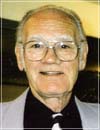
Scott Richardson

Weakness and Infirmities In The Believer

Mark 4:35
Scott Richardson July, 31 1977 Audio
0 Comments

Sermon Transcript

Auto-generated transcript • May contain errors

100%
...this evening to the Book of
Mark, Chapter 4. Fourth Chapter of the Book of
Mark, and... ...Verse 35 of the Fourth Chapter. And the same day, when the evening
was come, he saith unto them, Let us pass over unto the other
side. And when they had sent away the
multitude, they took him, even as he was in the ship. And they
were also with them other little ships. And there arose a great
storm of wind, and the waves beat into the ship, so that it
was now full. He was in the higher part of
the ship, asleep on a pillow. They awake him and say unto him,
Master, carest thou not that we perish? And he arose and rebuked
the wind, and said unto the sea, Peace be still. And the wind
ceased, and there was a great calm. And he said unto them,
Why are ye so fearful? How is it that ye have no faith. And they feared exceedingly,
and said one to another, What manner of man is this, that even
the wind and the sea obey him? There are many things to be learned
from these five or six verses that I read to you here. And certainly we can see without
too much insight, the power of Almighty God as it is expressed
here in the controlling of the elements, the smoke and the wind,
the water, this great sea obeyed Him. They were astounded, amazed
at what manner of man is this. We can see the power of God. We can see that all things are
subject to Him, all things. Not only all flesh, but all things. We know that He has power over
all flesh. All flesh has been turned over
to Him, but everything else has been turned over to Him, all
the elements. He controls everything. The government
of this universe is in his hands. But that's not the particular
emphasis that I want to stress here this evening. Let us learn that there may be such
weakness and infirmity even in a true Christian. Weakness and
infirmity we see in these apostles. He was in the hinder part of
the ship when the storm arose and the waves beat
into the ship so that the boat was full of water. He was there
asleep on a pillow, and they were scared. They awoke him. They said unto him, Master, carest
thou not that we perish? Now, this is evidence of weakness
and infirmity of these apostles. is in the conduct of these disciples
as we've related to you. They were full of fear and anxiety
when they cried out, Master, carest not that we perish. Well, I think that in this we
can see three things that gives evidence of the weakness and
infirmity in true believers. First off, there was impatience. They were very impatient. They
might have waited until their Lord thought fit to arise from
His sleep, but they didn't. They were impatient. And secondly,
There was unbelief expressed in their conduct. They forgot,
or they didn't believe, that they were in the keeping of one
who had all power in his hand. They forgot that. And thirdly,
there was distrust. They spoke as if they had doubted
their Lord's care and thoughtfulness for their safety. They said,
Master, carest thou not that we perish? So there's three things
there that gives evidence, that's proof, of their unbelief, of
their fear, of their distrust, of their impatience, of their
weakness, of their infirmities, three things. Well, these are,
in a sense, poor, faithless men, poor, faithless souls. What business have they to be
afraid of? Our Lord, many times prior to
this occasion, giving them proof upon proof
of his power and his wisdom and his faithfulness to see that
no real harm would come to them. In fact, they had several examples
just prior to this particular happening of his kindness, which
would have been sufficient enough to convince them that he certainly
wasn't going to let anything happen to them. But, as you well know, a sense
of immediate danger often makes a man have a bad memory. Fear
is often unable to reason with past experience, so they had
forgotten about past experience. They had memory problems, just
like you and I have. They heard the winds, They saw
the waves. They felt the cold waters beating
over them. They believed that death was
close at hand and they could wait no longer. And they said,
terrorists, thou not that we perish. Well, I've said all this
in order that I might say to you this evening that this is
a picture of what is continually going on among believers in every
age, even unto this day. A picture of unrest, a picture
of unbelief, a picture of unfaithfulness, a picture of anxieties, a picture
of fear, a picture of weakness, even in Christians who have forsaken
all to follow the Lord Jesus Christ. Now, there's a lesson
here to be learned. Many of us, we get along real
good, real well, as long as we have no difficulties. As long
as we have no trials, everything's all right. We're taught to be
good Christians, and we convince ourselves we're good Christians.
As long as we have no difficulties. We'll attend church twice a week
or three times a week. murmur too much or complain too
much about the weather or things of that nature, we'll just go
right along with our heads up and our backs straight and a
smile on our face and doing real good as long as we have no difficulties,
as long as we have no problems. That is a time of fair weather.
As long as it's fair weather, there's no storm. There's no
water beating over the bow of our ship. There's no danger of
death closing in. Why? We don't have too many problems.
We get along pretty good. We convince ourselves that we're
trusting in God entirely. We flatter ourselves that we
have cast every care upon him. That's what we think. In fact, we obtain a reputation
of being a good Christian. That's what others say about
us. They say, well, he's a good Christian. He's a good Christian. He comes to church all the time.
He gives of his money. He prays. He reads his Bible.
He's well acquainted with the scriptures. He gives a good witness,
a good testimony. He's a good Christian. He's a
good Christian. That's the reputation that we
obtain from others, as long as no storms come our way, as long
as we have no trials, as long as we have no difficulties. We
flatter ourselves that we have cast every care, every burden
upon the Lord Jesus Christ, but out of nowhere, Suddenly, unlooked
for trials and troubles come our way. Sometimes property makes
itself wings and flies away. Our possessions, our possessions. Our health fails. Get sick. Doctor said we had tuberculosis.
The doctor says, we've got to have an operation. The doctor
said, we've got cancer. The doctor said, we've had a
heart attack. Even death sometimes comes to
our house. Tribulation and persecution arises
because of the Word. Where's the strong confidence
that we thought we had in these things? Where is it? Huh? Well, what I'm trying to say
this evening is this. Number one, I'm trying to say
that we need to learn that there is weakness and infirmities in
the best of Christians. There was in the apostles and
there will be in us. We need to look for that in each
other. We need to know what to expect
from one another. When trials and tribulation come, We fade and sink and are as unstable
as water when trials and troubles come. We act like we have no
confidence whatsoever in God Almighty. I don't put a premium on that.
I'm just telling you the truth, the way we are. We ought to know
what to expect. Fear and doubt and distress comes
upon us like a flood. when something happens. If something
ever happened to us like it happened to some of the brethren, the
saints of God in the Bible, I don't know what would happen. What
would happen to you and I if someone came to your house
and said your oldest son had died? And hardly before When he got
that out of his mouth, another messenger would come and say, Your next son has died. And before you had got over the
shock of that statement, another messenger would come and say,
Your other son has died. And before it's over with, two
or three more messengers would come and say, Your daughters
have all died. And someone else would come along
and say that the wealth that you had accomplished throughout
the years, your property had taken wings and flew away, and
you was hopelessly and helplessly bankrupt. You did not have a
single solitary thing in this world. Everything was taken away. Your family was taken away. Your
wealth was taken away. and all at once your health was
attacked and you had boils on the bottom of your feet to the
top of your head. And then your wife would turn
to you and say, why don't you just curse your damn religion
and curse God and die? What would you do? Where would
your strong confidence be? Would you say, the Lord giveth
and the Lord taketh away, blessed be the name of the Lord? Would
that be your testimony and my testimony? I'm afraid not. I'm afraid that fear and doubt
and distress would come upon us, and it's hard to tell what
we'd do. Well, the plain truth is—this
is the plain truth. Is there a difference? No. Just
the expression. The plain truth is that there
is no literal and absolute perfection among true Christians so long
as we're in this body. Now, I know that that's the way
Job acted in the first chapter of the book of Job, but all you've
got to do is turn over to about the third chapter and you'll
see another reaction out of Job. Old Job retained his integrity
and sinned not against God. But finally, as he was sitting
there thinking about his difficulties and his problems, and how everything
had taken wings and flew away, and he was cast to himself in
all of his misery and all of his woe, three of his friends
came from afar off. to comfort and to console him. And they sit there before him,
I think seven days. Don't hold me to that. I'm not
sure how many days. But they sit there before him
and never opened their mouth. Not one time did they open their
mouth. And all at once Job looked up
at them and they reminded him of something, and he cursed. the very day that he was born.
And he began to curse violently and bitterly. I don't mean obscenities,
I don't mean bad language, but he cursed the very day that he
was born. Yeah? The plain truth is that
there is no literal and absolute perfection among true Christians
as long as they're in this body and flesh. There's just not any,
and I don't care what people say. I'll guarantee you, if you
find a fellow that says he's absolutely perfect, slip up on
his blind side and tramp on his toe real hard, and I'll guarantee
you, you'll see an expression of the old Adam. You'll see an
expression of the natural man. In the book of Ecclesiastes,
chapter 7, and verse number 20, it says, For there is not a just
man upon the earth that doeth good and sinneth not. In the book of James, chapter
3, verse number 2, it says this, it says, "...for in many things
we offend all." The plain truth is that there is no literal and
absolute perfection among true Christians as long as they are
in this body of flesh. Abraham, the father of the faith,
the friend of God, He forsook his country and his kindred and
went out according to the command of God. He left everything behind,
everything. He cut it off. God spoke to him
and said, Get thee out of this country and away from your kindred
and go where I command you to. And he did exactly as God told
him to do without question, without hesitation. He gathered up what
few belongings he had and he went. doing what God told him
to do. He was content to dwell in the
land as a stranger. Yet, we find that
he was overcome by fear and unbelief and allowed his wife Sarah to
be called his sister instead of his wife. Because of the fear
of man, because of unbelief, he thought God wasn't able take
care of him under that circumstance and under that condition. So he said, We'll hedge a little
bit. It's just a little thing. It
won't make much difference, but it made a whole lot of difference.
Yet God called him a friend of God and refers to him as the
father of the faithful. There's no absolute perfection
in any Christian. David was a man after God's own
heart. That's what the Bible says. He
was a man after God's own heart. He had confidence in God. His confidence was so strong
that he tackled a bear, killed it with his bare hands. He was
out there in the hills as a shepherd boy, guarding his father's sheep. A bear came in one time. He tried
to take one of those little lambs, and old David flew into that
barren. Because he had confidence that God would assist him and
help him, he flew into that barren and killed him. He did it more
than once. One time he was down there, went
down to battle and took some portions of food down to his
brothers. Right down there on the hillside
was the army of the Israelites, all cowed down and bowed down
and cringing and scared to death, thought they wasn't going to
live another day. Over there on the other side of the hill
was a giant by the name of Goliath, defiant, making fun of them,
cursing them. David heard all of this. He said,
Who is that fellow? Who is that uncircumcised Philistine
over there that's making all this noise? He said, well, that's
the giant Goliath. He said, he's going to kill us
all. He's defying us. Trying to get someone to fight
him. No one will fight him. No, it's a losing battle. You
couldn't go up against a man ten foot tall. It's an impossibility. Let's be reasonable about this
thing. David said, why, get out of the
way. I'll fight that fellow. Get out of the way. He said,
move aside and let me get to him. Why, Saul said, you can't
do that. He said, he'll kill you. No,
he said, I said, God's come to my rescue more than one time
when I was fighting those bears up there. He said, He'll undertake
for me. He'll undertake for me. Get out of the way, he said.
Well, if you've got to do it, if you've got to do it, put on
my armor. No, he said, that armor's too big. It'll hinder me. He
said, I don't need anything. He said, I got a sling shot here.
Went down there and got about three stones out of the brook.
Said, that's all I need. and flew into that giant and
killed him and cut his head off. Yet, that same David, who was
a man after God's own father, was so afraid of Saul, King Saul,
when Saul pursued him, chased him all over the hills of the
Scripture state, hunted him up like a man who would hunt a park.
And old David said one day, he said, I shall one day perish
at the hand of Saul. In a moment of weakness and a
moment of fear and a moment of unbelief, he had forgot, he had
forgot, he had a bad membrane. He couldn't recollect past experiences. You can't find no absolute perfection,
reverend, as long as you're in this body of flesh. You're not
going to find it. Not going to find it. Well, one purpose of our lesson here
this evening is this. I want all of us, we're all Christians,
to understand what they can expect in others. You can't quickly
conclude that a man has no grace because you see in him some form
of pollution? You can't make a hasty statement
and say, well, there's no grace in this man. There's the grace
of God's not in this man because I see a stain on his character. You cannot conclude that. If
you do, you're wrong. You're making a hasty judgment.
That's our problem in this generation, especially among those that are
called the fundamentalists and those that are the Calvinists.
We're too quick to set in on judgment of an individual because
we've seen a little stain on his character. You say, well,
there can't be no grace in that fellow. I've said it and you've
said it. We're guilty of it and we ought
to confess it unto God. We cannot quickly conclude that
a man has no grace because you see in him some corruption. Listen,
there's many spots on the face of the sun. If the sun shines
brightly, it lights the whole world. There's many flaws on some of
the finest diamonds in the world, but that does not prevent them. from being of priceless value
because there's a few flaws. Someone said, well, our bodies
are indeed temples of the Holy Ghost. And I've heard that time
and time again. They say, well, now listen, your
body is the temple of the Holy Ghost. That's right, I don't
doubt that, but it's not a perfect temple, is it? Huh? Our body
is the temple of the Holy Ghost, but it's not a perfect temple
and will not be until it's changed or raised. You say, well, the grace of God
is indeed a treasure. It is, but it's a treasure in
earthen vessels. What I'm saying is, it's possible. It's possible for a man to forsake
all for Christ's sake, and yet be overtaken with doubts and
fears and unbelief." It's possible, listen to me again, it's possible
for a man to forsake all, to give up all for the Lord Jesus
Christ, and follow the Lord Jesus Christ, identify himself with
the Lord Jesus, and yet be overtaken with doubts and fears. So, in light of that then, let
us be charitable in our judgment of each other. You've got to remember that these
men that I've talked to you about, these apostles that were in this
frail craft with their master who was in the hindered part
of the ship, asleep with his head on a pillow, these men had
forsaken all. Let's not be too quick to judge.
They had forsaken everything when it meant something to forsake,
more so than it does now. They had forsaken all. Matthew had forsaken his receipts
at the custom table, had forsaken all of his money and overcome
the love of money. It was a tax collector. went
around receiving tax money from the Jews for the Roman government,
and he was hated, and he was a rich man. Well, Matthew was,
but he left it all. You've got to remember that about
Matthew. He left it all. There's not many
that I know of that were willing to leave it all. He left it all.
The Lord said to Matthew, he said, What did he say? Follow
me. No explanation. Didn't say where
are you going or where am I going or didn't tell him anything.
Didn't give him a map. He just said, Matthew, follow
me. And he rose up and he followed him. He left all and followed
him. Peter, James, and John, I'm sure, were successful fishermen
to the extent that they made a living. It says that they left
their ships and they left their nets. They left all and they
followed Jesus. They went wherever he went. These men, what I'm trying to
tell you now this evening, these men that I'm telling you about
that were impatient, that their conduct gave evidence of their
unbelief and of their doubts and their fears and their bad
memories, these men had forsaken all and followed Jesus. in the storm, they was afraid. Yet, when the cold waters hit
their bodies, and they thought they was going to die, they was
afraid. See, they was afraid. This flaw in their character
was a chink in their armor. A chink in their armor. Well, they believed in Him with
all their hearts, and they loved Him. more than life itself. I
don't deny that. They believed in the Lord Jesus
Christ. They believed that he was the Messiah. They believed
that he was the Son of God. They believed that he was God
manifest in the flesh. They had a bad memory. They loved
him. But when the storm comes, they're
afraid. Well, here's what I want us to do.
I want us to contend to the death for the truth. that no man is
a true Christian who is not converted and is not a holy man. Contend
to the death of that truth. No man is a true Christian who
has not been truly converted and is not a holy man. He's not
a Christian. He's without God. He's without
Christ. He's without hope in this life
and without hope in death. He's not truly converted and
he's not a holy man. But allow that man, even though
he may have been converted, truly converted and be a holy man,
allow him that he might have a new heart and so forth. But
he's liable. Allow that liability there, that
he's liable in the course of his experience to have doubts
and to have fears and to have and the weakness of the flesh.
Allow that. Now, if we can allow that in
one another, we'll be better Christians than
Paul. If you're looking for perfection,
certainly don't look at me. You will not find it. And if
I'm looking for perfection, I'm not going to find it in you.
The only one we can find it in is Him. Who is what? Our blessed substitute, our blessed
Lord. You say, well, he ought to be
perfect. I know I ought to be perfect.
Thank God he is, Lord. Thank God I know one who is perfect.
I'm not perfect, but I know one who is. That's the Lord Jesus. If you're not truly converted,
you don't know him. I trust that this has been some
help to you. It's been a help to me. Let's
stand with
Scott Richardson
About Scott Richardson
Scott Richardson (1923-2010) served as pastor of Katy Baptist Church in Fairmont, West Virginia.
Broadcaster:

Comments

0 / 2000 characters
Comments are moderated before appearing.

Be the first to comment!

Joshua

Joshua

Shall we play a game? Ask me about articles, sermons, or theology from our library. I can also help you navigate the site.