Bootstrap
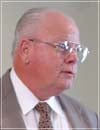
Rupert Rivenbark

Is Christ My All And In All

Colossians 2
Rupert Rivenbark March, 17 2013 Audio
0 Comments

Sermon Transcript

Auto-generated transcript • May contain errors

100%
Turn to Paul's letter to the
Colossians, the second chapter, Colossians chapter 2. My title this morning, and it
will no doubt be borne out in the chapter that we're about
to read, Colossians chapter 2, my title is, Is Christ My All
in All? Is He everything to me? Everything. Now before we begin to read the
second chapter, the first verse, let us beg the Lord to help us come
in our midst and speak to our poor hearts. Lord, as we gather in this place
this morning, We thank you for the privilege of singing hymns that honor and
glorify the triune God, Father, Son, and Holy Spirit. And we
bless you and thank you for the wonderful statements that are
found in the scriptures that have been sent to music that
declare to us the truth of your grace in Christ, that we might
know beyond a shadow of a doubt whether or not we are in Christ
because Christ is in us. And Lord, as we come to this
wonderful chapter in our Bibles, if you do not bless us As we
read, as we comment, and as we preach, if you do not bless these
things both to the preacher and to the listener, nothing takes
place. If all we hear is the voice of
a man, we must hear the voice of Almighty God speaking by your
precious Holy Spirit. to our minds, our souls, our
hearts, our inner being. We beg for your aid and help
and for your presence. We thank you in our Savior's
precious name. Amen. For I would that you knew what
great conflict I have for you, and for them at Laodicea, and
for as many as have not seen my face in the flesh, that their
hearts might be comforted, being knit together in love and unto
all riches of the full assurance of understanding, to the acknowledgment
of the mystery of God, and of the Father, and of Christ. In
whom, in Christ, are hid all, not some, not most, all the treasures
of wisdom and knowledge." Yeah, but what about the philosopher
so-and-so? What about him? Did he not speak
truth? No. You know why? He has nothing to do with Christ.
Therefore, it cannot be true. Many people might believe what
a given philosopher declares in his philosophy, but that doesn't
make it true. It does not make it true. In
Christ are hid all the treasures of wisdom and knowledge. Yes,
but I know people that love God, but don't know Christ. No, they
don't. By nature, we love the God of
our own imagination, and He's not the one in the Bible. Paul goes on in verse 4, and
this I say, lest any man should beguile you with enticing words. For though I be absent in the
flesh, yet am I with you in the Spirit, joying and beholding
your order and the steadfastness of your faith in Christ. As you
have therefore received Christ Jesus the Lord, so walk you in
Him. Rooted and built up in Him, and
established in the faith as you have been taught, abounding therein
with thanksgiving. Now a warning in verse 8, beware
lest any man spoil you through philosophy and vain deceit. After the tradition of men, after
the rudiments, the base elements and principles on which this
world exists among men, After the rudiments of the world and
not after Christ. For in Him, in Christ, dwells
all the fullness of the Godhead bodily. In a human sinless body. And you are complete in Him. If we are indeed in Christ, and
God himself must put us in Christ, but if we are in him, we are
indeed complete in him, for Christ is what? He's all. He's all. Which is the head of all principality
and power. That's one way of saying that
Christ rules everything and everybody, me and you included. In whom also you are circumcised
with the circumcision made without hands, namely spiritual circumcision. It is the circumcision of the
heart, of the soul. In whom, I'm reading that statement
in verse 11 again, in whom also you are circumcised with the
circumcision made without hands in putting off the body of the
sins of the flesh by the circumcision of Christ. Look at that preacher. It looks like we won't ever sin
anymore after we are converted. Oh, well, that's a different
story. But you can bet this, there's
as much Scripture in our Bibles to declare that we do remain
sinners until our dying day, until we leave this world, and
that it's just useless to argue it in our setting. I think most
of you understand this and have heard it so many times that maybe
we're beginning to believe it ourselves. Alright, verse 12. Bearing with him in baptism,
wherein also you are risen with him through the faith of the
operation of God, who has raised him from the dead, and you being
dead in your sins and the uncircumcision of your flesh, has he quickened
together with Christ, having forgiven you all trespasses,
all sins, blotting out the handwriting of ordinances that was against
us, which was contrary to us, and took it out of the way, nailing
it to his cross." One of our hymns has that expression. They
are nailed to the cross. I can't remember which one it
is right off. But I've heard people say that just in that
hymn, they didn't like, that's like it's already finished, you
know. Doesn't need my help to complete
it. Well, that's the whole point. The whole point. You know, this
guy whom many of you knew for a long, long time, that was his
statement. When we sung the hymn, he got
upset about the word in the hymn that it was there nailed to the
tree. Nailed. Y'all made me lose my place again
now. Where am I? Huh? Oh, 15. Thank you. And having spoiled
principalities and powers, he made a show of them openly, triumphing
over them in it. Let no man therefore judge you
in meat, that is, in food or in drink or in respect of an
holy day, or of the new moon or of the Sabbath days, These
things are meaningless. They were very important in the
Old Testament, but not in the New. Which are a shadow limiting certain foods, not allowing
certain foods, drinking certain things, not allowing other things,
celebrating holy days and new moons and Sabbath days. And what
does verse 17 say? These things are a shadow of
things to come, and things have already come when Paul writes
this letter. But the body, the essence, the
substance is of Christ. Let no man beguile you of your
reward in a in a voluntary humility and worshiping of angels, intruding
into those things which he has not seen, vainly puffed up by
his own fleshly mind, and not holding the Head, that is, the
Lord Jesus, from which all the body by joints and bands having
nourishment ministered, and knit together in creases with the
increase of God. Therefore, if you be dead with
Christ from the rudiments of the world, why, as though living
in the world, are you subject to ordinances?" So rudiments
has some kinship to ordinances. These are Old Testament ordinances. In the body of Christ, in the
church, how many ordinances do we have? Sir? He thinks there are two. I might
want to add a third one. But he's talking about baptism
and the Lord's Supper. And then I think the third one
ought to be to preach the gospel. The gospel itself. The gospel
itself. So why, as though living in the
world, are you subject to ordinances that say, do not touch, do not
taste, do not handle, do not look, do not hear, do not speak
certain things? Does that make any sense? taste not, touch not, taste not,
handle not, which all are to perish with the using." All of
that is in parentheses. After the commandments and doctrines
of men, which things have indeed a show of wisdom in will worship
and humility, that's false worship and false humility, and neglecting
of the body. but not in any honor to the satisfying
of the flesh." That is, that it does not honor God, but only
satisfies the flesh. Therefore, if it is gratifying
to our flesh, you can pretty much be sure it has nothing to
do with the worship of God in Christ. Alright, so let's just
take the chapter as a background for our attempting to answer
some questions now having to do with the Lord Jesus being
our all and in all. Now, I want to turn a few times,
so I'll try to limit this, and I will try to finish on time
if I can. Here's the first thing we want
to look at. The whole of salvation is Christ. He is God's salvation. He's God's Savior. He's our Redeemer. Could not be otherwise. Christ
is salvation. He is salvation itself. So the first thing we would raise
about this matter of Christ and salvation, do we question this?
Do we think this is too strict and too strong or too whatever?
Well, let's see. Exactly in what is Christ not
enough? What part of the believer's life
is Christ not enough? What part of conversion is Christ
not enough? I mean, the Bible everywhere
talks of Him as being everything. Everything. We could take hundreds of things
out of this one Bible having to do with the Lord Jesus and
salvation. Here's another question. Is God's
holy, divine justice not satisfied with Christ? Is the blood that
He shed, the suffering that He endured on the cross, and prior
to the cross, is that not enough? You mean we can add something
to that? These filthy hands of ours, all
we can add to it is sin. And that's why the Lord Jesus
came. Divine justice is indeed perfectly
satisfied with Christ. I hope I shouldn't be asking
this to you, but I have no idea who's going to listen to this
thing. Probably just a couple of other people in this whole
world, maybe. I don't know. That doesn't bother me. But would
we prefer to make part of salvation our work in order to enter heaven? I don't think so. It would strongly infer, if not
absolutely declare, that Christ didn't finish the work that he
said he finished, if we have to add something to it. Now,
finished means complete. Some of you, well, if I'm not
mistaken, Tim James, it's been three or four years ago, preached
that right here at this congregation because it was a message that
he preached in Crossville Conference in June of three or four years ago, I don't
remember, maybe longer than that. But when he got through, when
he finished that message, Boy, I said, I've never seen it like
that before in my life. So some months later when he
came to preach for us, I requested him to preach that message, It
Is Finished. And oh my goodness, it is. Oh,
it is finished. But if we were to say it isn't,
then what more could be required? Are we to make some kind of ceremonial
washings and cleansings, you know, like the Jews did? They
found fault with our Lord and his disciples because they ate
without washing their hands. Now, some of you might feel pretty
strongly about not doing that, but the Lord Jesus didn't seem
to object. It's simply, for the Jews it
was just, it was like saying, hey look at me, I'm holier than
you are. I don't want to eat with unwashed,
I mean ceremonially unwashed hands. I might actually swallow
something that would change my thoughts and that would be awful. The only washing that the sinner
who comes to Christ knows anything about is a fountain filled with blood
drawn from Emmanuel's veins. Now that, my friend, is necessary
washing. He washes all our sins away. The past ones, the present ones,
and the future ones. I mean, if he doesn't put all
of them away, it doesn't matter if he didn't put any away then.
But he put them all away. He said so. This book everywhere
declares so. Well, what about our clothes?
Well, there is such a thing as the robe of Christ's righteousness. And that is the believer's imputed
righteousness. And in one of the parables in
the Gospel of Matthew, it is called the wedding garment. And
the guest that came in had to put on this garment that was
supplied by the king to honor his son and his son's marriage.
And one fellow slipped in and didn't have on a wedding garment. He had on nothing to represent
the righteousness of Christ. And the king came in to see the
guest. And he spotted the man immediately
and asked him point blank, why did you come in here without
a wedding garment? And the only reason that could
be produced is that he would rather spit in the king's son's
face than accept a righteousness from him. And you think, well,
preacher, ain't nobody would do that. You go to some of these
churches and you start telling them that their self-righteousness
is nothing but sin, you'll find out. They're deadly serious when you
go messing with their idols. I know I used to have some of
them. So did you. Christ is also our medicine.
The book says with his stripes, we are healed. Now, Paul took a good many stripes
because of the gospel that he preached. But they didn't put
any sin away or heal us from the disease of sin. Oh, and by
the way, A short passage in Matthew, Mark, and Luke, if I remember
right, but the one that I wrote down here was the second chapter
of Mark. Hey, we've got time, so let's
just take a quick look at Mark chapter 2. Boy, it's right where it was this
morning. How about that? Mark 2, verses 21 and 22. Now you ladies, I doubt you men,
but you ladies probably know more about what I'm about to
read than I do, which wouldn't take much. Verse 21, no man also
sews a piece of new cloth on an old garment, else the new piece that filled
it up takes away from the old, and the tear, the rent as it
is called, the tear is made worse. Now, we understand that, don't
we? Sure. If you have a hole in a shirt
and you get a new piece of material and put it there, it's going
to take some more of that old garment. And the same thing is
true in the next verse. No man puts new wine into old
bottles. Now, these bottles were not plastic
nor metal. These were made of skins. And
a new skin that had not dried out would expand and stretch. but not so the ones that had
dried. And no man puts new wine into
old bottles, else the new wine doth burst the bottles, and the
wine is spilled, and the bottles will be marred or broken. But new wine must be put into
new bottles." Now, let me draw you, I guess the right word is
an analogy. from these two illustrations in regard to Christ and the gospel. Everywhere the true gospel of
God's grace in Christ goes, not in every place, but in many places,
and in this one especially. When that gospel came to Bethel
Baptist Church in the latter part of 1981, November to be
exact, it took a while for it to take place. But that cloth
tore, making it worse than it was before, and those bottles
burst. I mean, we had a brouhaha. without actually using any physical
attacks on people. But it was very tense for a long
time. It lasted for years. So this wonderful truth concerning
the Lord Jesus, as it has to do with this particular illustration, The battle between Christ's robe
of righteousness and a proud religious person and their own
righteousness. I'm telling you, that's where
the battle is fought and won. We're proud of what we've done
and our achievements. Preacher, I've been tithing forever.
Well, you're still in Old Testament religion if you are. Sometimes I think if you guys
went to tithing, we'd have to shut the doors. Of course, I
don't know what you make, and I don't want to know. But I'm
very thankful that we do the things that are necessary, and
we've had some tremendous expense at times. And here's our medicine. Not
only our washing, our clothing, but our medicine. With His stripes,
we're healed. And our food, the bread and water
of life. Then my second aspect of things,
suppose the Lord Jesus is not perfect as a Savior. Just suppose for a minute that
Christ is not who the Scriptures say that He is. Could any of us, or all of us
together, make up the deficit if Christ were not here, if He
had not come, if He had not died? Could we actually lessen the
distance between ourselves and God? Lord, that's crazy. That's like we just got out of
Dick's Hill or something. Or instead of his unfinished
robe of righteousness, we could put on our filthy rags, because
that's what they are, just filthy rags. If the fountain filled with blood
was not full, could we fill it? What would we pour into it? Our own blood? Surely not. Shall a worm, a dead dog's sinner,
be needed to complete the work of Him who made the world, Christ
our Creator? Must the Son of God be helped
and assisted by dead sinners? One more reference. And two is
not many, you've got to say that. All the way to the Old Testament,
toward the beginning of the Old Testament, the book of Joshua, The book of Joshua, chapter 24,
that's the last chapter in Joshua. Now these are the people who
spent, depending on when they were born during this Exodus
event, but the people to whom Joshua is speaking is not very long after the children
of Israel finally entered the promised land and captured the
city of Jericho by divine aid and help and so forth. But here
Joshua himself now is about to take his leave, much like Moses
did before his death, take his leave from these people and they
would have to rely on another leader. So in verse 18, after delivering
this chapter containing Joshua's last charge
to the Israelites before his death, in verse 18 he has the
reply of the people. Let me back up just a little
bit. Verse 16, Joshua 24, and the
people answered and said to Joshua, God forbid that we should forsake
the Lord to serve other gods. He's already told them in this
writing that this is what they're going to do. For the Lord our God, this is
still the Israelites speaking to Joshua, The Lord our God,
He it is that brought us up and our fathers out of the land of
Egypt, from the house of bondage, which did those great signs in
our sight and preserved us in all the way wherein we went,
and among all the people through whom we passed. And the Lord
drove out from before us all the people, even the Amorites,
which dwelt in the land. Therefore," here's their confession,
Will we also serve the Lord, for He is our God?" And Joshua
just jumped up and down for joy. No, that ain't what happened.
Verse 19, Joshua said unto the people,
You cannot serve the Lord. Now you try telling that to a
bunch of Baptists or Methodists or Presbyterians or whatever
other stripe you want to use. You'll have a fight on your hands. You cannot serve the Lord. Why
not? Because He's holy. For He is
an holy God. He is a jealous God. And He will
not forgive your transgressions nor your sins. Therefore, we conclude that Christ
himself must do the saving or we'll never be saved. And it
is not part Christ, it is all Christ. And the smallest, tiniest
thing that we seek to add to Christ is like putting a shot
of strychnine in your blood. Just go ahead and leave this
world. So are we trusting partly in
Christ and partly in ourselves, then our hope is null and void. It is dead and it is vain. Christ must be everything, or
else he's nothing to me. Let me see if I can do this without
turning to it. If you'll turn to just one of
these references, and I'll cite the other one. Revelation chapter 19. Revelation chapter 19. Christ must be everything or
nothing. Now in the Old Testament, there
are some unusual and strange things that God commanded the
Israelites not to do. One of those things had to do
with wearing or making garments made out of wool and linen. It had to be all wool or all
linen. That's what God required. And
you might say, well, that's a silly thing to do. No, it's because
the glory of Christ is involved. This is one of those Old Testament
pictures and shadows of Christ. And besides that fact, where
does wool come from? It's produced by sheep. And believers
are said to be sheep. Now do you begin to see? You can't have this. The same
is true about the altar that the children of Israel were to
erect in Exodus chapter 20, which is the chapter that begins with
giving us the Ten Commandments. And then at the very end of the
Ten Commandments, God begins to speak about an altar. Now
listen, if we could keep the Ten Commandments, we don't need
an altar. God never gave those commandments
expecting people to be able to keep them. That was never its
purpose. Its purpose was to tell us there's
only one hope for you, and that's the one that's all grace and
in Christ alone. That's the only hope a sinner
can find. Now, if you can keep the Big Ten, just go right ahead.
They might even name a basketball conference after you for all
that goes. It's just, I'm serious, it is
absurd. People who are smart, who make
millions of dollars or make small amounts of money, and everybody
in between, we're all in the same boat with this. Some of
us are educated and some of us, you know, we thought we had better
things to do than to go to school. If you'd have my parents, you'd
have gone to school, I guarantee you that. Because they didn't mind letting
you know who was who. It is so important for us to
know this, that there are things that we cannot do. If we had a million years to
satisfy God for just one of our sins, it would not be enough. It would not be enough. Alright, did you find Revelation
19? We're working on this statement, Christ must be everything or
else He's nothing. So don't compliment Him with
some deceitful manner of speaking
and use some kind of kind term for Him without actually honoring
Him for who He is and what He's done. So in Revelation 19, Thinking
back to that statement about the wool and the linen, those
altars that were to be built first described, I think, in
Exodus 20, if it was to be made of stone, it had to be stones
that were picked up off the ground and never touched with a human
tool. And there were not to be steps
on this altar for man to show his nakedness. And if it was
to be an altar of earth, then it could not be decorated. It
had to be plain Jane. Nothing fancy. You wonder why? Because the altar of earth is
the humanity of Christ, and the altar of stone is the spiritual
being of Christ. You see what I'm saying? Somebody
put glue on my elbow this morning. If you've got hawkers morning
and evening, I'm telling you, and I haven't read them on what
I'm talking to you about right now, It will be unusual if it's
not in there someplace. You've got an index in the back,
so use it. Because, Lord, I could live to
be a thousand years old and never come close to the insight that
he had into the Word of God. Chapter 19 of Revelation, verse
8. It takes you all a long time to
get to this verse. the marriage of the Lamb, and
to her, the Church, it was granted." Now, watch this carefully. She granted that she should be
arrayed in fine linen, not wool. That is, she is to be granted that she
might be arrayed in the merits of our Lord Jesus Christ, in
his righteousness. Fine linen, clean and white.
This is as simple as it can be said, the last praise. For the
fine linen is the righteousness of saints. That's it. The preacher,
don't they have some more righteousness? No, they don't. They don't. If we had any other
righteousness, it would have to be a self-righteousness, and
that's automatically down the toilet. It doesn't get it. The question is, is Christ my
all and in all?" Well, I can answer one thing. It's certainly
not by degrees. He either is or he isn't. There's
no confusing the matter. There.
Broadcaster:

Comments

0 / 2000 characters
Comments are moderated before appearing.

Be the first to comment!

Joshua

Joshua

Shall we play a game? Ask me about articles, sermons, or theology from our library. I can also help you navigate the site.