Bootstrap
Donnie Bell

Christ The Power Of God And The Wisdom Of God

1 Corinthians 1:24
Donnie Bell December, 4 1994 Audio
0 Comments
1 Corinthians

Sermon Transcript

Auto-generated transcript • May contain errors

100%
Someone was lamenting, Fanny
Crosby termed, lamenting her blindness one time to her, and
she said, Oh my, she said, How blessed it is. She said, The
first thing my eyes shall ever see will be the face of my Savior. Boy, that's wonderful, ain't
it? It's wonderful. Well, it's so
delightful to be here. Open your Bibles with me to 1
Corinthians chapter one. Look with me at verse 22 through
24. I always, always enjoy coming
up here. I enjoy being with you all, and
I've never, never been in a, nothing but a God-honored service
here. Always been such a joy. So many people. It seems like
every time I come, just another two or three or one or two or
something, it's It's so wonderful. I want to ask this question,
you know, especially in light of that last hymn we sung, but
is it well with my soul? I've asked myself that question
several times over the years, and the thing that's astonishing
about it, and the reason a person would ask it, is that they see
themselves And if you ever see yourself,
you just, you really stand astonished that God had anything to do with
you at all. I remember my son went and saw a movie, maybe some
of y'all saw it one time when he was several years ago, Mississippi
Burning. They killed those three civil
rights workers in Mississippi during the civil rights, the
60s, and it bothered him, it really bothered him. And he told
me, he said, it made me embarrassed to be white, that people would
be that mean, that cruel. And I said, son, if God ever
opened your heart, you'd be embarrassed to be a member of the human race,
not just the white race. You'd be ashamed to be a member
of the human race. You see, I know that in me, that
is, in my flesh, this old, rotten, carnal nature dwells no good
thing, no good thing at all. And I put no confidence in the
flesh. I put no confidence in this flesh, no confidence in
your flesh, no confidence in Paul's flesh. I'm talking about
as far as our standing, our acceptance with God. As far as what he's
going to commend me to God, I put no confidence in it. I've never
done anything in my flesh, outwardly or inwardly, that God could be
accepted that could accept, could be possibly pleased with. So
I put no confidence in it. I have confidence in human beings.
I mean, we have to have confidence in one another. But as far as
our acceptance and our way that God looks at us, I put no confidence
in the flesh. In fact, by God's grace, I have
to control this flesh. I have to subdue it. I have to
mortify it. I have to make it dead. And,
you know, the Scripture tells us to crucify. crucify the flesh. Well, how in the world can you
do that? Well, the new man crucifies the old man. Now, he can do that. The new man can't. But if the
old man's never been crucified, then you've got no new man to
crucify the old man. You have to make him dead. If
you don't, your flesh will control you as did you controlling it,
your own nature. That's why Paul said, I die daily. I die daily. And there are several
things about me, and see if you agree with these things. I hope
you're not like this. I really hope you're not like
this. I sincerely do. But there are several things
about myself that astonish me, absolutely astonish me. You know,
you become a believer, and you're encouraged, and you're taught,
and you're instructed. And Paul does such a wonderful
job this morning about, Comfort ye, comfort ye my people, and
That we should have full assurance of understanding, and the more
you understand, the more assurance you'll get. But oh, as face answers
to face in water, even so man's heart answers to man's heart.
Just like when you look in a mirror and you see yourself, your heart
answers to your own heart. There's things about yourself
you hope nobody ever finds out, thoughts you have that you're
so glad that nobody can look into your mind. But I, you know,
as you, as you, as things come out about yourself and you see
them, you just, it astonishes you. And one thing is that I'm
so ready to halt. You know, in Bunyan's Pilgrim's
Progress, there's a character in there named Mr. Ready to Halt,
and he walked with a crutch all the time. Walked with a crutch,
so ready to halt, so ready to quit. So ready to quit. I have quit the ministry a thousand
times. I don't know at the times I've
quit or how many times I said, I'm going to find me a place
so far back in the wilderness, in the woods, that nobody can
find me. I won't get so far away from people and that nobody can
find me, and if they could, they wouldn't want to go that far
to see me. So ready to halt. So ready to just drop out of
society, through weaknesses, through lack of faith, having
no patience. So ready to halt. And secondly,
it astonishes me that I'm so slow in believing God's promises—so
slow in believing them. You know, God makes a promise,
and the preacher tells us about him. We read him in his word,
but when you're in a trial, when you're in darkness, when you're
in trouble, it's so hard to believe him, so slow to believe him.
We say, Lord, I believe. Please help my unbelief. And
the third thing that so astonishes me about myself in light of the
Scriptures, in light of the grace of God, in light of the light
that I have, is that I am so unwilling to bear burdens. So
unwilling to bear burdens. I'm unwilling to bear my burdens,
and I'm especially unwilling to bear somebody else's. So unwilling. And I find often that when I
do things for others, that my motives just aren't right. They aren't right. I do things
for others, but there's no love involved in it. There's a begrudging
of it sometimes, and no really wanting to, you know, when the
Scripture says, We ought to be able to, just like a waitress
or something, you know, when you go into a restaurant or something,
and the better service you get, the more likely you go to bat.
And they walk up to you and say, they bring you a cup of coffee
or a cup of water, they set it down there in front of you, and
they look at you, how are you today? And they smile at you,
I hope you're having a good day. Now what can I get you, get for
you? And they're getting paid to do that, and they smile at
you. But God gives us His grace, and He gives us His power, and
He gives us His encouragement. Hey, that's the way we're—what
can I do for you, if I'm allowed to serve one another? And I find
that I'm so unwilling to do that. I feel like I'm being imposed
on, being infringed upon. And if I have to do anything,
I feel like, you know, well, boy, I better get that done,
get it over and done with. It's more of a duty than it is
a privilege. And oh, and I murmur so against
the providence of God, especially if it ain't just exactly smooth
and easygoing, especially suits me. If it ever crosses my path
and crosses my wires and crosses my wants and my desires, I murmur
so against the providence of God. Hurts your heart, don't it? Hurts
your heart. And my heart—this is so astonishing—my
heart seems so cold, so hard, so lifeless most of the time,
and it seems like it takes such a long time to warm up to the
things of God. You come in a service, and you
won't show when Paul prayed for worship, Rick prayed for worship. God help us to worship, you know,
and we come in, and it seems like our hearts are so cold and
lifeless, and it's so slow and so long for our hearts to warm
up to the things of God. But finally, eventually, it'll
start thawing out, and about the time it thaws out, you get
away from it, and an hour later, cold again. Cold again. Huh? And my heart and my mind
is so prone to wonder, to wonder from here on and everything else
when I'm in prayer. Now that's an astonishing thing,
addressing God, speaking to God, calling on God, who inhabits
eternity and has to humble himself to behold the things that are
in this earth, and we're speaking to Him, we're coming to Him,
and when we get there, we start speaking and here goes our mind
this way. And oh, we bring it back and say, Lord, I'm sorry,
and yay, it goes your way. And there's been times I've got
up and say, Lord, I'm sorry. I'm sorry for tending. I'm still
up and going about my business. Huh? And oh, it astonishes me
the attitude that I have towards others when the Scripture says
charity covers a multitude of sins. And it seems like that's
all I can say about folks sometimes, sin. Don't try to cover it, try
to expose it. And I can so readily see the
faults in other people and get so angry when somebody
points out my own act to me. Now I hope that you're not like
that. I hope that you're not. But yet in spite of all that, bless God's glorious name, yet
in spite of all that, I've got a good hope. and a confident
expectation of inheriting eternal glory. I really do. Huh? I've got a good hope. Confident expectation. I know
that he has begun a good work in his people. They're going
to, he's going to perform it under the day of Jesus Christ.
If he started, he's going to finish it. He's got the power,
he's got the will, he's got the ability. And I know this, for
I am so empty that I have nothing, know nothing, and can do nothing,
and that I have no strength and have only weaknesses. Yet I have
courage enough to stand here, and I have courage enough to
believe and tell you that God is for me, just the way I am
with all of those things. That Christ the Lord Jesus died
for me, bore my sins in his own body, and put them away by the
sacrifice of himself. that the Holy Spirit called me
out of the world, set me apart, sanctified me, and sealed me
unto the day of redemption, gave me the earnest of my inheritance."
Huh? Well, how in the world can you
say these things, preacher, in light of all of that? Well, I'll
tell you why. Look here in 1 Corinthians 122. I'll tell you why. The Jews,
they require a sign. Give us a sign. If you really,
if I'm really saved, if I really know the Lord, give me a sign.
Let the sun clear off at 12 noon today so I'll know that I'm saved.
If the sun clears off, you give me that sign. You let somebody
say a certain thing to me. You let somebody do a certain
thing. Give me a sign that I know I'm saved. That's what the Jews
require. The Greeks, they seek after wisdom. Oh, give me an intellect. Give
me such intellect and let me study philosophy and let me understand
so many of the deep metaphysical things of the universe. I want
some wisdom. But we preach Christ crucified,
a living Lord on a wooden tree, a living Lord on a Roman gimbet,
God dying on a cross. Under the Jews, they stumble
at that. There's no signs in math. A naked man hanging on
a tree, and life only given to sinners who will look to Him?
That's no wisdom. There's no sign in that. And
under the Greeks, that's foolishness. It's foolishness that through
another man's death I live? That what another man did is
attributed to me? Oh, I can't believe that. But watch this, but under them
that are called, called out of the world, called by the power
of God, called by the gospel. Christ is the power of God. And he's the wisdom of God. After all, I can stand here and
tell you that. All these things I can stand
here and I mean, I didn't even start to surface some of the
things about me. But oh, I can stand here and tell you, in the
presence of God and angels, And just come together here today
that I've got a good hope and a confident expectation because
Christ, I see him as the power of God and as the wisdom of God. I've been made to see. Now, beloved,
Christ personally, he in his own person, is the very power
of God. He is the power of God Himself.
You see, our Lord—and He's a complex person. He's a complex person. He is the power and wisdom of
God. Let me show you in several ways.
First of all, He was the power of God from all eternity. And
when I mean by the power of God, I mean He is the exerting force
of God, and He not only is the power of God as God exerts a
power and a force, but He's also the power of God as far as authority
goes. Huh? Look over in Psalm 33. Look in the 33rd Psalm with me.
You see, no wonder John said, in the beginning was the Word.
A lot of people think, you know, coming up on Christmas time here,
and most folks, I noticed coming into town there was a, what do
they call those things where they get all of the people around,
and the baby in the manger, the nativity scene. Had a nativity
scene out there? And most folks think that the
Lord Jesus didn't become into existence until he was born. And he couldn't have possibly
been born in December. December 25th is not Christ's
birthday. Believe me when I tell you that.
It's not. It couldn't possibly be. But
anyway, over and above that, most folks think that he didn't
come into existence until he was born. But our Lord, there
never was a time that he didn't exist. He existed in another
form when he came. into this world at His birth.
But He has always been, and He always will be. He said, I am
He which was, which is, and who always will be the Almighty.
And look here, that's why John says, Behold the Word, the Word. He said in the beginning was
the Word, the Word was with God, the Word was God. The same was
in the beginning with God. And the beginning was when God
said it was. God was before the beginning.
He, beloved, He is the one who started the beginning. There
wouldn't be no beginning without God, and God said in the beginning.
And the beginning was the Word. The Word was with God, and the
Word was God. And everything that was made
was made by Him. Who's Him? The Word. And was
not anything made that was made without Him. And look here at
Psalm 33 and verse 6. By the Word of the Lord were
the heavens made. Colossians 116 says that all
were by Him, by Christ, were all things created. They were
created by Him and for Him, and that He's before all things,
and by Him all things consist. I mean, whether it be thrones
or dominions or principalities, whether you can see them or you
can't see them, he's before all things, and by him all things
consist. And all a host of them by the
breath of his mouth. Now look down there in verse
8. Let all the earth fear the Lord, let all of the inhabitants
of the world stand in awe of him for his spake. And it was
done. He commanded, and it stood fast. So you see, when God brought
the world into existence, He bought it, and brought it into
existence by the Word, and the Word is the Lord Jesus Christ.
He's the creator of this universe. I mean, God, who is so many times
in endowed with manners and time passed fake unto the fathers
by the prophets, hath in these last days spoken unto us by His
Son, whom He hath appointed out of all things, and by whom also
He made the worlds. He made them by Him. Bless His
glorious name, so He's the power of God from all eternity. God's
never done anything except through His Son. Huh? And oh, and when he became a
man, and oh, so when he was born, he has always been God. He's
always been the Creator. He's always been the Word. But
when he became a man, when he was born of that virgin, when
Emmanuel, when he said, Emmanuel shall be with us, God has come
to be with us. God has come to dwell among us.
When he became a man, He still will cease to be God, so here's
God and man in one undivided person. And when He became a
man, when He had flesh like our flesh, and blood in His face
like our blood, When He shed tears like you and I shed tears,
and when He got hungry like you and I get hungry, and when He
worked for a living like you and I work for a living, and
when He walked and got tired, and when He got hard, and when
He got cold, and when He got lonely, and when He got sorrowful,
and when He had joy, and when He experienced all these things,
when He became a man, He was as much man, you and I, except
for sin. But still, when He was a man,
He proved that he was the power of God, as a man on this earth. They went out on a boat one night. Him and his disciples. He laid
down to sleep. Now we know good and well that
God don't sleep. Ain't that what Paul said? Joe
and I talked about it already. God says, the Lord said, He slumbers
not nor sleeps. Ain't that what it says? But
here lays the Lord Jesus Christ asleep. Now God don't sleep,
but man sleeps. God don't get tired, but man
gets tired. And down he's laying in that
ship, and he's laying asleep. He's tired. He's a man. And a
big storm began to roll, and whip, and toss, and turn, and
throw that little old boat around. And they all thought they was
going to die, and they went over and shook him up, and whipped
him up, and woke the master up, and said, Master, Master, don't
you care that we perish? Are you, don't you love us enough?
Are you so considerate that you don't, do you restore us all
to freedom? Our Lord got up, and I'll tell you something now.
Only God can control the elements. Man can't control the elements.
But God don't sleep, a man sleeps. But the man, Christ Jesus, walked
out on that ship and he looked at the wind. It was just a whippin'
and a whippin' and a turnin' and a twistin'. And them waves
was carryin' that, carryin' that boat up high. And he just walked up there and
said, Peace, be still. And man, I'm telling you, those
fellows said, what manner of man is this? Even the wind and
the seas obey him. I'll tell you who he is. He's
the power of God. He walked on no water. He
walked on no water. I saw this one time with this
black guy. I saw this with my own two eyes. He claimed to be
the Messiah. claim to be the Lord. Well, he
was being interviewed on some show one time, and this fellow
said, well, I'll tell you, there's only one way in the world we
can prove. We can prove it very simply if
you're the Messiah. If you're the Christ, we can
prove it very simply. He said, how? And the guy got, said, go
get me some water and bring it out here. The guy went and got
a big pan of water, and the boy said, stand up in that, and if
you don't sink, he said, you'll convince us all. And don't you
know the fool had sense enough to step in it? He didn't have
no more sense than to step in it. And believe me, he better
be glad he had just a little pan of water. Huh? But our Lord Jesus, He walked
on the water. In the middle of the night, He
came walking. They said, It's the Spirit. He
said, Don't be of good cheer. It is I. And the moment you heard
His voice, they knew who it was. The lame began to leave. And
they brought in a man one time, sick of palsy, and our Lord Jesus
looked at him and says, said, Man, be of good cheer. Your sins
are forgiven you. And the Pharisees stood there
and they reasoned with themselves, Oh, this man speaks blasphemy.
Who can forgive sins but God only? God's the only one that
can forgive sins. God's the only one got the power
and the right and the authority to do it. And our Lord raised,
and He knew what they said, and He read their thoughts, and He
said to them, Why are you eager among yourselves in your minds?
His omniscience, He knew their thoughts afar off. And He said,
Which is eager to say, Your sins be forgiven you? And you know
that's the easiest thing to say, your sins be forgiven you, or
to lie, say the lies, take up your bed and walk. But that you
may know the Son of Man hath power to forgive sins on this
earth, take up your bed and go to your house." Prove He is the
power of God as He forgave sin, huh? The deaf heard, the blind
was seen, He sent His Word and healed people, the dumb began
to speak, the dead were raised to life. Lazarus, when they came
to raise Lazarus from the dead, he stood outside that tomb, and
Mary and Martha said, Lord, he's been dead for days. In fact,
he's rotting! He's seething! The corruption's
already setting in! So our Lord stood outside that
tomb and said, Lazarus! And not only did he give him
life, but he reversed the effects of death. He took the righteousness
and corruption and brought back blood and life and smile and
a twinkle to a man's eye. Huh? Oh, beloved, listen. Devils were cast out. The poor
had the gospel preached to them. Was he the power of God as a
man? Huh? And oh, look in John's gospel,
chapter 10. You see, that's why I can have
hope. I ain't looking. You see, even as a man, as a
man, he proved he was the very power of God. And in his death, in his death,
he proved he was the power of God. Look here in John 10, 17. in his debt. Therefore doeth my Father love
me, because I lay down my life, that I might take it again. Now
watch this. No man, no man takes it from
me. I have the power to lay it down.
I have the power to take it up again. Now I don't have that
power. I don't have that power. You
don't have that power. If we did, we'd never lose a
loved one. We wouldn't go through the pain
of it. We'd live so long, or else if
we could will, there's been times that we've willed ourselves to
die in prison, so sorrowful, so depressed. But boy, oh boy,
our Lord proved that he was a man in the very power of God in his
death. You see, when our Lord hung on that cross, Pilate said
to him, don't you know I've got the power? I've got the power. I've got the power and I've got
the authority to let you go or to crucify you. And our Lord
said, you don't have any power. You don't have any power. He
said, I'm here because I will be here. And when he hung on,
they nailed him to that tree. They didn't have to hold his
hands down. They didn't have to struggle with him. He was
led of the lamb to the slaughter, and the sheep before shears his
duck, and he didn't open his mouth. And beloved, when they
took him to that cross, our Lord Jesus Christ, he laid his hands
just like this right here. And when they died, I don't believe
he groaned. I don't believe he had such a
man. I don't believe he groaned. I don't believe he murmured when
they began to drive those nails right there in the spikes of
his hands. Right there. Watch where they put them. They
didn't put them up here. They put them there where the
most painful part. And they would put them on top
of one another just like this. And they'd put their feet on
top of one another. There wasn't no cross like this. It was like
this. And there he hung. They had to hang him limp, you
see, so their hearts would burst and they could die. It was more
agonizing that way. And when they took our Lord out
there and they laid him down, our Lord just laid there. And
then again, God will strike him to his hands, and then they shoved
that thing into the ground. And I'm going to come down that
cross." He says seven orders from that cross. And beloved,
the last thing he did, he lifted up, lifted up his head, lifted
up his voice. And he cried, it's finished.
And then he said, Father, into thy hands I commend my spirit,
and the scripture said he yielded up his life. He could not, would
not have died until he willed it. He willed the moment of his
own death. He said, I can give it up now. You see, the leper's sin had
no power over him. Nothing had any power over him
except he willed to do it. He voluntarily did it. And as
he hung down that cross, he said, Father, here, I'm yielding myself. I'm giving my spirit. And, beloved,
he gave up the ghost. And he proved in his death that
he was the very power of God. He said, No man takes my life
from me. Nobody. They didn't take it. And then
in his resurrection, oh, this is one of the most blessed things.
Look in John 20. Look here in John 20, verse 5.
He proved he was the power of God in his resurrection. In his resurrection. Boy, this is something. There in verse 5. You know, this
is after Mary came and said, Said, the Lord is risen from
the dead. I've seen him. I went to the tomb earlier this
morning. He wasn't there. So, Peter and John, they come
running. I'd go running too. They went
running. The stone was rolled back and
they come up to his grave and look here what it says. John
outruns Simon Peter and he got there first and he, John, came
up to that and it's a cave. It's a cave, and he's stooping
down and looking in. He saw the linen clothes lying,
yet he didn't go in. Now, Simon Peter, true to his
nature, he cometh and he follows him, and he went into the sepulchre,
and he sees the linen clothes lying. And the napkin that was
about his head, not lying with the linen clothes, but wrapped
together in a place by itself. Now, what's significant about
that? Well, What's significant about it is that when Simon...
John looked down in that room. He looked down in there. He saw
the linen clothes lying. And Simon Peter got there, and
he stooped down, and he went in. And you know, they took our
Lord's body down, and they wrapped it in those linen clothes. And
what they do, they wrap them all over, and then they have
a little napkin that they lay over their eyes and over their
nose. And what was significant about it was that here, this
napkin that was over his eyes was laid over here like this.
And the clothes were laying there, and somebody would have stolen
his body. If he wasn't the power of God, his clothes would be
like yours and mine when we take them off, we store them here
beyond the living room. But his clothes were laying there just
exactly like they was when he was raptured. They weren't under
wraps. They were lying there, they were
lying there, and it's just, he just rinsed up with his hands,
and he laid the mask over here like that, and he come out of
the tomb, left the clothes just exactly like they still is, except
he wasn't. But, I mean, Jesus, do you understand
what Peter Laverne said? You know, that, that, that didn't
matter what. How can that be? He's not alive.
He's already come. Just like, just like he's still
in him. He's just like that napkin sock. That's why the napkin's
over there. So he proved that he was a part
of God in his resurrection. He got up out of those grave
clothes under his own power, under his own will, under his
own authority, because sin had been put away, death had been
vanquished, God had been honored, and he walked out of that tomb
of conqueror, of victor. And the proof that he left his
clothes laying there, he didn't have to unwind himself. He wasn't
bound up. Somebody had to try and unwind
him. He was God! He's the power of God. He's not
just a little old somebody wanting to do something for you if you
let him, pecking at your heart's door. He's not standing outside
with a lantern, trying to get in. And hey, they can put him
in mangers all they want to, but I got news for you. He's
not in a manger, he's on a throne. And he's going to reign, and
he must reign, until every enemy is destroyed. And the last enemy
to be destroyed is death. He said, I've got all power in
heaven and in earth been given unto me. And beloved, oh, I'm
telling you, he said, oh, I've got power over all flesh. that
I shall give eternal life to his midst thou hast given me."
He has the authority and power over all angels and principalities. And oh, I'm telling you, he said,
old Pilate said to him, if you're the Christ, just tell us plainly.
He said, I've told you, but from hereafter you're going to see
the Son of Man sitting on the right hand of authority and power,
coming in the clouds of glory. And that right hand means the
power of honor, The place of honor, authority, and exaltation,
he said. He's right hand—you heard that
old saying, right hand man? Well, there's God's right hand,
the Lord Jesus Christ. And then I'm going to give you
this one, and I'll finish this message up Wednesday night. Not
only is he the power of God, but he's the wisdom of God. You
see that in Colossians 2, 3 this morning, in him. That's why Paul
said, I want you to know the mysteries The acknowledging of
the mysteries of God the Father and the Lord Jesus Christ, in
whom are hid all the treasures of wisdom and knowledge. You
see, he's the very wisdom of God. And the great thing, not
only the power of God, but the great thing he did before the
world began proves that he was the wisdom of God. I mean, the
very fact that he's the one who planned and purposed the way
of saving sinners. Now, you let me present you with
a dilemma, and this is a dilemma. Man is a sinner. There is no denying that. There
is no place on the topside of God's earth where you can go
and find where men's consciences don't accuse them of something
they do, where there's never been a Bible, where there's never
been a preacher, but there's things that they know is right
and things that they know is wrong. Now why is that? Because everybody knows if there
is faith there's a man to moral being. And he overrides his own
conscience, his own morality, and does things that he knows
wrong. So he's a sinner. He's guilty before God, and so
how can God, who is holy and just and eternal, and who must
punish sin because he's the governor of this universe, how can he
do something for a sinful man, and save a sinful man, and punish
him for his sin, cause him to die for his sin,
and at the same time save him from his sin and give him life?
How can he do that? That's through His Son, the Lord
Jesus Christ. He's the wisdom of God. God made
Him, made His blessed Son, to be sin. And He actually became
sin, made Him to be sin, who knew no sin, never experienced
sin, never had any acquaintance with sin. who knew no sin. God took the sin of his people
and put it on his son. He took my sin, your sin, and
every believer, and he put it on his son. And when God viewed
his son, he saw him as sin. So in setting forth to be a propitiation
and atoning victim, and when sin was found on him, God came
down in strict justice and wrath, and poured out His wrath on the
soul of God, and injustice punished him unto death. And that death was a substitutionary
death. He didn't die for himself. Because
he had no sin of his own. So why did he die? Because my
sin was on him and your sin was on him. And God took him in our
place, in our room instead, and punished him as we should have
been punished. And because it was such a substitutionary
death that we were considered as punished in him. So you see, God's people have
been punished. They have endured the wrath of
God. They have satisfied the justice
of God. They have suffered for their
sins. Where at? In their substitute. So here comes God looking for
a man. He's going to call the man to judgment. What's going
to happen? There ain't going to be nothing
happening to me. Why not? Because there ain't
nothing wrong with me. Well, you just have to tell us
all that awful thing about yourself, but God don't see it. It's like
Noah. Noah lay drunk in that pit, drunk
and naked. But God made him there. Nobody
else saw him naked in this, but God didn't see it. You know why? Because God covers this. God
made him to be sin who knew no sin that was sin. We might be
made the righteousness of God. We're in Him. So if my sin was
on Christ, they can't possibly be on me. And if He suffered
for me, then I don't have to suffer. Huh? So if God comes out to pay
for my sin, then He's not just. He's demanding twice payment,
and He can't do that. Because that's the very reason
Christ died. So you see, he's the wisdom of God. When you see
him as the wisdom of God, you say, I know the gospel. When
you see him as the wisdom of God. He was the lamb slain. God is so gracious that before
he ever made a man so he could deal mercifully and graciously
and justly with the human race, his son stood as the lamb slain
before the foundation of the world. You see, God can call
things that don't even exist as if they already did. Things
that haven't even been done yet as if they've already been done.
Why? Because it's as good as done.
So Christ, He stood as the Lamb slain from the foundation of
the world, so God viewed His people and His Son slain from
the foundation of the world, so that in time when He was slain,
God showed just how just He was. He's always, always, always dealt
with His people. through the Lamb, through the
Lamb's Lamb. Because if He ever deals with
us in ourselves, we're going to hell. We're going to hell, and we ought
to. But thank God He ain't dealing with us in ourselves. He dealt
with us in a substitute. We was on the altar, should have
been the knife plunged into our hearts, and God spoke, said,
Let him go, have him come. Because there's a ram caught
in the thicket here. let him go, put the ram in their
stand. Huh? That's what happened. Huh? Oh, beloved. You see, God can't
die, but only God can satisfy God. Man can die, but man can't
satisfy God. So God in the man Christ Jesus,
as God he could satisfy God, and as man he could die. And
we get to go free. Oh, he's the wisdom of God. And
He'd done that so willingly. And then, secondly, look at the
world. All the world and its creation,
its glory, and how everything continues, just like it's been
ordered by its Creator, our Lord Jesus Christ. You know why the
sun comes up every day? You don't see it today, but that
sun's up there. And it's shining. And it'll come up tomorrow. And
the next day, and the moon will come up exactly when it's supposed
to come up, and it'll go through its first phase, its second phase,
its third phase, and its fourth phase. The tide comes in and
it goes out. The stars give off just the right
amount of light. Huh? The rivers flow, everyone
of them flows into the ocean, yet the oceans never flow. Huh? Three-quarters of this earth
covered with water, and yet we're not let up as grounded? I don't
know why they're worried. I mean, why? Because God set
the boundaries of the sea. He said, You come here, don't
you dare go nowhere. That's such an order. There's
going to be a spring. We're coming up on winter. Then
there'll be a spring, and then there'll be a summer, and then
there'll be a fall. How come we have all these seasons? It's because there's an order,
and we see the wisdom of God. And God's people enjoy this creation,
this world, more than any—all these naturalists, you know,
they talk about preserving this, that, and the other, but I'm
telling you something, beloved, I enjoy this world as a believer
like nobody—you just can't imagine how I enjoy God's world, God's
creation. I hear a bird sing, I hear a
bird sing, and it just causes my heart to sing. A bird ain't puttin' nothin'
in a barn to be prepared for the winter, and I have to fill
up my barn with hay to feed my cat? And ain't nobody cookin' supper
for it like my wife cooks supper for me, and yet that bird wakes
up in the morning, and especially in the spring of the year, we
lay in our bed, and there's them birds just singin', just singin'
so pretty, and I lay there and I said, boy, what a joyous thing
to wake up here. Oh, do you hear them singing? They sure want to get into the
glory. Look at all the different colors. You ever look at a mountainside
and see all the different shades of green? They don't want all
them different trees. Everyone's got green leaves,
but yet they're all different shades of green. Oh, God's creation. The heavens declare
His glory. The firmament shows His handiwork.
And there ain't no place on this earth where you can't go where
that language's not understood. Huh? And, oh, beloved, he upholds
this world by the word of his power. And then in our Lord's
sinless humanity he proved he was the wisdom of God. And I'll
wind her down. When he was in his sinless humanity
as a child, when he was just twelve years old, he sat for
three days and he confounded the doctors and the lawyers.
He was a 12-year-old boy, and that's what he was. He had to
learn to eat. He had to learn to walk. He had
to be... He had to be diapered. He had to learn to read. Had
to learn to count. He's just like us. Sin accepted. And when he was 12, he grew in
such wisdom and stature that he sat there one day in the temple,
and his mother and father had done him three days' journey.
And there he was. Where'd they find him? Some doctors and lawyers
and all the wise men, all the Gills of their day—John Gills
and Jonathan Edwards and Carl Sagans of their day—were sitting
there talking to a twelve-year-old boy and scratching their head.
Couldn't—he's confounding them. Huh? I ain't seen no twelve-year-old
confound you except in meanness. They confound me in being mean,
you know, little devils. But oh, our Lord is a child in
his sinless humanity. He confounded the Pharisees and
the Sadducees and the Herodians time and time and time again.
Let me show you this, and I'll quit. Matthew 22. Look in Matthew
22. You see, here in this chapter,
they come and they ask our Lord three questions. Three questions, and our Lord
confounded them. Oh, He confounded them so. Here
in Matthew 22, the first thing they ask Him,
should we pay taxes or not? We're Jews, and you say you're
the King, you're the Messiah, you're God, and you're the Savior,
and you have all these people following you. Are we supposed
to pay taxes to Caesar or not? That's what they asked him. Said,
what they was going to do if they could trap him? Say, well,
he's going to, he's teaching sedition, then. He's teaching
sedition. He's teaching, he's a traitor
here to Caesar. If he says no, and if he says
yeah, we'll say, well, he's not really the Messiah, then, because
Messiah's come set us free. So what he said to him, he said,
well, bring me a coin over here. They brought him a coin. He said,
whose image is on that coin? They said Caesar's. He said,
you give Caesar's what belongs to him. Give God what belongs
to him. That shut that bunch up. Well, other parts heard him
asking that question, said, well, we got one he can't answer. Them
fellas are too dumb. We got one. So Sadducees didn't
believe in a resurrection. So they came to him and said,
this man had him a wife, and he died. And he had a brother,
so she died, and he married a big brother. They went on seven times.
She had seven brothers. She married all seven of them.
So when they die, hmm, when they get to glory, She's got seven husbands, so
when she gets to heaven, who in the world is she going to
be married to when she gets there? They thought, boy, we got him
now. How's he going to deal with it? Our Lord said, He said, Don't
you know that God, God not a God of the dead, but the living,
said in heaven, they neither marry nor are given in marriage.
They're like the angels. Well, that's shut to your mind.
And this other fellow said, well, they all said, this ain't as
smart as I am. He said, I know why I'm going
to ask him. He said, you know, he's come to save people. He
said, let's face him with the law. And they said, Master, which is the greatest commandment?
What's the greatest commandment? You tell us what the most important
commandment is that we're to keep in order to be saved and
satisfied. He said, Well, Lord, you rightly
said, and then look what our Master asked them. He turned
around and asked them a question here in verse 41 of Matthew 22. showing that he's the very wisdom
of God. No wonder they said, never a man spake like this man.
Verse 41, While the Pharisees were gathered together, Jesus
asked them, saying, What think ye of Christ? Whose son is he?
Well, they said unto him, Why, he's the son of David. He's going
to be the shepherd, he's going to be the king. He saith unto
them, How then doth David buy the Holy Spirit, and in his spirit
call him Lord? If he's David's son, how does
he call him Lord? And the Lord said unto my Lord,
Jehovah said, God the Father said unto God the Son. The Lord
said unto my Lord, sit thou on my right hand till I make thine
enemies his footstool. If David didn't call him Lord,
how is he son? Now I understand that. I know
the answer to that question. I've answered that question.
I see that, because I see Christ as the power and wisdom of God.
But they didn't watch what I said, and no man was able to answer
Him a word. How can it be David's son and
David's Lord? How can it come from David and
be David's Savior? How can it be a descendant of
David and save David from his sin and give him eternal life? How can he be David's son and
sit on the throne and be the shepherd and do all
these things? How can he do it? If you ever see him to be the
power and wisdom of God, you're going to have a bit of a problem
with it. But they didn't, they didn't ask him, answer him a
word from that day forth, and they didn't ask him any more
questions. Huh? And I'll tell you something.
If you ever see him to be the power and wisdom of God, if you
know it all, you'll find out you don't know nothing. Your
mouth will shut up. All these folks that you know when you
get through preaching, they won't ask you questions. They say,
well, I want to go over to your house and we'll talk and we'll discuss
things. If they ever see Christ, the power and wisdom of God,
there ain't no sense discussing anything. You just shut up and
say, oh, he's the Lord. Is that right? Oh, I tell you,
I've enjoyed myself this morning. I hope you have. Let's bow our
hearts together and give thanks. Lord, we bless you. Lord, how
we praise you and thank you. for your goodness and your grace
towards us. Thank you for this wonderful
privilege to meet with the saints of God. And I pray, Lord, that
you take what's been said and what's been your word today and
cause it to bring forth fruit to your glory. Cause it, O Lord,
to find a lodging place in the hearts of your dear people and
those who have never yet embraced your Son. May they have had a
glimpse of him today and desire him above everything else. We
ask and bless your name, in our Lord Jesus' name. Amen. Amen. Paul is saying a verse or two,
if it's well with my soul. Would you do that? Would you
lead us with a verse or two of that, if it's well with my soul?
Is that appropriate? 256. 256. two hundred fifty six and stand
down if you go back to the back of. The same couple of verses
and great people in the family. To fifty six. When peace like a river ended
my way When sorrow like sea billows roll Whatever my lot, Thou hast called
me to say, It is well with my soul. He's well with me, He's well
with my soul. But the third will be the last.
The third is the last. My sin, O God, is but this glorious
song. My sin, O God, Oh. It is well with my soul. It is well, it is well with my
soul. You dismiss.
Donnie Bell
About Donnie Bell
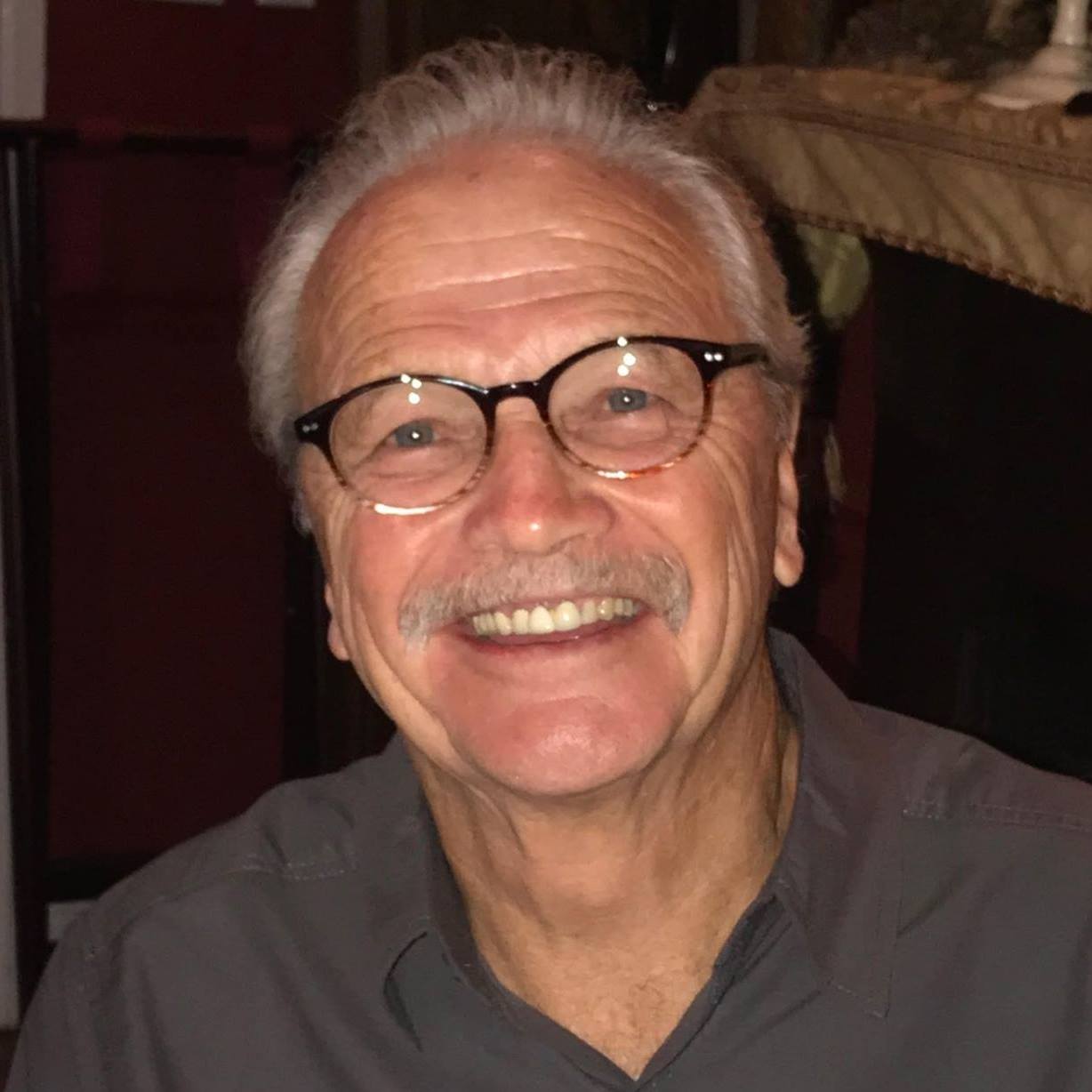
Donnie Bell is the current pastor of Lantana Grace Church in Crossville, TN.
Broadcaster:

Comments

0 / 2000 characters
Comments are moderated before appearing.

Be the first to comment!

Joshua

Joshua

Shall we play a game? Ask me about articles, sermons, or theology from our library. I can also help you navigate the site.