Bootstrap
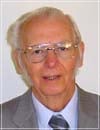
Bill McDaniel

The Word Made Flesh

John 1:1; John 1:14
Bill McDaniel October, 23 2011 Video & Audio
0 Comments
John puts emphasis on the deity of our Lord Jesus Christ. John's gospel presents the Lord Jesus as truly God and truly human, yet without sin and having eternality with the Father. The Lord Jesus is called God's "logos", or "Word".

Sermon Transcript

Auto-generated transcript • May contain errors

100%
This is the greatest gospel in
my opinion, John 1 and verse 1. In the beginning was the Word,
and the Word was with God, and the Word was God. Now look at
verse 14. And the Word was made flesh, and dwelt among us, we beheld
His glory, the glory as of the only begotten of the Father,
full of grace and truth." Now you see the connection. In the
beginning was the Word, and the Word was made flesh and dwelt
among us. Now, most that have been Christians
for a time and been in church for a time are aware that the
Gospel of John, from which we have read this morning, was written
later than the first three Gospels, synoptic as we call them. And in that short time between
the composition of Matthew, Mark, and Luke, and then the writing
of the Gospel of John, certain heretics already were perverting
the doctrine and the person of Christ. Heretics such as Corinthians
and Ebion. had already denied the deity
of our Lord Christ and had perverted His eternal and divine sonship. And that John, therefore, lays
the heaviest emphasis upon the deity of the Son of God. He it is that more than others
emphasizes the deity of our Lord and Savior, Jesus Christ. So that as some of the tares
of error that had already been sown and were already taking
root and beginning to grow, sprung up in places where today even
they are still brooded on by degenerate apostate spirits teaching
an era about the person and the deity of our Lord Jesus Christ. Now, I want to warn us that the
eras about the Lord, about His person, His deity, and all of
those things regarding Him are for sure the more dangerous and
deadly heresies that have ever invaded Christianity. Because
you see, Christianity wrests upon the foundation of the person
of the Lord Jesus Christ. Christ and His person and His
work is the very foundation of the Christian religion. It is
the heart, it is the soul, it is the essence of salvation,
the Lord Jesus Christ, His work, and His person. So, while all
the Gospels give us a very detailed history of the birth, the life,
the ministry, the crucifixion, the burial, and the resurrection,
and yes, the ascension of our Lord, yet it is John that lays
the heaviest emphasis upon the divinity of our Lord. He was and is God. Now, that's why some have extolled
this fourth gospel so highly. One, barring words from the governor
at the wedding feast held there in the city of Cana, thou hast
kept the best gospel until now." As we look at the gospel of John. Now, we notice that John begins
his testimony of the Lord by a very clear declaration of his
eternality. Verse 1, in the beginning. Now the same way as the Bible
opens in Genesis chapter 1 and verse 1, in the beginning God
created the heaven and the earth. And if thou entreat us, or enter
us rather, into the house of Scripture by either one of these
doors, Genesis 1.1 or John chapter 1 and verse 1, there will meet
you, right there, the eternal uncreated God who never was non-existent. And if this offends thee, Dear
friend, then it is best that you be on your way and turn back
now. God can have no beginning. He neither was created nor did
He evolve as to His existence. If He was created, then the question
is by whom? Who is there? What is there able
to be pre-existent to God and to create Him? If he had a beginning,
then may he also have an end. Dr. John Gill wrote, John, quote,
begins his gospel with the divinity of Christ, unquote. And in the
very first five verses of this great gospel, he establishes
for us a three-fold truth concerning the one we call the Son of God,
the Christ, the Lord Jesus. And here they are. Number one,
He establishes that He is eternal, that He is everlasting, that
He was from the beginning. in the beginning. In this and
in his priesthood, he answers, therefore, the type of Melchizedek
that we read in Hebrews chapter 7 and verse 3 as being without
father, without mother, without pedigree, without beginning of
days or end of life. The Son existed as the Son before
His incarnation. He did not become the Son at
the incarnation. He is not a created being. He is not even the first created
being of Almighty God. He is not God's first creation
as some heretics have taught. and still teach, verse 2, the
same was in the beginning with God. Now the second thing that
we notice that John establishes early in his gospel is his union
and association with God the Father. In verse 1, he was with
God and he was God. Notice the word with and was. He was with God and he was God. He was not an angel. No, he was
not a brother of Lucifer as some in the world teaching today.
He was Jehovah's Fellow. Zechariah chapter 13 and verse
7. He was very God. He was then
a partaker of the divine nature, the second member, as we like
to say, in the Godhead. And yet with this distinction,
that there was Father and there was Son, in the great Godhead. Or as in this passage, God and
the Word, and the Word was God. Now the Word is a reference to
Christ, the Son, and He was God. Now the third thing that John
sets out for us that is pertinent and as a foundation to this whole
gospel is, we see John gives another evidence of the deity
of the Son or of the Word by ascribing unto Him the work of
creation. If you look at verse 3, all things
were made by Him and without Him was not anything made that
was made. Now I think it is a little bit
too weak to understand the third verse as only saying that God
made all things for Christ or that He made all things through
Him or for His use. as some interpret that. Rather,
John adds, as further proof of the divinity of the One He has
called the Word, that He was, in verse 1, was God. Now, only God can create. And if creation may really be
ascribed unto Christ, then it certainly confirms His deity. You have it again in Colossians
chapter 1 and verse 16. For by Him were all things created
that are in heaven, that are in earth, visible and invisible,
whether they be thrones or dominions or principles or powers, all
things were created by Him and for Him. And then the next verse,
verse 17, and He is before all things, and by Him all things
consist, or cohere, as the word might be, altogether remain in
their place. Not only has the Lord created
all, but He actually sustains all things. Again in Hebrews
1 and verse 2, By whom also He made the worlds. Then verse 3,
upholding all things by the Word of His power. There are those
two things again. The Son created and He upholds
all things by the Word of His power. Back in chapter 1 and
verse 10 of the Gospel of John, the world was made by Him. Now there's something remarkable
here, something very remarkable, lest we miss it because it is
a little or a small word we're apt to overlook it. And that
is the little word WAS that we keep seeing here early in the
Gospel of John. In fact, I counted some six times
that this word was is here in the first four verses. Now, and
it is from the same Greek word, all of them are. For example,
It does not appear to be the same word as down in verse 6. In referring to John, there was
a man sent from God. Not the same Greek word at all. Different from that that John
uses and applies unto Christ. But here in speaking of the Lord's
Christ, he uses what Linsky calls a verb, and the tense in the
Greek being durative, imperfect. Now, you don't have to understand
that, but it reaches beyond, it reaches back, it reaches back
beyond the beginning of verse 1, in that the beginning, the
Word already was. in the beginning was the Word. He was, and this is a timeless,
eternal existence. We could say the Word was, or
it existed, or the Word subsisted. In other words, He did not become
for He was. And that is important. When things
such as the world had their beginning, the Word, the Lord, the Son,
was already in existence. He subsisted, for He is before
all things. Colossians 117. With this meaning
of was, let's see then what it is that John tells us as to the
eternal existence of what he calls the Word. First of all,
John 1.1, In the beginning was, that is, subsisted or existed
the Word. Notice again, the word was. existed, subsisted with God,
and the Word was God. Then look at the second verse,
the same was in the beginning with God. And in verse four,
in Him was life, and the life was the light of men. Now in
the third verse, The word was made has the meaning of through
him all things became and without him nothing became that became. That's nothing came to be which
is. He made all things therefore
he was before all things, and as God, He called them into existence
by the very word of His mouth, or of His power. Now John wants
to clearly establish for us the divinity of the one, first of
all, that he calls the word, and secondly, that was made flesh. Let's consider the title which
John uses in referring to the Son, to Christ, to Jesus, and
such like. The Word. He uses it. It is a favorite with John. The Word was in the beginning
and the Word became flesh. Now, this is a title of the Lord
that is peculiar and unique to the Apostle John. J.C. Ryle thought that it was not
used by any other New Testament writer of the Scripture. John
uses it here in his glorious gospel. The Word was God. The Word was flesh. Should we
flip over to the first epistle of John, and there in 1 John
chapter 1 and verse 1, he refers to the Word of Life with a capital. And in 1 John 5 and 7 he said,
Of the three in heaven, there was the Word. Finally in Revelation
chapter 19 and verse 13, and His name is called the Word of
God. See it? His name, the Word of God. Now, the word used here is, of
course, the word logos, and in general can, or sometimes does,
have a very broad range of meaning as it is used in the scripture.
It can mean from something said, the word something said. including the thought. A topic
is expressed. Reasoning, communication, tidings,
speech. Those are some of the meanings
of this word logos. Many places in the New Testament,
the word is used in reference to the Word of God, that is,
the written Word of our Lord, or also the preached Word of
our Lord and of our God. 1 Corinthians chapter 12 and
verse 8, the Word of wisdom, the Word of knowledge, the Word
of life. And in Titus chapter 1 and verse
9, the faithful word. Now, of all of these and dozens
more, they are all the translation of that one word that we talked
about, logos. So then we ask ourselves the
question, what is the significance then of John calling the sun
The Word. And He does it on those occasions
that we have mentioned. The Word. The Word was in the
beginning, and the Word was made flesh. Why no other author in
the Scripture does this? And why the Word, if you notice,
is capitalized in the writings of John, that is, in the King
James Version, and especially in Revelation 19.13, His name
is called the Word of God. That He is called the personal
Word of the Eternal God. A special title given unto the
Son by John the Apostle. There must be a reason. Why John,
and only John, of all others referred to the Son as the Logos
or as the Word. Garden Clark has written a book,
The Johnene Logos, and he thought it could be to warn the Gentile
Christians against false forms of the Lagos Doctrine and a denial
of the pagan religions aloose in the world. He also thought,
that is, Garden Clark, that the best English equivalent is the
word logic, bringing that over into our English, meaning the
science of valid reasoning, the Word of God. Now we have to hurry
along, but remember, as the Lord is called the Word of God, so
has God spoken unto us In his son, Hebrews 1 and verse 3, he
revealed the Father. He came among men as a spokesman
for the Father and is in fact the very image and likeness,
the hypostasis of the Father. Thus John has declared Christ
to be the eternal Word and then made flesh. in the beginning
was the Word. Now, jumping down to verse 14,
where our emphasis is today, and the incarnation and the manifestation
of the Word in the world, in human history, among mankind,
appearing in and to a particular generation in human history. being introduced to them by a
man sent from God, whose name is called John. Now, the 14th
verse, from here on out, is our point of emphasis. And the word
was made flesh, and dwelt among us, and we beheld His glory as
the only begotten of the Father, full of grace and of truth."
Now this is what Christianity is. Here is Christianity, the
incarnation that the Word, the Son, Christ, or the Son, not
God the Father and not God the Spirit, but God the Son, assumed
flesh, became flesh, was made flesh, took on flesh and blood,
Hebrews 2 and verse 14, thereby assumed a necessary kinship unto
His brethren with the children that God had given Him. and took hold of the seed of
Abraham. Hebrews 2 and verse 16. Not only so, but even incarnate
in the flesh. He had the glory as though the
only begotten of the Father and John says he was full of grace
and of truth. Here again I say is the essence
of Christianity. The Word was made flesh It became
incarnate, or He became incarnate. He dwelt, or literally the word
is tabernacled or tented, among men in a body. that God had prepared him, Hebrews
10 and 5. We'll look at that later. Is
anyone surprised that John declares the incarnation of Christ, that
the Word was made flesh, and in doing so makes no mention
of the manner of Him becoming flesh. He tells us nothing about
the experience of Mary or the conception or any of those things. But after all, This is the premier
work of God toward the salvation of the elect, and yet John omits
to tell us how the Word became flesh, that is, by what process
the Word took on our flesh. I think the explanation is easy. And that's because this was already
written up in the Gospel of Matthew and in the Gospel of Luke. Already
there were two accounts of the manner in which the Son became
flesh. You'll find it, Matthew 1, 18-25,
the birth of Christ was on this wise. You'll find it again in
Luke 1, 26-28, the announcement of the angel Gabriel unto the
virgin Mary. Now these give a full account
of the incarnation of our Lord and the manner of it. so that
we are not left to conjecture. The people of God already knew
from Matthew and from Luke's account the manner of our Lord's
incarnation. To conceive the humanity of Christ
was the work of the Spirit of God. It was not in any way a
conjugal act. The power of the Holy Spirit
of God overshadowed God's chosen vessel and said to her, Thou
shalt conceive in thy womb, and the one born of thee shall be
called the Son of God. His humanity, therefore, was
consumed by the power, the sovereign power of the Spirit of God. Now, in order to avoid a great
heresy, we ought, I think, to consider the success of the person
of Christ, his being the Son of God, and being, as to his
humanity, sinless and impeccable. It is not owing to the vessel
used. His sinlessness and the fact
that he had impeccable flesh in no way is dependent or does
it flow from merit. for Mary was an ordinary young
Jewish maid. She had not been herself, immaculately
conceived. She was not sinless, as some
say. She did not live her life out
in perpetual virginity, nor did she and Jonah rather Joseph,
have a strictly platonic marriage or relationship. As some say,
though they were legally married, they lived only as brother and
sister throughout their life. I want to say again, it was not
Mary's virtue. It was not her virtue that saved
the incarnate Son from depravity. It was rather the manner of His
conception by the Spirit of God, conceived by the Holy Spirit. Having no earthly father, being
born of a woman, he had true and real humanity. He was indeed
true man, even known as a Jew after the flesh. Romans 9. And
verse 5, now maybe it needs emphasizing that it was not the whole Godhead
that became incarnate, but it was the Son, the Word, who partook
of flesh and blood. The Son only, not the Father
and not the Holy Spirit. So let us attempt here, if we
might, to contemplate what the Puritan writer John Owen called,
quote, the nature or constitution of the person of Christ, unquote. The Word was made flesh. First, it does not mean that
the Word turned into flesh, ceasing what it was before. It does not
mean that the Word turned into flesh. He did not cease being
what He eternally was. He did not lay aside His divinity,
nor did He exchange divine nature for human nature. He lay aside
neither His divine nature nor His divine attributes, as we
see Him in Scripture exercising the divine attributes. Though
He did veil His glory, we'll grant that, and function as a
man and was recognized as such. Now concerning the Incarnation,
number one, It is surely the crowning work of our God, of
all of His works, what is more glorious or greater than this. Secondly, I'll repeat it again,
it is the foundation of the Christian religion, for without it there
would be no salvation, there would be no gospel, there would
be no deliverance. The constitution of the person
of Christ incarnate, therefore, is after this order. And let's look at some things
this morning with regard to Him becoming flesh. Number one, the
Eternal Son assumed human nature into personal existence with
His divine nature. Now this was not depraved human
nature, for that could not be. Neither was it as human nature
originally stood in the first created man, Adam. In fact, Now
listen to me carefully that you don't carry this the wrong way
or misunderstand. In fact, Romans 8 and verse 3
said, in the likeness of sinful flesh. There's that word that ultimately
guards it. The humanity of Christ, of our
Lord and Savior Jesus Christ, consisted in a fleshly body and
a human soul. Yes, I said a human soul as scripture
is very clear. The Lord had a human soul. My soul is exceedingly sorrowful
even under death. Matthew chapter 26 and verse
38. Now the second thing about this
great work is this. Christ was not two persons living
in one body. He was not two persons living
in one body. He was one person with two natures. the constituted, theanthropic
person of our Lord, one person with two natures, a divine nature
and a human nature. Nor did these two natures merge
together in the Lord Jesus Christ. They were not amalgamated into
one. The human and the divine were
not amalgamated. So he was true God and true man. What would he have been if the
two natures had amalgamated into one? He was the God-man and yet
without mixture of the two natures in his being. Then number three,
that was formed what is called, in theology, the hypostatic union
of the two natures in the one person of Christ. I agree with
Owen, who's done some really great work on this, that assumption
and the hypostatical union are distinguishable when we study
and consider the person of Christ. The first thing is the constitution
of the person of Christ is his assumption of human nature in
union with the divine nature so that he is one person with
two nature. It was the divine nature that
did the assuming and it was the human nature that was assumed
and not the other way around. And the point to remember, the
humanity which our Lord assumed was not created humanity in the
sense that God created Adam full grown. The Son, the Word, did
not step into full-grown, mature humanity. He did not partake
of flesh and blood at first in its full nature or statue. God might have created him a
full human body and a soul. But he was pleased to take another
way. In God's infinite wisdom, here's
what he did. He was to be rather a seed of
the woman. Genesis chapter 3 and verse 15. A seed of the woman. The seed of the woman would bruise
the head of the serpent. Secondly, Galatians 4.4, he was
to be made or born of a woman, as Paul said, and that his humanity,
as we read in the Gospel of Luke 1 and verse 42, is called the
fruit of the womb. The fruit of the womb. For he would get to be flesh,
He would have his humanity in a way as never ours was possible
or necessary and still be free of depravity. He would be born
of a woman. yet have no human father. We understand that. It's important. Born of a woman without a human
father. I'll go further. Born of a fallen
woman and yet be sinless and impeccable. For you see, His
purity is not derived from nor dependent on Mary. His humanity began with a conception
as did ours. He would lay in the womb, as
did we. He would grow there by degrees,
as did all. He would be pushed out of the
womb in a bloody birth, as are all. And He would grow into manhood. He would enter into the world
a babe, Luke 2 and verse 7. He would be a lad, age 12, Luke
2 and 42. Then Luke 3 and verse 23, he
began to be about 30 years of age as he entered into his ministry. Yet all of this without sin. Even though Paul writes, In Romans
8 and verse 3, he came in the likeness of sinful men. What if the Spirit had not inspired
Paul to put in that word likeness? Without any danger of his soul
being or becoming sinful. Or as Thomas Goodwin wrote in
his book, Christ Our Mediator, Quote, the humanity of Christ
was exempt from depravity for it was supernaturally conceived
and not by generation. He was not begotten, but he was
conceived in Mary by the power of the Holy Spirit. Ms. Goodwin also wrote, He had to
be married to our nature. Had he been married to our nature
any further off, he had not come close enough in order to perform
the work of a mediator, of a redeemer, and of the seed of Abraham. So, let's look now at one final
passage. I referred to it earlier. You
may want to turn to it. Hebrews 10 and verse 5, this
passage of Scripture. And the words found there, among
others, are, A body hast thou prepared me. Hebrews 10 and verse
5. I've got to make this quick on
account of time. But if you look at Hebrews 10,
And look at verses 5 through 10 in that place. You will find
that they are a reference from the Old Testament, from Psalm
chapter 40, verse 6 through verse 8. This is a reference to an
Old Testament passage of Scripture. And in the context, in Hebrews
chapter 10, What it comes in for, or the purpose it seems,
of the author writing these things, is to show us how Christ the
Son made up the deficiency of the legal sacrifice. He said in verse 1, 2, and 3,
not possible for the blood of bulls and goats to take away
sin, not possible for those legal sacrifices to expiate sin. So what did he do? He prepared
Christ a body. Hebrews 10 and verse 5. Not His body the church now.
Don't try to make it or apply it to the church His body. having
no delight, that is God, in burnt offerings and sacrifices as they
were typical and they were temporarily established by God. So what did
God do? He prepared Christ a body, the
margin might say, fitted. And this was when He came into
the world, in which he would do the will and the work of God. God prepared him a body in which
he would come into the world, assume that humanity, and do
the will of God. Now, a bodily, especially designed
by God exactly as he ought to have for the work and a body
in which he would suffer and offer himself without spot unto
God upon the cross. Offer himself without spot and
without blemish as a sacrifice for our sin. He would bear our
sin in His own body on the tree, Peter tells us in his first epistle. And this is the proper interpretation,
therefore, of Psalm chapter 40. As you read it, we see that it
is clearly messianic, particularly verse 6 and verse 8. Now, consider
Hebrews 10 And verse 10, if you are in that chapter, look at
this, by which we are sanctified through the offering of the body
of Jesus Christ once Thou hast prepared Him a body. We are sanctified
by the offering of that body. And notice the word once. In
fact, if you want a kind of interesting study, go through the book of
Hebrews and study once as contrasted to many. The legal sacrifices
were repeated over and over and over. Christ died once. and only once, and how can that
be? That they're offered yearly,
some were offered daily, but Christ died once. So verse 10
there said that we were sanctified through the offering of the body
of Jesus Christ once. That is, not our once being saved,
you know, but once Once He died, once He offered Himself, once
and but one, once and no more must our Lord suffer and die. Hallelujah for our study today. The Word was in the beginning. The Word was made flesh and dwelt
among us. He revealed the Father unto us
and He gave Himself a sacrifice for our sin. It is death upon
the tree. The Word was in the beginning,
the Word was made flesh and brought the glory and the grace of God.

Comments

0 / 2000 characters
Comments are moderated before appearing.

Be the first to comment!

Joshua

Joshua

Shall we play a game? Ask me about articles, sermons, or theology from our library. I can also help you navigate the site.