Bootstrap
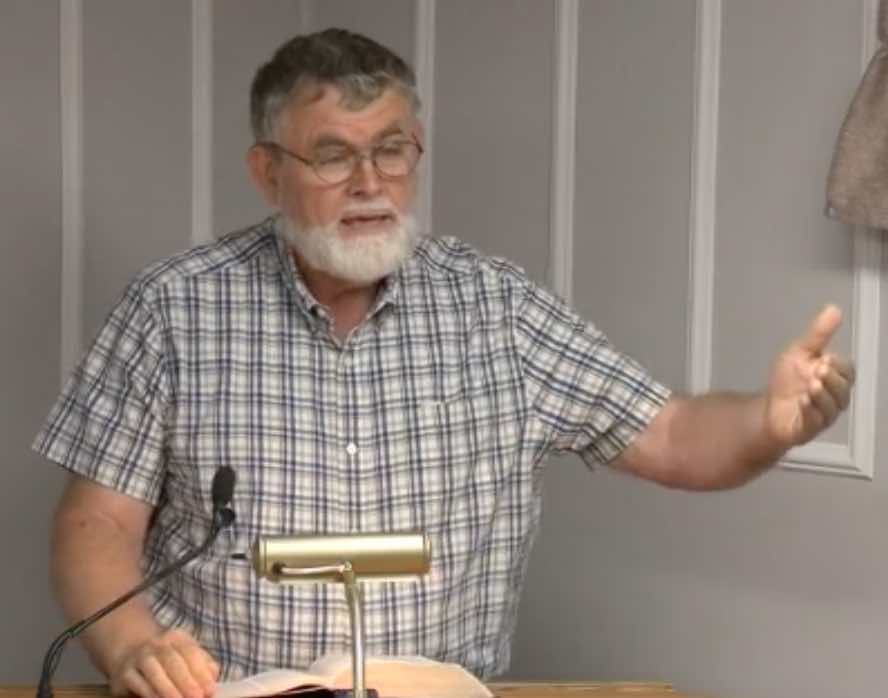
Mike McInnis

The "Yoke" of Christ #266

Mike McInnis May, 13 2019 Audio
0 Comments
What does the Bible say about the yoke of Christ?

The yoke of Christ is described as easy and light, as Christ fulfills all righteousness on behalf of His people.

The yoke of Christ is depicted in the Bible as a source of rest and lightness for believers. In Matthew 11:28-30, Jesus invites those who labor and are heavy laden to come to Him for rest. This yoke signifies not merely the absence of burdens but the reality that Christ Himself has accomplished the full requirements of the law for His people. He has satisfied every demand, which means that His followers are freed from the continual pressure of performance under the law. As seen in Romans 8:1-4, there is no condemnation for those who are in Christ, which highlights the grace that comes through His completed work.

Matthew 11:28-30, Romans 8:1-4

How do we know that grace is sufficient for salvation?

Grace is sufficient for salvation because Christ's work fully satisfies the law's demands, leaving nothing for us to perform.

The sufficiency of grace for salvation is a key tenet of Reformed theology. According to Ephesians 2:8-9, we are saved by grace through faith, not of works, allowing no room for boasting. Christ’s substitutionary atonement ensures that His righteousness is imputed to believers, meaning that all legal demands of the law have been met in Him. Romans 5:20 points out that where sin abounds, grace much more abounds, underscoring the victory of grace over sin. This grace is not merely a starting point but the entirety of the believer's relationship with God, ensuring that salvation does not rely on human effort but on Christ’s pivotal work.

Ephesians 2:8-9, Romans 5:20

Why is understanding the law's fulfillment important for Christians?

Understanding the law's fulfillment in Christ liberates Christians from condemnation and empowers them to live righteously.

Recognizing that Christ fulfills the law is essential for Christians as it shapes our view of God's justice and mercy. In Romans 8:3-4, we learn that Christ condemned sin in the flesh, fulfilling the law's requirements on our behalf. This understanding relieves the believer from the burden of trying to attain righteousness through their own efforts. As Paul teaches in Galatians, to seek righteousness through the law frustrates grace, leading to condemnation rather than peace. The ability to see ourselves as legally righteous in Christ empowers us to live out our faith with assurance and delight, reflecting the character of Christ as we walk in the Spirit (Galatians 5:16).

Romans 8:3-4, Galatians 5:16

Sermon Transcript

Auto-generated transcript • May contain errors

100%
Thy mercy, my God, is the theme
of my song. In his epistle to the Romans,
the apostle Paul declares, there is therefore now no condemnation
to them which are in Christ Jesus, who walk not after the flesh,
but after the spirit. For the law of the spirit of
life in Christ Jesus hath made me free from the law of sin and
death. For what the law could not do and that it was weep through
the flesh, God sending his own son in the likeness of sinful
flesh and for sin, condemned sin in the flesh, that the righteousness
of the law might be fulfilled in us who walk not after the
flesh, but after the spirit. A man cannot serve two masters.
He will either serve the law or he will serve Christ, but
there can be no mixture of the two. This error has troubled
the church since the very earliest of days, and we see the Holy
Epistle of Paul to the Galatians written to correct this aberration
of the gospel. Christ does not deliver his people
from the law of Moses only to put them back under it in some
other form or to introduce some more stringent requirement. Any
and all requirements which are given to those who are the sons
of God by the grace of God have been satisfied by him who comes
to save sinners, and not to load their backs with another law
of this demand or that. The law that is the principle
of the spirit of life in Christ Jesus is that which frees the
sons of God from the law that is the principle of sin and death.
The principle of sin and death is anything which says, do this
and live, or do this and gain blessings. Christ has secured
any and all blessings for those for whom he came. The promise
of God in Christ Jesus is that he has become the performer for
his people. He does currently work in them, both to will and
to do of his good pleasure. Paul declares this to the Galatians. For I, through the law, am dead
to the law, that I might live unto God. I am crucified with
Christ. Nevertheless, I live, yet not
I, but Christ liveth in me. And the life which I now live
in the flesh, I live by the faith of the Son of God, who loved
me and gave himself for me. I do not frustrate the grace
of God, for if righteousness come by the law, then Christ
is dead in vain. The yoke of Christ is easy, not
because no effort is required, but rather because He is the
one who has put forth and accomplished all of the effort needed for
the complete and utter salvation of those whom He commands to
learn of Him. There is nothing left for them
to do. Would they need obedience? He is their obedience. For as
by one man's disobedience many were made sinners, so by the
obedience of one shall many be made righteous. Moreover, the
law entered that the offense might abound. But where sin abounded,
grace did much more abound. That as sin hath reigned unto
death, even so might grace reign through righteousness unto eternal
life by Jesus Christ our Lord. Though he were a son, yet learned
he obedience by the things which he suffered. The Lord said, Take
my yoke upon you, and learn of me, for I am meek and lowly in
heart, and ye shall find rest unto your souls. The yoke of
Christ is the revelation of the character of Christ. When the
Spirit of God has come, He testifies of Christ and His perfect righteousness.
He gave us His example of loving God. For I came down from heaven,
not to do mine own will, but the will of Him that sent me.
He showed us what loving our neighbors ourselves looks like.
For scarcely for a righteous man will one die, yet peradventure
for a good man some would even dare to die. But God commendeth
his love toward us in that while we were yet sinners, Christ died
for us. The yoke of Christ is the revelation
of the satisfactory and substitutionary work of Christ. The greatest
rest for the sons of God is in being made able to see that Christ
has satisfied the total demands of the law for those he has intended
to redeem. He has not made some attempt
at a general redemption for all men, which yet requires the addition
of their faith, but rather He has entered in once into that
holy place and obtained eternal redemption for His people. If
He has obtained that redemption, then nothing can be left which
needs to be performed. Christ is the Redeemer of His
people, the Savior of sinners, and the Provider of every perfect
gift. The yoke of Moses' law demanded obedience and promised
condemnation for those who did not live up to its stringent
demands. Because of the innate rebellion which is in the hearts
of all men, this law can do nothing but stir up the natural enmity
of the mind towards it and minister damnation. The yoke of Christ,
on the other hand, ministers life and light because it reveals
a perfect law keeper. His yoke causes them to delight
in the law of God after the inward man. Perfect love casts out fear. Rather than living under the
law's condemnation, the man who is in Christ lives under the
law's perfect fulfillment and satisfaction. He cannot be condemned. His burden is light. If you would
like a free transcript of this broadcast, email us at forthepoor
at windstream.net.
Mike McInnis
About Mike McInnis
Mike McInnis is an elder at Grace Chapel in O'Brien Florida. He is also editor of the Grace Gazette.
Broadcaster:

Comments

0 / 2000 characters
Comments are moderated before appearing.

Be the first to comment!

Joshua

Joshua

Shall we play a game? Ask me about articles, sermons, or theology from our library. I can also help you navigate the site.