Bootstrap
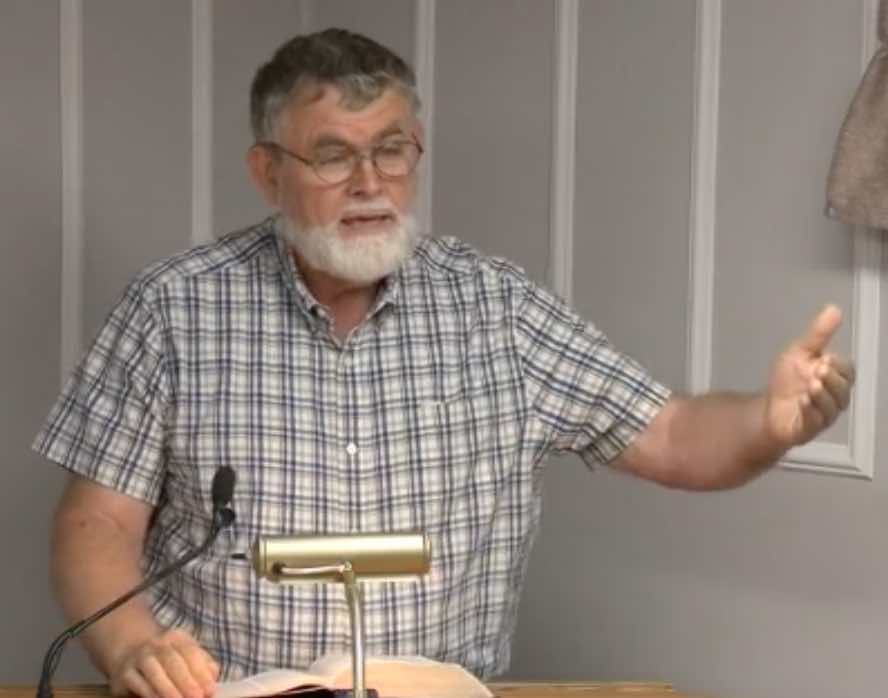
Mike McInnis

Remember His Death #261

Mike McInnis May, 6 2019 Audio
0 Comments
What does the Bible say about remembering Christ's death?

The Bible instructs believers to remember Christ's death through the observance of the Lord's Supper, focusing on His sacrifice and love.

The observance of the Lord's Supper is a commanded practice for believers to remember the death of Christ. This remembrance involves reflecting on who Christ is—the eternal Son of God, who became sin for His elect and took on the punishment due to them. It emphasizes the importance of worshipping in spirit and truth, steering clear of religious rituals that detract from the core significance of remembering Christ’s atoning death.

1 Corinthians 11:24-26, John 4:24, Romans 5:8

How do we know that Christ's death was essential for salvation?

Christ's death is essential for salvation as it fulfilled God's ordained purpose, demonstrating His love and addressing the penalty of sin.

The necessity of Christ's death for salvation is rooted in God's sovereign plan and purpose. Scripture reveals that His death was foreordained by God's determinate counsel. It was through this act that Christ displayed His love for sinners, as He took on the guilt of the elect and shed His blood as a perfect atonement. The death of Jesus was not only a historical event but also a divine necessity to satisfy God's justice while revealing His grace.

Acts 2:23, Romans 5:8, Hebrews 9:22

Why is the resurrection of Christ important for Christians?

The resurrection of Christ is crucial for Christians as it signifies victory over sin and death, providing hope for eternal life.

Christ's resurrection serves as the cornerstone of the Christian faith, assuring believers of their future resurrection and eternal life. This event confirms His deity and the effectiveness of His redemptive work on the cross. The resurrection not only brings joy and hope but also acts as a promise of the ultimate victory believers have in Christ, who conquered death. As stated, it is the assurance that, because He lives, all who trust in Him shall live also, making it an essential doctrine for all Christians.

1 Corinthians 15:20, Romans 6:5, John 14:19

Sermon Transcript

Auto-generated transcript • May contain errors

100%
Because of man's natural religious
nature, he will turn the instructions of the Lord into rituals and
religiously oriented habits. An example of this is using the
Lord's model prayer as a liturgy by rote repetition of it in the
very fashion which He told them only the heathen do. But when
ye pray, use not vain repetitions, as the heathen do. This tendency
toward religiosity is seen most clearly in the practices which
men adopt in carrying out the most simple of instructions of
the Lord as to how they are to remember his death. Among those
practices is the notion that this table must be presided over
or administered by someone who is augustly and properly ordained
or set apart for this task by other rituals administered by
those who have themselves undergone such proper ritualistic ordination. This is no more or less a form
of priestcraft than that which is practiced by the High Church
of Rome and has existed in the fleshly religions of men since
time began. The Lord ably and deftly put
an axe to the root of man's prescribed and sacrosanct methods by which
he is to be worshipped when he told the Samaritan woman, But
the hour cometh, and now is, when the true worshippers shall
worship the Father in spirit and in truth. For the Father
seeketh such to worship him. God is a spirit, and they that
worship him must worship him in spirit and in truth. Any aspect
of the observance of that memorial supper which Christ instituted
and commanded His disciples to observe, which would in any wise
turn a man's eyes towards anything but the remembrance of the death
of Christ, is a product of the flesh and not the spirit. In
order to properly remember his death, we must first consider
the one who died. Jesus Christ is the eternal Son
of God, who thought it not robbery to be equal with God, and is
the fullness of the Godhead bodily. He did take upon himself a mortal
body of flesh and blood, and was tempted in all points like
as we are, yet was perfect in his obedience to his Father,
and the holy law of God being without sin. In this sinless
and incorruptible state, he did become sin for his elect bride
as her substitute, imputing her sin to himself and his righteousness
unto her. In order to properly remember
his death, we must consider the death which he died. His death
was not imagined, incomplete, or somehow anything less than
the exact death which all flesh must experience. In those three
days and nights in which he resided in the tomb, his body was absolutely
dead. He was without mortal life of
any sort. Yet far more deadly than a simple cessation of bodily
functions, he was cut off from the very presence of the Father
in whom was his delight and did make his soul an offering for
sin. In order to properly remember his death, we must consider the
reason that he died. There are three reasons that
come to mind. The first is his purpose, the second is his love,
and the third is the awfulness of sin. God does all things according
to his purpose, and nothing occurs in heaven or earth which does
not exactly fulfill that purpose. God does not have contingency
plans which are dependent on what any part of His creation
does. Rather, He directs all things to occur according to
that ordained purpose. The death of Jesus Christ was
according to that purpose. Him being delivered by the determinate
counsel and foreknowledge of God, ye have taken and by wicked
hands have crucified and slain. Jesus Christ did undertake the
redemption of His elect bride because He loved her with an
everlasting love. But God commended His love toward
us, and that while we were yet sinners, Christ died for us.
It pleased God, in order to magnify both the glory of His grace and
the unwavering justice of His law, to put Him to death on the
account of sin. God will by no means clear the
guilty, nor at all acquit the wicked, and He has decreed that
the soul that sinneth shall die. It is quite clear from the scriptures
that even the elect of God were by nature the children of wrath,
even as others. Therefore, it is because of the
sin of His elect that Jesus Christ went to Calvary's cross and endured
the shame which was rightly due to each one of them. We remember
his death and weep that our sin caused his pain. We remember
his death and rejoice because he has by it demonstrated his
love for his elect and has removed all condemnation from them. We
remember his death with gladness since he has triumphed over death
in his resurrection, which is the first fruits of that resurrection
which awaits all who sleep in him. The resurrection is the
very basis of our hope, and we are encouraged as we consider
the temporary nature of this remembrance with bread and wine,
for it is only until He comes. Then we shall drink of that new
wine which never yet any man has tasted, with Him at that
marriage supper. Indeed, He has saved the best
wine until last. And if I go and prepare a place
for you, I will come again and receive you unto myself, that
where I am, there ye may be also. If you would like a free transcript
of this broadcast, email us at 4the4 at windstream dot net.
Mike McInnis
About Mike McInnis
Mike McInnis is an elder at Grace Chapel in O'Brien Florida. He is also editor of the Grace Gazette.
Broadcaster:

Comments

0 / 2000 characters
Comments are moderated before appearing.

Be the first to comment!

Joshua

Joshua

Shall we play a game? Ask me about articles, sermons, or theology from our library. I can also help you navigate the site.