Bootstrap
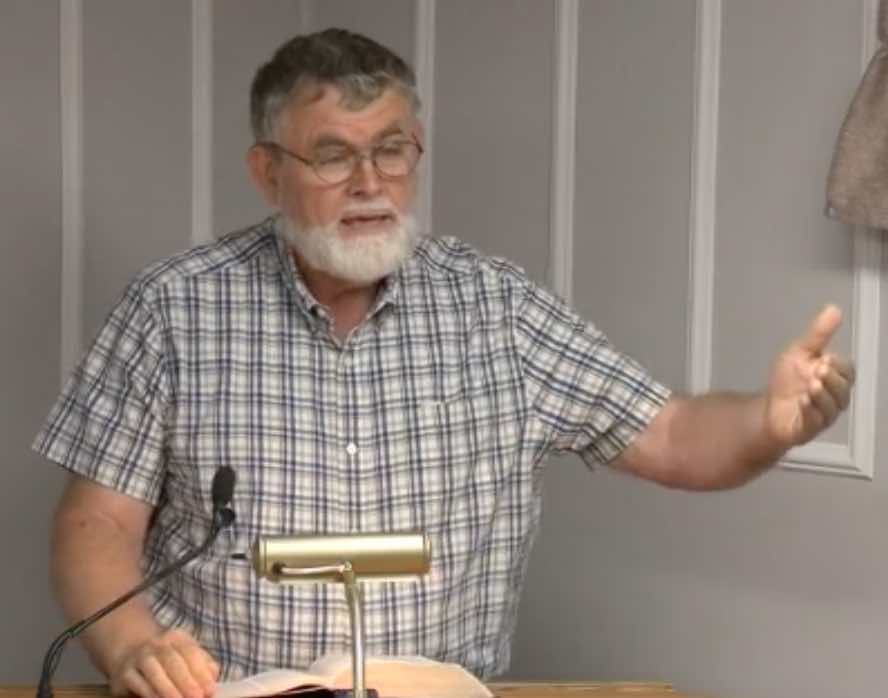
Mike McInnis

The King's Blessings

Mike McInnis August, 5 2018 Audio
0 Comments
Christ In The Psalms
What does the Bible say about God's blessings?

The Bible teaches that God's blessings are bestowed according to His mercy and not based on human merit.

According to Scripture, God's blessings are rooted in His mercy and grace rather than human righteousness. As Psalm 21 illustrates, the king rejoices in God's strength and salvation, highlighting that blessings are given not because of what we have done but because of who God is. Despite our sinful hearts and failures, God chooses to bless His people out of His kindness and love. This is seen throughout the Bible, emphasizing that it is God's will and not our deeds that determine the blessings we receive.

Psalm 21, Jeremiah 17:9, Ephesians 2:8-9

How do we know Jesus is God's salvation?

Jesus is identified as God's salvation because He came to save His people from their sins, as revealed in Scripture.

The identity of Jesus as God's salvation is confirmed through biblical prophecy and His role as the Mediator. In Matthew, the angel tells Joseph to name the child Jesus, meaning 'Jehovah is salvation,' indicating His divine purpose. Jesus’ entire life and mission were directed towards saving His people from their sins, fulfilling the prophecies outlined in the Old Testament. Furthermore, the New Testament affirms that there is no other way to the Father but through Him (John 14:6). Ultimately, His resurrection underscores that He is indeed the source of eternal life for His followers.

Matthew 1:21, John 14:6, Isaiah 53:5

Why is understanding forgiveness important for Christians?

Understanding forgiveness is essential for Christians as it reflects God's grace and informs how we are to forgive others.

Forgiveness in the Christian faith highlights the immense grace we have received from God and sets a standard for how we interact with one another. Jesus’ words on the cross, 'Father, forgive them, for they know not what they do,' exemplify the depth of His mercy, teaching us the importance of forgiveness even towards those who may wrong us. Recognizing that we have been forgiven much impacts our relationships and encourages a community built on grace. The teaching that ‘he who has been forgiven much loves much’ (Luke 7:47) encapsulates the essence of our response to Christ's sacrifice and motivates us to extend forgiveness to others.

Luke 7:47, Matthew 6:14-15, Ephesians 4:32

Sermon Transcript

Auto-generated transcript • May contain errors

100%
So we'll read Psalm 21. It says,
The king shall joy in thy strength, O Lord, and in thy salvation
how greatly shall he rejoice. Thou hast given him his heart's
desire, and hast not withholden the request of his lips, sayest
thou? For thou preventest him with
the blessings of goodness. Thou settest a crown of pure
gold on his head. He asked life of thee, and thou
gavest it him, even length of days, for ever and ever. His glory is great in thy salvation. Honor and majesty hast thou laid
upon him, for thou hast made him most blessed for ever. Thou
hast made him exceeding glad with thy countenance. For the
king trusteth in the Lord, and through the mercy of the Most
High he shall not be moved. Thy hand shall find out all thine
enemies. Thy right hand shall find out
those that hate thee. Thou shalt make them as a fiery
oven in the time of thine anger. The Lord shall swallow them up
in his wrath, and the fire shall devour them. Their fruit shalt
thou destroy from the earth, and their seed from among the
children of men. For they intended evil against
thee. They imagined a mischievous device
which they are not able to perform. Therefore shalt thou make them
turn their back, and when thou shalt make ready thine arrows
upon thy strings against the face of them. Be thou exalted,
O Lord, in thine own strength, so will we sing and praise thy
power." Now, of course, this is written by David. But David,
in what understanding he had, and the degree to which David
understood completely the things that he wrote, is no doubt very
limited. Now, of course, David was a man
after God's own heart, and God blessed him greatly in his life. He blessed him in spite of his
life. even as we can say the Lord has
blessed us. Now, you know, the religionists,
the moralists, they believe God blesses men because they do good
things. But anybody who has ever been
acquainted with their own heart knows that could not be true,
because we would never receive nothing if it was dependent on
what we did good. because our heart is deceitful
and desperately wicked. Who can know it? The Scripture
says the Lord knows our heart. He knows what we are. He knows
that we are dust. When He looked on His disciples,
and they could not even pray with Him for an hour, and He
looked on them with pity, He was not mad at them. Now a lot
of people think that He was mad at them. He was not mad at them.
He just recognized them for what they were. He said, the spirit
is willing, but the flesh is weak. He knew what they were.
He knows what we are. He knows our weaknesses. He knows
everything about us. And nothing surprises him. And
he does not keep a scoreboard where he goes by and marks off
the things that we each one do. And he says, well, he got a pretty
good report card today, so I'm going to bless him. No, the blessings
of God are according to His mercy and His kindness. And He blesses
His people in spite of themselves. not because of themselves. But
all the blessings that come to the people of God come to them
through Jesus Christ, because the Lord loves His Son. He has
loved Him from the beginning. He is His only begotten Son.
Now, when we get talking about the Father and the Son, that's
a mysterious thing. And I've read a lot of books
and stuff, and people supposedly got all the answers about how
that is. I'm here to tell you that when
men think they have got that figured out, they know little
about it. And I certainly don't claim to
know a whole lot about it except to know the things that the Lord
revealed in His Word. I know this. that no man hath
seen God at any time. Yet the Scripture says that Jesus
Christ, who is in the bosom of the Father, He hath revealed
Him. And we have by faith seen Him
face to face. His disciples looked Him in the
face. He said to Philip, When Philip asked, Lord, show us the
Father and it will suffice us, he said, Philip, if I've been
so long time with you and you've not known me, he said, he that
hath seen me hath seen the Father. Now that's a good enough thing
for me. I don't need to delve into all the metaphysical aspects
of, you know, the Father and the Son and what people call
the Trinity and the Holy Ghost and that sort of thing, and the
relationship and all of that. I don't need to know that. Because
the Lord has revealed unto us His Son. He said to all those
gathered on the Mount of Transfiguration, He said to them, This is my beloved
Son. Hear ye Him. So dear brethren,
when we go and preach and declare the Word of God, we are declaring
the Word of Jesus Christ. He is the Word. No man can come
to the Father except by Him. No man can approach unto the
Father except by Him. The only way that man can come
into the presence of God is through Him, in Him, of Him, by Him. That's it. And so David, when
he speaks here about the king, shall joy in thy strength, O
Lord, and in thy salvation, how greatly shall he rejoice." Now
I believe probably in David's mind, he says as being the king
of Israel, that he rejoiced in the Lord. But the words that
he wrote were far beyond perhaps even the capability of David
to completely understand. Now keep in mind that the Lord
said of John the Baptist that there hath not arisen a greater
prophet among men than John the Baptist. That is, John the Baptist
was given a greater comprehension of that which God would do than
any other prophet, including David, up to that time. But then he went on to say, but
he that is least in the kingdom of heaven is greater than John
the Baptist. So brethren, those who have been
given grace live on this side of that which Jesus Christ did
as the great Mediator and see Him risen from the dead, we have
been given greater light and greater understanding than all
of the Old Testament saints combined. Now, do we mean by that that
we are smarter than them? No. Do we mean that we are better
than them? No. It is just that God has given
grace in the revelation of His Son as who He is before greater
than all of them. Because you see, when the angel in the book of Matthew came to
Joseph and said, Thou shalt call His name Jesus, for He shall
save His people from their sin. That was the first time that
that name was associated with who He is. Now He is. Jehovah
is salvation. That's what the word Jesus means,
the word Joshua. In the Hebrew language, it means
Jehovah is salvation. Jesus Christ came into the world
to save His people from their sins. But that was the first
time anybody knew who the Messiah was. They knew He was coming. But dear brethren, we know who
He is. He was born. in that limb. I mean, he has
historically come into the world. Now that's a grand and glorious
thing. This is not just some fairy tale
or something that's hidden and shrouded in, you know, the clouds
of time, but this is something that occurred. He came and he
walked among men, just as much so as you and I walk. among men. He was the same. And so when David speaks, the
King shall join thy strength, O Lord, by the Spirit of God,
he is speaking of the King, the true King, the One who rules
and reigns in the army of heaven and among the inhabitants of
the earth. But more importantly than that, the One who has a
kingdom which will not fade away. That one who came to establish
that kingdom in the earth, this King, this King, he shall rejoice
in thy strength, O Lord, because as a man walking among men, his
joy was in his Father. He said, I came not to do mine
own will, but the will of Him that sent me. And so he came
into the world to do the will of the Father, and he came in
the strength of the Father, and he rejoiced in the strength of
the Father. How do we know that? Because
he prayed. He was a man of prayer. He constantly
relied upon his Father. The king shall join thy strength,
O Lord, and in thy salvation, how greatly shall he rejoice."
Now, when you talk about salvation today, by and large, in most
religious circles, the immediate thought that people have is they
talk about my salvation. Well, I remember when I got saved,
brother, and, you know, we want to get salvation to these people
over here. Well, the Scripture speaks about
the salvation which is of the Lord. And that's what it's speaking
about here. You see, salvation belongeth
unto the Lord. It's His salvation. He owns it. And the Scripture says that He
gives it to whomsoever He wills. That salvation is like apples
hanging on a tree out here, and you just go over there and pick
you a sack full off when you get ready for it. No, salvation
is the gift of God, as much so as faith is the gift of God.
It is that which belongs to Him. It is His salvation. And so that
we tell men, you know, there is only one place that salvation
can be obtained. It is from His hand, according
to the good pleasure of His will. Now the good thing is, The blessed
thing is that to those that desire this salvation, salvation has
in reality already come. Because there is nobody alive
upon the face of the earth that desires and wants the salvation
in Jesus Christ according to His terms and according to His
way that the Spirit of God has not already begun the work in. How else would a man begin to
call upon the name of the Lord, except that the Lord does performal
work in him? Men don't seek the Lord. How
do we know that? Scripture says, there is none
that seeketh after God. They've all turned aside. Everyone. You can't make a man seek God.
You can't help a man seek God. You can't persuade a man to seek
God. Well, dear brethren, when the
Lord begins a work in a man through the operation of His Spirit,
you can't keep a man from seeking God. He'll wake up in the morning
thinking about seeking God. He'll go to bed at night thinking
about seeking God. Now, it's a glorious thing when the
Lord moves a man to seek Him. And He said this, You'll find. He that knocketh,
it shall be opened to him. I mean, that's just as true as
anything. You know, sometimes people look
at the doctrine that we preach and they say, well, man, that's
a hard doctrine. I couldn't ever tell people that and all that
kind of stuff. Well, why would you want to tell
anybody something that wasn't true? I mean, you know, the truth
is the truth. They say, well, you know, you
make it where it is not up to men what they do. I mean, what if a man comes?
I get this question a lot. Well, what if a man comes and
he is wanting to know the Lord, but he is not one of the elect?
Well, dear brethren, that cannot happen. It cannot happen. It would never happen. Because
if a man desires in the depths of his soul to know the way of
God, the work of God is already being manifest in that man. That's
how men come to know the Lord, is because the Lord moves in
their heart and stirs them to seek after Him. It's His salvation. In His salvation, how greatly
shall he rejoice! Now you know that's an amazing
thing really too when you consider the Lord Jesus Christ, who is
the salvation of God, manifested into earth, and how that He,
knowing what was set before Him, came into the world to bear the
sin and sorrow of His people, how that He would rejoice in
that salvation. Because the Scripture says, "...who
for the joy that was set before Him..." He rejoiced in that which
the Father sent Him to do. Now, it's an incredible thing. When you think about men and
our fallen way, our main concern is for our own benefit. Even
when we want to seek somebody else's benefit, we kind of think
about it in terms of what we're going to get out of it. You know,
isn't that a shame? I mean, really, a lot of times
we do good for somebody because in the back of our mind we'll
think, well, you know, maybe they'll return the favor one
day. We'll do good. Maybe it will come back to us
in some way. But the Lord never thought like
that. His consideration was never concerned with the benefit that
was going to accrue to Him as a man, but rather to those to
whom He came and for whom He came as a perfect man. How greatly shall he rejoice
in that? For thou hast given him his heart's
desire, and hast not withheld the request of his lips. Selah. And when I read that passage,
my mind always goes back to Psalm 2. The Father said to the Son,
Ask of me, and I will give thee the heathen for thine inheritance. Now the Scripture speaks about
the people of God having been given to the Son, does it not?
Now I don't profess or consider or have any knowledge of how
all of that took place, but I know this, this is what the Scripture
says, that whatever the Son desired, He received from the hand of
the Lord. Now that's a glorious thing,
because you see, He prayed for His people. He said, Father,
I pray for them that Thou hast given me. Thine they were, and
Thou hast given them to me. You know, when you have the utmost of confidence
in somebody is when you give them something that is precious
to you for safekeeping. I mean, you don't just offhandedly
give something that means a great deal to you to someone else for
safekeeping, do you? Unless you have the utmost confidence
that they will take care of that thing. And the Father has given
those that were His. Thine they were, and Thine has
given them to Me. Because He is that One who would
perform that which the Father would have done has not withheld
the request of his lips, for thou preventest him of the blessings
of goodness." Now that word, preventest, is actually a word
that means, we might say, thou hast preceded him. Thou went
before him. In other words, the goodness
of the Lord was upon him, basically. It's what that means. Thou preventest
him with the blessings of goodness, and settest the crown of pure
gold on his head. He hath asked the life of thee,
and thou gavest it him, even length of days, for ever and
ever." Now I think we've probably talked about this on more than
one occasion, but it's important, I believe, that we have this
concept firmly planted in our mind, and that is that The Scripture
says over in John about the 6th chapter, I can't remember the
verse, but somewhere I believe in the 6th chapter, the Scripture
says, the Lord said that the Father hath given to the Son
to have life in Himself. Now the Son has life in Himself. Because why? He is the life. He's the source of life. In Him
was life. And all life comes from Him.
And there's no life outside of Him. And so, He has life. Now, we have been given life,
eternal life. It's been bestowed upon us, but
it's not ours by nature. It's not ours by just natural
occurrence. We live because He lives. No
other way. We don't live because we live.
We live because He lives. He is our life. He will always
be our life. We will never have life in ourselves. Our life is in Him. We're hidden
in Him. Now that's a glorious thing because
knowing what we are, as we are, What would we be? We couldn't keep life. We wouldn't
have any way to have life, except that He gives it to us. And He
is our constant source of life. He has life of thee, and thou
gavest it Him, even length of days, forever and ever. He is
the same yesterday, today, and forever. His glory is great in
thy salvation. Honor and majesty hast thou laid
upon Him. I believe it's in one of our
hymns there written by William Gadsby, it says, Immortal honors
rest on Jesus' head. Now that's poetic language, but
the glory of God cannot be seen anywhere else in its grandeur
like it is seen in Jesus Christ. He is the fullness of the Godhead
bodily. As He walked among men, the Lord
put on display perfection. He put on display what He created
His people to be. Even as Christ walked among us
as the example, His glory is great in thy salvation. Honor
and majesty hast thou laid upon Him. And you know, as we think
about His glory is great in thy salvation, That is the place where the Lord
would manifest His glory is in the work that Jesus Christ did
in the salvation of His people. Because the Lord could have,
if it pleased Him, He could have manifested His glory in the creation
so that men could look at the creation and see the glory of
God. Now men do look at the creation
and see the glory of God, do they not? But he could have caused
that to be the ultimate. I mean, a lot of people worship
the creature more than the Creator, don't they? They worship the
creation. They believe it ought to be preserved
at all costs. And you know, it's hard to argue
against some of the things that some of those type people say,
except that they see that as the most glorious thing. Now,
creation is a glorious thing. But God has seen fit to manifest
the essence of His glory in the salvation of His people. And
I believe the Scripture plainly teaches that the world has been
created for the purpose of setting the stage that God might manifest
the glory of His grace in the salvation of His people. To the angels, to the creation
that we have no concept of. I mean, we don't know what the
angels, the vastness of God's creation of the angels, But the
angels are not those to whom the Lord has given glory. I mean,
they're glorious. But all they are is a reflected
glory, is it not? I mean, they're just glorious
because God made them glorious related to us. We're a little
lower than the angels. But you see, the angels desire
to look and see the things that you see clearly. But God would
manifest. the glory of His grace even to
the angels, ultimately, because He would put this salvation on
display. And they would stand back in
wonder and amazement and desire to look into these things. How
can this be? What a glorious thing that is displayed here.
And the Scripture says that the angels in heaven rejoice over
the repentance of the sinner. It is an amazing thing. the glory
of that salvation which the Lord has given to the Son, and glory
is great in His salvation. For thou hast made Him most blessed
forever. Thou hast made Him exceeding
glad with thy countenance." The Lord desired to do His Father's
will, and He has been made exceeding glad with the countenance of
the Lord. What a blessing! for Him who
came to do the Father's will to see the Father smile upon
the Son, because that is the thing He desired. But oh, you
know, we know what the ultimate manifestation of God's glory
required of Him. If there has ever been a man
on the earth who was between what they call the rock and the
hard place. As men use that terminology,
we know what that means. In other words, it's kind of
an inescapable situation. The thing that he desired more
than anything is to do his Father's will, to be pleasing in his Father's
sight. And yet, the one thing that he
had to do in order to please his Father was to become displeasing
to His Father as He became sin for us. We read that the Scripture says
that He was a man of sorrows and acquainted with grief, and
surely He was, and surely He has understood our grief because
He is acquainted with grief. But dear brethren, He endured
grief that you cannot know about. You know, people often talk about
the grief that Jesus knows about because we know about grief and
He knows what grief we have. Well, that's true. He does know
whatever grief you have. And He has borne your griefs
and carried your sorrows if you belong to Him. But, dear brethren,
never lose sight of this, that He has endured sorrows and griefs
of a depth that you cannot comprehend, which would destroy you. and
would destroy any other man who ever lived had it not been this
man who came, a man of sorrows acquainted with grief. And surely
he desired the smile of his father's face, but he could not have it.
Because the Scripture says He is of pure eyes and to look upon
sin, and the Scripture says that He became sin for us. Is it any wonder that the sky
has turned dark? That the Lord Jesus Christ cried
out, My God, My God, why hast Thou forsaken Me? An incredulous
cry by one who desired the presence of the Lord. But you know, even
in the midst of that, Even after saying that. Even after knowing
that. Even after experiencing that.
Even after going through the very, not just the valley of
the shadow of death, but the very valley of death itself. What was the Lord's final words?
Father, into Thy hands I commend my spirit. Why? Because he trusted in the Lord. Just as Isaac trusted in his
father even when his hands were bound and he was placed on an
altar and his dad stood over him with a knife raised in his
hand. He safely trusted even as Job said, though he slay me,
Yet will I trust Him. Not my terms, but His. See, the Lord Jesus Christ demonstrated
what it is to be reconciled to the will of God. Father, into Thy hands I commend
my spirit. For the king trusteth in the
Lord, and through the mercy of the Most High he shall not be
moved. You see, this is a mixture of
judgment and mercy displayed on Calvary's cross. It's the judgment of God that
put him there. The justice of God put him there. And justice
is surely demonstrated, but dear brethren, keep in mind that the
very work that he came to do as a Savior of sinners was accomplished
through the mercy of God, because he was upheld. in the midst of
that. And He became the salvation of
His people through that which He suffered. He shall not be moved, shall
not be turned aside from it. And we are going to stop right
there. May the Lord give us a mind and
heart to contemplate Christ, what He did. You know, all the
movies depict, and oftentimes men go to great lengths to depict
the physical suffering and trouble of the Lord Jesus Christ, and
all of that is true. He was marred more than any man.
We never need to forget that. But the wounds that Jesus Christ
bore were much, much deeper than simply bleeding, crown of thorns
on His head, all of those physical hurts that He endured, much greater
than that. For He was smitten in His heart
for the sin of His people, which He gladly bore. He gladly went
to do that thing which the Lord sent him to do. But never has
a man endured such sorrow in our behalf. But never has a man
been more reconciled to the will of God, giving glory to Him,
even in the midst of that great suffering and trouble. He is
our Savior. He is the King of kings and Lord
of lords. He is the one who receiveth sinners. You know, that's a blessed consideration. He wasn't angry on the cross,
was he? He said, Father, forgive them,
for they know not what they do. That's basically what he said
to his disciples. He said the spirit is willing
but the flesh is weak. Dear brethren, may the Lord give
us tender hearts when we think on that which Christ did for
us. May we ever be moved to praise Him with every fiber of our being
for the great salvation that He has given freely to those
whom He loves and manifested in those that love Him. May the
Lord give us such a heart and mind.
Mike McInnis
About Mike McInnis
Mike McInnis is an elder at Grace Chapel in O'Brien Florida. He is also editor of the Grace Gazette.
Broadcaster:

Comments

0 / 2000 characters
Comments are moderated before appearing.

Be the first to comment!

Joshua

Joshua

Shall we play a game? Ask me about articles, sermons, or theology from our library. I can also help you navigate the site.