Bootstrap
Mike McInnis

Acomplishing His Will #199

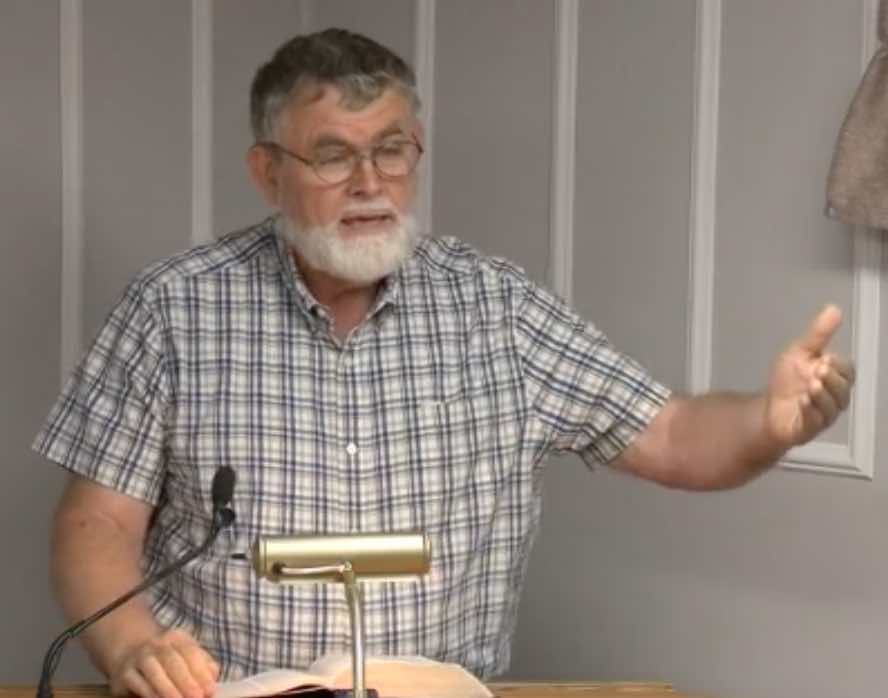
Mike McInnis June, 21 2018 Audio
0 Comments
What does the Bible say about God's sovereignty?

The Bible declares God's sovereignty over all creation, including the actions and decisions of men.

Scripture overwhelmingly affirms God's sovereignty as the ultimate authority over all things. Isaiah 46:10 states, 'I will accomplish all my purpose,' revealing that God's plans are not contingent on human decisions but are determinative. Passages like Ephesians 1:11 remind us that He works all things according to the counsel of His will. Therefore, nothing occurs outside of His predetermined plan, emphasizing a God who is absolutely in control and not a servant of human will.

Isaiah 46:10, Ephesians 1:11

How do we know God's will is unchangeable?

God's will is unchangeable because He declares it clearly in Scripture and nothing can thwart His purposes.

God's unchangeable will is supported by numerous biblical references that illustrate His character and authority. For instance, in Isaiah 14:27, it is proclaimed, 'For the LORD of hosts has purposed, and who will annul it?' This indicates that once God has decreed something, it will come to pass without fail. Additionally, Romans 8:28 tells us that God works all things for the good of those who love Him, which further affirms His careful orchestration of events according to His good purpose.

Isaiah 14:27, Romans 8:28

Why is God's sovereignty important for Christians?

God's sovereignty is crucial for Christians as it assures us that His plans prevail and gives us peace in trials.

Understanding God's sovereignty allows Christians to find deep assurance in His control over all aspects of life. This belief leads to the comforting doctrine that no event is wasted and that God can even use trials for our spiritual growth, as illustrated in the book of Job. The narrative demonstrates how God used the suffering of Job to not only prove His power but also to bring Job to a deeper understanding of divine mercy and sovereignty. In this light, knowing that God governs the universe fosters a sense of peace in believers, encouraging them to trust in His purposes regardless of their circumstances.

Job, Romans 8:28

What does the Bible say about human free will?

The Bible teaches that human free will operates under God's sovereign authority and is ultimately subject to His will.

While humans possess the ability to make choices, Scripture asserts that these choices are always under the lordship of God. For instance, Proverbs 16:9 states, 'The heart of man plans his way, but the LORD establishes his steps.' This highlights that even our decisions conform to God's overarching plan. The tension between human agency and divine sovereignty is addressed in Acts 2:23, where the actions of wicked men crucified Jesus, yet this act was foreordained by God. Thus, free will exists, but it is framed within the purpose of God, affirming His ultimate control and authority.

Proverbs 16:9, Acts 2:23

Sermon Transcript

Auto-generated transcript • May contain errors

100%
Those who glory in the free will
of men suppose that God has many contingencies and multiple plans
as He waits upon men to decide what they will or will not do. They would have us believe that
he is constantly changing course based upon the outcome of various
scenarios which he will not or perhaps cannot control due to
the myriad of decisions which are yet to be made by men, which
would of necessity alter the course of history, not to mention
the multitude of prayers that might yet be prayed which would
require him to act in various fashions in order to fulfill
those which are of sufficient fervency and faith. If we have
learned anything at all, we are quite certain that the God of
heaven and earth is truly God. He does not simply know the end
from the beginning due to His prescience or foreknowledge,
as many would define it, but rather because He has determined
the end and the beginning as well as all events in between.
He is not ashamed to declare that this is exactly what He
does and makes no apology for doing precisely as He wills in
the army of heaven and among the inhabitants of the earth.
He says that none can stay his hand or even question his doing,
let alone change any of the words which have gone out of his mouth.
The idols of men are seldom carved out of wood and stone in the
present day. Rather, they most often consist
of false ideas and notions of a limited God whom they would
gladly bow their knees to while rejecting the absolute God who
describes Himself in the pages of Scripture. Just like the Philistines
had Dagon and the Moabites had Baal, so too do the modern confusion
mongers present a supposed deity which has neither feet, hands,
nor a mouth that speaks. Rather, he is the servant of
men who waits upon them to determine what actions he will take and
can only determine the number of occupants of his kingdom by
hoping that some of them will avail themselves of the opportunity
which he has provided for them to be included therein. The Lord
who forms the light and creates the darkness does also make peace
and create evil, so that all things are done in accordance
with his purpose which cannot be changed. He does bring his
will to pass through every activity and action of men, angels, and
Satan, as well as the fowls of the air, the beasts of the field,
the winds, and the waves of the ocean. While most men would concur
that He controls the forces of nature, they will not acknowledge
that He also determines the wills and destinies of all men, having
set the bounds of their habitation that they cannot pass. Only as
a man is humbled before this sovereign Creator and Redeemer
can he truly rejoice and find rest in desiring that his will
be done in the earth as it is in heaven. Only then can he find
a place of true repentance for his ignorance and will worship.
Even as Job expressed at the end of his saga of discovery,
I have heard of thee by the hearing of the ear, but now mine eye
seeth thee, wherefore I abhor myself and repent in dust and
ashes. When we examine the book of Job
and how the trials of Job came to occur, we see a perfect illustration
of the Lord's use of the wicked to perform His will and to accomplish
His purpose. We must ever keep in mind that
Satan, just as all of creation, was formed in order to fulfill
that purpose for which he was created. He is the father of
lies and demonstrated his nature when it pleased God to manifest
him as such. In the case of Job, we see the
Lord bringing Job to Satan's attention and issuing a challenge
to him which he gladly undertook. The Lord determined the scenario
and set the bounds of Satan's ability in order that the Lord
might prove his own power to keep that which is his from the
snare of the fowler, causing all things to work together for
the good of Job, whom he desired to bring to a place of repentance
which we see occurring in the last chapter. So the Lord blessed
the latter end of Job more than his beginning. The carnal mind
of men only allows them to focus on the trials and troubles of
Job, but the theme of the book of Job is a commentary upon the
purpose of God to show mercy to whom he will show mercy. He
does ordain the actions of wicked men to fulfill his purpose as
well as he does the actions of the righteous. We see this most
clearly manifested as he ordained the wicked actions of men to
crucify him who is the salvation of his people. If you would like
a free transcript of this broadcast, email us at 4the4 at windstream
dot net.
Mike McInnis
About Mike McInnis
Mike McInnis is an elder at Grace Chapel in O'Brien Florida. He is also editor of the Grace Gazette.
Broadcaster:

Comments

0 / 2000 characters
Comments are moderated before appearing.

Be the first to comment!

Joshua

Joshua

Shall we play a game? Ask me about articles, sermons, or theology from our library. I can also help you navigate the site.