Bootstrap
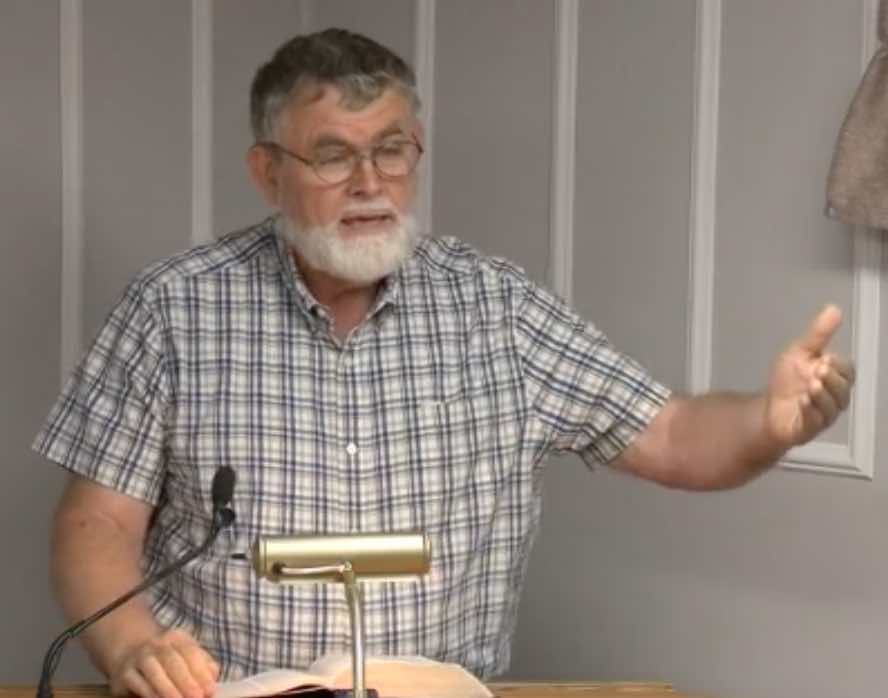
Mike McInnis

Abound in This Grace Also

2 Corinthians 8:1-15
Mike McInnis November, 26 2017 Audio
0 Comments
2 Corinthians Series

Sermon Transcript

Auto-generated transcript • May contain errors

100%
We're going to be continuing
to look over here in 2 Corinthians. Look in there in verse 8. Paul
is writing to these Corinthian believers and having sent Titus
to them on a couple of occasions. And of course, Titus being one
whom the Lord brought into Paul's life. And evidently Titus was,
we don't know a lot about Titus, just a few mentions of him in
the Scripture, but he was evidently one whom Paul considered as one of his
sons in the Gospel. And he had much confidence in
Titus and Timothy. that they were both faithful
men, that they would adhere to the things that he believed to
be true. They were not apostles, but they
were those whom he said had the gift given to them by the laying
on of his hands. And, of course, these things,
we believe, I believe at least, were gifts passed on from the
apostles themselves, and that was the end of such things as
that. And the Lord gave that for a
season. He gave the apostles power that
evidently He did not give to others. And He gave them some
ability to convey some of these gifts to those who were the direct,
if you want to call it, descendants of them. But, you know, the Lord... Of course, keep in mind that
they didn't have these scriptures that we have now. The New Testament, of course,
had not been written in its totality during that period of time. They
had the Old Testament, of course, And they had some of these letters
and they had pieces of the Gospels and mostly through oral tradition
given to them. But it was only in later times
that the Scriptures as a whole began to be circulated among
the churches. And so it is that it was a necessary
thing for the Lord to operate in that fashion during that time,
what you might call a transitional period. Now a lot of people make
the mistake of thinking that all the things that occurred
in the early days of the church were good things and all the
people that became or at least professed to be believers in
the early days were indeed so. But they are no different than
we are now. There was false doctrine that
started being preached as soon as sound doctrine was being preached. There were those that came with
an agenda, those that came seeking power among men and using religion
as a means to gain it. And that is just the nature of
men. Men are just that way. Men are going to seek glory. By nature, you can't take that
out of a man. That's just the way he is by
nature, unless the Lord cleanses him from it. He's going to seek
to be built up in the eyes of men. He's looking for somebody
to pat him on the back, and he's looking for people, those who
are of such a mind, to lead other men. They have a tendency to
want to gain a following. And to look at it and say, well,
this is my following here. And they want to build on that. And of course, we see this quite
readily around us. You know, men speak of, this
is my church and all that kind of stuff. Well, you know, this
is not my church. It's not your church. It's the
Lord's church, if it be a true church. And I don't want to be
a part of anything that isn't the Lord's church. I'm not interested
in being a part of my church, because if it's my church, it's
going to be in a mess. And if it's your church, it's
going to be the same way. So it's the Lord's church. It's
not somebody's church. So these things are just natural
to me. And we're not surprised when
we see that. We're not taken aback. We marvel
that this is not the way it is with everybody. And it's just
by the grace of God that it's not. And so Paul is writing here,
again, as we've said to these Corinthians, and continuing on. exhortations and admonitions
and encouragement to them. And of course, as we closed out
this chapter last week, he was sending forth to them his great
affection, the abundance of his love and his desire to care for
them as a father does for his children. He said, I rejoice
therefore, in verse 16 of chapter 7, that I have confidence in
you in all things." He says, I'm not ashamed to be associated
with you, basically is what he's saying. Moreover, brethren, we
do you to wit, or we want you to know. That's kind of an archaic
sort of language, we do you to wit. It just means we want you
to know, is how we would say it. We want you to know of the
grace of God bestowed on the churches of Macedonia. And of
course last week we talked about Macedonia, that's the Philippi
was one of the main cities of Macedonia, and that was just
to the north of Corinth. And so Paul is speaking here
of the saints there in Macedonia, of the churches in Macedonia.
Now when we think of the church at Philippi, that doesn't mean
there were only one gathering of saints in the region of Macedonia,
because there are many churches in Macedonia. Perhaps Philippi
was a greater center and there were more people in there, but
the Lord had His people scattered abroad in the earth back then
just like He does now. The gatherings of God's people
are not known particularly because they are great in number. That's
not the thing that makes a church. Now obviously, you know, as the
saints of God, thinking and believing that we have a message which
is blessed of God, and it is a blessing to us if we have love
to one another and to our fellow man, we desire to have to see
men embrace these things. I mean, we're not mad when somebody
expresses to us that they believe the things of the gospel. That's
an encouragement to us. So it's not that we don't desire
for men to gather with us, but we understand that that's not
necessarily always the purpose of God among the saints of God,
for all the people of God to be gathered in one place. is
not even often a healthy thing. I believe when gatherings, churches,
become so large that it's just kind of like going to a pep rally
or something. It's not really the gathering
of the saints so much as it is a place to go and a place to
see what goes on and a place to come away with the concept
and the mind of, well, we went. You know, if the only thing that
you get out of coming is that you went, then you might as well
stay home, because that's not the purpose for which we gather.
It's not so we can say, well, we went to church, but we always
go to church. Well, great. What do we come
for? I mean, why are we gathered together? That is the purpose of our gathering
together. It's not just so we can fulfill
some unwritten obligation, but it is so that we might be built
up in the most holy faith, that we might encourage one another,
that we might minister to one another, not just in preaching,
but in the prayers of the saints, bearing one another's burdens
and demonstrating love one to another. These are the reasons
that the church is to come together. And he says, we want you to know
about the grace of God bestowed on the churches of Macedonia,
how that in great trial of affliction, the abundance of their joy and
their deep poverty abounded unto the riches of their liberality. Now, he is basically telling
them, I want you to know that the grace of God is so much at
work and evidenced among the saints of Macedonia that even
though they have been under great trial and trouble, the manifestation
of grace is shown in their liberality. Now he's speaking here, because as we go on into the
chapter, we'll see that he's speaking about the gathering
together of monetary gifts to take to the saints in Jerusalem. Now, the saints in Jerusalem
were a specific case because there was much persecution of
the saints in Jerusalem. And many of them, as they were
cast out of the synagogues in Jerusalem and persecuted by the
Romans, most of them were stripped of all of their earthly possessions. They were basically their property
was taken away and they were outcasts there in the city. That didn't keep them from gathering
together and seeking to worship the Lord Jesus Christ. And so
Paul often, throughout the New Testament, he's speaking in references
to carrying money and gifts to the saints at Jerusalem. in order
to help them because they were in great trouble in that way. And so he's speaking about these
people in Macedonia. He said, I want you to know that they were
liberal in their giving even though it was out of poverty
at times at the gate. And that brings to mind, of course,
the widow. whom the Lord spoke of. And he said, you know, there
were great rich men came along and they were casting in their
offerings into the temple treasury. And one little woman came along
and she put in two pennies into that treasury. And the Lord said
that the woman gave more than the rich men gave, even though
You know, if you added it up, you'd say, well, that was a pivot,
so there wasn't anything to it. But it was the liberality of
her heart. She gave all that she had. She
didn't hold back. She didn't say, well, you know,
everybody's got to take care of themselves first. Now, we
do believe that everybody should take care of themselves. We do
believe that. Scripture teaches that. But it
doesn't teach necessarily that we should take care of ourselves
First. That's not the concept that the
Lord Jesus Christ set forth, did He? I mean, He didn't have
a place to lay His head, but He saw to the needs of His disciples
first. Why? Because He loved them. And
that's the whole purpose of what Paul is setting forth here and
showing what the grace of God does. in the lives and hearts
of God's people. For to their power I bear record,
yea, and beyond their power, they were willing of themselves,
praying us that with much entreaty that we would receive the gift
and take upon us the fellowship of the ministering to the saints. They implored us to take this
gift And this they did, not as we hoped. They didn't do this in the manner
which Paul hoped that he expected, but first gave their own selves
to the Lord and unto us by the will of God. He said they exceeded
our expectations. You know, we thought they were
going to, you know, come up with some stuff, but we knew they
didn't have much, so we weren't expecting a whole lot. But he
said they did more than we expected. You know, isn't that the blessing
of the Lord? I mean, He always does more than
we expect for us, doesn't He? You know, the liberality of the
Lord to His people is beyond measure. And so Paul is speaking
here. to these Corinthians, and he's
giving them the example of these Macedonians, how the measure
of their giving was related to the fact that they gave their
own selves to the Lord. They gave their selves to the
Lord and unto us by the will of God. In so much that we desired
Titus, that as he had begun, so he would finish in you the
same grace also." So he says, I've sent Titus. And he said,
the thing that we were so moved by that which the Macedonians,
as they opened up their heart to give, we hoped as we sent
Titus to you that this might be the case with you as well.
Therefore, as ye abound in everything, in faith, and utterance, and
knowledge, and in all diligence, and in your love to us, see that
ye abound in this grace also." Now listen to what he says here.
I speak not by commandment. Now those that would lay a tax
or a burden or a tithe upon God's people and say, you must give
a certain amount, Paul didn't know anything about that, did
he? He didn't say it. I mean, why didn't he say it?
Well, now you know. I mean, wouldn't it have been a good opportunity
for him to have taught about tithing if that was what this
was about? I mean, couldn't he have said,
alright, you all know the tithe is the Lord's. Ten percent. I want everybody to pony up and
give it. And if you don't, you're a thief. Now, the Scripture says the tithe
is the Lord's, and I would never, never would I tell anybody that
it isn't. That's what he said, did he not?
I mean, the Scripture says the tithe is the Lord's. Now, a brother
Barnard, I heard him say one time, he said if a man teaches
tithing, he's under the law. But he said, if a man doesn't
tithe, he's an outlaw. So this is not about tithing. Paul didn't come teaching tithing.
And the giving that is spoken of in the New Testament had nothing
whatsoever to do with obligation. It's just not there. The Scripture
says the Lord loves what? A cheerful giver. That's what
Paul's coming to say. Look, he said the grace of God
was demonstrated as these saints in Macedonia as they gave out
of the abundance of their poverty and their liberality was beyond
what we ever could consider that they would do. And he said this
was because they gave themselves to the Lord. That's where that
came from. And so he's using the example
of the Macedonians to encourage the saints because He saved them.
I'm not telling you you've got to do this. He said, I want you
to abound in this grace. Also, I speak not by commandment. I'm not demanding anything. I'm
not telling you how big of a check to write. I'm not telling you
you've got to write any kind of a check. He says, I'm just
telling you how the Lord when he works in the hearts of his
people, what the result is. I speak not by commandment, but
by occasion of the forwardness of others. I want you to see
what they have done and to prove the sincerity of your love. I mean, John said if a man sees
his brother in need and he says, He warmed and filled, but he
doesn't give his brother that thing that he stood in need of.
Does he love his brother? I mean, can you say you love
your brother if you don't have any concern for his well-being? Because that's, you see, the
principle that the New Testament speaks of, that you may prove
the sincerity of your love, for you know. Now listen to this.
See, everything in the Scriptures that we are taught, it doesn't
make any difference what it is, if it's giving or it's love or
it's humility. It doesn't make a difference
if it's prayer. We have one example, do we not? And until we have
exceeded that example, we've not measured up to what's expected
of us. And who is that example? For
ye know the grace of our Lord Jesus Christ, that though he
was rich, yet for your sakes he became
poor, that through his poverty ye might be rich. Now that's
the New Testament principle of giving right there. If you want
to know what the New Testament teaches about giving and the
amounts that you are required to give, if you want to call
it required, it is not required, but it is required by grace,
is it not? I mean, if we believe that Jesus
Christ is the example, then we see what it is that the New Testament... See, the New Testament demands
that we love one another, does it not? And how far does that
love go? I mean, it goes the same distance
that the forgiveness of one another goes. When Peter asked the Lord,
how many times should I forgive? Until seven times? I mean, is
there a limit upon it? When the Lord said seven times
seventy, 490 times, He didn't mean 490 times and when you've
done that, that's it, did He? He meant there's no limit to
it. You can't say, if your spouse says, how much do you love me,
do you quantify it and say, well, I love you this much? I mean, where's the limits upon
that? See, love doesn't have any limits.
I mean, you know, if your child's sick, what will you do Try to help that child be well. I mean, would you say, well,
you know, we don't want to drive all the way to Jacksonville.
There's a doctor over there that probably can help, but we don't
have time to go to Jacksonville. I mean, we've got other things
to take care of. What are you going to do? Why would you do
it? Because you love the child. And
it doesn't make any difference about all that other stuff. That's
immaterial. Well, that's just a carnal example.
The Lord Jesus Christ didn't need anything. He owned the cattle
on a thousand hills. I mean, as far as the eye can
see, everything is His. The glories of heaven belong
to Him. And yet, for our sakes, He laid
that glory by according to what the Scripture tells us, and He
became poor for our sakes. He walked among men as the all-scouring
of the earth. Men spat upon Him and hated Him
and crucified Him. And yet He gave Himself for us. And, brethren, He set for us
an example that we cannot ever match. Though He was rich, yet for your
sakes, not for His sake, for your sakes, Remember, you know,
some people present the gospel as though the Lord, you know,
He had to save men because He had made this creation and then
it was going to be sad if the whole thing just went up in smoke,
so He had to do something. Well, dear brethren, the Lord
didn't have to do anything. It was according to the good
pleasure of His will and His purpose and the fact that He
loved His people with an everlasting love. And He gave Himself to demonstrate that love, that
through His poverty we might be rich. And herein I give my
advice. See, that's all that we can do
as brethren, is it not? I mean, we can't really command
one another. We can tell you what the Word
of God says, That's what Paul is doing to the Corinthians here.
He says, I'm not commanding you. He says, I'm not telling you
what to do. He says, but I'm going to give you my advice.
For this is expedient for you. Is it not expedient? Is it not
proper for the sons of God to manifest their love one to the
other? This is expedient for you who
have begun before not only to do, but also to be forward a
year ago. Now evidently, he had already
told them about that they were going to gather this money to
take to these saints. He sent Titus down there. He
said, you said you were going to do this a year ago. You were forward
to do it a year ago. Now therefore perform the doing
of it. He said, you said you were going
to do it. Well, let's see you do it. Just plain and simple,
I mean, he said, I'm not telling you what to do. He said, you
said we're concerned about the saints in Jerusalem. Well, what
are you going to do about it? You said you were going to do
something about it. He said, well, the time has come. Now,
therefore, perform the doing of it as there was a readiness
to will. You know, isn't it an easy thing
to will to do something? I mean, if you did everything
that you were willing to do or you said you were willing to
do, now you know what you're really willing to do. What you're
willing to do is what you really do, but what you think in your
mind that you're willing to do. Oh, I'd do this and I'd do that. You know, it's easy to sit back
and say what you would do. And what you would do is a good
thing because that's the start of actually doing something.
But to will to do it and to do it is two different things. And
that's what he says. Now, therefore, perform the doing
of it, that as there was a readiness to will, so there may be a performance
out of what you have. Now, if you say to Paul, Paul,
we're going to gather up $10,000 and we're going to do it. But you don't ever do it. Remember
the parable of the man that had two sons? And one of the sons,
Daddy said, let's go work in the vineyard. And one of them
said, I ain't going. I've got to go to town. I've got plans. I've got things I've got to do.
I ain't got time to go to the vineyard. And the other son, He said, Oh, Daddy, yes, Daddy,
I'm going. I'm an obedient son, Daddy. I'm
going to the vineyard. Well, the one that said he was
going, guess what? He didn't ever make it. The one
that said he wouldn't, he repented. He said, You know, that's not
right. I've told my dad the wrong thing. I'm going to do it. Now,
the Lord said, Which one of these sons did the will of God? It
wasn't the one that said he would. Talk cheap, basically, is what
Paul is saying here. He said, talk cheap. You say
all these things, and you say you've got a ready mind to do
them, well, let's see it. If you're going to do it, I'm not
telling you you've got to do it, but if you say you're going
to do it, then do it. So there may be a performance
out of that which he has, that which the Lord has given to you.
For if there first be a willing mind, it is accepted according
to that a man hath, and not according to what he hath not." In other
words, if a man is really willing to do something, it doesn't make
any difference what he has. Having a lot to be able to do
something with doesn't enter into it. Just like the widow
and the mites, it's what you do. It's not what you have to
do it with. For if there first be a willing
mind, it is accepted according to what a man hath. The widow
had two mites. That's what she had, wasn't it?
I mean, she didn't have a hundred dollars. She had two pennies.
So it didn't make a difference about the hundred dollars. That
never entered into it. But it was what she had. And not according to what he
hath not. You know, sometimes we say, well, we don't have a
bunch of money. So we can't give a bunch of money.
Well, give what you have. That's what Paul's saying here. He doesn't care how much money
you have. You know, he said, give what you have. For I mean
not that other men be eased, and ye burdened. I'm not trying
to lay some heavy weight upon you. He says, you know Only the
Lord can give you a mind and heart towards what I'm talking
about, He says. He says, I'm not trying to tell
you you've got to do a certain thing. I'm not trying to burden
you while making life easier for some people and making life
harder for you, but by an equality that now at this time your abundance
may be a supply for their want and their abundance may also
be a supply for your want that there may be an equality. So
he's saying if you have much, give much. If you have little,
give what you can. It doesn't make any difference
because those things, the day may come when the need that you
have is supplied by those that have, even less than what you
have now. So it doesn't make any difference.
These things, he says, he likens to the The giving of
the manna, he says, as it is written, and he is speaking about
when the Lord gave the manna to the children of Israel, he
that hath gathered much hath nothing over, and he that hath
gathered little hath no lack. Now why was that? Because the
Lord gives every man the measure of faith. And He never requires
more from somebody than He gives them. You know, that's an amazing
thing, is it not? To whom much is given, He said,
much is required. And the converse of that is true
also. To whom little is given, little is required. But you see,
those things are true. And I can't look at you and say,
well, the Lord's given you much. I don't know. You know. And that's the thing, you see. An amount is not about me looking
and assigning a certain amount, but it is in the heart of God's
people. He that had gathered much had
nothing over, and he that had gathered little had no lack.
But thanks be to God which put the same earnest care unto the
heart of Titus for you, for indeed he accepted the exhortation.
But being more forward of his own accord, he went unto you,
and we have sent with him the brother whose praise is in the
gospel throughout all the churches." I think he was speaking of Timothy
there. And not that only, but, "...who was chosen of the churches
to travel with us with this grace, which is administered by us to
the glory of the same Lord, and the declaration of your ready
mind." Now we're going to cut it off there, but the Lord uses the grace and mercy that he shows
us in the gospel as the means to stir us to the service of
our brethren. As we have received much, so
we give much. Now, he is speaking here primarily
of a monetary gift, but all the things that we give to one another
are not necessarily money. We give of what we have. Now,
if I have a gift or a talent and I don't use that for the
benefit of the brethren, then I am basically a hoarder. I mean, I'm considering my own
self. And so it is incumbent upon all of God's people to first
give our own selves to the Lord that He may teach us what it
is He would have us to give, whether of time, talents, money,
whatever it is. You know, I can't set the standard
for you. I can't say, do this and that
will be fine. See, that's kind of what people
like about tithing, is that they can be satisfied because they
say, well, I met the requirement. I did the thing. I mean, that's
big in a lot of circles. You know, in the church I grew
up with, they had that plastered up on the wall, the tithe is
the Lord's, and they didn't want you to forget that, you know,
because they were afraid that if they didn't have that up there,
you wouldn't give anything. Well, dear brethren, if you've
got to be stimulated to give your money because of something
written out, then the grace of God is not offerable. Because
the grace of God stirs us in our heart to do the things that
the Lord would have us do. Paul said, give yourselves unto
the Lord. And you know when a man has done
that, he doesn't have anything else to give, does he? I mean,
there's nothing left, you know, when a man's done that.
Mike McInnis
About Mike McInnis
Mike McInnis is an elder at Grace Chapel in O'Brien Florida. He is also editor of the Grace Gazette.
Broadcaster:

Comments

0 / 2000 characters
Comments are moderated before appearing.

Be the first to comment!

Joshua

Joshua

Shall we play a game? Ask me about articles, sermons, or theology from our library. I can also help you navigate the site.