Bootstrap
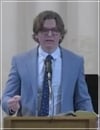
Bill Parker

The Manifestation of the Sons of God

Romans 8:17-22
Bill Parker May, 26 2019 Video & Audio
0 Comments
17 And if children, then heirs; heirs of God, and joint-heirs with Christ; if so be that we suffer with him, that we may be also glorified together.
18 For I reckon that the sufferings of this present time are not worthy to be compared with the glory which shall be revealed in us.
19 For the earnest expectation of the creature waiteth for the manifestation of the sons of God.
20 For the creature was made subject to vanity, not willingly, but by reason of him who hath subjected the same in hope,
21 Because the creature itself also shall be delivered from the bondage of corruption into the glorious liberty of the children of God.
22 For we know that the whole creation groaneth and travaileth in pain together until now
What does the Bible say about being a child of God?

The Bible teaches that true children of God are those chosen by God and justified through Christ's righteousness.

According to Romans 8:17-22, the true children of God are those whom God has chosen before the foundation of the world and justified by the merits of Christ’s obedience. They are referred to as the 'sons of God' who have been called out of darkness through the Holy Spirit’s regeneration and conversion, allowing them to have faith in Christ. This new identity as children of God is not based on our deeds or righteousness but solely on God's sovereign grace and Christ’s finished work on the cross.

Romans 8:17-22

Why is the manifestation of the sons of God important for Christians?

The manifestation of the sons of God signifies the final glory and assurance of salvation for believers.

In Romans 8:19, Paul discusses the earnest expectation of creation awaiting the manifestation of the sons of God. This event will publicly demonstrate God's children and their final glorification. For Christians, this is crucial as it reassures them of their salvation and the hope of eternal life free from suffering and sin. It marks the moment when God’s redemptive plans culminate, and believers’ inheritance as joint heirs with Christ is fully realized. This promise provides comfort and encourages faith amidst present sufferings.

Romans 8:18-21

How do we know our salvation is secure in Christ?

Our salvation is secure because it depends entirely on Christ's righteousness and God's promises.

The security of salvation rests upon the merits of Christ's righteousness being imputed to believers. Romans 8:1 affirms that there is no condemnation for those who are in Christ Jesus. The assurance of full salvation comes from the Holy Spirit bearing witness with our spirit that we are indeed children of God. This relationship does not fluctuate based on our actions but is anchored in the unchanging character of God and the complete work of Christ. Therefore, as believers, we find peace in relying on God’s promises rather than our own performance.

Romans 8:1, Romans 8:16

Sermon Transcript

Auto-generated transcript • May contain errors

100%
Okay, Romans chapter eight, concerning
the manifestation of the sons of God. Now the word manifestation
means to make known, make known in a public way. And so we're
gonna be talking about that. But we pick up here in verse
17, he's talking about the true children of God. Those whom God
chose before the foundation of the world, Those whom God has
justified in his sight, forgiven their sins, declared them righteous
in his sight by the merits of Christ's obedience unto death
as our surety, our substitute, our redeemer. That's who he's
talking about. Those for whom Christ died on
the cross, the redeemed of the Lord. That's the true children
of God. They are made known first. We're
going to talk about this a little bit more in a minute. They're
made known first by the calling of the spirit Wherein the Holy
Spirit is sent from Christ to impart life and knowledge Within
them through the preaching of the gospel. That's the new birth.
It's regeneration and conversion when God brings a sinner into
It gives him eyes to see, gives her eyes to see and ears to hear,
a new heart, the scripture. There's a lot of different ways
it's described in the scripture, but it's basically bringing a
sinner from the darkness and deception of unbelief and ignorance
to faith in the Lord Jesus Christ as he is identified and distinguished
in the word, the true Christ. We see what we didn't see before. Mark preached on that last week,
you know, a sight for blind eyes. We were born blind, just like
that man in John chapter nine. We were born blind spiritually,
but God gave us eyes to see under the preaching of the gospel.
What did we see? We saw the glory of God revealed
in the face of Jesus Christ. We saw the light of his glory,
the light of his finished work, the light of his righteousness.
And God brought us to faith in Christ and repentance of dead
works, and that's when we're manifested to ourselves, actually. And that's what Paul had been
talking about, verse 16, the spirit itself beareth witness
with our spirit that we are the children of God. That's how the
Holy Spirit bears witness with our spirit. You know that word
spirit, it's like the word breath, it means life, there's life within. And the Holy Spirit bears witness
with our life within, our spirit, by showing us the truth of the
Word of God and assuring us that we are the children of God. So
that's what we're talking about. The assurance of full salvation
and final glory by the sovereign, powerful grace of God based upon
the merits of the righteousness of Christ that's been imputed
to us. And if his righteousness has been imputed to us, At some
point in time, God's gonna bring us under the preaching of the
gospel and he's gonna turn on that light. He's gonna give us
those eyes to see and ears to hear. And the apostle, in these
verses, look at verse 17, he says, and if children, now, I
always make the distinction about the if statements of scripture
that they're not conditional, but they're evidential. And so
that's what he's talking about. This is evidence that we're children
of God. This is not conditions we meet
in order to become children of God. Now a lot of translators,
some translators will say the word if could be translated since. And that's okay. But we're studying,
we've got the King James Version of the Bible here and it says
if. So I make that distinction for that reason. But it could
be and since children, since we are children. And we looked
at that last time, how God adopted us into his family in Christ
before the foundation of the world. And it says, and if we're
children, or since we're children, then heirs. We're heirs, we are
the recipients of an inheritance, heirs of God. And how did we
get this inheritance? We didn't earn it, we didn't
deserve it. He says we're joint heirs with Christ. That's how
we got it. Christ is our elder brother in
that sense. And you know, he's called sometimes
the firstborn of every creature. That's talking about his resurrection
in some passages. But what it's talking about,
you know the law of the firstborn under the old covenant. Or even
under the patriarchal time. The firstborn was to be the spiritual
head of the family. Well Christ is our spiritual
head. And he, by virtue of his nature, has that inheritance
given to him because he's the second person of the Trinity,
God in human flesh. And then he earned it by his
work on the cross. And the reason we have it is
because we're joint heirs with Christ. It's because of our union
with Christ. We didn't earn it, we didn't
deserve it. We only earned and deserved hell. But because we're
in union with Christ, and that's one of the things that Paul,
this is the whole premise of it, he says, there is therefore
now no condemnation to them which are in Christ Jesus. The only
reason we have this inheritance is because we're in Christ, because
of his blood to put away our sins, his righteousness to justify
us. And so what he's showing here
is that being heirs of God, we are the recipients of an inheritance
that's incorruptible, as Peter said. It cannot be taken away,
it cannot be corrupted. And he says, if so be that we
suffer with him, or since we suffer with him, in verse 17. And we'll talk about that in
just a minute, that we may be also glorified together. So we
could say, now the if there again. It's not conditional. We don't
earn this inheritance because of our suffering. I've heard years and years ago,
I would hear preachers at funerals talk about somebody who got sick
with some bad disease that they suffered with and then they died.
And at the funeral, you'd hear stuff like, that would indicate,
say, well, I know he or she's in heaven because they suffered
much here on earth. Well, suffering on earth will
not get you into heaven. I don't care how much you suffer.
Our suffering is the consequence of sin. But this suffering here
is suffering with Christ, if so be, or since we suffer with
him. Now, think about it this way.
We suffered with him legally, because when he died, we died.
When he was buried, we were buried. All that Christ went through
for us as our representative, we were with him legally, representatively,
and we suffered with him. And that's the basis of our whole
salvation. But what Paul has in mind here
is the suffering that believers experience when we take sides
with Christ in faith and in repentance, when we take sides with Christ
against his enemies, against the unbelieving world. That's
what he's talking about. In other words, being a child
of God separates us from the world. And being a child of God
causes us to testify that the world and its deeds are evil.
That the best efforts of sinners to make themselves acceptable
to God is wicked and evil because it fails to glorify God. It denies
Christ. It lifts, it exalts the sinners. And when we do that, what happens?
We suffer persecution. Paul called it the persecution
of the cross. It comes over our testimony.
Christ talked about it in John, he talked about it in the Sermon
on the Mount. When he said, blessed are you
when you suffer for righteousness sake. That's over our testimony
of the gospel. We preach that there's only one
righteousness that will save sinners and make sinners acceptable
to God. And that's the imputed righteousness
of Christ. And any righteousness that sinners
think they have is filthy rags in the sight of God. And that
brings persecution, that brings derision. Christ taught his disciples
in John 15, 18, marvel not if the world hates you. It hates
me before it hated you. And that's just the way it is
because we testify of it that its deeds are evil. And that's
what Paul's talking about. Over in the book of 2 Timothy,
I've got this one, 2 Timothy chapter three and verse 10. The Apostle Paul, encouraging
Timothy here, he says in verse 10 of 2 Timothy 3, he says, but
thou hast fully known my doctrine, my manner of life, my purpose,
faith, longsuffering, charity, and patience, perseverance, persecutions,
afflictions, which came unto me at Antioch, at Iconium, at
Lystra, What persecutions I endured, but out of them all the Lord
delivered me. Verse 12, yea, now listen to
this, yea, and all that will live godly in Christ Jesus shall
suffer persecution. Now that's what he's talking
about. Christ talked about this, he said, taking up your cross
and following me. That's part of it. He told his
disciples when he sent them out to preach the kingdom of God
is here, he said, eventually they will persecute you, they'll
deliver you up before the council. In John 16, he said, they'll
throw you out of the synagogue and those who will murder you
will think they're doing God's service and they do it because
they neither know me nor the Father, he said. And that's the
suffering that he's talking about. There's one verse, I don't know
why I failed to put this in your lesson, but if you want to, write
it down, it's in Philippians. And the point I wanna make with
this verse, Philippians chapter one, this specific suffering
that comes over our doctrine, that's what it comes over. You
know, when I was growing up, I was taught that the suffering,
that it was like this, that if you were invited to a party and
they were all drinking and you decided you weren't gonna drink,
that they'd make fun of you. Now, that may be suffering to
you, but that's not what he's talking about here. He's talking
about the suffering that comes with our public identification
and our public proclamation that we side with the Lord Jesus Christ
against the world, the religious world. And he says in another
place here in Philippians, this specific suffering is evidence
of one who has been brought by God to true faith in Christ and
repentance of dead works. That's what Paul's meaning in
Romans 8, 17. He says, we're children of God,
we're heirs of God, we're joint heirs with Christ, if so be,
or since we suffer with him, that we may be also glorified
together. So that suffering is a specific
evidence of being a true child of God, but it's also, it exposes
the unbelief and pending condemnation of those who do not believe,
who hate the gospel, who persecute us, and that's what Philippians
1, Look at verse 27 of Philippians 1. He says, only let your conversation,
your walk, be as it becometh the gospel of Christ. In other
words, walk appropriately to the gospel. That whether I come
and see you or else be absent, I may hear of your affairs, that
you stand fast in one spirit with one mind, striving together
for the faith of the gospel, Verse 28, and in nothing terrified
by your adversaries, which is to them an evident token of perdition,
but to you of salvation and that of God. And then he says in verse
29, this is something, for unto you it is given in the behalf
of Christ, not only to believe on him, but also to suffer for
his sake. That's suffering like faith is
a gift of God. That suffering's a gift from
God. How in the world can we think
of it that way? Only by believing what God says. It doesn't feel
good. You can't go by feelings. Even
chastisement, you remember he says, no chastisement for the
present is pleasant. Doesn't feel good. And somebody
says, well, you know, somebody says, well, some of those martyrs,
they went willingly and all that. Well, he probably did. I don't
know. I know that there is dying grace. I know it's by the grace
and power of God. But that's what I'm saying is
the only way we can really look at suffering this way is to believe
God's word. We walk by faith, not by sight. And so that's what he's talking
about. But now look at verse 17 again.
He says, that we may be also glorified together. In other
words, this should give us looking to Christ and identifying with
him, should give us assurance that we're going to be glorified,
and look at verse 18, and it's an accounting. In other words,
again, it's not feeling, it's not racking up our works, but
it's an accounting that we make based upon God's testimony of
Christ. And he says it this way in verse
18, for I reckon, it's an accounting, that the sufferings of this present
time, whatever we're going through, are not worthy to be compared
with the glory which shall be revealed in us. Now there's no
doubt here that what the apostle's talking about is final glory,
in which there'll be no suffering. There'll be no sin, there'll
be no sickness, there'll be no death, there'll be no sorrow,
there'll be no more persecution. It will be the eternal bliss
of eternity in glory with Christ. And that's described in 1 Corinthians
15. You can read the whole chapter. But that's what he's saying,
it's an accounting that's supported by God's word, and it's based
upon the merits of the obedience unto death of Christ. Christ
died. He suffered, and he suffered
unto death. He was buried, but he arose the
third day. And he's the firstfruits. In
other words, back in the Old Testament, whenever the firstfruits
of the crop come in, if the firstfruits were good, the whole crop was
gonna be good. And that's what Christ is. He's the firstfruits.
He's the guarantee that everyone who is all sinners saved by his
grace, his true children who suffer for his sake, we will
be glorified together. And that's our account based
upon God's word which shows us the glory of Christ in his death,
burial, and resurrection. That's our accounting. And so
whatever it is, that we experience on this earth, whether we lay
outside the gate with poor as church mice and the dogs licking
the sores on our body, like Lazarus, or whether we're like Abraham
and we've got plenty, got money in the bank and everything seem
to be going forward. Whatever it is, it's not to be
compared with the glory that's to follow. That's what we have
to look forward to. Well, look at verse 18, or verse
19, rather. He says, for the earnest expectation
of the creature or the creation waiteth for the manifestation
of the sons of God. Now, what Paul does here, he
shows us that God has appointed a time when this fallen, sin-cursed
world will be destroyed. It'll be totally obliterated
and it's going to be replaced with a new heavens and a new
earth. And that time will not come until the last one of God's
children is brought into the kingdom by the Lord Jesus Christ
sending the Spirit to bring them in. And then it says here, the
manifestation of the sons of God. Now as I said, that means
to make known publicly. Now we know here he's talking
about final glory. Because listen, when the Holy
Spirit brings a sinner to believe in Christ, that's manifested
to ourselves. That's why we're given the spirit
witnesses with our spirit. The spirit bears witness with
our spirit that we are the children of God. In other words, we have
that assurance of being his children. And I know a lot of people, I've
heard preachers say, well, faith and assurance are two different
things. I believe if you'll read the scriptures, you'll find that's
not true. Now, somebody said, well, we
have to fight and struggle with unbelief. We do. We do. But what is faith? It's believing
God. Paul said it this way, I know
whom I have believed, and I'm persuaded that he's able to keep
that which I've committed unto him against that day. In other
words, you say, well, you believe God. Well, you believe his word.
You have the foundation of his word. You're looking to Christ
for all of salvation, but you don't have assurance of salvation.
Whenever, okay, if we ever have moments of doubt, times of doubt,
what's the problem? I guarantee you what the problem
is. That's exactly right. We're looking to ourselves. And
that's not faith, is it? Faith is looking to Christ and
Him alone, pleading His righteousness alone. But when the Holy Spirit
brings us in the new birth under the gospel, we're manifested
to ourselves and we're manifested to our brethren. Now, I'm not
saying that we can't be fooled in some situations, but that's
another message. But we're manifested to our brethren.
I mean, I look at you folks here and I see brothers and sisters
in Christ. If you really don't believe the
gospel that I'm preaching, you can fool me, but you can't fool
God. But I believe you do. That's why we have fellowship
together. The Bible tells us that if somebody comes in and
doesn't bring this doctrine, don't have fellowship with them.
I'm to reject them, I'm to be kind to them, I'm to tell them
the truth, I'm to help them as a human being, but I cannot have
religious fellowship with them if they don't believe this gospel,
if they're ignorant of or not submitted to the righteousness
of God. So we're manifested to ourselves, we're manifested to
our brethren, but we're not manifest to the world. First John chapter
three, the world will not know us. You know, somebody says,
well, I want the world to know that I'm a Christian. Problem,
the world doesn't even know what a Christian is. And the only
way the world is gonna call you a Christian is if you fit the
pattern of what they think a Christian is, which is a lie. Now, that
doesn't mean that we're not to be moral people and all of that,
but morality doesn't make us Christians. We should be moral. That's not what makes us Christian.
What separates us from the world? Our gospel separates us from
our message, our doctrine. So when Paul says here that the
earnest expectation of the creation waited for the manifestation
of the sons of God, It's obvious that he's talking about final
glory because that's when Christ is coming to gather his church
unto himself and it will be declared to the whole universe who his
children are and who are not. The sheep will be separated from
the goats at that time. Remember Matthew 25. But the
whole world will know that all who believed in him, by God's
grace, who were brought to faith in Christ, they're the children
of God. And the world will admit at that time that they deserve
nothing but condemnation and death. Every knee's gonna bow
and every tongue's gonna confess that Jesus Christ is Lord. Now
what Paul does here, he uses a literary device, talking about
the creation. Look at verse 20. He says, for
the creation or the creature was made subject to vanity, not
willingly, but by reason of him who had subjected the same in
hope. He gives the creation a human
characteristic here, to make a point. The creation was made
subject to vanity. You know, when Adam fell, And
this is really, somebody said this is a commentary on Genesis
3, 17 through 18. You remember that's when he pronounced,
when God pronounced the curse upon Adam? You know, in Genesis
3, there after the fall, he pronounced three curses. The curse upon
the serpent. which was the first manifestation,
the first public declaration of salvation by God's grace in
Christ because the seed of woman who was going to bruise the serpent's
head. So meaning that which Satan brought in, condemnation, would
be remedied by the seed of woman, who is Christ. And then he pronounced
the curse upon woman, And then he pronounced the curse upon
man, and that curse, remember he said the earth's going to
bring forth thorns and all of that. What he is showing there
is that when Adam fell and brought the human race into sin, it affected
the whole world. It affected this creation. Things changed. There began to
be deterioration. There began to be disasters. That's when the animals started
eating each other, that kind of thing, you know? And man could
only earn his living by the sweat of his brow. His labor was not
to be a pleasant labor after that. It's to be a grueling way
of life. And instead of all the glorious
things that grew in the garden before the fall, here comes up
thorns and briars and thistles and all of that. So this creation,
now, the creation was made originally by God to be good, and there
is still some beauty retained in this creation. You can read
Psalm 19, one through six, the heavens declare the glory of
God, the firmament his handiwork. People, you travel places to
go and you see beauty, but it's all temporary, and it's all sin-cursed,
and it's all headed for death. It's under the curse of sin and
death. And it was made subject to vanity. In other words, vanity
means worthlessness. And what I'm saying is this,
our hope and our salvation is not in this earth. You see, it
comes from above. And that's why when people, as
I say, reason from the ground up, they always go wrong. And
I'll tell you what, I mean, I'll add this. This is what, you know,
we need to be careful about this environmentalism. Now, I've always
said we ought to be responsible and good stewards of the good
things that God gave us. I don't want to drink dirty water
and I don't want to eat poison food. I don't want to breathe
dirty air. And I think we ought to be responsible.
But here's the point. This world's not our salvation
and we can't save this world. Environmentalists think we can
save the world if we just do this. This world is headed for
destruction. And I'll tell you this, man cannot
destroy this world. Now it's true that God may use
Man, as an instrument in destruction, people talk about nuclear weapons
and all that. I don't know. I know this world's
going to, you know, they talk about global warming. Well, read
2 Peter 3. The world's going to burn up
with a fervent heat. That's global warming. So it's going to be, but the
prospect here, the whole creation was made subject by reason of
him who hath subjected the same in hope. Now a lot of people
have problems with this. Who is the him who hath subjected
the same in hope? Some commentators say that's
Satan. Some say it's Adam. You know who I think it is? I
believe it's God. This was all God's plan and purpose, but here's
why I really believe that he's talking about God. God's the
one who subjected the same thing. He said he subjected the same
thing in hope. And only God can do that. Listen,
Satan didn't do what he did for the hope of mankind. Adam didn't
do what he did in hope. But God does all he does for
the good of his people. We're gonna read about that later
on. All things work together for good. That's our hope to
them that love God, who are the called according to his purpose.
Only God can take something this tragic, the fall of man, the
curse of the world, and make it a hope. But where is the hope? Not in man, not in the earth,
in Christ. That's where the hope is. A new
heavens and a new earth. Read about it in 2 Peter 3. I
think I've got that listed here. But look at verse 21. He says,
Because the creature or the creation itself also shall be delivered
from the bondage of corruption into the glorious liberty of
the children of God. There's the hope. Even this world's
gonna be made new. You know, they had this last
week, they had tornadoes coming up through the Midwest. Boy,
we've had our share of them. Yeah. Yeah, people killed. We're headed for the hope of
a world where that won't happen again. We talk about how those
are manifestations of the wrath of God, whether the consequences
of sin, where people go wrong is whenever they judge people
who are subject to those things to be worthy and they themselves
aren't. Remember Christ dealt with that
in Luke 13? He talked about those who were going to worship in
Galilee and they were slaughtered by Pilate's Roman soldiers. And
then he talked about a natural disaster, that tower that fell
down. And he asked him, he said, do
you suppose that they were greater sinners than anybody and that
they got that because they were greater sinners? Is that what
you think? That's what man naturally thinks.
You remember when the hurricane came through New Orleans? Oh,
that sinful city. Would you suppose that they deserved
it and we in Albany didn't because we got a church on every daggone
street corner? A false church? Huh? He said, except you repent, you will likewise
perish. If the tornado doesn't hit here,
it's not because we earned it or deserved it. We're still sinful
people. Our only hope is Christ and his
blood and righteousness alone. So look at verse 22. For we know that the whole creation
groaneth. See, he's giving the creation
human characteristics here. It groans and travaileth in pain
together unto now. How does it groan and travail?
Well, you can look at natural disasters, kind of like creation
groaning. Earthquakes, wildfires, all of
that. That's possible. But I'll tell
you, you know, one of the greatest testimonies, I think, of the
creation groaning Showing the testimony of God that our hope
is not in this world But in his grace and his power and his goodness
in Christ is the seasonal changes Look up and and and you don't
have to turn there. I wouldn't have time I've got
to quit then Genesis 8 Ecclesiastes 3 in Psalm 74 What what is the
testimony of the seasons? You know you've got spring that's
you and And that's birth, and summer is youth, fall is getting
older, and winter is death. And then it starts all over again.
Like a tree drops its leaves, and then next year here comes
more leaves. That's that continual cycle. And what's God showing
us? He's showing us, look, we have
a life to live, we have a death to die, we have a judgment to
face, we have an eternity to spend. How are we going to look
to those things? We look up. How do we look up? You know, every time I look down
at my Bible, I'm actually looking up. Because this is the word
of God. That's what I mean. The gospel.
God said, I send my righteousness near, his near right. Christ
came from above, sprung out of the earth, his humanity, and
righteousness and peace kissed each other. And that's our hope. All right.
Bill Parker
About Bill Parker
Bill Parker grew up in Kentucky and first heard the Gospel under the preaching of Henry Mahan. He has been preaching the Gospel of God's free and sovereign grace in Christ for over thirty years. After being the pastor of Eager Ave. Grace Church in Albany, Ga. for over 18 years, he accepted a call to preach at Thirteenth Street Baptist Church in Ashland, KY. He was the pastor there for over 11 years and now has returned to pastor at Eager Avenue Grace Church in Albany, GA

Comments

0 / 2000 characters
Comments are moderated before appearing.

Be the first to comment!

Joshua

Joshua

Shall we play a game? Ask me about articles, sermons, or theology from our library. I can also help you navigate the site.