Bootstrap
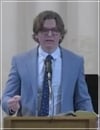
Bill Parker

The Christian Way of Dealing with Sin (2)

Colossians 3:5-11
Bill Parker August, 19 2018 Video & Audio
0 Comments
Bill Parker
Bill Parker August, 19 2018
Colossians 3:5 Mortify therefore your members which are upon the earth; fornication, uncleanness, inordinate affection, evil concupiscence, and covetousness, which is idolatry: 6 For which things' sake the wrath of God cometh on the children of disobedience: 7 In the which ye also walked some time, when ye lived in them. 8 But now ye also put off all these; anger, wrath, malice, blasphemy, filthy communication out of your mouth. 9 Lie not one to another, seeing that ye have put off the old man with his deeds; 10 And have put on the new man, which is renewed in knowledge after the image of him that created him: 11 Where there is neither Greek nor Jew, circumcision nor uncircumcision, Barbarian, Scythian, bond nor free: but Christ is all, and in all.
What does the Bible say about dealing with sin?

The Bible teaches that the Christian way of dealing with sin involves mortification, or putting sin to death through faith in Christ.

The Bible discusses sin as the root of all our problems and emphasizes that it must be dealt with continually throughout our lives. In Colossians 3:5, Paul exhorts believers to 'mortify' their sinful members, meaning to put them to death. This mortification is twofold: a legal mortification, which pertains to the finished work of Christ on our behalf that legally accounts for our sins as dead, and a spiritual mortification, which is the ongoing struggle against sin that believers face daily. This is elaborated in Romans 6, where it is declared that through faith in Christ, believers are counted dead to sin.

Colossians 3:5, Romans 6:3-11

How do we know that we are dead to sin?

Christ's death on the cross legally accounts for believers as dead to sin, as explained in Romans 6.

We know we are dead to sin because of the legal ramifications of Christ's atonement. Romans 6:6 teaches that our old self was crucified with Christ, meaning that in our union with Him, the power of sin has been broken in our lives. Believers are encouraged to reckon themselves dead to sin, which signifies that sin no longer has dominion over them as they stand justified in Christ. This accounting of being dead to sin is not based on personal merit but on the completed work of Jesus as our substitute and surety.

Romans 6:6-11

Why is mortification of sin important for Christians?

Mortification of sin is crucial for Christians as it acknowledges the persistent battle against sin and affirms their identity in Christ.

Mortification of sin is important for Christians because it is a key aspect of spiritual growth and holiness. The act of putting sin to death is essential in recognizing that while our legal standing before God is secure through faith in Christ, we still contend with the presence of sin in our daily lives. Colossians and Romans indicate that while believers are legally dead to sin, they must actively engage in the battle against it. True mortification leads to a deeper dependence on Christ's finished work and fosters a greater desire for spiritual maturity and obedience.

Colossians 3:5, Romans 6:12-14

What does the Bible say about the consequences of sin?

The Bible reveals that sin leads to death and separation from God, but in Christ, believers are no longer condemned.

According to the Scriptures, sin results in both physical and spiritual death and ultimately separation from God. Romans 6:23 states that the wages of sin is death, highlighting the serious nature of sin's consequences. However, Scripture also provides assurance to believers that they are no longer condemned because Jesus took upon Himself the penalty for their sins. Those who are in Christ will not face the condemnation of sin because they are justified by faith, which reassures them of their eternal security.

Romans 6:23, Romans 8:1

Sermon Transcript

Auto-generated transcript • May contain errors

100%
Would you turn in your Bibles
with me to the book of Colossians chapter 3. Colossians chapter 3. Last week,
I began this message entitled, The Christian Way of Dealing
with Sin. And I want to continue that.
If you didn't hear last week's message, you won't be completely
out of pocket because of the way I will present this message.
It may take me two more, I don't know. I just kind of go as long
as time allows. But what I want to talk to you
about is the Christian way, the Christian way, the true Christian
way of dealing with the issue of sin, the matter of sin. And first of all, we do have
to, all of us have to admit that sin is the problem. It's the root of all our problems,
isn't it? That one little three-letter
word, S-I-N, sin, is something we have to deal with every day,
every moment of our lives. We suffer the consequences of
sin. Even though if we're in Christ,
if we're in Christ, we have no fear of the condemnation that
sin brings. Because I'm going to talk to
you about that first. Now, I said last week before
in the introduction to the message that I want you to understand
now that when I talk about the true Christian way of dealing
with sin, is this, that we as true Christians do not always
deal with sin in a Christian way. And you can see that in
the Bible. For example, the church at Corinth
is one example of that. But there's others, and we know
that ourselves. You know, somebody said, well,
I always, you know, deal with it the way that I should. Well,
do you ever complain? You ever do that? You know what
complaining is, don't you? You know the Bible calls it murmur,
murmur, murmur? It's unbelief. And unbelief is
the greatest of all sins. You think about that psalm that
Brother Jim read that came as a result of a conviction that
God the Holy Spirit brought through the prophet Nathan to David.
And we talk about the great sin. of David in committing adultery
with Bathsheba, and that was sin, and that's not a Christian
way of dealing with sin. It's giving in to it. Paul calls
it evil concupiscence, unbridled lust, in Colossians 3. But I'll tell you what, that
wasn't the only thing that was David's problem, was it? Sin
is the enemy. In fact, we could say it this
way. We, you know, we talk about the world, the flesh, and the
devil. Well, the flesh is us. We want to be separate from the
world. We want to put on the whole armor
of God that we can withstand the wiles of the devil. But the
biggest problem we have, the biggest problem I have is standing
right here behind this pulpit. Did you know that? And the biggest problem you have
is sitting right there in the pew. And it's because of sin. Well, last week I made this statement.
Look at verse 5 of Colossians 3. He says, mortify therefore
your members which are upon the earth. And then he lists fornication,
uncleanness. We'll get to that in just a moment.
But the Christian way, the true Christian way of dealing with
sin is this issue of mortifying, mortification. That's how we're
to deal with it. But mortification, the word mortify
means put to death. And this mortification falls
under two headings in the scripture, I believe. I hope I can make
good on this as I go through these scriptures. First of all,
there's what I would call a legal mortification. And that is a
legal accounting of death. It's like a death certificate.
Somebody dies and they issue a death certificate. It's what
insurance companies need, you know, to release the funds. We need a death certificate.
There's a legal accounting of death. And that's mortification
as an accomplished, finished work. And that's the basis and
the ground of all Christian dealing with sin, all right? And then
secondly, there's what I call a spiritual mortification in
which we would say has various aspects. And I want to talk to
you about that. But it's what we see spiritually as God reveals
the reality of sin to us and what it means. And this is the
way that true Christians are to deal with this serious problem
of sin. Like I said, I probably won't
get through all of these, but let me just give you an overview
of this. The first, number one, has to do with God-given faith
in the Lord Jesus Christ. That's number one. That's how
we deal with sin. God-given faith in the Lord Jesus
Christ, and that involves this legal accounting of sin. In other
words, a finished work. Something that someone accomplished. Something that someone finished. And you and I didn't do it. We didn't do it. I love that
prophecy in the book of Daniel chapter 9. Verse 24 when it talks
about the 70 weeks or literally the 77's. which I believe represents
the 490 years between Judah's return to the promised land,
to Jerusalem, and the coming of the Messiah. But listen to
what it is. This is a prophecy. What Daniel was prophesying was
that after that period of time, The Messiah, the Lord Jesus Christ,
is coming. God, in his appointed time, is
gonna send Christ into the world, and here's what he's gonna do.
Now listen to this. This is Daniel 9, 24. This is interesting. It
says, 70 weeks are determined upon thy people and upon thy
holy city. And listen to what he's gonna
do. Christ, the Messiah, he's going to finish the transgression. He's gonna finish it. You ever
seen somebody get in a fight and one of them looked at him
and said, I'm gonna finish you off. Well he's gonna finish it off.
And then it says he's going to make an end of sins. Now this
is the work of the Messiah. It says he's going to make reconciliation
for iniquity. You know what that means literally?
It means that Christ is gonna balance the scales of justice.
In other words, if I stand in Him, the scales of justice are
not tipped against me. He made reconciliation for iniquity. And He's gonna bring in everlasting
righteousness. He did it now. And to seal up the vision in
prophecy. This is what the whole revelation
of God was all about. And to anoint the most holy. entering into the presence of
God. So that's number one on the mortification of sin. I'm
going to come back to that, but let me give you the second one.
The second one has to do with the spiritual aspect of repentance,
and it comes under God-given repentance of dead works. When God the Holy Spirit brings
you to faith in Christ, legally accounting, that we are dead
to sin, and I'll show you that from the scripture. He also brings
us to repentance of dead works, and that's when the Holy Spirit
gives us a spiritual side of sin, convinces us of the reality
of sin, and we repent of our dead works and of our sins. And then thirdly, We deal with
sin with a life of God-given repentance. There's an initial
repentance of dead works that comes through faith in Jesus
Christ, but there's a continual repentance. And that's why I
had you read Psalm 51. King David. If you want to talk
about the godly sorrow and continual repentance of a believer, That's
one of the best Psalms to read, Psalm 51. I've heard preachers
say, well David was only praying there because he got caught.
Well, there are times we only repent and become sorrowful when
we get caught too, isn't that right? Concealment seems to be
a a way of life with some of us, with all of us, really, at
certain times, certain points. But there's a continual warfare,
a continual mortifying. Now, this is mortification as
a goal. Put it to death. That's what
Paul's talking about here in Colossians 3 and verse 5. Mortify
therefore your members. Now, we, and that means put it
to death. Kill it. Now, the Bible talks
about a believer as having the spirit and the flesh. And in
Galatians 5 there he talks about the Holy Spirit lusting after
the flesh and the flesh lusting after the Spirit. There's a battle
within. And we will never reach or attain
the goal of putting sin to death within ourselves while we're
on this earth. That's a continual battle. It'll
plague us until we draw our last breath. And then When we are
delivered from even the influence and the presence of indwelling
sin into glory when we die and go to be with Christ, we know
now, it's not us who does it. We didn't win that victory, Christ
did. Paul said that this way, he said,
O wretched man that I am, who shall deliver me from this body
of death? Well, he said, someday I'm going
to make it. Someday, no. He said, I thank God through
Jesus Christ my Lord. It's all the work of God. So
we can't really kill sin within ourselves. And yet he commands
us to do so. And somebody said, well, why
would he command us to do something we can't do? Good not have you
ever read the scriptures. Believe on the Lord Jesus Christ.
Isn't that a command? That's not a suggestion. This
is not Paul's advice column. It's a command. And we're to
seek to follow the Lord and obey the Lord. And yet we know, because
God says it, that if he doesn't work sovereignly and powerfully
and invincibly within us, we won't do it. We won't do it. And so that last mortification
is the mortification that God will bring us to in glory, the perfection of glory. That's the final mortification
of all sin. Then we'll be able to say that
sin is not only eradicated legally in Christ, but it's eradicated
within me. I'll be like Christ. That's the final one, isn't it?
And that's the work of God by His grace. Christ. Well, let
me go back to this first one. Paul deals with this right here
in Colossians chapter 3. Number one now is God given faith
in the Lord Jesus Christ. This is the legal accounting
of sin. That it's an accomplished work.
It's dead. It's been mortified. It's been
put to death. That's what he's talking about.
And Paul has dealt with this. Look at verse 1 of chapter 3
again. He says, If you then be risen with Christ. Now to be
risen, somebody's got to die. He says, Seek those things which
are above, where Christ sitteth on the right hand of God. Now
Christ sitting on the right hand of God is a way of expressing
an accomplished work. A finished work. A done deal. Because he's seated at the right
hand of the God as the one who did what? finished the transgression,
made an end of sin, brought in everlasting righteousness. If
he hadn't finished it, he wouldn't be seated. You remember back
in the Old Testament in the tabernacle, the high priest, there were no
chairs in that holy place and in the Holy of Holies because
his work was never done. Those animal sacrifices had to
be repeated year after year after year. But Christ, on the cross,
dying for the sins of his people charged to him, legally imputed
to him. And here he is on that cross,
obeying unto death, suffering, bleeding, and then dying. And
before he gave up the ghost, what did he say? He said, it
is finished. A done deal. And now he arose
and he's ascended unto the Father, seated at the right hand of the
Father, ever living to make intercession for us. Well look at verse two.
Set your affection, your minds, your hearts on things above,
not on things there. Look at verse three. Now here's
what I'm talking about in this number one on mortification.
This legal accounting of being dead to sin. He says, for you
are dead. He doesn't say you will be dead. You say, well, what are you talking
about there, Paul? I'm not dead. I'm standing here behind this
pulpit. I'm talking to you. And I still have a battle every
day with sin, don't you? Don't you really? You do, don't
you? Well, preacher, are you saying I'm immoral? No. No, not
in the eyes of men. But that's not the problem, is
it? Hold on to that thought. He says, you are dead. How am
I dead? Look here, and your life is hid
with Christ in God who, when Christ who is our life shall
appear, then shall you appear with him in glory. Now let's
turn to Romans chapter six. Now this is the mortification
of sin legally, an accomplished work, accomplished for God's
people by Christ. and by Him alone. This was no
cooperative effort. This is Christ taking care of
the problem of sin as it was imputed to Him, the debt was
imputed to Him, charged to Him. And he drank damnation dry. And
look at verse 3 of Romans 6. This is what it's talking about.
This is the done deal. He says, know you not that so
many of us as were baptized into Jesus Christ were baptized into
His death. Now the word baptism here is
not referring to the believer's ordinance of believer's baptism. That's not Paul's subject. See,
the context would not support that. He says you were baptized
and he's in. Now, when a believer is baptized,
that believer identifies and confesses that when Christ died,
I died. When he was buried, I was buried.
When he arose again, I arose again. That's a public confession.
But it's a public confession of a work that was done long
ago and finished and completed. Legally. And that's what he's talking
about. We were baptized into his death. The word baptized
literally means placed into. That's what it literally means.
Placed into Christ. Well, when was I placed into
Christ? Well, I was placed into him before the foundation of
the world in God's divine, gracious election. Chose a people, gave
them to his son, put all the responsibility of my salvation
upon the shoulders of Christ. He was made my surety. My sin,
even then, before Adam fell, before I committed the first
one, my sin debt was imputed to Christ. And His righteousness
was imputed to me. You say, well, how could God
impute righteousness before Christ actually came in time? Let me
tell you something about God. He's eternal. He's immutable. He looks at things from the viewpoint
of eternity. He's not like me and you. He
don't wear a watch. He didn't look at the clock.
He rules over that. In the fullness of the time,
he did send forth his son, made under the law, made of a woman,
to redeem them under the law. Why was that? Because he gave
us to Christ before the foundation of the world, and imputed righteousness
to us, and Christ had then to come into this world and complete
the work, establish the righteousness, pay the debt, So he says in verse
four, now look at this. Therefore we are buried with
him by baptism into death. Buried with him. That like as
Christ was raised up from the dead by the glory of the Father,
even so we also should walk in newness of life. And that's walking
by faith in Christ. Not in legalism, not in unbelief. Go on, verse five. For if we've
been planted together in the likeness of his death, we shall
be also in the likeness of his resurrection, knowing this, that
our old man is crucified with him. Now the old man there is
our connection with Adam in sin. And he says the old man is crucified.
Now that's not a process that he's talking about. That's a
done deal. He's crucified. That the body
of sin, what is the body of sin? That's the whole body of sin
that is our problem. We fell in Adam, we sinned in
Adam, the scripture says. When Adam sinned, we sinned.
He's our representative. He represented us. We fell, we're
born dead in trespasses and sins, and we sin. In fact, like I said last week,
nothing we do, even as believers, comes up to snuff as far as perfect
righteousness does it. Do you know that sin still contaminates
and influences everything we think, say, and do? It does. You know, there's some people
who can't take that. They just can't take that. I remember when
I couldn't take it. I remember the first time I heard
Brother Mayhem make a statement, I was lost now, I wasn't, I wasn't,
I wouldn't regenerate, I wasn't a believer. I was religious,
going to a seminary, in fact. And I was sitting in the back
pew up there at that church in Ashland, and I heard him make
this statement. He said, you know, he said, there's enough
sin in the best prayer I've ever prayed to sink a world into hell.
I thought he was crazy. Then when the Holy Spirit, under
the Word of God, came and convicted me of sin, I said, you know,
I know what you're talking about. You have to struggle right now
to even keep your mind on the things of God. That's the way
we are, isn't it? But Christ crucified the whole
body of sin. My fallen Adam, my past sins,
my present sins, my future sin. The body of sin might be destroyed,
verse six, that henceforth we should not serve sin, that is,
be dominated by sin in the way of condemnation. How do you know
he's talking about that? Look at verse seven, now keep
the context. For he that is dead is freed
from sin. Do you have a concordance in
your Bible? See if it has that word freed translated differently.
You know what the word means literally in the Greek? It means
justified. He that is dead is justified.
You see, that's what Paul's talking about here. He's talking about
the legal matter of accounting sin to be dead because Christ
died. and He represented me. He was
my substitute. He's my surety. My sins imputed
to Him. His righteousness imputed to
me. And what He did is He literally took my sins to the cross and
drank damnation dry. It's mortified. It cannot condemn
me. It cannot be charged to me. I
count it as dead. That's mortification. Look at verse 8 of Romans 6.
Now if we be dead with Christ, you see what he's saying? We
believe that we shall also live with him, knowing that Christ,
being raised from the dead, dieth no more. In other words, he doesn't
have to die over and over again. This isn't mass. You know, that's
what Catholic mass is about. They crucify him again. No, he
dieth no more. His one death was enough. For
by one offering he hath perfected, completed them that are sanctified
forever and ever. by his one death. You say, well,
what would give such magnitude and worthiness and value to that
death? It's who it is that died, folks.
God in human flesh. That's it. See, that's why the
gospel is the revelation of the righteousness of God and not
the righteousness of man. So he says, death hath no more
dominion over him. One death of the Lord Jesus Christ
for the whole body of sin of his people charged, accounted,
imputed to him was enough. Verse 10, for in that he died,
he died unto sin once. But in that he liveth, he liveth
unto God. Now verse 11 is very important. Look at this verse.
Look at it, now this is the mortification, the legal accounting, the done
deal of mortification. Verse 11, likewise, or in the
same way, reckon, account, impute you also yourselves to be dead
indeed unto sin. But alive unto God through Jesus
Christ our Lord. If I have God-given faith, Holy
Spirit-wrought faith in the Lord Jesus Christ, then what am I
to do? I'm to account that I'm dead
to sin in the exact same way that Christ died to sin. He died
as my surety, as my substitute, as my sin-bearer, my sin-offering,
my redeemer, my ransom. Again, here's this mortification.
Sin cannot be charged to me. God cannot do it. How do you
know that? He says he can't. God was in
Christ, reconciling the world unto himself, not imputing, not
charging their trespasses unto them. Romans 8.33, who shall
lay anything to the charge of God's elect? It's God that justifies. Who can condemn us? It's Christ
that died. Yea, rather, is risen again and
is seated at the right hand of the Father. You see, it's all
based upon His finished work. And that's the first way we're
to deal with this issue of sin. That's the main way. That's the
foundation of all of it. However, you know, false religion
on the whole represents man's attempts to deal with the problem
of sin and attain righteousness by something that he can do or
decide. Did you know that? That's what
false religion is. Well, what's the Christian way
of dealing with it? How do we mortify? We look to
Christ as the author and finisher of our faith. We look to Christ
and his one offering, his righteousness imputed to us. I'm dead, sin
cannot condemn me. And he goes on to talk about
that. He says in verse 14, for sin shall not have dominion over
you, for you're not under the law, but under grace. Well preacher, does that just
give us leave to sin as much as we want? No, he says, verse
12, let not sin therefore reign in your mortal body, that you
should obey it in the lust thereof. No. No. If you think that that
gives you leave to just sin the more, you haven't understood
faith in Christ. You're missing it. But I'm going
to get to that matter later. Probably in another message,
it looks like. But no, in fact, what we have in that legal mortification,
now listen to me here. What we have in that legal mortification,
seeing myself as dead to sin because of what Christ accomplished
on my behalf, that is the strongest and the only godly way that believers
are to fight sin throughout their lives. That's the motivation. And you know why most unbelievers,
they'll say, well, if I believe that, I just go sin all I want
to. What they're actually saying is that, well, then you just
removed every motivation that I've ever had to not sin, to
fight sin, and to obey. See, their motivation is ungodly. An unbeliever's motivation to
fight sin is ungodly because it's legalism. It's mercenary. My friend, what can wash away
my sins? Nothing but the blood of Jesus. And once we see our death to
sin legally in Christ, once we've mortified the sin in Christ,
to see it that He took care, the old man is crucified with
me, all that I am in myself in Adam, and in my unregenerate
state, and even my sins now, which is a carryover of that,
we still have it. The flesh, he says. My friend,
God does not hold it against me. He said he'll remember it
no more. Did you know that? He said I'll remember their sins
no more. What does that mean? Does that mean God forgets it?
No, it means God doesn't keep a record of it legally. Did you hear what Jesus said
to me? They're all taken away. Your
sins are pardoned and you're free. They're all taken away. Christ was manifested to take
away our sins. Christ conquered sin for us. Christ conquered the grave and
death for us. In Him, we who believe are dead
to sin and we have an understanding That there's a difference between
the effects and the consequences of sin and the condemnation of
sin. Because we see Christ. And he
died for those sins. He mortified, he put it away.
We cannot be condemned. Think about that. There is therefore
now no condemnation to them which are in Christ Jesus. Who walk
not according to the flesh, but who walk According to the Spirit. And what does the Spirit do?
He drives a sinner to Christ. For relief. For redemption. For salvation. For assurance. Somebody asked me one time, said,
well, how do you know? How can you have assurance of
salvation? I'll tell you exactly how. Christ is my surety. He's my surety. And I know whom
I have believed and I'm persuaded that he's able to keep that which
I've committed. I'm not even able to keep it.
I'm not able to gain it. I'm not able to keep it. I'm
not able to bring it to fruition. It's full fruition. But he's
able to keep that which I've committed unto him against that
day. Now, what have I committed unto him? My whole salvation
from sin is committed to Christ, the one who's seated at the right
hand of the Father. ever living to make intercession
for me. Okay.
Bill Parker
About Bill Parker
Bill Parker grew up in Kentucky and first heard the Gospel under the preaching of Henry Mahan. He has been preaching the Gospel of God's free and sovereign grace in Christ for over thirty years. After being the pastor of Eager Ave. Grace Church in Albany, Ga. for over 18 years, he accepted a call to preach at Thirteenth Street Baptist Church in Ashland, KY. He was the pastor there for over 11 years and now has returned to pastor at Eager Avenue Grace Church in Albany, GA

Comments

0 / 2000 characters
Comments are moderated before appearing.

Be the first to comment!

Joshua

Joshua

Shall we play a game? Ask me about articles, sermons, or theology from our library. I can also help you navigate the site.