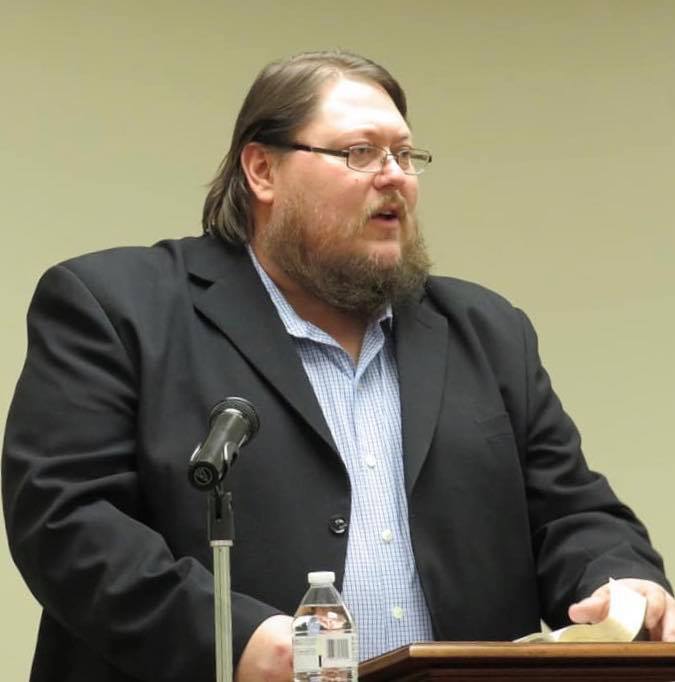
In his sermon titled "Officers of the Church Pt. 4," Mikal Smith addresses the doctrine of church leadership, specifically focusing on the qualifications and responsibilities of the pastor within the local church. He argues that only the offices of pastor and deacon are biblically mandated in the church today, as referenced in Ephesians 4:8-13, which discusses the gifts given by Christ for the edification of the body. Smith emphasizes that the pastor is to be a servant leader, characterized by blamelessness, fidelity in marriage, and the ability to teach sound doctrine, drawing extensively from 1 Timothy 3 and Titus 1 for specific qualifications. The practical significance of this message is to guide congregations in identifying true biblical leadership and to remind pastors of their high calling and the standards they must meet to shepherd God’s people effectively.
Key Quotes
“The body of Christ is speaking of the local church, wherever that congregation is gathered together.”
“The term for pastor, teacher, is one thing... He is the one who is overseeing the worship, the ministry of the church.”
“God has ordained that the men be the ones who hold this office, who are given this gift.”
“If a pastor is not one that rules his house well, how is he going to be able to rule in the matters of the church?”
The Bible outlines specific roles for church officers, primarily pastors and deacons, to equip and edify the church.
In Ephesians 4:11-12, the Apostle Paul describes how Christ has given various gifts to the church, including apostles, prophets, evangelists, pastors, and teachers. The primary roles of these officers are to perfect the saints for the work of ministry and to build up the body of Christ. The local church serves as a congregation of believers, functioning as the body of Christ. The pastor's role, in particular, combines oversight and teaching, ensuring that the congregation is nourished spiritually and remains unified in faith.
Ephesians 4:11-12
The office of pastor is established through biblical qualifications set forth in Scripture, notably in 1 Timothy and Titus.
The office of pastor is grounded in Scripture, as seen in 1 Timothy 3 and Titus 1, where the Apostle Paul provides a list of qualifications for bishops, which are understood as pastors. These passages make it clear that the role is distinct and carries specific responsibilities, including being able to teach and manage their own household well. Furthermore, the presence of these qualifications emphasizes the divine order within the church, ensuring that those in leadership embody the character and calling that God requires.
1 Timothy 3, Titus 1
Pastors must meet specific qualifications to ensure proper leadership and spiritual health within the church.
The qualifications for pastors, such as being blameless and the husband of one wife, serve to maintain the integrity of the church and its teachings. A pastor's character and conduct reflect on the church as a whole; therefore, those called to lead must demonstrate spiritual maturity and a commitment to their role. This adherence to qualifications fosters accountability and helps prevent false teaching or moral failures that could harm the congregation and hinder the church’s witness in the world.
1 Timothy 3:2-7, Titus 1:5-9
Deacons are appointed to assist the pastoral office and serve the needs of the church community.
The role of deacons is addressed in 1 Timothy 3 and is understood as one of service within the church. Deacons are to be men of dignity, not double-tongued, not addicted to much wine, and not fond of sordid gain. Their purpose is to support the work of pastors and help facilitate the church’s ministries, addressing practical needs and allowing pastors to focus on teaching and prayer. This partnership between pastors and deacons is vital for a healthy church, as it ensures that both spiritual and physical needs are met.
1 Timothy 3:8-13
A pastor should administer correction and rebuke with love and gentleness to uphold the church's spiritual health.
According to 2 Timothy 2:24-25, a pastor must not strive but should be gentle to all, apt to teach, and patient in instructing those who oppose themselves. His approach to correction should be one of compassion and clarity, aiming to restore rather than to condemn. When administering rebuke, the pastor ought to reflect Christ’s love, ensuring that his intent is to guide believers back to the truth and help them grow in their faith, rather than to bring about division or discouragement.
2 Timothy 2:24-25

Comments
Your comment has been submitted and is awaiting moderation. Once approved, it will appear on this page.
Be the first to comment!