Bootstrap
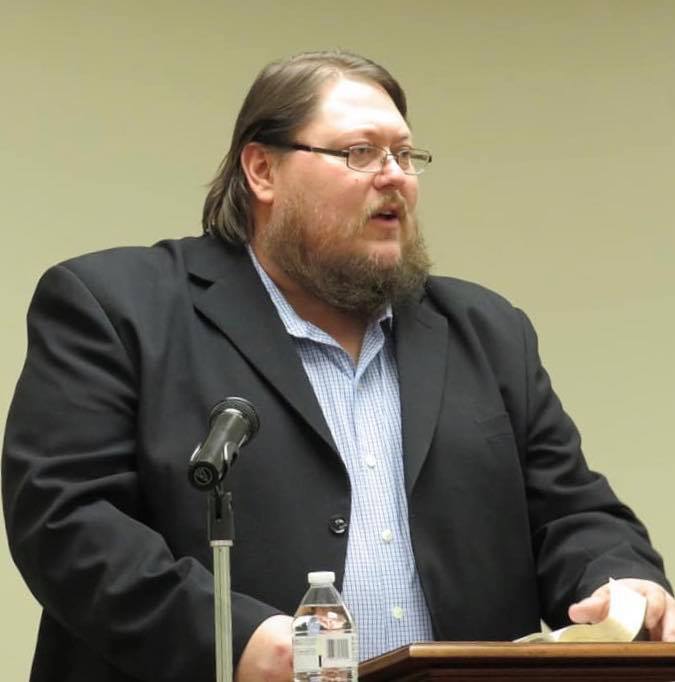
Mikal Smith

The Sheep of His Pasture

Psalm 100:3
Mikal Smith May, 24 2026 Video & Audio
0 Comments

The sermon titled "The Sheep of His Pasture" by Mikal Smith addresses the theological themes of God’s ownership, the pastoral care of Christ, and the election of believers within Reformed theology. Smith emphasizes that believers are not independent but belong to God, as indicated in Psalm 100:3, which states, "We are his people and the sheep of his pasture." He argues that the relationship between the shepherd (Christ) and his sheep (believers) is one of complete dependence, paralleling biblical imagery that illustrates God’s total provision, protection, and governance over his people. Smith makes extensive use of Scripture, notably referencing John 10, Ezekiel 34, and Romans 8, to demonstrate God's sovereign grace in electing believers and ensuring their eternal security. The sermon's practical significance lies in its encouragement for believers to rest in the assurance that they are cared for by the Good Shepherd, who lays down his life for them and keeps them secure in their salvation.

Key Quotes

“We didn't make ourselves. We didn't create ourselves. It is God who has created us. And so being God, being the creator, he is owed reverence...”

“The relationship is one of constant interaction with the sheep... a bond happens between the sheep and shepherd.”

“Eternal safety for all of God's sheep because He will preserve them.”

“If we have been given to him, then that means no one can pluck us out of his hands.”

What does the Bible say about being the sheep of His pasture?

The Bible describes believers as the sheep of God's pasture, emphasizing His care and ownership over them.

Psalm 100:3 states, 'We are his people and the sheep of his pasture,' illustrating that God is both our creator and our shepherd. This metaphor throughout the Scripture shows that just as sheep rely on their shepherd for guidance, sustenance, and protection, so do believers depend entirely on God for spiritual nourishment and safety. The imagery of God as a shepherd creates a deep sense of intimacy and trust between God and His people, highlighting the loving relationship that exists where the flock finds rest and provision.

Psalm 100:3, John 10:11-15

How do we know God's sovereignty in choosing His flock?

Scripture reveals that God has chosen His flock according to His sovereign grace before the foundation of the world.

Ephesians 1:4-5 declares that God chose us in Him before the foundation of the world and predestined us to be adopted as His children. This doctrine of election showcases God's sovereignty, as He determines who belongs to His flock. Additionally, Romans 8:29-30 elaborates on this process of foreknowledge, predestination, and calling, which emphasizes that God's choice is not based on human merit but solely on His grace and purpose. Thus, the salvation and belonging of believers hinge entirely on God's sovereign plan.

Ephesians 1:4-5, Romans 8:29-30

Why is understanding Christ as the Good Shepherd important for Christians?

Recognizing Christ as the Good Shepherd reassures Christians of His sacrificial love and guidance.

In John 10:11, Jesus identifies Himself as the Good Shepherd who lays down His life for the sheep. This understanding is foundational for Christians because it assures them of His protective care, guidance, and ultimate sacrifice for their salvation. The imagery reflects Jesus’s intimate knowledge of His flock and the relational aspect of salvation—He not only cares for the needs of His sheep but also provides eternal security. This assurance fosters a deep sense of belonging and trust in God's providence, underscoring the importance of His shepherding role in the believer's life.

John 10:11, John 10:27-28

Sermon Transcript

Auto-generated transcript • May contain errors

100%
100 song. It's good to have you with us. You need to use the bathroom or anything. It's just right through that hole to the left. OK, you ever have if you need to get up or use use the restroom or anything just right through there. If you need anything, just let one of us know. My wife will be sitting right behind this. She can point you to anything that you need. Daniel, if you need anything, you just have to wait till after church. No, I'm just kidding. Good to have you today.

The 100th Psalm, if you would. Now, we're going to be looking at quite a few verses this morning, but I want to start here on the 100th Psalm, something the Lord kind of put on my mind this morning as I was kind of sitting down at my desk and going over a few verses this morning, something that really kind of stuck out to me. I actually, there's a phrase that kind of came out. I was listening to some preaching this week, doing some driving and listened to a little bit of preaching as I was going along. And the phrase popped out a couple of times in a couple of the messages that I listened to. And it just says, I guess it stuck with me all this week.

But we'll look at the 100th Psalm in verse three. Well, let me just start at verse one. It says, make a joyful noise unto the Lord all ye lands. Serve the Lord with gladness. Come before his presence with singing. That's what I hope we've already done today, right? Know ye that the Lord, he is God, It is he that hath made us and not we ourselves. Now that's going to come in pretty pertinent here in just a few minutes whenever we get into kind of talking a little bit more about what we want to look at this morning. But notice what it says next.

We are his people and the sheep of his pasture. Enter into his gates with thanksgiving and into his courts with praise. Be thankful unto him and bless his name. For the Lord is good, his mercy is everlasting, and his truth endureth to all generations. Now, as you notice here, the main thrust of this psalm, brethren, is to give glory unto God.

And that's the reason why we always come to church. We come to church to praise and worship the Lord our God. We always look at Church is something that we come to to get something out of, right? And in essence, we do. I mean, whenever we come to church, if the Lord be with us, then we'll be fed, we'll be encouraged, we'll be comforted.

But the main purpose that we gather together is to give glory and praise and honor to the Lord. And that's why I said, I hope that's what we've been doing this morning. that we have made a joyful noise unto the Lord. I'm glad that, and I know this is kind of a common saying, I've heard a lot of preachers say this, but I truly am glad, make a joyful noise unto the Lord. It didn't say that you had to be a great singer, right?

And everything, I'm sure sometimes from people that we have windows open, people in the neighborhood hearing the singing, especially on some of these ones that we don't know very well, here is kind of cobbling along in our songs. thinking boy man people are got it rough in there but hey the bible says make a joyful noise unto the lord uh serve the lord with gladness come before his presence with singing that's why we always lift up the lord in song plus in the new testament the lord commanded us to do that whenever everyone came together they had prayer they had a hymn um but what i wanted to pull out here is this fact of us being his people and the sheep of his pasture. This idea of being a sheep or being a part of a flock, and it really is an image, an imagery that is shown throughout all the scriptures, brethren. I mean, all throughout God's word, God uses the image of a sheep and a shepherd in relationship to how we belong to him, and he is our father, he is our husband, he is our shepherd. Well, the shepherd and the sheep image is one that not only did we see throughout the Old Testament, but we also see all through the New Testament, and even the Lord himself, as we'll see here in just a few minutes, the Lord himself described himself in such a way as a shepherd to the sheep. Now, why such this imagery?

Well, for one, we know that sheep are pretty frail, okay? They're pretty frail. They really can't do nothing for themselves. They really need to be taken care of and they need to be watched after because they like to run off, okay? And a shepherd is someone who, night and day, has to keep watch, has to keep care over, has to take care, has to protect. They can't protect themselves. They must be protected.

And so Jesus gives us this image of him being this great shepherd or this true shepherd who truly loves his sheep and takes care of his sheep, watches over his sheep, feeds his sheep, gives them everything that they need, takes them in and out of pasture. You know, whenever the Bible says that they are taken in and out of pasture, It just means that he brings them out to the pasture, that's where they feed, and then he'll bring them back in for a time so that they can rest, and then he'll take them out to feed.

So we see this imagery of direct, complete, and total watch care by the shepherd. Everything is provided for the sheep. And that's how our relationship is with the Lord Jesus Christ. Everything that we have need of the Lord Jesus has provided for us, whether it be sustenance, whether it be whether it be housing and clothing and all these things.

I mean, the Bible talks about, you know, look at the birds of the air, look at the grass, the field, the lilies and all these things. Take a look at all these things and how they the Lord takes care of all those things. And he says, would not I take care of you or my children? Make sure that you have everything that you have need of. So Jesus takes care of us as we have need. And that doesn't mean he meets everything that we need. You know, sometimes I need gas and I might not have it. Okay. Well, I'm not talking about every little thing like that.

He's talking about everything that we have need of in this spiritual life. He has provided for us. There's not anything that we have to do to work for it, to ask for it. He provides everything for us. Now, he does provide us a lot of material things.

And I heard Brother Larry speak on his thing this week a little bit about being thankful for things. And the Lord has given us a lot of stuff and we really have it good, especially here in the United States. We have things great here. We should be thankful. The Lord has provided us quite a bit of things.

But what I want to look at this morning, is this imagery of being a sheep. Because if you actually go through the Bible and start looking at this, you'll begin to see some patterns throughout the scripture that shows sovereign grace in the life of the little flock, or the life of the shepherd and the sheep.

So it says here that we are his people and the sheep of his pasture. We don't belong to anybody else. We are his. That shows ownership there. The sheep are his sheep. Now they're his sheep, number one, by way that the fact that he is God, he has created them. Matter of fact, right above that, it says, it is he that has made us. and not we ourselves.

We didn't make ourselves. We didn't create ourselves. We didn't form ourselves. OK, it is God who has created us. And so being God, being the creator. He is owed reverence, as we've seen in this song, the reverence and the honor and the glory and the praise should all go to his name because he is the creator. He is the one who has made us. We are his creation.

Okay. And a lot of times we, as people, we act like we're above him. That we should be, we should be taken care of. He owes us something. He should make us this or that or the other. He should be the one that comes to us and, and gives us this and that. But yet the Bible here tells us that we did not make ourselves, that he made us and therefore being his, we are under his ownership.

God but brethren it goes a little bit further and deeper than that not just because he is God but because he is our true Shepherd he is the one who is intimately been given over us in relationship as our Shepherd see back in the Old Testament time when all these men and even I guess today There may be people that have all these shepherds.

I watched a video not long ago of these some of these shepherds over in New Zealand and it's just amazing that these sheep was out in this pasture and this guy was calling for these sheep and these sheep was ignoring this guy didn't pay any attention barely even raised an ear this guy was calling to it but he wasn't the actual shepherd of those sheep he was a guy that was there doing the interview with this in this video thing this documentary or whatever it was And he was just a talking, talking, and these sheep weren't paying nothing attention.

But just as soon as the shepherd of those sheep called for them, they immediately looked up and started coming to him. They all started coming to the fence and came right to him and everything. And I just was amazed at the reality of that. You know, we read it in the scriptures, but sometimes the reality of that just doesn't hit us until we actually see it. But all these sheep came to him.

The other thing that I saw on that thing was there was several herds of sheep that was out there in the field and they were intermingling with one another. And this guy's sheep and this guy's sheep were all out there together. And here they were all mixed up together. But whenever this guy here called for his sheep and this guy here called for his sheep, those sheep went like this. These sheep knew their shepherd. These sheep knew their shepherd. They went to that shepherd and they divided themselves, they went to their shepherd. And I think of that whenever we see this, it says, he is people, he is sheep, he is our owner.

Now that's gonna come up here in a few minutes when we read Jesus' own words. But the first thing I want us to see about being a sheep and being his sheep and him being our shepherd and us abiding in his pasture, is that the flock or the sheep, the herd of sheep is a sheep fold or a sheep flock, however you want me to say that, sheep fold, that has always been foreknown. Look with me if you would while you're there in Psalms, look at Psalms 95. It says, oh, come, verse six, verse six and seven. It says, oh, come, let us worship and bow down. Let us kneel between the Lord, our maker, for he is our God and we are the people of his pasture and the sheep of his hand. So we are his people, we are his sheep, he is our maker. So that, again, establishes what Psalms 100 has already told us, right? we belong to him.

There's a relationship there. Brethren, listen, these shepherds, whenever they took care of their sheep, they loved those sheep and those sheep loved them because there was this constant interaction with the sheep. This constant shepherd having to take care and maintain and be there for the sheep.

And I mean, we kind of have that same kind of understanding with our household pets. All of us here at some time or another has probably had a pet that we've had, especially one that we've had a long time. I mean, my dog, I have to feed my dog, water my dog, let my dog out, play with my dog, all this kind of stuff. And there's this bond that happens between you and that animal, right? and it becomes like it's almost one of your family.

I know that Larry and Rosette and us as well have, I guess it's not real recently, but somewhat in the not too far away past, has lost long-term animals. They had a dog named Tulip that they had for several years. We had a dog named Wookiee that we had for several years, and we've lost those dogs. And it was heartbreaking whenever we lost the dog.

I remember, you know, crying and being upset and all this stuff and just can't believe that the dog's gone. It's almost like your own child. We form those bonds. Why? Because we have these intimate relationships with them. We're feeding them. We're taking care of them. They are depending upon us for everything. They are depending on us to provide all their needs and everything. And so there's this relationship and dependency that comes from the sheep to the shepherd and the shepherd to the sheep.

And so we see this established, but if you would turn to John chapter 17, and we're gonna hit John 17 a couple of times, because there's several things within that that has to do with what we're talking about. But look, if you would, at John 17, I know we were there last week, verses one and two, but I do want to read verse two again to you. Jesus here is praying and he says, as thou hast given him power over all flesh, that he should give eternal life to as many as thou hast given him. So here we're talking about the Lord's people that has been given to Christ Jesus. Okay. So I mentioned that the flock or the sheep were ones that was foreknown. Okay, they were foreknown already. Now, the reason I come to this verse is because it says here, to give eternal life to as many as thou hast given him.

You can't give something that doesn't already exist. And I can't give anything to anybody unless I already have ownership of it. God already had ownership and therefore had the right to give to Christ whoever he wanted, however many he wanted. And he gave to them a people that would be for him and for him alone.

And so Christ in covenant I don't believe that God bargained with each other. God made a covenant to do this for his people. Christ is the person that God manifested himself in to accomplish this task, to redeem a people for himself, for his glory. Now, we won't go back into everything that led into that, but I want you to pay close attention that This flock, this sheepfold was given to Christ, therefore it was already owned and it was already given in possession, therefore it was foreknown.

Now we already know that. If you'll look down at verse six, it reiterates this. Jesus says, I pray for them. I pray not for the world, but for them which thou hast given me, for they are thine, and all mine are thine, and thine are mine, and I am glorified in them." So here we see that they were already in possession of Christ. If they were already in possession if they were already given, if they were already owned.

And as it says here, as many as were given, that means the specific ones who were given were already known. Now, brethren, we already know that because the Bible tells us all through scripture in many, many places that God already knows his people. Matter of fact, in Roman chapter eight, we know that the Bible says this, Turn with me if you would over there real quickly Romans chapter 8 at the very end The Bible says and we know that all things work together for good to them that love God to them who are the called According to his purpose the call According to his purpose are the flock that God has given to Christ Jesus It says for whom he did foreknow There you go this flock This called out group is foreknown by God.

For whom he did foreknow, he also did predestinate to be conformed to the image of his son, that he might be the firstborn among many brethren. Moreover, whom he did predestinate them, he also called. Whom he called them, he also justified. And whom he justified them, he also glorified." Look, if you would, over at Ephesians chapter one, And I know these are familiar verses.

We go here all the time. And my, I hope through all the times that we go through here, you guys are seeing how in-depth the word of God is and how much the word of God, you just can't scratch. I mean, we're just scratching the surface, brethren, when we come together and look at some of these things, because it has so much to do with everything.

In Ephesians chapter one, Grace be in, verse two, grace be unto you and peace from God our Father and from the Lord Jesus Christ. Blessed be God and Father of our Lord Jesus Christ who has blessed us with all spiritual blessings in heavenly places in Christ Jesus.

Here it is, according as he has chosen us in him before the foundation of the world that we should be holy and without blame before him in love, having predestinated us unto the adoption of children by Jesus Christ to himself according to the good pleasure of his will, to the praise and glory of his grace, wherein he hath made us accepted in the beloved." And brethren, if you look throughout scripture, you'll find that the sheepfold, the flock, the sheep of God are often called the beloved. We are called beloved, why? Because we are in the beloved. We have been united to Christ Jesus who is the beloved one. So we see here that this flock is already foreknown.

Now, we also see in the Old Testament, if you'll turn with me back to Ezekiel, we also see that not only was the sheep foreknown, but in the Old Testament, The shepherd was also promised ahead of time. Jesus didn't just come out of nowhere. He didn't come in response to a mess up that Adam did. Jesus didn't come, just arrived on the scene one day in Bethlehem in a manger and everybody then said, well, wow, what's this all about? The Bible all throughout the Old Testament prophesied of Christ's coming in the capacity of shepherds.

And as I've mentioned to you many times before, whatever is prophesied, all that is, is the eternal purpose of God being revealed to us in word. God has already purposed this and God in prophecy is only telling us what his eternal purpose is and going to be and how it's going to happen. So prophecy is God telling us what he is going to do when he's already determined.

It's already determined. It's not going to change. It's not going to be different. Something that's going to happen in the New Testament isn't something that happened in the New Testament because all of the events between the Old Testament and the New Testament made it that way. No, all the events between the Old Testament prophecies and the New Testament fulfillment of it and our experience of it now are all because of the dictates of God in his purpose from the foundation of the world and his sovereign providential work in bringing it all about in time.

Look with me if you would at Ezekiel 34. Now, I wanted to start looking here in verse 11, but everything that's preceding this in 34 is God talking about how bad the shepherds of Israel were. And I believe this is not only talking about during that time, but also was talking about the time foretelling the time when Jesus would be here and those Pharisees and Sadducees and religious leaders during Christ's times, as the Bible says, brought to fullness or filled up the measure of these shepherds that was back here in the Old Testament times. They were the ones that killed the prophets. They were the ones who spilled blood. They was the ones who rejected Christ. They was the ones who had went off into idolatry and continued to bring those idolatry practices into the worship of God.

And so that's who we're talking about prior to this. But then Jesus says in verse 11, for thus saith the Lord God, behold, I, even I, will both search my sheep and seek them out. Now who's gonna seek out the sheep? Is he getting the mission board ready? Is he getting some convention or denomination prepped and ready to carry out his commission? No, it says right here, he says, for I will deliver my flock from their mouth. Oh, excuse me, verse 11.

For thus saith the Lord, behold, I, even I will both search my sheep and seek them out. As a shepherd seeketh out his flock in the day, that he is among his sheep that are scattered. So will I seek out my sheep and will deliver them out of all places where they have been scattered in the cloudy and dark day.

And I will bring them out from the people and gather them from the countries and will bring them to their own land and feed them upon the mountains of Israel by the rivers and in the inhabited places of the country. I will feed them in a good pasture, and upon the high mountains of Israel shall their fold be. There shall they lie in a good fold, and in a fat pasture shall they feed upon the mountain of Israel. I will feed my flock, and I will cause them to lie down, saith the Lord.

I will seek that which was lost and bring again that which was driven away. and will bind up that which was broken and will strengthen that which was sick, but I will destroy the fat and the strong and will feed them with judgment." Now, brethren, again, we see this right here is a prophecy that found its fulfillment in Christ Jesus.

During that period of time, those religious leaders were not feeding the flock. They were feeding themselves, as it says here in Ezekiel 31, in the verses above, they were feeding themselves and not the flock. They were taking care of themselves. They were boistering themselves. They were not caring about those who were below them. Okay.

And so in doing that, they were not pointing people to Christ. They continued to keep going back to the Mosaic law. They kept trying to pump themselves up in the side of the people as being those who were keeping the law, but everyone else was not keeping the law. And they continued to drive them like slaves back to the law, back to the law, back to the law, when the shepherd should have been pointing them to the coming Messiah and the freedom and the liberty that would be found in Christ Jesus. They were to be pointing them to the fact that their sins would be taken on by their Messiah. But they weren't doing that. That's why Jesus said, you know, I would have, Jerusalem, I would have taken you under my wing like a chicken covers her chicks. You know, I would have taken you and I would have fed you. I would have taken care of you. I would have protected you. These men did not do that. They only cared about themselves and their status. And they were pointing people back to a system that was not about the Messiah. It was about their own self-righteousness. And so Jesus said that he was going to come and that he was going to feed his sheep in good pastures.

Now, brethren, this isn't about bringing Israel back to their land in 1948. This is about the Lord bringing in all his sheep that has been scattered throughout the world and bringing them in to one fold, Jew and Gentile alike. Look what it says there. And I will bring them out from the people and gather them from the countries and we'll bring them to their own land. That's not talking about a physical piece of land over in Israel. This is talking about bringing them into the new land, the new promised land, which is in the kingdom, which is a spiritual kingdom. and feed them upon the mountains of Israel. You have not come to Mount Zion or Sinai, but you have come to Mount Zion, okay, unto the city of God.

And it says, and I will feed them in a good pasture. And upon the high mountains of Israel shall their fold be. And there shall they lie in a good fold. And in a fat pasture shall they feed upon the mountains of Israel. I will feed my flock and I will cause them to lie down, saith the Lord. And look at verse 23, it says, and I will set up one shepherd over them and he shall feed them. Even my servant David, which David was a type of Christ, was a prophetic picture of Christ Jesus. He shall feed them and he shall be their shepherd.

So here we see the shepherd was promised in the Old Testament and his coming, and brethren, what was the food that he fed them? Because it says he would feed them. Well, he did feed them manna in the Old Testament, that's true. Quail, he did feed them quail in the Old Testament as well. What about the New Testament? What did he feed them with in the New Testament?

Bread and wine, exactly. And what was the bread and wine a picture of? Remember Jesus at the Lord's Supper, that last supper, he said, this body that is broken for you, this bread represents the body that is broken for you. And this cup, this wine, what does it represent? My blood. So it represents the body and the blood. What Christ did for us on the cross, what do we call it today?

The gospel. The gospel is the foretelling or is the declaration of the salvation by Christ Jesus by his body and blood. Jesus said that this body that came down out of heaven is the bread of life. And so His doctrine, His work, His righteousness, all that He has done and given to us and told to us and we have received by way of the apostles and that has been preserved and passed down from every generation as the Lord has preserved His church through every age and the gates of hell have not prevailed over it. He has preserved His word and that has been the sustenance, that has been the bread of life, that has been our Bread and wine is himself and he shall feed us.

Brethren, a preacher can get up here and preach all day long, but until the Lord comes and applies that doctrine to your heart and to your mind, applies the beauty of his death and burial and resurrection for you, until he applies that to your heart and to your mind, It doesn't become food.

Matter of fact, when Jesus was preaching and teaching all these things, most of those people didn't even care. They didn't like it. They rejected it. A lot of them hated it. Matter of fact, all the religious leaders killed him over what he was preaching.

Right. But to some, they believed it. And we'll talk about why they believed it here in just a few minutes. Turn with me, if you would, over to Micah, chapter five. Micah, chapter five. We'll start reading in verse one. Micah five. We don't go to Micah very often, do we? A lot of good things there, Micah. It says, verse one, now gather thyself in troop, O daughter of troops. He hath laid siege against us.

They shall smite the judge of Israel with a rod upon the cheek. This is a prophecy of Jesus' crucifixion. But thou Bethlehem Epirath, though thou be little among the thousands of Judah, yet out of thee shall he come forth unto me, that is to be ruler in Israel, whose going forths have been from of old, from everlasting.

So listen, brethren, The time that God has given Micah this prophecy is already saying that Christ is of old and of everlasting. Now there's a lot of people out there that have disfellowshipped with me because of my stance that Christ preceded Bethlehem and his manhood preceded Bethlehem. They just think that Christ is the son of God who is this ethereal third being in a tri-god complex thing, Jesus was there among them in the Old Testament. I won't get off into all that, but here again, we see that even in Micah's days, the Bible says that Christ was from old, from everlasting.

Verse three, therefore will he give them up until the time "'that she which travaileth hath brought forth. "'Then the remnant of his brethren "'shall return unto the children of Israel, "'and he shall stand and feed "'in the strength of the Lord.'" There's that verbiage again, stand and feed. That's the imagery of a shepherd standing and feeding his sheep. "'And he shall stand and feed "'in the strength of the Lord, "'in the majesty of the name of the Lord his God, "'and they shall abide For now shall he be great unto the ends of the earth.

Look, if you would, over to 23rd Psalm. I know a very familiar one to all of y'all. Probably most of y'all could probably quote the 23rd Psalm without having to look at it. I remember as a kid them teaching us 23rd Psalm. Psalm 23. Again, we see Christ promised in the 23rd Psalm, the Lord is my shepherd. Now, let me clarify a couple of things here. There's a rabbit to chase here, and I'm gonna hunt it down just a little bit.

Do you notice the word Lord there? You see that it's in all capitals in our King James Bible? L-O-R-D is all capitals. Whenever you see the word Lord in capitals in the King James Bible, the King James translators did a great job whenever they did the translation of this in making that word capitalized. That always signifies the divine name of God. Whenever you see Lord in all capitals, that word means Jehovah.

The Greek word or the Hebrew word behind that is Jehovah, Yahweh. I am that I am. That's who that is referring to. The great I am, God Almighty. The beginning, the end, the Alpha, the Omega. The divine person of God. That's who that's speaking of. And who's it say that that divine person, that Jehovah, that Yahweh is? My shepherd. Well, who does the New Testament say our shepherd is?

Jesus. So that is telling us that Jesus is Jehovah. You have seen me, you have seen the Father. I and the Father are one. Jesus is Jehovah, Yahweh, the Almighty God. The first, the last, the alpha, the omega, the beginning, the end. All things were created by him and for him. Nothing was created that was created that he has not created. He is the creator.

And it says here, the Lord is my shepherd. But look at the beautiful relationship again here, brethren. But again, this is foretelling who Christ is to us, his flock. The Lord is my shepherd, I shall not want. Why? Because he's the great shepherd. He feeds his sheep. He just told us in that last verse that he's gonna feed them. He's gonna stand there and he's gonna feed them. He's gonna feed his flock.

Says, he maketh me to lie down in green pastures. Okay, we just read that he said that he was gonna bring us into a land of our own. The Israelites of old, they were brought into a land that was not their own. And there they dwelt. And God had to destroy the enemies out before them. But in the new covenant, we're told that we have a land that is promised to us, that is given to us.

And it is a place of constant nourishment. It is a place of constant rest. Notice here, he says, he maketh me to lie down in green pastures. The green pastures is not only where they fed, but notice that it's where they're resting. They are resting in the actual place where they are being fed. Now there's a lot to be said there. There's another rabbit to chase down.

Brethren, where does the child of grace find rest? In the very food that they feed off of, the finished work of Jesus Christ for them. The fact that Christ has secured all of their salvation. Salvation is of the Lord. That is their rest. Where do we come to find rest? We find rest in what Christ is and what he has done.

And it says here that our shepherd leads us. He leads us to this pasture. He leads us to this green pasture. He doesn't lead us to some old brambly, deserty, you know, brown grass pasture, you know. I'm one of those rednecks that, you know, I don't care if my grass dies. I love brown grass. It means I don't have to grow, I don't have to get out there and mow. But our shepherd, he doesn't lead us to places like that. He leads us to green pastures. He says he leads me beside the still waters.

You know, a sheep ain't gonna go out there and try to get a drink out of a raging river. It's too scared. So what does the shepherd do? The shepherd knows his sheep, and he takes the sheep beside the still waters so it's calm, so they can drink from it.

He restores my soul. He leadeth me in the paths of righteousness for his namesake. Yea, though I walk through the valley of the shadow of death, I will fear no evil. For thou art with me, thy rod and thy staff, they comfort me. Thou preparest a table before me in the presence of mine enemies. Thou anointest my head with oil, my cup runneth over. Surely goodness and mercy shall follow me all the days of my life. And I will dwell in the house of the Lord forever. Brethren, that is a promise of a good shepherd. A good shepherd. We've already seen that the flock was foreknown, but we also need to see that the flock was given to that good shepherd.

Look if you would with me back to John chapter six. More familiar verses to us here. John chapter six, look with me at verse 37. All that the father giveth me shall come to me, and him that cometh to me I will in no wise Cast out. So here again, we see that these sheep have been given to Christ Jesus look down at verse 30 39 And this is the father's will which has sent me that of all which he hath given me I should lose nothing But should raise it up again at the last day So we have been given to Christ. We are protected by Christ He is our good shepherd. Look, if you will, at John chapter 10. This whole entire verse, this whole entire chapter pretty much is worth reading. But let's look at starting in verse seven.

And Jesus said to them, verily, verily, I say unto you, I am the door of the sheep, all that came Before me are thieves and robbers, but the sheep did not hear them. If you look at verse chapter 34 of Ezekiel and read before where we read, you'll see if that's what he's talking about.

Verse nine, I am the door by me. If any man enter in, he shall be saved and shall go in and out and find pasture. The thief cometh not but to steal and to kill and to destroy. I am come that they might have life and that they might have it more abundantly. Here it is, verse 11.

I am the good shepherd. The good shepherd giveth his life for the sheep. But he that is a hireling and not the shepherd, whose own the sheep are not, seeth the wolf coming and leaveth the sheep and fleeth, and the wolf catches them and scattereth the sheep. The hireling fleeth, because he is a hireling, and careth not for the sheep. I am the good shepherd, and I know my sheep, and am known of mine. As the father knoweth me, even so know I the father, and I lay down my life for the sheep."

And look what he says here. "'And other sheep I have, which are not of this fold of Jews, them also I must bring, and they shall hear my voice, and there shall be one fold and one shepherd.'" That goes back to the prophecy that we just read, where all of the sheep were scattered, all over the place and the good shepherd would come in and whenever the good shepherd come in he would bring all of his sheep back into one fold that goes with the illustration I was telling you before about the guy where all those sheep was out there in the pasture and they was scattered all over out in this great pasture all over the place and as soon as he called them boom they all came into one fold and came right to him he gathers them together and he's the one that does that so the sheep were given to Christ here as a good shepherd.

In John chapter 17 again, we see, we've already read it, you don't have to turn back over there, that we were given to him and that we belong to him before the foundation of the world. But notice this in John chapter 10, if you still got your finger there, verses 25, 26 and 27 here. right around here somewhere, let me look, make sure. Yeah, verse 25. Jesus answered them, I told you, well, I guess let me back up, verse 24. Then came the Jews around about him and said, how long does thou make us to doubt? If thou be the Christ, tell us plainly. Jesus answered them, I told you, and you believe not.

The works that I do in my Father's name, they bear witness of me. But ye believe not, because ye are not of my sheep. As I said unto you, my sheep hear my voice, and I know them, and they follow me. And I give unto them eternal life, and they shall never perish, neither shall any man pluck them out of my hand. My Father which gave them me is greater than all, and no man is able to pluck them out of my Father's hand.

I and my Father are one. So the sheep are given to Christ and they know his voice. They hear him, they follow him. They don't follow after another, they follow after him. And of course we've read already in these verses that this shepherd has vowed, has covenanted to lay his life down for these particular sheep. Now remember where we've been so far, brethren. And I mentioned at the very beginning, how whenever you look at the study of the flock of God, the sheep of God, that you find sovereign grace there. Here is a flock that God has chosen. He didn't have to choose them, but by grace, he chose them to be his flock.

The Bible says that we are all sinners by nature. For all have sinned and come short of the glory of God. All of us are sinners in Adam. We didn't choose or we didn't do anything to get to be a sheep. God chose us by his grace to be his sheep, even though we don't deserve it. There's nothing that makes Mike Smith any different than anybody else that's out there. The only thing that makes us to differ is the fact that God has chosen us and loved us and given us his grace, called us by his name and has given us everything that we have need of because he is the good shepherd.

So the flock is foreknown, that's predestination, that's election. The shepherd is promised, that's God by grace in the covenant that he has made given a people and united them to Christ Jesus. The sheep hearing His voice, that's irresistible grace. The Bible says that the natural man receiveth not the things of the Spirit of God, nor can he because they're spiritually discerned. But yet the Bible says, my sheep will hear my voice and they will follow after me. Matter of fact, this passage we just read, Jesus said, the reason that you believe is because you're my sheep. The very graciousness of God to call us to be his sheep has enabled us to be able to hear his voice and to follow after him and believe.

See, it's because God loved us and made us his sheep that we are what we are. Mike didn't repent and get to be his sheep. Mike didn't choose to be a sheep and then God made me a sheep because I chose it. I didn't, you know, bow down at an old fashioned altar and pray a prayer and God made me his sheep because I did that. I didn't get baptized in water and God made me his sheep because I was baptized.

Now, brethren, all those things are good. It's good to, you know, pray and confess to the Lord your sin and to ask him to come and be your savior. There's nothing wrong with any of that. There's definitely nothing wrong with being baptized. The Lord commands those who believe to be baptized.

But that isn't what made us sheep. We were already his sheep before the foundation of the world. Before we were ever born, the Lord had already chosen us out to be his sheep. And because we are his sheep, He lays down his life for us, because that's what a good shepherd does. He even told us a good shepherd lays down his life for the sheep, right?

Look, if you would, again, in John chapter 10, we just read them. Verse 11, I'm the good shepherd, the good shepherd giveth his life for the sheep. Verse 15, as the father knoweth me, even so know I the father, and I lay down my life for the sheep. Verse 17, therefore doth my father love me because I lay down my life that I might take it up again. In Hebrews chapter 13, look if you would. Hebrews chapter 13, verse 20.

Whenever Paul's signing off on this letter, he says, now the God of peace that brought again from the dead Our Lord Jesus, that great shepherd of the sheep, through the blood of the eternal covenant, make you perfect in every good work to do His will, working in you that which is well-pleasing in His sight, through Jesus Christ, to whom be glory forever and ever. Amen.

So here we see the great shepherd of the sheep. Christ is called the great shepherd of the sheep. Why? Because he laid down his life for the sheep. It says here that how the God of peace that brought again the dead from the dead, our Lord Jesus, that great shepherd of the sheep through the blood of the eternal covenant.

Notice how God ties together him being the great shepherd with the blood of the covenant. The shepherd covenanted to be the ransom for that group of people. The shepherd promised that he would give his life and lay down his life so that they wouldn't have to die.

So that they wouldn't have to pay the penalty of sin. Jesus died for us so we don't have to die for our own sins. God's wrath will not be poured out upon us because it was poured out upon Christ for us. Go to Acts chapter 20, if you will. Acts chapter 20, look at verse 28. It says, take heed therefore unto yourselves and unto all the flock over which the Holy Ghost hath made you overseers to feed the church of God, which he hath purchased with his own blood. Who did Christ die for? For the sheep. He didn't die for the goats. He died for the sheep. And because of that death, now what takes place, well now not only Jew but also Gentile becomes the recipient of that covenantal salvation.

Look with me if you would at Let's see, this is Ephesians chapter two. I believe this is where I was wanting to go. Ephesians chapter two. Look with me, starting in verse 11. It says, wherefore remember that ye being in times past Gentiles in the flesh, who are called uncircumcision by that which is called the circumcision, meaning you guys were called Gentiles By those who were Jews in the flesh made by hands That at that time you were without Christ being aliens from the Commonwealth of Israel and strangers from the covenants of promise Having no hope and without God in the world God had kept the gospel of Jesus Christ had kept all the things the types and the foreshadows within the sacrificial system of the Old Testament, all that old covenantal system that was a type and foreshadow pointing to Christ, God kept that from the Gentiles.

He only brought that to those who were of Israel because that was a picture that God made of all the spiritual reality that God has chosen for himself a specific people called spiritual Israel. And that that spiritual Israel would be made up of people from all tribes and languages and tongues, not just from one, but from all. And that upon them, all the blessings would come. And that upon them, he would bring his word. He would bring his salvation. He would give his presence with them.

In the old covenant, the presence of God was distant from the people. and they feared and didn't want to come near. But now the Bible says because of Christ Jesus dying for us and the two groups of people coming to one and the veil of God, the veil of the temple being ripped in twain, the Bible says that now we have access unto God. The Bible says he is our God and we are his people. The Bible says that he is, he dwells in our presence. He will be with us and in us. The Bible promises that we are the temple of God, that he is in us, that we make up the spiritual tabernacle where God resides and where God exists and where God is being worshiped today.

And we see that this is only for the sheep of God, that there is one shepherd and now there is only one sheepfold. Look if you would with me to Luke chapter 12. Just a few more verses here, bro, and we'll be done. Luke chapter 12. Now remember, we've already seen throughout the Old Testament several places where the Lord has prophesied of sheep, prophesied of a shepherd, prophesied of pastures, green pastures, prophesied of land, prophesied of all these things. Now look, it says, fear not little flock. Notice that it's a little flock. Fear not little flock, for it is your father's good pleasure to give you the kingdom.

Who's the kingdom of God to be given to? Well, right now, if you look around the world, everybody mostly thinks that the kingdom is to be given to the people over in the Middle East in a strip of land called Israel. They think that that's who that belongs to. They think that that's who is the kingdom is gonna be for them. That God is coming back to set up a kingdom that Israel is gonna rule in and rule over. But here he says the kingdom of God It's given to the little flock. It's the little flock who is the people of the kingdom.

The kingdom is given to us, brethren. That shepherd has given it to us. Now. We find a lot of things, one Peter chapter one, if you would. In the scripture. that tells us that our shepherd is gonna keep safety over all of us. I'm on chapter one and verse five here. I'm gonna start reading in verse two.

It says, elect according to the foreknowledge of God. There again is that foreknowledge of the flock God knew his people before the foundation of the world. Elect according to the foreknowledge of God, the Father, through sanctification of the Spirit, unto obedience and the sprinkling of blood of Jesus Christ, grace unto you and peace be multiplied. Blessed be the God and Father of our Lord Jesus Christ, which according to his abundant mercy, hath begotten us again unto a lively hope by the resurrection of Jesus Christ from the dead. to an inheritance incorruptible and undefiled that fadeth not away reserved in heaven for you who are kept, verse five here, who are kept by the power of God through faith unto salvation ready to be revealed in the last time.

Brethren, it is God and by his power that every sheep of God will be kept. They have safety. That's what the Bible in the Old Testament promised. This shepherd would give them safety. He would give them pasture, but he would also give them safety. That he would keep their enemies away, that he would keep them and preserve them until the end.

And that's exactly what he's doing. How is he doing it? By the power of God is he doing it by giving you the means of grace and now you appropriate those means Pull yourself up by your own bootstrap get out and do all the work. No, he said it is by his power That he gives you that We see that in what we've already read i'll go back real quick again to john chapter 10 you saw there John chapter 10 verse 28.

And I give unto them eternal life and they shall never perish. Neither shall any man pluck them out of my hand. My father which gave them me is greater than all and no man is able to pluck them out of my father's hand. Brethren, the security of every sheep is the fact that no one can pluck them out of the shepherd's hand. They can't be stolen. They can't be taken. They can't be killed.

And I'm saying that in a figurative way. We all die, right? What am I saying? I'm saying that they can't be moved away from the faith. They can't lose their salvation. I know of other denominations of churches and things like that. They preach that you can lose your salvation and then you can get it back again and then you can lose it again. You can get it back again. Okay. I used to work with a fellow and he believed those things. Me and him used to talk all the time. And I said, well, you know, I told him, I said, well, what is it that I need to do?

What, what, what do I do to lose your salvation? Well, you don't, if you aren't obedient to God, then you lose your salvation. I said, okay. So, you know, if I happen to tell just a little white lie here today, this afternoon, while we're here at work, I'll lose my salvation over that. He said, well, no, not for a little white lie and everything. I said, okay, well, what if I slip up and accidentally curse? You know, say out there, you know, I stuck my toe, you know, working out there today, and I curse.

Am I going to lose my salvation if I do that? Well, no. I said, okay. I said, well, have you ever lost your salvation? He says, no, no. I said, okay. I said, well, do you know anybody that's ever lost their salvation? I said, yeah. I said, okay, well, what did they do to lose their salvation? Well, it was a lot of what they did. I mean, it was a continual life of sin that they continued to go.

I said, okay. I said, well, so how much sinning do we have to do before God cuts us off? He says, well, I don't know. I said, well, there sure isn't a lot of assurance in that. There sure isn't a lot of hope in that. And I said, besides, what does the Bible say?

I mean, the Bible tells us that he gives us eternal life. So you're telling me that Christ gives somebody eternal life and then turn around and then they lost that eternal life. So I guess it ain't too eternal, right? It also says in the Bible that he said, I will never leave you nor forsake you. But now you're telling me that if you sin enough, that God will forsake you.

He was kind of stumped at that point. He said, well, you bring up some valid points, but that's just not how it is. You believe once saved, always saved, and everybody can just go out there and live. I said, no, no, you've just made an assumption based upon some phrase that you hear in your Pentecostal environment. I said, I believe once saved is the issue. The issue is once saved.

If you are saved by Christ, you are saved from now on. And what your life and your life of sin is of no consequence in your standing with God because all your sin has been forgiven of God. And that's what we see here. Eternal safety for all of God's sheep because He will preserve them. See, I will never reject God. I will never disown God. I will never go away from the faith. I will never apostatize. if I am his child, because he has given me his faith.

That faith is what undergirds. That's actually what that word means. Whenever the Bible tells us in Hebrews that faith is the substance of things hoped for, that word substance in the Greek means an undergirding, like a pillar, like a bridge. It's a support mechanism. Faith is what sustains us, and God has given us that faith, and he maintains that faith. He gives the measure of that faith to his sheep. That's why he can boldly claim, my sheep will hear my voice and they will follow me. Another's voice they will not follow.

That's why Jesus can boldly claim, all that the Father giveth me shall come to me, and all that come to me I will, what? not make them lose their salvation if they do too many sins. No, I will in no wise cast them out, but raise them up at the last day. Brethren, that promise is the promise to his sheep, and that promise can't be broken. If Christ has promised to raise us up at the last day, if we have been given to him, then that means no one can pluck us out of his hands.

He is the good shepherd of the sheep. All right, anybody got any questions or comments? Anything you want to add? Any corrections or rebukes? Anybody glad that we have a great shepherd? I am glad we have a great shepherd. I, under shepherd, I'm not your shepherd. Christ is your shepherd. Christ has called me and given me a gift to do what I do, but that makes me no different than anybody else in here. You have been given gifts by God for the edification of the Lord's church.

We all have, as the Bible says, we are all one body fitly joined together. And as each member does its thing, the body is healthy, the body is good. And if one doesn't, the body fails, suffers, hurt, right? So we're all just as important as anybody else.

But even though I may be an under-shepherd that's here to relay these things to you guys, I'm not the shepherd. He's the one that's gonna bring it to your heart, bring it to your mind, comfort you with it, encourage you with it, strengthen you with it. He's the one that does those things. This shepherd can make errors. This shepherd can be a bad shepherd, but Christ, He's never a bad shepherd. That's who you should look to. That's who you ought to rejoice in.

So often we put too much stock in the under shepherds. And we put them up on pedestals. We treat them like gods. We shouldn't. There is a respect the Bible teaches that we ought to give to those who are preaching and teaching God's word to the flock, but they are no different than any of us.

So, all right. Anybody got anything you'd like to add? I remember brother Dan O'Dell, his wife, she had a breast surgery this week to remove some tumors there. And she's going to go for a follow up in a week or two to make sure that there's nothing else wrong. Anything else needs to be done. So be in prayer for them, if you would. Anybody else that I'm forgetting? Let's pray.

Father, we thank you for this day and we thank you for your mercy that you've given us in Christ Jesus. We thank you, Father, for the time that we have together to to hear your word. Father, we thank you for the graciousness that you have given us. Christ Jesus, the good shepherd of the sheep. And we thank you for being part of his flock and Lord, we sometimes don't realize the greatness and the wonderful things that you have done for us and have given us in this life. And as Brother Larry has mentioned already this week, Lord, we should be a lot more thankful for these things, even the small things that you have given us, because they are all by grace. We are undeserving people, Lord, we know that.

We know that we could never be saved apart from your love and mercy that you have shed upon us through Christ Jesus. So I pray for each person that is here today that they might know you, that you have made yourself known unto them, that you have given them eyes to see and ears to hear, that they might find this gospel precious. And Lord, I just pray that you might be with us as we leave this week and that you might continue to instill within our heart the love and the joy and the securedness that we have through the Lord Jesus Christ. And may that guide and direct all of our viewpoints of everything that we see in this life. Lord, we know that you are great and mighty and wonderful. The Bible tells us of your great power and your great wisdom and how humbling it is to know that the God of all creation took on flesh and came and died for us.

Lord, if we can't find anything to be thankful for, may we always find place in our humility to bow before you and give you thanks for the life that you have given us through your blood. May you be with these brethren as they leave this week. May you give them safety as they go. For it's in Christ's name that we pray, amen.

Comments

0 / 2000 characters
Comments are moderated before appearing.

Be the first to comment!

0:00 0:00