Bootstrap
James Gudgeon

Blind Bartimaeus

Mark 10:46
James Gudgeon July, 5 2026 Video & Audio
0 Comments
The sermon contrasts the self-serving ambition of James and John with the humble faith of blind Bartimaeus to illustrate the true nature of Christ's kingship. It emphasizes that Jesus came not to be served but to serve, offering Himself as a ransom for sinners and demonstrating ultimate humility through His sacrifice. The narrative highlights how Bartimaeus, recognizing Jesus as the Messiah, cried out for mercy and cast aside his old identity to receive spiritual and physical sight. This act of faith serves as a model for believers to abandon their own righteousness and worldly attachments in order to follow Christ wholeheartedly. Ultimately, the message calls listeners to respond to Jesus' question by seeking His grace rather than personal elevation.
What does the Bible say about faith and healing?

The Bible illustrates that faith is essential for healing, as seen in the story of Blind Bartimaeus.

In Mark 10:46-52, Blind Bartimaeus exemplifies the power of faith in the face of physical blindness. When he hears that Jesus is passing by, he cries out for mercy, demonstrating not only his desperation but also his belief that Jesus could heal him. Jesus responds to his faith, stating, 'Go your way; your faith has made you well.' This indicates that Bartimaeus's healing was directly related to his faith in Christ's ability to save and restore, highlighting how faith is a precursor to divine healing and intervention. Throughout scripture, many instances reflect that faith often activates God's mercy and healing power, reinforcing that true belief in Christ can lead to both spiritual and physical restoration.

Mark 10:46-52

Why is humility important for Christians?

Humility is vital for Christians as it reflects the heart of Christ, who came to serve rather than to be served.

Humility is a central theme exemplified in the life of Jesus Christ, especially as demonstrated in Mark 10:42-45. Jesus teaches His disciples that greatness in the Kingdom of God is marked by service to others rather than seeking authority and prominence. He emphasizes that He, the King of Kings, came not to be served but to serve, highlighting that true Christian leadership is rooted in humility and sacrificial love. This call to humility invites believers to lay aside pride and self-ambition, following Christ’s example of servitude. Moreover, as shown in the story of King Nebuchadnezzar, those who are lifted up in pride must recognize their need for humility before the Lord, implying that it is through humility that one can truly connect with God and His purposes.

Mark 10:42-45, Daniel 4:37

How does Christ demonstrate true servanthood?

Christ demonstrates true servanthood by coming to serve humanity, ultimately giving His life as a ransom for many.

The essence of Christ’s servanthood is encapsulated in His willingness to give up His heavenly glory to minister to humanity, as described in Mark 10:45. Jesus exemplifies servanthood by engaging with those in need, healing the sick, and even washing His disciples' feet, as recorded in John 13. These acts not only display His humility but also His love and compassion for the marginalized and the broken-hearted. In taking the role of a servant, He teaches His followers that greatness in God’s kingdom is not about achieving power and status, but about serving others selflessly. Moreover, His ultimate act of servanthood was His sacrifice on the cross, where He laid down His life as a ransom for sinners, illustrating the depth of His love and commitment to redeeming humanity.

Mark 10:45, John 13:3-5

Sermon Transcript

Auto-generated transcript • May contain errors

100%
Once again the Lord's help I'd like to turn with me to the chapter that we read in the Gospel according to Mark chapter 10 and the text you'll find in verse 46. And they came to Jericho, and as he went out of Jericho with his disciples, a great number of people, blind Bartimaeus, the son of Timaeus, sat by the highway side, begging.

Again as we come to the next miracle of the Lord Jesus Christ we find him continue on in his work that he was usually about in the ministry of the Word of God and as he taught he performed those miracles which were signs and seals to his ministry which brought authentication to the word that he was speaking.

And all around the Lord Jesus Christ, whenever he ministered, a crowd about him was found. And there were those that were there out of curiosity. There were those that really loved the word that he was preaching. And there were those who were there because they wanted to be healed. They followed the Lord Jesus Christ because there was some ailment that they had, some sickness that they had. as we have seen in all of the miracles that the Lord Jesus Christ did, they were set in a background as to teach the apostles something that they may learn about the Lord Jesus Christ. And so, as we've seen before, the Lord Jesus healed many who were blind.

There was many in those days, as there is in our day, many who were unable to see. And being a society without the healthcare system and without the welfare system that is in place in this country, there was a need for those people who were blind, unable to work, to live off the live off the good deeds and kindness of other people. And so as you come to the gates of these cities, Jerusalem and Jericho, the main gates you would find around the gates, those that were begging, those that were unwell, wanting something to help them on in their lives. They lived daily, they had no welfare system to help them out, they lived on the generosity and love of other people and in our culture sometimes we may go to London, we may see people begging there, sometimes you may even in Hastings you may see people begging there, but there is things in place in this land to help people that are are struggling. And so we don't often see those that are blind or those that are having some disability begging at the side of the road. But when we were in Kenya, it was something that you would see very often. those that were unwell, those that were maimed, those who were disabled, and they would be begging at the sides of the road in a pitiful condition.

Some, you would wonder how they even had survived up to the point of that day. I remember one man, he used to have, he had like half legs. and he used to have shoes on his feet because the ground was so hot that he would have things on his knees and he would crawl along in the dirt and the filth along by the sides of the roads asking people for something to help him to get through the day and so as Jesus was passing by, coming out of the city of Jericho, there he finds some beggars there at the side of the road. not an unusual sight, but this particular beggar is named.

An unusual thing in the Gospels for those who are being healed by the Lord Jesus Christ. We don't often hear of their name, but here we are told by Mark of the name of this beggar. His name is Bartimaeus, son of Timaeus. Meaning that as he is healed and becomes a follower of the Lord Jesus Christ, he becomes well known to the early church. A man who was healed not only physically but also spiritually. He sees the Lord Jesus Christ for who he is. He trusts in him. He puts his hope of salvation in him.

He believes him to be the Messiah and he he takes up his cross and he follows the Lord Jesus Christ, is obedient to him. And so this miracle that we see take place here, not only is it wonderful in the fact that he is delivered from physical blindness, but while in his physical blindness, he sees by faith who the Lord Jesus Christ is and declares him to be the son of David. never seen him, he's only heard about him and in his blindness he cries out, Jesus, son of David, have mercy on me.

And so the background then of this chapter is the Lord Jesus Christ and him being a servant as he begins to explain to his apostles that he is not here to rule over them although he is the king of kings and lord of lords he is here to minister unto them to give his life a ransom for many. Verse 42 42 But Jesus called them to him and saith unto them you know that they which are accounted to rule over the gentiles exercise lordship over them and their great ones exercise authority upon them but so shall it not be among you but whosoever will be great among you shall be your minister or your your servant and whosoever of you will be the chiefest, shall be servant of all. For even the Son of Man came not to be ministered unto, but to minister and to give his life a ransom for many. Now this is an amazing statement by the Lord Jesus Christ. that he came not to be served but to serve, the one who made all things, all things were made by him and through him.

He is the king of kings, he was in glory for eternity past, that he laid aside his glory housed himself in human flesh and gave his life a ransom for sinners. He gave up his life so that others may live and so he came to this earth with a specific purpose, not to have servants to serve him but to be the servant king.

He demonstrates what true humility is. He demonstrates what it is to truly be humble and to serve others. We think of King Nebuchadnezzar when he was filled with pride. You know, if we look at our king, And although we respect him as a king, he's made recently that declaration that he is going to be the head of all faiths, seeming to bring all faiths under one banner, that there is only one. His faith is really down to the intellect of the mind, and all roads lead to heaven. And so kings can be lifted up with error. Kings can be proud. And it's not easy for a king to demonstrate true humility.

It's a lesson that has to be taught by the work of grace within the heart.

And if you think of King Nebuchadnezzar in the book of Daniel, when he was lifted up in pride and as he looked at all of Babylon and he declares that this was the great Babylon which he had built for himself in Daniel 4, it says, and at the end of 12 months he walked as the king in the palace of the kingdom of Babylon, and he spake and said, Is not this great Babylon that I have built for the house of the kingdom by the might of my power and for the honour of my majesty? While the word was in the king's mouth, there fell a voice from heaven saying, O king Nebuchadnezzar, To thee it is spoken, the kingdom is departed from thee, and they shall drive thee from men, and thy dwelling place shall be with the beasts of the field, and they shall make thee to eat grass like oxen, even seven times or seven years shall pass over thee until thou knowest that the most high ruleth in the kingdom of men. and giveth it to whomsoever he wills. And so as Christ demonstrated true humility, it was not a forced humility, it was a willingness to give his life as a ransom for sinners, and so King Nebuchadnezzar had to learn this lesson. a lesson of humility, as he is elevated in pride, as he looked at the kingdom that had been given to him and the success that had been given to him, made possible by the ability that the Lord had given to him, he declares that this is my work. This is what I have done. I am the great king and the Lord would not have this pride stand before him so he brought him down and made him a madman, made him to become like one of the animals, to live in the fields, to have long hair and for all that he was proud about to disappear overnight.

And so the Lord was teaching him a lesson to shake his pride off him until he came to testify, until he came to his senses.

At the end of the days, I, Nebuchadnezzar, lifted up my eyes unto heaven and my understanding returned unto me. and I bless the most high and I praise and honor him that lives forever, whose dominion is an everlasting dominion and his kingdom is from generation to generation.

All the inhabitants of the earth are reputed as nothing and he does according to his will in the army of heaven and among the inhabitants of the earth. And none can stay his hand or say unto him, what doest thou? He had to take his eyes off his earthly kingdom. all that he had, and he says, I turned my eyes up to heaven. And when his eyes turned up to heaven, then he understood, as we've seen in the New Testament, that all the visible things are temporal and the invisible things, they are eternal. He took his eyes from the temporal and he looked to the eternal and he saw that his kingdom was just a kingdom that passes away. And he saw Christ, he saw the Lord seated upon the throne and understood that his kingdom His throne goes forever and ever and ever.

This King, the King, the Lord Jesus Christ who is seated upon the throne for all eternity, came down to this earth, was not forced to this earth. He came as a willing substitute to give his life as a ransom for sinners. As King Nebuchadnezzar, as he was driven into the field and became like a wild beast, clothed with the filth Lord Jesus Christ willingly came to this earth, clothed himself in a body like unto his brethren, in a mortal body, a body that he could taste death for his people, a body that is still with him today as he's seated on the right hand of the Father, a body that has been resurrected has now seated at the right hand of the father as he ever lives to intercede for his people. This king, the king that has an eternal throne, came down to earth not to be served, but to serve. Sorry. Yes, to be served. Sorry. Not to serve, but to serve his people.

We turn to John, the Gospel of John, when the Lord Jesus is preparing for his crucifixion. As he begins the teachings of the upper room, he begins to demonstrate to his disciples the attitude that they are to have to one another. But as the Lord Jesus Christ came to serve, that they also have been brought into his kingdom, that they also may be part of, that they also may demonstrate the same love and compassion that the Lord Jesus Christ demonstrated to his people. John 13, it tells us there in verse four, from verse three, sorry, and knowing that the Father had given all things into his hands and that he was come from God and went to God, he raised his from supper and laid aside his garments and took a towel and girded himself and after he had poured water into a basin he began to wash his disciples' feet and to wipe them with the towel wherewith he was girded.

Then cometh he to Simon Peter, and Peter said unto him, Lord, hast thou washed my feet? And Jesus answered and said unto him, What I do thou knowest not now, but thou shalt know hereafter. Peter said unto him, Thou shalt never wash my feet. Jesus answered him, If I wash thee not, thou is no part with me.

And so Jesus, he takes the position of a servant or a slave, doing the work that the disciples should have done to each other and to the Lord Jesus Christ. He being the leader and the teacher, the king of kings, housed now in a human body, like unto our body, stoops down, girds himself with a towel, and begins to wash his disciples' feet. Peter is obviously alarmed at what the Lord Jesus Christ is doing and says, you're not to wash me. Jesus says to him that if you are not washed, you have no part with me. And so Jesus takes this physical, literal washing and he spiritualizes it that If somebody denies the Lord Jesus Christ, rejects the washing and cleansing of the Lord Jesus Christ, then they have no part with the Lord Jesus Christ. If you say that you don't need washing, if you say that you are clean in his sight, then you have no need of the Lord Jesus Christ. But Jesus came to cleanse sinners from their sin. Jesus came to cleanse the unclean and to make them clean, to make the unrighteous righteous, to make the unholy holy, to make the sinner a saint, to make the beggar a child of the king.

And so Peter doesn't fully grasp. He says to him, if I washed thee, thou has no part with me. Then he understands. He says, not just my feet, but my hands and my head. Jesus says unto him, he that is washed needeth not to accept to wash his feet, but is clear every way. Ye are clean, but not all. Jesus knew that one of those who sat amongst them was still unclean. One of them, Judas Iscariot, was still in his sin. He had not been cleansed. He wasn't truly trusting in the Lord Jesus Christ.

Just like Nebuchadnezzar, his eyes were fixed upon the temporary. His eyes were fixed upon the money. His eyes were fixed upon what he could gain physically from the Lord Jesus Christ. if I wash thee not, thou hast no part with me. And so Jesus takes that physical teaching and applies it spiritually to his disciples.

Go back to our text or the chapter we read Verse 37, we see that James and John had this same mindset. James and John did not have the mindset of the Lord Jesus Christ. As King Nebuchadnezzar had to be taught a very hard lesson, that he was resting in his own ability, he was filled with pride, and the Lord had to bring him down and to cause him to eat the grass. Simon Peter had to learn the spiritual lesson from the physical lesson that was being taught to him, that he not only needed to be cleansed externally but also internally.

James and John were looking at the Lord Jesus Christ and pride, self-ambition was stirring up within their hearts. Jesus asks them, or verse 35, James and John, the sons of Zebedee, came unto him saying, Master, we would that thou shouldest do for us whatsoever we shall desire. What a question. Coming to the Lord Jesus Christ and asking, do for us whatever we want. completely the opposite of the teaching of the Lord Jesus Christ, especially as it comes off the back of what the Lord Jesus Christ has just been teaching to his disciples.

As he tells them, that he is going to give his life a ransom for many as he tells them that they're going now up to Jerusalem and this is exactly what is going to happen when we go up to Jerusalem that Jesus is going to be delivered. not set free, but he's going to be delivered into the hands of the high priests.

Then he's going to be condemned by the Gentiles. Then he's going to be crucified. They're going to scourge him. They're going to spit upon him and kill him. And the third day he shall rise again. And their statement comes or their question comes right off the back of the teachings of the Lord Jesus. I'm going to give my life. I'm going to be beaten. I'm going to be spat upon. I'm going to be rejected by my own people. I'm going to be rejected by the Gentiles. I'm going to be crucified. And then they come filled with self.

Give us whatever we ask you. Imagine if a child did that to a parent. as they come up to their mother or their father, give us whatever we desire. No sane parent would respond to such a request. It's not for the child to come and demand something from the parents, what they want.

It is what the Lord wants. This is how we are by our nature. Outside of Christ, our lives exist in a selfish bubble. The world revolves around ourselves and we want everybody to do everything that we want the way that we want it. We don't like to be uncomfortable in any way. Our life revolves in a sphere of self. We say, give me, do for me whatever I want. We look for things that will benefit ourselves. How can my life be made better? How can I succeed in a greater materialistic way? How can I be served? How can I do as little as possible and allow for other people to do as much as possible and to serve me?

We like to be the king of our own lives, the gods of our own lives. And we want people to fall down and worship us and to serve us. Just like James and John, they wanted Christ to be at their beck and call. Give us whatever we want. We want to sit at your left hand and your right hand in your kingdom. We want to be higher than our brethren. We want to have everybody to look up to us. We want them to bow down to us when they bow down to you. We want our names to be the greatest names. I want the world to revolve around me. I, especially in the secular age in which we live, the I and me has become the central point, my life, achieving what I want to do, my goals, and God is sidelined completely.

Blind Bartimaeus, sitting by the side of the road, at, we could say, rock bottom, at the lowest point in society, living off the generosity of other people, unable to work for himself, sitting there at the side of the road, doesn't understand what's going on round about him.

Here's a commotion, and as we read in Luke, he asks, what's happening? He can't see, can he? What's happening? And they tell him Jesus of Nazareth is passing by. When we were in Kenya, we used to sing a hymn. Jesus is passing this way. Jesus is passing this way today. Wouldn't it be lovely? if there were some blind Bartimaeuses today that cried out in faith to the Lord Jesus Christ as he passes by today. Jesus, thou son of David, have mercy on me.

His name, Timaeus, comes because he is the son of Timaeus. We read a great number of people blind Bartimaeus, the son of Timaeus, sat by the wayside. So his name is not Bartimaeus, it is the son of Timaeus. But his name is the same as his dad's. We've got Richard here and we've got Richard here. What people do is sometimes they name their children after themselves. But he is known as Blind Bartimaeus, the son of Timaeus who is blind. But his name means highly prized. Highly prized. You would think when Bartimaeus was born, maybe they named him for this specific reason. that he was highly prized, highly prized by his mum and dad. And so they decided to name him Timaeus.

But their son, who they highly prized, was sat by the roadside begging, was unable to work, he was unable to succeed in life, to achieve the normal things that you would expect a son to do. living in dependence upon other people, living with a stigma that was associated with people in those days, that it was because God was punishing him for a specific reason, maybe the sins of his parents or the sins of his grandparents, that he was living then in poverty under a stigma of society, living of people looking down upon him and giving him something to help him on the way.

But today, his life was going to change. Today, he was going to receive something that would supersede everything that he has ever received in his whole life. He could never receive anything greater than what he was to receive at the end of this day. Why?

Because he was going to receive the Lord Jesus Christ. Not only was he going to have his eyes open, but he was going to have his eyes open to view Christ Jesus. that his sin, which was a lot, as it is with all of us, was going to be forgiven. That he was going to receive the precious gift of God, the Lord Jesus Christ, into his heart. He was going to believe and he was going to be saved.

And when he hears that it is Jesus of Nazareth who was passing by, he cried out. He cried out, thou son of David, have mercy on me. This shows us something of his understanding. He was not ignorant to the scriptures. He understood of the prophecy given to David. He understood that the Lord had promised to David that there would be one of his sons that would be on his throne forever. And he understood that the man that he could not see that was walking by him was the Messiah, the anointed one of God.

And he cries out in his blindness, asking for the son of David to have mercy upon him. As he cries out, he is told to be quiet. Many charged him that he should hold his peace, but cried the more a great deal, Thou son of David, have mercy on me. Can imagine the scene. crowd around the Lord Jesus Christ, they're able to see what was going on, they're able to see the Lord Jesus Christ. Bartimaeus is blind, unable to see, crying out, son of David, then those that are seeing are telling him to be quiet. He's crying the louder. They're seeing like an eccentric, a madman, someone who can't see anything and is just crying out, they're telling him to be quiet.

Jesus doesn't want anything to do with people like you. You're just a beggar sitting at the roadside. You're dirty, you're filthy, you're living off the dependence of other people. Jesus doesn't want to know you. Maybe that's how you think today. Maybe you're thinking the same thing. You're just a beggar. You're a nobody.

Why would Jesus want anything to do with Why would Jesus want anything to do with me? Well, in fact, it is those people that Jesus came for. This man received sinners, the scripture says. And it was blind Bartimaeus' voice that the Lord Jesus Christ heard. He didn't hear the din of the crowd. He heard Bartimaeus' voice above all of the other voices that were round about. Why? Because it was a voice of faith. It was a cry of faith. Round about him was a din.

Round about him was the noise of the crowd, but one voice stood above all of the other voices, and that was, Son of David, have mercy on me. and we read that he stood still. Jesus stood still. The man who was king of kings, who made heaven and earth, who was always about his father's business, stood still. Very hard, isn't it, to get people to stand still when they're busy. people are busy about their things and you say, I just want to speak to you for a little moment.

It's something that's quite important. They've always got something else that they want to do. Oh, I've got to do this. I've got to do that. I've got to do this. If you're to ring King Charles up and ask him, can I have a meeting with you? I've got something very important that I want to speak to you. You'd say, oh, just speak to my advisor, my secretary, and they'll see if they can get you a slot. But I'm too busy at the moment.

Not with the Lord Jesus Christ. was not too busy for blind Bartimaeus because blind Bartimaeus cried out, son of David have mercy on me. You remember, it just comes to my mind when Joshua Jemson was in the coma and I spoke there at that prayer meeting about the Pharisee and the tax and the tax collector in the temple.

And he says, God, be merciful to me, a sinner. You see, that is the voice, that is the cry that stops, you could say stops heaven. That is the cry that stops the Lord Jesus Christ in his tracks. That is the password for the narrow gate that leads to life. God be merciful to me a sinner.' And applying Bartimaeus he knew the password we could say, he knew that this would stop the Lord Jesus, this is what he needed, mercy.

Not like James and John who felt they were entitled They believed that they were something better than everybody else, that they should sit around the Lord Jesus Christ. Not at all. Completely different to their cry. God, be merciful to me, a sinner. Cause the Lord Jesus Christ to stand still. What did they say there? The cry of the crowd changes. Be quiet, be quiet. Come. He calls for you. The master is come. Remember Mary, Martha and Mary, the master is come and calleth for you. The same words, very similar. Be of good comfort. Get up. He calls for thee.

One of the writers puts this in a really lovely way. You know, there could be a mother and she may be having an enjoyable time with her friends. laughing and talking and then she hears her baby and immediately she stops. She leaves what she was doing and goes to attend to the needs of her child. And she will not stop until that child is satisfied once again. Just like the Lord Jesus Christ, he hears the cry of blind Bartimaeus, he stops and he calls to him that he should go to him.

How does he go? He casts away his garment. And he, casting away his garment, rose and came to Jesus. His garment was what he used to sit in the gutter. Old, no doubt dirty, a symbol of poverty. He cast it away. his old identity. No longer would that be of any use. He was casting it away in faith. As Christ calls to him, he casts his garment away in faith, believing, I don't need that anymore.

I'm going to be made whole. The master has stopped. Christ has stopped. The son of David has stopped, and he calls me to himself, and I'm going to be made well. and cast it away by faith. You could say it's like casting away the old man, the old nature. But he takes off this coat and he comes to the Lord Jesus Christ. His old life, he's put behind him. He doesn't want that anymore.

He's going to have a new life in the Lord Jesus Christ. He's going to receive a new robe, the robe of righteousness, the robe of a king. He goes from being a beggar to being the son of God. He's going from being in the kingdom of darkness to be in the kingdom of light.

No longer will he need his old old tatty coat because he's going to be able to see. He'll be able to work for himself. He'll be able to deal with things himself. No longer will he be reliant on the good deeds of others around about him. He was now a child of God.

What do you have to cast away in your life? Blind Bartimaeus sitting there, picture of poverty. hears of the Lord Jesus Christ, casts that poverty, his old life, his old identity away. What is holding you back? What are you holding on to that is causing you to stop running to the Lord Jesus Christ? Is it your own works of righteousness? Is it the righteousness that you believe you have obtained? That you're good enough to get to the Lord Jesus Christ yourself. You don't realize that your own righteousness is a filthy rag, just like Bartimaeus. He had to cast off that old life, he had to cast off that old robe of righteousness, he had to cast off his old good works and come to Christ alone and to trust in Christ alone for the forgiveness of his sin, for the opening of his eyes.

What sins are you holding onto? What sins are you refusing to cast off? that they're still on your back. You're refusing to let go of them. You love them so much that they're holding you back. They're stopping you from coming to the Lord Jesus Christ. You see all that is in the Lord Jesus, but you say, I love my sin. I'm not willing to fully let go. I still want something of the world. I'm still trying to straddle the Christ and the world, the kingdom of light and the kingdom of darkness. What things of the world, what material things do you have that hold you?

Yes, there are material things that we need and there are things that we have and are able to possess. When these things become like a cloak to our lives, a hindrance to our spiritual walk, then we're to cast them off. Jesus says it's better, isn't it, to pluck out your eye than to go into, to pluck out your eye and go into heaven maimed than to go into hell, to get rid of those things which are idols to us, that hold us back and suppress us and stop us from following the Lord Jesus Christ.

So Jesus asks him the question. It's interesting to note actually that he goes to Jesus still blind. When he comes to Jesus, Jesus asks him, what will thou or what do you want me to do for you? The same question that he asked James and John. Lord, that I might receive my sight. That's what his request was. He felt that Jesus Christ was the only one that would be able to heal him. He came to the only one that could help him. And Jesus says, go thy way, thy faith has made thee whole. Again, that word whole is saved. Thy faith has saved thee.

If you remember Esther, when Esther went into the king, which was not lawful for her to do, the king held out his scepter to her and said to her, what do you want me to do, Queen Esther? And the Lord today still holds out his same scepter and he still asks the same question, what do you want me to do for you? How do you answer today? If Christ puts that question to you, how do you answer it? How are you going to respond? What do you want me to do for you? Oh Lord, that I might sit at your right hand, at left hand.

I want my life to be so blessed and elevated that everybody will look at me and I'm going to achieve something great. Or are you like blind Bartimaeus? Lord, that I might receive my sight. Maybe it's not spiritual sight, maybe you are trusting in the Lord Jesus Christ already this morning, maybe it's just a clarity upon a certain situation, maybe your eyes have become dim, you've become discouraged, you've been filled with doubt and fear, and maybe you need your eyes to be opened once again to the beauties of Christ, that he is the King of kings, the Lord of lords, who sits on an eternal throne, the son of David.

Go thy way, thy faith has made thee whole, and immediately he received his sight and followed Jesus in the way. Cast off your cloak, that which is holding you back, and follow the Lord Jesus Christ in the way. And when they came to Jericho, he went out of Jericho with his disciples and a great multitude of people, blinded by Timaeus, the son of Timaeus, sat by the highway begging. Jesus came to save sinners, ignores the cries of the crowd and stops for this beggar and this beggar becomes a man who can see and a man who is known by the early church as he takes up his cross and he follows the Lord Jesus Christ. May the Lord help us to answer that question, what do you want me to do for you Lord? that I might receive my sight.

Amen. Our final hymn this morning is from Gatsby's 329 to the tune 915. 329 How firm a foundation, ye saints of the Lord, is laid for your faith in his excellent word. What more can he say than to you he has said, you who unto Jesus for refuge have fled. 329 Throughout the world and nation, these hands of the Lord is faithful. ♪ To you be I sent ♪ ♪ Herewith to Jesus ♪ ♪ For refuge and rest ♪ ♪ In every condition ♪ ♪ In sickness and health ♪ ♪ In poverty's peril ♪ ♪ Abounding in love ♪ ♪ At the roar of war on the land of the free ♪ this way.

I am thy daughter, will still give thee aid. A strength that may help thee, and cause thee to stand. Upheld by my righteous, of me potent of the overflowing. For I will be with thee thy troubles to bear, and sanctify to thee thy deepest distress. ♪ To thy retrial thy pathway shall I ♪ ♪ Thy grace, all sufficient, shall be thy supply ♪ ♪ Perfection, all-worthy, thy only desire ♪ people shall prove thy sovereign, eternal, unchangeable love. And when all we have behold. The strong hand of Jesus has been ♪ Gives out to his part ♪ ♪ But so the whole world shall end up to shame ♪ ♪ No never, no never, no never more shall it end ♪ And now may the grace of the Lord Jesus Christ, the love of God the Father, with the fellowship and communion of the Holy Spirit, be with us each now
James Gudgeon
About James Gudgeon
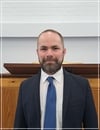
Mr James Gudgeon is the pastor of Ebenezer Baptist Chapel Hastings. Before, he was a missionary in Kenya for 8 years with his wife Elsie and their children.

Comments

0 / 2000 characters
Comments are moderated before appearing.

Be the first to comment!

0:00 0:00