Bootstrap
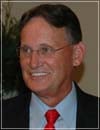
Larry Criss

But Our God

Psalm 115:3
Larry Criss September, 13 2015 Audio
0 Comments
Larry Criss
Larry Criss September, 13 2015

Sermon Transcript

Auto-generated transcript • May contain errors

100%
In verse 2, here in Psalm 115,
a question is asked by those who don't know God. They do so
mockingly. But in verse 3, the answer is
given by those who do know God. Notice the first three words
in the answer, but our God, our God, Want to consider that for
a moment. Must start there. Here's the
foundation. Who God is, and then where He
is, and what He's done. But our God is in the heavens. He hath done whatsoever He hath
pleased. Our God. Isn't that a sweet,
sweet word, John? Our God? Can that be? How can a man of time, whose life is a vapor that
appears just for a little while, how can he claim to have the
everlasting God, our God. David says in verse 4, my God,
our God is not like yours. And he sums up their God with
the words, he's the work of your own hands. Our God is not so. Our God was not created. He had
no beginning. Now think about that a minute.
As much as you're able. Our God had no beginning. Mike, our God had no starting
place. He's from everlasting. Turn back,
if you will, here in the Psalm, the Psalm 90. This is the Psalm
of Moses. And I wonder if This psalm was
penned during those 40 years of wandering in the wilderness. And every evening, they would
have to set up tents for the night. Every morning, they'd
have to take those tents down. Day after day after day for 40
years. Was Moses perhaps looking over
that vast multitude, wandering through the wilderness, setting
up ten or perhaps taking it down when he penned these words? Though
here we have no certain dwelling place, Lord, thou hast been our
dwelling place in all generations, our God. Verse 2, before the
mountains were brought forth, or ever thou hast formed the
earth and the world, even from everlasting to everlasting, thou
art God. He's God eternally. He's God
everlastingly. Not only is He God from everlasting,
but He's everlastingly God. He's always ruled. He's always
reigned. He always sits upon his throne. He is God alone. He's not like your gods, David
says. Look here again in Psalm 113
concerning our God, the 113th Psalm. Look what David says at
verse 4. The Lord is high above all nations. and His glory above the heavens.
Oh, my soul. Whenever God is pleased, and
you have example after example of it in the Word of God, whenever
God is pleased to reveal something of Himself to any sinner, the
reaction is they bow down before Him in the dust and exclaim,
Oh, my, what a God. What a God! The Lord is high
above all nations and His glory above the heavens. Who is like
unto the Lord? Our God. Our God. Our God saideth, King forever. Our God sets upon no precarious
throne or begs leave to be. Our God has His way. among the
armies of heaven and the inhabitants of the earth. Our God rules all
things at all times in every place. Who is like unto the Lord
our God? Again, are those not sweet comforting
words? This God, this everlasting God,
This eternal God, this omnipotent God, He's our God. I am His, and He is mine. Who is like unto the Lord our
God, who dwelleth on high, who humbleth himself to behold the
things that are in heaven, and in the earth. Look what he does.
He raises up the poor out of the dust. Did he not do so to
you, child of God? Did he not raise you up out of
the dust? And lefteth the needy out of
the dunghill, that he might set him with princes, even the prince
of his people. Oh, a child of the king, a child
of the king. This is our God, not imaginary. Not a pretense. Not man-made like their gods. No, he's God self-existent. God all-powerful. The very first
book of scripture, in the beginning, God. God. Not God tried to do. You never,
never, From Genesis 1 and 1 to Revelation 22, never one time
do you find any place where it ever speaks of our God attempting
to do anything. There is no such language concerning
God. There is no hint one time that
God tries to do anything. God does. He's God overall. Who shall stay His hand? Who
shall prevent him from accomplishing his will? Who shall stop him
from doing so? In the beginning, God. And we
come to the last book of Scripture and we read, Hallelujah, they
sing. They're redeemed before the throne
of God because the Lord God omnipotent, all-powerful reigneth. God over all. This is our God. Who shall stop him from ruling? Turn, if you will, to Isaiah.
Isaiah chapter 44. Isaiah 44 and verse 6. This is our God. This is the God of every redeemed
sinner. This is the God of everyone who's
been called out of darkness to experience the riches of His
grace. In verse 6 of Isaiah 44, thus saith the Lord, the King,
the King of Israel, and his Redeemer, the Lord of hosts, I am first
and I am last. And beside me there is no God.
And who is I shall call and shall declare it and set it in order
for me, since I appointed the ancient people. And the things
that are coming and shall come, let them show unto them. Fear
ye not. Child of God, this word is to
you. Fear ye not, neither be afraid. I visualize that time
on the stormy sea that our God, our God, the Lord Jesus Christ,
the mighty God, the everlasting Father, the Prince of Peace,
God who was in the beginning, God who created all things, God
who was made flesh, my soul, wrap your little brain around
that, Mike. It won't stretch that far. It
won't stretch that far. Yours or mine either. But our
God, who in the beginning created all things, without him was not
anything made that was made, who said, let there be light.
Our God was made flesh and tabernacled in that flesh among us for a
while. And John said, we beheld his
glory. Fear not. Oh, that night he comes
walking upon the sea, the stormy sea, and what did he say? It
is I. It is I, the great I Am, the
everlasting God, the omnipotent, ruling, reigning Prince of Peace.
It is I, therefore, therefore. Oh, what's the fruit of having
such a Redeemer? What's the fruit of serving such
a God as we serve? Be not afraid. Because our God has his way. I hear preachers talk about a
God who doesn't have his way. That's the God that David says
is the product of your own making. He's the work of your own hands.
He can't do anything. Oh, but our God, not so. Our God is in the heavens. He's
in the heavens doing whatsoever He has pleased. And that being
the case, fear ye not, neither be afraid. Neither be afraid. Have not I told thee from that
time? And have declared it? Ye are
even my witnesses. Is there a God beside me? Yea, there is no God. I know
not any. Turn, if you will, a few pages
over here in Isaiah chapter 46. Chapter 46. Again, God describing
himself. He says in verse 9, Remember
the former things of old. For I am God and there is none
else. I am God and there is none like
me. None like me. Declaring the end
from the beginning and from ancient times the things that are not
yet done, saying my counsel shall stand and I will do all my pleasure. Now I need to hear that again.
I need to hear that again. When the storms of life are raging,
I need to hear this again. My counsel shall stand and I
will do all my pleasure. That's exactly what David said.
Our God is in the heavens. He's done whatsoever He has pleased. He does all of His pleasure. He's God. Calling, verse 11,
a ravenous bird from the east, the man that executed my counsel
from afar country, yea, I have spoken it. I will also bring
it to pass. I have purposed it. I will also
do it. Does that sound like a God that
needs your help? Does it? If God needs your help,
you're in trouble. You're in trouble. Mr. Pink,
let me read you a brief article by Pink. He said, The God, small g, of
this 20th century no more resembles the supreme sovereign of holy
writ than does the dim flickering of a candle, the glory of the
midday sun. The God who is now talked about
in the average pulpit, spoken of in the ordinary Sunday school,
mentioned in most of the religious literature of the day, is a figment
of human imagination, an invention of over-emotional sentimentality. The heathen outside the pale
of Christendom form gods out of wood and stone, while the
millions of heathen inside Christendom manufacture a god out of their
own carnal minds. Is that not so? Is that not so? You compare as we done in those
few verses that we read. Or as our text says, our God
is in the heavens. Compare him as he is described
in his word by the God that is described today. They're both
not the same person. They're both not the same being. They both can't be God. That God and our God are not
the same. But our God is the God of all
grace. Do you hear that? Do you hear
that? Our God is the God of all grace. This sinner, this needy sinner,
I've never gotten beyond that. Peter said, grow in grace. Oh, but we never outgrow grace,
do we? We never get beyond the need
of grace. And our God, that David speaks
of, is the God of all grace. Peter, or rather Paul in Romans
5 says, grace that reigns, grace that rules, grace that gets the
job done, grace that reigns over my sin, over the devil, over
the world. Grace that's sufficient, grace
in short, that gets the job done. Ezekiel, Ezekiel, God asked the
prophet, after taking him over that valley of dead, dry bones,
Ezekiel, can these bones live? The apostles asked the question
of the same kind. Then who can be saved? Looking at that other God, No
hope, no salvation, no grace, no glory. Oh, but our God, He
doesn't attempt to save. He saves by His grace. He saves
to the very uttermost. He's mighty to save. He's a great
God and Savior, and He saves only great sinners. He doesn't
save any other kind. Turn, if you will, to Ephesians
chapter 2. Ephesians chapter 2. Paul describes
what we were, where we were, and how we were when God found
us, and what he did, not attempted to do, but what, glory to his
name, he did by his mighty grace. Ephesians chapter 2, you had
he quickened who were dead in trespasses and sins, and he describes
our former state, wherein in times past ye walked according
to the course of this world, According to the prince of the
power of the air, the spirit that now worketh in the children
of disobedience, that's where we were. Among whom also we all
had our conversation in times past, in the lust of our flesh,
fulfilling the desires of the flesh and of the mind, and were
by nature children of wrath even as others. But don't you love
the next verse? Why are we no longer children
of wrath? Why do we now love those things
we once hated and hate those things that we once loved? Why
are we now new creations in Christ Jesus? Why is it that all things
have passed away and behold, all things have become new? What's
the explanation for that? What? Who? Bring sinners out
of darkness into the marvelous light of the kingdom of God. What hope do we have for our
children yet under wrath? What hope do we have for our
lost sons and daughters yet engulfed in darkness? What hope do we
have for them? Verse 4, but God. But God. Oh, bring your prodigal
son or daughter next to this blessed reality. But God, who
is he compared to God? What is that rebel compared to
God? But if God is pleased to call
them out of darkness, they'll be called out. If God is pleased
to come and arrest them by His sovereign grace, they'll be arrested. If God is pleased to say to that
rebel, come down sinner, that sinner will come down. But God. But God who is rich in mercy,
for His great love was with us, He loved us even when we were
dead. When we were helpless, hopeless,
when we were dead in sins, what did God do? He quickened us. He made us live just as certainly,
just as surely as the resurrection of life stood before the tomb
of Lazarus and said, Lazarus, come forth. That's a picture
of what God does for sinners. He raises them to newness of
life. This is our God, the true God,
the everlasting, omnipotent God, and our God. God's grace and
mercy is always sufficient. It never returns void. It's always
effectual. I've lately enjoyed remembering
this hymn. I've quoted it. So it will not
surprise you. But this is our God. I was lost. But he found me. I was wandering far from my home.
I was clothed in garments so filthy, like that prodigal son
that crawled out of the pigsty and made his way back to the
father's house. That was me, clothed in garments
so filthy. And the father saw me when I
was yet a great way off, and he came. And he clothed me. He said, bring forth the best
robe. Cover this filth. Put on the
robe of my son's perfect righteousness. Clothed in garments so filthy,
yet he gave me his own. And through eternity's ages,
this my glad song shall be. His grace is sufficient, sufficient
for me. And even now, John, even now. The tempter accuses when I follow
my face. He says, how can you be a Christian
for you're such a disgrace? I cannot deny that. But I have an answer. I know
of only one answer, just one thing I can plead, that God's
grace is sufficient. God's grace is sufficient even
for me. Oh, sometimes have I failed Him.
Sins I hate, I embrace. Now I'm sure I'm forsaken and
I've fallen from grace. But as I bow down before Him,
I find mercy so free, for His grace is sufficient, sufficient
for me." That's our God. Our God that gives His reigning
grace also will bring all of His children Turn back, if you
will, or rather to Isaiah one more time. Isaiah chapter 46. Oh, listen to this sweet promise,
child of God. He will bring all of his children
to glory. Isaiah chapter 46, verse 3. Listen to this promise, this
word of our God. He says, Harken unto me, O house
of Jacob. and all the remnant of the house
of Israel, which are born by me from the belly and are carried
from the womb. And even to your old age, even
to your old age, I am he. Change and decay all around I
see. Oh, but thou who changes not."
He says, I'll abide with you. I'll never leave you nor forsake
you. I'm with you always, even into the end of the world. Though
mother and father forsake you, the Lord shall raise me up. Even into your old age, when
you perhaps feel lonely and deserted. It may not be so, but even if
it is, even to your old age, I'm still He. I'm still your
God. Even into whore hairs will I
carry you. I've made and I will bear, even
I will carry and I will deliver you. To whom will ye liken me
and make me equal and compare me that we may be like? This is our God. In Psalm 84
we read, every one of them in Zion appeareth before God. Psalm 84, rather. They pass through
Baca, the Valley of Weeping. Oh, but God leads His dear children
along. Our glorious Redeemer, we're
told, shall see of the reveal of His soul and be satisfied. Hebrews 12 says of Him, for the
joy that was set before Him, the joy of bringing many sons
to glory. The joy of redeeming his people. The joy of putting away their
sin. For the joy that was set before
him, he endured the cross. He endured the cross. He did
not die. Oh, my soul. He did not die for
a possibility. No, no, no, no. He did not trod
the winepress alone for a perhaps. No, no, no. He had by Himself
purged our sins. Glory to His name, He got the
job done. He said it is finished. It sounds
like He got the job done for each one He redeemed. The words
that he spoke to that thief upon the cross apply to you and I,
child of God. Thou shalt be with me in paradise. John saw a multitude, didn't
he? A multitude of redeemed sinners.
All that he redeemed, he brings to glory. Every sinner that experiences
his grace in time shall be brought to glory. No failures, no loss. All the children of God shall
be gathered around the throne by their glorious Redeemer. John
said, I saw a multitude that no man can number and was told,
these are they which came out. I like that. I like that. They came out. Do you ever think
sometimes, oh, this trial will be the end of me? This will be
my downfall. I cannot endure this. I will
not pass through this. Oh, but by God's great mercy
and amazing grace, he brings you out. And he'll continue to
bring you out and bring you out until without fault you appear
before the throne of God himself without a spot or a wrinkle or
any such thing. This is our God. Every one of
them in Zion appeareth before God. That's our God. And now
where is he? David says again in verse 4,
or verse 3 rather, our God is in the heavens. He's above all,
ruling and reigning over all, in absolute control of all. In Romans chapter 8 Paul says,
what shall we say to these things? What shall be our response? If
God be for us, this is what we'll say. If God be for us, who can
be against us? David says our God is where He
always is. Not only is He God from everlasting,
but He's everlastingly God. He's never less. He's always
upon His throne. Isaiah said in the year that
King Uzziah died, My earthly king, what did you do, Isaiah? Did you throw up your hands and
say, well, all hope is gone? My hope has vanished from the
Lord? Oh no, he said, I lifted up my eyes. I lifted up my eyes. And what did you see, Isaiah?
I saw the Lord. Where was he, Isaiah? On the
throne. Just like David said, he's always
on the throne. Our God is in the heavens doing
whatsoever he hath pleased. I saw also the Lord high and
lifted up. Turn, if you will, to Daniel.
Daniel chapter 4. Listen to what Nebuchadnezzar
learned concerning God. When he walked on the balcony
of his palace one evening and looked over and said, look what
my hands have made. Man, I'm something. I am something. Oh, look at this great Babylon
that I've built. And in a stroke, God took it
away. And here in Daniel 4, verse 34, at the end of the days, I,
Nebuchadnezzar, lifted up my eyes unto heaven. Daniel 4 in
34. I lifted up my eyes to heaven,
and my understanding returned unto me, and I blessed the Most
High. And I praised and honored him
that liveth forever, whose dominion is an everlasting dominion, and
his kingdom is from generation to generation. And all the inhabitants
of the earth are reputed as nothing. And he doeth according to his
will in the army of heaven, and among the inhabitants of the
earth, and none can stay his hand, or say unto him, What doest
thou? Does it sound like God needs
your help? Oh, no. At the same time, verse
36, my reason returned unto me, and for the glory of my kingdom,
mine honor and brightness returned to me, and my counselors and
my Lord sought unto me, and I was established in my kingdom, and
excellent majesty was added unto me. Now, now, not as before,
but now I, Nebuchadnezzar, pray and extol and honor the King
of Heaven, all whose works are truth, and His works are judgment,
and those that walk in pride He is able to abase. That is our God. That's where
He is, on His throne always. Oh Lord my God, the hymn writer
said. God make me aware of who he is,
his majesty, his greatness, his glory, his eternality, his omnipotence. Oh Lord my God, when I in awesome
wonder Oh, what a wonder God is! When I am enabled to consider
Him, the response is, Oh my God, how great Thou art! His throne is never shaken. Last of all, what is our God
doing? What is our God doing? David
says, He hath done whatsoever whatsoever he hath pleased. And since he changes not, he
will continue to do whatsoever he pleases. Who shall prevent
him? Who shall prevent him? He was
pleased to bruise his son. That's what we read in Isaiah
53. It pleased the Lord to bruise
him. It pleased the Lord to crush
him. It pleased the Lord to make him,
Christ who knew no sin, to be sin. And what was the result
of that? What was the outcome of that? He shall see of to develop his
soul and be satisfied. By his knowledge shall my righteous
servant do what? Justify many. Because he was
made sin, they shall be without a doubt made the righteousness
of God in him. Oh, glory to his name. He was
pleased to bruise his son in the room of his people. And Paul
says, here's another wonder. Though I was a blasphemer, a
rebel, injurious, when it pleased God, who called
me by his grace, not Saul of Tarsus, Not Saul. Anyone but Saul. Saul of Tarsus. He hates Jesus of Nazareth. He has dedicated his life to
stamping out the memory of Jesus of Nazareth. Paul said, when
it pleased God, who called me by his grace, he revealed his
Son in me. Oh, our great God calls sinners
to his Son. He brings He fetches them to
Christ by his omnipotent grace. This psalm, Psalm 115, was one
of the psalms that was sung during Passover when they were redeemed
by blood and by power. What do we read in Galatians
3? Christ had redeemed us from the curse of the law. Oh, redeemed. Redeemed. Redeemed by the blood
of the Lamb. By His own blood He entered in
one time into the holy place, having obtained eternal redemption
for us. Effectual grace. Effectual blood. Effectual redemption. One hymn writer put it like this.
Jesus, thy blood and righteousness, my beauty are, my glorious dress. Misflaming worlds in these arrayed,
with joy shall I lift up my head. Bold shall I stand in that great
day, for who ought to my charge shall lay, while through thy
blood absorbed I am from sin and fear and guilt and shame. standing before the throne of
God, robed in the perfect righteousness of the Son of God himself, God
says, we're without fault, without fault before the throne of God. In Exodus chapter 14 we read,
after they crossed the Red Sea, that Israel saw that great work
which the Lord did that day. And Israel feared the Lord. They stood in wonder at such
a great God as He is. And that work typifies the greater
work of the salvation of His people, the salvation of great
sinners. Love to find one. Oh, I would
love to find one. Find me a great sinner, a great
sinner, the sinner, and I have great news for them. Christ saves
such sinners. Our great God and Savior, Jesus
Christ, shall save his people from their sins. And that's why
they all sing, not unto us. not unto us, but unto thy name
give glory for thy mercy and for thy truth's sake. This is
why they sing before the throne of God, unto him who loved us
and have washed us from our sins by his own blood, to him be glory
both now and forever. All the redeemed will be brought
to glory, every one In that song of praise they sang in Exodus
15 after being brought through the Red Sea, they said, God in
his mercy has led forth the people that thou has redeemed. Oh, the
wonders, the wonders that grace has done. We'll never get over
it. The wonder of that will grow
on us more and more through eternity. Oh, the wonders of grace, the
wonders that His grace has wrought, bringing us before the throne
of God. This great work by our great
God deserves great praise, does it not? Does it not? Let us sing
a song of triumph to our God. Our God is triumphant. In the
first verse, of that hymn or song they sung at the Red Sea,
they said, God hath triumphed gloriously. God triumphed. The subject of
the song is not what man has done, but what God did. If we
didn't even know what it was that was done, we would know
what the outcome was bound to be. If God's doing it, it's victorious. God always triumphs. He's always
victorious. He always accomplishes His purpose. Child of God, read it one more
time. Hear it one more time. But our
God is in the heavens. He hath done whatsoever He hath
pleased. That being the case, let me read
you this portion of Scripture in Revelation chapter 21 and
we'll close. Revelation chapter 21. If our
God is in the heavens doing whatsoever he hath pleased, then this is
bound to come to pass. He's been pleased to do this
as well. In Revelation chapter 21 verse
1, And I saw a new heaven and a new earth, because sin intruded in both, but God
shall make new heavens and a new earth wherein dwelleth righteousness.
For the first heaven and the first earth were passed away,
and there was no more sea. And I, John, saw the holy city,
New Jerusalem. This is the church, the bride,
coming down from God out of heaven, prepared as a bride adorned for
her husband. And she doesn't have a wrinkle,
a spot, a blemish, a taint of sin in her. Not at all. And I heard a great voice out
of heaven saying, Behold, the tabernacle of God is with men,
and he will dwell with them, and they shall be his people,
and God himself shall be with them and be their God. And God
shall wipe away all tears." All tears. Whatever makes you cry
now will not exist in glory. There'll be no reason to cry
in heaven. God shall wipe away all tears
from their eyes. The omnipotent hand of our God
shall wipe away all tears from their eyes, and there shall be
no more death, neither sorrow, nor crying. Neither shall there
be any more pain, for the former things are passed away. And he
that sat upon the throne, our God is in the heavens, said,
behold, I make all things new. And he said unto me, write, these
words are true and faithful. And he said unto me, it is done.
I am Alpha and Omega, the beginning and the end. I will give unto
him that is a thirst of the fountain of water of life freely. That's our God. Glory to His
name. God bless you.
Larry Criss
About Larry Criss
Larry Criss is Pastor of Fairmont Grace Church located at 3701 Talladega Highway, Sylacauga, Alabama 35150. You may contact him by writing; 2013 Talladega Hwy., Sylacauga, AL 35150; by telephone at 205-368-4714 or by Email at: larrywcriss@mysylacauga.com
Broadcaster:

Comments

0 / 2000 characters
Comments are moderated before appearing.

Be the first to comment!

Joshua

Joshua

Shall we play a game? Ask me about articles, sermons, or theology from our library. I can also help you navigate the site.