Bootstrap
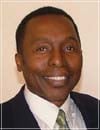
Jesse Gistand

Friday Night Bible Study - Acts 12:1-12

Acts 12:1-12
Jesse Gistand February, 13 2015 Audio
0 Comments
Jesse Gistand
Jesse Gistand February, 13 2015
Acts

Sermon Transcript

Auto-generated transcript • May contain errors

100%
I'm going to be reading verses
1 through about verse 12, and then we'll go back and work point
by point on this exciting and very instructive chapter in the
book of Acts. We are about one third through
the book, and this is a very important chapter in the life
of the early church. Now about that time, Herod the
king stretched forth his hands to vex certain of the church. And he killed James, the brother
of John, with the sword. And because he saw it pleased
the Jews, he proceeded further to take Peter also. Then were
the days of unleavened bread. And when he had apprehended him,
he put him in prison and delivered him to four quaternions of soldiers
to keep him intending after Easter to bring him forth to the people. Peter therefore was kept in prison,
but prayer was made without ceasing of the church unto God for him.
And when Herod would have brought him forth, the same night Peter
was sleeping between two soldiers bound with two chains, the keepers
before the door kept the prison. And behold, the angel of the
Lord came upon him and a light shined in the prison, And he
smote Peter on the side and raised him up, saying, arise quickly. And his chains fell off from
his hands. And the angel said unto him,
gird thyself and bind on your sandals. And so he did. And he said unto him, cast thy
garment about thee and follow me. And he went out and followed
him and did not know whether it was true which was done by
the angel, but thought he saw a vision. When they were passed
the first and second ward, they came unto the iron gate that
leadeth unto the city, which opened it to them of its own
accord. And they went out and passed
on through one street and forthwith the angel departed from him. And when Peter was come to himself,
he said, now I know of a surety that the Lord has sent his angel
and has delivered me out of the hand of Herod and from all the
expectation of the people of the Jews. When he had considered
the thing, he came to the house of Mary, the mother of John,
whose surname was Mark, where many were gathered together praying."
Thus is the reading of the scriptures. The title of this particular
study is called, The Return of the Antichrist in the Political
Religious Beast. For those of you who have been
studying with us for years, you understand the implications of
that last line, the political-religio beast. One of the axioms that
I have stated many times is that if you mix religion with politics,
you will create a beast. Religion plus politics produces
a beast. It equals a beast. ravenous beast,
a wild beast. And that beast is generally targeting
the docile creature called the lamb. So you have in the Bible
these grand analogies or grand metaphors, grand types and pictures
of the conflict between heaven and hell, the kingdom of God,
the kingdom of men, the kingdom of darkness and the kingdom of
light. The archetype of the docile animal is the lamb of God. He
is understood to have been in the purview and mind of God from
before the foundation of the world. Revelation chapter 13,
the lamb that was slain from the foundation of the world.
So in God's mind, there is this docile, obedient, complicit animal
called the lamb. But also in the mind of God,
there is this other ravenous, hostile beast whose objective
is predatorial and destructive. And this beast has been in pursuit
of the lamb ever since the foundation of the world. This beast has
sought to destroy the lamb. And that's the overarching sort
of theme and a framework of the book of Revelation. When you
understand the book of Revelation, what you understand is, is that
a lamb is being pursued by the beast, but the lamb destroys
the beast ultimately. There's a parallelism that we
have come to understand between what goes on in heaven and what
goes on in earth in other words What's taking place down in the
physical earthly realm where you and I are? Has its corresponding
reality in heaven that heaven is dictates what goes on in the
earth. And that the kingdoms of men
are governed by principalities and powers, either from the dark
realm of the devil or the kingdom of light where God is King and
Lord and sovereign. Nevertheless, we are dealing
with a continual conflict in this world. And chapter 12 has
brought us to sort of the emergence of the conflict. If I were to
set the context a little bit more, here's what I would say.
All that took place from Acts chapter one up to where we are
now, where the spirit of God has been commissioned by Christ
and the church has been born and the gospel has been preached
and many people have come to know the Lord and the gospel
is spreading. albeit small measures of persecution
and opposition have occurred from the beginning. As you know,
the Jews have gradually and consistently and persistently questioned and
challenged and threatened the church. But now the persecution
has arisen to the point where the political rulers are involved. And it's for this reason that
Luke is opening up chapter 12 with this advertisement. Now
about that time, Herod the king. Now when you think about Herod
the king, what do we think about? We think about the birth of Christ. When you think about Herod the
king, you are thinking about the birth of Christ. Why? Because
as I stated, the birth of Christ becomes the signal and marquee
event by which the lamb now is on the scene. And because the
lamb is on the scene, also now the beast now must act. And interestingly, or coincidentally,
in Matthew's gospel, as you and I know, Herod, who is called
Herod the Great, is in pursuit of killing Jesus in the same
way this Herod is in pursuit of killing the apostles. So we're
gonna talk a little bit about the Herodian kingdom as we lay
a foundation, not a lot, but enough for you and I to not be
confused. We would call the Herodian family
a dynasty, not so much a kingdom, but a dynasty. And they need
to be talked about just briefly because Luke intends for us to
contemplate him. Because a horrible thing is about
to occur to this Herod. A dreadful wonder on the part
of God destroying this Herod in the presence of the people
is about to occur. It will be a sign and a wonder
that will be both prophetic and judgmental and something with
which we would want to extract the lesson. If I were to say
something about the Herodian kingdom, here's what it would
be. The Herodians are a sort of title given, an official title
given to political rulers who served as servile servants for
the Roman Empire. Like the term pilot, like the
term governor, these are official titles. So the Herodians were
people who Operated under the auspices and rule of the Roman
Empire and their rule actually began about 65 years before Christ
65 what we would call BC 65 BC that's quite a while. That's
more than a half a century before Jesus and so there are two or
three rulers that exists 65 BC before we come to 4 BC 7 to 4
BC where Jesus is born. So you always want to remember
that if you want to deal with the actual birth of Christ, he
was not born on 0 AD or 1 AD. He was born somewhere between
7 BC and 4 BC so that if our master was crucified and in AD
33, he would not have been 33 years old. That's just a roundabout
number that people give under the assumption that Jesus was
born 1 AD. No, he was born before that because
we have to tie in the secular records of the ruling Herod at
that time, which was Herod the Great during the time in which
Jesus was born. Herod the Great rule. He's the
one, Herod the Great, is the one in Matthew's gospel who is
extremely agitated when the magi come to him and say, where is
he that is born king of the Jews? Herod the Great. Herod the Great,
like all the other Servile rulers were little petty Kings who had
a very corrupt moral set of principles and Consequently they were like
all men who are morally corrupt Insecure when you and I are not
walking in a standard of righteousness with God there is no grounds
for security so pagan rulers who operate out of overt and
extensive levels of immorality are insecure. And the insecurity
will be evidenced by them being excessive in putting up boundaries
and control factors and having excessive guards protecting them
and them becoming paranoid and giving over to excesses in terms
of imprisoning people and killing people. Do you guys remember?
When Herod the Great drew the conclusion that Jesus was going
to be viewed as king of the Jews, he went about to kill every child
two years old and under. That's because of his mental
insecurity, his emotional and psychological instability. There
was a level of senility as well as insanity that ran through
the Herodian dynasty as well because the Herodian dynasty
was also a dynasty given over like many dynasties to endogamy. Who knows what endogamy is? You
know what polygamy is, right? Polygamy is the marrying of many
wives, but endogamy is the marrying with inside the family, inbreeding,
inbreeding. And this was a problem with the
Roman Empire. It was a problem with the Herodians
as well. It was one of the reasons why
John the Baptist was compelled to tell the grandson of Herod
or the son of Herod the Great Philip, you know, actually it
wasn't Philip, but it was Antiper, that you have married your brother
Philip's wife. And his brother Philip's wife
happened to have been the granddaughter of Herod the Great. So folks
was marrying inside the family way too close. Way too close. The other thing about the Herodians
is that they were not Jewish. They were Idiomites or the people
of Edom. And remember Edom and Moab were
the children, the incestuous children of Lot and his two daughters.
Do you guys remember that? So that incestuous trend followed
itself all the way through the days of Abraham, 2000 years before
Jesus, right up to Jesus' time. When sin patterns enter into
our family line, they are not easily broken. This is where
God speaks in Exodus chapter 20, the sins of the parents being
passed down to the children until the third and fourth generation
of them that hate me. We don't call this generational
curses. These are pagan terms. What we
are saying is because a generational curse would imply Just for your
information, for those of you who want to get your theology
right, a generational curse would imply that human beings do not
have the responsibility to do the right thing and are therefore
just dominated by that sin and can't do anything about it. We
would not therefore use that term. But what we would say is
the pattern of iniquity that is practiced by our families
are much more inclined to be passed on to our children and
to our children's children until someone recognizes that this
pattern is wrong and therefore breaks the pattern. Do you guys
follow what I'm saying? It also can have biological ramifications. Our DNA has the capacity of morphing
to a certain degree, modifying, taking on intelligences or information
and thus affecting us physiologically and also emotionally and psychologically
as we make our way down the line. That's why in the Bible, the
Bible gives us a lot of hints about a number of things like
the mother was not to drink the milk of a cow that had just given
birth for several reasons because of what was in the milk. She
was not to be given to wine because the foods and the ingredients
that are in the wine and in the milk were going to pass from
her to the child, right? And we also know that children
today can take on the physiological consequences of bad behavior
on the part of parents. Those physical consequences can
also affect our mind and they become addictive behavior patterns,
don't they? So we grew up with addictions
God knew that and so if we behave in a fashion that's destructive
If God doesn't break that cycle in his mercy by giving people
enough awareness That that sin pattern does not have to be adopted
just because your mama did it your great-grandmama did it your
great-granddaddy did it you can break that pattern and give them
grace to do it and this is often what you see in families where
One person comes to discover, hey, I'm just not living like
that. And by the grace of God is able to walk out of that pattern.
Well, the Herodians sustained the Idomenean pattern of endogamy
or incest among their families quite a long time. It was very
common among the aristocrats, as you and I know, probably still
goes on today. This is where people end up crazy
and insane many of the Roman Empire Roman emperors were that
way as well Insane because they violated God's law along that
line Well, if we were to actually go further into an investigation
of Herod this Herod We would actually be dealing right now
with what we would call Herod Agrippa. That's in our text Herod
Agrippa You will hear about him again and like the 24th chapter
where the Apostle Paul Will be dealing with Agrippa the second,
but this is Herod Agrippa the first Who is gonna die here in
a little bit Herod Antipas was the one who killed John the Baptist
remember that and then he was also the one who killed or conspired
with Pontius Pilate to kill the Lord Jesus These guys were strange. They were strange from this standpoint,
particularly the, the, the hair rod that killed John the Baptist
and killed Jesus because he was highly religious in terms of
his curiosity about religion. He feared John the Baptist and
he was intrigued by John the Baptist because he was a pseudo
Jewish person or a pseudo religious person. Politicians are that
way. Politicians are hypocrites as
a whole, and they are split personalities where they give their allegiance
to the secular institutions and all of the winds that blow within
that realm, but also give themselves over to their other more intimate
social constructs. And in this context, Herod, Antipas,
the one who was interested in John the Baptist and interested
in the Lord Jesus would draw conclusions like when John the
Baptist was beheaded at the behest of the daughter of Herod, who
actually asked for the head of John the Baptist on a platter.
Herod Antipas assumed that when Jesus came on the scene, that
he was nothing but a mere resurrection of John the Baptist. And he was
really curious as to whether or not John the Baptist had risen
from the dead. He wanted to see Jesus. He wanted to see miracles.
He wanted all of this, even up until the time where he was going
to conspire with Pontius Pilate to kill Jesus. He wanted to see
Jesus do a miracle. Remember, Jesus is brought into
the presence of Pilate, Herod, in the gospel of John, Matthew,
and Mark. And Jesus goes completely what
on Herod? Silent. He does not satisfy his
curiosity one bit. He doesn't take an opportunity
to seek to deliver himself by the alleged authority that Herod
would have either. And so Herod Antipas was very
much perturbed by Jesus' silence and sends him back to Pilate
and Pilate ultimately does what we're gonna see here in verses
one and two and that is give Jesus over to the will of the
people so under our first point the return of the Antichrist
system in the political religio beast I say they will lay hands
on you you guys see that they will lay hands on you now That's
exactly what we read in verses 1 & 2 now about the time that
Herod the king Stretched forth his hands to vex certain of the
church see what he's doing stretching forth his hands Now, for you
ladies who are in our biblical theology classes, we're getting
ready to work through hermeneutics. I want you to just take the time
to be sensitive to that today. Because in language, you have
to be careful as to how terms and phrases are used. In this
verse, it says, now about that time, Herod the king stretched
forth his hand to vex certain of the church. When we talk about
rules of interpretation like a literal, grammatical, historical,
theological, redemptive mode of interpretation, starting with
the word literal, if you and I assume that we know what a
literal interpretation means, we may fall prey to thinking
that what this means is that Herod literally stretched forth
his hand to vex certain of the church. But common sense would
tell you that if you read that text, with common sense that
we are dealing with a metaphor. We are dealing with a phraseology
or a genre of speech that means symbolically the king is imposing
a law upon someone with the objective of bringing them under his control
and under his authority. Are you guys following me? So
some of the baseless arguments in hermeneutics is where people
don't think it through. So you get this piece of information.
A literal interpretation of scripture does not mean that you take the
text in a literal hard fashioned interpretation. That is to say
in a kind of factual denotative sense. It does not mean he literally
stretched forth his hands. It means he exercises authority
over that person with whom he has a problem. And obviously
King Herod, is vexing certain of the what? Church. The church
is under persecution. So right now the church is under
persecution of the state, isn't it? Herod represents the state. Herod represents the political
ruling class in Israel. The high priest represents the
false church, right? Herod represents the political
ruling class. I'm talking slow because I'm
trying to lay a foundation so that you can obtain the paradigm
that the scriptures lay down about what it means for the church
to suffer persecution. So the authorities, the ruler,
the secular power here represented in Herod means his will is being
executed through a whole body politic of subordinate slaves
and servants going after the church And so he vexes certain
of the church. That word there means to harass.
It means to persecute. It means to take into control.
It means to have authority over. So they will lay hands on you. That's my proposition. And guess
who told us this would occur? Jesus. I want you to see it explicitly. Luke chapter 12, Luke chapter
21, verse 12. They will lay hands on you. As
I am calling your attention to the pointer passage that is affirming
what would occur in the book of Acts on the part of our Lord
Jesus, I will also call your attention to another necessary
sensitive device when it comes to interpretation of scripture.
And that's this, the verse that I am using It's counts in a sort
of prophetic genre as Jesus was a prophet as well as all the
old Old Testament prophets. Jesus prophecy here is in what
we call the future tense future tense. Listen to the language,
but before all these things, what things? Famines and wars
and pestilences and conflicts around the world before all these
things He says they shall lay their hands on you. Isn't that
what we read in Acts chapter 12 1? So one of the things that
I have been doing for years, I don't know 25 30 years but
particularly as I speak on the radio for the last 12 years just
about is I I basically argue against modern interpretations
of prophecy which project the fulfillment of biblical passages
in the future that Have to do with the end of the world. I
reject those kinds of untested and unqualified Conclusions because
when I read my Bible carefully prophetic statements that are
made such as this one by our Lord Jesus Christ are fulfilled
in what we call recent or near future events, not long-term
future events, near future events, near enough so that we have them
in the text of scripture and the text of scripture where the
fulfillments are actually cover all of the biblical rules essential
to a sound interpretation. What do I mean by that? Listen
carefully to this verse and I'll show you what I mean. But before
all these things, they shall lay their hands on you. If you
and I are reading that passage, one of the basic rules that we
would ask is, who is talking? And then to whom is he talking? If this is Jesus talking, to
whom then is he talking? It could be the larger group
of people, the audience, it could be the non-believers, it could
be the believers, it could be the disciples. Contextually,
we know it's the disciples. More specifically, the 12. Those
who would be his apostles going into all the world with the gospel.
So the subject and the object relationship is Christ and the
apostles. The apostles, therefore, would
receive this information. Yes, prophetically, but personally. It would be to them first before
it would be to you and me. If we're going to be sound in
our exegesis, our exposition of scripture, we're going to
understand it in this context. This would be now another rule
of interpretation that we call a historical interpretation of
scripture. Historically speaking, Jesus
is the one talking, the disciples are the one listening, and Jesus
is telling them specifically how it's going to go when he
passes the baton of the gospel to them. When we get to the book
of Acts low virtually everything that he says in Matthew Mark
Luke and John is happening. So we read They will lay hands
on you and persecute you Delivering you up to the what synagogues
and into what is that our context right now? I Were they delivered
up in synagogues in the book of Acts? Acts chapter 9, Paul
drugged them out everywhere, went into synagogues and drugged
them out, persecuted them to far regions and even put them
to death. What you and I are doing now
is affirming a literal and a historical rule of interpretation critical
to the continuity of scripture testimony. We are not simply
taking the passage and making some ad hoc interpretation that
might satisfy our own lusts, whether it be in the realm of
prophecy or application. I do believe in prophecy, but
I believe in prophecy in a proper way. And so we do accept that
Christ was speaking prophetically here, but we believe that he
was speaking first and foremost, prophetically to his disciples. Being brought before who? Kings. Is Herod a king? Yes, indeed. Before kings and rulers, for
whose sake? That's exactly right. So I gave
you that text as a corresponding text so that we might know that
when you hear people quoting from Luke's gospel chapter 21
or Matthew chapter 24 or Mark 13, do not allow their sort of
being enamored by our fixation on end time prophecy. to dissuade
you from first understanding that passage in its context.
So then under, they will lay their hands on you. The point
is, is to exercise authority, to control you. And I want you
to see the two texts in the book of Revelation that affirms this.
Revelation chapter 13, verse seven, and then Revelation chapter
13, verse 10 through 12. Revelation 13. Now, again, in
the book of Revelation, we will not go back over it if you are
not a person who was given to sound study of the Word of God.
We have hundreds of CDs in our tape department and you are welcome
to go through the series where we explain how to understand
the book of Revelation. But in Revelation chapter 13
we have the image of the beast, don't we? Both the political
beast and the religious beast. And in Revelation chapter 13,
here's what we read concerning the Religious beast and we are
at verse 7 and it was given unto him that is the beast to make
what with the Saints That's right. And to do what? Overcome them. Do you guys see that to make
war is to oppose someone to overcome them is to what kill them? to kill them It was given unto
him to make war with the saints and to overcome them and kill
them. You see that opening phrase, and it was given. This is what
we call a divine passive. This is a language device that
underscores that the authority that this ruler has is not something
that he took to himself. It was given to him. It was given
to him. It was bestowed upon him. And
when we use the term a divine passive, what we are saying is
the language intentionally does not tell you where it came from.
But when you are a covenant reader, you know this. A man can receive
nothing except to be given to him from God. So divine passives
are statements that are phrased in the passive mode for the one
who is receiving it. to underscore that he didn't
take it to himself. It was bestowed upon him. But
the divine element means that God gave it to him. God gave
the beast the power to persecute the church and in some cases
kill them. Does that make sense? Well, think about it. Jesus said
they will take you up. They will put you in prison.
They will kill you with the sword. There you go right there. It's
not Christ, the second person of the glorious Godhead. Could
he not have said, I will not let them take you up. I will
not let them persecute you. I will not let them kill you.
No, he says, some of you are going to be taken. Some of you
are going to be persecuted and some of you are going to be killed.
If that's the case, God had to give the beast authority, didn't
he? So it's important for you and I to know this, but just
in case your light bulbs are going off, let me share with
you what I stated in the opening of our study. We have the tension
between two animals. One is the docile creature who
is submissive and subservient to God, and he's called a what?
A lamb. The other is a predatorial beast
whose objective is to destroy everything in its way, and that
beast is the dark powers of the fallen kingdom ruled by Satan.
So ravenous beasts like lions, Satan goes about as a roaring
lion, or bears, or leopards, or things of this nature, animals
of prey are going after the lamb. Now, every person who is identified
with the lamb is also called a what? A lamb. We are like sheep
led to the what? Right, and it's important for
you to understand the metaphor, metaphorical language here, the
analogy here, because what it teaches you and I is that part
of our calling is to suffer for Christ. As you and I are thinking
through right now this text of scripture with regards to Peter
being put in prison, you know what I'm doing? I'm praying for
a brother whom I already know is in prison. And he's been there
for quite a while. Said, who happens to be our Middle
Eastern pastor who has been in an Iranian prison now for several
years, should have got out a few months ago, but they reneged
and he's still struggling. So he's been in prison for a
number of years. much like the apostles and much like many believers
in the Middle East who know these passages by experience. And they shall overcome them
and power was given to him over all kindreds, tongues and nations.
So that last line and power was given unto him, the word power
there means authority, was given him over all kindreds, tongues
and nations means that he will have ruling influence over the
world. The his primary objective is
to kill the saints, but he will have influence over the world.
Now, this is a worldview that Christians know. Christians know
that our political systems. Are not by nature. Designed to be obedient to God
our political systems are by nature to operate in hostility
against the rule of God to be selfish in their own agenda and
therefore dictatorial and Controlling of the masses under them. Do
you believe that it's important for you to I hope there's not
one person in the house that's under the false notion that Mankind
is basically good and that when you give him authority and power
that he's going to naturally use his authority and power for
good specifically to those that are under him. But if you believe
like the Bible teaches that man is corrupt by nature and power
corrupts and absolute power corrupts absolutely. As Lord Atkins had
said it and I did therefore is and watch this children of God
as we begin to lay a foundation for our study While God gives
people authority, and he does, he gives one authority. God raises
up kings, he sets down kings. He raises up governments, he
sets down governments. While God gives them authority,
he also gives them responsibility to do what's right. You guys
do understand that, right? So our God is not an arbitrary
God that is dim-witted in terms of him bestowing upon kingdoms
and people authority. He bestows upon them authority
with the objective of them actually following his rules. Secondly,
just to help you understand why a biblical worldview to me is
the most rational worldview in the universe. And any other worldview
would really relegate me to insanity or going off on somebody. That's
what I would do. If I did not believe there was
a God, I would go insane. And particularly because I know
the nature of man. I know that man is a beast according
to the king. I know that he's vile in nature
and that he'll do anything to stay in control, rule people
and have his way, even at the expense of collateral damage.
You and I know that our hearts are wicked like that. OK, so
we believe that God sets up authorities and we believe that he gives
them authority. We must also believe that God
gives them the capacity to restrain themselves for the good of mankind
in fear that there are consequences that they must meet with God.
Do you guys follow that logic? Let me say it again. We believe
God runs everything. All power belongs unto God. We
believe that he gives authority to people, to kingdoms, to dynasties,
to governments. All governments are of God. We
believe that those governments have the right and privilege
to serve their subjects. and they are obligated by God
to do so. But we also know that they violate
those rules constantly because they're bent on sin and evil.
Watch this, just like you and me. You know how we lay people
and we proletariats and we common folks, the pitchforks and rape
folks, the low ladder folks. We love to talk bad about our
government as if our government is wicked, but we're not. Did
you get that? Let me help you here. We love
to talk bad about our government as if our government is wicked
and we're not. Well, the latter is true. Our
government is wicked, but it's not true that we're not wicked.
Government is not the black hat and the common folk, the white
hat. That's communism. Government is the black hat and
the proletariat is the black hat too. It's just that the black
hat proletariat common folks with the pitchforks and the rates
don't have power So as Solomon said in the book of Ecclesiastes
I've seen an evil under the sun that has caused me to grieve
and that is those who had authority over people Exercised it to the
oppression of the people under them That's bad. But here's even
worse and those who were controlled had no comforter Solomon said,
my observation is this, people in power control people who are
not in power. That's bad. And the people who are not in
power and are under the subjugation of those who are in control,
they don't have a comforter. In other words, the state of
man is miserable. Does that follow? So now watch
this. Why would God allow that kind
of circumstance and condition to occur in the world? Are you
ready? That men might call upon God
in the context of their misery and oppression and seek relief
from God alone. You got that? When you expose yourself to technology
and you observe from 10 to 12 to 15,000 miles away, the evil
that goes on in other countries, by oppressing rulers upon the
masses of the common people. And it causes your stomach to
churn and turn over, mine does. It causes me to bow over in absolute
mercy and empathy and sympathy for common people who are being
taken advantage of and being brutally assaulted and just devastated
as if they have no value whatsoever. Does anyone know what I'm talking
about? My soul bends over Empathy towards them for two reasons
One is many of them don't have the comfort of the Holy Ghost
the second reason is is because it could be me and God tells
me to think about the persons that are in adversity as Myself
being in the body because five years from now I could be in
that same situation Our government could flip and we can find ourselves
in those same kinds of oppressive situations because on microcosmic
levels, it's true. Folks in our country know what
it means to run up against the law and the law is abusive and
the law is unkind and the law is as a beast and the law does
with you what it wills and the law laughs in your face when
you talk about justice. And if you don't have the comfort
of the Holy Ghost, you have nowhere to go. Am I making some sense? So, a presupposition to Jesus'
warning in Luke 21 and what we're about to read here, a presupposition
to Jesus' warning is that the disciples who are going to be
told that they are going to suffer for Christ's sake are going to
have a level of grace that assists them in their suffering that
is going to redound to God's glory and they're good. Say that
again. You're not going to like this.
I fully understand. Fundamental presupposition on
the part of Christ is that when he tells us that we're gonna
suffer for the gospel sake That we're gonna have the assistance
of the Holy Ghost to get us through it so that we will understand
what we are going through Why we are going through it and what
its outcome will be Did you guys hear what I just stated? Right.
So God would not put us in a situation where he has not already informed
us why that will occur. Not with his covenant people,
the Lord do it nothing, but that he first reveals it to his servants. This is why serious Christians
stay in the word of God. So the spirit of God can speak
to our heart and our mind and teach us what time it is. And
when we are about to take a hit for Christ, he prepares us to
take the hit so that, as he said to the disciples, I've told you
these things beforehand so that when it comes to pass, you might
know. That's what prophecy is about. Prophecy is to let us know in
advance so that when it comes, the Holy Ghost will bring back
to our remembers, ah, our master said these things would occur. Am I making some sense? Right
now you and I are living in the comfort of it, not actually happening
to us specifically, but we are part of the kingdom of God and
it could certainly happen. Look at verse 10 with me. I might
read just from verses seven through 10, just so those of you who
are not familiar with your text can get it. Verses seven through
10. So in verse eight it says, and all that dwell upon the earth
shall worship him. Who are they worshiping? The
beast. That's the political and religious beast. I'm not going
to take time to develop it. And all that dwell upon the earth.
Now, again, when you look at the first line of chapter eight
and all that dwell upon the earth, do not take that in a wooden
literal fashion. To do so would be to miss the
point. especially the book of Revelation,
as you ladies will learn, as we are going to be dealing with
rules of interpretation. There are certain books in your
Bible that carry strong language genre that requires you understanding
it from a different perspective. The book of Revelation is highly
symbolic. and therefore its terminology
is to be understood going in as having symbolic connotations
and not to be grasped just merely literally. So when it says, and
all that dwell on the earth shall worship him, I cannot draw the
conclusion that every single individual on the earth is going
to be worshiping the beast because on the earth also are the saints. So therefore, when we use the
phrase, all that are on the earth, we're talking about a spiritual
sphere in which people operate. Those who are earthly are people
who are carnal, who are given over to secular agendas, and
they will do the bidding of the beast. Men and women who worship
the beast, the secular system. If you want to get a little bit
more handle on that, If you love this world, first John chapter
two, verse 14 and 15. If you are a friend of this world
system, James chapter four, verse four. If you're jazzed about
the life that you now presently have, you may very well be a
worshiper of the beast. And what that means is, is you
live for your carnal pleasure. And every day you are doing the
bidding of this secular world system. You can easily ask the
question if this is so by asking, what is the preponderance of
your time given to? What is the vast majority of
your energy given over to in a 24 hour period? What do you
think about on a daily basis in terms of food, raiment, material
things, advancement in life, acquiring wealth, living large,
that kind of thinking is earthly. And if that is your affection,
you are susceptible to if you are not already governed by the
beast. All that's in the world is the
lust of the eye, the lust of the flesh and the pride of life.
It is not of the father, it's of the world. Are you guys hearing
me? When Jesus came into the world and challenged the political
rulers and the religious rulers of his day, guess who were some
of the most visceral and hostile enemies of Jesus? The Herodians. The Herodians. That's why Herod
and Pontius Pilate became friends on the day they killed Jesus.
See, the Herodians ostensibly are the ruling body in Jerusalem. And for Jesus to be having hovering
over his head, the nomenclature that he's the king, he's the
king, he's the king, constantly threatens the Herodian kingdom.
Are you guys hearing me? So they were constantly following
Jesus, trying to catch him in their words. Often they would
get together with the Sadducees and test Jesus. So the Herodians
always had an interest in Jesus because they didn't want Jesus
to have such a large following that they would topple the Herodian
kingdom, like little petty monarchs have to worry about, right? Remember
I told you earlier, when you and I are operating out of flawed
moral ethical principles, you and I are operating on a premise
of insecurity. So we're anxious and we're fearful
and we are given over to suspicions And we therefore exercise excess
when it comes to putting up securities and defenses. And we are more
than willing to kill people to assuage our conscience if we
have to. Like Jesus is always a problem for them. Jesus is
always a problem for them. So it says, and they that dwell
upon the earth shall worship him. If you are a new creature
in Christ, if you're truly born again, watch this. You do not
dwell upon the earth. You dwell in heavenly places
in Christ Jesus. Our citizenship is in heaven.
Philippians chapter three, verse 20 and 21. We are seated in heavenly
places in Christ Jesus. Ephesians 2, 1, 1 through 5 and
1 through 8. Colossians 1, 1 through 2. And
Jesus plainly said it in his prayer in John chapter 17. Father,
I will that those you have given me be with me where I am, that
they might behold my glory. And every believer is positionally
is in heavenly places. What that means is our affections
are set on things above, not on the earth. And what that allows
us to do is operate according to kingdom principles while having
to struggle through this world. Yes, we are salmon swimming upstream. I've told you that before. We
are going in the opposite direction of the trends of this culture,
but that's because of our DNA. We can't help it. It's our nature
to swim upstream because we've been born again. We're headed
to glory. So we accept the, opposition
and the Contrarity of the world system because it affirms who
we are in Christ. You'll get that on Sunday That's
why we were told to rejoice in tribulation Because rejoicing
in tribulation means that we have our faith affirmed that
it's authentic because in the midst of trials When you see
the grace of God in your life Keeping you from wholesale giving
up packing in and capitulating to the world. You know that God
has called you The only way you know that God has called you
is in the midst of trials Are you hearing what I'm saying?
Yeah, we'll unpack that more on Sunday. So All that dwell
upon the earth shall worship him watches whose names are not
written in The book of the life of the Lamb that was slain from
the foundation of the world. You see that Now he incorporates
the book, which is the ledger of citizenry for the kingdom
of God. I have just stated that if we
were of the world, the world would love us and we would do
what the world bids us to do. And our name would be on the
ledger written in the earth as Jeremiah chapter 15 puts it.
But because our name is written in the ledger in heaven, we are
citizens of above. That means we are pilgrims and
aliens down here. A pilgrim and alien down here
is just a passing through. A pilgrim and alien down here
is just a passing through. We didn't buy anything. We didn't
cast our stakes down here. We didn't put all of our eggs
in one basket down here. We are just a passing through. If you can own the concept of
being a pilgrim and a stranger, you can enjoy this transient
life ready to let it go. Anytime God says, Hey, this way,
this way. We always stay light for the
flight. Our suitcases are packed and
we're ready for the beckoning call all the time. I don't care
where you go in the world. Enjoy this world as you go, but
keep your suitcase packed. because you're a stranger and
pilgrim in this world. And because you're a stranger
and pilgrim in this world, you expect for the world not to understand
you. It didn't understand him. Am
I making some sense? All right. So this is where we
receive comfort from the prophecy, even though it means on some
occasions we're going to suffer. Whose names are not written in
the Lamb's Book of Life from the foundation of the world.
Now we can go to verse 9. Now watch this. If any man have an ear,
let him what? You know what that means? You
better pay attention to what was stated and what's about to be
stated because these are accents. But those passages actually make
a clear distinction between false Christians and true Christians.
Here's the next verse. This is what we're close right
here. He that leads into captivity shall what? Go into captivity. He that killeth with the sword
must be what? Now isn't Herod? Seeking to kill with the sword
isn't herod leading into captivity But is this passage condemning
herod? And it's condemning everyone
who practices these kinds of means of captivity What this
says to the christian is it is not your job to take up arms
and convert people with the sword Do you guys get that? People
die through that mechanism. And Jesus is warning that just
because he has given power to political, social entities and
constructs, he has the ability to thwart them in their purposes.
And he has the ability to use them to actually execute judgment
upon people who don't do his will. It is not the role of the
saints to go around killing people to get them to believe on Jesus.
And so the last part is, here is the patience and what of the
saints? So patience and faith, the word patience there means
endurance. And what that means is, is that you and I stay up
under the teaching and ethic and rule of Christ so as not
to be inclined to want to take up the sword against somebody
that wants to hurt us. And we continue walking in faith
in Jesus because Jesus did. And the apostles did. Jesus is
standing before Herod Antipas. He's standing before the Herod
who is the father or uncle of the Herod Agrippa that we're
dealing with. They both want to kill Jesus and they want to
kill James and they already killed James. They want to kill Peter
and John and the rest of the apostles. Peter is in prison. What? Sleeping. Bless his heart. Do you know why? Because he trusts
God. Did you hear what I just said?
Watch this. Let's go back to our text. I
want to do a little bit more work. He's in prison sleeping because he
trusts God. Chapter 12. He's in prison sleeping
because he's a different Peter than he was before the resurrection. He's in prison sleeping because
Peter has gone through enough trials now that he has the experience
that we learned about in Romans chapter five. Remember Romans
chapter five? that we rejoice in tribulation
because tribulation produces endurance. Tribulation produces
endurance and endurance produces what? Experience. And as some of you guys are going
to learn on Sunday, the word experience is an objective term
that means through the process of what you go through, you discover
that God is faithful to keep you. I want you to get that. That
word experience is not just we go through some things. That's
Christians don't just go through some things. What Christians
experience is the presence and providence and protection and
faithfulness of God. So that when you go through enough
of that with God, you learn how to go to sleep on the boat like
Jesus did when the storm is raging. The storm is raging around brother
Peter right now. And Peter remembered when Jesus
was in the back of the boat sleep. And this time around, cause he
didn't made it through some trials down. You know what he said?
I'm going to sleep. See, because the Lord that's
watching this thing, he neither slumbers nor sleep. So since
the Lord is watching, I'm going to sleep. That's a good word. is one of the evidences that
you are really able to trust Jesus. In the midst of a difficulty,
in the midst of a trial, now we don't always do it, but on
those days we do, isn't it an amazing thing to find that peace
that passes understanding, that keeps your heart and mind in
Christ Jesus, that settles you down so much that you marvel
at the fact that you're not going in seven different directions
at once like you used to? Is that good? Because God is
good. See, and so what Peter is teaching
us in that one point of application is that he has come to be an
experienced apostle. More than that, I'm going to
just read into this one. He's ready to go meet his maker.
Hallelujah. Hallelujah. Think about it. Think about it. The day in which
Peter had stated, Lord, I'll go with you anywhere, even unto
death. He was speaking out of the flesh
and the flesh profits little. In fact, it profits nothing.
And you and I can do nothing for Jesus in the flesh. We can
talk a good talk, but we can't walk a good walk without the
spirit of God helping us. Without Christ, we can do nothing.
But with Christ we can do all things through him which what
so now now now mark this now peter is at a place Where he
is not operating out of carnal boastings In fact, he's not boasting
at all. See you notice today. He's not
running off at the mouth like religious folk do He's just standing
for christ See, you know a christian by how they act We love to talk
peter's not talking today You know what he's doing. He's resting
In his mind, he's going to die tomorrow. In his mind, he's going
to meet his maker. In his mind, he gets to make
up for what he messed up several years back. In his mind, he gets
to take the test over. And right now he's pretty confident
he's going to pass the test because the grace of God is with him.
In his mind, he's worshiping, he's thanking God, he's looking
forward to it because he's already going through incremental tasks
where they've come after him and threatened him and he's called
on God and God's given him boldness to stand up and preach the gospel.
And they've stood back and said, these dudes must have been with
Jesus, the way they talking. And he realizes the grace that's
with him, that's ready to take him across Jordan's river. Are you hearing me? This is so
important to grasp. He's resting while he's on trial
to die. They just killed his partner. Who was his partner? That's right. I have to drive it home. Cause
you know, we read our Bibles and we're so shallow in our reading.
We don't pick up on all this. Do we we don't pick up on it
with so the Bible says the Bible says and we miss the deep implications
of those texts and the only way you and I are gonna be able to
Appreciate the Word of God every word of God is to be able to
read into every verse these implications God has worked mightily in Peter's
life as you know Peter is a different man amazing So point number two,
let's move forward the unbelieving Jews who are contrary to all
men I need to call your attention to that because this will be
the second group of antagonists. First is the Herodians and the
second group of antagonists will be the Jews, the Herodians and
the Jews. And this too is paradigmatic.
When you read your Bible, one of the chief antagonists against
the gospel are the Jews. It happened in Jesus' day, it's
happening in the book of Acts, right? Now notice what is stated,
the collaboration between Herod and the Jews I'm in Acts chapter
12 verse 1 and 2 listen to what it says he says in verse 2 and
After having stretched forth his hands to vex the church.
He killed James the brother of John with the sword verse 3 and
because he saw that it what pleased the Jews he proceeded further
to take Peter also and And in those days were unleavened bread.
Amazing, amazing. Can I talk about that for a little
bit? It's amazing. Because he saw that it pleased
the Jews. This is what I meant about being a politician, where
you stick your finger in the air and see which way the political
winds blow. And because the consensus is hatred against the gospel,
now you're ready to write legislation against the gospel, policies
against the gospel, policies against the grace of God. Although
you call yourself a religious man, But because the masses of
the people are apostate and blind and want to oppose biblical truth
Even though biblical truth is good for the whole human race
Now the politicians are ready to advocate policies that thwart
our freedom to communicate biblical truth Do you see the do you see
the application here? So he saw that it pleased the
jews And it pleased the jews greatly That not only did he
put him in prison But that he killed him What kind of religion
is that that takes pleasure in the death of innocent men at
the hands of the state? Do you see it? See, you need
to see these juxtapositions so that you and I will not fall
prey to the framework of that. Herod is political, the Jews
are religious, but they're both operating under the same power,
the dark power of Satan, And their objective now is to target
the saints as we read in Revelation chapter 13, right? And the beast
is making war against the saints and wants to overcome them and
kill them. And Peter is in prison. And verse three is just absolutely
phenomenal. I'm just going to talk about
that briefly. And we'll look at our two points
under the unbelieving Jews who are contrary to all men. Paul
knew them. He's going to explain that for
me. But if you look carefully at verse three, the salivation,
That is dripping from the mouth of this predatorial beast called
herod It's it's it's so over the top. It's so visceral That
he is totally disregarded Totally disregarded what's taking place
at this present time, which is a high feast day called the day
of unleavened bread He's proceeding to take Peter. Then were the
days of unleavened bread. Do you guys see that? So again,
why would Luke insert that little statement? It doesn't matter
if you're not a covenant believer, but now if you're a covenant
believer, you want to know about everything that God says, right?
That's what I meant by the secret of the Lord is with them that
fear him and he will show them his what? His covenant. Covenant
believers understand, uh, understand that when God makes these little
statements, that's a parenthetical right there. That's a parenthetical
that he is actually teaching us or highlighting a spiritual
truth. Can I tell you the truth? The
truth is, is that the unleavened bread was part of the Passover
and the Passover points to the death of Christ. And so the death
of Christ is being alluded to here by the death of James and
now the attempted death of Peter. And what Jesus is saying is,
as I was a lamb slain by these same powers, so was James. And so they want to do with Peter.
Do you see that? that when he said to Paul in
Acts chapter 9, Saul saw why persecuted Zalmi, there it is
again. And every believer would have been able to pick up on
that, understanding the covenant language, that the season is
the season of the sacrifice. And what Herod is doing is satisfying
the Jews' evil lust by doing what Pilate did when the Jews
had to choose between Barabbas and Jesus. Do you see the application? That's right. That's where you
have to be careful about how to read the scriptures. Careful
about it, because there's a lot of gospel truth. So in theology,
when we talk about hermeneutics, we talk about a five-fold rule.
Literal, historical, grammatical, theological. And what I'm sharing
with you now is the theological truth. It's the underpinning
of what takes place in the narrative. When you're reading the narrative
of scripture, and it's just a storyline. When you're reading the narrative
of scripture, and it's just giving you the historical account. Don't
just look at the historical account. Think about the God who is behind
the account. That's called theology. I always
want to know what God is up to behind the scene. I'm not so
much interested in the event. I'm interested in the providence
behind the event, the purpose behind the event, what God is
up to behind the event. So I want to read the text with
God in view. And when I do, he'll give me
little markers that he's there. As we're going through the book
of Ruth, I'm gonna show you how God gave us a bunch of markers.
Even though God does not talk at all in the book of Ruth. Ruth
doesn't have God talk. It's like God's gone, but God's
everywhere in the book of Ruth. When you understand the hand
of providence, do you understand? See, for some of us, all we need
is the hand of providence to be there. We don't need the face
of revelation. We got that in our heart. I need
the hand of Providence sometime. All God need to do is show me
his hand. I'm good to go. Show me your hand, Lord. I'm
seeing your glory. Show me your hand. Because sometimes
that's all he does. He shows us his hand and then
he withdraws it to let us know I'm there. You got to trust me
in the dark. And that's what this text is doing. Then were
the days of unleavened bread. And so under the second point,
the unbelieving Jews, contrary to all men, let me share with
you two points. One is their pleasure does not
please God. 1 Thessalonians 2, verse 15. Here's what you and I need to
ask the question. This is what we call a rhetorical
reflection. Whenever we're studying the scriptures, a rhetorical
reflection is this. When the scriptures say something,
I wanna understand what it's saying. I wanna understand to
whom it is saying it. Then I want to understand what
it's saying to me. That's what we call a rhetorical
reflection. First Thessalonians 2 15. Without a rhetorical reflection,
you know, all you're doing is taking a position, studying about
God and not listening to obey God. A rhetorical reflection
is where you automatically think about the tax as being authoritative
in your life. Rhetorical reflection is when
the Arthur is speaking and you assume The privilege of him talking
to you That means I'm obligated to respond to God according to
that text So here's what let me start at verse 14 Here's what
Paul said for you brethren became followers of the churches of
God which are in Judea Which are in Christ Jesus see that
first line So then again, we follow the rule. Who's talking?
Paul's talking. To whom is he talking? The Thessalonians.
Who were the Thessalonians? They were largely Gentile believers.
Who's talking? Paul's talking. To whom is he
talking? Gentiles. Thessalonians, right? Rather,
that's Acts chapter 16 and 17. They are largely Gentile believers
with a little handful of Jews. And he's about to make the distinction
between their suffering and the Christians who suffer in Judea.
Watch this. For you brethren became followers
of the churches of God, which in what? Judea. That means Jewish
what? Christians. For you brethren
became followers of the churches of God, which in Judea are in
what? That means in Judea, which is
Jerusalem, there are believers who are largely Jewish, but they
are now what? Christian. Do I have to say that
again? I know it's hot in here. I just
want you to get this. The people of whom Paul is speaking
are Jewish Christians. The people to whom Paul is speaking
are Gentile Christians. The people of whom Paul is speaking
is Jewish. The people to whom Paul is speaking
are Gentiles. Both of them are Christian. He
is saying to the Gentile Christians, you are suffering like the Jewish
Christians. You guys got that? This is important
for another point I have to make about false teaching that permeates
the airways around the doctrine of election. For you, brethren,
became followers of the churches of God, which in Judea are in
Christ Jesus. For you also have suffered like
things of your own, what? Even as they have of the what?
So you see the parallelism he's making? This is called a contradistinction
with parallelism. So the distinction is, these
Gentile Christians are suffering at the hands of Gentiles, who
are unbelievers, like the Jewish Christians are suffering at the
hands of the Jews, who are unbelievers. Does that follow? Good, it's
important for you to see that. Now, look at verse 15, because
Paul is going to give a commentary on the Jews. Who both what? Killed
the Lord Jesus. Who killed the Lord Jesus? Contextually,
it was the Jews. Can't get away from it. I don't
care how politically incorrect it is in our present day not
to want to render the historical facts the way they are, but the
Holy Ghost made it very clear through the mouth of Paul that
the physical hands who delivered Jesus up were the Jewish rulers
who gave him over to the Gentile rulers to be killed at their
behest. Paul, who was a Jew, who understood
that very same evil spirit, which dominated his life, which drove
him to kill Christians too. He's confessing that my Jewish
brethren are bloodthirsty beasts, ravenous praise that prey upon
the lambs of God. That's what he's saying. Are
you guys hearing me? That's what he's saying. Now
here's what he means. They both killed the Lord Jesus
and their own what? That's right, Isaiah they killed.
All the prophets of old they killed. Jesus says, which one
of the prophets you didn't kill? A prophet must be killed in Jerusalem.
That was the lineage of apostate Judaism to kill the prophets.
And they have persecuted us. Now who is Paul speaking about?
The apostles. He's including himself, right?
And they have persecuted us. That's what we're reading in
Acts chapter 12, right? So in 1 Thessalonians, which
is Acts chapter 15 through 17, Paul is commenting on Acts chapter
12. This text is he not and they have persecuted us watch this
and they please not God Now watch this in Acts chapter 12 Herod
saw that it pleased the Jews To kill the Christians what Paul
says here? Yeah, but their pleasure is not
God's pleasure Do you guys see that their pleasure is not God's
God's pleasure? And yet this is what Jesus said
in the gospel of Matthew. They will take you up in the
synagogues and they will kill you and they will think that
they are doing God a favor. See how delusional religion can
be? So let's make the rhetorical application to ourselves. Don't
you nor I become bloodthirsty religious predators seeking to
kill other people thinking we do God a favor. Don't you nor
I become bloodthirsty religionists seeking to kill other people,
thinking we are doing God a favor. I'm talking about by way of all
of the different analogous forms by which we can kill. Because
what Jesus said is, if you are angry with your brother in your
heart, you've committed what? Don't you, nor I, as believers
in Christ, adopt a position of being a predatorial beast, because
that's all religion is, given over to wanting to kill. Do you
hear what I'm saying? Restrain me, oh God. from being
so self-righteous that I'm inclined to want to find satisfaction
in eternity-bound souls going to hell just because they're
sinners. For if it were not for the grace
of God, there go I. Are you hearing me? So a rhetorical
reflection demands that I ask the question, am I like these
dudes? Because if I am, I got to get right right now. I got
to get right right now. Not only do they not please God,
they are contrary to all men. Now, the commentary is coming
from a former Jew who understood the ways of Judaism. So now,
second point under our outline is not only are the unbelieving
Jews contrary to all men, they do not please God, it was for
political expedience. This is the dreadful thing about
politics. Go back to our text. Look at
it again. You see it. It says in verse three, and because
Pilate our Herod saw that it pleased the Jews. He proceeded
further to take Peter also These are the days of unleavened bread.
This is what we call an echo passage You know what an echo
passage is. We only got a few more minutes.
You know what an echo passage is An echo is when you say something
and it reverberates over and over again. Echo passages are
passages where you see the paradigm in other places in scripture,
and that model pops up again. We call that patterns in theology,
echo passages, where a thing happens in the Old Testament,
then it happens again in the New Testament. It may happen
again in the latter part of the Bible. This is where sometimes
prophecy is what we call multiple fulfilled, sometimes even three
times in its fulfillment. the original fulfillment, then
an application fulfillment, and then what we would call a teleological
or ultimate fulfillment, where prophecies are fulfilled over
and over again. Example, and I've given you this
before. Jonah is in the back of the ship
sleep. Historical prophecy of him being called to the Gentiles
to preach the gospel. Jesus is in the back of the ship
sleep. New Testament prophecy echoing that Old Testament prophecy.
You guys get that? It's an echo to teach us a paradigmatic
truth. When I say that this is a echo
passage, what am I talking about? In the days when Jesus was on
trial, Pontius Pilate stuck his hand in the air and said, because
it pleased the Jews to kill him, I'll give them over to him. And
he just gave them over. Remember he struggled for a little
while. Why, why would you do anything to him? I don't find
any fault with him. He said it three times. I find
no fault in this man, right? I find no fault, but because
God had predetermined the death of Christ Pontius Pilate had
no power to do what was right. And so he was left to his carnal
nature. And that is as a politician,
he did the bidding of the people. You know what he did? He washed
his hands and says, you guys do what you want to. I'm through
with this matter. No, he wasn't. He was just as
guilty as they were. because he was under authority
to do the right thing by that man. But because he was a politician,
he gave Jesus up. Now, ladies and gentlemen, can
I do one more rhetorical reflection right there? If you and I are
politicians, we will compromise in situations where we need to
stand for people who are right. But because it will be to our
advantage We will sit there and we will capitulate and we will
agree with the consensus and throw our brother or sister under
the bus just to make sure that we stay in good company with
those people with whom somehow we have some interest. Did you
guys hear what I just said? So you can pretend that you're
not like Pontius Pilate if you want to, but God knows and I
know that we are just like Pontius Pilate. We will throw a person
under the bus to save our own skin. If God doesn't give us
grace to tell the truth. Can I get a witness on that?
That's exactly right. That's exactly right. And you
will go away sad like Pontius Pilate. He was tore up from that
point on because his wife had told him, Hey, I suffered many
things in a dream of, I told you, I told you about that man. I told you about him. Don't touch him. Pontius Pilate
had to hear from that point on what they did to Jesus What they
did to Jesus and so in the time of trials and testing where your
skin is up Because see here's what would have happened. Are
you ready if Pontius Pilate? Would have let Jesus go the way
those rabbiting wolves were acting they would have tore up the whole
kingdom and Then the Roman Empire would have to come down with
their soldiers Pontius Pilate would have lost his job and had
his head cut off Are you hearing me he was worried about insurrection
Now you and I know this stuff is true We see it going on in
the Middle East all the time how quickly societies can go unstable
destabilize when the will of the people is thwarted in their
own mind and they start tearing up everything because the government
doesn't give them what they want. Am I making some sense? Remember
now, Pilate is standing between Rome and Judaism. And Pilate
understands that Rome wants peace. And when Rome listens to what
Pilate is going through and finds out that Pilate can't keep the
peace among the Jews, Pilate's dead. And so Pilate understood
that and Pilate said, I'd rather let this man go let Barabbas
go and let this man be killed and keep the peace. This is where
Herod is in our text. He saw that it pleased the Jews.
This Herod was highly religious himself. He has given over to
religion and he wanted to win the favor of the Jews. I wish
I had time to go back again into the dynasty of the Herodians
to help you understand that. Like I said earlier, Herod Antipas
was the one that was over the top interested in John the Baptist
and over the top interested in Jesus. And this one here, Herod
Agrippa was too. In fact, this Herod Agrippa was
so wrapped up in the allegiance of people towards him that he
adopted the same mad and insane deification of himself that the
Roman emperors did. This Herod Agrippa went about
to be worshiped by the people as a God. It is why in the latter
part of the chapter, as we're going to be seeing, when they
call him a God, God brings judgment on him. So the application is
very clear. If you and I don't see the true
and the living God, we're going to worship something else as
God, or we're going to worship ourselves as God. Are you guys
hearing me? This is the important, I'm done
here in five minutes. This is the important thing about
truth. Let's see if we can make a point of application. If we
are in a world that's a mystery to us, and we are, and we are
not quite sure how to understand all of the intricacies of its
operation and its function, we struggle with a world that is
exquisitely and meticulously governed by all of the laws that
it presently operates in. And we awe and wonder and thankfulness
on the one hand as to how God could keep this universe going.
On the other hand, there's always the other hand. This world is
so crazy, so chaotic, so topsy-turvy, so unpredictable, so inclined
to all kinds of outbreaks of evil that you and I worry every
day when the next shoe is gonna drop. It's true. And in that
sphere of concern, we wonder how we're going to pay the bills,
how we're going to keep a roof over our head. We wonder if we're
going to get hit by diseases, going to get hit by plagues.
We wonder whether or not someone is going to molest, assault or
cost our families. There are a lot of things that
we have to worry about now that we've been kicked out of the
house. Because we've been kicked out
for a long time, haven't we? So every day we got a hustle
and we actually have to take on certain predatorial characteristics
and dimensions just to survive. Is that true? It's called the
hustle. But if we lose our identity in
Christ, we will take on the full or identity of the beast and
do the bidding of the beast. And when that happens, we are
not operating by faith. See, faith in God is critical
to our sanity. Faith in God is critical to our
believing that God has this world under control. Faith in God is
essential to me knowing that when I go home tonight and lay
my head on my pillow, that God Almighty will be watching this
universe, taking care of me and mine while we sleep. Minds are
scattered all over the Bay Area now So that means I spend a few
minutes before I sink down into my ram sleep Praying for this
girl and that girl and this boy and that boy and that son and
that grandson and that granddaughter over here yonder cuz they're
all out there in Any evil in the world could take them and
could keep me up all night long But I've got to go to sleep because
I've got to believe God So I got to take my position with Peter
and trust that it's gonna be alright, no matter what happens
So when we lay our head on our pillows, we've got to go to sleep
in faith Believing that God will keep ours as his Every day we
have to we have to we have to because we have no other option
Imagine living in this kind of world and there is no God See
what I'm saying Just imagine living in a world like this and
no God to restrain the whole back To keep back to do good
to preserve to to to to nourish and strengthen and guide Imagine
a world without it. I'd go crazy as I said at the
opening of the message I'd go crazy I'd go crazy, I'd go crazy. But we don't have to. Jesus says, you believe in God,
believe also in me. If we believe in the Lord Jesus
Christ, if we rest in Christ who is our hope for glory, we
can rest in this reality that everything is working after the
counsel of his own will and that nothing good, bad, evil, ugly
will ever occur that won't ultimately redound to his glory in our soul's
good and eternal satisfaction. But to believe that proposition
requires the sustaining of faith for which we say to God, grant
me faith to trust you today and to trust you tomorrow and to
trust you the next day. Until I see you, grant me faith
to trust you in the midst of all of this craziness that's
going on in our world. Father, thank you for this time.
Thank you for our study. Thank you for our introduction
into this study. Prepare our hearts to worship
you on Sunday as we are to give us a blessed day tomorrow. Bless
the mothers and bless the wives who will be honored on tomorrow.
May they be honored appropriately for who they are and also for
who they are in you. We thank you, oh God, for your
goodness in our life. We thank you for all of your
blessings that occur in our life. We are grateful that we have
a God like you. We are grateful that we have
a tenure as we do. We ask O God that you would increase
our gratefulness, our thankfulness, our sense of appreciation for
what we have. For O God, it could be a whole
lot worse than we have it. And so we thank you for our tenure.
And we ask for traveling mercies now as we pray in Jesus name.
Amen. God bless you guys.
Jesse Gistand
About Jesse Gistand
Jesse Gistand has been pastor of Grace Bible Church of Hayward for 17yrs. He is a conference speaker, lectures, and has a local radio ministry. He is dedicated to the gospel of God's Sovereign Grace, and the salvation of chosen sinners through the ministry of gospel preaching. "Christ is All." Their website may be viewed at http://www.grace-bible.com.
Broadcaster:

Comments

0 / 2000 characters
Comments are moderated before appearing.

Be the first to comment!

Joshua

Joshua

Shall we play a game? Ask me about articles, sermons, or theology from our library. I can also help you navigate the site.