Bootstrap
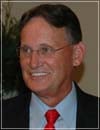
Larry Criss

Four Certainties

1 John 5:20
Larry Criss August, 10 2014 Audio
0 Comments
Larry Criss
Larry Criss August, 10 2014

Sermon Transcript

Auto-generated transcript • May contain errors

100%
1 John chapter 5. We'll begin by reading just one
verse, verse 20. John, in concluding his epistle,
writes, And we know that the Son of God is come, and hath
given us an understanding, that we may know him that is true,
and we are in him that is true, even his Son Jesus Christ. This is the true God and eternal
life. If you'll turn to chapter 1 of
John's epistle, you'll find that he ended it much as he began
it with Jesus Christ, the first and the last, the Alpha and the
Omega. In chapter 1 of the epistle,
John wrote, that which was from the beginning, which we have
heard, which we have seen with our eyes, which we have looked
upon and our hands have handled, of the word of life for the life
was manifested and we have seen it and bear witness and show
unto you that eternal life which was with the father and was manifested
unto us that which we have seen and heard declare we unto you
that ye also may have fellowship with us and truly our fellowship
is with the father and with his son Jesus Christ throughout this
epistle John speaks with utter dogmatism. He's dogmatic about
some things. He speaks with certainty. He
doesn't sound unsure at all, does he? He speaks very matter-of-factly. Over and over again in these
five chapters, he says, we know, we know, we know. I find that
refreshing. Because I hear folks speak of,
well, we can't know, we don't know, we won't know, we can't
be sure concerning the things of God. And they seem content
to leave it there. I declare, if I wasn't sure of
my eternal state, if I wasn't sure this night that if God would
call me home, I would be accepted by him, that if I wasn't sure
that I didn't know Christ, I would, as Peter exhorts, give all diligence
to make my calling in my election sure. John doesn't speak that
way, though, does he? I hear people say, as I've mentioned,
that we can't know that we're saved, something that important,
something with such eternal consequence, they say we just can't know.
I've had people tell me that we won't know, no sinner, will
ever know they're really saved until they stand before God. Is that scriptural? That's not
what John wrote here and throughout the Word of God. I've had people
actually tell me that God will set out a set of scales, balances,
and weigh our good works against our bad works and our ever to
scale tips. Lord, you're shaking your head.
You've heard this nonsense too. Can you imagine such a thing
as that? Brethren, if that's the criteria,
if that is what determines where I spend eternity, I'm in trouble. I'm in trouble. No, salvation
is not by the tipping of the scale. My good works outweighing
my bad. Oh no, it's by the grace of God
that is in Christ Jesus. And this is who John writes about.
This is who he's talking about, and that's why he talks with
such certainty. Over and over again he says,
we know. We know. We know who we saw. We know who he was. We know who
sent him forth. We know what we're declaring.
We know who we are witnesses of. And then here in verse 20
of the last chapter, John mentions four things that we know, that
believers know. He says, we know that the son
of God has come. Four certainties he speaks of
here. He's given us an understanding
for this purpose. Not that we might doubt, no,
but that we might know Him that is true. The Lord Himself that
night prayed, this is life eternal, that they might know Thee, the
only true God, and Jesus Christ whom Thou hast sent. And we are
in Him, that is true, even in His Son, Jesus Christ. This is true God and eternal
life. The first thing John mentions
is this. We know that the Son of God is
come. God himself came to this earth. That sounds much like the beginning
of John's Gospel, doesn't it? Turn there back, rather, if you
will, to John's Gospel, chapter 1. And that's what we read here. John's Gospel, the first chapter,
he writes, in the beginning was the Word, and the Word was with
God, and the Word was God. The same was in the beginning
with God. All things were made by Him,
and without Him was not anything made that was made. In Him was
life, and the life was the life of men. The Word of God, someone
said, is about God the Word. Look what John says in verse
14 here in his Gospel chapter 1. and the Word was made flesh. What a wonder. The Word was made
flesh and dwelt among us. And John says, we beheld. Again,
notice how he speaks with such certainty, such matter of factness.
And we beheld His glory, the glory as of the only begotten
of the Father, full of grace and truth. Imagine that. Imagine
the night that He was born. You look into that stable, in
the arms of that young mother is a dark-skinned Jewish baby
boy. And he doesn't have anything
about him that distinguishes him from any other baby boy.
There's not a halo over his head. I know in these so-called pictures
of Christ, they have him with a halo, a pretty little manger
scene. It was a stable. It was a stable. That's where the Son of God was
born. And there is no halo over his
head. There are no wings upon his back. He looks just exactly like any
other Jewish baby boy. You know why? Because he was
made like unto his brethren. The word John says was made flesh
and dwelt among us. But that baby, Lo and behold,
now this is what Paul spoke of. This is what Paul said was a
great mystery. That baby in the arms of Mary
is none other than God Almighty, God in the flesh. Paul said this
is a great mystery, Timothy, without controversy. We're not
going to debate this. We're not going to argue about
it. We're just going to bow to it and adore God's marvelous
grace. God sent forth his son, made
of a woman, made under the law. Because his brethren were flesh
and blood, we read in Hebrews 2, he likewise took part, he
took hold of the same. Not the nature of angels, but
the nature of his children, his brethren. the sons of Abraham. That babe in the arms of Mary
lying in that stable that night is none other than that one that
the prophet spoke about. And he never ceased being God. He never ceased being God. I've
heard folks say, well, he laid aside his glory. Well, it may
have been veiled. It may have been veiled in flesh,
but it wasn't laid aside. He never ceased being God. For
unto us a child is born. Isaiah is talking about that
baby. 700 years before he was born, Isaiah
speaking of him, indeed. You see, no wonder Paul said
this is a great mystery. Unto us a child is born, unto
us a son is given, and the government shall be upon his shoulder, and
his name shall be called Wonderful. counselor, the mighty God, that
babe in the manger, the mighty God, the everlasting father,
the prince of peace, of the increase of his government and peace,
there shall be no end. Upon the throne of David and
upon his kingdom to order it and to establish it with judgment
and with justice from henceforth even forever, the zeal of the
Lord of hosts shall perform. He that had no beginning, now
my little T brain just can't get much of a grip on that. I
deal with, or rather everything I deal with is time, 24 hours
in a day, 7 days in a week, so forth and so on. But I read concerning
the Son of God, the God-man, he who was God and became man,
had no beginning. He that in the beginning created
the heavens and the earth came down to earth. He that created
man in the garden and breathed into the nostrils that man the
breath of life, making him a living soul, himself became a man like
Adam. Isn't that something? The second
Adam. Spurgeon said, Oh, son of God,
I don't know what to admire most. Spurgeon said, I'm overwhelmed
attempting to consider this. I don't know what to admire the
most, your height of glory or your depths of misery. In order
to be made sin, he must be made man. The incarnation is a means
to atonement. God could not die and man could
not satisfy God. Oh, but the God-man, the God-man
does both. In his glorious person, that
man who is himself God, he brings us night. We that were so far
off. And none of our works, Louie,
could bridge the gap. It's been tried. It's still being
tried. Men think by their own works
that they can bridge that gap between themselves and God. They
don't have a clue what God Almighty requires. It can't be done. Oh, but the Lord Jesus Christ
in his life of perfect obedience, in that glorious sacrifice of
himself to God, he bridged the gap. He took God, as it were,
in one hand, and man, those he redeemed in the other, and Paul
says, we're brought near to God, as near as Jesus Christ, the
Son of God himself. John says, but the Son of God
is come. Isn't that something? What a
miracle! God came into this world. Religion always has man trying
to reach up to God, trying to reach up to God. But here we're
told in His Word, God Himself came down to man. He took upon Himself the form
of a servant and became obedient unto death, though He was rich,
yet for our sakes For our sakes, the sake of his bride, he became
poor that they through his poverty might be made rich. The Son of
God has come. It must be for a great purpose. It must be for a great purpose
that God would become flesh and bone. that God himself would
condescend to take upon himself the form of man? He, the mighty
God, the everlasting Father, became flesh of our flesh and
bone of our bone. What was his purpose? It must
have been a glorious purpose, must have been a great reason
to send the Son of God, the everlasting Son of God, into this world.
The angel told Mary, Before she conceived the Lord in her womb,
call his name Jesus. He shall be great. We attempted
to speak on that last Sunday. He shall be great. Greater than
Solomon. Behold a greater than Solomon.
One greater than the temple. One greater than Abraham. Why
did he come into this world? I'll tell you this, whatever
his reason was, Whatever his purpose was in coming into this
world, it will be realized. Listen to this, again from the
prophet Isaiah. 700 years before, he wrote, behold,
looking down through time, with the eye of faith, he saw that
one, the son of God that would be made sin, and God himself
says concerning him, Behold my servant whom I uphold, mine elect
in whom my soul delighteth. I have put my spirit upon him.
He shall bring forth judgment to the Gentiles. He shall not
cry, nor lift up, nor cause his voice to be heard in the street.
A bruised wreath shall he not break, and the smoking flax shall
he not quench. He shall bring forth judgment
unto truth." Listen to this. He shall not fail. Whatever He came to do, He shall
not fail. Whatever His intention in coming
to be done, He shall not fail. And bless His name, He did not
fail. He shall not fail. He won't even
be discouraged. He won't even be discouraged.
That sounds so different. So vastly different from this
little peep-squeak of a so-called savior that we hear about today
that just can't have his way. Who is that imposter? Who is
he? He's not the King of Glory. He's
not the one that Isaiah saw. He's not the one that John said
he saw. No, and that he handled the word
of life because concerning him, we read, he shall not fail. I take that to mean whatever
he came to do, he shall not fail. He didn't come to fail, he came
to do. He didn't come to attempt. What's
that worth? An attempt. Anybody can attempt. You can attempt all day long
and fail all day long. The Lord Jesus Christ did not
attempt, He came to accomplish. He didn't come to make something
possible, He came to obtain. He said in that body that the
Lord had prepared Him, He said in coming into this world, I
come to do thy will, O God. Now you think about that. That's
not a small endeavor. That's not a small task to do
the will of God. God's not easily satisfied. As a matter of fact, it's got
to be perfect to satisfy God. It's got to be as good as God
is to satisfy God. It must please Him. And Jesus
Christ did. I come to do thy will, O my God. And God himself said, on more
than one occasion, he spoke these words from heaven concerning
his son. Never had been said concerning
anybody else. We read that Enoch walked with
God. We read that Abraham was the friend of God. David was
the man after God's own heart. Oh, but of this one, the God-man,
God said concerning him alone, this is my beloved son. This
is my beloved son in whom I am well pleased. Well pleased. Everything he does
pleases me. He's never had a thought contrary
to my will. He's never uttered a word that
didn't please me. Every action, every thought,
every step he ever took, from the first breath he drew when
he entered this world until that last breath when he expired upon
the tree, he did everything that pleased me. And brothers and
sisters, he did it as the substitute for God's people. John said,
the Son of Man has come. Joseph, I love this verse of
scripture. Call his name Jesus. That means
savior. That means God's salvation. Why
are you going to call him that? Why are you going to give him
that name? Because he's going to try to save somebody. No. He'll partly save somebody. He'll
save them if they take the first step. No. Call his name Jesus,
for he shall. He shall. Nobody else. Without any help, I looked and
there was none to help, the prophet said. Therefore, my arm, my arm
brought salvation unto me. My strength, it sustained me. Call his name Jesus, he shall
save his people from their sins. I'll tell you what, Lord, that's
good news for this helpless sinner. That my salvation, where I spend
eternity, Where I spend eternity is not dependent upon what I
do. If I thought that was so, I would
be hard-pressed to lie down and sleep tonight. Oh, but the sweet
assurance to every redeemed sinner, everyone called by his grace
is this, he will keep us. He won't lose one of his sheep. Who's going to dare pluck them
out of his hand? That's the hand of God Almighty.
Who's going to pluck them out? He said, none, none. My father,
which gave them to me is greater than all. He did not attempt
to redeem. You can't find any such language
as that in the word of God. It said that he entered one time
into the holy place, the very presence of God Almighty, with
his own blood, with his own precious blood. In Acts 20, Paul referred
to it, the church of God being purchased with his own blood.
When he offered himself without spot to God, what did that accomplish? Hebrews 9 and 12 says he obtained
Eternal redemption for us. Look what we hear in chapter
3 of the first epistle of John. Chapter 3, verse 5. And ye know
that he was manifested to take away our sins. That's why he
came into this world. He didn't come to be a martyr.
He didn't come to be an example of morality. He came to save
his people from their sins. That's the reason he came. And
ye know that he was manifested to take away our sins. And in
him is no sin. Did he succeed? Did he succeed? His mission in coming was to
save his people from their sins. That's why he's given that glorious
name. Did he succeed? Did he accomplish
his mission? Did he do what he came here to
do? Absolutely. When he had Hebrews
1 and 3, when he had by himself, oh see him, Oh, that glorious
redeemer, that one in whom God entrusted the salvation of all
of his people, put him into the hands of the great shepherd of
the sheep. Did he succeed? Oh yes, see him
trod the winepress alone. See him bruised for them. See
him made sin for them. But oh, see him come forth exclaiming,
it's done. It's finished. When he had by
himself purged our sins. Glory to his name. When he had
by himself purged our sins. He took all my sins away. Have you heard? Have you heard
what Jesus did for me? They're all taken away. All my
sins are all taken away, like that scapegoat that the high
priest symbolically transferred the sins of Israel on the head
of that scapegoat, and it was taken out into the wilderness,
never to be seen again. My sins and iniquities, God says,
I shall remember no The second certainty that John speaks of
is this, the Son of God has come and has given us an understanding. Has given us an understanding. Not that we may know all mysteries
or understand all prophecies. I don't know what it is about
prophecy that is so intriguing, but it sure gets the following,
doesn't it? Any dunce can come along with
charts and figures and just fill a house if he's going to lecture
about prophecy. When I first moved here several
years ago, almost three years ago, a fellow, I don't know if
I told you this story or not, was driving me back home. He
was going to wash my, clean up my car, so he had to bring me
back home, of course, then take the car back to his business.
But he asked me what brought me to Silicon. I said, to be
a pastor, to preach. I was asked to be a pastor. I
feel like this is what God wants me to, where God wants me to
be. That's why I'm here. And he says,
you know what you should preach. And I said, yeah, I know what
I should preach. I better know what I should preach. He wasn't interested. He didn't
care. He said, you ought to be preaching
about 666. You ought to preach about the beast and the mark
of the beast and not being able to buy or sell. I said, no, I
think I'll preach the gospel. The gospel. He said, oh, but
this is a great mystery. You need to dig into that. And
I tried to talk to him, but he wasn't interested. But I said,
here's the greatest mystery that I've read in the Word of God.
And I've never got over this. I've never gotten near to understanding
this. If I ever do, then maybe I'll
go on to these other things, these other mysteries. But I've
never gotten over this. I've never been able to get much
of a grasp of this. That God Almighty made Jesus
Christ to be sin for me. That the sinless one was made
sin. Not just that he took the sinner's
place, but he was made sin itself. He drank damnation dry. Now that's
deep. That's deep. That's a mystery.
That I might be made the righteousness of God in him. Now, the third
thing John mentions here that we know, the Son of God has come
and given us the understanding that we may know Him. That we may know Him, that is
true. Salvation is knowing Him. He's the only body of divinity
I want to know. When He gathered around Him the
disciples, when he was among them on earth for those three
years or so, if you would have asked them, what's your system
of theology? What's your body of divinity?
What do you believe? They would have pointed at him.
They would have pointed at Jesus Christ. We believe him. We believe
him. We believe that in him dwelleth
all wholeness. We believe in what he says. We
believe that he's the one that God sends forth. We believe him. He is precious to the believer. Talk about, I've heard talk rather,
about how much does a man have to know to be saved. And I've
heard them go to the other extreme. How little? How ignorant can
a man be and yet be saved? But here's what's necessary.
Christ said, look unto me. Look unto me. Every sinner, he
says, that looks unto me will be saved. Look unto me and be
ye saved. That's what's necessary. To see
the Son of God, the object of faith, Christ Himself, that's
what's necessary, Him alone and nothing else. Folks say, well,
let's talk about the look. Let's talk about faith. Let's
study that. How much, how little, how clear,
how accurate? Let's dissect faith. No, no,
no. Sinner, look and live. Just look
and live. Is anybody thirsty? Christ, the
fountain of living water says, come and drink. Here's the issue,
are you thirsty? Come and drink. Are you weary?
Heavy laden? Burdened down with the weight
of sin on your back? Then come unto me and I will
give you rest. Look and live. Just look and
live. Oh, that's what the Savior says.
Come unto me and I will give you a drink and you'll never
thirst again. Like the old hymn writer wrote.
And this is the truth. We don't sing hymns that dishonor
the gospel. No, no. This one says, the vilest
offender that truly believes that very moment from Jesus apart
and receives. Did you find that to be true?
The very moment that God enabled you like Simeon to embrace his
son in the arms of faith, the very moment, the very moment,
one minute you were burdened down, one minute you had such
a weight of sin on your back wondering if God would have mercy
on a sinner like you, and the next minute, You're lifted up,
you're lifted up. He set your feet upon a solid
rock and whispered into your ear all such sweet, sweet words. Your sins, which are many, are
all forgiven thee. Now arise and go in peace. Go
in peace. Oh, the vilest offender that
truly believes that very moment from Jesus, a pardon receives. Is that true? Right now? The moment a sinner believes
on Christ? Absolutely. He receives a full,
irrevocable, eternal, everlasting pardon of all of his sins. Isn't
it a blessed, blessed thought, brothers and sisters in Christ,
When we dismiss from here in a few minutes and go our separate
ways, go to our homes, that God Almighty, our Heavenly Father
looks down from glory and says, there goes one home justified. Isn't that something? Think about
that, Lord. You go home tonight. You're going home to an empty
house. But you're not alone. You're not alone. There's one
that'll stick to you closer than a brother. There's one that's
with you day and night. When you lie down and sleep,
he that keepeth Israel never slumbers, he never sleeps, and
he'll never leave you. And God says because of his darling
son, his death on the behalf of all of his own, that that
sinner is going home justified. Oh, that's worth more than this
world. That's worth more than 10 million
worlds. and everything in it, all to
know God and His Son, Jesus Christ. The Son of God has come and given
us an understanding that we might know Him. That alone can enable
a sinner to lie down and sleep in peace, knowing that it is
well with his soul. The Lord told that woman at the
well that day, if thou knewest the gift of God and who I know
you fathers and mothers often look at your children, your sons
and your daughters, and say that very thing. Oh, if they just
knew. If they just knew. Oh, if they
knew. The gift of God and who? Oh, that they might know Christ,
God's unspeakable gift, that God would say concerning them,
blessed art thou. Flesh and blood have not revealed
this unto you, but my Father which is in heaven. You are blessed
by God himself. Paul is in prison. He's facing
death. You know the story. He says to
Timothy, my departure is at hand. Prior to that, he said, but I'm
not ashamed because I know the doctrines that I believe. No,
he says, Timothy, I know whom? Jesus Christ himself. He's in
this cell with me. And when the executioner comes
and takes me out and severs my head from my body, I'm going
to be absent from the body, but I'm going to be in a better place."
No, he said, a far better place. I shall be with the Lord forever. Old John Bunyan, I enjoy reading
him. In his Grace Abounding to the
Chief of Sinners, he said when he was under conviction of sin,
he thought for a while that God wouldn't have mercy upon him.
He was so fearful because he had been such a rebel, such a
sinner. I read that for the first time
and I said, I can identify with that, Mike. I know exactly how
he felt. Because I felt the same way.
But old Bunyan said he was so wrong. So far was it that God
rejected me, he wrote. There was rejoicing in heaven
that old John Bunyan had come home to the Father's house. Yes, he delights to show mercy. How can God forgive me, I thought. I've told you this story. Walking
those railroad tracks. knowing that I'm the sinner,
and I thought, how can God save me? Can God have mercy on me? And he did. And he did. Oh, mercy there was great, and
grace was free. The fourth and last thing that
John mentions here, giving us understanding that we may know
him that is true. And he says, we are in him. We
are in Him, that is true. In His Son, Jesus Christ. There's no condemnation, Paul
said, right now. There's now no condemnation to
them who are in Christ Jesus. And there never will be. There
never will be. Once we're His, we're His forever. Nothing from His love can sever. Oh, how secure the child of God
is, because we're accepted in the beloved. As concerning that
infant that God found and clothed and nourished, said, your renown
went forth among the heathen for thy beauty, for thy comeliness,
because it was perfect. Your beauty was perfect through
my comeliness that I put upon you. And John said, I saw that
multitude of redeemed sinners clothed in perfect white robes
of the righteousness of Christ, and it presented them without
fault before the throne of God. Remember what we read earlier
in Psalm 85? Let me read that last verse to
you again. the 85th Psalm. Righteousness
shall go before Him, and shall set us in the way of His steps. Every step that the Son of God
walked in this world, from the manger to the cross, to Calvary,
were steps of perfect obedience. And we're told that God shall
set us in His steps. Give us credit for perfect obedience
unto Him. Our Lord asked His disciples
one time, when I sent you out to preach, did you like anything? Was any need not supplied? And
they said, we didn't like anything, nothing, nothing. And in Jesus
Christ, brothers and sisters, we don't like anything. We don't
like anything. How can we? How can there be
a like? We're in that one in whom dwells
all the fullness of the Godhead bodily. And if I'm in Him, how
can I be anything but complete? And we're told that we are complete.
Old Top Lady wrote, while I draw this fleeting breath, when mine
eyes shall close in death, when I soar the world's unknown, and
behold thee on thy throne, oh rock of ages, sweet precious
rock of ages, cleft for me, let me hide myself in thee. And we know that the Son of God
is come and has given us an understanding that we may know him that is
true. And we are in Him that is true, even His Son Jesus Christ. This is true God and eternal
life. Amen. Amen. God bless you.
Larry Criss
About Larry Criss
Larry Criss is Pastor of Fairmont Grace Church located at 3701 Talladega Highway, Sylacauga, Alabama 35150. You may contact him by writing; 2013 Talladega Hwy., Sylacauga, AL 35150; by telephone at 205-368-4714 or by Email at: larrywcriss@mysylacauga.com
Broadcaster:

Comments

0 / 2000 characters
Comments are moderated before appearing.

Be the first to comment!

Joshua

Joshua

Shall we play a game? Ask me about articles, sermons, or theology from our library. I can also help you navigate the site.