Bootstrap
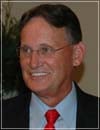
Larry Criss

The Bottom Line

John 3:36
Larry Criss May, 6 2012 Audio
0 Comments

Sermon Transcript

Auto-generated transcript • May contain errors

100%
If you'll turn back to John's
Gospel, chapter 3, we want to consider this last recorded testimony of a faithful servant of our
God. The wise man, that is Solomon,
in the book of Ecclesiastes concludes his writing with these words. Let us hear the conclusion of
the whole matter. John the Baptist does likewise
here. The title of my message is, The
Bottom Line, The Bottom Line, The Conclusion of the Whole Matter,
that is, the root of the matter. This is, as we said, the last
recorded testimony of John the Baptist. and it's exactly, we'll
notice this in a moment in chapter 1, this last recorded testimony
of this man is exactly as his first one was. Nothing's changed. Nothing's changed. He has no
new theory, no new theology. John sums up all that he has
said before in this chapter in verses 27 through 35 with the
words of verse 36, which is our text. This sums it all up. This is the conclusion of the
whole matter. This is really the bottom line. Verse 36. John sums everything
up this way. He says, He that believeth on
the Son hath, present tense, everlasting life. That's it. He that hath the Son
had all things. He that hath the Son has all
that God Almighty requires. He that hath the Son has sanctification
and redemption and righteousness and redemption. And he that believeth
not the Son, John says, shall not see life, no matter what
else he may claim. no matter what else he says he
knows, no matter what else he's experienced. If he doesn't have
the Son, he doesn't have life. If he doesn't know Christ, it's
impossible that he knows God. He may know a figment of his
own imagination that he calls God, Many people do, but he can't
know God, have fellowship with God, certainly can never be accepted
by God except he knows and has come to God through Jesus Christ. He that believeth not the Son
shall not see light. He doesn't know God, but this
he does have. And notice, too, it's a present
experience. But the wrath of God abideth
right now at this moment to everyone outside of Christ. The wrath
of God abideth on him. As we said, his testimony, that
is John the Baptist, concerning Christ hasn't changed. If Christ is the same, and the
writer of the Hebrew epistle tells us Jesus Christ is the
same. If Christ is the same yesterday,
as we read there, and today, and forever, shouldn't the message
about him also be unchanged? If Christ is unchanged, the message
about him need not change. Look what John the Baptist says
in verse 15 of chapter 1 of John's Gospel. Concerning the Lord Jesus
Christ, he says, John bear witness of him and cried, saying, This
was he of whom I speak. This is he. You that look for
the Lamb of God, you that look for the sent one, you that are
looking for the Messiah, you that are looking for God in flesh,
this is him. It's not me, John said. It's
him. John bear witness of him. Who
else would he bear witness to? If God sends a man to preach,
he'll preach Jesus Christ and nothing else. Christ is enough. Christ is sufficient. Christ
is the only remedy for sin. John bear witness of him. of him. Is there anything else
worth hearing about, Lonnie? Will anything else comfort your
aching heart? Will any other message be good
news to needy sinners? Will anything help them other
than this message of salvation in him? John spake and bore witness
of him. This was he of whom I spake,
he that cometh before me. or cometh after me, rather, is
preferred before me. He ranks higher than I, is what
John was saying, for he was before me. And notice what he says on
down in verse 19. In verse 19 of chapter 1, remember
we said his testimony that we read of in chapter 3 hasn't changed
one iota. In verse 19 of chapter 1, John
says, and this is the record of John, that is, John the Baptist,
when the Jews sent priests and Levites from Jerusalem to ask
him, who art thou? There was a rumor going around.
Perhaps this is the Messiah. Perhaps this is that one that
all the Old Testament prophets prophesied of. Perhaps this is
the sent one. Perhaps he is the one that should
redeem Israel. Perhaps this is him. And they
asked him, who art thou? And he confessed and denied not
but confessed, I'm not him. It's not me. I'm not the Christ. I'm not the one they prophesied
of. I'm not the one that God has sent. And they asked him,
what then, art thou Elias? And he saith, I am not. Art thou
that prophet? And he answered, no. Then said
they unto him, who art thou that we may give an answer the them
that sent us, what sayest thou of thyself?" He said, I am the
voice. Isn't this a blessed testimony?
I am the voice of one crying in the wilderness, make straight
the way of the Lord as said the prophet Isaiah. This is that
one, all the Passover lambs pictured. John spoke of him. He said, behold,
the Lamb of God. To those multitudes that came
to be baptized, he said, behold, the Lamb of God. The two disciples
who stood with him one day, his message was still the same. Whether
it was to many or whether it was to few, his message was always
the same. Behold the Lamb of God. There's life for a look in him. If you haven't seen him, you've
never seen God's salvation. It doesn't make any difference
what else you see, what else you know, what else you think
you know. If you've never seen the Lamb
of God, you don't have life. This is what we read of in our
text, is it not? This is that one John said that
all the Passover lambs pictured. It's him. There he is. That's why John used those words.
Behold the Lamb of God. They would know what he was referring
to, that Passover Lamb, and only by seeing him, only by believing
on him will God pass over you and I as he did that night in
Egypt. when judgment was pronounced
upon every firstborn, and the only ones that were saved, the
only ones that were secure, the only refuge were those houses
where the blood of that lamb had been applied. And God said,
when I see that, Not when I see any goodness in you, any merit
in you. Oh, no, but when I see the blood,
the blood that pictures the Lamb of God, the blood that typifies
the blood of my dear Son, when I see that, I'll pass over you
in judgment." Oh, bless God, so it is even now. This was John's
answer to them. That is what we read of in chapter
3. This was John's answer to their
question in verses 25 and 26. Back in John chapter 3 at verse
25, then there arose a question. A question. They always had questions,
didn't they? I always had speculations. The religious Jews of Christ's
day always had questions about which is the greatest commandment
they asked him. Questions like, what must we
do that we might work the works of God? Or questions like this,
is it lawful to give tribute to Caesar or not? Shall we give
or shall we not give? Or this, in the resurrection,
Whose wife will be the woman who married each of seven brothers
who died? Whose wife will she be in the
resurrection? The same is true today, isn't
it? Endless questions, conferences, and committees, and dialogues. Just drive around. Look at the
signs. announcing church's services,
what the issue is with them, what they're talking about. Oh,
no, there's only one issue. When those Jews came to Christ
with all those questions, Christ said, now I have a question for
you. There's only one real issue. Do you know that? Only one. There's not two. There's only
one. And Christ said the issue is
this. Here's the bottom line. Here's
the conclusion of the whole matter. What think ye of Christ? What think ye of Christ? Who is he to you? Can anything
be more important than that? Hmm? Can anything be more important
than that? Preachers who think there is
anything more important or equal to that are blinded. They're
blinded. Ask the rich man in Luke 16 that
our Lord said died, and in hell he lifted up his eyes. Ask him
how important his riches were to him then. Or ask that multitude
that stand before the Lord in Matthew 7 when he said, in that
day many shall stand before me and say, Lord, we prophesied
in your name. We did many wonderful works in
your name." And they hear him say, I don't know you. I don't
know you. You're not mine. If he never
knew them, you can be assured that they could not know him.
And he says, depart from me. What was most important to them
in that hour are those in Revelation chapter 6. that we read, pray
to the mountains to fall on them and to hide them from him that
setteth upon the throne. What mattered then? What's most
important then? What's most important then? If I knew in the next breath
that I take would be my last, what's most important to me then? What would appear most precious
to me then? Paul tells us what it is, and
I hope that it's our testimony as well. Paul said, this is the
bottom line. This is what's most important. This is what I want more than
anything else. Everything that I once had, everything
that I once trusted in, it's nothing but done. It's worthless,
and that includes my own righteousness. which is of the law. That includes
my pedigree. Oh, he says, this is the only
thing that matters, that I might know him. Him, Christ, that I
might win Him, Christ, that I might be found that day in Him, not
with my own righteousness, but wrapped up in the righteousness
of Jesus Christ. That's the only way I can stand
before the Holy God accepted, accepted in the Beloved. I have no desire to make anybody
a Calvinist. Not at all. Not at all. Men can
go to hell believing that just as easy as they can go to hell
believing free willism. There's only one issue. There's
only one, and that's what John deals with here. Look, look. Who does John speak of? To whom
does he point them? Not himself. Look again at what
he says in verse 28. ye yourselves bear me witness
that I said, I am not the Christ. It's not me. If you think so,
you'll be deceived. If you think I'm the Christ,
you'll perish. It's not me. Look away from me. Look to that one to whom I'm
pointing. I am not the Christ, but that
I am sent before him. God gave, or rather, John gave
glory to Christ. In verse 29, John said, I'm not
the bridegroom. He's the bridegroom. He that
had the bride is the bridegroom, and that's not me. The bride
belongs to Christ. God gave them to Christ before
the foundation of the world. They were redeemed by his precious
blood. And when God calls one out of
the darkness, into his marvelous light, he brings that sinner
to Christ, not to the church, not to the preacher, not to the
priest, not to the pope, not to some so-called altar. He brings
that sinner to the footstool of Jesus Christ where he makes
him to bow down and he looks up and cries, Lord, if thou wilt
have mercy on me. John said, to him, and it's he
that is the bridegroom that will present all that are given to
him by the Father back to the Father in the fullness of time. In verse 30, John says, he must
increase. He must increase, and as we said
in the reading, If their intent wasn't to stir up some jealousy
between John the Baptist and Jesus Christ, they were barking
up the wrong tree. When they said, Master, he who
came after you, all men are going to him, John said, oh, I'm glad
to hear it. I'm glad to hear it. That's what
I've longed for. That's the only reason I'm here.
I'm just a voice. I'm just a forerunner. He must
increase. I'm content to have it so. I'm
content to fade away. He's the light. Dear brother
Scott Richardson, who's now with the Lord, who's now in glory,
used to say, God put all his eggs in one basket. God's put all of his eggs in
one basket. And what he meant by that was
Jesus Christ. Everything depends upon Everything,
creation, all things were made by him and for him, and so it
is true concerning salvation. Salvation is all in him. Turn, if you will, to 1 John
chapter 5, the first epistle of John chapter 5. John bears
the same witness that John the Baptist bore concerning Jesus
Christ. In 1 John chapter 5 verse 11,
we read these words, and this is the record that God had given
to us eternal life. Oh, he has. He's given to us
eternal life. He that had the Son had life. God's given that to us as a precious
gift of his grace. Oh, yes, but where do we receive
it? How is it given? From whom does
it come? And this life is in his Son. It's in his Son. Same thing that
the Baptist said, verse 12. He that hath the Son hath life. and he that hath not the Son
of God hath not life. These things have I written unto
you that believe on the name of the Son of God that ye may
know, that ye may know that ye have eternal life and that ye
may believe. Just continue to believe. Don't
move an inch. Stay right here that ye may believe
on the name of the Son of God. Now, looking back at verse 35
of John 3, look what we read again. We read that God the Father
loveth the Son and hath given all things into his hand. Circle
that. At least mentally highlight that
word, all. All things. All things means
some things? No, no, it means everything. It means everything without exception. And notice what it says, hath
given. Now, already done. As our mediator, as the God's
man, God has put all things under the authority, under the dominion,
under the rule of the Son of God. All things, everything,
nothing. No exceptions. Everything. All
power, all grace, all glory, everything that pertains to salvation. In Hebrews 4, the writer tells
us that Jesus Christ sits on a throne of grace. Can you picture
that? Can you picture that? That's
comforting. Oh, for the child of God. There's
our Redeemer, setting in glory on a throne of grace. There he sits. After having purged
our sins, there he sits on a throne of grace, willing and able to
save to the uttermost. Don't you like that? Don't you
like that? He's able to save to the uttermost. He has grace for even a sinner
like you and a sinner like me. Oh, yes, as the God of all grace,
He declares. He declares. This is His will. This is the will of the omnipotent
God. This is the will of that one
whose hand none can stay. This is the will of that one
who doesn't try to have his way. He has his way all the time,
everywhere, with everyone, saved and lost. That's exactly right. And he declares, I will be gracious. He declares that it's his mighty
will that none can resist, and he declares, it's my will that
a multitude without question, without a doubt, will experience
his mighty grace. Thank God for such a Redeemer. Again, in chapter 1 of John's
Gospel, look what he wrote in verse 14. And the Word was made
flesh and dwelt among us, and we beheld his glory as the only
begotten of the Father, full of grace, full of grace, and
truth, all the grace that this sinner will ever need, all the
grace that's necessary to purge me from my sins, all the grace
required to keep my wandering soul, all the grace that's needed
to bring me all the way to glory and to present me in the presence
of God Almighty without a spot, without a wrinkle, without a
blemish, without any evidence of sin, whatsoever of my soul."
No wonder Newton said, that's amazing grace. That's amazing
grace. Look what we read again in verse
16 of John 1. And of his fullness have we all
received and grace for grace. Grace greater than all my sins. reigning grace. That's the grace
of him that sets up on the throne. He possesses and he dispenses
reigning grace, conquering grace, ruling grace. Can anything less
than that help you? Do you require anything less
than that? Oh, the grace of the Lord Jesus
Christ is grace that's never in vain. Never useless. Grace that accomplishes all that's
needed, needed to God. Grace personified came into this
world at the time appointed by the Father, and he said, I come
to do thy will, O my God. All the grace necessary for man. Paul said, where sin abounded,
God's grace doth much more abound. Oh, yes, as sin hath abounded
unto death, even so might grace reign through righteousness in
Jesus Christ the Lord. That's the true grace of God. Turn, if you will, to Acts chapter
20. Here the apostle Paul is on his way to Jerusalem. and
he wants to meet with the elders of the church at Ephesus, and
he doesn't want to go to Ephesus because he doesn't want to be
detained in his journey. He wants to be at Jerusalem by
Passover. So he calls the elders of the
church at Ephesus to a little isle called Byletus to meet with
him, and among his words of exhortation to them, look what he says at
verse 24 of Acts 20. we should read verse 22 as well.
It says, Paul says, I know that's how it'll be. But look what he
says in verse 24, but, but, I can just picture the apostle. And as I do so and as I read
these words together with you, I pray, God, make me such a faithful
witness. But he says, none of these things
move me. None of these things move me,
he says, neither count I my life dear unto myself so that I might
finish my course with joy in the ministry which I have received
of the Lord Jesus, which is this, to testify the gospel of the
grace of God. not to march for political reform,
not to shout for social issues, but to preach the glorious gospel
of the grace of God. That's what God called Paul to
do, and Paul says, I'm determined to do that to the end. Look what
he says down in verse 32 in Acts 20. And now, brethren, I commend
you to God and to the word of his grace which is able to build
you up. That's what God's grace does
and to give you an inheritance among all them that are sanctified. That's the true grace of God.
Our Lord Jesus Christ is typified by Joseph when he was a prisoner
under Pharaoh in the land of Egypt, but Pharaoh, by God's
providence and grace, brought him out and he sent him over. the head of everything that he
had. And there was a famine, a famine in Egypt just as Joseph
had prophesied. And they came to Pharaoh and
said, we need bread. And Pharaoh said, you've got
to go to Joseph. You've got to deal with him.
And that's what God Almighty says concerning the need of sinners. You've got to go to my son. I've committed all things into
his hands. And he used the head over the
body, the church. and only he. Do you need grace? You must approach he who sits
on the throne of grace. Peter said there's none other
name given among men under heaven whereby we must be saved all
in the name of the Lord Jesus Christ. Again in verse 35 of
John 3 we read, the father loveth the son and hath given all things
into his hand. Only in the hand of Christ do
the keys of life and death, of heaven and hell, belong. He has
them. He has them. Only from the hands
of Christ does any sinner ever receive mercy from God and peace
with God. In chapter 1, verse 17, we read,
the law was given by Moses. All but mercy, grace, and truth
came by Jesus Christ. The law demands, but grace gives. The law curses, but grace says,
thy sins are all forgiven thee. John concludes by putting all
his eggs in one basket and says, "'He that believeth on the Son
hath everlasting life.'" Christ again, John. A believer can't
make too much of Christ. It can't be done. Often, often. I'll tell you this. I never leave
this place. I'd never leave this pulpit after
attempting to preach from you feeling that I made too much
of Christ. Joe, that thought never enters
into my thinking. Oh, but on the contrary, I often
feel Oh, I didn't say enough. I didn't exalt Him enough. I
didn't honor Him enough. I didn't glorify Him enough.
I wasn't sincere enough in exhorting sinners to behold the Lamb of
God. You can't make too much of Christ. Brothers and sisters, you can't
trust him too much, and you can't glory too much in him because
he's all the glory of glory land. The only theme of that song of
praise in heaven is this, thou art worthy. Thou art worthy. Why? To receive power and riches
and wisdom and strength and honor and glory and blessing. You're
worthy to receive all those things. You deserve all those things.
Why? Why? They tell us, for thou was
slain and has redeemed us to God by blood. The angels stand and adore with
holy wonder the accomplishment of the Lamb of God. He has redeemed
his people from their sins. Do you hear that, brothers and
sisters? He didn't go into the holy place and make an effort,
take a stab at it. He entered one time into the
holy place and there our glorious substitute obtained eternal redemption
for us. That's why on the cross he could
exclaim as the victor that he is, it is finished. He has redeemed us to God by
his own blood. That's why on our bulletin, on
the very front page, we read, we preach Christ crucified, the
power of God and the wisdom of God and nothing else. Someone
asked Mr. Spurgeon one time, can you give
us a summary of your theology? what it is that you believe.
We would like to have a summary of it." And Mr. Spurgeon said, oh, yes, I can
do that very easily. I can do it in just four words.
This is my theology. This is a summary of it. He died
for me, Todd. That's it. That's it. He that
believeth, our text says, not he that worketh. that'll never
bring peace to your soul, but he that trusts Christ alone. Notice, if you will, verse 10
of chapter 4. We'll draw to a close. Our Lord
meets the woman after well. He deliberately goes through
Samaria that he might find this lost sheep. He came to seek and
to save his sheep. And Jesus answered and said unto
her, If thou knewest the gift of God and who it is that saith
unto thee, Give me to drink, thou wouldst have asked of him,
and he would have given thee living water. Who? Not what. Not what. Salvation is not in a what, but
a who, and that who is Jesus Christ alone. Paul said, I'm
in prison, Timothy, for preaching the gospel of the grace of God. That's why I'm in these chains.
That's why I'm bound, but I'm not ashamed, Timothy, because
I know whom I have believed, and that's what comforted his
heart. That's what he looked to. Who, not what? Oh, it's whom. He that believeth
on the Son, period. That's faith's resting place. That's the only refuge. He that
believeth on the Son is not condemned, he told Nicodemus, and never
will be. Never will be. There's no condemnation. Never will be to those who are
in Christ Jesus. This is the will of him that
sent me. Of all that seeth the sun and believeth on me should
have everlasting life. Our Lord told the religious leaders
of his day, destroy this temple and in three days I will raise
it up again. They thought he meant the earthly
temple. the material temple. He meant the temple of his body.
and they attempted to destroy him. But in three days, our head,
our bridegroom, arose again. And all the members of his glorious
body, his church, the bride, they shall rise again too with
this song of victory in their hearts. O death, where is thy
sting? O grave, where is thy victory? Dear brother and sister in Christ,
did you come here today troubled? heavy-hearted, that doesn't affect this. Whatever
you may be passing through, whatever burns your heart at this moment
doesn't affect this ever. Our relationship with God rests
on Christ alone. Paul said, our earthly man perishes. That's true, but the inward man,
is renewed day by day, and we know, we know that if our earthly
house were dissolved, this body of clay, we have a house eternal
in the heavens, not made with hand, in glory with Jesus Christ. Old Mr. Newton in his old age
said, my memory is just about gone. He said, so much that I
don't remember anymore. But he said, there are two things
that I haven't forgotten, two things I still remember. That
old ex-captain of a slave ship said, I remember this. I'm still a great sinner, and
he's still a great sager. I'm still a great sinner, Joe.
but I have a hope. I have a good hope through grace.
He's still a great Savior. There are only two classes of
men in Scripture, those who know God and those who don't. The
saved and the lost. As our text says, those that
believe on the Son and those that believe not. To which group
do you belong? Those that believe not, Christ
says, if you believe not that I am he, you shall die in your
sins. May God give us grace to look
and live, to behold the Lamb of God. God bless you.
Larry Criss
About Larry Criss
Larry Criss is Pastor of Fairmont Grace Church located at 3701 Talladega Highway, Sylacauga, Alabama 35150. You may contact him by writing; 2013 Talladega Hwy., Sylacauga, AL 35150; by telephone at 205-368-4714 or by Email at: larrywcriss@mysylacauga.com
Broadcaster:

Comments

0 / 2000 characters
Comments are moderated before appearing.

Be the first to comment!

Joshua

Joshua

Shall we play a game? Ask me about articles, sermons, or theology from our library. I can also help you navigate the site.