Bootstrap
Donnie Bell

The Sacrifice of Abraham

Genesis 22:1-14
Donnie Bell October, 12 2005 Audio
0 Comments

Sermon Transcript

Auto-generated transcript • May contain errors

100%
It is delightful to be back with the saints of
God here. I was very encouraged to see Todd and Lynn today myself.
You know, like Paul, when he was on the Appian Way, and some
of the men came out to see him when he was on his way to Rome.
They walked out of town to meet him, and they saw the brethren,
and they took courage. When he saw the brethren, he
took courage. That's the way I was the day I saw him. And
he was laying in bed when I first saw him. And hat and shaved and
just didn't look the best he ever saw. But it's still, oh
my, so good to see him. Oh, it's so good to see him.
And to see Lynn. So thankful for him. God's people
are the best people on the face of the earth. And I've got, he's
got people that love him, pray for him. And we all do. And we pray for one another and
love one another. That's how we know we've passed
from death unto life, because we love the brethren. We even
pray for people we haven't met when we heard about them in their
situations, because we love the Lord's people and we know what
they go through. But I'm going to try, by God's grace, to bring
a message this evening on the sacrifice of Abraham. And for
us to understand the message, I need to read the first 14 verses,
so we'll I'll be able to follow along. And it came to pass after
these things that God did tempt Abraham and said unto him, Abraham,
and Abraham. And he said, Behold, here I am.
And he said, Take now thy son, thine only son Isaac, whom thou
lovest, and get thee into the land of Moriah, and offer him
there for a burnt offering upon one of the mountains, which I
will tell thee of. And Abraham rose up early in the morning,
saddled his ass, took two of his young men with him, and Isaac
his son. claimed the wood for a burnt offering and rose up
and went unto the place of which God had told him. Then on the
third day Abraham lifted up his eyes and saw the place afar off. And Abraham said unto his young
men, Abide ye here with the ash, I and the lad will go yonder
and worship and come again to you. And Abraham took the wood
of the burnt offering and laid it upon Isaac his son, took the
fire in his hand and the knife, and they went both of them together.
And Isaac spake unto Abraham his father, and said, My father?
And he said, Here am I, my son. And he said, Behold, the fire
and the wood. But where is the lamb for a burnt offering? And
Abraham said, My son? God will provide himself a lamb
for a burnt offering. So they went, both of them, together. And they came to the place which
God had told him of. And Abraham built an altar there,
and laid the wood in order, and bound Isaac his son, and laid
him on the altar upon the wood. And Abraham stretched forth his
hand, and took the knife to slay his son. And the angel of the
Lord called unto him out of heaven, and said, Abraham, Abraham. He
said, Here am I. And he said, Lay not thine hand
upon the lad, neither do thou anything unto him. For now I
know that thou fearest God, seeing thou hast not withheld thy son,
thine only son, from me. And Abraham lifted up his eyes,
and looked, and, behold, behind him a ram caught in a thicket
by his horns. And Abraham went and took the
ram and offered him up for a burnt offering in the stead of his
son. And Abraham called the name of that place Jehovah-Jireh,
as it is said to this day, in the mouth of the Lord it shall
be seen." Now, Abraham, as I have read this, we know from the New
Testament that Abraham is called the father of the faithful. He
is called the father of the faithful. They that are of faith are the
children of Abraham, Galatians says. And as the father of the
faithful, he had to face the most severe trials, many trials
in his life. And this one here in Genesis
22 is his most severe. You see, his spiritual history
was marked by four great crises. And every one of them involved
the surrender of something naturally dear to himself. And that's something
God has to do to all of us. He has to bring us to a crisis
in our life. He's got to absolutely bring
us to a place. where we've got nowhere to turn
but to Him, no one to trust but Him, no one to look to but Him,
because if He gives us any other alternative, we'll take it. Now,
is that not right? If He does not bring us to a
place in such a crisis, in such an awful place, to where we've
got nowhere else to go but Him, we'll take our way out. So God
brought Abraham to four great crises in his life. The first
one was this. His whole history, his spiritual
history is made up of these. He is called to separate himself
from his country and his kindred. Now that's a pretty good task.
That's a pretty good call. God said, get up, leave your
country, leave your family, leave your idols, and you go on to
a land that I'll show you. And Abraham got up and he went
out not knowing where he was going. And he went. Secondly,
he was called upon to give up his nephew Lot. He had raised
Lot, raised him all of his life, had been with him, cared for
him, loved him, protected him. Even one time took 300 men and
rescued him from five kings. And yet he had to separate himself
from Lot. That was a great crisis. And
then he had a boy by a bondmaid, Hagar, Ishmael. And God said,
Ishmael cannot dwell in the house. Flesh and spirit can't dwell,
but flesh and the promised sea can't dwell together. He said,
Abraham, Ishmael's got to go. He cannot dwell with you. He's
not your heir. He's got to go. And Abraham lifted up his voice
and cried, O God, that Ishmael might live before thee. And he
sent Ishmael and his mother out with a loaf of bread and a bottle
of water. And then here is the greatest
trial of all, the greatest crisis of all. And it's said in verse
1, God did tempt Abraham. And over in Hebrews it said,
God cried Abraham. And God told him to take his
son. He wasn't told to take his son to someone else and let him
offer him as a sacrifice. He said, but know you be the
priest. You be the high priest. You be the one to yield the night.
You be the one to shed the blood. You be the one to kindle the
fire. You be the one to make him an
offering. And oh, and this is the first mention of human sacrifice
in the Scriptures. And this tells us this, that
by man came sin, and by man sin must be put away. And this is
a father and a son endeavoring to do this. Well, how did Abraham
react to this? How would you and I react to
this? Well, I'll tell you how he reacted. He didn't reason
about it. He didn't reason about it. He didn't sit down and scratch
his head and wonder, what am I going to do? How am I going to get
out of this? Why would God call me on to do something like this?
He didn't consult with anyone. He never called Sarah in, never
called His servants in, never called the wise men in. God told
Him He didn't reason with Himself or consult with anyone else.
And He knew that this was the promised seed. And this told
the slave, the one that all the promises of God dwelt in. And
all the promises of God dwelt in the blessed Son of God. And
this was all the promises, as far as Abraham was concerned,
dwelt in this boy. And then secondly, how he reacted,
he staggered not. He staggered not. Occasionally
I get staggered. Occasionally I get flabbergasted. Just, man, how could that happen?
I don't understand that. I don't know how that could be.
He staggered not. Though it was a staggering command,
but he was strong in faith. Staggered not, but given glory
to God. And then thirdly, he was proud.
Look what it says in verse 3. Abraham rose up early in the
morning. He was prompt. He didn't put it off. He didn't
say, let's wait, maybe God will change His mind. Maybe God will
decide that He don't want this done. He got up the next morning,
rose up real early, got up early. So he was prompt about what God
told him to do. And fourthly, he was deliberate.
Look what it says. And he saddled his ass and took
two of his young men with him and Isaac, his son. And look
here. And he claimed the wood for the burnt offering. He prepared
the wood before he ever left for the burnt offering. He wouldn't
wait until he was going to get on the mountain and start gathering
up the wood. He claimed the wood to take it
with him for the burnt offering. So he was prepared beforehand.
Now here was a man, a man like you and me, flesh and blood.
He didn't oppose God. didn't argue with God, didn't
reason with God, didn't question God, but bowed in absolute submission
to the will of God. Beloved, faith here triumphed
over natural affection. Faith triumphed over reason.
Faith triumphed over self-will. And, beloved, this thing that
he did, he didn't do it naturally. He didn't have this ability in
him. He was just like you and me. The only reason that faith
triumphed is because God gave him faith. And, oh, the power
of grace! You know, whenever God calls
you to go through something, there's going to be grace to
go through it when you call on Him to go through it. Don't worry
about how you're going to handle something. Wait until you're
called on to handle it. That's what we do. Women's the
word. Well, I won't say women. But
I'm talking from my own experience in my family. They're always
saying, what if, what if, what if, what if. What if this happened? What if that happened? This might
happen. That other thing might happen. They're always crossing
bridges before they get there. Always make up these scenarios
of all the things that could happen. Well, let's wait until
they happen. Then let's deal with them. And
that's what Abraham did. He never thought about offering
his son. It never entered his mind until God said, now take
your son and go offer him. That's when he responded. That's
when the grace was given. That's when the faith was given.
That's when the ability was given. That's when the strength was
given. Not until he was called on to do it. He didn't sit down
and say, what if God's going to call on me to offer my son?
He never thought of that. So we don't know that I do know
this, that whatever God calls us to go through, He will give
us the grace. I've seen it happen. Not myself,
because I've never went through it, but I've seen other people
go through things. And bless God, He's always, always sustained
them. Well, let's look here quickly.
Let's look at the Father's sacrifice. In verse 2, the Father's sacrifice. God said to Abraham, He said,
Abraham, take now thy son. Now watch how He deals with this.
Take now thy son. Then watch what else He says.
Thine only son. And then He calls him by name.
Thy only son, Isaac. And then He goes another step.
Whom thou lovest. He just kept piling it on. Take
your son. Your only son. His name's Isaac. The son that you love. And, oh
beloved, here's our God. Here's the God, the Father of
our Lord Jesus Christ. Here's God in His wondrous mercy
letting us know beforehand in the Gospel here, God revealing
His heart to us. He called on Abraham to give
His Son, so what God would call on a man to do, God Himself would
do. And God reveals His heart, so
He took His Son, His only Son, His only begotten Son, The Son
of His love. The Son of His eternality. The
Son who is daily His delight. The Son who dwells in His bosom.
And beloved, He delivered Him up for us all. Spared Him not,
but delivered us up. So here is the Father revealing
His heart to us. And the Father here, He says,
you give up your son. God spared not His own Son, but
gave Him up for us. And oh, bless His holy name.
And here is the Father. setting apart the Son for sacrifice.
So this is the gospel. This is much more than just a
historical story. You take Christ out of this.
You take the relationship of the Father and the Son out of
this, and you've just got an Old Testament story. But you
see the Father, God the Father. You see God the Son. And in this,
you'll have the gospel of the grace of God, the gospel of redemption. And oh, here it says, here's
the Father setting apart the Son for sacrifice. It says in
verse 3, And he took his young men with him, and Isaac, and
his son, and the wood for the burnt offering, and rose up,
rose up, and went unto the place God had told him. And he, before
this ever took place, in his mind, in his heart, before he
ever got the wood, before he ever got the fire, before he
ever got the knife, he had already, in his mind, set apart his son
for this sacrifice. And as the Passover lamb was
set apart to make sure that it had no spots or no blemishes
in it, Abraham set this son apart. It was three days' journey for
them to go up that mountainside. And just as that lamb was set
apart, Isaac was set apart for three days before he was supposed
to be offered on that altar. And did I not? And did you know
when our God set His blessed son apart? He set him apart before
the foundation of the world. He set him apart before there
was ever a human being on the face of this earth. He was delivered
by the determined counsel and foreknowledge of God. He said
that they took his son and done with him what he before times
in his counsel had determined before to be done. And our Lord
Jesus Christ was marked out, set apart, just like a Passover
lamb, set apart, and there's no spot or no blemishes in him.
And God the Father himself, just as Abraham set his son apart,
And it took three days to take him to that altar. God set apart
his son before the world ever began. He stood as a lamb slain
from the foundation of the world. He was a lamb without spot and
blemish who was ordained before the foundation of the world and
was manifest in these last times for you and me and all my soul. Let's just imagine, Abraham,
what's going through his mind for the love that he had for
his son. And you imagine God, before anybody was ever born,
knowing all that we would be, and all that we would think,
and all the acts we would commit, and yet, He set apart His Son. Set apart His Son. And when you
consider who He set Him apart for, oh, it just fills my heart
with such joy and such humility at the same time. And here's
Abraham's hopes, Abraham's desires, Abraham's affection, Abraham's
purposes centered in Isaac. His whole life was in this Isaac.
This is my heir. This is the son of my love. This
is the son of promise. This is the son that I delight
in and all beloved. And so that's the way it was
with God the Father. He loved his son. Colossians
1 called Him the Son of His love. And He said He was daily the
delight of His Father. And the purposes and will and
affections and all that God had was in His Son. And when we understand
to some degree the greatness of the love of the Father that
He had for His own Son, and that He gave Him and offered Him up
in our stead, then we'll begin to understand to some degree
the greatness of the sacrifice that was made on our behalf.
Now, let me tell you this. What took place on that Mount
of Sacrifices, Abraham and Isaac went up there, was a transaction
that was only between the Father and the Son only. Only between
the Father and the Son. Look in verse 5. Abraham said unto his young men,
Abide ye here with us, and I, the lad, will go yonder. I love
this. And worship, and come again to
you. Oh, my. And Abraham took the
wood and the burning offering, and up that mountainside he went.
Now, here they are. They've gone up this mountain
alone. They went up this mountain just the two of them. And when
they get to that altar of sacrifice, it's just going to be two people
there. Just the Father and the Son. There's going to be something
done only between them two. Sarah's not mentioned. Those
young men aren't mentioned. No witnesses are mentioned. Nobody's
mentioned. They're left behind. And they
saw the place. And they didn't allow to see that place of sacrifice.
They seen Isaac head off up that mountain with that wood on his
back. And oh, my, what took place between the Father and Son at
that altar, they weren't allowed to see and nobody else was. And
it was like when our Lord Jesus Christ was on the cross, God
himself, pulled down the curtains of heaven, turned out the lights. And that's what it means to be
forsaken of God. That's what it means to be in
outer darkness. That's why the Son of God cried,
My God, my God, why hast thou forsaken me? There's going to
be a transaction between the Father and the Son that no human
eye is going to see. They're not going to see the
agony of the soul of the Son of God and the sufferings of
His soul. They're not going to see when
God pulls out that sword of justice and plunges in His heart and
hear the heart cries of the Son of God. as He groans on that
tree, as He groans for mercy and no mercy is extended, as
He groans for strength and no strength is given, as He groans
for help and no help is given, as a transaction only between
the Father and the Son. Nobody else gets to see it. But, oh, bless His holy name,
we get to enjoy the benefits of it. I didn't have to see what
took place. God told me what took place.
And I believe what God said, don't you? Oh, there's the father and the
son. What's in that father's heart as he draws back the knife?
Only the father knew. And what was in that son's heart
as the father was fixing to plunge the knife? And he didn't resist.
Only the son knew. And only the father and the son
knew what transpired between their hearts that day. And only
God the Father and God the Son understood what transpired in
the Queen. And if I can say it this way, between the heart of
the Father and the Son that day on Calvary. And look at the Son's
submission in verse 6. And Abraham took the wood of
the burnt offering, what's this, and laid it upon Isaac his son. Oh my. He took that, I don't
know how much wood he took. His enough to start a good fire
with. He put it on his shoulder and said, son, here, carry this.
Isaac was a full grown man. He was probably 23, 24, 25 years
old. He could have said, I'm not going to carry that. I'm
not going to do that. But instead, he quietly, as the
father lays that wood on his shoulder, he just quietly follows
along with his father. And He carried that wood on His
shoulder. Now, you keep Genesis 22 and look with me in John chapter
19. John chapter 19. And you notice He laid it on
Him. The Father laid it on Him. The Son didn't say, Here, give
it to Me and let Me carry it, Father. And ain't that the way
it was with the Son of God? I come, O Father, sacrifice and
offerings Thou wouldest not. But it's written of Me, Lo, I
come. Lo, I delight to do Thy will. It's written of Me in the
volume of the book. I delight to do Your will. And
if it's Your will for me to carry the wood of my own death, if
it's Your will for me to carry the old wood that's going to
burn me on the altar, make me a burnt offering, I'll carry
that wood. If that's Your will, Father, if that's Your purpose,
Father, if that's what You intend for it to be, lay the wood on
here. And look in John. And he, bearing his cross, went
forth unto a place, the place of a skull, which is in the Hebrew,
Galgatha. And so, oh my, just as Isaac
carried that wood, the Father gave him a cross to bear. The
Father laid the wood on him. Our Lord Jesus Christ, they kept
talking about they were going to destroy Him. And He kept saying,
My hour has not come, My hour has not come. And then one day
He says, The hour has come. Now the hour has come that the
Son of Man shall be delivered into the hands of sinful men
and be, what? Crucified. Crucified. And I'll say something about
crucifixion, in my opinion. This is just my opinion. I don't
think they had a wooden cross. I don't think it was like this
with a cross like this. I think it's a tree. I think
it was a tree they cut down. And I personally think that they
put their hands over their head like that and their feet on top
of one another. And I think that he probably wasn't a foot, 18
inches off the ground. Because when you read about his
mother and the three Mary's standing there, other three Mary's standing
there, For Mary's sister and two other Marys, and John standing
there, it says they're standing beside his cross. And they were
almost looking him in the eye. And they were close enough to
him that he could speak in a normal voice and speak to them. So here
our Savior carried that cross, carried that tree, just as Isaac
carried that wood. And he never resisted. He never
said, I don't have the strength. He didn't say, you've beaten
me to a bloody pulp, let somebody else carry it. They gave it to
him, and he put it on his back, and blood already pouring from
his broken body. And away from there he went. And on, look here, look in verse
6 again of Genesis 22. And it says there in the last part of
the verse, They were in, they were, the Father and the Son
were in one accord. It says, and they went, both
of them, together. And it says again, last part
of verse 8, so they went, both of them, together. The Father and the Son, they
got the same will, they got the same purpose, they got the same
heart, they got the same desire, they got the same end to be accomplished. The Father and the Son went together. Went together. And oh my, He
submitted to be burdened with the cross, our Savior did. Isaac
was burdened with wood. Our Lord was burdened with the
cross of sacrifice. And the burden that He bore was
more than just the piece of wood He carried. The burden that was
upon the blessed Lord was the burden of sin laid upon Him.
Our sin, just as the Father laid that wood upon Him, our Father,
God the Father, Christ the Father, He laid upon Him the iniquity
of us all. He was wounded for our transgression. He was bruised for our iniquity. God the Father. God cannot make
sin to be on a man. I mean, we can't make sin to
be on a man. Only God can make sin to be on
a man. I can't charge my sin or your
sin or nobody else's to anybody else. Only God can make a man
to be sin. And God laid on Him who knew
no sin. God burdened Him and laid on
Him. And guess what? The One who laid
on Him was a loving Father. A Father that loved Him more
than you and I will ever know what love is like. Oh, my! And then to be bound to the altar.
Look what it says down in verse 9. They got to the altar, the
place of altar. And at verse 9 it says, And they
came to the place which God had told Him of. And the greatest
thing between both eternities, you knock out the end of both
eternities, and the central point of history. Central point of
history. It's not why the empire went
here and the empire went there. It was the cross of the Lord
Jesus Christ. That place that God had fixed
from eternity. Everybody, until that time, looked
forward to it. And everybody, since that time,
looks back to it, who is one of God's elect. This was the
greatest event in all history. This is the greatest event that
ever took place between the eternities. This is the event that God Himself
ordained that was prepared. And when Abraham came to the
place where God showed him up, and when Christ came to the place
that God sent for him, they came there. And look what happened.
And Abraham built an altar there. He began to build an altar. Isaac's
standing watching it. And he laid the wood in order.
Everything had to be done. I mean, he just didn't throw
another like you and I'd throw a fire. It had to be in order.
God's a God of order and decency. And everything had to be just
right. And he laid the wood in order. And then watch this. And
he bound Isaac, his son. Can you imagine? This boy's got to lay down. Got
to be willing to lay down. He willingly laid down. on that altar with that wood.
And then the Father took some type of cord and bound him, bound
him to that altar. And Isaac never said a word,
never murmured, never questioned him, never said a thing, just
laid down. And our Lord Jesus Christ, He
was a lamb led to the slaughter, and as a sheep before his shearers,
He is dumb and open, not His mouth. When they come to get
Him, He said, if you want Me, let these go their way. There's
only one you're going to take from this place. There's only
one that's going to that cross. There's only one going to be
bound by God. Only one's going to go. These
got to go their way. And nobody gets to go to that
mountain but the Father and the Son. And oh my, what happens
now? And oh my, as He was bound to
that altar, laid on that altar, I know that it was nails physically
bound our Savior to the cross. But you know what really bound
Him to that cross? Love and mercy. The delight to fulfill the will
of God. The love that He bore for poor
sinners that were given to Him in a covenant of grace before
the world ever began. It was the hearts and souls and
the love and the men and women that He saw through all eternity,
and all of their iniquities, and all of their sins, and all
of their rebellions, and all their wickedness. He said, Oh,
Father, You gave them to Me. So I'll redeem all of them. They're
My sheep. You gave them to Me. And I'm
going to go and I'm going to pay for all of them. And it will
be My love for them and My love for you that will hold Me to
this cross." Nails physically held Him there, but nails could
have never kept an eternal God on a tree. There had to be something
more than nails, didn't there? Oh my, if you ever... I never
forget it. I'll tell you this. Years and years ago, We first
moved to Tennessee 30 years ago, and we lived in a little old
trailer there we bought. And I was setting up one morning
as the sun was coming up, and I was sitting at the kitchen
table looking out. Sun coming up from the east, and our window
faced out toward the east, and I was sitting at the table. And
I began to read about the cross, and all I just saw was the Lord
Jesus. I saw the blessed Son of God
as the Lamb of God, as an offering for me. I saw Him with my sin
on Him. I saw Him suffering in my place.
And I cannot tell you how it broke my heart and how thankful
I was that the Lord Jesus Christ took my place, bore my sin. And I saw Him. I saw Him on a
cross. And why are you doing there?
I'm here for you. Nails physically held Him. But it was what He was doing
for me to accomplish my salvation and my redemption and your salvation
and your redemption is what held him to that tree. That's the
only thing that could hold him. If a grave can't hold him, you
know nails ain't going to hold him. Is that not right? And oh my, well, look what else
happened. He submitted, the Son submitted to be burdened with
the cross. He submitted to be bound to the
altar. And then He submitted to judgment
and justice. And oh, there he says in verse
6 that Abraham took fire in his hand and a knife. And what is
fire? Fire is emblematic of God's judgment,
always of God's judgment. The fiery wrath of God. Our God
is a consuming fire. And when the fire would consume
the sacrifice. But here's one time where the
sacrifice consumed the fire instead of the other way around. And
then he had that knife. And that knife was to slay Him,
to cut His throat and let the blood flow. And oh, He had that
knife that was emblematic of the sword of God's justice, where
the knife of God's justice would plunge into the heart and soul
of the Son of God. Awake, O sword, against my felon!
Against the shepherd! Smite the shepherd! And God put
that in there, and when He'd draw it out, He'd wipe the blood
of it off and then put it back in His sheep. And there's no
more judgment and there's no more justice that's going to
come after any for whom Christ died. Not nobody. Ain't that
right? God's not mad at me. If He was
ever mad at me, Christ bore that anger. And the justice that demanded
my death, the Son of God went and said, plunge the knife into
my heart and let Him go free. That's what happened. And now
look what happens in verse seven and eight. Look what the son
says. Isaac spake unto Abraham, his father. And he said, my father,
see how respectful. And he said, here I am, my son.
And he said, we got the wood, we got the fire. But what's this? Where is the lamb for a burnt
offering? Where is the lamb? I heard old
Scott Richardson say one time after a fellow got through preaching
and everybody was going on about what a good message this was.
Scott said, where was the lamb? Where was the lamb? If there ain't no lamb, just
keep it to yourself. Where is the lamb? That's what
Isaac wanted to know. Where is the lamb? We're going
up here to worship God. We're going up here to offer
sacrifice. We've got everything necessary for sacrifice. But
we got everything, but one thing we're missing, we're missing
a lamb. Look what Abraham said. Oh, bless the Lord, oh my soul. Abraham said, my son, God, God will provide Himself a lamb
for a burnt offering. Who will? God will. When we get
where we're supposed to be, Doing what God told us to do, there'll
be a lamb there to be offered. God will provide Himself a lamb.
And oh, not only would God provide a lamb, but He'd provide it for
Himself. The first and foremost reason
God has a lamb offered, God provides it for Himself. God must be satisfied. God must be glorified. Justice
must be satisfied. Wrath must be expended. And he
said, God Himself will provide Himself a Lamb. And secondly
was that God would provide Himself as the Lamb. How is He going
to do that? In the person of His blessed
Son. Great is the mystery of Godliness. God was manifest in
the flesh. And oh my. And that's why old
John said, Behold the Lamb of God. What are you talking about?
I see a man there. Behold the Lamb of God. Ain't
that what he said? And he purchased the church of
God with what? His own blood. Whose blood? The
blood of God. How can God bleed? I don't know.
How can God die? I don't know that either, but
I know that's what took place because this tells me. And I
know that my own conscience, my own conscience tells me that
that's what it's going to take to save my sinful soul. God's
the only one that can put away sin. God's the only one that
can satisfy God. God's the only one who can suffer
infinitely. And God's the only one that's
got the merit to save a sinful soul like me. So God came down
in the person of His blessed Son to save me and save you by
His blessed grace. And then look at substitution.
Look at this blessed substitution. And they came to the place, in
verse 9, which God had told him of, And we're all going to come
to that place that God's told us about. And I ain't told me
where I'm going to go. I'm going to go be with the Lord
Jesus one of these days. Enjoy Him forever. Oh, King Hollywood. And he built an altar and laid
Isaac on it. And then when he stretched forth his hand, took
the knife to slay his son, the angel of the Lord, the angel
of the Lord said, Abraham, Abraham, stop. Stop. Don't do it. Don't harm him. For I know you
fear God, seeing that you have not withheld your only Son."
So Abraham was down here, had his son on this altar, had the
wood under, had his knife drawn back. And that angel says, stop. He's positioned to do the slaying. He's positioned to do that slaying.
And all of a sudden, that angel said, stop. So Abraham looked
up and he looked around for the boy. And when he looked around,
you know what was behind him? He said, well, there's a ram.
A male ram. And you know it had to be without
spot and blemish, because God put it there. He said, there's
a ram. And watch what happens. And Abraham
lifted up his eyes and looked. And behold, behind him, a ram
caught in a thicket by his horns. And Abraham went and took the
ram, offering him up for a burnt offering in the stead of his
son. Can you imagine what Isaac felt like when that father took
that knife and cut the cords and said, son, get up? Told you
God had a lamp. Because he said, I have that
lamp going on to the worship, and we're coming back down. Now, you imagine the faith that's
in a man's heart to believe that he's going to go slay a man,
his own son. And that God's going to let him
and that son come back down off that mountain together. And that's
exactly what happened on the cross. God slew His own son. And they went, both of them,
together. And God said in the third morning, I'm going to come
and get him up. This thing is going to be together. And beloved,
we were as sinners in the place of Isaac, in the place of death.
We were awaiting our execution. But just as Abraham the father
saw the ram, saw the lamb, you and I, we were bound by sin.
bound by the awful, awful thing called sin, unable to help ourselves. And as the ram was put in Isaac's
stead, Christ was put in our stead. He Himself bare our sins
in His own body on the tree. God made Him to be sin. Who knew
no sin that we might be made the very righteousness of God? Christ, our Passover sacrifice
for us. And here's where Abraham had
the gospel preached to him. And he saw the day of the Lord
Jesus Christ right here. Right here. And as Isaac was
freed from that altar and his bonds were loosed, can you imagine
the joy? Can you imagine the joy that
was in Abraham's heart? The satisfaction that was in
Abraham's heart? The glory that he gave to God
in his heart? the honor and praise that was
in his heart and the thankfulness that was in his heart, that here
my son, as far as I was concerned, was dead. And now he lived. And
he had something. He had just exactly what God
provided. And, beloved, as Isaac was taken
up off that altar, God set us free. The Scripture says this
in John 8, 32. He said, Know the truth and the
truth will set you free. And the truth is the Lord Jesus
Christ. The truth is we can't save ourselves. The truth is
we have no ability. The truth is we're sinners. The
truth is we have no strength. The truth is we don't know nothing.
The truth is we can't do anything. Salvation is of the Lord. That's
the truth from start to finish. We know that. We know that. We
know that in our heart of hearts. And because Christ was put in
our stead, And our Lord said, The Son abideth in the house,
and who is he that serveth sin is the servant of sin. And He
said, But the Son abideth in the house, and whom the Son sets
free, he is free indeed. And Christ, through being offered
in our room and place and in our stead, we were taken up,
and we are set free, free from sin, free from the law, Free
from wrath, free from judgment, free now to worship God, free
to call on God, free to give thanks to God, free to praise
His holy name, free to bless the Son of God, free to worship
God. We couldn't do that before, but
we can do it now because we have been taken out of the place of
execution. Christ was put in our place. And that's what it
was. It was an execution. And look
with me in Hebrews 11. I'll be done in a minute. Hebrews
11. You know, I wish I could tell it as good
as I felt it. And as good as I understood it in my own mind.
I wish I could preach as good when I'm preaching as I do when
I'm laying in bed at night. Or when I'm like kind of Martin
Lloyd-Jones. He said, I preached one time
in my life. He said, when was that? He said,
I was dreaming. That's pretty much the way it
is with me, but I'll tell you something. I do know this, that
this is the only hope for a poor sinner, is for Christ to be put
in our stead. And this is something God done
for us. We didn't do it. We had nothing to do with it.
Before I was ever born, Christ was put in my place. Before I
was thought of 2,000 years ago, everything for my redemption
was accomplished. And the gospel came and told
me Not what I was to do, but what Christ had already done. And you see, that's what we're
trying to tell sinners. Stop! Everything's been done
that needs to be done. Now what you do is you believe
God to what He did. Ain't that right? And if He ever
gives you faith, you can't help yourself. You go believe. Ain't
that right? You can't help yourself. But
look here in Hebrews 11, 17. Watch this now. I love that.
By faith, Abraham, when he was tried, God tried him. He don't
try us. Offered up Isaac. And he that
had received the promises now, offered up his only begotten
son. Of whom it was said that God told him that in Isaac thy
seed shall be called. Thy seed. Christ. Accounting,
now watch this, that God was able to raise him up even from
the dead, from which also he received him in a figure. When
Abraham went up that mountain, he said, I and that lad are going
to come back again. We're just going up there to
worship. Now, he honestly believed in his heart. He was ready to
slay that boy, but he also, because God had made the promise that
in him was a seed, that God would raise him again from the dead
and take him back down off that mountain. And that's where the
gospel was preached to him. The gospel of substitution, the
gospel of resurrection, the gospel of sin offering, the gospel of
satisfaction, the gospel of God's sovereignty because God's the
only one that could do this. It was preached to him. And this
is how Abraham went up to worship by faith in the God who provided
the lamb and believed that he had raised his son up from the
dead. And he believed it would be done, and we believe it is
done. Ain't that right? It's done. It's done. Do you believe it's done? My
sin was put away, not when I believed, 2,000 years ago. God brought
me to believe that what I needed was already done. And my faith
never had anything to it. It was a gift from God that enabled
me to do it. He said, I'm the lad. We're coming
again. He said, oh my. I just came out. My poor little
old weak brain can't get around that, but a man's going to slay
his son and going to come back down off the mountain with him
and call it worshiping God. But that's what it was. It was
worship. You ain't going to worship God apart from sacrifice. You
ain't going to worship God apart from substitution. You ain't
going to worship God apart from a burnt offering. You ain't going
to worship God apart from blood. And then let me say this and
then I'm through. The salvation of sinners. Oh, what a Jehovah-Jireh
the Lord will provide. And God provided us a salvation.
And oh, the salvation of sinners, what a costly, costly provision
it was. What was it? It was God's own
Son. His precious, precious blood.
It was His blood that was offered that day. It was His blood that
put away sin. It was His blood that satisfied
God. It was His blood that God said, when I see the blood, I'll
pass over you. And secondly, is the most wisest,
the wisest provision. What else? You've heard people
say that, you know, God could have done it some other way.
Do you know what you're saying that God could have done it some other
way? That God was, if He had another way to do it, that that
wasn't the wisest way to do it? It wasn't the gracious way to
do it? It wasn't the most just way to do it? It wasn't the righteous
way to do it? So you're impugning the whole
very character of God Himself when you say God could have done
it some other way. God, if righteousness come by the law, then Christ
is dead in vain. There was but one way God could
be just, stay just holy and righteous and glorious in His character
and save sinners, and that's for Himself to take on flesh
to be a sin offering and satisfy Himself, because nothing you
and I ever do could satisfy Him. And, oh my, that's the only way
it could be. A holy man and a holy God united. and met on Calvary's
tree 2,000 years ago. And oh, bless His holy name,
it was done. And he united to take the sinner's
place. And last of all, it was an effective
provision. When that lamb was put in Isaac's
place, Isaac got up. He come down off that mountain.
He was free. And when Christ was put in our
place, Dan, We've got to go free. As far as God was concerned,
it's over and done with. And then, bless His name, He
crossed our paths with the gospel and said, You're free! And whom
the Son sets free is free indeed. That's why I love preaching the
gospel. I don't know who the Lord's sheep are. I don't have
no idea who they are. But He knows! And if there's
an Isaac, if there's one of the heirs of promise among the Lord's
people, just as sure as God's on His throne, He's going to
cross her path. Somebody is going to say something.
Their ears are going to pop up. Huh? I heard about a fellow last night.
He called the preacher and said, do you mind if I come over and
hear what you've got to say and sit there and just listen to
you for a minute of service? He said, no, I don't mind at
all. I'm coming from a big Baptist church. And he'd come over and
sit down and listen to what he said. And he's been coming six
years now. He was one of them Isaacs. He
got set free. And the messenger brought in
the message of freedom. Huh? You're free! Free from the
law, oh happy condition. And I wish I knew the rest of
it. But I don't. The Lord bless you. I've enjoyed
you very much. And I love you all, every one
of you. And I wish I could see you more
often. God bless you.
Donnie Bell
About Donnie Bell
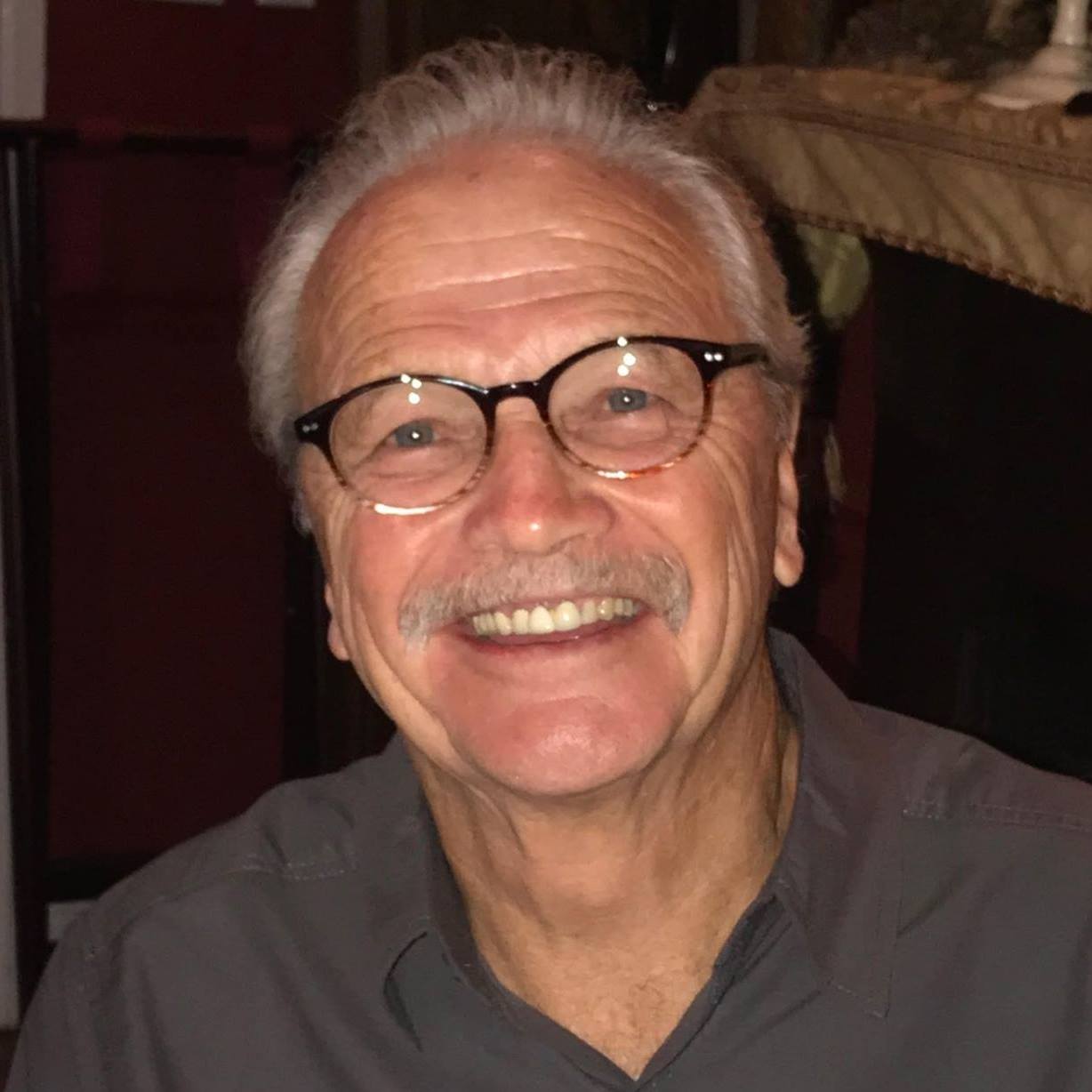
Donnie Bell is the current pastor of Lantana Grace Church in Crossville, TN.

Comments

0 / 2000 characters
Comments are moderated before appearing.

Be the first to comment!

Joshua

Joshua

Shall we play a game? Ask me about articles, sermons, or theology from our library. I can also help you navigate the site.