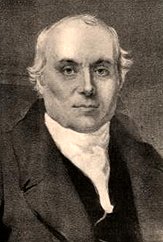
William Gadsby's letter to Edward Smyth systematically defends Reformed doctrine against Arminian theology by challenging the logical consistency of salvation dependent on human free will. Through a series of seven pointed questions citing Scripture, Gadsby argues that if sinners can possess God's eternal mercy, Christ's redemption, the Spirit's regeneration, justifying and sanctifying grace, adoption, and Christ himself—yet still perish—then salvation cannot truly depend on God's grace alone, exposing what he views as the internal contradiction of Arminianism. Gadsby concludes that genuine salvation must rest entirely upon God's sovereign, efficacious grace working through all aspects of redemption, not on any component of human choice or cooperation.
What does the Bible say about unconditional election?
The Bible affirms unconditional election, illustrating that salvation is solely by God's grace without dependence on human merit.
Ephesians 1:4-5, Romans 9:15-16, 2 Timothy 1:9
What does the Bible say about God's grace in salvation?
The Bible teaches that salvation is entirely dependent on God's sovereign grace and not on human free will (Ephesians 2:8-9).
Ephesians 2:8-9, John 1:13
How do we know that grace is sufficient for salvation?
God's grace is sufficient for salvation, as it covers all sin and provides the means for believers to be reconciled with Him.
Ephesians 2:8-9, Romans 3:24, 2 Corinthians 12:9
Why is the doctrine of unconditional election important for Christians?
Unconditional election assures believers that their salvation is secured by God's sovereign choice, not by their own actions (Romans 9:15-16).
Romans 9:15-16
Why is understanding the doctrine of total depravity important for Christians?
Understanding total depravity is crucial as it underscores humanity's need for God's grace in salvation.
Romans 3:10-12, Ephesians 2:1-5
How do we know that salvation depends entirely on God's grace?
The Bible explicitly states that salvation is by grace alone, supported by various scriptural affirmations (Titus 3:5-6).
Titus 3:5-6, Romans 3:23
What does the Bible say about free will and salvation?
The Bible teaches that human will is enslaved by sin and that true salvation comes solely through God's sovereign choice and grace (Romans 9:16).
Romans 9:16, Ephesians 2:1-3
Why is the concept of grace essential for Christian faith?
Grace is essential because it is the unearned favor of God that enables salvation and spiritual growth in believers (2 Timothy 1:9).
2 Timothy 1:9
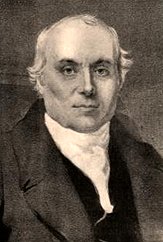
Note: The cause of the appearance of this work was a controversy which took place between Mr. Smyth, of St. Luke's Church, and Mr. Roby, then minister of the Independent Chapel, Grosvenor Street, Manchester. Mr. Smyth wrote a work entitled, "Paul against Calvin," to which Mr. Roby replied, and this work was issued as a further task for Mr. Smyth. The only answer that Mr. S. wrote was, that "as MR. G. had compared himself to a country rustic, he [Mr. S.] would pass him by as a good dog would in a farm-yard." Mr. Smyth-
Sir: Learning you are again preparing, or rather gathering together, another volume of scraps, which you intend to publish to the world in vindication of free-will, and to hold up to contempt the doctrine of electing grace, after having a thousand thoughts revolving in my mind upon the propriety or impropriety of interfering in the business, seeing you have, in many respects, been so ably handled already, I at last resolved to drop you a few lines, to which I request your very candid attention; for I assure you, as far as I know my own heart, I have nothing in view but the glory of the eternal God and the welfare of Zion.
And, first, you are hereby desired, as early as possible, to inform those characters whom your extraordinary piety induces you to hold up to public view as murderers, upon what ground the salvation of a poor sinner depends; whether it depends wholly and entirely upon the free grace of Jehovah, or whether it rests wholly and entirely upon man's free-will, or whether it be a joint concern, depending partly upon God's free grace, and partly upon man's free-will? Should you be disposed to give the preference to the first of these, you will have the goodness to reconcile that to your Arminian creed, and for the better clearing of the way, you will be very particular in stating upon what branch of the free grace of God salvation does absolutely depend; and lest you should mistake what I mean, I will just state a few things, unto which I hope you will conscientiously attend. And in the first place, does the salvation of a sinner depend upon the everlasting love or mercy of Jehovah, or is it not possible for a sinner to be interested in that mercy, which is from everlasting to everlasting (Psa. 103:17) and after all perish everlastingly? And if so, does it not evidently appear that salvation does not depend upon the mercy of God? But secondly, does salvation depend upon redeeming grace, and may the characters redeemed unto God by the precious blood of Christ (Rev. 5:9), depend upon the efficacy of the redemption of Christ for salvation, seeing they are thereby redeemed from all iniquity (Tit. 2:14), from the curse of the law (Gal. 3:13), and out of the pit where there is no water (Zech. 9:11), or may not a sinner be interested in the redemption of Christ, and be damned at last? And if so, does it not appear that salvation does not depend upon the redemption of Christ ? Thirdly, does salvation depend upon quickening, regenerating, or renewing grace? As it is written, "You hath he quickened, who were dead in trespasses and sins." (Eph. 2:1) "Not by works of righteousness which we have done, but according to His mercy He saved us, by the washing of regeneration and renewing of the Holy Ghost." (Tit. 3:5) Or may not a sinner be quickened, regenerated and renewed by the Holy Ghost, and after all be banished from the presence of the Lord into the burning lake of never-ending perdition? And if so, does it not appear that this grace is not sufficient to save a sinner? Fourthly, does salvation depend upon justifying grace? "Being justified freely by His grace, through the redemption that is in Christ Jesus." (Rom. 3:24) "And by Him all that believe are justified from all things, from which ye could not be justified by the law of Moses." (Acts 13:39) Or may not a sinner be justified by grace from all things, and after all be brought into condemnation, and have his everlasting portion with unbelievers in the torments of hell? If so, does it not appear that justifying grace will not save a sinner? Fifthly, does salvation depend upon sanctifying grace? as it is written, "And such were some of you; but ye are washed, but ye are sanctified, but ye are justified in the name of the Lord Jesus, and by the Spirit of our God." (1 Cor. 6: 1 1) Or may not a sinner be sanctified in the name of the Lord Jesus and by the Spirit of God, and be lost at last? If so, does it not appear that sanctifying grace will not save a sinner?
Sixthly, does salvation depend upon the grace of adoption? "According as He hath chosen us in Him before the foundation of the world, that we should be holy and without blame before Him in love: having predestinated us unto the adoption of children by Jesus Christ unto Himself, according to the good pleasure of His will." (Eph. 1:4, 5) Or may not a sinner receive the adoption of sons, be an heir of God through Christ, (Gal. 4:5-7), and fall short of Heaven at last? If so, does it not appear that salvation does not depend upon the grace of adoption? Now if salvation does not depend upon any of these, separately considered, will you have the goodness to inform us whether it depends upon the whole of them, jointly considered, as one infinite treasure of immortal grace; or may not a sinner be interested in the whole of them, and after all perish in his iniquity? That is, may not a sinner be interested in the unchanging mercy of God, and in the redemption by Christ, and in the quickening, regenerating and renewing influences of the Holy Ghost; and may he not be justified from all things, and be washed and sanctified by the Spirit of God; and may he not be a son and an heir of God; I say, may not a sinner be interested in the whole of this grace today, and tomorrow die in his sins? And if so, how can salvation be of grace? But in order to give you room for your strength, and allow you every fair opportunity of proving salvation to be all of God's free grace, and yet the creed for which you contend be of God, I will ask in the seventh place, does salvation depend on the unspeakable gift of grace, viz., Christ Jesus? For "Herein is love, not that we loved God, but that he loved us, and sent His Son to be the propitiation for our sins." (1 John 4:10) And if salvation depends on the unspeakable gift of grace, you will be particular in informing us what part of this gift it is that it depends. Does it depend upon the work of Christ, or upon the characters He bears, or the offices He fills, or the fullness that in Him dwells, or the union and relationship that subsists between Him and His church; does salvation depend upon these things jointly or separately, or may not a sinner be interested in the whole of this grace, and be lost at last? But to make the matter as straight as possible, I would ask, may not a sinner be interested in the work of Christ, that is, in his active and passive obedience on earth, and his intercession in Heaven; and may he not build upon Christ as a foundation; shelter in Him as a hiding-place from the wind; rest upon Him as a resting-place; bathe in Him as the fountain opened for the house of David and the inhabitants of Jerusalem for sin and uncleanness; enter into the sheepfold by Him, as the door and strait gate; trust in Him as the Lord, his rock and fortress, and deliverer, and strength, and buckler, and as the horn of his salvation, and his high tower (Psa. 18:2); may he not receive Him as his Prophet, Priest and King; as the Captain of his salvation, his Day's-man, his Surety, Advocate and Mediator; may not a sinner live upon Him as the bread of Heaven, the water of life, and the wine of the kingdom; may he not be interested in Him as the everlasting Father, and the elder Brother, yea, a Friend that sticketh closer than a brother; may he not be united to Him as a loving Husband and a living Head; may not his life be hid with Christ in God, and he be life of His life, body of His body, bone of His bones, and flesh of His flesh; in a word, may not a sinner receive Christ as the Lord his righteousness and strength, his portion, and his all in all; be blessed with repentance unto life, and have Christ in him the Hope of glory; "be born again, not of corruptible seed, but of incorruptible, by the word of God, which liveth and abideth forever" (1 Peter 1:23); be blessed with the fruits of the Spirit, as "love, joy, peace, long-suffering, gentleness, goodness, faith, meekness, and temperance" (Gal. 5:22, 23) ; and after all be brought into condemnation? And if a poor sinner can be interested in the whole of this grace, and be lost at last, do, sir, for the Lord and truth's sake, and for the sake of poor, perishing sinners, inform us upon what salvation does absolutely depend.
I presume it is impossible to propose to you, or to any other person, a subject of great importance, and therefore I hope you will use all diligence to make the matter clear and straight; and if, upon due inspection and cool deliberation, you conclude that no sinner can be interested in the whole of this grace, and be damned at last, you will then, without the least reserve, inform us what part of it a sinner may be interested in, and yet be lost, and what part he cannot be interested in, and miss Heaven, that we may be able to form some just views of our real state, and be no longer left at an uncertainty about the grounds upon which salvation absolutely depends. Should you be disposed to give the preference to man's free will, and inform us that salvation depends upon the will of man, you will inform us how such a sentiment agrees with the word of God. But if, after all, you cannot feel any regard for me, yet for the truth's sake, and for the sake of poor, perishing sinners, you will inform us how such a sentiment agrees with the following passages of Holy Writ: The first passage that I will recommend to your attention upon this part of the subject is John 1:13: "Which were born, not of blood, nor of the will of the flesh, nor of the will of man, but of God." The second is in Romans 9: "So then it is not of him that willeth, nor of him that runneth, but of God that showeth mercy." The third is Eph. 2:8,9: "For by grace are ye saved through faith: and that not of yourselves: it is the gift of God; not of works, lest any man should boast." The fourth is 2 Tim. 1:9: "Who hath saved us, and called us with an holy calling, not according to our works, but according to His own purpose and grace, which was given us in Christ Jesus before the world began." The fifth is James 1:18: "Of His own will begat He us with the word of truth, that we should be a kind of firstfruits of His creatures." The sixth is Philippians 1:6: "Being confident of this very thing, that He Who hath begun a good work in you will perform it until the day of Jesus Christ." The seventh is Acts 13:48: "And as many as were ordained to eternal life believed." See also the first six verses of the second chapter to the Ephesians. I could produce many more, but am inclined to think the above will be as many as you will be able to manage, and keep free-will upon its throne.
We also earnestly wish you to inform us whether the will of man became completely perverse by the introduction of sin, or whether it was only slightly injured, or whether it was injured at all; and if the former, what you and your brethren mean by free-agency and free-will; and if the latter, and salvation depends upon free-will, what do you mean by praying that God will have mercy upon all men, and save them with an everlasting salvation, and then tell the congregation that God has done all He can to save them, and the matter now rests with them, whether they will be saved or not? Surely, such vain jangling can never be acceptable to God, however it may feed the carnal mind of man; for if God has done all He can, why pray to Him to do more? and if He has not done all He can, why tell the people He has? Strange as such contradictions may seem to a sensible mind, they are frequently produced in the course of one hour by an Arminian preacher. Now, sir, depend upon it, the credit of your favorite system depends much on these things being made to appear clear; nor can an experienced child of God be satisfied with a shuffling put off.
If you feel disposed to say that the salvation of a sinner, is a joint concern, depending partly upon God's free grace, and partly upon man's free-will, you will doubtless be careful to inform us, where such a salvation is recorded, and how it agrees with the following passages of Holy Write: "I, even I, am the Lord; and beside me there is no Savior." (Isa. 43:11) "Neither is there salvation in any other; for there is none other name under heaven given among men. whereby we must be saved." (Acts 4:12) "And if by grace, then it is no more of works, otherwise grace is no more grace. But if it be of works, then it is no more of grace; otherwise work is no more work." (Rom. 11:6) "Who hath directed the Spirit of the Lord, or being His counsellor hath taught Him? With whom took He counsel, and who instructed Him, and taught Him in the path of judgment, and taught Him knowledge, and showed to Him the way of understanding? Behold, the nations are as a drop of the bucket, and are counted as the small dust of the balance! behold, he taketh up the isles as a very little thing. And Lebanon is not sufficient to burn, nor the beasts thereof sufficient for a burnt offering. All nations before Him are as nothing; and they are counted to Him less than nothing, and vanity." "It is He that sits upon the circle of the earth, and the inhabitants thereof are as grasshoppers; that stretcheth out the heavens as a curtain, and spreadeth them out as a tent to dwell in; that bringeth the princes to nothing; he maketh the judges of the earth as vanity." (Isa. 40:13-17, 22, 23) And again: "For ye see your calling, brethren, how that not many wise men after the flesh, not many mighty, not many noble, are called; but God hath chosen the foolish things of the world to confound the wise" (pray, sir, do not forget that) ; "and God hath chosen the weak things of the world to confound the things that are mighty; and base things of the world, and things which are despised, hath God chosen, yea, and things which are not, to bring to naught things that are. that no flesh should glory in His presence." (I. Cor. 1:26-29)
Now from this account given of man by the eternal God, it evidently appears that all the nations of the earth are but as a drop of the bucket, or the small dust of the balance, as grasshoppers, having no might; nay, they are as nothing, and less than nothing, and vanity. What flesh can bear it? Well, be it as mortifying as it may to proud man, God informs us by the mouth of the psalmist that "every man at his best state is altogether vanity." (Psa. 39:5) And it evidently appears that if any of these particles of nothing.-, and less than nothing, and vanity, appear to shine brighter than the rest, there are but few of these saved. But God has chosen the foolish, the weak, the base, and the despised; and the end answered thereby is, that no flesh should glory in His presence; that, according as it is written, "He that glorieth, let him glory in the Lord."
Now, sir, in case you should still feel yourself inclined to maintain that salvation is a joint concern, partly depending upon the free grace of God, and partly upon man's free will, your work in this business is judiciously to inform us what deficiency there is in the free grace of the eternal Jehovah, and in what sense He needs the aid and assistance of this drop of the bucket, this small dust of the balance, these wonderful grasshoppers, these particles of nothing, and less than nothing, and vanity, yea, these foolish, weak, base, and despised particles of less than nothing, who, at their best estate, are altogether vanity; I say, sir, your work is to inform us, and that with the greatest accuracy and clearness, wherein these worms can aid and assist the great Jehovah in their eternal salvation, and upon what part of their aid salvation depends. And having done this, you will then inform us whether it be just and righteous in God to demand all the glory, and not to admit any flesh to glory in His presence, but in the Lord, seeing that all the goings forth of the free grace of God will never save one sinner, if the sinner neglect to do his part. It is to be hoped that you will not pass these things over as trivial matters, for they are matters of the greatest importance; and surely it behooves every sinner that expects to go to Heaven to be well persuaded in his own mind upon what ground his salvation depends, lest he should be building upon a false foundation, and, after all his diligence and watchfulness, be found wrong at last.
Now, sir, as your conscience is so tender that you could not satisfy it till you had protested against the doctrine of unconditional election, you surely cannot die in peace without answering these important questions; important, I say, for I repeat it again, that nothing can be of greater importance than to know upon what ground salvation does absolutely depend; and if it will not be thought insulting your superior abilities and understanding, I will remark, that should you find yourself inadequate to the task, you are at full liberty to call in the assistance of any of your brethren, and truly they are many; for if the matter be but fully and clearly stated, it matters not to us whether the statement be the work of an individual, or the joint concern of a host; it is the truth itself we want to appear. You will perhaps wonder that I so frequently mention the pronoun us, as if this epistle was a joint concern; but if you will only read a small pamphlet called "A Dialogue between a Barber's Block and a Methodist Minister," your wonder will perhaps be at an end, for there you will see the same question proposed, namely, "What is it that saves a lost sinner?" in which pamphlet some of the above questions are asked. Thus you see that I am not the only person who wishes to know upon what ground salvation absolutely depends; and as I have never heard of any of your brethren that have ventured to solve the important question, I thought if the question be put to Mr. Smyth, and the nature of it be clearly stated to him, who can tell but he will exercise his superior talents in giving a plain, unequivocal, decisive answer; and I think I may venture to say, that in this town I can find some hundreds of people who feel themselves interested in the subject, and who will be sure to conclude that if Mr. Smyth does not answer the above, the just reason will be because he cannot. And therefore, if neither regard for the truth of God, nor a concern for the welfare of souls, will induce you to answer this epistle, let your credit as a man of learning and talent have some weight with you, and never let it be said that country rustic, William Gadsby, has proposed questions to the Reverend Edward Smyth, formerly of Trinity College, Dublin, which he is not able to answer without exposing the fallacy of his own creed, and that, therefore, rather than do that, he will pass them by in cowardly silence.
I would not have solicited an answer, did not the subject appear to me to be a matter of the greatest moment. I am acquainted with characters who are in possession of an immortal soul, and consider themselves bound for an eternal world, and have had, or imagine they have had, some Soul-ravishing foretastes of immortal felicity, and are living in daily expectation that, "When the earthly house of this tabernacle is dissolved, they have a building of God, a house not made with hands, eternal in the heavens," where they shall be forever free from sin (a monster that their better part abhors), yea, where they shall be free from all the insults of hell, the sorrows of the world, and every lurking care, fear and distress, and be forever with the Lord: where they shall see as they are seen, and know as they are known, and in one immortal song chant forth the high praises of the triune Jehovah forever and ever. Oh how the soul longs to be with Christ, which is far, infinitely far better than to dwell below! Indeed, sir, they are expecting the period to arrive very soon, when their immortal sight will be favored with a clear view of the majestic blaze of Jehovah's unsullied glory, when all their powers will be sweetly employed in realizing those immortal blessings which are in reserve for those who wait upon God. But if, after all, they are only building such expectations upon a false foundation, how awful, how dreadfully awful will be the disappointment! The very thought of being disappointed convulses the whole frame; and when such a thought prevails any length of time, it produces a tremor in the mind not to be expressed by tongue or pen. Therefore, to such souls no subject can be of greater importance than that now proposed for your consideration. We might expect to be princes and emperors, and be disappointed, but a disappointment of this nature is not worth a thought compared with the above; for all the riches, pleasures, honor and dignity which this world can afford are but poor, fleeting, perishing trash. A few years at most puts an end to the whole, and the beggar upon the dung-hill, and the king upon the throne, will become equally level with the dust. But to be disappointed in soul concerns, concerns of an eternal nature, is awful beyond description; therefore, if Mr. S., or any of his brethren, feel any regard for poor, perishing sinners, who are thirsting for God, even the living God, let them inform us, with the greatest accuracy, upon what salvation's does absolutely depend, that we may know upon what to ground our expectations.
Bear with me a moment, sir, for I have one thing more to propose, and then I have done for the present. If, after you have dispassionately discussed the above subject, you should still think yourself doing the work of an evangelist in holding up to contempt the doctrine of unconditional election, and still maintain that upon the ground of such a doctrine God is more barbarous than the worst of tyrants, nay, even as sanguinary and implacable as Appollyon himself, you will have the modesty to inform us what there is in sinners, and what they have done, that lays the eternal God under the obligation of providing for them a Savior.
Now, sir, either God is just in electing some according to the good pleasure of His will, leaving the rest without what you call a chance of being saved, or else man must have some just and righteous claim upon Him, whereby he has a right to demand salvation at His hands. Suppose upon this subject we propose a passage of Scripture for your consideration; and if we turn our thoughts to the third chapter to the Romans, we shall see that there were characters who slanderously reported the apostles, and affirmed that they said, "Let us do evil, that good may come," whose damnation, we are informed, is just. Having given this statement of the matter, does the apostle then begin to admire his own goodness, and the goodness of the rest of the apostles and believers in Christ Jesus, and intimate that they were characters more worthy of Jehovah's complacency and delight than those whose damnation is just? No, not a single hint of the nature, but quite the reverse. Hence he asks, "What then? Are we better than they?" To which he replies, "No, in no wise." That is, if I understand him aright, we are in no sense whatever more deserving of the favor of God than they: for we are by nature no better than they, but were by nature children of wrath, even as others. But what is the reason the apostle gives for such an assertion? A very plain and a very obvious one indeed, namely, that both Jews and Gentiles are under sin; and then, to illustrate the point, he quotes a variety of passages from the Old Testament, which give a short description of the real state of man by nature; at it is written, "There is none righteous, no, not one: there is none that understandeth, there is none that seeketh after God; they are all gone out of the way, they are together become unprofitable; there is none that doeth good, no, not one; their throat is an open sepulchre; with their tongues they have used deceit; the poison of asps is under their lips; whose mouth is full of cursing and bitterness; their feet are swift to shed blood; destruction and misery are in all their ways, and the way of peace have they not known; there is no fear of God before their eyes."
This, sir, is a short description of fallen man, given by holy men of old who spake as they were moved by the Holy Ghost; and from the same unerring authority we learn that "God made man upright, but men have sought out many inventions." Fertile inventions indeed, if the above be a true description of them, and who dare deny it? And pray, sir, for which of all these inventions is the eternal God obliged to provide salvation? Or what virtue can there be in these things, jointly or separately considered, sufficient to merit the immortal favor of Jehovah, or to render Him an unjust tyrant in case He gives them their portion with fallen angels? Does their virtue lie in their want of righteousness, and so because they are altogether unlike God He is necessitated to love and redeem them, or be unjust? Or does the virtue lie in their dreadful ignorance or want of understanding, or because they seek not after God, "having their understanding darkened, being alienated from the life of God, through the ignorance that is in them, because of the blindness of their heart?" (Eph. 4:18) Or does it lie in their having gone out of the way, and being altogether unprofitable, or because they do no good, seeing that they that are in the flesh cannot please God? Or does the virtue lie in that dreadful stench of sin which they emit through their throat, which is an open sepulchre, or in the deceit which they use with their tongues? Or is it in the poison of asps under their lips, which is a composition of every species of sin and rebellion? Or is it in that mouth full of cursing and bitterness they possess? Or does it lie in the swiftness of their feet to shed blood, or in the destruction and misery that are in their ways, or because they are strangers to the way of peace? Or does the virtue lie in their having no fear of God before their eyes? Now, sir, if there be no virtue in the whole of this, jointly or separately, that lays the eternal God under an obligation of extending His mercy toward, and bestowing His special favors upon them, He must be just in saving some, as the effect of His own purpose of grace, and leaving the rest to perish in their sins; I say, Jehovah must be just in so doing, unless His justice can be impeached upon some other foundation than what has already been stated. But as I said in the beginning of this letter, that I have nothing in view but the glory of God and the welfare of Zion, so I say again, and can assure you that I do not wish to take any unjust advantage of you or your creed. We will, therefore, for the sake of getting more fully to the real truth, suppose that some men by nature are not so vile as others, and we will suppose that those who believe in the doctrine of unconditional election are by far the worst, and that those who believe in the doctrine you profess are by far the best, and we put the question to each, Do you believe that the eternal God would have been just had He left you to perish in your sins? What says the electionist to this question? Me thinks I see every one who in heart believes the doctrine, from a feeling sense of its intrinsic glory, ready to say, without the least reserve, Just indeed! I have been astonished, almost to an infinite degree, that He could be just in saving me. I am quite sure I have deserved His righteous indignation in thousands of instances, and had He seen fit to banish me from His presence, into that place where hope never cometh, I must have said, even then, it is what I justly deserve. Thanks be to God for His unspeakable gift! Adored be His eternal name, that He has brought my poor, guilty, ruined, hell-deserving soul to know that He has made Him to be sin though He knew no sin, and in the riches of His grace has made such a God-dishonoring wretch as I the righteousness of God in Him! "Wonder, O heavens! and be astonished, O earth! for the Lord hath done it." When by a precious faith I am enabled to behold unworthy me among the sons of God, the purchase of the precious blood of Christ, I am lost in wonder, I sink to nothing before Him, and am compelled, sweetly compelled to cry from my very soul, "Lord, how is it that thou wilt manifest thyself unto me, and not unto the world?" (John 14:22) I am persuaded that it is not for works of righteousness which I have done, but according to His mercy He saved me, by the washing of regeneration and the renewing of the Holy Ghost. O my soul! let all thy powers unite in praising the eternal God for so great a salvation. Great God! fill me with Thy blessed self; and may it ever be my highest ambition to be nothing, and to magnify Thine infinitely adorable name.
But hark! What do I hear? Is it not the voice of Mr. S. calling such language "cant"? O, fie, fie, blush for shame! But whether you are capable of blushing or not, this is the language of a sinner saved by grace; and if you and your brethren were to call it by the detestable name of cant, ten-thousand times ten-thousand twice told, it would be their language still. I admit it is language that hardly becomes a man who believes that God would be an unjust tyrant if He did not provide salvation for him; for what thanks can be to Jehovah for redeeming characters whom He in justice is bound to redeem? He either must do it or impeach His justice; and then wherein can grace and mercy shine? Indeed, sir, I am greatly mistaken if upon an inspection you are not induced to call the terms, grace, mercy and compassion of God, cant, too, or else give up that for which you plead. If salvation be a just debt that God owes to His fallen creatures (and it must be, if He would be unjust in case He did not provide it), how can it be of grace and mercy? If your mind be not overwhelmed with enmity, against the sovereignty of God, let these thoughts occupy it for a moment at least.
But we will now turn our thoughts to those characters whom we supposed might be considered the best sort of sinners, namely, the Arminians. [Those who credit their eternal salvation upon anything they can think, say, or do.] Will Mr. S. inform us what claim these have upon the Almighty for an everlasting salvation? Now, sir, we earnestly wish you to be very particular in telling us what they have in them, or what is done by them, that is so virtuous in its own nature as to oblige the eternal God to provide salvation for them, or else be a cruel, unjust tyrant. But in order to get at the truth, we will suppose that Mr. S. is not able to answer for all this body, seeing they are so amazingly numerous, and we will therefore bring the matter into a narrow compass, and he shall be desired to answer for himself only. Then the matter now rests here: If you feel yourself inadequate to answer for the whole, you are desired to come forward and truly declare, without any reserve, what you have done that lays the mighty God under an obligation of providing salvation for you, and wherein Jehovah will be an unjust tyrant if He does not give you a chance of being saved. We hope you will state upon what grounds you can appeal to the infinite God, and tell Him you have a right in justice to expect salvation at His hands, and that if He withholds it, and leaves you to perish in your sins, He, is no less than a capricious tyrant.
Should you feel yourself disposed to say that Jehovah ought to have prevented the fall of man, or provided a salvation that extends to all the fallen race, you will then, no doubt, inform us from what quarter such an obligation arises or how Jehovah came to be thus obliged, and whether He was not as much under the same obligation toward angels as men; and if He be just in leaving fallen angels to perish, without a possibility of being saved, upon what ground can His justice be impeached in leaving fallen man to the same condemnation? If Satan were as much disposed to cavil with the sovereignty of God as Mr. S., and had the same opportunity of publishing his views to the world through the medium of the press, could he not represent the Almighty in as odious a light, for passing by fallen angels and redeeming fallen men (seeing they are all the creatures of God), as Mr. S. has done, upon the ground of unconditional election? Indeed, sir, to be consistent with yourself, it is high time your bowels began to yearn a little over fallen angels, and instead of calling Satan the destroyer, and arch-fiend, etc., represent him in the same favorable light as you do fallen man, and be a complete champion for universal charity at once. O, sir, think and tremble. I have often thought that man excels Satan himself in rebellion against God; for though we read of him tempting Christ, and of him crying out, "What have we to do with Thee, Jesus, Thou Son of God? Art Thou come to torment us before the time?" yet we hear nothing about his calling Him a capricious tyrant, because He has not given them a chance of being saved. No, this species of rebellion appears to be the sole prerogative of ruined man. I have no more to say at present, only again to solicit your candid attention to the things proposed, and to request that you will give us a plain, unequivocal, decisive answer. That the truth of God may run and be glorified, is the prayer of
Yours to serve in the gospel of the Lord Jesus Christ,
-William Gadsby

Comments
Your comment has been submitted and is awaiting moderation. Once approved, it will appear on this page.
Be the first to comment!