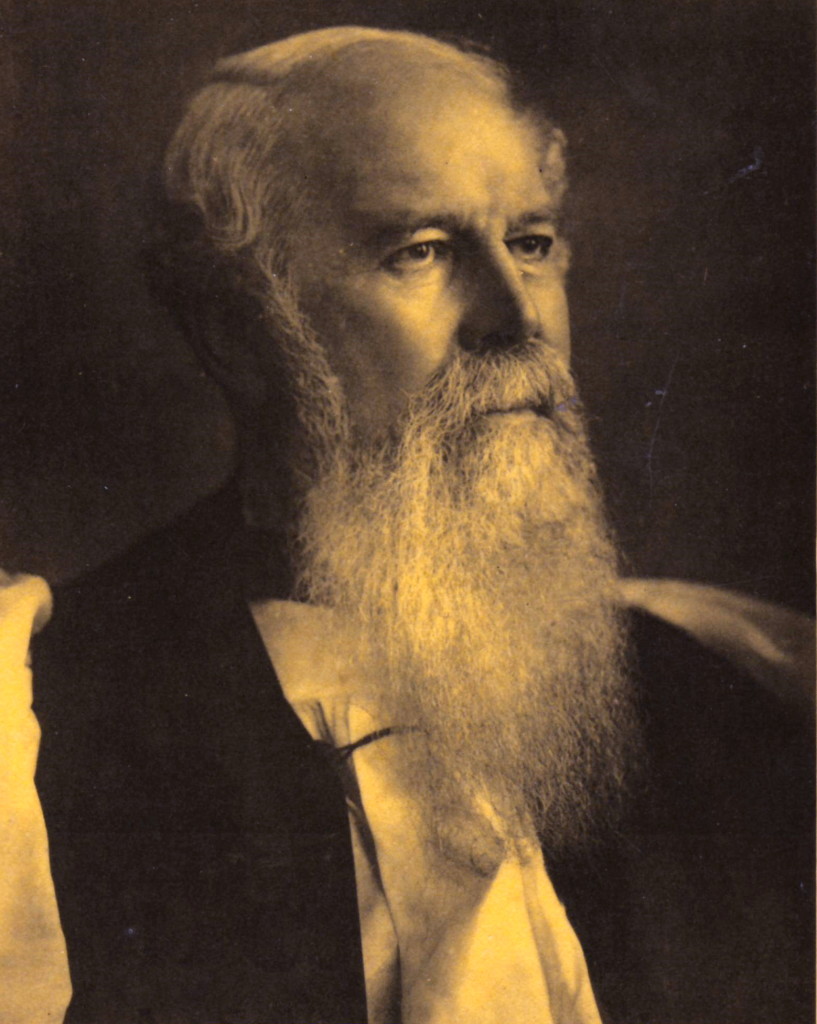
The main theological topic addressed in J.C. Ryle's exposition of Matthew 1:1-17 is the importance of Scripture and the significance of Christ's lineage. Ryle argues that the genealogy presented not only fulfills God's promises to Abraham and David, but also emphasizes the faithfulness of God in keeping His Word (Genesis 12:3; Isaiah 11:1). He reinforces the doctrine of total depravity by highlighting the sinful nature of descendants like Rehoboam and Joram, illustrating that grace is not inherited but must be actively sought (John 1:13). The practical significance of this passage lies in the assurance that, despite human corruption, Christ's mercy and compassion extend to all, encouraging believers to relish their connection to Him and the promise of salvation through faith.
Key Quotes
“The book before us contains not the word of men but of God. Every verse in it was written by inspiration of the Holy Spirit.”
“Let no one think that these verses are useless... Nothing is useless in the Bible.”
“Grace does not run in families. It needs something more than good examples and good advice to make us children of God.”
“If Jesus was not ashamed to be born of a woman whose pedigree contained such names... we need not think that He will be ashamed to call us brethren.”
What does the Bible say about the importance of Scripture?
The Bible emphasizes the importance of Scripture as divinely inspired and central to our faith, guiding us to eternal life.
2 Timothy 3:16-17
How do we know God's promises are true?
God's promises are evidenced in the genealogy of Christ, fulfilling His covenant with Abraham and David.
Genesis 12:3, Isaiah 11:1
Why is the genealogy of Jesus significant?
The genealogy of Jesus highlights God's faithfulness to His promises and the fulfillment of His plan for salvation.
Matthew 1:1-17
What does the Bible teach about human nature?
The Bible teaches that human nature is inherently sinful, reflecting the need for regeneration by the Holy Spirit.
John 1:13
Why is understanding Christ's humanity important?
Understanding Christ's humanity underscores His compassion and ability to empathize with our struggles.
Philippians 2:7-8
These verses begin the New Testament. Let us always read them with serious and solemn feelings. The book before us contains not the word of men, but of God. Every verse in it was written by inspiration of the Holy Spirit.
Let us thank God daily for giving us the Scriptures. The poorest Englishman who understands his Bible, knows more about religion than the wisest philosophers of Greece and Rome.
Let us remember our deep responsibility. We shall all be judged at the last day according to our light. To whomsoever much is given, of them much will be required.
Let us read our Bibles reverently and diligently, with an honest determination to believe and practice all we find in them. It is no light matter how we use this book. Eternal life or death depends on the spirit in which it is used.
Above all let us humbly pray for the teaching of the Holy Spirit. He alone can apply truth to our hearts, and make us profit by what we read.
The New Testament begins with the life, death, and resurrection of our Lord Jesus Christ. No part of the Bible is so important as this, and no part is so fulland complete. Four distinct Gospels tell us the story of Christ's doing and dying. Four times over we read the precious account of His works and words. How thankful we ought to be for this! To know Christ is life eternal. To believe in Christ is to have peace with God. To follow Christ is to be a true Christian. To be with Christ will be heaven itself. We can never hear too much about Jesus Christ.
The Gospel of Matthew begins with a long list of names. Sixteen verses are taken up with tracing a pedigree from Abraham to David, and from David to the family in which Jesus was born. Let no one think that these verses are useless. Nothing is useless in creation. The least mosses, and the smallest insects, serve some good end. Nothing is useless in the Bible. Every word of it is inspired. The chapters and verses which seem at first sight unprofitable, are all given for some good purpose. Look again at these sixteen verses, and you will see in them useful and instructive lessons.
Learn from this list of names, that God always keeps His word. He had promised, that in Abraham's seed all the nations of the earth should be blessed. He had promised to raise up a Savior of the family of David. (Gen. 12:3; Isaiah 11:1.) These sixteen verses prove, that Jesus was the son of David and the son of Abraham, and that God's promise was fulfilled. Thoughtless and ungodly people should remember this lesson, and be afraid. Whatever they may think, God will keep His word. If they repent not, they will surely perish. True Christians should remember this lesson, and take comfort. Their Father in heaven will be true to all His engagements. He has said, that He will save all believers in Christ. If He has said it, He will certainly do it. "He is not a man that He should lie." "He remains faithful—He cannot deny Himself." (2 Tim. 2:13.)
Learn next from this list of names, the sinfulness and corruption of human nature. Observe how many godly parents in this catalogue had wicked and ungodly sons. The names of Rehoboam, and Joram, and Amon, and Jechoniah, should teach us humbling lessons. They had all pious fathers. But they were all wicked men. Grace does not run in families. It needs something more than good examples and good advice to make us children of God. Those who are born again are not born of blood, nor of the will of the flesh, nor of the will of man, but of God, (John 1:13.) Praying parents should pray night and day, that their children may be born of the Spirit.
Learn lastly from this list of names, how great is the mercy and compassion ofour Lord Jesus Christ. Think how defiled and unclean our nature is; and then think what a condescension it was in Him to be born of a woman, and "made in the likeness of men." Some of the names we read in this catalogue remind us of shameful and sad histories. Some of the names are those of people never mentioned elsewhere in the Bible. But at the end of all comes the name of the Lord Jesus Christ. Though He is the eternal God, He humbled Himself to become man, in order to provide salvation for sinners. "Though he was rich, yet for our sakes he became poor."
We should always read this catalogue with thankful feelings. We see here that no one who partakes of human nature can be beyond the reach of Christ's sympathy and compassion. Our sins may have been as black and great as those of any whom Matthew names. But they can not shut us out of heaven, if we repent and believe the gospel. If Jesus was not ashamed to be born of a woman, whose pedigree contained such names as those we have read today, we need not think that He will be ashamed to call us brethren, and to give us eternal life.

Comments
Your comment has been submitted and is awaiting moderation. Once approved, it will appear on this page.
Be the first to comment!