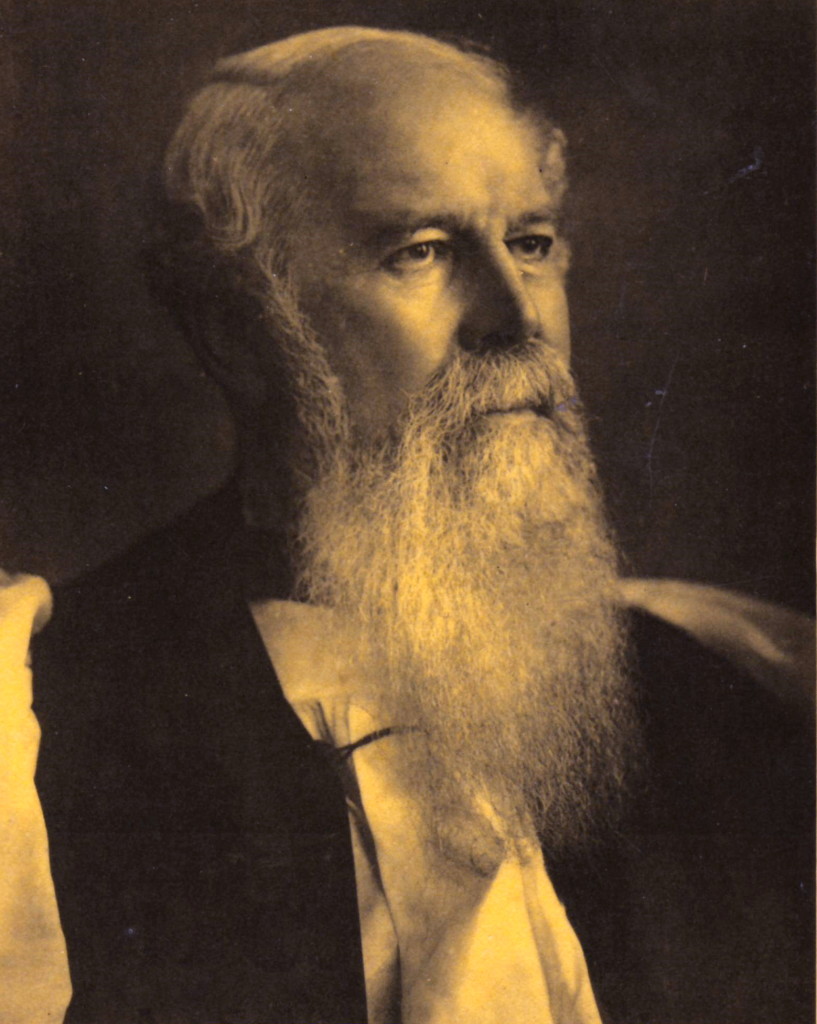
The article "Expository Thoughts on Matthew 14:22-36" by J.C. Ryle focuses on the theological themes surrounding the miracle of Jesus walking on water and Peter's subsequent attempt to do the same. Ryle asserts that this miracle illustrates Christ's absolute dominion over creation, reinforcing the belief that all things are under His control, as demonstrated in Psalm 93:4. He also highlights the transformative power Jesus imparts to believers, allowing them to achieve what seems impossible, supported by Scripture such as John 14:12. Ryle emphasizes the dual themes of faith and doubt, showing how Peter’s temporary fear and sinking serve as a metaphor for the struggles of believers, ultimately underscoring Christ's mercy and readiness to rescue those with even the smallest faith.
Key Quotes
“The power and mercy of the Lord Jesus and the mixture of faith and unbelief in His best disciples are beautifully illustrated.”
“Let us fear nothing if we are in the path of duty. The waters may seem deep, but if Jesus says Come, we have no cause to be afraid.”
“Doubting does not prove that a man has no faith but only that his faith is small.”
“While we do not despise little faith, we must not sit down content with it. Our prayer must ever be, Lord increase our faith.”
What does the Bible say about Jesus walking on water?
The Bible records Jesus walking on water in Matthew 14:22-36, showcasing His authority over creation.
Matthew 14:22-36, Psalm 93:4
How do we know that Christ has dominion over all things?
Scripture affirms Christ's dominion over creation, demonstrated through His miracles, including walking on water.
Matthew 14:25-27, Hebrews 1:3
Why is faith important for Christians?
Faith is essential for Christians as it connects them to God's power and enables them to overcome challenges.
Matthew 14:28-33, John 14:12
What does Jesus teach us about doubt and unbelief?
Jesus teaches that doubt can hinder our faith; however, He remains merciful and ready to help us in our weakness.
Matthew 14:30-31, Psalm 94:18
Why should Christians trust in Christ's mercy?
Christ's mercy assures believers that even in weakness, help is always available and His promises are unfailing.
Matthew 14:31, Hebrews 13:5
The history contained in these verses, is one of singular interest. The miracle here recorded brings out in strong light the character both of Christ and His people. The power and mercy of the Lord Jesus, and the mixture of faith and unbelief in His best disciples, are beautifully illustrated.
We learn, in the first place, from this miracle, what absolute dominion our Savior has over all created things. We see Him "walking on the sea," as if it was dry land. Those angry waves which tossed the ship of His disciples to and fro, obey the Son of God, and become a solid floor under His feet. That liquid surface, which was agitated by the least breath of wind, bears up the feet of our Redeemer, like a rock. To our poor, weak minds, the whole event is utterly incomprehensible. The picture of two feet walking on the sea, is said by Doddridge to have been the Egyptian emblem of an impossible thing. The man of science will tell us, that for material flesh and blood to walk on water is a physical impossibility. Enough for us to know that it was done. Enough for us to remember, that to Him who created the seas at the beginning, it must have been perfectly easy to walk over their waves when He pleased.
There is encouragement here for all true Christians. Let them know that there is nothing created, which is not under Christ's control. "All things serve Him." He may allow His people to be tried for a season, and tossed to and fro by storms of trouble. He may be later than they wish in coming to their aid, and not draw near until the "fourth watch of the night." But never let them forget that winds, and waves, and storms are all Christ's servants. They cannot move without Christ's permission. "The Lord on high is mightier than the voice of many waters, yes than the mighty waves of the sea." (Psalm 93:4.) Are we ever tempted to cry with Jonah, "the flood was all around me. All your waves and your billows passed over me." (Jonah 2:3.) Let us remember they are "His" billows. Let us wait patiently. We may yet see Jesus coming to us, and "walking on the sea."
We learn, in the second place, from this miracle, what power Jesus can bestow on those who believe on Him. We see Simon Peter coming down out of the ship, and walking on the water, like His Lord. What a wonderful proof was this of our Lord's divinity! To walk on the sea Himself was a mighty miracle. But to enable a poor weak disciple to do the same, was a mightier miracle still.
There is a deep meaning in this part of our history. It shows us what great things our Lord can do for those that hear His voice, and follow Him. He can enable them to do things which at one time they would have thought impossible. He can carry them through difficulties and trials, which without Him they would never have dared to face. He can give them strength to walk through fire and water unharmed, and to get the better of every foe. Moses in Egypt, Daniel in Babylon, the saints in Nero's household, are all examples of His mighty power. Let us fear nothing, if we are in the path of duty. The waters may seem deep. But if Jesus says, "Come," we have no cause to be afraid. "He who believes in me, the works that I do he will do also, and greater works than these will he do." (John 14:12.)
Let us learn, in the third place, from this miracle, how much trouble disciples bring on themselves by unbelief. We see Peter walking boldly on the water for a little way. But by and bye, when be sees "the wind was strong," he is afraid, and begins to sink. The weak flesh gets the better of the willing spirit. He forgets the wonderful proofs of his Lord's goodness and power, which he had just received. He considered not that the same Savior who had enabled him to walk one step, must be able to hold him up forever. He did not reflect that he was nearer to Christ when once on the water, than he was when he first left the ship. Fear took away his memory. Alarm confused his reason. He thought of nothing but the winds and waves and his immediate danger, and his faith gave way. "Lord," He cried, "save me."
What a lively picture we have here of the experience of many a believer! Howmany there are who have faith enough to take the first step in following Christ, but not faith enough to go on as they begun. They take fright at the trials and dangers which seem to be in their way. They look at the enemies that surround them, and the difficulties that seem likely to beset their path. They dwell on them more than on Jesus, and at once their feet begin to sink. Their hearts faint within them. Their hope vanishes away. Their comforts disappear. And why is all this? Christ is not altered. Their enemies are not greater than they were. It is just because, like Peter, they have ceased to look to Jesus, and have given way to unbelief. They are taken up with thinking about their enemies, instead of thinking about Christ. May we lay this to heart, and learn wisdom.
Let us learn, in the last place, from this miracle, how merciful our Lord Jesus Christ is to weak believers. We see Him stretching forth His hand immediately to save Peter, as soon as Peter cried to Him. He does not leave him to reap the fruit of his own unbelief, and sink in the deep waters. He only seems to consider his trouble, and to think of nothing so much as delivering him from it. The only word He utters, is the gentle reproof, "You of little faith, why did you doubt?"
Behold in this concluding part of the miracle, the exceeding "gentleness of Christ!" He can bear with much, and forgive much, when He sees true grace in a man's heart. As a mother deals gently with her infant, and does not cast it away because of its little waywardness and frowardness, so does the Lord Jesus deal gently with His people. He loved and pitied them before conversion, and after conversion He loves and pities them still more. He knows their feebleness, and bears long with them. He would have us know that doubting does not prove that a man has no faith, but only that his faith is small. And even when our faith is small, the Lord is ready to help us. "When I said, my foot is slipping, your loving-kindness, O Lord, held me up." (Psalm. 94:18.)
How much there is in all this to encourage men to serve Christ! Where is the man that ought to be afraid to begin running the Christian race, with such a Savior as Jesus? If we fall, He will raise us again. If we err, He will bring us back. But His mercy shall never be altogether taken from us. He has said, "I will never leave you, nor forsake you," and He will keep His word. May we only remember, that while we do not despise little faith, we must not sit down content with it. Our prayer must ever be, "Lord, increase our faith."

Comments
Your comment has been submitted and is awaiting moderation. Once approved, it will appear on this page.
Be the first to comment!