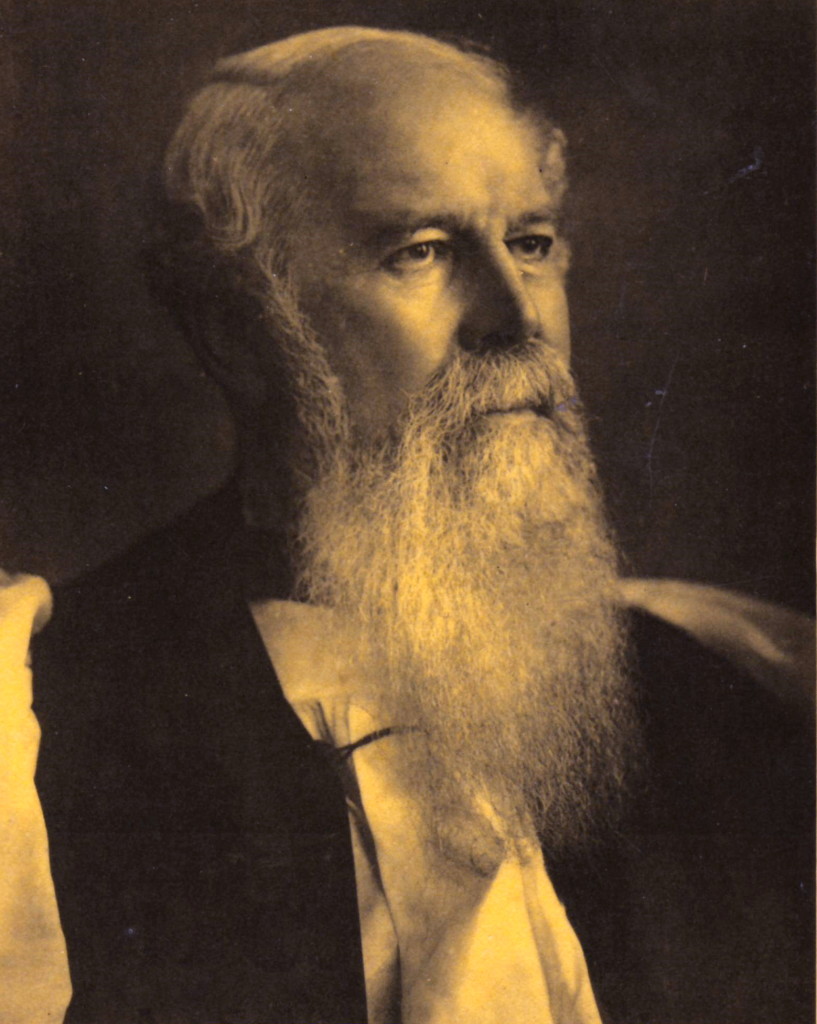
In J.C. Ryle's exposition of Luke 20:27-40, the main theological topic is the doctrine of resurrection. Ryle argues that the Sadducees' denial of the resurrection reveals the ancient nature of unbelief, illustrating how skepticism has permeated even the historical Church. He cites Jesus' response regarding the resurrection, emphasizing the eternal state of believers and their nature in the world to come, where marriage and death will no longer exist. Ryle supports his argument with Scripture references such as Matthew 16:18, Hebrews 11:10-16, and Job 19:26, demonstrating the biblical foundation of the resurrection and the significance of eternal life. Ultimately, Ryle emphasizes that belief in the resurrection is central to Christian hope, serving as both assurance in trials and comfort in the face of mortality.
Key Quotes
“We must never be surprised when we hear of infidels deists heretics and free-thinkers rising up in the Church and drawing away disciples after them.”
“We have nothing to do with 'supposed and imaginary cases'... Enough for us to talk and argue about facts as they are.”
“Their happiness shall be eternal. They can die no more. No births shall be needed to supply the constant waste caused by death.”
“Let us anchor our own souls firmly on this great foundation truth that we shall all rise again.”
What does the Bible say about the resurrection?
The Bible teaches that there is a resurrection of the dead both for the just and the unjust, affirming our hope in eternal life.
Luke 20:37-38, Acts 24:15
Why is belief in the resurrection important for Christians?
Belief in the resurrection is crucial as it provides hope beyond this life and assures believers of eternal life with God.
Job 19:26
How do we know the resurrection of the dead is true?
The truth of the resurrection is affirmed by biblical witnesses and the consistent teaching of God's Word throughout history.
Luke 20:37, Hebrews 11:10-16
RESURRECTION AND MARRIAGE.
We see in these verses what an old thing unbelief is. We are told that "there came to our Lord certain of the Sadducees, who deny that there is any resurrection." Even in the Jewish Church, the Church of Abraham, and Isaac, and Jacob, the Church of Moses, and Samuel, and David, and the prophets—we find that there were bold, avowed, unblushing skeptics. If infidelity like this existed among God's peculiar ? If these things existed in a green tree, what must have been the condition of the dry?
We must never be surprised when we hear of infidels, deists, heretics and free- thinkers rising up in the Church, and drawing away disciples after them. We must not count it a rare and a strange thing. It is only one among many proofs that man is a fallen and corrupt being. Since the day when the devil said to Eve "you shall not surely die," and Eve believed him, there never has been wanting a constant succession of forms of unbelief. There is nothing new about any of the modern theories of infidelity. There is not one of those who is not an old disease under a new name. They are all mushrooms which spring up spontaneously in the hot-bed of human nature. It is not in reality an astonishing thing that there should rise up so many who call in question the truth of the Bible. The marvel is rather, that in a fallen world the sect of the Sadducees should be so small.
Let us take comfort in the thought that in the long run of years the truth will always prevail. Its advocates may often be feeble, and their arguments very weak. But there is an inherent strength in the cause itself which keeps it alive. Bold infidels like Porphyry, and Julian, and Hobbes, and Hume, and Voltaire, and Paine arise from time to time and make a stir in the world. But they produce no lasting impression. They pass away like the Sadducees and go to their own place. The great evidences of Christianity remain like the Pyramids, unshaken and unmoved. The "gates of hell" shall never prevail against Christ's truth. (Matt. 16:18.)
We see, secondly, in these verses, what a favorite weapon of skeptics is a 'supposed case'. We are told that the Sadducees brought to our Lord a difficulty arising out of the case of a woman who had married seven brothers in succession. They professed a desire to know "whose wife of the seven" the woman would be in the resurrection. The intention of the inquiry is clear and plain. They wished to pour contempt on the whole doctrine of a life to come.
The case itself is one which we cannot suppose had really arisen. It seems the highest probability that it was a story invented for the occasion, in order to raise a difficulty and found an argument.
Reasoning of this kind will often meet us, if we are thrown into company with people of a skeptical turn of mind. Some imaginary difficulty or complication, and that connected probably with some fancied state of things in the world to come, will often prove the stronghold of an unbeliever. "He cannot understand it! He cannot reconcile it! It seems to him revolting and absurd! It offends his common sense!"—Such is the language which is often used.
Reasoning of this kind should never shake us for a moment. For one thing, we have nothing to do with 'supposed and imaginary cases'. It will be time enough to discuss them when they really arise. Enough for us to talk and argue about facts as they are. For another thing, it is mere waste of time to speculate about difficulties connected with a state of existence in a world to come. We know so little of anything beyond the visible world around us, that we are very poor judges of what is possible or not possible in the unseen world. A thousand things beyond the grave must necessarily be unintelligible to us at present. In the meantime it is our wisdom to wait patiently. What we don't know now, we shall know hereafter.
We see, thirdly, in these verses, something of the true character of the saints' existence in the world to come. We read that our Lord said to the Pharisees, "But that is not the way it will be in the age to come. For those worthy of being raised from the dead won't be married then. And they will never die again. In these respects they are like angels. They are children of God raised up to new life."
Two things are abundantly clear from this description, respecting the saints in glory. For one thing, their happiness is not a carnal happiness, but a spiritual one. "They neither marry nor are given in marriage." The glorified body shall be very unlike what it is now. It shall no longer be a clog and a hindrance to the believer's better nature. It shall be a fit habitation for a glorified soul. For another thing, their happiness shall he eternal. "They can die no more." No births shall be needed, to supply the constant waste caused by death.
Weakness, and sickness, and disease, and infirmity, shall be no more at all. The curse shall be clean removed. Death himself shall die.
The nature of what we call "heaven" is a subject which should often engage our thoughts. Few subjects in religion are so calculated to show the utter folly of unconverted men, and the dreadful danger in which they stand. A heaven where all the joy is spiritual, would surely be no heaven to an unconverted soul! Few subjects are so likely to cheer and animate the mind of a true Christian. The holiness and spiritual-mindedness which he follows after in this life will be the very atmosphere of his eternal abode. The cares of family relationships shall no longer distract his mind. The fear of death shall no longer bring him into bondage. Then let him press on and bear his cross patiently. Heaven will make amends for all.
We see, lastly, in these verses, the antiquity of belief in a resurrection. Our Lord shows that it was the belief of Moses. "That the dead are raised, even Moses showed at the burning bush."
Faith in a resurrection and a life to come has been to universal belief of all God's people from the beginning of the world. Abel, and Enoch, and Noah, and Abraham and all the Patriarchs, were men who looked forward to a better inheritance than they had here below. "They looked for a city which had foundations." "They desired a better country, that is, a heavenly one." (Heb. 11:10-16.)
Let us anchor our own souls firmly on this great foundation truth, "that we shall all rise again." Whatever ancient or modern Sadducees may say, let us believe firmly that we are not made like the beasts that perish, and that there shall be "a resurrection of the dead, both of the just and unjust." (Acts 24:15.) The recollection of this truth will cheer us in the day of trial, and comfort us in the hour of death. We shall feel that though earthly prosperity fail us, there is a life to come where there is no change. We shall feel that though worms destroy our body, yet in the flesh we shall see God. (Job 19:26.) We shall not lie always in the grave. Our God is "not a God of the dead, but of the living."

Comments
Your comment has been submitted and is awaiting moderation. Once approved, it will appear on this page.
Be the first to comment!