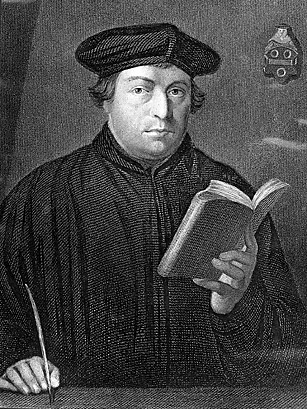
In the Preface by the Translator, Henry Cole provides insight into Martin Luther's work titled "The Bondage of the Will," emphasizing its theological importance within the Reformed tradition. He notes that the treatise was included at the request of various friends due to its profound arguments against human free will in salvation, directly engaging with the views of Erasmus. Cole highlights Luther's emphasis on Scripture to support his arguments, particularly in addressing the nature of human will and sinfulness, as seen in verses such as Romans 7:14-25. The preface indicates the significance of Luther's work for the Church, positioning it as a tool for discerning truth and defending against heresy, thereby reinforcing key Reformed doctrines related to total depravity and God's sovereignty in salvation.
Key Quotes
“They wished to see a correct and faithful Translation of LUTHER ON THE BONDAGE OF THE WILL—without note or comment.”
“The Work is translated from Melancthon’s Edition which he published immediately after Luther’s death.”
“The Translator presents this profound Treatise of the immortal Luther on the Bondage of the Will to the Public.”
“He trusts he has a sincere desire that his own labour may prove to be in every respect a faithful Translation.”
What does the Bible say about the bondage of the will?
The Bible reveals that human will is bound by sin and cannot choose God without divine intervention, as seen in Romans 3:10-12.
The doctrine underscores the necessity of God's sovereign grace for any spiritual awakening or positive response to the Gospel. It is only through God's initiative that anyone comes to faith. Thus, the idea of the bondage of the will is critical for understanding the nature of salvation, emphasizing that it is entirely a work of God, rather than human decision-making.
Romans 3:10-12
How do we know the doctrine of total depravity is true?
Total depravity is confirmed by multiple Scripture passages that highlight the pervasive nature of sin in every part of humanity, such as Ephesians 2:1-3.
Furthermore, texts like Genesis 6:5 and Jeremiah 17:9 reveal the depths of human sinfulness, affirming that the inclination of the heart is continuously evil. These truths emphasize that without the regenerating work of the Holy Spirit, a person is unable to turn towards God. Ultimately, total depravity highlights the necessity of grace for any hope of salvation, thereby affirming the centrality of divine intervention in the process of redemption.
Ephesians 2:1-3, Genesis 6:5, Jeremiah 17:9
Why is the doctrine of sovereign grace important for Christians?
Sovereign grace assures believers that their salvation is entirely a gift from God, emphasizing His control over all things, including salvation.
Furthermore, understanding sovereign grace cultivates deep gratitude and humility in the heart of believers. It leads them to recognize the vastness of God's love and the depths of His mercy, ultimately fostering a spirit of worship and praise. By affirming that God is always in control and that salvation is His work from beginning to end, it also provides believers with comfort and hope amidst the challenges of life, as they trust in God’s plan.
2 Timothy 1:9
THE Translator has long had it in meditation, to present the British Church with an English version of a choice Selection from the Works of that great Reformer, MARTIN LUTHER: and in November last, he issued Proposals for such a publication. He considers it however necessary to state, that this Treatise on the BONDAGE OF THE WILL, formed no part of his design when those Proposals were sent forth. But receiving, subsequently, an application from several Friends to undertake the present Translation, he was induced not only to accede to their request, but also to acquiesce in the propriety of their suggestion, that this work should precede those mentioned in the Proposals. The unqualified encomium bestowed upon it by a Divine so eminent as the late Reverend AUGUSTUS MONTAGUE TOPLADY, who considered it a masterpiece of polemical composition, had justly impressed the minds of those friends with a correct idea of the value of the Treatise; and it was their earnest desire that the plain sentiments and forcible arguments of Luther upon the important subject which it contained, should be presented to the Church, unembellished by any superfluous ornament, and unaltered from the original, except as to their appearance in an English version. In short, they wished to see a correct and faithful Translation of LUTHER ON THE BONDAGE OF THE WILL—without note or comment! In this wish, the Translator fully concurred: and having received and accepted the application, he sat down to the work immediately: which was, on Monday, December 23rd, 1822.
As it respects the character of the version itself—the Translator, after much consideration of the eminence of his Author as a standard authority in the Church of God, and the importance of deviating from the original text in any shape whatever, at last decided upon translating according to the following principle; to which, it is his design strictly to adhere in every future translation with which he may present the public—to deliver FAITHFULLY the MIND of LUTHER; retaining LITERALLY, as much of his own WORDING, PHRASEOLOGY, and EXPRESSION, as could be admitted into the English version.—With what degree of fidelity he has adhered to this principle in the present work, the public are left to decide.
The addition of the following few remarks shall suffice for observation.
1. The Work is translated from Melancthon's Edition, which he published immediately after Luther's death.
2. The division-heads of the Treatise, which are not distinctively expressed in the original, are so expressed in the Translation, to facilitate the Reader's view of the whole work and all its parts. The Heads are these—Introduction, Preface, Exordium, Discussion part the First, part the Second, part the Third, and Conclusion.
3. The subdividing Sections of the matter, which, in the original, are distinguished by a very large capital at the commencement, are, in the Translation, for typographical reasons, distinguished by Sections I, II, III, IV, &c.
4. The Quotations from the Diatribe, are, in the Translation, preceded and followed by a dash and inverted commas: but with this distinction—where Erasmus' own words are quoted in the original the commas are double; but single, where the substance of his sentiments only is quoted. The reader will observe, however, that this distinction was not adopted till after the first three sheets were printed: which will account for all the quotations, in those sheets, being preceded and followed by double commas. Though it is presumed, there will be no difficulty in discovering which are Erasmus' own words, and which are his sentiments in substance only.
5. The portions of Scripture adduced by Luther, are, in some instances, translated from his own words, and not given according to our English version. This particular was attended to, in those few places where Luther's reading varies a little from our version, as being more consistent with a correct Translation of the author, but not with any view to favour the introduction of innovated and diverse readings of the Word of God.
With these few and brief preliminary observations, the Translator presents this profound Treatise of the immortal Luther on the Bondage of the Will to the Public. And he trusts he has a sincere desire, that his own labour may prove to be, in every respect, a faithful Translation: and that the work itself may be found, under the Divine blessing, to be—an invaluable acquisition to the Church—"a sharp threshing instrument having teeth" for the exposure of subtlety and error—a banner in defence of the truth—and a means of edification and establishment to all those, who are willing to come to the light to have their deeds made manifest, and to be taught according to the oracles of God!
HENRY COLE.
London, March, 1823.

Comments
Your comment has been submitted and is awaiting moderation. Once approved, it will appear on this page.
Be the first to comment!