Bootstrap
Scott Richardson

My Peace I Give Unto You

John 14:27
Scott Richardson October, 27 1996 Audio
0 Comments

Sermon Transcript

Auto-generated transcript • May contain errors

100%
Turn with me to the 14th chapter
of the book of John, John chapter 14. We'll begin reading there at verse
27. peace I leave with you, my peace I give unto you. Not as the world giveth, giveth
I unto you. Let not your heart be troubled,
neither let it be afraid." This is a repetition from verse
one. where he speaks to the disciples,
he says, ìLet not your heart be troubled.î But here in verse
27 he adds, ìNeither let it be afraid.î ìLet your heart be troubled,
neither let it be afraid.î ìYe have heard how I said unto
you, ìI go away and come again unto you.î If ye loved me, ye
would rejoice, because I said, I go unto the Father, for my
Father is greater than I. Now I have told you before it
come to pass, that when it is come to pass, ye might believe. Hereafter I will not talk much
with you, for the prince of this world cometh, and hath nothing
in me. But that the world may know that
I love the Father, and as the Father gave me commandment, even
so I do. Arise, and let us go hence. Now, our Lord uses the expression,
My Father and The Father, four times in these few verses that
I've read unto you. And He uses these expressions,
My Father and The Father, twenty-two times in this chapter, the fourteenth
chapter of the book of John. He tells them at the beginning,
Let not your heart be troubled. Ye believe in God, believe also
in me. Now, I think the reason why that
he uses this expression so many times, Father and The Father,
is that certainly we know that the Lord never spoke a word without
meaning, and there must be meaning in the expression that he uses
over and over in this twenty-second chapter of the book of John.
And I think that he desired to leave on the mind of his disciples
a strong impression of his complete an entire unity with the Father. You remember, there is such a
thing as the incarnation, that God become a man. As much God as if he is never
man, as much man as if he is never God. God and man in one
person. He has told them here in several places, "...verily,
verily, I say unto you," verse 12, "...he that believeth on
me, the works that I do shall he do also, and greater works
than these shall he do, because I go to the Father." And He said in other places here
in this chapter, He said, The words that I relay unto you are
that which I have heard of my Father, expressing an entire
and complete unity and harmony between the Father and the Son. He has continually reminded them
that all His giving was one with the Father, and
he did nothing apart from the Father, did nothing without the
Father. And in this twenty-seventh verse, he said, Peace I leave with you. My peace I give unto you. Now, peace is a peculiar gift that he leaves to his people.
He doesn't leave money to his people. This legacy that he does leave
is far greater than money. It's a greater blessing than
money or riches. or honor, but he says, I leave
with you peace, my peace, peace I give unto you, not money, not
worldly carnal ease, not a temporary excitement, last legacy that he leaves before
He leaves this world. He gives to His people. Not to
everybody. He gives to His people. The vast
majority of the people on earth at any given time has no part
with what our Lord Jesus Christ is saying here. These disciples represent His
people. Other sheep I have which are
not in this fold, they must be brought in." So he's speaking
to his people, to my people. This is my legacy to my people. I've been with you for three
years. I've given up all for you. I
was rich and yet I've become poor. I can give you an old Silver
or gold, have I none. Don't give you any temporary
carnal excitement or temporary prosperity. Even at the very
best, riches and honor and prosperity and worldly ease, even at the
very best, Those things certainly are questionable in the life
of a believer. I was talking to a fellow here
the other day, just kind of run into him, and it wasn't but just
a minute or two. In our conversation, he said,
Would you like to be a millionaire today? Well, I thought about it a little
bit and I said, Well, I don't know. It seems to me like if
you had a million dollars, have more trouble than what the money's
worth. Oh, he said, there's a millionaire being made every day. I said,
well, what are you trying to tell me? Oh, he said, the lottery. He said, if you play the lottery.
I said, there's the lottery. I said, there's over 200 million
people in the United States, and all of them play it. And
I said, he said, but somebody wins it every day. I said, well,
did you ever win it? No. I said, do you know anybody
that ever won it? I said, where do you live? And
he told me, I said, anybody up there won it? No. I said, well, you probably ain't
going to win it either. Probably just wasting your time. Well,
I said, I go every morning and buy so many lottery tickets. I said, if you continue to do
that in the next 25 years, you'll probably spend a million dollars. over there on the 7-11 of the
morning. I stopped in there to get the
paper sometime, and lots of times there's fellows in there buying
tickets as much as $40 worth, tickets, lottery tickets, to
win that million dollars. And I heard them interview people
on the television that has won the lottery, and they're the
saddest people in the whole world. Some of them went broke. Some
of them lost their wives. Some of them lost their children.
They lost everything, but they thought they won everything.
So these gifts, you know, riches and honor and prosperity, things
of that nature, the very best of them are questionable because
they don't do anything for it. They're more of a clog. a heavy weight on a man's soul. Our Lord said here, I'm getting
ready to leave. Don't let your heart be troubled.
Don't be afraid. Peace. Peace. I leave with you. My peace. I leave it with you. I give it unto you. Peace. Last legacy to his people, peace
I leave with you. Not money, not worldly ease,
not temporary prosperity, not that. It's inward peace. It's peace of heart. It's peace
of conscience. That's what he's talking about.
To the inward man, peace of heart. Rest, that's what it is. Rest
for your soul. I leave that with you. I give
that to you. It's my peace. I give it to you. And this inward peace of conscience,
it arises from a source. It arises from a well-grounded
persuasion that my sins are pardoned and put away and made an end
of forever." Now, that peace there, that peace is that which
calms the storm of the soul, knowing that my sins are pardoned. All of my, all of my iniquities
All of my known sins, all of sins which are unknown to me,
sins of ignorance, all of my imperfections, all of them, all
that I have thought of, all that I have actually participated
in, all of my imperfections, They've been pardoned by God. They have been laid on the sacrifice,
and the fire of justice has fallen on the sacrifice and consumed them, and they're
done away with, and they'll never rise up in judgment against me. That's what I'm talking about.
This legacy, this peace to the inward man, to the conscience
that comes from the knowledge that they're gone, that gives
me peace. That gives me peace that riches
and honor and Worries never could afford my poor soul. Peace, the peace of God, which
arises from the forgiveness of my sins, arises from a sense of pardon
sin, arises from reconciliation to the great God. Now, this peace
is the property of all believers, all believers, high or low, big
or small, old or young. It's the property of every believer
in Christ Jesus. If you're not a believer here
this morning, it's not your property. Be speaking to these disciples
who had given up all to follow him. And he tells him, I go my
way, I'm going back to the Father. Don't let your heart be troubled,
neither let it be afraid. Peace I leave with you, the peace
of a troubled conscience because of sin. this peace that arises, coming
from a well-grounded persuasion from the Word of God, that I
bore your sins. I bore the penalty that's due
you against your sins. I stood in your place. I'm your
substitution. I'm God's land. I'm the righteousness
that God requires. I'm the obedience that you never
rendered unto God in regard to his holy law. I'm all that. I'm
the good shepherd that knows my sheep, laid down my life for
my sheep. Your sins are gone. This peace is the property of every believer, high
or low, regardless of age, color. It's the property of him who
believes. Him who believes. Believes what?
Believes God. What has God said? God said,
this is the report, this is the record. that Christ died for
sinners. That's the report, that's the
record. The Bible says that Abraham believed God. And it was imputed,
it was charged to him as righteousness. You know what it says? Abraham
believed God. Reconciliation. This peace which
he gives, he calls my peace. And it is especially his own
to give, because he bought it with his own blood. He purchased
it by his substitution, by standing in our stead. It was appointed
by the Father. for him, the Lord Jesus Christ,
to dispense this peace to his people, just as Joseph was sealed
and commissioned to give corn to the starving Egyptians of
old. Even so, the Lord was specially
commissioned in the councils of the eternal Trinity before
time ever was, to give peace to His people. Peace, I leave
with you, not riches, not worldly honor, but peace of heart, peace
of conscience, peace to that inward man that comes from this
sense of pardoned sin, a living Savior, and a home in heaven
when you die. That's what that piece is. You
know anything about that? You know about a conscience that
has been quieted? Your conscience either excuses
or accuses. That conscience has got to be
silenced. It's got to be made to shut up. And the only thing that will
silence that conscience is the sense of a living Savior being
your substitute, paying the penalty that you owe. That's the only
thing that will quiet that out. Else it will excuse you. You'll excuse yourself. or it'll
accuse you. It's got to be silenced. And
the only thing that can silence this conscience is a perfect
sacrifice. It must be perfect to be accepted. You must have a perfect sacrifice,
and if you ever have a perfect sacrifice, the conscience will
be silenced. as to accusations. When he left
this world, and that's what, this is just prior to the crucifixion. That's the reason he says, I'm
not going to talk to you much hereafter. Time was short. The devil is on the prowl. And
I haven't got time to talk with you hereafter very much. I'll talk to you, he didn't say
that, but he did. I'll talk to you after the crucifixion,
after the resurrection we'll talk. But from this point, from
now until then, I won't talk with you much. Time is short. Time is short. when he left this
world, which he is about to do shortly. He made his will like
you've made your will. Most of you have a will. Clyde and his wife went off to Texas
a few days ago relative to a will. I don't know all the details
about it, but I know that this is involved in it. There was
a will. Her father-in-law died. I mean, her stepfather died.
Well, he shot himself. No, he didn't shoot himself.
Did he shoot himself? Well, then he had committed suicide.
And he had a will. And the will specified that everything
he owned, went to Vivian and her sister. But the will wasn't
signed. Never signed a will. Gnaw and
void. Gnaw and void is no account. Our Lord Jesus Christ made a
will, and He signed it with His own blood. It's signed, sealed,
and delivered. when he made his will, he gave
his soul to his father. I commit myself to thee. He gave his soul to his father,
and he gave his body to Joseph of Arimathea. And he gave his clothes to the
soldiers that crucified him. And his mother, He left under
the care of loving John. What should he give to these
poor disciples who had left all to follow him? What could he
give to them? Silver and gold he didn't have. What could he give to them? What
can be his last legacy here to these poor fishermen who had
turned their backs on everything and followed him through thick
and thin? What could he give to them? He'd
give them the greatest gift that can be given. He'd give them
peace of mind, peace of heart, on the assurance of faith. Peace, he said. Peace I give
to you, I leave it with you, it's my peace. This peace which
is my special prerogative to give to my people, I give it
to you. Not as the world give I unto
you. The world can only give Temporarily
carnal satisfaction, that's all they can do. I feel bad for men
and women who lives in this life year after year, year after year,
year after year, finally reach the age when anything can happen. Their health is gone, and the
only hope they've got is some sort of a carnal excitement that
the world has revived in their hearts and souls. They've got
no true hope, no true hope of eternal life. That temporary carnal excitement
and satisfaction can only gratify the passions and the affections
and the pride of the natural heart. but it cannot give inward peace
and inward rest to the conscience. To the conscience. The conscience,
when a man comes down to the last mile of the way, if he's
at himself, if he's not completely out of his mind, if he's not
completely overcome by drugs or something of that nature,
his conscience is going to rare up and ask him, have you done
enough to be saved? He'll have to admit that he hasn't. And he'll say, I wish I'd have
done this and I wish I'd have done that. If I had it to do
over again, his conscience, his conscience will pierce him through. It will be like a stab in his
heart that makes the blood run. It cannot give. It cannot give
inward peace and rest for the conscience. Now listen. He said, Peace I leave with you,
my peace I give unto you. I don't pay it to you. I don't
give it to you because you earned it. Peter, James, John, Bartholomew,
and all the rest of the disciples had no merit of their own. They
would not have left all and followed the Lord Jesus Christ unless they had come to the realization
and the knowledge that the Lord Jesus Christ went and found them
where they were and brought them unto himself. They'd have never
left all. There was a work of grace in
their hearts. They wouldn't have left all. They had no merit.
There was nothing about them that was any different than you
and I. They were hellions and sinners. They cared for nothing
but themselves. He goes on, listen now. Let not
your heart be troubled, neither let be... You have heard how I said unto
you, I go away. That is, he told them that in
the first part of the fourteenth chapter. how I said unto you,
I go away and come again unto you. Now, if you loved Me, you
would rejoice, because I said, I go unto the Father, for My
Father is greater than I." That is, if you really loved Me, I'm
not indicating that they didn't love Him. They loved him. They loved him. But he says,
if you really loved me with an intelligent love and understood
my person and understood something of my nature and my work, you
would rejoice to hear of my leaving this world and going to the Father,
because you would see in it the finishing and the completion
of the work that the Father has given me to do. If you loved
me truly, intelligently, you'd understand. And you wouldn't
be mourning. You wouldn't have this trouble,
this distress. You wouldn't have that if you
understood where I'm going. and what I've done, you'd see
and understand that what the Father gave me to do, I've completed. So now it's time for me to lay
down my inferiority and take upon myself my glory that I had
with the Father before the world ever was. If you really love
me, see, that's what he said, if you really love me intelligently,
Now the Lord did not mean, as I said, that the disciples did
not love Him at all, but that they did not rightly and intelligently
love Him, for if they did, they would have rejoiced in the completion
of His work. His work, He came to do what? To accomplish redemption for
His people. He achieved redemption through
the shedding of His blood. He's able to pardon and to forgive
and to show mercy, all because He's satisfied justice of God.
The justice of God must be satisfied. Oh, what an important The truth
that is. You hear people, if you was around
enough, and if you looked and listened, you'd hear people talk
about how God loves people. And he wonders why God loves
people. But God loves him, they say.
And Jesus Christ loved us. and gave himself for us, and
the Scriptures say that. But the first and foremost thing
in the gospel is not that God loves us. It's that God's justice
must be satisfied. And our Lord Jesus Christ satisfied
His justice. You see, God cannot bestow mercy
or pardon or favor upon any soul until justice has been satisfied. And our Lord satisfied justice
when the wrath of God fell on sin. My sin, not His sin, He
had none. My sin was laid on Him. justice fell on him. The cup
of wrath he must drink every drop. And when justice is satisfied,
he cries, it's finished. Justice is satisfied. Now God
in heaven is free to bestow mercy and grace and pardon upon the
guiltiest sinner outside of hell, because justice is satisfied."
Well, listen to what he says. He said, you ought to rejoice
at my going to the Father, if you intelligently understood
who I was and what I'd done. You'd rejoice that I'm going
back. Oh, he says, For my Father is
greater than I. What does he mean by that? My
Father is greater than I. Well, our Lord, we know, was
equal with the Father. The Son of God was God Himself. The Son of God is God Himself. Deity of God Almighty is in Him. He is Deity. He's God, manifest
in the flesh. Now, our Lord was equal with
the Father. Don't misunderstand me. He was
equal with the Father as touching His Godhood. Equal with the Father
as touching His Godhood. and inferior to the Father as
touching His manhood." See what I'm saying? Equal with God in regard to the
Godhood of God. He was equal with Him. But as
man, as man, in His incarnation and in His humility, He was inferior
to God the Father. He was in this sense. Truly, my Father is greater than
I. Christ, as God, is equal with
the Father. As man, He is inferior to the Father. And He's talking
of the time of His incarnation and humiliation. When the Word
was made flesh, He took upon Himself the form of a servant. It was a temporary inferiority. Now he's about to lay aside his
inferiority and go back to the Father with the glory that he
had before he came. And he said, if you understood
this intelligently, if you understood it, understood who I was and
what I've done, he said, you'd rejoice at me going back. laying
aside my inferiority as a man. You ought to rejoice, because
I shall shortly resume that glory which I had with Him before the
world was. Here on this earth, during my
thirty-three years of incarnation, I have been in the form of a
serpent. Living in a body inferior to
my Father. So leaving this world, as he
told them, John chapter 14. Leaving this world, I take again
that glory that I had, and now, he says, I lay aside my position
of inferiority, so if I had not, voluntarily and willingly laid
aside by Godhood and taken the place of inferiority, you'd never
be saved. You'd never have any hope. If
I had not left my Godhood, taken on this inferiority, and become
a man, and as a man redeemed you, see, it's for His sake. We're saved for Christ's sake,
not for our sake. It's for His sake. He willingly put Himself in the
position of inferiority, voluntarily, voluntarily, by becoming a man. And He did it for our sake, freely. If He hadn't have done that,
No hope for our souls this morning, no hope. We'd have died and went
off into the regions of the damned with no hope whatsoever. But
oh, because he gladly, voluntarily laid aside his Godhead incarnation,
taking the position of inferiority and humiliation He who thought
it not robbery to be equal with God now lays aside this inferiority
and goes back." Why? Because the work's done. The
work's done. The gospel does not address sinners
as, you do something and you'll be saved. No, the gospel tells sinners,
the work is done. work is finished, completed,
all that's necessary, all that God requires is done. He did
it, the Lord Jesus Christ. Hereafter, He says, I won't talk
much with you. I told you that meant the time
was short. The betrayer, Judas Iscariot,
he's about to arrive on the scene. He's going to betray our Lord
Jesus for a few forty pieces of silver, wasn't he? He says,
the time's short. Betrayal, the betrayer is about
to come, and suffering is going to fall on me, because he must
suffer. And he said, the Prince is coming.
You see that in there? Let me read that. Verse 30, Hereafter I will not
talk much with you. Time's short. I'm going to the
tree. And he said, For the prince of
this world cometh. The prince of this world cometh. Who's that? Who is the prince of this world?
That's Satan the devil. He's about to make his final
conquest, his final assault on the Lord Jesus Christ. And the
Lord says, He comes. He's coming, the prince of this
world cometh. and have nothing in me." That
is, he said, there's nothing in me he can lay a hold of. There's
not a point of weakness in me. Oh, thank God for that. He was
unblameable, wasn't he? Unblameable. Sinless. Nothing
in me he can lay a hold of, no weak point. Now listen, our Lord
Jesus Christ said, He didn't say, the Pharisees come, He didn't
say, the Romans is coming after me to kill me. He didn't say
that. What did he say? He said, the
prince of this world, come up. He's at the bottom of it all.
Did you know that? As it was with the first Adam
in the Garden of Eden, when God made him upright, when God came
in the cool of the day and walked with him, talked with him, fellowshiped
with him, and gave him control over the garden. Everything's
in the garden's yours. Your animals and everything else
is under your direction. It's yours. I'll make a covenant
with you. Everything here is for your happiness. All you've got to do is obey
me and you'll be happy. You'll never die. But he said, if you eat of the
fruit, that's on this tree in the midst of the garden. If you
eat of that fruit," he said, you're going to die. That's a
covenant he made with him. It's a covenant of works. In
order for him to live, he couldn't eat of that fruit. But to first
crack out of the box, who came? Satan came, didn't he? He came,
and he attacked Eve. And Eve thought he was right.
Eve thought he was right. She said, God's hiding something
for us. And she untold her husband, and
he agreed with her, and he took that apple, or whatever it was,
and he ate of it. And when he did, we all died
in him," right there. The sentence of death was upon
him and upon all of his seed. Satan, he's at the bottom of
it. He didn't call the Pharisees
and the Romans. He called the prince of this
world. The devil, Satan, listen, he
rules and he reigns in the hearts of the vast majority of the peoples
on this earth, whether they be Russians, Chinese, Japanese,
Americans, Africans, whoever they are. The vast majority of
them, Satan rules and he reigns in the seat of their affections.
He has them. Does not the Bible say that the
whole world lieth in the wicked one? No. Listen, the extent and
intensity of His rule and influence on earth we have but little idea. He's everywhere. He's our tormentor. He assaults us. He cometh. He's coming for the first time.
All the time our Lord Jesus Christ was upon this earth, He was tempted
and assailed and opposed by the devil, by Satan. He cometh now,
He said, with a special violence. He cometh with bitter wrath to
make His last attack. But our Lord says, He can find
nothing in me that He can lay hold of. Let me tell you this,
I don't know how many men and women have been born into Adam's
race from the time of Adam until right now. I don't know. But
there is billions of them. And the holiest man of all those
billions that have died and who live now, they couldn't make
a statement like that. The devil came unto Adam and
Eve, and what did he find in them? Weakness. Weakness. He came unto Noah. What did he find in Noah? Weakness.
He came to Abraham. What did he find in Abraham?
He came unto David. He came unto all of them. This
is the only man. This is the only man that can
ever be saved. He comes to me, but he finds
nothing in me. No weak point, no sin in me, nothing in me that he could lay
hold of. You see, the difference between
Christ Jesus, the Lord, and all others who are born of women
is this. He is the only one in whom Satan
could find nothing. Blessed God, what a Redeemer! The difference between the Lord
and all others who are born of women is that there is no sin
in Him, no weakness in Him. He came to Christ and found nothing
at all. He is the Lamb, God's Lamb. He was without spot. He was without
blemish. He was a sacrifice suitable for
the worst sinners that ever lived. A perfect, sinless Savior. His
righteousness is a perfect righteousness. His life is a blameless life.
Perfect. Oh, if we had no other hope this
morning than our righteousness, we would be in despair. If that's the only hope you've
got this morning is your good works and your righteousness,
You are of all men most miserable. Oh, why will you die when the
Lord of life so graciously passes by? Why will you do that? If you ever die and go to heaven, you'll have to give all the credit
to God. If you die and go somewhere else, you'll have to take all
the credit for that. Because wide is the gate. Wide! Whoever wants to come in can
come in, he said. Why don't you come? Why don't
you come? I believe we've got some here
this morning. I believe we've got some here
this morning. They've heard this. Over and over and over. And I
believe in their hearts they believe it! I believe in their
hearts. They haven't rejected this blessed
truth as to who the Lord is and what the Lord done, but they
just have never identified with it. And this is a good opportunity,
I think, for you just to stand up and say, I'm His and He's
mine. I believed God, and I trusted
in His Son. He told me to come. He told me to believe intelligently
in the substitutionary work of the Lord Jesus. He said I had
no righteousness, and I agreed with Him, but I don't. I'm only
a sinner and nothing more. But I found in Him all that I
lacked. And He's a suitable Savior for
a suitable sinner. Lord bless you. Let's stand.
We'll be with you.
Scott Richardson
About Scott Richardson
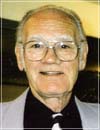
Scott Richardson (1923-2010) served as pastor of Katy Baptist Church in Fairmont, West Virginia.
Broadcaster:

Comments

0 / 2000 characters
Comments are moderated before appearing.

Be the first to comment!

Joshua

Joshua

Shall we play a game? Ask me about articles, sermons, or theology from our library. I can also help you navigate the site.