Bootstrap
Scott Richardson

Lovest Thou Me

John 1:7
Scott Richardson November, 3 1996 Audio
0 Comments

Sermon Transcript

Auto-generated transcript • May contain errors

100%
First chapter. The question here, I ask by the Lord Jesus unto Peter,
and I'll read part of this chapter. Again reading there at verse
7, it says, Therefore that disciple
whom Jesus loved saith unto Peter, It is the Lord. Now when Simon Peter heard that
it was the Lord, he girt his fisher's coat about him, for
he was naked, and did cast himself into the sea. And the other disciples came
in a little ship, for they were not far from the land, but as
it were two hundred cubits, dragging the net with fishes. And as soon as they were come
to land, They saw a fire of coals, and fish laid thereon and bred. And Jesus said unto them, Bring
of the fish which ye have now caught. And Simon Peter went
up and drew the net to land full of great fishes, a hundred and
fifty-three. And for all there were so many,
yet was not the net broken. And Jesus said unto them, Come
and die. Very gracious out of the Lord,
wasn't he? Come and die. This is after the
crucifixion. Remember he told them in John
chapter 15, he said, I'm going to talk to you now for a little
while, but hereafter I'll not say much to you. That is, after the crucifixion
and after the resurrection I'll talk to you, have more to say
to you. And here he greets them with, this is the way he greets
these forlorn disciples. He said unto them, Come and dine. And none of the disciples durst
ask him, Who art thou? knowing that it was the Lord. Jesus then cometh and taketh
bread, and giveth them, and fish likewise. This is now the third time that
Jesus showed himself to his disciples, after that he was risen from
the dead. So when they had dined, Jesus saith to Simon Peter, Simon,
son of Jonas, lovest thou me more than these? He saith unto him, Yea, Lord,
thou knowest that I love He said unto him, Feed my lambs. He saith to him again the second
time, Simon, son of Jonas, lovest thou
me? He saith unto him, Yea, Lord,
thou knowest that I love thee. He saith unto him, Feed my sheep. He saith unto him the third time,
Simon, son of Jonas, lovest thou me? Peter was grieved, because
he said unto him the third time, Lovest thou me? And he said unto
him, Lord, thou knowest all things, thou knowest that I love thee.
Jesus saith unto him, Feed my sheep. Verily, verily, I say unto thee,
When thou wast young, thou girdest thyself, and walkest whither
thou wouldest. But when thou shalt be old, thou
shalt stretch forth thy hands, and another shall gird thee,
and carry thee whither thou wouldest not. This spake he signifying
by what death he should glorify God. And when he had spoken this,
he saith unto him, Follow me. Then Peter, turning about, saith
the disciples whom Jesus loved, following, which also leaned
on his breast at supper, and said, Lord, which is he that
betrayeth thee? Peter, seeing him, saith to Jesus,
Lord, what shall this man do? Jesus saith unto him, If I will
that he may tarry till I come, what is that to thee? follow
thou me. Then went this saying abroad
among the brethren, that that disciple should not die. Yet
Jesus said not unto him, He shall not die, but if I will that he
tarry till I come, what is that to thee? This is the disciple
which testifieth of these things and wrote these things, and we
know that his testimony is true. And there are also many other
things which Jesus did, the which, if they should be written ever
one, I suppose that even the world itself could not contain
the books that should be written. Amen. Well, the question that
seems to be predominant in this chapter, or at least in the part
of the chapter that I've read to you, is this question here
asked of the Lord Jesus to Peter. Simon, verse 16, Simon son of
Jonas, Lovest thou me?" Now, I read to you over in the
book of I Corinthians, chapter 16, where it said, If a man does
not love the Lord Jesus Christ, let him be anathema, maranatha. Let him be cursed of God. throughout all eternity, if a
man does not love the Lord Jesus Christ." Simon, son of Jonas, lovest thou
me? Well, what is the feeling of
a true believer towards the Lord Jesus Christ? It is this, he
loves Him. That's the feeling, the attitude
of a believer, a true believer, is that he loves the Lord, loves
the Lord Jesus Christ. Now, a true believer, a true
Christian, is not a mere baptized man or one who goes through a certain form
of religion on a Sunday, that is, who only goes as a matter
of form to a church on Sunday and lives the rest of the week
as if there was no God. Formality is not Christianity. Ignorance and lip service has
nothing to do with true religion. The Bible speaks something like
this in Romans chapter 9 and verse 6. It says, They are not
all Israel which are of Israel. A true believer, a true Christian,
is one whose religion is in his heart and in his life. It's something that's felt by
himself. He feels his religion. It's felt
by himself in his heart, and it's also seen by others in his
conduct and in his life. He or she always feels their
sinfulness, their badness, their guilt, and they repent of it. A true believer is one who puts
off the old man and puts on the new man. He's one who habitually
and continually fights against this world. and the flesh and the devil. Ask this man who is a true believer
what he trusts for forgiveness, and he'll tell you every time
the worth and the person of the Lord Jesus Christ. He will not
add to it or take from it. wholeheartedly in the person
and the work of the Master, the Lord Jesus. He loves you. He loves you. He that would be in tune
with God's heaven must know something of the love of the Lord Jesus
Christ. He that dies ignorant of that
love had better never been born. Some marks by which that love
to him makes itself known, and I'll call your attention to a
few of those marks that makes itself known. in the heart of
a believer. Now, this is of great importance,
I think, vast importance. If there is no salvation without
love to him, and certainly that is true, there is no salvation,
there is no heaven, there is no glory, there is no life eternal
without love to him. Now, if this is so, then it makes
the answer of this question, lovest thou me, to be of vital
importance. If he that does not love the
Lord Jesus Christ is in danger of eternal condemnation, then
it becomes you and I, find out very distinctly what we know
about this matter. Now we know that we know something about love because
we know something about loving people here on earth. We know
something about loving our wives. Loving our children? Now, in what way or what manner
does this love for our parents and for our wives and for our
children and for our friends, in what manner does this love
show itself between father and son, mother and daughter, friend
and friend? How does it show itself? How
does it show itself between the people of this world? Now, if you'll answer these questions based on common sense, I ask no more. Let these questions
be answered simply, honestly, intelligently, and the knot will
be untied as to the answer of the question, Simon, son of Jonas, lovest thou
me? If we love a person, we like
to think about him. Isn't that right? If we really
love somebody, we like to think about him, we need not be reminded
of him. We do not forget his name or
his appearance or his occupations or what he looks like, what his
character is, what his reputation is. We need not be reminded of
these things in that we know him. We think about him. We know about his character.
We know about his opinion. We know about his taste or his
position. We know about these things. He or she is on our mind's eye
continuously. We think about him. We think
about them, though they may be far off from us, yet they're
ever present in our thoughts. Well, this is so between the
believer and the Lord Jesus Christ. Over here in the book of Ephesians
is a portion of a verse that says what I'm trying to say.
In the book of Ephesians chapter 3, Let me read it to you. Chapter 3 and verse 17. I'll begin reading at verse 14,
and the truth that I want you to see is in verse 17, pertaining
to our feelings and our love towards one another and how this
relates to the Lord Jesus Christ. For this cause I bow my knees
unto the Father of our Lord Jesus Christ, of whom the whole family
in heaven and earth is named, that he would grant you, according
to the riches of his glory, to be strengthened with might by
his Spirit in the inner man. that Christ may dwell in your
hearts by faith, that ye be rooted and grounded in love." Christ
dwells in our hearts. Now, a believer in Christ Jesus
who loves him needs not to be reminded that he has a crucified
Savior. He knows that he has a crucified
Savior in his heart. That is, he knows who Christ
is. He knows that he was sent of
God. He knows that the desperate mission
that he was on was to accomplish redemption, to shed his blood, be the messenger of the covenant,
to be the fulfiller of the eternal purpose of God in the matter
of salvation. He knows that he came to be the
sin bearer, that is, to bear the punishment due him against
his sins. He knows that. A true believer
knows who the Lord Jesus Christ is, where he comes from, who
sent him, and what he came to do. A true believer knows that. And because he knows that, he
loves him, and he dwells in his heart constantly, and the dwelling,
the abiding of Christ in his heart causes him to be rooted
and grounded in the faith. He knows who he is. He knows
what he does. He knows what he accomplished. He knows where he's at, and he
knows what he's doing now. Now, if a man loves a person,
that man likes to hear about him. If you love somebody, you
like to hear about him. For instance, don't you find pleasure in listening to somebody talk
about somebody you love. You get much joy and pleasure
out there talking about him. You become very attentive when
others talk about him, describe his ways, his mannerisms, his
sayings, his doings, his plans, his accomplishments, and so forth.
You become very interested when others talk about him, don't
you? Well, there's some people now, you can say that they're not concerned
about hearing others talk about this one that you love. He could
be mentioned. in their hearing, and they would
manifest an attitude of indifference as to what's being said, describing
him and his ways and his doings and his plans. But you don't
feel that way. Your heart is happy, and you
rejoice at the sound of his name. You love to hear about him. So
it is with the believer in Christ Jesus. Others may be indifferent,
unconcerned, but not you. A mark of a true believer that
really delights in the Lord Jesus Christ is he loves to hear the
sermon. that are full of Christ. He loves
that. Others may be indifferent, but
not him. It strikes a chord in his heart,
and he's very attentive, and he listens intently to what's
being said about him whom he loves. It's a mark, an indistinguishing
mark of ever-believing. He enjoys the society most in
which people talk of the things of the Lord Jesus Christ. The people that have the same
concern as he does are the people that he desires to be with. He
desires to be in their society. He desires to meet with those
who assemble themselves from time to time to hear about him
whom he loves. He desires their company. He
likes to be around them. If you love a person, it can be truly said that you
like to read about him, and what pleases you most If this person
that you love is in a far distant place from you,
you like to get a letter from him and you desire to hear from
him, how he's doing and what he has to say. And it gives you
great pleasure. to get a letter from one that
you love. Now, others might find very little
interest in that letter. I know this in my own experience,
that sometimes someone has said, well, just read this letter.
And I wasn't interested in the letter, the contents of the letter,
or wasn't interested too much in the writer of the letter.
Maybe not interested in the receiver of the letter, but out of courtesy,
took the letter and started to read it, or maybe did read it
half-heartedly. Maybe sometimes wouldn't even
take time to read the letter through. Others might find little
interest in the letter from one of your loved ones, but those
that love the writer of the letter have an extreme interest in the
contents of the letter. Is that not right? There's something in that letter
which you see that no one else sees. And you read that letter over
and over and over. You lay the letter down and go
about your business and the first thing you know it crosses your
mind as to what they really said or there's something there that
you want to read again and you pick that letter up. You love
to read a letter that was written to you by one of your loved ones. If you have a son or a daughter
that's away in school, you love to hear from them. And when the
mail comes, there's several letters there, but if there's a letter
there from your son or your daughter or your mother or your father
or your wife or your husband, a letter comes from one of these,
that's the first letter you open, because you love to hear those
that you love. And that's a mark of a true believer. A true believer delights in the
Word of the Living God. A true believer, he loves to
read the Scripture, or he loves to hear the Scripture read to
him. Why? Because the Scriptures from
start to finish tells him about his Savior. He loves it when
he hears about his Savior. He loves to hear what his Savior
has to say. One part that always fascinates
me in the Scriptures is what the Savior has to say to me. about judgment. Judgment. I was brought up into
believing all of my life. I don't mean that people set
out to teach me this. I mean, I just imagined that
this was true, that I would be judged for everything that I
ever did, which was contrary to perfection. For me to live with that and
to wrestle with that was more than I could handle. But when
I heard, when I heard with my own ears and felt it in my very
soul that this judgment that was a terror to me all of my
life, which made cold chills run up and down my spine, which
made me want to erase, if I could, the thought of judgment and having
to answer for all of my wrongdoings scared me. But when I heard that
there is no condemnation to them that are in Christ Jesus, Oh,
what a changed person I was. Oh, the pleasure that I got out
of hearing that He bore my judgment. He bore, actually, really, as
a man. He wasn't a ghost or some mystic,
some vapor, some form, some non-being, but it was a person just like
myself, a man, came from God, sent from God, and as a man from
first to last, constituted my substitute and stood in my place
and for the judgment that was due me. And because He bore the
judgment that was due me, I'll never have to bear that judgment. And I'll not be tried for my
sins and my crimes because He was tried in my place. I like to hear about it. I like for preachers to preach
that I have no sin, no judgment for me. I like to
hear about that. makes me happy. I take pleasure
in it. I think about it, and I relish
it. Oftentimes during the day, whether
I'm by myself or with others, I relish that thought, that truth,
that fact that's riveted in my heart. No condemnation. He that believeth shall not come
into condemnation. but is passed from death unto
life. For now there is no condemnation
to them that are in Christ Jesus and walk not after the flesh
but after the Spirit." I like to hear that. I like to hear. I delight in the Word that tells
me about Him. Oh, listen, if we love this person, If I love my son, my daughter,
my wife, my friends, I love them, my love will cause me to try
my dead-level best to please them who are the object of my
love. I want to please them. I want to please my wife. Strange
as that may seem to some of you, that means that I would want
to please my wife. I want to please my wife. I help
her. I want to please her. I want to please her because
I love her. I didn't love her back when she
was 16, 17 and then quit loving her. I've loved her from that
time until now. And I want to please her. I want
her to be happy. If you love a person, that's
what love is. If you love them, you take pleasure
in them. We like to please them. We're
glad to consult their tastes and their opinions. We're glad
to act upon their advice. We do the things which they approve
of. We do the things which please
them. We even deny ourselves sometimes
to meet their wishes. We abstain from things which
they dislike in order that they wouldn't be offended. We love
to please them. If we love a person, we love
his friends. We'll love his friends for his
sake, if nothing else. If we love a person, we're jealous. We're jealous about their name.
We're jealous about their honor. And we don't like to hear them
being spoken against, do we? I don't like for folks to speak
against my family. I don't like to, even though
Some of what they say or maybe all of what they say is true,
I still don't like it. Do you? I don't like it. I don't like it. We feel bound to maintain a friend's
interest and his reputation, and we do not hesitate to stand
and to defend him. We don't do it. If we love a
person, then we like to talk with him. We like to hear his
thoughts and we like to tell him our thoughts. However silent
or reserved we might be with other people, we are not silent
and reserved with those that we love. We want to know their
thoughts. We want to adhere to their counsel
and their wisdom and their advice. We find it easy to talk to a
much-loved friend, don't we? Oh, my soul! These are marks that kind of give us some indication
here of whether we love him or not. Lovest thou me, Peter? Peter
said, Lord, you know I love thee. Now, if that's all we can do,
that'll be enough. If we can honestly, intelligently
say before God, when this question is asked us by the Son of God,
Lovest thou me? If we can be... Peter couldn't
point back to his conduct Peter couldn't say, now, when I was
tried and tested, I stood firm. He couldn't say that. Peter there, when that little
Jewish maiden said, well, your speech kind of betrays you. I
believe you're one of them. Peter stood up and denied that
he was one of them. He denied that he ever knew the
Lord Jesus Christ was associated with him in anything else. He couldn't, at this time, he
couldn't refer back to him some act of faithfulness and steadfastness
of his, how he defended the Lord Jesus Christ. Lovest thou me,
Peter. Peter couldn't say anything except,
Lord, I know you're God. I know you're God and you know
all things. You made the heart and you know
what's in my heart. Lord, thou knowest. I love thee. Thou knowest. That's about all I can say. Lord, thou knowest. I love thee. Do you love me? Well, if a man doesn't love him, there's no salvation for him.
And if you love him, then these questions that I ask here, remarks
that I made concerning how love to earthly people makes itself
known, there's a similarity. That makes itself known in the
heart of a Christian, that he loves Him. He loves to walk with
Him. He loves to talk with Him. He
loves to hear about Him. He loves to read about Him. And evidently, the biggest part
of us that are gathered here this morning, we wouldn't be
here. If we didn't love Him, if we
didn't want to hear about Him, if we didn't want to sing about
Him, if we didn't want to pray to Him, if we didn't want to
worship Him, in all probability we wouldn't have been here. Isn't
that right? But we love Him. We love Him. We don't love Him like we ought
to love Him. And we don't serve Him like we
ought to serve Him. He knows. Lovest thou me, Peter? Lord, you know everything. You know I love you. God help
us and bless us. Bring us back again this evening
and we'll talk some more about it.
Scott Richardson
About Scott Richardson
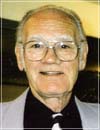
Scott Richardson (1923-2010) served as pastor of Katy Baptist Church in Fairmont, West Virginia.
Broadcaster:

Comments

0 / 2000 characters
Comments are moderated before appearing.

Be the first to comment!

Joshua

Joshua

Shall we play a game? Ask me about articles, sermons, or theology from our library. I can also help you navigate the site.