Bootstrap
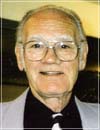
Scott Richardson

God Requires Us To Believe On Him

John 6:28-30
Scott Richardson July, 17 1977 Audio
0 Comments

Sermon Transcript

Auto-generated transcript • May contain errors

100%
I want you to turn with me this
morning to the 6th chapter of the book of John. John chapter
6. John chapter 6. I want to read verse 28 and 29
and 30. There are three verses there in the middle of this chapter,
the first part of the chapter. Then said they unto him, that's
unto the Lord Jesus, what shall we do? They asked the question,
that we might work the works of God. Lord Jesus answered and said
unto them, This is the work of God, that ye believe on him whom
he hath sent. They said therefore unto him,
What sign showest thou then, that we may see and believe thee? What doest, or what dost thou
work? Now this 28th verse here, What
shall we do that we might work the work of God. This question
appears to be the language of men temporarily impressed and
aroused, but still in the dark concerning the way to heaven. They felt perhaps that they were
on the wrong road, that something was required of them to do, but
what that something was they didn't know. They supposed that
they must do some good works, but what good works they were
required to do, they knew not. Now, I believe that this is the
evidence of the self-righteousness of the natural man or the carnal
mind. The natural man is all. he's ever occupied with his own
doings. The natural mind is flattered
when it is conscientiously doing something for God. That seems to be an expression
that's used in our generation in religious circles, doing something
for God. Men are flattered when they think
they're doing something for God. Everywhere I go, and practically
everybody that I listen to, in this area in particular, is
talking about someone doing something for God. That's right. Someone doing something for God.
When they refer to a religious person, they say, he's doing
a beautiful job for God. Or they say, he's doing a fantastic
job for God. Or he's doing a wonderful work
for God. Well, the natural mind is flattered
when it thinks it's doing something for God. And I'll tell you why. Because he believes that his
doings entitled him to some sort of reward. Every man, until he's
taught by divine grace, or until divine grace has completed its
work in his heart, believes that by his doing, that entitles him
to a spatial favor from God Almighty. He believes that salvation is
due him because he has earned it. It's his reward. He seeks
to bring God into a humbling position of a debtor. And that humbling position of
a debtor is a debtor unto him, a debtor unto man. He feels by
his doing, then, his doing entitled him to a special favor from God. And that's the gist of the question
that was asked here by these people that heard our Lord Jesus.
They said, What shall we do that we might work the work of God. Well, the carnal mind, the natural
mind, when I say carnal or natural, I'm talking about a man in his
state prior to conversion. That's what the scripture calls
him, the natural man, the natural mind, the carnal mind. Now, the
carnal mind is enmity against God and is utterly unable to
rise to the thought of a gift. Can't go that far. The carnal
heart, the carnal mind, is unwilling to come down to the place of
a beggar and a pauper and receive everything for nothing. Just
won't do it. Man wants to do something to
earn it. You can mark that down. That's
the truest statement that you've heard. this morning, right there,
you can mark it down that man wants to do something to earn
or something that will entitle him to spatial favor of God Almighty. He wants to do it and he will
do it. He'll die doing it unless God intervenes. You and I, I'm
speaking to all of us, will die trying to do something for God,
trying to find a spatial favor, or a token of favor with God,
we'll die, we'll crawl up near to China if it's required of
us, if we thought that that would entitle us to some spatial favor
of God Almighty. Man wants to do something to
earn it. I want to read something to you
here in the fourth chapter of the book of John in the tenth
verse. I want you to see that this woman
at the well, that until the grace of God had
completed its work in her heart, she knew nothing of the gift
of God. She knew nothing about it. Jesus
answered and said unto her, If thou knowest the gift of God,
if you knew the gift of God, what is the gift of God? The
gift of God is eternal life. The wages of sin is death, but
the gift of God is eternal life through Christ Jesus our Lord.
That's the gift of God. Jesus said, if you knew the gift
of God and who it is that says unto thee, give me to drink,
you would ask of him and he would give of thee living water. If
you knew the gift of God. Man wants to do something to
earn the gift of God. Now, I know that I can talk about
this every Sunday and every Wednesday and every time I can get a half
a dozen people together to listen to me, but unless God teaches
this to our heart and intervenes and the work of praise is completed
in our hearts, we'll never see it. It seems so simple. That seems so simple that it
looks like anybody could understand it, but nobody can understand
what I'm talking about this morning unless Unless God intervenes. Can't do it. Can't do it. You'll
say that you understand it in your mind, and twenty minutes
after you say you understand it, you'll give evidence that
you don't understand it by giving testimony that you hope that
you're going to get to heaven by your baptism, or you hope
you're going to get to heaven by your good works. You hope
you feel that your prayer, your tears, your almsgiving, Some of these performances and
duties have something to do with your relationship with God. If thou knewest the gift of God,
she didn't know it. She didn't know it. She did come to see it because
the grace of God completed its work in her heart. The rich young
ruler, over here in Luke chapter 17, Turn with me there, if you
will. Luke 17. Luke 18, maybe it is. Somewhere along there, I don't
see it right now, but listen to what this rich young ruler
said. He came to the Lord Jesus, and he said, Good Master, what
must I do? What must I do that I might gain
eternal life?" Something he wanted to do. What must I do? Well, in the book of Acts, the
second chapter, and I think about the 37th verse, these stricken
Jews, they cried out. Their hearts were pierced and
they cried out. They said, What shall we do? Now, here's three illustrations of man's attempting
to do something to gain favor with God. The woman at the well,
she didn't know what the gift of God was. The rich young ruler,
what must I do? What must I do? Something is
required of me. What is it? that I'm required
to do. These stricken Jews in Acts chapter
2 verse 37, men and brethren, what shall we do? Peter had told
them, said, you've crucified the Lord of glory, you've killed
the Lord Jesus Christ, the Prince of life, and they said, what
shall we do? What shall we do? We've got to
do something. the prodigal son in the 19th
chapter of the book of Luke, I believe it is. He said, when
he comes to the end of himself, he said, I'll tell you what I'm
going to do. I'm going to rise and go to my
father, and I'm going to say to my father, don't accept me
as I am. as a poor prodigal son. Don't
accept me as I am, but make me as one of thy higher servants."
Now, what was the thought in his mind? One who works for what
he receives. That was the thought in that
prodigal son's mind. For me, and I've read about here
this morning and quoted to you, which is, characteristic of the whole human
race, men wanting to do something to gain favor with God. What
shall we do? In John chapter 6 and verse 29,
I read to you 28 there, what shall we do? In verse 29, Jesus
said this, This is the work of God that
you believe on him whom he hath sent. Now this is what he means. He states here, in no uncertain
terms, that the one thing that God requires of a poor, helpless,
hopeless, doomed, damned sinner is that this poor, helpless,
hopeless sinner Believe on the one whom God hath sent into this
world to meet his deepest needs. That's what God said to
him here through the Lord Jesus Christ. That's what he said to
these people. This is the work of God. What
shall we do that we might work the works of God?" And Jesus
said, this is the work of God. Do you know what he means when
he says this is the work of God? He means this is what is required
of you. This is what's required of you.
What's required of you? That you believe on him whom
God has sent to meet your deepest needs. This is the work of God. Why
is it then that man had rather do than believe? The Scriptures say that it's
not by works of righteousness which we have done, but it's
according to his mercy that he saved us. Why is it then that
man would rather do than believe? He wants to do something. Well,
I think I can tell you why, or at least give you one plausible
reason for it. It provides for him a platform
on which he can boast and gloat by his doing. His salvation depends
upon his doing. He's entitled to the reward of
heaven because of his doing. He went to church, or he cried
all night, and he prayed all night, or he quit smoking cigarettes,
or he quit drinking alcohol, or he sobered up and treated
his wife better, and he doesn't mistreat his neighbors, or he
doesn't kick his dog. Anything that you can think of,
he'll bring in as a reliable substitute for the gospel that
he might put his feet upon and brag and boast about it, you
see. That's the reason why he would
rather do than believe because it's a platform. It's something
that he can get up on and he can boast and brag about it,
you see. I belong to the church. I've
been baptized. I've done this, I've done that,
I've done something else. It's my doing, it's my dying.
It's my dying to self even. It's my striving after a series
of holiness. It's my being punctual in my
religious duties. That's what it is. Something
to brag about. Something to boast about. Trying
to bring God down in a place of a humble debtor to Him. All right. This raises this question then.
Is it possible that I can ever enter Heaven without good works? The answer's no. It's not possible
for any man to ever enter into Heaven without good works. You
can't enter into Heaven without a good character, much less good
works. But those good works and those
good characters that we're talking about must be without flaw. They must be good works, good
character, must be as holy as God is holy, or a man can never
enter the presence of God. Now the question arises from
this statement. How then can I secure such a
character as that? I know that That's utterly impossible
that I might be as good and as holy as God Almighty. No, it's
not. No, it's not. It's not utterly
impossible. Well, can I get it by a series
of strivings after holiness? No. No, you can't get it that
way. That's doing again. You can't
get it that way. Well, you mean if I quit this,
if I quit that, and if I become religious, and I carry my Bible,
and I never miss church, and I pray all the time, and I give
up my money, and my conduct is far better than what it used
to be? You mean that that doesn't count for something, doesn't
count for a fund? Doesn't count for a single solitary thing.
It will not gain you entrance into heaven. It will not gain
you favor with God. Won't do it. Well, that's good, see? Why is
it that man would rather do than believe? Jesus answered the question
here. He said, this is what God requires,
that you believe on Him whom God has sent. That's what God
requires. Believe on Him who has already done this. Believe on the Lord Jesus Christ
who has a spotless character, who has a spotless life, who
has a flawless life, who is without sin. Believe on him. Is that
too difficult for a man to do, to believe on him? I'll tell
you, it's a very difficult thing because a man in his natural
state is not willing to abandon his own doing. his own righteousness,
his own wisdom, and accept the doing and the dying of the Lord
Jesus Christ. He won't do it. You see? He won't
do it. He's not willing to do that.
He's willing to do his thing. I want to do it my way. I want my believing, my intelligence
in regard to religious customs, in regard to scriptures, I want
that to count for something. You mean to tell me that I'm
going to go to church all of my life and it doesn't count
for anything? That's right, it doesn't count for anything. It
don't count for nothing. It don't count for nothing. God
does not reward or give you anything on the basis of what you do.
Well, that's what the Bible teaches. If you ever receive anything
from God, it'll be on the basis of what he's already done in
Christ. It'll not be your doing. See?
Man's not willing to abandon his doings and come to God empty-handed
in his own true character. He won't do it. He won't do it.
He'd rather go about his own doing, bragging about what I've
done. I listened to a fellow. Overheard
a fella the other day bragging about how much... I don't know
whether he was conscious of it or not, but he was bragging.
Why? He said, I've been going to church
for 20 years. He said, I've helped to build
three churches. I'm a deacon in the church. And he said, I
sing special numbers and I do this and I never miss a church.
You know what he was doing? He was bragging. Bragging and boasting
about his own doing. And unless he comes to the end
of himself, he's lost before God. He's more interested in
what he's done than what the Lord Jesus Christ has done. I built three churches. I've
been retired now for so many years, and since I've been retired,
I've built three churches. I never miss a service. I'm a
deacon. I'm a deacon. I sing special
numbers. I play the guitar. Sometimes
they have me on the radio. Sometimes I'm on the television.
I'm a pretty important fellow. Bragging, bragging. Not willing,
you see. He's like every other man. He's
no different. He's not willing to abandon his
own doing and accept the doing or receive the doing in the dying
of the Lord Jesus Christ. Well, how many of us are willing
to abandon our own ways? our own doings, our own righteousness,
and accept His righteousness, accept His doings, accept His
dying, how many of us? Now, no man will do this until
they are thoroughly convinced that all their doings are faulty,
that all their efforts fall short of God's demands. See? Let me go again. No man will
ever be willing to come to God in his own character until he
is thoroughly, thoroughly convinced by God himself that all of his
doings, all of his righteousness, all of his efforts fall short of the demands of
a holy God. He'll never do it as long as
he's convinced that there's something in his own doing that will somehow
present him in better light, or good light, or stand him in
better stead with God, he'll hang on to his doings. And men,
listen to me this morning, every one of us, there's men dropping
off into the eternal fires of hell every minute of every day,
holding on to their doings. Hold on! to their church membership,
holding on to their baptism, holding on to the fact that they
strive after a series of holiness, holding on to them, dropping
off into hell. What shall we do, they said.
What shall we do? That we might work the works
of God. He answered, this is the work of God, or this is what
God requires of you. This is what God requires of
you. He doesn't require of you to swim the Jordan River. He
doesn't require of you to swim the ocean. He doesn't require
of you to confess your sins to the priest. He doesn't require
that. What does He require? He requires that you believe
on Him whom He has sent. That's what He requires. But is that all? Is that all?
That's all God requires. That's all He requires, that
you believe on Him. Well, I thought sure I had to
do something. I want to do something. Well,
I'll never be convinced that that's enough. That's not enough.
There's some things that I want to do, things I've got to do.
Well, all your tears and all your sorrow for sin and all your
prayers and all your almsgiving and all your church doings, all
your efforts of holiness of life, they're nothing but your own
doings and your own efforts. and they belong to you, and they'll
never in any way justify you before God. Even if your efforts,
now listen to this, even if your efforts were perfect, even if
they were perfect, they couldn't save you. Do you believe that?
Even if every effort in all your doings from the time you entered
into this world to the time that you died, if they were absolutely
perfect, listen, would they save you? Certainly not. I'll tell
you why. In Romans chapter 6 and verse
23 it says this, it is written, by the deeds of the law there
shall no flesh be justified. See? No flesh will ever be justified
by the deeds of the law. Salvation
is not a thing to be earned by a religious life. but it's a free gift received
by faith. That's what it is. The Lord Jesus Christ, here in
this 30th verse, after he has said, this is the work of God
that you believe on him whom he hath sent, well they said
unto the Lord Jesus, now notice in this 30th verse, they said therefore unto him
what sign showest thou then? Show us a sign. He said, if you
show us a sign, something we can see. And now what it says,
what sign show us thou then that we may see and believe thee? Show us a sign that we may see
and then we'll believe. Give us a sign. Well, listen. This is typical. Man must either
see or feel, or he won't believe. Here in this sixth chapter of
John, this chapter which I've read these three verses out of,
provides us with one of the greatest miracles that the Lord Jesus
Christ ever performed. And these people were eyewitnesses
to that miracle. They said, show us a sign. They said, We're on the wrong
road here. We've been around, Paul, and
we don't know which way to go. What can we do that we might
work the works of God?" And he said, this is what's required
of you, that you believe on him whom God has sent. Well, that
wasn't enough. They said, well now, listen,
what sign? What sign will you show us? Give
us some evidence. Give us some evidence. So I was
talking to a fellow yesterday. He was telling me how he was
striking a bargain with God. I told him, I said, you're striking
a bargain with God. I said, I don't want to offend
you. I don't want to make you mad. But I said, that's what
you're doing. He told me, he said, well, he
said, one of these days I'll get some money. He said, it'll
come down to your church to put it in the offering. I said, well,
that'd be all right. He said, I told God. He said,
I told God. I prayed to God. If I'd get the
black lung, I'd give 10%. I'd give 10% if they'd give me the black lung.
Well, actually what he was doing, see, he was telling God, now
you're able to get me this black lung. You're able to do it. You're
able to do it. And if you'll do it, I'll give
you 10%. See, if you'll do it. Striking a bargain with God.
Yeah, that's what you call, that's striking a bargain with God.
Virgil Brewer, if I told you, if I told you, if you cut down
my hay up there, I'll give you 50 bales I'm striking a bargain
with. See what I'm talking about? That's
striking a bargain. You don't strike a bargain with
God Almighty. He thinks, give it, give it something
that we can see here and we'll believe on you. Give me $10,000
and I'll give you I'll give you, what, $1,000 of it. Give me $10,000
and I'll give a tenth of it, $1,000, to the church somewhere.
Strike a bargain with God. That's the way man is. He wants
to sit in the field before you, but show us a sign. Give us a
sign. I said that in this very sixth
chapter here, One of the most remarkable miracles that our
Lord ever performed while he was on the face of this earth
was performed here before their very eyes, and yet they still
said, show us a sign. There was a multitude of people
here, a multitude, I mean a big crowd, something like 5,000 people
had gathered around the Lord Jesus. And Jesus, to prove Philip,
said to Philip, he said, Philip, where are we going to buy enough
bread to feed? this great multitude. What are
we going to do? Well, Philip said, 200 penny
worth won't do. Peter came to him and he said,
Lord, there is a boy out here and he said he's got five barley
loaves and two fishes. He said that's all he's got.
Five little loaves of bread and two fishes. I think, if I'm not
mistaken, it says two small fishes. Let me look at that again. Yes, 9th verse. of that sixth
chapter. Look at that. There is a land
here which have five barley loaves and two small fishes. But what are they among so many? What does that mean? Five barley
loaves and two fishes among 5,000, 6,000, 7,000 people? Well, the Lord Jesus, he said,
all right, bring that boy here. Jesus said, mate, the men sat
down. Much grass in that place. So the men sat down and numbered
about 5,000. Now you talk about a miracle. This is a miracle right here.
Two little fishes, not that big. If he'd have said just two fishes,
someone would have come along and said, well, it was two whales.
Now, yes, some skeptic or some infidel or some agnostic, somebody's
going to argue about the thing and say, well, it was two sharks
about 19 feet long. That's what it was. But it says
here, two small fish. It says, make them in and set
down. Five thousand of them set down. About five thousand men. And Jesus took the loaves and
when he had given thanks, he distributed to the disciples.
and the disciples to them that were sent down, and likewise
of the fishes, as much as they would. And then it says, when
they were filled, they were filled up, they weren't hungry anymore.
They were filled, it wasn't just a token bite or a token meal,
a partial. They were filled that he said
to the disciples, gather up the fragments that remain, that nothing
belongs, that there's some left over. Therefore they gathered
them together, and filled twelve baskets with the fragments of
the five barley loaves, which remained over and above unto
them that had eaten." Listen to what these men said.
Same men that Jesus is preaching to. Then those men, when they
had seen the miracle that Jesus did, this is what they said,
"...this is of a truth, that prophet which should come
into the world. This is the truth. He's come. He perceived at that time that
they would come and take him by force and make him a king.
And he departed into a mountain, himself alone. And now they gather
again to him. And he says, You seek me, notes
the 26th verse, same people now. You've got to see this, the same
people. You seek me not because you saw the miracles, but because
you did eat of the loaves and were fed." They seen the miracle. They said, what shall we do that
we might work the works of God? He said, this is what's required
of you. I'll show you what God requires
of you, that you believe on him whom God has sent. And they said,
under him, what sign showest thou then that we may see and
believe? What doest thou work? Give us
a sign. Give us a sign. Show us a sign. My soul, isn't that a record
of depravity? Men talk about earning eternal
life and talking about God being a debtor unto them and we have
right here recorded in the Word the unbelief of of the natural
man. Let me turn with me to the book
of 1st John. 1st John, chapter 5. 1st John, chapter 5. Listen to
this. This is what is required. This is what God requires of
every one of us. Right here. 10th verse says, He that believeth
on the Son of God hath witness in himself. And he that believeth
not God hath made him a liar, because he believeth not the
record that God gave of his son. When a man holds on to his puny
works and in his own heart feels that his work somehow justifies
him before God, then he doubts and denies and infumes the work
that Christ did on the cross. And so he makes God a liar. He
that believeth on the Son of God has this witness in himself. He that believeth not God, he
that believeth not God is hanging on to his own filthy rag, his
own filthy righteousness. He's hanging on to that, has
made God a liar, has made him a liar. Why? Because he believes
not the record that God gave of his son. What is the record?
That you might believe on him whom God has sent. Believe on him. He did it all. He paid the due. He paid the debt that the sinner
owes. He satisfied the debt. the righteous
demands of God Almighty in regard to the deeds of the law. No man
can be justified before God for the deeds of the law because
he cannot perform them from his inward parts. He cannot perform
them perfectly with the right motive. He can't do it. But he
did, the Lord Jesus Christ did. He did. So I believe the record. I believe the record of the Son
of God who came into this world to save sinners in whom I'm chief.
I'm the chief of sinners. That's one point that I can't
get away from. I can't get away from that. Maybe
you can, but I can't. I'm a poor sinner. I'm a poor sinner and that's
all I've got. I'm a poor sinner, but Jesus
Christ is my... I can't get away from that. I'm
a poor sinner. All right, now listen to this 11th verse. And
this is the record that God hath given to us eternal life, and
this life is in his Son. What did I read to you in John
chapter 6? This is the work of God that you believe on him,
whom God has sent. And this is the record that God
hath given to us eternal life, and this life is in his Son,
and he that hath the Son hath life, and he that hath not the
Son of God hath not life. These things have I written unto
you that believe on the name of the Son of God, that ye may
know that ye have eternal life, that ye may believe on the name
of the Son of God. And this is the confidence that
we have in Him, that if we ask anything according to His will,
He hears us. Come on down here now to this
other 19th verse, or 20th verse, and it says, And we know that
the Son of God is come. and have given us an understanding
that we may know Him that is true, and we are in Him that
is true, even in His Son Jesus Christ. This is the true God
and eternal life. That's it. And that's what it's
all about. It's not your doing. It's not
your striving. It's believing the record. It's
believing the reform. And this is the report, this
is the record, this is what God requires of us, that we might
believe in whom God has sent. God help us to be willing or
to be made willing to abandon any hope that we might have in
our own doings, our own righteousness, our performance of religious
duties, that we might abandon them and cast ourselves at the
feet of Him, who to know is life eternal. Life eternal is in Him,
in the Lord Jesus Christ. I hope you can see that. I pray
that you might see that. God help us. If we miss that,
we've missed everything. If we miss that, everything goes
for naught. Let's not miss that.
Scott Richardson
About Scott Richardson
Scott Richardson (1923-2010) served as pastor of Katy Baptist Church in Fairmont, West Virginia.
Broadcaster:

Comments

0 / 2000 characters
Comments are moderated before appearing.

Be the first to comment!

Joshua

Joshua

Shall we play a game? Ask me about articles, sermons, or theology from our library. I can also help you navigate the site.