Bootstrap
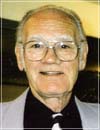
Scott Richardson

Man Is Not Justified By the Works of the Flesh

Luke 18:9
Scott Richardson April, 24 1977 Audio
0 Comments

Sermon Transcript

Auto-generated transcript • May contain errors

100%
This morning to the 18th chapter
of the book of Luke. Luke chapter 18. Last Sunday morning, I believe
it was, I related to you some thoughts, I trust were Biblical
thoughts, in regard to the only resting place for the soul of
man, and it pertained to the character of God as in Christ. And I think I read to you from
the Book of Job that verse of scripture that said, Acquaint
now thyself with him, and be at peace. Now, this morning I
kind of want to impress upon you that man's character is no fit ground
for his soul's rest. and submit to you from this 18th
chapter of the book of Luke a divine testimony that more or less sets
forth what I'm trying to say in a whole lot better way. That
man's character is no ground to feast for his soul and that
seems to be the It seems to be the hope of all
false worshipers and false religionists. Their hope is based, that is,
their soul's hope is based upon their character or something
that's found in their life or their religious duties. Their
hope is based on that, and that's false hope. fade into nothingness as man
is ushered out into eternity when he passes beyond this veil
of tears. So to me it's very important
that, you know, if we can be used of him in this life to somehow
destroy false hopes. help men to see by the Spirit
of God, under God, the only hope that's worthwhile and the only
hope that will stand us in good stead with God at that final
day we'll be resting in Christ. Now, this 18th chapter of the
book of Luke Let me begin reading there at the ninth verse, Luke 18 and
9. And he spake this parable unto
certain which trusted in themselves. That's what I'm talking about. that we know, not someone far
off in Africa or Australia, but most people that we know are
trusting in themselves. They're resting in their own
character, something in their own life, or some religious duty. They're trusting in themselves. That's terrible. It doesn't seem
like much, but it's terrible because if they remain in that
state, if they remain in that state until they die, they'll
be separated from God. They feel that, you know, because
they trust in themselves and their conscience is at ease and
they have no, they have no, torment of soul. They're not aware of
their insufficiency or their need. They're trusting in themselves. And if they remain in that state,
you see, there's no hope for them. So he said in this verse
here, and he spake this parable unto certain which trusted in
themselves. Very significant to me. And they were righteous and despised
others. Tenth verse. Two men went up
in the temple to pray, one a Pharisee and the other
a publican. The Pharisee stood and prayed
thus with himself, God, I thank thee that I am not as other men
are." And that's our text right there. God, I thank Thee that
I am not as other men are. Well, let me read the rest of
it. The extortioners and unjust and adulterers, or even as this
public, put his finger right on that public. I thank God that
I'm not as other men are. I thank God that I'm not like
this fellow, this public. Tell you what I do. I fast twice in the week, and
I give tithes of all that I possess. That's what I do. Those are my
religious duties. So do those in our day who expect
to get peace by doing, by feeling, by praying more than others,
or than they themselves have done in times gone by, and who
refuse to take the peace of the gospel till they have amassed
such an amount of doing and feeling as will ease their conscience
and make them conclude," now listen to this, "...and make
them conclude that it would not be fair in God to reject the
application of men so earnest and devoted as they are." That
was the attitude of this fellow. He couldn't understand how God
could reject his application. He said, why, it's not fair in
God, or it's not fair for God to reject such an earnest application
with such great qualifications to go with this application. These are my qualifications.
He prayed. He came and prayed, and he said,
I fast twice in the week. That's what I do. And he said,
I give tithes of all that I possess. These are my qualifications.
So I submit these qualifications to God. Now, it's not fair, it's
not fair for God to reject such an application as this with all
the qualifications that goes along with the application. God
just cannot reject this application. He cannot do it. Why? Because
I pray. I pray so many hours every day. I fast twice every week, and
I give ten percent of everything that I have. Therefore, you can
see how a man can begin to trust in himself. He's trusting in
himself, trusting in what he is and what he does. Well, I'm sure that that's what
our Lord had in mind when he said he spake this parable unto
certain which trusted in themselves. Well, this publican, standing
afar off, would not lift up so much as his eyes unto heaven,
but smote his breast, saying, God be merciful to me, a sinner. I tell you, this man, that is,
this publican man, went down to his house, justified rather
than the other. That is, this man who made no
pretense of what he was. He did not try to hide himself
in a role of hypocrisy and plead things that he certainly was
not or plead things that he was in regard to his character or
religious duty. He didn't do it. He was standing afar off and
would not lift up so much as his eyes unto heaven, but he
smote his breast, saying, God, be merciful to me a sinner. Now,
I tell you, our Lord, that this man went down to his house acquitted. That's what justified. Acquitted. Acquitted of every crime and
every charge that my law had against him. He's acquitted of
those charges, freely forgiven, and made accepted in the righteousness
of the beloved. I tell you, this man went down
to his house justified rather than the other. rather than the
other. For every one that exalteth himself
shall be abased, and he that humbleth himself shall be exalted."
Now, I've said thus far that to be for the soul to have
peace of conscience and peace of heart and peace of mind, he
must not rest his case on his own character, because his own character God
has condemned. God has condemned everything
that's in the flesh, including one's character. God has condemned
him. Why would man want to rest his
eternal soul's welfare on something that God has condemned? Well, you say, I wonder why. Well, all men are worshipers. All men are religious by nature.
That's one reason why men do. is because they're religious
by nature and they will worship something or somebody or some
object, they will do that. So they worship themselves. They become their own God. They
trust in themselves and therefore they are their own Savior, their
own God. We know, as we said last Sunday,
that God testifies against us. Now, if God testifies against
us, who can testify for us? Who's left, then, to testify
for us if God has testified against us and has condemned everything
in this body of flesh? Isaiah said that God hath condemned
everything about this body of flesh, from the soles of one's
feet to the crown of his head, there is no soundness in it. There is not one good thing in
this body of flesh. Now, that's what Isaiah said
about God's condemning us. The Apostle Paul said this about
the condemnation of the flesh. He said, For I know there is
no good thing in me that is in this flesh. God has condemned
this flesh. There is nothing in this flesh
by way of character, by way of thoughts, by way of intent, by
way of desires. There is nothing in this body
of flesh that can be approved or blessed by God himself. God has condemned this sinful
body of flesh. Now, if God testifies against
us, who can testify for us? If God's opinion of our sinfulness,
if his judgment of our guilt be so very decided against us,
there can be no hope of acquittal for us on the ground of personal
character. That which God sees in us furnishes
only a matter for condemnation rather than pardon. God condemns
everything in and about this flesh. Now, it's vain to struggle
or to murmur against God's judgment. He's the judge of all the earth,
and he is right as well as sovereign in judgment, and his law must
be obeyed. But this flesh cannot obey the
law of God, and there's nothing in us that is acceptable unto
God, that he delights in. Now listen, it's very clear in
God's testimony against us and our doings in this great matter
of approach and acceptance with him. Three verses here I want
to read to you in regard to God's testimony concerning us, and
I say these things in order that we might see Because of the condemnation
of the flesh, there cannot be anything that the soul can rest
upon in a matter of or by way of acceptance with God Almighty. Not one single solitary thing
in this body of flesh, in his religious duties, in his thoughts,
in his desires, or anything about him. Now you turn with me, if
you will, to Titus, chapter 3. The book of Titus, chapter 3. Verse number 5. Verse number 4, I'll read it
first, 4 and 5. Titus chapter 3, verse number
4 and 5, "...but after that the kindness and the love of God
our Savior towards man appeared." Now listen to this, "...not by
works of righteousness which we have done, but according to
his mercy He saved us, not by works of righteousness
which we have done." Now, that condemns every ounce of activity,
that condemns every ounce of obedience to rules and regulations
on one's part. in order to justify him before
God or make him acceptable before God. This condemns every act
and every thought and every idea that could be used in order for
him to rest his soul upon. I don't care whether—well, you
say, what is a work of righteousness? Not by works of righteousness,
which—what is a work of righteousness? What does this mean? All right,
that's right. Buddy is right. Is it right to
keep the Ten Commandments? Is that right? It certainly is. The Ten Commandments. What's
wrong with keeping the Ten Commandments? Now, anything wrong with keeping
the Ten Commandments. Everybody ought to keep the Ten
Commandments. Everybody. Every soul born of woman, regardless
of of creed, regardless of color, regardless of background. Every
person born of woman into this world ought to keep the Ten Commandments
because the Ten Commandments are ten righteous laws, and it's
right to do so. But will keeping the Ten Commandments
save an arm? not by works of righteousness
which we have done." Well, what about that? The Ten
Commandments, you mean if I do the best I can all of my life
and be fair to my neighbors and good to my family? and a congenial,
loving, bubbling-type person, and looked upon by everybody
in the area as a fine felon. And you mean that that won't
count for something? It'll only count for your condemnation.
It'll just add to the woe of your condemnation. It won't add
to your justification. Listen to me now. Not by works
of righteousness, which we have done. He doesn't save anybody
by the works of righteousness. The Pharisee thought that his
religious duties and his character was involved in his justification. See? I thank God that I'm not
as other men are. And I told you at the outset
of our discussion here that the majority of those that we have
to do. The majority of the people that
we see every day, that we talk to every day, are those who consider
themselves righteous in themselves. and are resting in what they
do, in resting in their character, in their life, or in the performance
of their religious duties, and if they die in the state that
they're in, what will happen? They'll be
separated from God throughout all eternity. So if you love
these of your loved ones, and if you love those that you work
with, those that you see every day and the burden of their soul
is upon your heart, the best thing you can do is pray unto
God that he will somehow enable you and this loved one, the one
that you love, can get together and you might present unto him.
the truth about himself and help him under God. I know that you
can't in yourself reveal anything to him, but you can give him
the clear-cut truth. And you can tell him that it's
a false religion. You can tell him there's no hope
in it. You can tell him that it's not by works of righteousness
which we have done, but it's according to God's mercy that
he saved us. And if you're hanging on to any
work, regardless of how small in detail it might be, you're
a lost man or a lost woman or a lost boy or a lost girl. That's
all there are to it. Not by works of righteousness
which we have done. Just that plane that's been there,
that's been there for 2,000 years. It's an ever-viable. There's
not a Bible that's published that this verse of Scripture's
not in. Titus chapter 3, verse number
5, "...not by works of righteousness which we have done." What about
the golden rule? Do you believe in the golden
rule that we should do unto others as we would have others do unto
us? Don't you believe that that's a good philosophy? It certainly
is. There's not a thing wrong with
the golden rule, and you ought to live that way. You ought to
live that way. Do unto people as you would want
people to do unto you. And you can't beat that, can
you, Darryl? That's a good rule. I think Darryl lives that way,
or in a sense, in his filling station business, he tries to
Do good to people over there and so forth? Not a thing wrong
with that. Well, do you think that that
would be all right to die by? No. No, I don't think it would
be all right to die by. Why? Because not by works of
righteousness which we have done. See? No, it won't do. It won't do. Well, don't you
think that—I pray. That's a good work. Don't you
think that somehow I'll be commended by God for my devotion? No, no,
not by works of righteousness, which we have done. The Pharisee
prayed. In fact, he prayed three times
every day, and he prayed sometimes an hour or two hours at a prayer
stand. He went up into the temple, and
he prayed long and loud for an hour at a time. Well, don't you
think that that somehow would commend one's person to God? No, it wouldn't. It would only
add to the woes of your condemnation. Not by works of righteousness.
Well, don't you think that maybe I ought to be baptized? Don't
you think that's a good work? Yeah, that's a good work. That's
a good work. Jesus said it was a good work.
But that won't stand you in good stead with God. Not by works
of righteousness, which we have done. And I could go on and on
and on and on in this list. But that's what the Scriptures
say. Very clear, isn't it? You see, God's testimony is very
clear against us. What I'm trying to do, the point
that I'm trying to make is that if there's anything in our doing,
anything in our living that we could cling to as any means of
justification before God or approval or acceptance before God, let's
look at it as God looks at it, let's condemn it as God condemns
it, and let's see that there's nothing in this body of flesh.
that can be approved by God as an anchor for the soul or a resting
place for the feet of the soul. Nothing whatsoever. God has condemned
everything in the flesh. He's condemned all good works.
He's condemned all religious duties as the grounds of our
peace. Not by works of righteousness
which we have done. My, what about that? Not by works of righteousness
which we have done. You've taken everything away
from us. I haven't got anything to cling to. I mean, this is
what people will say if they'll honestly face the truth. If they'll
honestly face it, they'll say, well, I haven't got a foot to
stand on. I haven't got anywhere to go.
There's nothing that I can lean upon. You've knocked every prop
out from underneath my flesh. I haven't got anything. Where
can I go? Well, that's what I want to do,
you see. And that's the idea. Knock every crop out from underneath
you that you're being supported by or leaning to as a means of
your acceptance with God and let you fall into the hands of
the sovereign, pure, sweet grace and favor and mercy of Almighty
God. That's exactly what the public
should do. Wasn't it? What did he do? Did he claim anything? Did he
say, now listen, here's my application. Look at the qualifications that
accompany and the references that accompany my application.
You know what a man's trying to do when he's doing all that?
He's trying to bribe God. That's what we're doing. We're
bribing God. We start carrying something in
our hands. Look at my baptism. I don't curse. I don't drink. I don't do this.
Look at my qualifications here. Surely, surely, Surely you'll
not turn down my application. Why? You couldn't do that. You
couldn't turn down my application. All these good works that I perform,
trying to bribe God, trying to get God in the mood to doing
something for us, bribe Him if we can. All right, turn with
me then to Galatians chapter 2. Galatians chapter 2 and verse 16. You see how clear God's testimony
is against us, against our doing in this great matter of approach
and acceptance. It says in this 16th verse, There's strength in that word,
knowing. Paul said, knowing, knowing that
a man is not justified by the works of the law. Man's not justified
by the works of the law. He's not justified by works of
righteousness. He's not justified by works of
the law, religious duties. And then turn with me to Romans chapter 4, I believe it
is. Verse number 5, 4th chapter of
the book of Romans. It says, "...but to him that
worketh not." just the opposite of our schemes, just the opposite
of most religious persuasions of our day. The way you are justified
or approved or accepted by God and with God in the religion
of the natural man is by your error. by your works, by your
good deeds, by your character, by your life, by your religious
duties. Something in yourself. Something
in yourself is the means of your approach, your acceptance with
God. That's the basis of every man's
religion outside of Christ. I don't care who he is. That's
the basis. Now listen. The Scriptures say,
But to him that worketh not, the man that ceases to do, and
relies on him that is already done, that's the fellow that's
justified. But to him that worketh not,
but believeth on him that justifies the ungodly, his faith is counted
for righteousness. Do you see how clear in these
three verses God's testimony is concerning our character? Your own character, regardless
of how good it is, cannot be your way of reproach or your
ground of confidence toward God. No amount of praise, No amount
of working or feeling can satisfy the righteous law of God or pacify
the guilty conscience. Can't do it. Seize from your
doing right now. Or quench the flaming sword that
guards access into the presence of the infinite holy God. Now, that which makes it safe
for you to draw near to God by way of acceptance and right for
God to receive you must be something altogether away from and independent
of yourself, for yourself, and everything pertaining to yourself. That kind of destroys everything,
doesn't it? Well, your liberty—listen now—your
liberty of entrance must come from something which He, God,
has accepted. You don't hear nothing this morning
except that. Hear this. Hear this this morning. Let it sink deep into your heart.
If you've got a pencil, write it down. Your liberty of entrance
must come from something which he has accepted, which God has
accepted. Who has he accepted? Who among
the children of men has God ever accepted as blessed evermore? None but Christ. None but Christ. Your liberty of entrance must
come from something which he has accepted. And that which
he has accepted is none other than Christ the Lord. Why did he accept Christ? Because Christ is the Son of
God, and because the Lord Jesus Christ, who was born of woman,
came into this world born of this woman, taken upon himself
this robe of flesh, this man Christ Jesus, who was born under
the law, lived under the law, and satisfied every jot and every
tittle of that law, and God could do nothing else but accept him
because he was pleasing to him. He was the perfect man, perfect
man and perfect God. and offered himself as a perfect
sacrifice. Who? Christ Jesus the Lord. Why? Because he was pleasing
unto God. So, our entrance, or our liberty
of entrance, must come from something which he has accepted, and that's
Christ. Not from something which he has
condemned. Get that. Not from something
which he has condemned. What has he condemned? All have
sinned and come short of the glory of God. He has condemned
all flesh. You cannot. See, your liberty
of entrance cannot come from something that God has condemned.
God has condemned every man. Every man that's born into this
world, God said, Ichabod is written on his forehead, the glory of
God has departed. Every man that's born into this
world, every man, woman, or child that has been born of woman,
is born in sin and conceived in iniquity, and condemnation
is wrought upon the heart and breast of every person. Now,
that's true, brethren, that's true. God help me, that's true
this morning. Nothing, not from something which
God has condemned. All flesh God has condemned. Let me give you a little illustration
here. One soul who, in bitterness of
his spirit, set out to work and to pray in
order to get peace, That's about what takes place
in this life where you go to some religious teacher, some
denomination, most preachers, and tell them, I've got to have
peace for my soul. My heart is troubled. I've got
to have peace. I'll tell you what most of them
will tell you now, and I say this not with bitterness towards
them or animosity or antagonism or anything of that nature, but
I tell you that because it's the truth, preachers or religious
people or teachers, leaders, if you come with the agonizing
burden of your soul and say, I need peace, I'm troubled at
heart, I'm troubled at mind, I need some peace, you know what
they'll tell you? They'll tell you to pray, they'll
tell you to read the Bible, they'll tell you to go to church, they'll
tell you to be baptized, they'll tell you to give alms, they'll
tell you to Anything to occupy your time. Instead of that leading
you to God, it'll lead you away from God. You know what I'm talking
about? It'll do it. It'll do it. Why? Because you cannot come to God
by and through anything that God has condemned. You cannot. Well, God doesn't hear you pray. You can moan and cry out. God
doesn't hear you. But people said, well, why don't
you pray? Why don't you ask God to relieve that burden? Why don't
you ask God to, why don't you study your Bible? Why don't you
take a course, a Bible course or something? Why don't you quit
your drinking? Why don't you quit your cussing?
Why don't you quit this? Why don't you quit that? Why
don't you start going to church and I'm sure you'll get some
peace? Well, there was a soul who in bitterness of his own
soul set out to work and pray in order to get peace. He couldn't get it by his working
and his praying. He couldn't get it. So he doubled
the amount of his devotions. And he said to himself, after
he doubled the amount of his devotions, surely God will give
me peace. But peace did not come. So, he said, I know what I'll
do. I'll set up a family worship.
I'll get the family all together, and we'll get the Bible out,
and we'll worship together. We'll read the Bible, and we'll
worship together. Surely, God will give me peace
now, and I know that he will. I'm bribing God again, you see. I'm going to bribe God. I'm going
to do something, and therefore, because of my doing, God's obligated
to do something for me. Isn't that right? Isn't that
what most people believe? God's obligated. I'm going to do something,
so now God's obligated. He's got to do something for
me because my doing obligates Him. I'm going to bribe Him.
I'll set up family worship, gather the wife and children in. Surely
God will give me peace again. Peace did not come. Well, he
had this thought. He said, well, I'll tell you
what I'll do. I know, I've just got this in mind, been thinking
about it, been led to do this. I'm going to have a prayer meeting
in my house, so I believe that by doing so this will be a sure
remedy, and God will certainly give me peace. So he fixed the
night, or he set the date, and he called his neighbors and acquainted
them with the particular date for the prayer meeting, and asked
them to come, that his soul was troubled, Would they come over? And so he prepared himself for
conducting the meeting by learning and by writing down a prayer
and memorizing that prayer. And he said, Now, surely this
will do. Surely this will do the trick. This will turn God and God will
give me peace. As he took his paper that he
had written his prayer down on and had it memorized and was
ready to conduct the meeting, he slammed the paper down on
his table, and he seemed to hear a small, still voice speaking
into his ears, saying, No, that will not do, but Christ will
do. And the burdens fell off and
the scales. fell from his eyes, and peace,
like a river, flooded his soul." Christ will do it. He'll do it. Seize your doing. Seize your
doing, and rely on Him. That paid it off. The sinner's peace, then, with
God is not from his own character. No grounds of peace nor elements
of reconciliation can be extracted from yourself directly or indirectly. His one qualification for peace
is what? That he needs it. That's his
one qualification, that he needs it. It is not what he has but
what he lacks of that qualifies him. Not what he was, but that's
what he lacks. He doesn't have anything. That's
what he lacks. He doesn't have anything. He
doesn't have anything, and his not having anything qualifies
him. Isn't that? That seems to be
paradoxical, doesn't it? He doesn't have anything. What
he doesn't have qualifies him. It makes him a candidate for
God's salvation. Man will never be a candidate
from God's salvation until he sees himself as that public and
seen himself stripped of everything, not anything to commend himself
before God, no righteousness of his own, nothing about his
character to commend himself unto God. But he comes empty-handed. You see, it's our sickness, it's
not our health, that fits us for the doctor, for the physician.
When you're healthy, you're not going to go to the doctor. That's
what a fellow told me one time. He said he didn't believe in
doctors, and I'm not going to the doctor. I don't go to doctors.
He didn't say he wasn't going to the doctor, but that was the
implication that he made. He said, I'm not going to no
doctors. I don't believe in them. Don't believe in no doctors.
And I'm not going to any doctors. Just don't believe in them. I'll just take care of myself.
I said, well, your problem is you've never been sick enough.
If you're not sick, you're not going to go to the doctor. But
when you get sick enough, now don't tell me, I mean, I know
none of you tough guys here, or tough people, don't tell me
that you're not going to go see no doctor when you get sick.
When you get sick and get sick enough, you'll scream, if necessary,
for a doctor. You'll want a doctor. Now, it's
not our, it's our sickness, not our health, that fits us for
the position, for the doctor. When we're sick, and heaven help
us, we're more than sick. I mean, if it was just that we're
sick, why, some of the smart people of our world would come
up with a remedy. I mean, they'd take care of it. If it was just
sickness, but it's not sickness. It's not ignorance. If it was
just ignorance, why, the smart people would come up for an answer.
It's not sickness, it's not ignorance. Brethren, it's worse than that.
We're dead. That's our fault. We're dead before God for the
lack of love that Jesus Christ has shown us. We're dead. We
have nothing. We have nothing in our hands
to offer God by way of commendation. We have no qualifications to
send along with our application except we're sick. And brethren,
when we come like that, when we're sick, we're sick, we have
nothing. Oh Lord, I have nothing. Give
me peace lest I die by and through the Lord Jesus Christ." Now,
that's the kind of prayer God hears. He doesn't hear this prayer
of, I thank God that I'm not as other men are. That's resting
your soul's welfare on your own chest. That's the truth, brethren. That's the truth. God help us
to see that this morning. In all false religions, the worshipper
rests his hope of divine favor upon something in his own character,
or his life, or his nature, or his religion. May that not be
so with us. God helped us this morning to
see that if we come naked and empty-handed and feel our We'll
be accepted. God has never turned one poor,
guilty, hopeless, selfless sinner away that came empty-handed. God's never turned him away.
All the Father giveth to me shall come to me, listen now, and him
that comes to me, and him that comes to me, I will in nobis
cast out. Boy, instead of discouraging
the sinner, that ought to encourage him, oughtn't it? Him that comes
to me, I will not cast him out. I won't cast him out if you'll
come to me. I had a fellow stay there on the television this
morning. He said, now, he said, I only got nine minutes here
to preach to you. Nine minutes, he said, I've got
to preach. That's all that's left. I wondered
about that because he spent all the rest of it. He had to do
it in order to keep on the television. about giving books away and selling
Bibles and personal appearances and all of that. And then he
had a quartet and then he had a fellow play the trumpet. And
all of that consumed about 20 minutes of his time. He had nine
minutes left. I doubt if he had nine minutes.
He said nine minutes. He said, I'm going to preach
to you in nine minutes, he said here. And he said, I'm going
to tell you how to get to heaven in nine minutes, he said. He said,
it's important. He said, I want you to listen
to it. He said, it's important. And it is important. I don't
remember, I don't even think I listened to what he said, but
it's important that the fellow comes along and he's going to
tell you the truth about God and the truth about yourself
and the truth about Christ and the truth about the gospel. You
ought to listen to him, because it's more important than if...
And he went on to say, now listen, he said, if I was to tell you
this morning that if you'll give me nine minutes of your time,
I can guarantee you to be... Well, he didn't say guarantee,
but he said, If you'll give me nine minutes of your time this
morning," he said, "'I can make you a millionaire twice over.'"
Did you listen to me? But he said, "'Me telling you,
preaching the gospel to you is far more important to you than
if I was to make you a millionaire twice over.'" And that's right.
That's how important it is, the gospel. Hear what we've got here.
A handful of people here this morning. This place ought to
be jammed. ought to be people right out there listening to
me. This place ought to be full of people listening to me. That's
right. There ought to be people knocking
on my door all afternoon, knocking on my door. Come and preach that
sermon again, will you? Preach that again to me. I want
to hear that. I want to hear that. Oh, my soul, my soul is
troubled, my spirit is in bondage and bitterness. Won't you come
and preach to me and tell me that there's no hope in my character,
that the ground of my peace is not in my doing, not in my living,
it's not in my dying, but the ground of my peace is in Christ. People ought to be anxious about
that, but they're not anxious, they're not concerned. They're
not concerned. This building's not full. They're
not standing outside, and I doubt it seriously. Now, of course,
I don't know, but I just humanly speak it. I doubt it seriously
if there'll be anybody that'll approach me in the next six days
and will ask me to tell them about Jesus Christ, or ask me
to preach to them, or invite me to come to their home and
preach, or invite me to another. I doubt it seriously, because
people are not They're not interested. But you're interested or you
wouldn't be here. You're interested. You're interested.
So may God continue to revive your interest. And those of us
that are in Christ, let's thank God that sovereign mercy visited
us one day and made Christ known as our only hope. We can say
like Paul, I count all things but loss. for the excellency
and knowledge of Christ Jesus my Lord. Count it all but lost. All right, let's stand.
Scott Richardson
About Scott Richardson
Scott Richardson (1923-2010) served as pastor of Katy Baptist Church in Fairmont, West Virginia.
Broadcaster:

Comments

0 / 2000 characters
Comments are moderated before appearing.

Be the first to comment!

Joshua

Joshua

Shall we play a game? Ask me about articles, sermons, or theology from our library. I can also help you navigate the site.